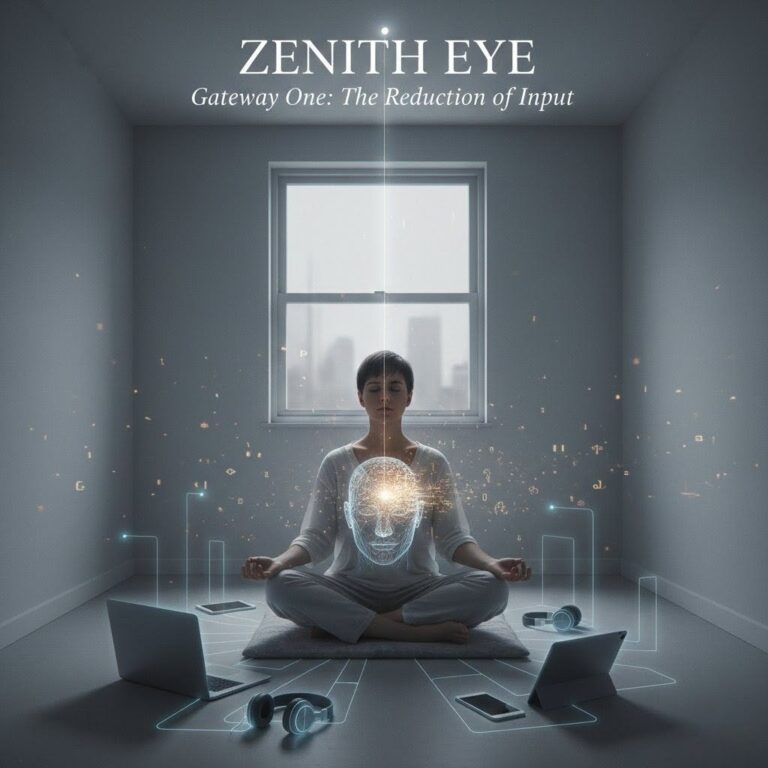
The Spectacle: When Reality Got Replaced by Its Representation
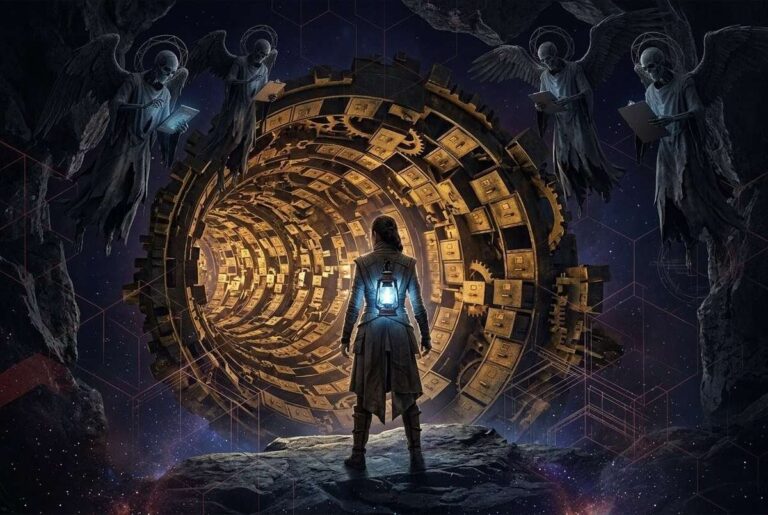
There is something strange about modern life: reality has not disappeared, but more and more of it now reaches us through representations.
Images, clips, feeds, headlines, profiles, metrics, maps, ratings, filters and narratives stand between the self and the world. They do not merely show reality. They select it, polish it, compress it, rank it, frame it and return it to us as something easier to consume than the living thing itself.
This is the spectacle.
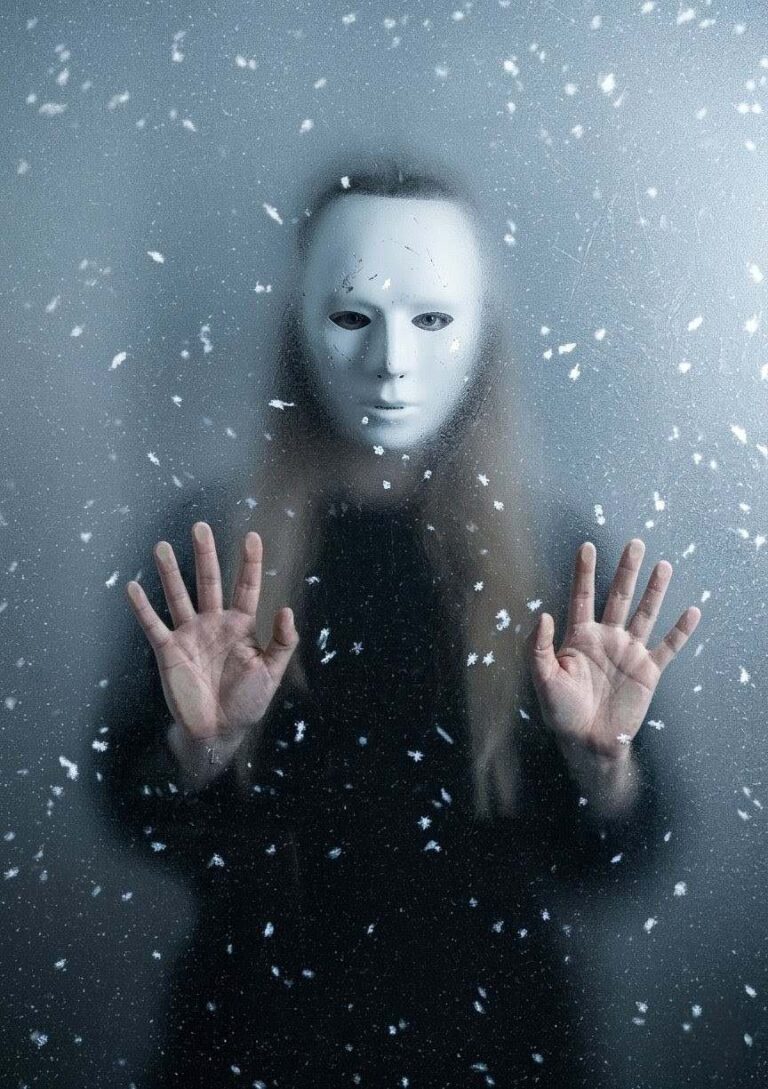
The spectacle begins when representation becomes more familiar than direct encounter. The post becomes easier to trust than the moment. The profile becomes easier to read than the person. The feed becomes easier to inhabit than the world. The screen does not need to destroy reality. It only needs to become the place where reality is most often encountered.
Reality did not disappear.
It got mediated.
And once mediation becomes the baseline, the uncomfortable question appears: if most of what you experience comes through a layer, how would you know what reality feels like without that layer?
In Plain Terms
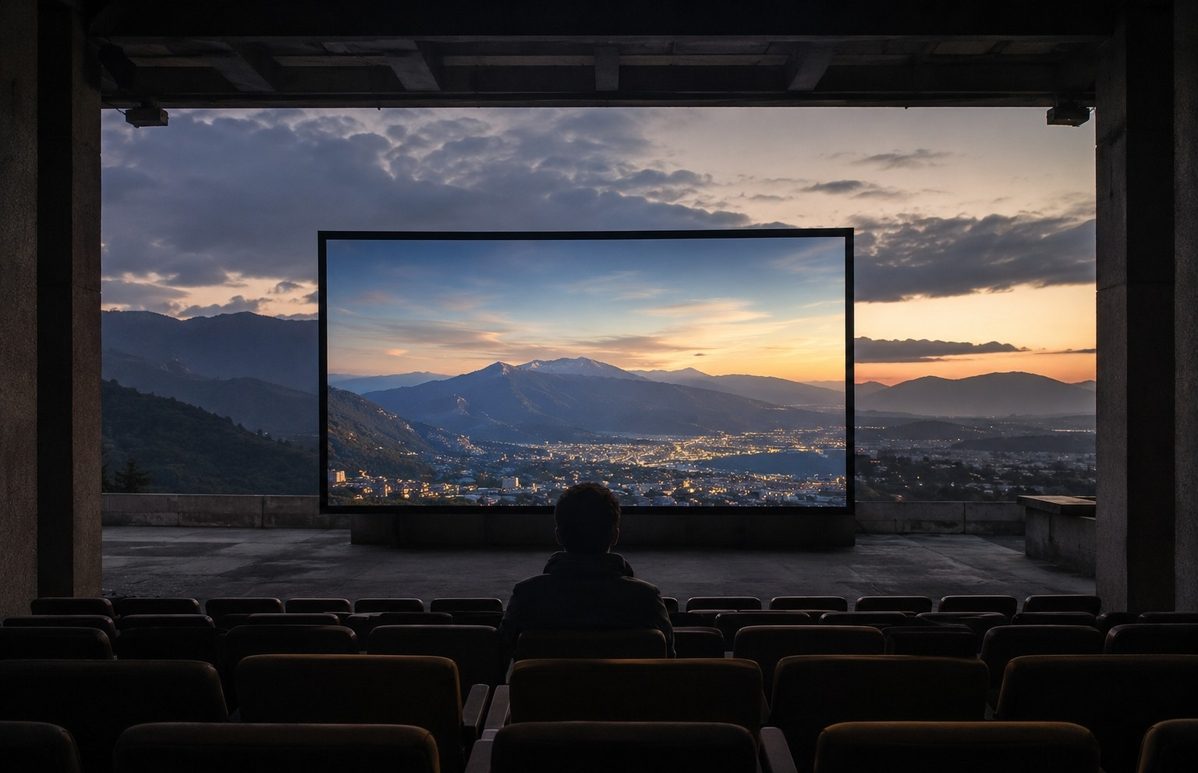
The spectacle is the condition in which direct experience is replaced, filtered or organised by images and representations. It is not only media overload. It is a social arrangement where people increasingly relate to themselves, each other and the world through curated appearances. The spectacle does not hide reality by covering it. It hides reality by offering a more convenient version to prefer.
Primary Sources and Traditions Discussed
- Guy Debord and The Society of the Spectacle.
- Jean Baudrillard, simulacra and hyperreality.
- Marshall McLuhan and the medium as environment.
- Neil Postman and the entertainment shape of public discourse.
- Algorithmic curation, filter bubbles and the attention economy.
- Social media, curated identity and the hyperreal self.
- Direct experience and less screen-mediated perception.
- Gnostic and Neo-Gnostic readings of counterfeit appearance, recognition and direct seeing.
How to Read This Article
Read this as a guide to mediation, not as a rejection of technology. Human perception is always shaped by body, memory, language and culture. The problem is not mediation itself. The problem begins when screen-mediated representations become so dominant that direct encounter feels secondary, vague or less real.
Article Map
- The Screen Between Self and World
- Debord: The Society of the Spectacle
- Baudrillard: Hyperreality and the Simulacrum
- McLuhan: The Medium as Environment
- Postman: Entertainment as Public Thought
- Algorithmic Curation and the Personalised Spectacle
- The Hyperreal Self
- How Representation Replaces Direct Experience
- A Gnostic and Neo-Gnostic Reading
- Useful Mediation and Captive Mediation
- Practice: Returning to Direct Experience
- Conclusion: The Layer Is Not the World
- Related Glossary Terms
- Read Next
- Further Reading
- Frequently Asked Questions
- References and Sources
The Screen Between Self and World
The most important thing about the spectacle is that it does not feel like a prison. It feels like access.
The screen gives you news, friendship, entertainment, maps, memory, education, music, status, outrage, comfort and a constant sense that something is happening. It gives the world to you at a scale no human nervous system evolved to hold. This is why the spectacle is seductive. It is not merely false. It is useful.
But usefulness can become dependency. A map is helpful until it replaces walking. A photograph is precious until it replaces seeing. A profile is convenient until it replaces the person. A feed is informative until it becomes the atmosphere through which all reality must pass.
The spectacle does not always lie. Often it tells partial truths in highly consumable form. It edits reality into something smoother, faster and more emotionally legible. It gives experience a frame before experience has time to speak in its own voice.
This is the first displacement: the world is no longer encountered directly, then represented. The representation arrives first and teaches the mind what the world is supposed to feel like.
The spectacle does not hide reality by covering it. It hides reality by giving you a more convenient version to prefer.
Debord: The Society of the Spectacle
In 1967, Guy Debord published The Society of the Spectacle, one of the sharpest diagnoses of modern mediated life. Debord argued that modern society had reached a stage where direct lived experience was increasingly displaced by representation. Life was no longer simply lived. It was shown, staged, consumed and recognised through images.
Debord’s spectacle was not simply television, advertising or celebrity culture. It was a social relation mediated by images. That phrase matters. The spectacle is not only what people look at. It is the system through which people begin relating to one another, and to themselves, by way of appearances.
In Debord’s account, the movement is from being to having, and from having to appearing. A person first lives. Then they are taught to measure life by possession. Then possession itself is displaced by display. It is no longer enough to be or to have. One must appear to be and appear to have.
The modern feed intensifies this movement. The holiday is not complete until it can be shown. The meal is not complete until it can be photographed. The opinion is not complete until it can be performed. The identity is not complete until it can be recognised by an audience.
The spectacle turns life into evidence of life.
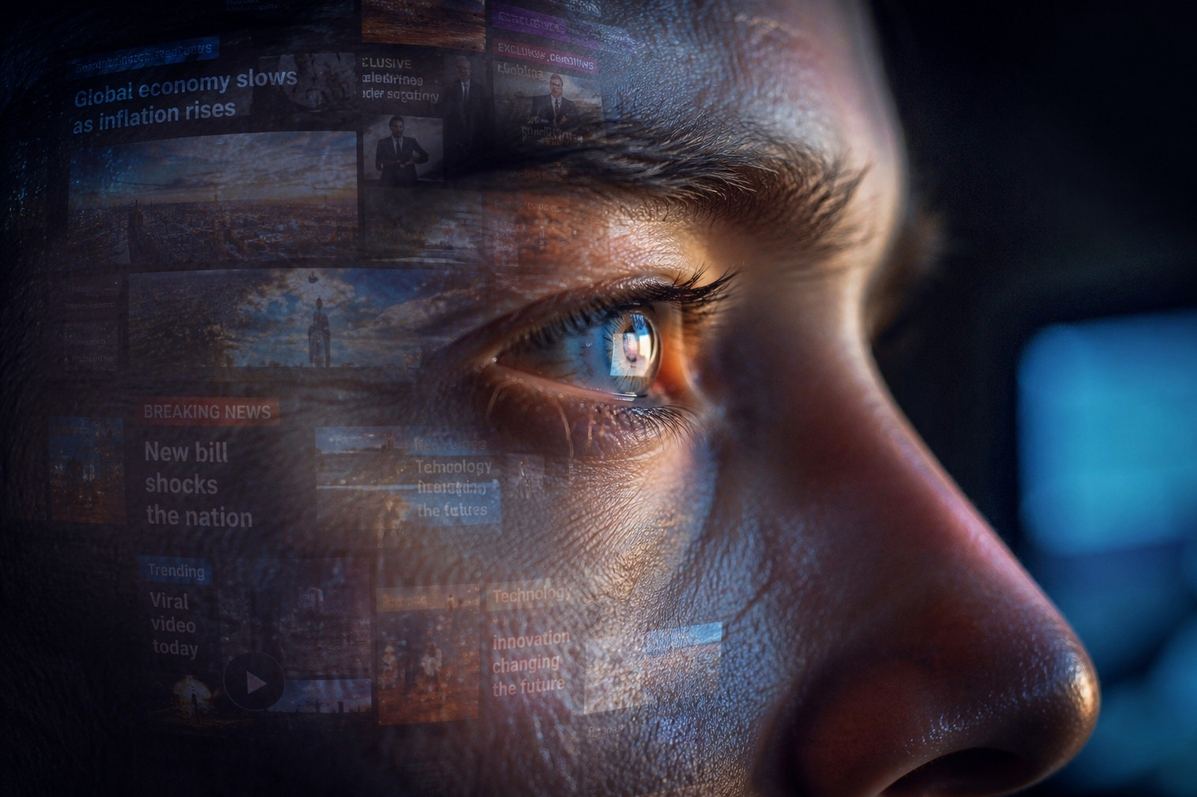
The spectacle turns life into evidence of life.
Baudrillard: Hyperreality and the Simulacrum
Jean Baudrillard took the problem deeper. Where Debord examined social life mediated by images and commodities, Baudrillard examined what happens when signs and simulations detach from any stable original.
In Simulacra and Simulation, Baudrillard describes stages in the life of the image. First, the image reflects reality. Then it distorts reality. Then it hides the absence of reality. Finally, it no longer refers to any reality at all. It becomes a simulacrum: a sign without an original, a map that no longer points back to a territory.
This condition is called hyperreality. In hyperreality, the distinction between real and represented begins to collapse. The image is no longer secondary. The simulation becomes the thing people actually respond to.
A filtered face becomes more recognisable than the human face. A travel reel becomes more desirable than the place. A brand identity becomes more emotionally coherent than the person or company behind it. A political slogan becomes easier to inhabit than the reality it claims to explain.
The danger is not that people cannot tell the difference in theory. The danger is that the representation becomes easier to desire.

Hyperreality begins when the representation becomes easier to desire than the difficult living thing.
McLuhan: The Medium as Environment
Marshall McLuhan gave another key to the spectacle: the medium itself changes perception.
When McLuhan said “the medium is the message,” he did not mean content is irrelevant. He meant the structure of a medium transforms the society using it. A medium is not a neutral pipe. It has speed, scale, sensory bias, rhythm and shape. It rewards certain behaviours and makes others less likely.
A printed book trains linear attention. A television broadcast trains passive reception. A social media feed trains scrolling, reaction and comparison. A search engine trains retrieval. A short video platform trains rapid stimulation and compression. None of these are simply containers. They are environments.
This means the spectacle is not only the content you consume. It is the form of attention the medium produces while you consume it.
Many people think they are choosing videos, posts and headlines. But beneath each item is a deeper training: how quickly to move, how long to attend, what counts as interesting, what feels boring, what kind of self is rewarded, what kind of reality feels worth noticing.
The content distracts the watchdog. The medium reshapes the house.
The content distracts the watchdog. The medium reshapes the house.
Postman: Entertainment as Public Thought
Neil Postman warned that a culture shaped by television would begin translating public life into entertainment. Politics, religion, news, education and moral debate would all be pulled toward performance, simplicity and emotional stimulation.
This warning has become sharper in the digital age. The feed rewards what arrests attention. It does not naturally reward patience, accuracy, context, restraint or wisdom. It rewards the item that can survive the scroll.
As a result, public thought becomes compressed. Complex issues become slogans. People become brands. Suffering becomes content. Outrage becomes performance. Seriousness itself must learn to entertain in order to be seen.
This does not mean all online media is shallow. The same systems can carry scholarship, beauty, friendship and genuine teaching. But the dominant pressure is toward engagement. And engagement is not the same thing as truth.
The spectacle wins whenever reality must become entertaining before it is allowed to matter.
Engagement is not the same thing as truth.
Algorithmic Curation and the Personalised Spectacle
The contemporary spectacle is personalised.
Debord wrote in a world of mass media. Everyone saw the same broadcast, the same advertisement, the same public image. Today, the spectacle adjusts itself to the individual. The algorithm sorts, ranks, hides, repeats and predicts. It learns the nervous system and then offers the next image, the next fear, the next desire, the next outrage, the next proof.
This is why algorithmic curation matters. It does not merely filter information. It filters the world that appears available. Over time, the feed can become a private weather system: one person’s reality filled with threat, another’s with aspiration, another’s with grievance, another’s with beauty, another’s with conspiracy, another’s with constant comparison.
The algorithm does not need to force belief. It only needs to repeat the world in a particular shape until that shape feels obvious.
This is where the spectacle meets Digital Archons. The archonic function is not merely censorship. It is attention management. What is repeated becomes familiar. What is familiar becomes believable. What is believable becomes reality’s costume.
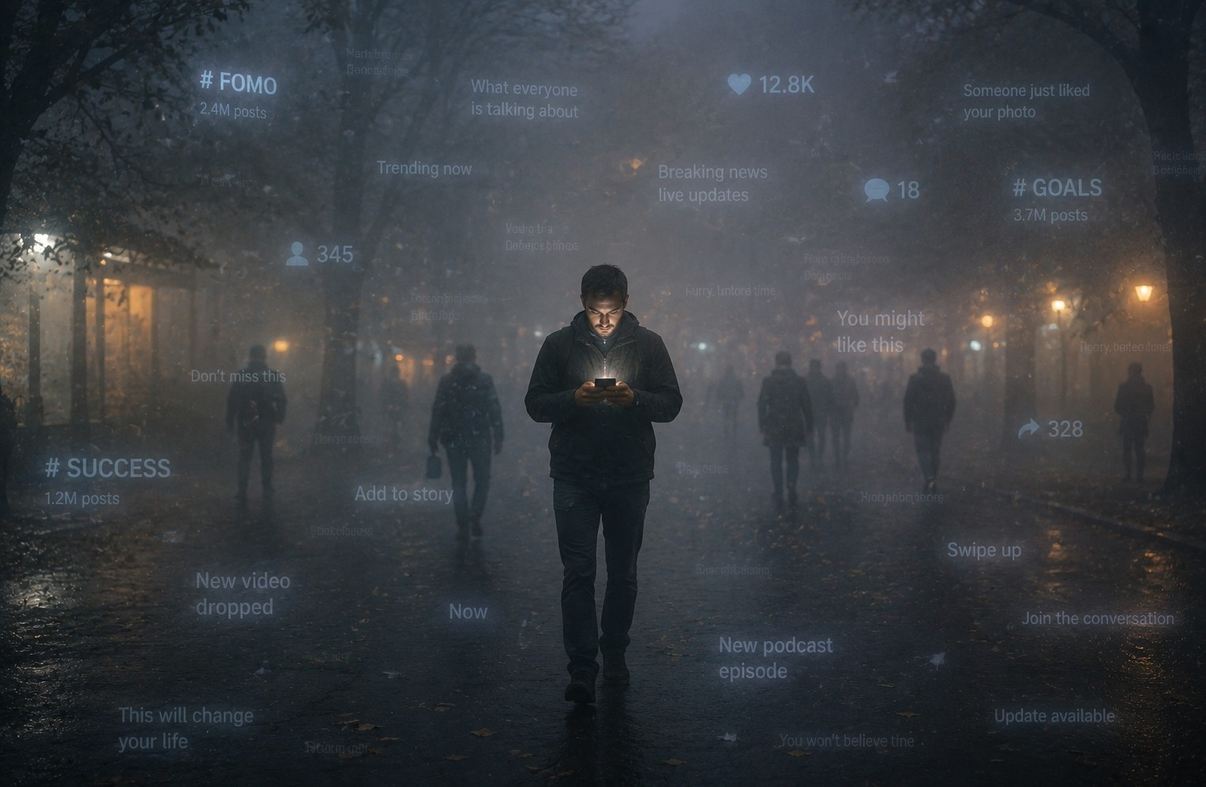
The algorithm does not need to force belief. It only needs to repeat the world in a particular shape until that shape feels obvious.
The Hyperreal Self
The spectacle does not only mediate the world. It mediates the self.
Online identity encourages selection. You choose the angle, crop the moment, edit the wording, polish the image, remove the awkwardness and present a coherent signal. This is not inherently false. All social life involves presentation. The problem begins when the presented self becomes more emotionally real than the living self.
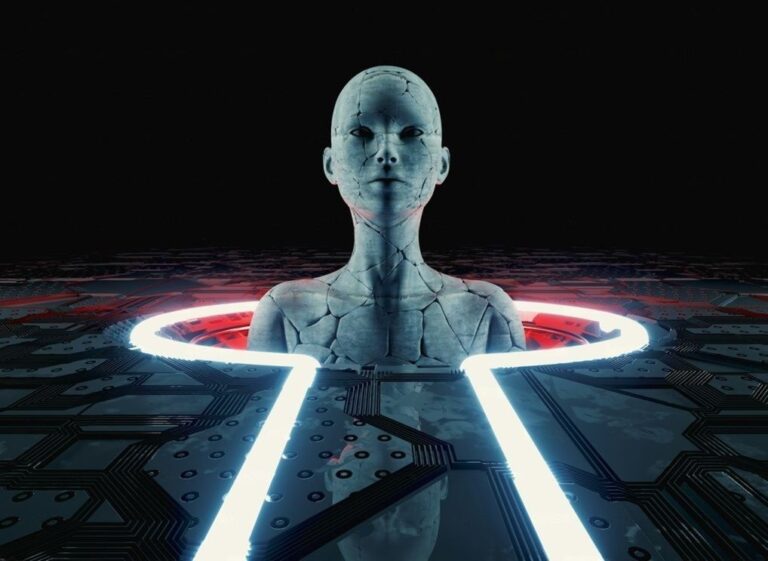
The hyperreal self is not simply a fake persona. It is a curated condensation of the person: more consistent, more legible, more marketable and often more desirable than the human being underneath. It is the self made suitable for recognition by the system.
This has spiritual consequences. A person can begin measuring their life by how representable it is. They may ask, without noticing, not “What is true?” but “How will this appear?” Not “What am I experiencing?” but “What can this become?” Not “What do I know?” but “What will be recognised?”
The spectacle converts experience into performance and then invites the performer to mistake applause for reality.
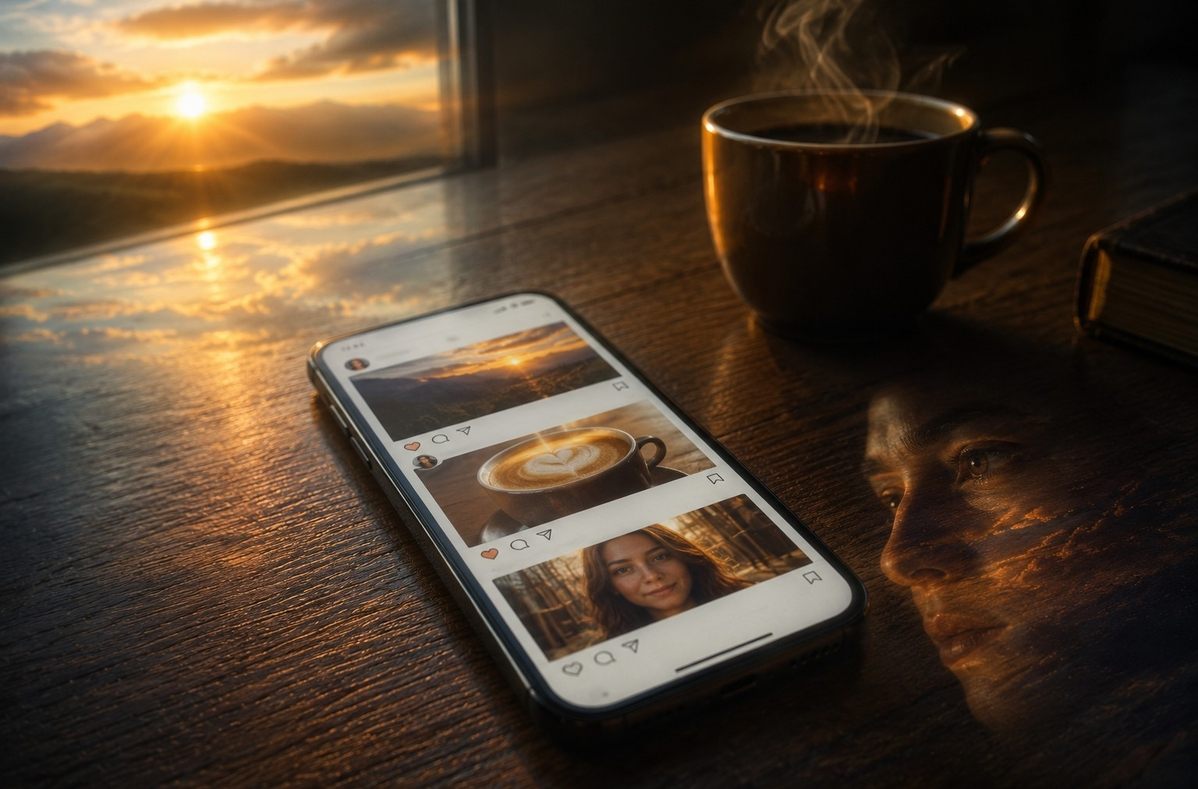
The hyperreal self is the self made suitable for recognition by the system.
How Representation Replaces Direct Experience
Direct experience is not perfectly pure. There is no human perception without body, memory, language, expectation and context. But there is a difference between ordinary human mediation and constant technological mediation.
Less screen-mediated experience has a different texture. It is slower. It has awkward edges. It cannot be paused, replayed, edited or optimised. It includes boredom, weather, smell, silence, discomfort, unpredictability and the strange density of things that are not performing for you.
The spectacle trains the opposite habit. It teaches the mind to expect life in edited form. Moments should have a point. Feelings should have a caption. Beauty should be shareable. Knowledge should be searchable. Desire should be ranked. Pain should become narrative. Ordinary life must justify itself by becoming content.
Over time, direct experience can begin to feel underdeveloped, almost unfinished, because it does not arrive pre-framed. The real meal lacks the glamour of the photograph. The real walk lacks the drama of the travel reel. The real conversation lacks the neatness of the post that summarises it.
This is how representation replaces experience: not by destroying the original, but by training the nervous system to prefer the edited copy.
Representation replaces experience by training the nervous system to prefer the edited copy.
A Gnostic and Neo-Gnostic Reading
From a Gnostic perspective, the spectacle is not proof that the material world is false. That would be too crude. The problem is not the world. The problem is the layer of appearances that replaces direct relation with managed representation.
The spectacle functions as a counterfeit world: not because mountains, meals, bodies, grief and love are unreal, but because the mediated image of them becomes more authoritative than the encounter itself. The copy becomes the teacher. The feed becomes the atmosphere. The metric becomes the judge.
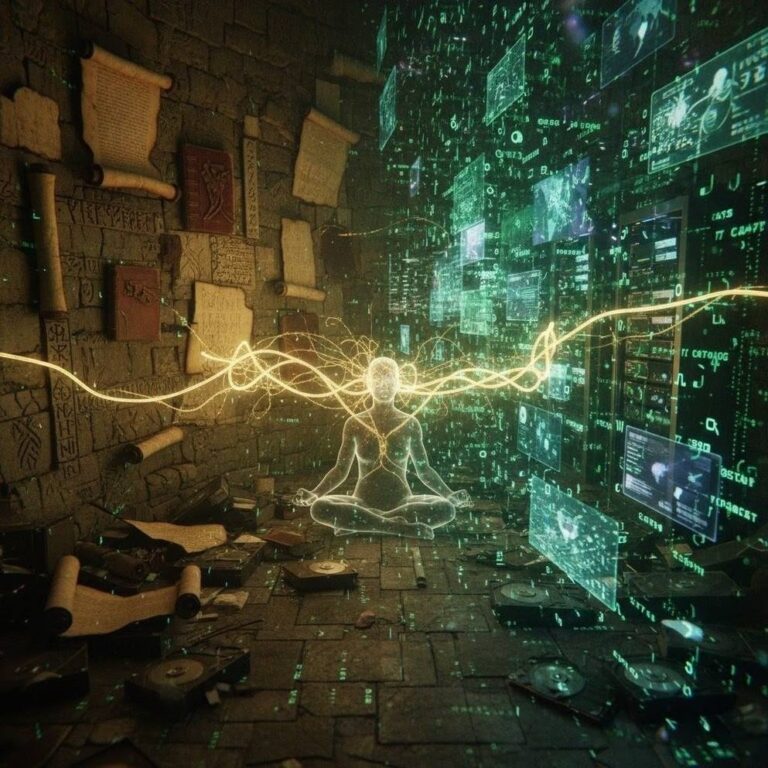
In Neo-Gnostic language, this is an archonic pattern of attention. The soul is not imprisoned by matter alone, but by false mediation: by systems that train consciousness to identify with images, numbers, profiles and performances.
Gnosis begins when the image stops exhausting the real.
Recognition is not a rejection of all media. It is the moment the layer is seen as layer. The person remembers that the post is not the moment, the map is not the land, the profile is not the person, the metric is not the meaning and the representation is not the world.
Gnosis begins when the image stops exhausting the real.
Useful Mediation and Captive Mediation
Mediation is not automatically harmful. A map can guide. A photograph can remember. A message can connect. The danger lies in forgetting that each representation is partial.
| Form | When It Helps | When It Captures | Question to Ask |
|---|---|---|---|
| Map | Guides movement through unfamiliar territory. | Replaces attention to the living landscape. | What does this map leave out? |
| Photograph | Preserves memory and beauty. | Becomes more important than seeing. | Am I present before I record? |
| News report | Brings distant events into awareness. | Frames reality through fear, outrage or spectacle. | What is the frame asking me to feel? |
| Social media profile | Allows connection and expression. | Turns identity into performance. | Who am I when I am not being seen? |
| Algorithmic feed | Finds relevant information quickly. | Builds a personalised reality around attention. | What is being repeated into familiarity? |
| Direct encounter | Returns the body to the present world. | Can be avoided when it feels too raw or slow. | What is here before I frame it? |
Practice: Returning to Direct Experience
The spectacle cannot be fully escaped, and total escape is not the point. The point is interruption. A moment of seeing the layer as layer is already a crack in its authority.
- Notice the layer. Ask: am I encountering this directly, or through a screen, image, metric, feed or story?
- Name the medium. Is this a photograph, headline, profile, comment thread, advert, recommendation engine or memory?
- Ask what it rewards. Does this medium reward speed, outrage, beauty, conformity, novelty, comparison or depth?
- Ask what it hides. What smell, silence, context, labour, body, history or ambiguity has disappeared?
- Return to one sense. Feel the cup in your hand. Hear the room. Notice the light. Let perception become local again.
- Do not immediately convert the moment into content. Let one experience remain unposted, unmeasured and unperformed.
- Watch what resists. If the moment feels incomplete without representation, that is the spectacle revealing its grip.
The return to direct experience does not require dramatic withdrawal. It begins with one unconverted moment.

The return to direct experience begins with one unconverted moment.
The Layer Is Not the World
The spectacle is powerful because it does not feel like removal. It feels like access, enhancement and connection.
And sometimes it is those things. A representation can teach, comfort, guide and connect. A screen can bring knowledge across distance. A photograph can preserve what would otherwise vanish. A map can save a traveller.
But the layer becomes dangerous when it forgets it is a layer, and when the person forgets too.
The post is not the moment. The feed is not the world. The metric is not the meaning. The image is not the living thing. The map is not the territory. The representation is not reality, even when it helps reality appear.
Direct experience may be slower, rougher and less flattering than its representations. That is part of its truth. It has texture. It has silence. It has awkwardness. It has weather. It has the weight of being encountered without first being edited.
The layer is not the enemy.
The forgetting is.
And beneath the spectacle, the world has not disappeared.
It is still waiting to be met without being turned immediately into proof that it was lived.
Related Glossary Terms
These terms help frame the article’s main ideas across the wider ZenithEye archive.
- Digital Archons
- The Uninstallation
- The Filter in Your Mind
- The Language Cage
- The Language Parasite
- The Unsaid
- Recognition
- Gnosis
- When Symbols Become Cages
- The Discipline of Not Interpreting Everything
- Attention
- Phenomenology
- Symbol & Encryption
- Spectacle
- Hyperreality
- Simulacra
- Mediated Reality
- Representation
- Direct Experience
- Attention Economy
- Algorithmic Curation
- Filter Bubble
- Screen Culture
- Curated Identity
- Hyperreal Self
- Media Theory
- Map and Territory
Read Next
Continue through the technology, language and perception route: from algorithmic attention into mediated reality, linguistic filters and direct recognition.
Further Reading
Articles from ZenithEye that continue the themes of mediation, attention, symbolic capture and direct seeing:
- Digital Archons – How algorithmic systems shape attention, desire and perception.
- The Uninstallation – How technology rewrites the habits of attention and thought.
- The Filter in Your Mind – How linguistic relativity shapes what reality the mind becomes fluent at seeing.
- The Language Cage – How inherited words can become limits in self-description and perception.
- The Language Parasite – How the inner voice can become mistaken for the self.
- The Unsaid – How much meaning travels outside literal speech.
- The Mental Plane Explained – Where thought, image and perception intersect.
- The Spiritual Practice of Attention – Attention as the first discipline of inner seeing.
- What Is Recognition? – Direct seeing beneath constructed filters.
- Pattern Recognition Without Paranoia – Discernment without turning every pattern into threat.
Frequently Asked Questions
What is the spectacle?
The spectacle is Guy Debord’s term for a society in which direct lived experience is increasingly replaced by images, representations and appearances. It is not merely media overload. It is a social relation in which people relate to themselves and others through mediated images.
What is hyperreality?
Hyperreality is Jean Baudrillard’s term for a condition in which the difference between reality and simulation becomes unstable. The representation may become more familiar, desirable or authoritative than the living thing it claims to represent.
What did McLuhan mean by the medium is the message?
McLuhan meant that the structure of a medium shapes perception and society more deeply than any single piece of content carried by that medium. A medium is not a neutral pipe. It is an environment that trains attention and behaviour.
How do algorithms intensify the spectacle?
Algorithms personalise the spectacle by sorting, ranking and repeating the content most likely to capture attention. Over time, the feed can become a personalised reality that confirms existing fears, desires, beliefs and habits of perception.
Is all mediation bad?
No. Mediation can guide, teach, preserve and connect. Maps, photographs, messages and screens can be useful. The problem begins when the representation is mistaken for the whole of reality, or when direct experience becomes less trusted than the mediated copy.
Can you escape the spectacle?
Not completely. The spectacle is woven into modern life. But it can be recognised, interrupted and loosened. Even brief returns to direct experience can remind the mind that the layer is not the world.
What is a Gnostic reading of the spectacle?
A Gnostic reading sees the spectacle as a counterfeit field of appearances: not proof that the material world is false, but evidence that mediated images can replace direct relation with reality. Gnosis begins when the image stops exhausting the real.
References and Sources
The following sources shaped the article’s framework on spectacle, hyperreality, media theory, algorithmic curation and direct experience.
Spectacle, Hyperreality and Media Theory
- Debord, Guy. The Society of the Spectacle. 1967.
- Debord, Guy. Comments on the Society of the Spectacle. 1988.
- Baudrillard, Jean. Simulacra and Simulation. 1981.
- McLuhan, Marshall. Understanding Media: The Extensions of Man. 1964.
- McLuhan, Marshall and Fiore, Quentin. The Medium Is the Massage. 1967.
- Postman, Neil. Amusing Ourselves to Death: Public Discourse in the Age of Show Business. 1985.
- Postman, Neil. Technopoly: The Surrender of Culture to Technology. 1992.
Algorithmic Curation and Digital Mediation
- Research on algorithmic curation, filter bubbles and echo chambers in social media environments.
- Research on platform design, attention economy and engagement-based ranking.
- Studies of curated self-presentation, influencer culture and digital identity performance.
- Research on information diversity, recommendation systems and personalised media environments.
Related ZenithEye Themes
- Algorithmic attention and Digital Archons.
- Technology as a rewriting force in thought and perception.
- Language, symbol and the architecture of perception.
- Gnosis as recognition beneath mediated appearance.
- Direct experience as contemplative practice.
Safety Notice: This article explores mediated experience, social media, algorithmic curation and the psychological effects of prolonged exposure to representations. It is not clinical advice. Readers experiencing distress related to social media use, digital compulsion, dissociation, anxiety, depression or loss of contact with ordinary life should seek support from a qualified mental health professional or appropriate support service.
Study Note: This article does not claim that technology, images or media are inherently bad. Representation can teach, connect and preserve. The concern is forgetfulness: the moment the layer is mistaken for the world, the metric for meaning, the profile for the person, or the image for reality itself.