
Nag Hammadi: The Burial and Resurrection of Gnostic Texts
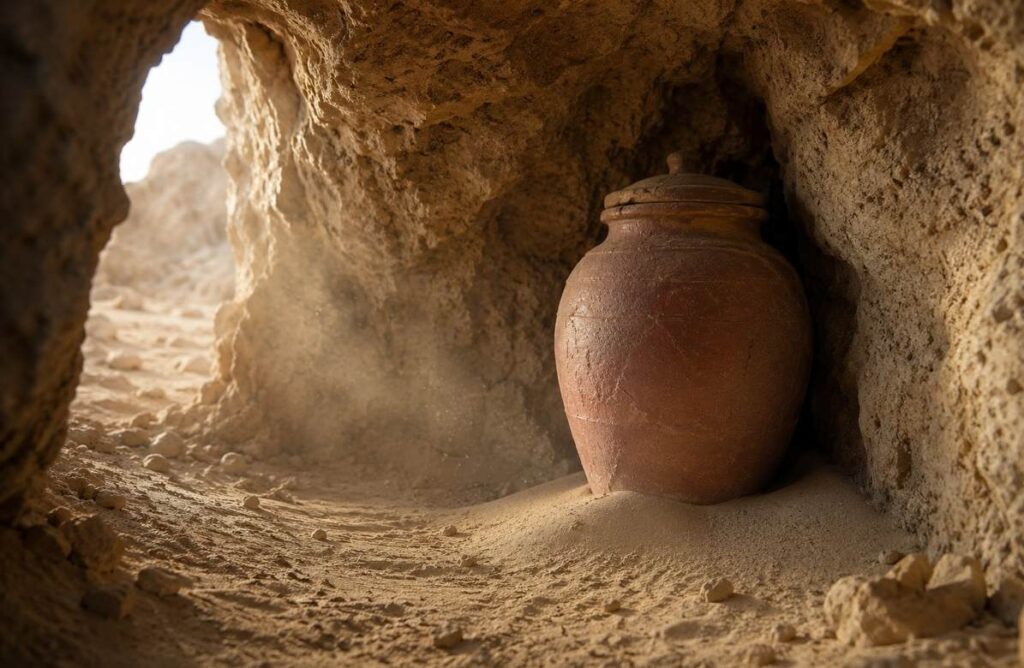
December 1945. The Arab League was forming. The Second World War had ended months before. In the upper Egyptian desert, near the town of Nag Hammadi, three brothers were digging for soft soil to use as fertiliser. Their tools struck something hard. A sealed jar, approximately sixty centimetres tall, containing thirteen leather-bound codices–fifty-two texts, most previously unknown, most previously thought destroyed.
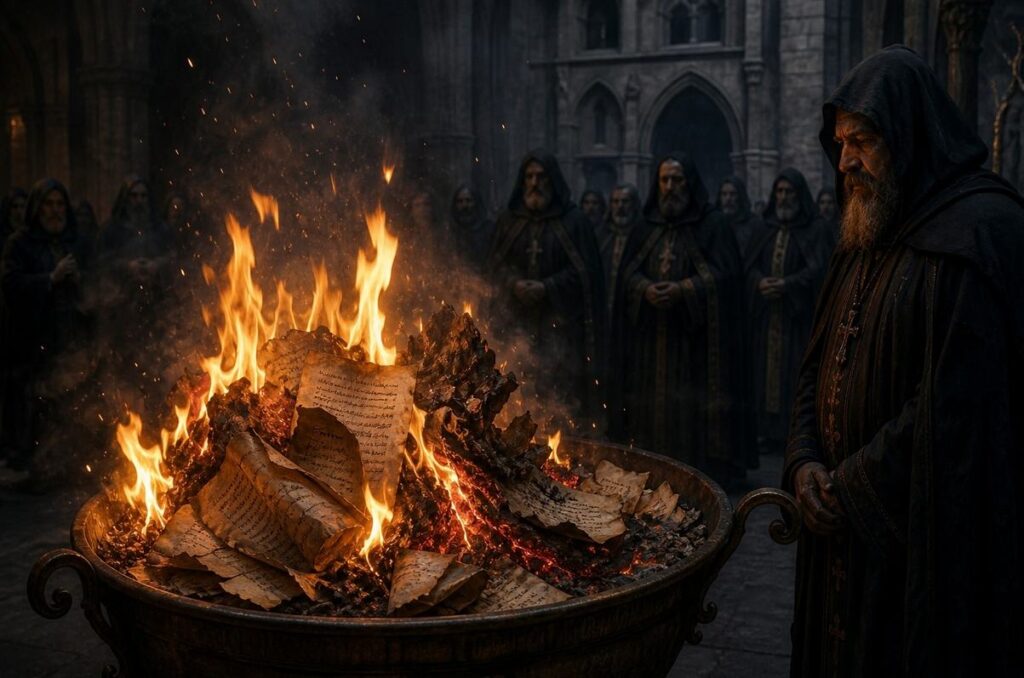
The discovery should have been impossible. The texts were Coptic translations of Greek originals, composed during the second and third centuries, copied into codices around the middle of the fourth century, and buried near the beginning of the fifth. Hidden from the destruction that had already begun. The Christian orthodoxy, consolidating its power, had declared these texts heretical. The copies were burned. The readers were persecuted. The thread was cut–or so the orthodoxy believed.
The jar said otherwise.

Table of Contents
- The Discovery: A Jar in the Desert
- The Texts That Survived
- The Burial Was Strategic
- The Resurrection Was Delayed
- The Content Was Dangerous
- The Recovery: Scholars Against Time
- The Thread Continues
- Frequently Asked Questions
- Further Reading
- References and Sources
The Discovery: A Jar in the Desert
The discoverer was Muhammad ‘Ali al-Sammán, an Arab peasant of the al-Samman clan. He and his brothers had saddled their camels and gone to the Jabal al-Tarif–a mountain honeycombed with more than 150 caves, some used as grave sites as early as the sixth dynasty, over four thousand years ago–to dig for sabakh, the soft soil used to fertilise crops. They tethered their camels to a boulder and dug around its base.
Muhammad ‘Ali hesitated to break the jar. It was red earthenware, sealed with a blackish substance that may have been bitumen, with four small handles near the opening. He feared a jinn might live inside. But realising it might contain gold, he raised his mattock and smashed it. Out flew particles of papyrus. Inside were thirteen papyrus books bound in leather. The jar had been closed by fitting a bowl into its mouth–a bowl of Coptic red slip ware from the fourth or fifth century, decorated with four fields of stripes, a detail that would later help date the burial.
The books were divided among the seven people present. Seven lots were drawn up. Covers were removed and each consisted of a complete codex plus part of another. The other drivers, ignorant of the value and afraid of sorcery, disclaimed their share. Muhammad ‘Ali piled them all back together and carried them home to al-Qasr, where he dumped them on the straw piled next to the oven. His mother, Umm-Ahmad, admits that she burned much of the papyrus in the oven along with the straw she used to kindle the fire. What survived the oven survived by accident.
What survived the oven survived by accident. What survived the centuries survived by intention. The thread, when threatened, goes underground.
The Texts That Survived
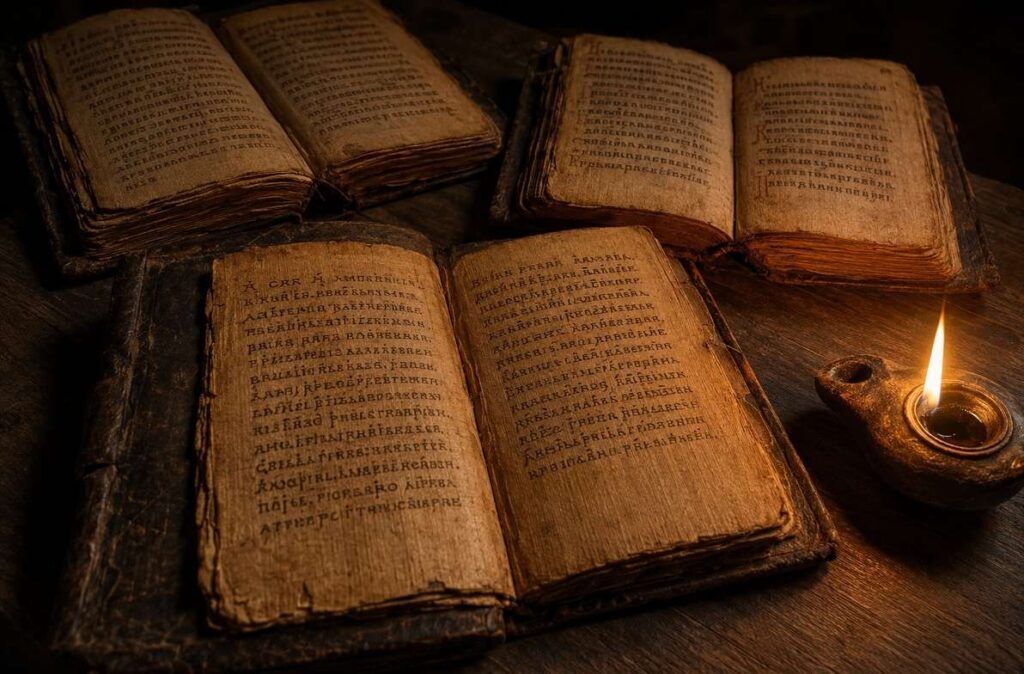
The Nag Hammadi library was not a random collection. It was a deliberate selection–the texts that someone, or some community, considered worth preserving against extinction. The fifty-two tractates represent forty-five separate titles when duplicates are accounted for. They are among the oldest surviving books in codex form–the modern book format of folded pages with flat bindings, as opposed to the scroll.
The texts spoke of direct knowing, of interior light, of authorities that needed no institutional validation:
- The Gospel of Thomas: 114 sayings attributed to Jesus, stripped of narrative, miracle, and resurrection. “The Kingdom is inside you, and outside you. When you know yourselves, you will be known.” [1] The text is not a biography but a collection of logia–a thread of direct instruction bypassing the apparatus of dogma entirely.
- The Secret Book of John (Apocryphon of John): A revelation dialogue and the myth of the demiurge who created the material world in ignorance. It is the attempt to articulate what happens when the creator of the world is recognised as incompetent–a theological filing error of cosmic proportions.
- The Thunder, Perfect Mind: A divine feminine voice speaking in paradox. “I am the first and the last. I am the honoured one and the scorned one. I am the whore and the holy one.” [2] The thread, gendered female, speaking directly across centuries in a voice that predates and exceeds Christian categorisation.
- The Gospel of Philip: A collection of mystical reflections on sacraments, marriage, and the bridal chamber (nymphon), suggesting that the sacred is found not in institutional ordinance but in the union of opposites.
- On the Origin of the World: A cosmological treatise that rewrites Genesis from the perspective of the suppressed–the story of creation told by those who recognise the demiurge’s incompetence.
The Burial Was Strategic
The texts were not accidentally preserved. They were deliberately hidden. The burial was an act of hope against hope–the belief that the thread, though suppressed, might survive. This is the pattern. The thread, when threatened, goes underground. It changes language. It wears masks. It waits.
The risk was real. The possession of heretical texts was dangerous in the fourth and fifth centuries. The burial was an act of faith in the future. Faith that the consensus would not last. Faith that recognition would return. The person who buried the jar–whether a monk from the nearby Pachomian monastery, a Gnostic community, or a sympathetic collector–chose the desert as accomplice. The dry climate of Upper Egypt, the sealed jar, the remote location: these were not random but calculated. The thread was not merely hidden; it was archived.
The burial date is significant. Around 400 CE, the Theodosian decrees were tightening the orthodox monopoly. The destruction of the Serapeum in Alexandria (391 CE) had demonstrated that pagan and heterodox texts were no longer safe in libraries. The burial was a response to this climate–a decision to remove the texts from the accessible world and place them in the custody of time.
The Resurrection Was Delayed
The discovery did not immediately transform understanding. Some texts were burned–even after 1,600 years of preservation–and others were scattered across collectors. The full corpus was not available in English until 1977. The resurrection was not the discovery. It was the recognition.
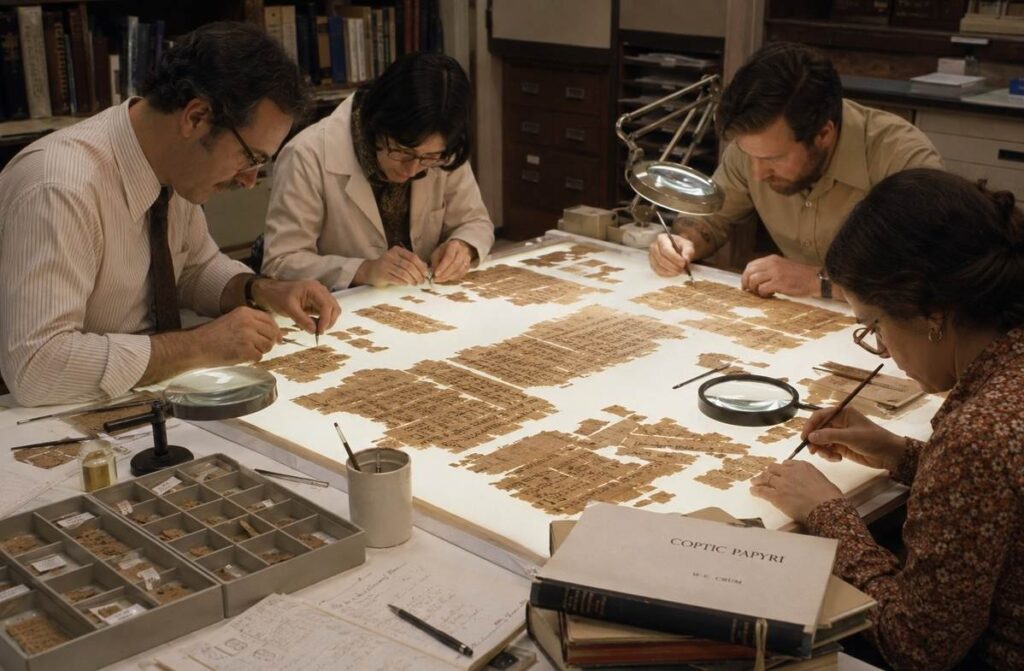
The path from jar to library was labyrinthine. Muhammad ‘Ali sold the codices piecemeal through local antiquities dealers. Some pages were lost to the oven; others to the black market. For decades, scholars tracked fragments across Cairo, Europe, and America. The Coptic Museum in Old Cairo held the bulk, but access was restricted by political turmoil, scholarly rivalries, and the sheer difficulty of reconstructing papyrus that had been separated for over a millennium.
In 1966, James M. Robinson of the Institute for Antiquity and Christianity at Claremont Graduate School assembled the Coptic Gnostic Library Project–a team of more than thirty scholars working to edit, translate, and publish the complete corpus. In 1970, the Egyptian Ministry of Culture and UNESCO established the International Committee for the Nag Hammadi Codices, with Robinson as secretary. Between 1972 and 1977, E.J. Brill of Leiden published the complete Facsimile Edition. And in 1977, Harper and Row released The Nag Hammadi Library in English–the first time the entire collection was available in a modern language.
The texts, once available, found their readers. Not the scholars alone. The seekers. The ones who recognised, in these ancient words, their own experience. The thread, buried for 1,600 years, extended again.
The Content Was Dangerous
Why the suppression? The Nag Hammadi texts were subversive. They denied the necessity of sacramental mediation and offered direct access to the divine, without priest, without ritual, without doctrine.
The Gospel of Thomas, for instance, contains no crucifixion, no resurrection, and no institutional church. Jesus appears not as sacrificial victim but as wisdom teacher. The authority is interior: “When you know yourselves, you will be known, and you will understand that you are children of the living Father.” [1] This was intolerable to the consolidating orthodoxy. The church required monopoly; the monopoly required control of the sacred. The texts had to be destroyed. Not because they were false. Because they were competition.
The Secret Book of John went further. It named the creator of the material world not as the true God but as Yaldabaoth–a blind, arrogant demiurge who believed himself supreme because he could not see beyond his own creation. This was not merely heresy; it was insurrection. It suggested that the God of Genesis was a usurper, and that the true God remained hidden, accessible only through gnosis–direct knowing–rather than through the liturgical machinery of the church.
The Thunder, Perfect Mind added gender to the subversion. In an era when the orthodox church was systematically excluding women from authority, this text placed a divine feminine voice at the centre of revelation. “I am the knowledge of my inquiry, and the finding of those who seek after me, and the command of those who ask of me.” [2] The thread, here, was not merely theological but structural–a challenge to the patriarchal architecture of institutional power.
The Recovery: Scholars Against Time
The recovery of the Nag Hammadi library is itself a thread–a story of persistence against obstruction. For three decades after 1945, tantalising bits and pieces whetted scholarly appetite while the full corpus remained inaccessible. The situation in Egypt, scholarly rivalries, and the sheer physical difficulty of reconstructing damaged papyrus all delayed publication.
The turning point came with the Coptic Gnostic Library Project, established in 1966 under James M. Robinson at Claremont. Working with UNESCO and the Egyptian government, the project published the Facsimile Edition between 1972 and 1977, followed by the complete English translation in 1977. The one-volume edition, though provisional, was momentous: for the first time, Gnostic works of varying orientation could be read side by side–Valentinian Christian texts alongside Sethian Gnostic writings and Hermetic initiation discourses.
The scholarly work continues. The complete critical edition, The Coptic Gnostic Library, published by E.J. Brill, includes the entire Nag Hammadi corpus plus three related manuscripts housed in Berlin, London, and Oxford. Each volume contains edited Coptic text, English translation, introduction, notes, and indices–the full apparatus of academic rigour applied to texts that were once considered too dangerous to exist.
The Thread Continues
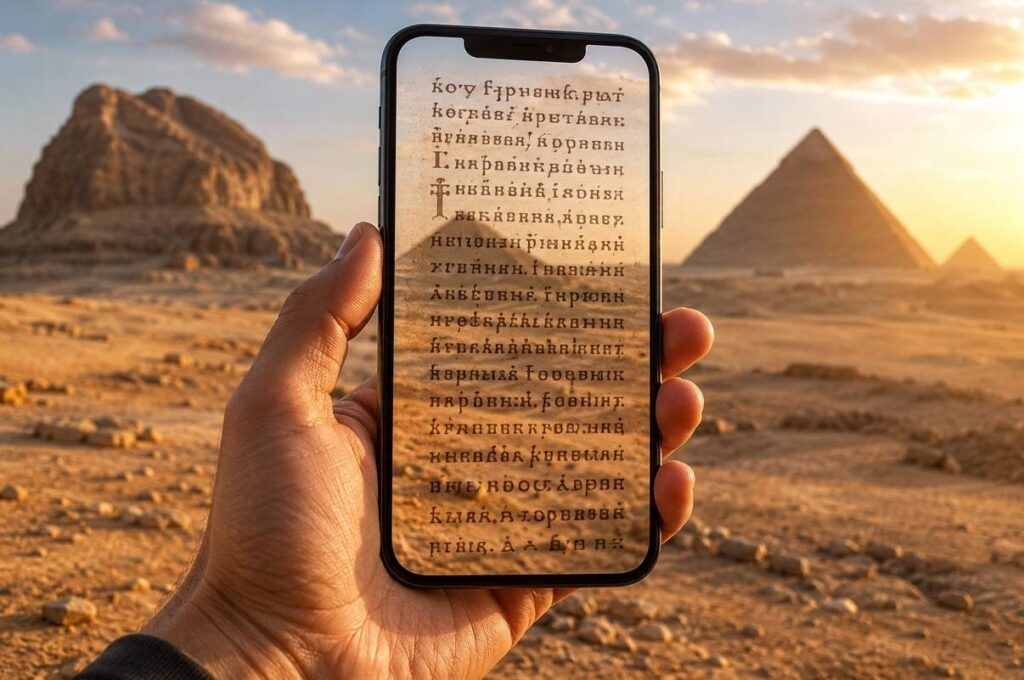
The texts that were buried for 1,600 years–you can now read them on your telephone. The irony is not lost.
But availability is not recognition. The thread extends not through access but through attention. The reader who approaches with the necessary seriousness, who recognises in these ancient words the description of their own interior–these are the ones for whom the jar was buried.
The thread continues. Not because libraries survive. Because someone recognises. Someone copies. Someone carries. Someone reads. The someone is you.
Frequently Asked Questions
Who discovered the Nag Hammadi library and when?
The Nag Hammadi library was discovered in December 1945 by Muhammad ‘Ali al-Sammán, an Arab peasant of the al-Samman clan, and his brothers. They were digging for sabakh (soft fertiliser soil) at the base of the Jabal al-Tarif cliff, about 11 kilometres north-east of Nag Hammadi in Upper Egypt. Their mattock struck a large red earthenware jar sealed with bitumen, containing thirteen leather-bound codices.
What is inside the Nag Hammadi library?
The library contains fifty-two separate tractates (forty-five distinct titles when duplicates are removed), composed in Greek during the second and third centuries and translated into Coptic in the fourth. Key texts include the Gospel of Thomas, the Secret Book of John (Apocryphon of John), The Thunder: Perfect Mind, the Gospel of Philip, and On the Origin of the World. Most were previously unknown and represent alternative Christianities suppressed by the emerging orthodoxy.
Why were the Nag Hammadi texts buried?
The texts were deliberately hidden around the beginning of the fifth century CE, likely in response to the Theodosian decrees and the increasing orthodox monopoly on Christian texts. The possession of heretical writings was dangerous. The burial was an act of strategic preservation–faith that the thread, though suppressed, might survive until recognition returned.
When were the Nag Hammadi texts first translated into English?
The complete Nag Hammadi library was first published in English in 1977 as The Nag Hammadi Library in English, edited by James M. Robinson and translated by the Coptic Gnostic Library Project team at Claremont Graduate School. This followed the Facsimile Edition published by E.J. Brill between 1972 and 1977 under the auspices of UNESCO and the Egyptian Ministry of Culture.
Why did the orthodox church suppress these texts?
The texts were subversive because they offered direct access to the divine without priestly mediation, institutional ritual, or doctrinal conformity. The Gospel of Thomas contains no crucifixion or resurrection narrative. The Secret Book of John names the creator of the material world as an incompetent demiurge. The Thunder: Perfect Mind centres a divine feminine voice. These were not merely theological disagreements but existential threats to the church’s monopoly on spiritual authority.
How many texts were lost before scholars could study them?
Muhammad ‘Ali’s mother, Umm-Ahmad, burned a significant portion of the papyrus in the family oven along with straw kindling shortly after the discovery. Additional pages were lost to the black market, poor handling, and the piecemeal sale of the codices. It is impossible to know exactly how much was destroyed, but the survival of the majority is itself remarkable.
What is the significance of the Nag Hammadi discovery today?
The Nag Hammadi library revolutionised our understanding of early Christianity by revealing the diversity of beliefs that existed before orthodoxy consolidated its control. It demonstrates that the thread of direct knowing–gnosis–persisted underground for centuries, buried in jars, waiting for recognition. The texts remain relevant to anyone seeking spiritual authority outside institutional structures.
Further Reading
Extend your understanding through these verified resources from the ZenithEye archive:
- The Living Thread: How Forbidden Knowing Survives the Fire — the pattern of burial and recovery across centuries
- The Gospel of Thomas: A Commentary — the 114 sayings that bypass narrative and dogma
- The Library of Alexandria: What Was Lost, What Survived — the earlier catastrophe of knowledge destruction
- The Cathars: A Clean Church Without Property — medieval suppression of direct knowing
- The House of Wisdom: Baghdad’s Translation Movement — how Arabic scholars preserved Greek knowledge
- What is Gnosticism? Defining the Undefinable — the broader context of the texts and their theology
- Nag Hammadi Library: Complete Index and Reader’s Guide — the full catalogue of all 52 tractates
- The Thunder, Perfect Mind: The Divine Feminine Speaks — the voice that transcends category and century
References and Sources
The following works inform the historical and archaeological framework of this article.
Primary Sources and Editions
- Robinson, James M. (general editor). The Nag Hammadi Library in English. 3rd completely revised edition. HarperSanFrancisco, 1988. First published 1977. The definitive one-volume English translation of the complete Nag Hammadi corpus.
- Robinson, James M. (editor). The Facsimile Edition of the Nag Hammadi Codices. 12 vols. E.J. Brill, Leiden, 1972-1984. Published under the auspices of UNESCO and the Department of Antiquities of the Arab Republic of Egypt.
- The Coptic Gnostic Library. Published by E.J. Brill under the Nag Hammadi Studies series. Includes the entire Nag Hammadi library plus the Berlin, London, and Oxford codices, with edited Coptic text, English translation, introductions, notes, and indices.
Archaeological and Historical Studies
- Pagels, Elaine. The Gnostic Gospels. Random House, 1979. Landmark study of the Nag Hammadi texts and their implications for early Christian diversity.
- Pearse, Roger. “The Nag Hammadi Discovery of Manuscripts.” Tertullian.org. Detailed account of the discovery circumstances based on Robinson’s interviews with Muhammad ‘Ali al-Sammán.
- Robinson, James M. “The Discovery of the Nag Hammadi Codices.” Biblical Archaeologist 42, no. 4 (Fall 1979): 206-224.
- Schenke, Hans-Martin. “The Phenomenon and Significance of Gnostic Sethianism.” In The Rediscovery of Gnosticism, edited by Bentley Layton. E.J. Brill, 1981.
Individual Tractate Studies
- Layton, Bentley. The Gnostic Scriptures. Doubleday, 1987. Annotated translations of the Gospel of Thomas, Gospel of Philip, and other Nag Hammadi texts with extensive commentary.
- King, Karen L. The Secret Revelation of John. Harvard University Press, 2006. Critical edition and study of the Apocryphon of John.
- Arthur, Rosemarie. The Thunder: Perfect Mind. Nag Hammadi and Manichaean Studies. E.J. Brill, 1984. Critical edition of the Coptic text with translation and commentary.
Safety Notice: This article discusses historical religious persecution and the suppression of texts. The descriptions of violence against heretics may be distressing to some readers. The information here is for historical education and spiritual discernment, not as a call to sectarian division or anti-Christian sentiment. The thread extends through recognition, not through enmity.