The Library of Alexandria – What Was Lost, What Survived & Why It Matters
You have heard the story. The greatest library of the ancient world. Four hundred thousand scrolls. The collected wisdom of centuries. Reduced to ash by Caesar’s soldiers, or Christian mobs, or the Arab conquest–depending on which account you read. The story is useful. It is also mostly wrong. The truth is more instructive.
The Library of Alexandria was not a single building. It was an institution. The Ptolemaic dynasty, seeking legitimacy for their Greek rule over Egypt, established a centre of learning that drew scholars from across the Mediterranean. The collection grew through acquisition, copying, and the somewhat aggressive customs policy that seized books from arriving ships for duplication. The library was a statement of power as much as a repository of knowledge.
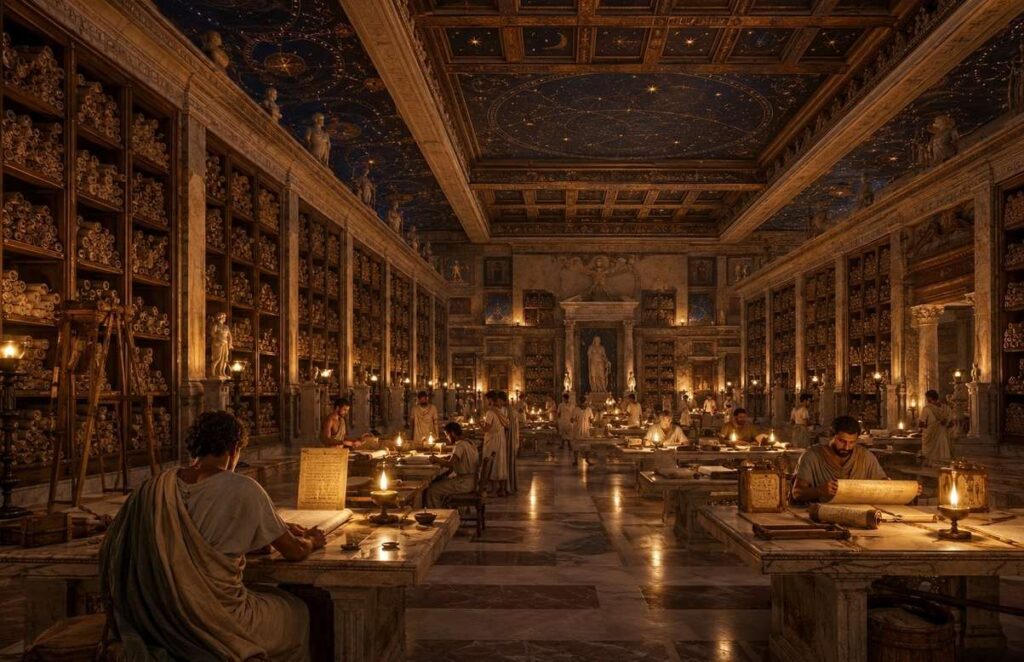
Table of Contents
- The Architecture of Acquisition
- The Fires That Weren’t the End
- What Was Actually Lost
- What Survived and How
- The Thread Beyond the Walls
- The Lesson
- Frequently Asked Questions
- Further Reading
- References and Sources
The Architecture of Acquisition
To understand what was lost, one must first understand what was built. The Ptolemies did not merely collect books; they constructed an ecosystem of knowledge. The Mouseion–the Temple of the Muses–was a research institute with dining halls, lecture theatres, botanical gardens, and an observatory. Scholars lived on site, supported by state stipends. The library was the archive of this living intellectual community.
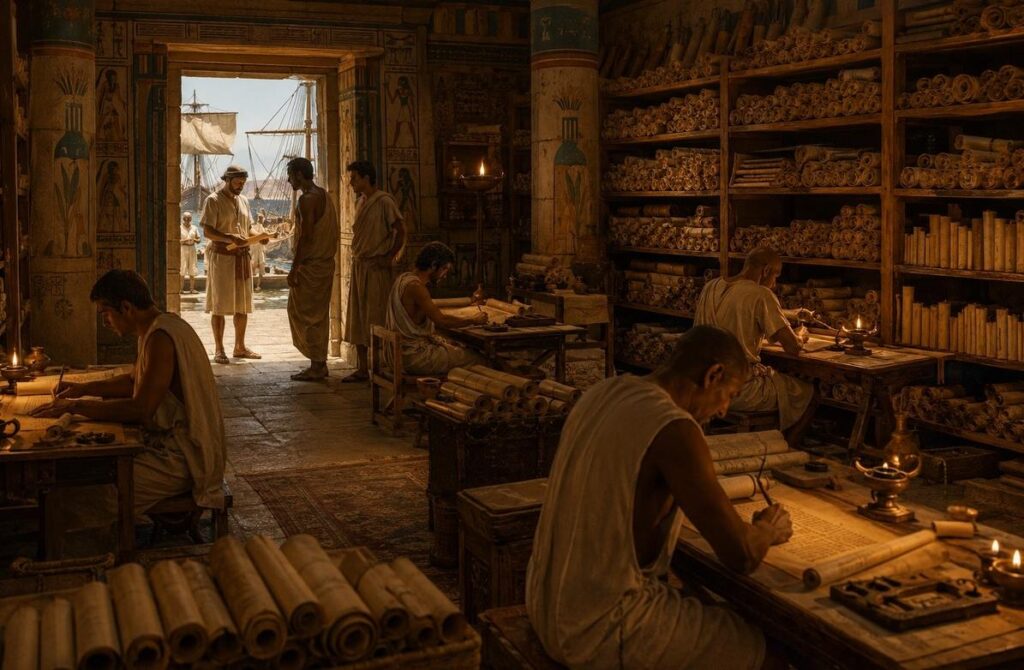
The acquisition system was as ruthless as it was brilliant. According to Galen and other ancient sources, customs officials in Alexandria’s harbour searched arriving ships for books. If a volume was found, it was confiscated, copied by the library’s army of scribes, and the copy returned to the owner while the original entered the collection. The Ptolemies also purchased aggressively at book markets across the Mediterranean and sponsored agents to acquire rare texts.
The result was the Pinakes–the catalogue compiled by Callimachus in the third century BCE. It was not merely a list but a bibliographic system, organising works by genre and author. The full catalogue is lost, but fragments suggest it ran to multiple volumes. The very existence of such a catalogue implies a collection of staggering scale. Ancient sources report anywhere from 40,000 to 400,000 scrolls at the library’s height. Even the lower figure represents more individual works than most modern university libraries hold in their rare book collections.
The Fires That Weren’t the End
The popular narrative of a single catastrophic fire is seductive but false. The library’s decline was death by a thousand cuts–political, economic, and cultural–stretching across centuries. The fires were real. They were also symptoms of decay, not its sole cause.
48 BCE: Caesar’s Civil War
In 48 BCE, Julius Caesar pursued Pompey into Egypt and found himself besieged in Alexandria. According to Plutarch, Caesar ordered his troops to set fire to Egyptian ships in the harbour. The flames spread to the dockside quarter and may have reached the library’s main collection. Ancient sources disagree on the extent of the damage. Some suggest a devastating loss; others imply the library survived largely intact.
What is certain is that the institution continued. Mark Antony later gifted Cleopatra some 200,000 scrolls for the library–a restoration effort that confirms the collection was still functioning and still valued. The fire of 48 BCE wounded the library. It did not kill it.
391 CE: The Serapeum Falls
By the late fourth century, the main library had declined through neglect and shifting imperial priorities. What remained of the collection had been moved to the Serapeum–the daughter library housed in the Temple of Serapis. This was not a minor annex; it was a substantial institution in its own right, built by Ptolemy III and expanded over centuries.
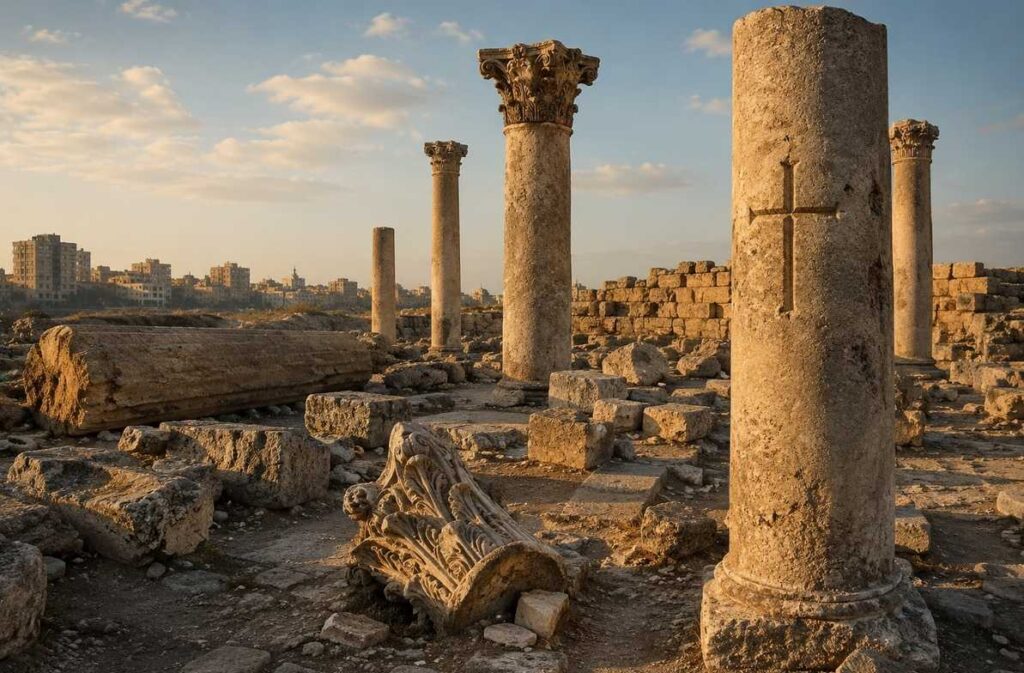
In 391 CE, Patriarch Theophilus of Alexandria–acting under edicts from Emperor Theodosius I that closed pagan temples–led a Christian mob against the Serapeum. The temple was demolished, its cult statue of Serapis dismembered, and the complex converted to Christian use. Church historians Socrates Scholasticus, Sozomen, and Rufinus of Aquileia document the destruction. Whether the remaining books perished in the violence or were dispersed is unclear. What is clear is that the last major physical repository of the Alexandrian collection was eliminated.
Theon of Alexandria–father of Hypatia and among the last known scholars associated with the institution–was active in this period. His commentaries on Euclid and Ptolemy represent the final flicker of the Alexandrian scholarly tradition before the darkness of the fifth century.
642 CE: The Conquest and the Myth
The traditional date for the Arab conquest of Alexandria is 642 CE. By then, whatever remained of the library was negligible. The famous story–that the conquering caliph Amr ibn al-As consulted Omar, who declared that if the books agreed with the Qur’an they were redundant, and if they disagreed they were heretical, and ordered them burned as fuel for the city’s baths for six months–is almost certainly apocryphal.
The tale first appears in the thirteenth-century work of Ibn al-Qifti, written six centuries after the events. No contemporary Arab or Christian source mentions it. Modern historians across the political and religious spectrum dismiss it as later propaganda for cultural conflicts between Islam and Christendom. The tragedy of Alexandria needed a villain, and medieval polemicists supplied one. The reality was more prosaic: the library had already ceased to exist.
What Was Actually Lost
The specific titles are mostly unknown. The library’s catalogue, the Pinakes of Callimachus, listed works but not summaries. We have fragments. Hints. Titles that survive in quotation or reference. The full scope of the loss is unmeasurable because the inventory itself is lost. What follows is not a catalogue but an archaeology of absence–the negative space where knowledge once stood.
Greek Tragedy
The three great tragedians–Aeschylus, Sophocles, and Euripides–were prolific. Scholars estimate that roughly seven percent of their total output survives. We possess seven plays by Sophocles from a reported 123. We have seven by Aeschylus from perhaps ninety. Euripides fared slightly better, with eighteen or nineteen extant from a corpus of over ninety.
The rest are titles. The Myrmidons. The Nereids. The Phrygians. The Cretans. The Telephus. Words that mean nothing now. They meant something then. Entire dramatic traditions, performance conventions, and philosophical debates embedded in theatrical form–all dissolved into the silence of the unquoted.
Homeric Context
We know the library held multiple editions of Homer, variant readings, and scholarly disputes about authenticity. Zenodotus, the library’s first head librarian, produced a critical edition of the Iliad and Odyssey in the third century BCE–centuries before the texts stabilised into the forms we read today. The text we have is the product of choices made without access to alternatives. The epics survived; the scholarly apparatus that would have illuminated their formation, their interpolations, and their prehistory did not.
Scientific Breakthroughs
Aristarchus of Samos, working in Alexandria in the third century BCE, proposed a heliocentric model of the cosmos–the Sun at the centre, the Earth orbiting it while rotating on its axis. He was not merely speculating; he developed mathematical arguments for the relative sizes and distances of the Sun and Moon. Archimedes, his contemporary, references Aristarchus’s treatise in The Sand Reckoner. The work itself is lost. So is the reasoning, the evidence, the reception.
Eighteen centuries later, Nicolaus Copernicus would arrive at the same conclusion. His early drafts of De Revolutionibus acknowledged Aristarchus as a predecessor. The reference was removed before publication–a deletion discovered only three centuries later in Copernicus’s personal copy. The Alexandrian astronomer had been erased from his own rediscovery.
Lost Philosophy
The pre-Socratics survive in fragments, quoted by those who argued against them. Heraclitus, Parmenides, Empedocles–our access is through distortion. The library held their complete works. The complete works are ash, or palimpsest, or simply forgotten. We possess the answers without the questions, the refutations without the original arguments.
And this is only what we know was lost. The Pinakes catalogued works we have never heard of–treatises on mechanics, geography, medicine, and mathematics whose very titles have vanished. The loss is not merely of specific texts but of possibilities: the intellectual roads not taken, the questions never asked because the texts that would have provoked them did not survive to be read.
What Survived and How
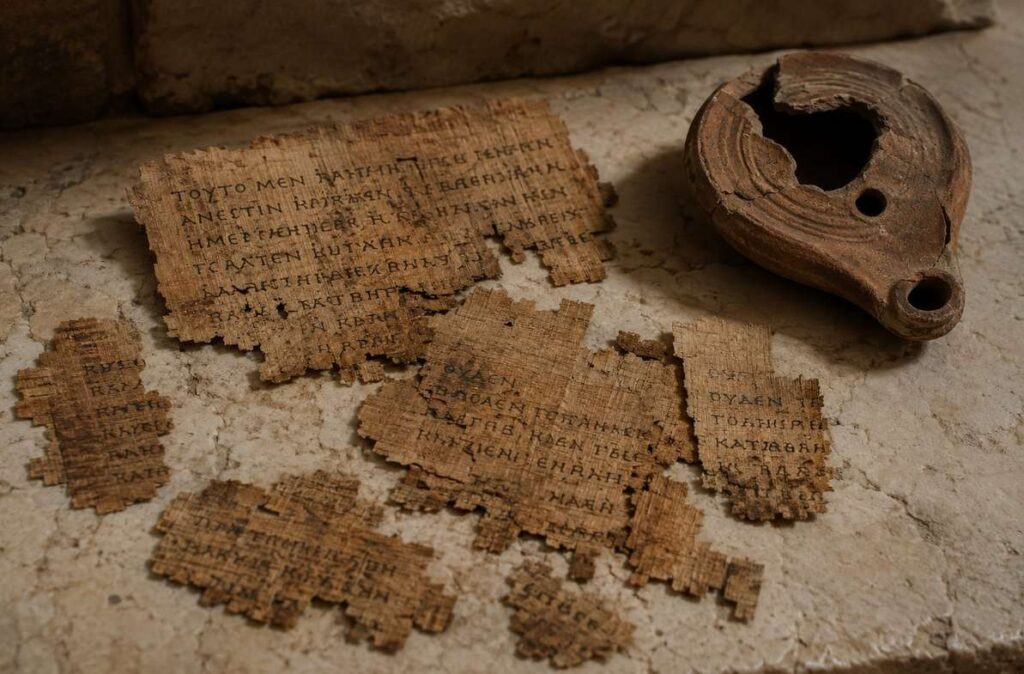
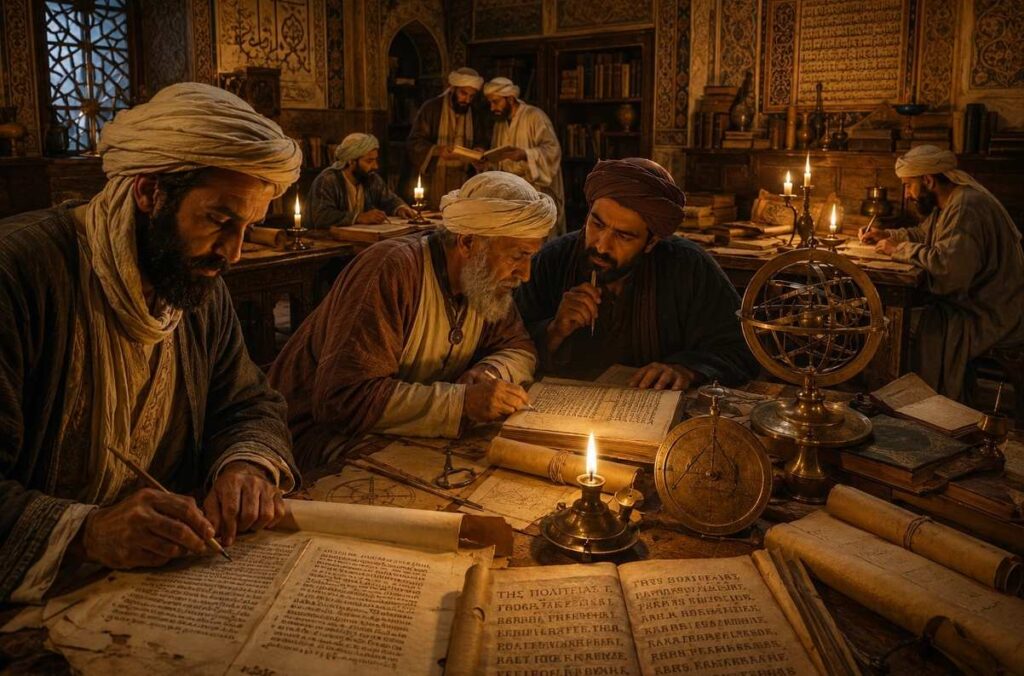
The thread persists. Not through preservation but through transmission. The works that mattered to someone were copied. The copies were copied. The chain continued through monasteries, through Islamic translation movements, through Byzantine scholars, and through Renaissance collectors hunting manuscripts in forgotten corners.
The survival was not random. It was selective.
What served power survived. The Platonic corpus was useful for theology, for political theory, for the education of rulers. The Aristotelian corpus was useful for logic, for natural philosophy, for the organisation of knowledge. These were copied, studied, and transmitted because they supported existing structures of authority.
What challenged power did not. The Epicurean and Stoic texts were reduced to summaries, to doxographies, and to the reports of opponents. The heliocentric model of Aristarchus was mentioned by Archimedes and then dropped from the record until Copernicus unearthed it. The atomism of Democritus survived in the hostile commentary of Aristotle. We read the dissenters through the lens of their conquerors.
The Islamic translation movement of the eighth to tenth centuries CE was particularly crucial. Arab scholars in Baghdad, Damascus, and Cordoba translated Greek scientific and philosophical works into Arabic, preserving texts that had vanished from Byzantine libraries. When these works were later translated into Latin during the twelfth-century Renaissance of translation, they re-entered the Western tradition through a double filter: Greek to Arabic, Arabic to Latin, with each translation shaped by the theological and philosophical commitments of its translators.
The selection shaped the Western mind. We are the inheritors of what was deemed worth saving. The alternatives–the roads not taken, the questions not asked–are visible only in outline, in the negative space of citation.
The Thread Beyond the Walls
The Library of Alexandria was not unique. Other libraries existed. Other centres of learning. The loss of Alexandria was symbolic because it was visible. The gradual decay of other institutions, the slower burning of other collections, attracts less attention but represents equal loss. The library at Pergamon rivalled Alexandria. The House of Wisdom in Baghdad surpassed it in some fields. Each fell, or faded, or was transformed beyond recognition.
The thread does not depend on institutions. It depends on recognition.
The scholar who reads a text and recognises its value. The copyist who preserves what others neglect. The traveller who carries a manuscript across borders, across centuries, across the boundaries of language and culture. The library is the container. The thread is movement.
The modern equivalent is not the digital archive. The digital archive is the flood–the drowning of signal in noise. The modern equivalent is the recogniser–the individual who sifts, who selects, who extends the thread through the act of attention. You are the library now. The thread continues through your recognition.
The Lesson
Do not mourn the Library of Alexandria. Mourn the principle it represented–the assumption that knowledge deserves preservation, that the collected wisdom of humanity is a common inheritance, that the thread is worth maintaining. Then act on that principle.
The library that burns is not the threat. The library that is never built–the recognition that never happens, the text that is never read, the thread that is never extended–this is the ongoing loss. The fire is dramatic. The neglect is invisible. The neglect is more dangerous.
The thread continues. Not because libraries survive. Because someone recognises what libraries contain. Someone copies. Someone carries. Someone reads. The someone is you.
The fire is dramatic. The neglect is invisible. The neglect is more dangerous.
— The Library of Alexandria
Continue Through The Thread
This article is one node in a wider route through ZenithEye’s living archive. If you want the larger map, continue through these reader paths.
- Start Here: A Reader’s Guide to ZenithEye — the clearest first route through the archive.
- The Thread and Five Pillars — the main map for hidden systems, sources, states and practice.
- Editorial Principles — how ZenithEye handles sources, interpretation, experience and symbolic reading.
- Browse All Articles — the full archive by discovery and date.
Frequently Asked Questions
Was the Library of Alexandria destroyed by a single fire?
No. The library declined over centuries through multiple causes. A fire during Caesar’s civil war in 48 BCE caused damage but the institution survived. The Serapeum daughter library was destroyed in 391 CE. By the time of the Arab conquest in 642 CE, little remained. The popular image of a single catastrophic fire is a historical simplification.
How many scrolls did the Library of Alexandria hold?
Ancient sources vary enormously, reporting anywhere from 40,000 to 400,000 scrolls at the library’s height. The exact number is unknown. The Pinakes–the catalogue compiled by Callimachus–was itself a multi-volume work, suggesting a collection of staggering scale regardless of the precise figure.
Did Caliph Omar order the burning of the Library of Alexandria?
Almost certainly not. The story first appears in the 13th-century work of Ibn al-Qifti, six centuries after the events. No contemporary source–Arab or Christian–mentions it. Modern historians dismiss it as medieval propaganda. By 642 CE, the library had already ceased to exist through centuries of gradual decline.
What famous works were lost in the Library of Alexandria?
The library held the complete works of the pre-Socratic philosophers, the vast majority of Greek tragedy (scholars estimate roughly 93% is lost), Aristarchus of Samos’s treatise on heliocentrism, multiple critical editions of Homer, and countless scientific and medical treatises whose very titles have vanished.
How did any knowledge survive the loss of Alexandria?
Survival was selective and transmitted through chains of copying. The Islamic translation movement of the 8th-10th centuries preserved Greek scientific and philosophical works in Arabic. Byzantine monasteries copied religious and philosophical texts. Renaissance scholars hunted manuscripts across Europe and the Near East. What served power tended to survive; what challenged it often did not.
Did Copernicus know about Aristarchus’s heliocentric model?
Yes. Copernicus’s early drafts of De Revolutionibus acknowledged Aristarchus as a predecessor. The reference was removed before publication–a deletion discovered only in the 19th century when his personal copy was examined. Aristarchus had proposed a Sun-centred cosmos with Earth orbiting and rotating approximately 1,700 years before Copernicus.
What is the modern lesson of the Library of Alexandria?
The lesson is not about fire but about neglect. Digital archives have created an opposite problem–a flood of information where signal drowns in noise. The modern equivalent of the Alexandrian scholar is the recogniser: the individual who sifts, selects, and extends the thread of knowledge through the act of attention. Preservation without recognition is merely storage.
Further Reading
- The Living Thread: How Forbidden Knowing Survives the Fire — The pattern of suppression and survival across history.
- The Burning of the Library of Alexandria: What Actually Happened in 48 BCE — Separating Caesar’s fire from the slow decline.
- The Ptolemaic Acquisition System: How the Greatest Library Was Built — The ruthless brilliance of ancient knowledge acquisition.
- The Serapeum: Alexandria’s Daughter Library — The forgotten second library that outlived the mother.
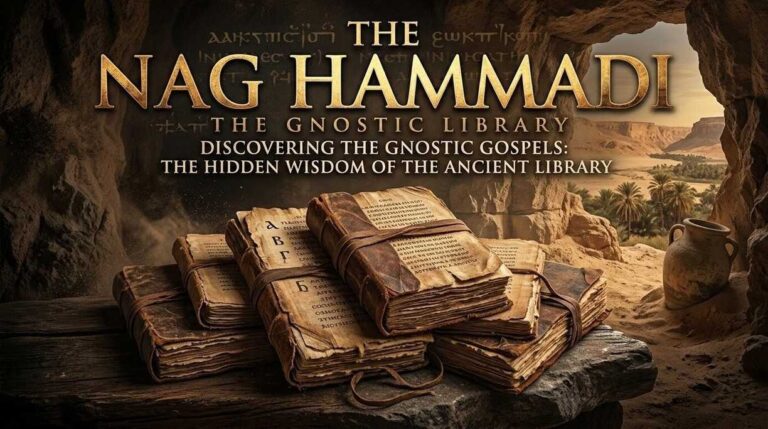
- Nag Hammadi: The Burial and Resurrection of Gnostic Texts — The 1945 discovery that changed everything.
- The House of Wisdom: Baghdad and the Translation Movement — How Arabic scholars preserved Greek knowledge after Alexandria fell.
- The Toledo School of Translators: How Europe Recovered Its Own Past — The twelfth-century Renaissance that returned lost knowledge to the West.
- Jewish Scholars and the Transmission of Knowledge — The hidden thread of preservation across medieval Europe and the Islamic world.
- How Scripture Became Scripture — The politics of textual selection and canon formation.
- Esoteric Lineages: The Hidden Archives of Western Mysticism — How secret knowledge survived through initiatory transmission rather than institutional preservation.
References and Sources
The following sources are grouped by period and discipline for readers who wish to explore the Library of Alexandria across multiple frameworks.
Ancient Sources
- Plutarch. Life of Julius Caesar. On the fire of 48 BCE.
- Galen. On the Order of My Own Books / Commentary on the Hippocratic Oath. On the Ptolemaic book seizure policy.
- Archimedes. The Sand Reckoner. References Aristarchus’s heliocentric treatise.
- Socrates Scholasticus. Ecclesiastical History (5th c. CE). On the destruction of the Serapeum under Theophilus.
- Sozomen. Ecclesiastical History. Alternative account of the 391 CE destruction.
- Rufinus of Aquileia. Ecclesiastical History. Early Latin account of the Serapeum.
Modern Scholarship
- Canfora, L. (1990). The Vanished Library: A Wonder of the Ancient World. University of California Press. Comprehensive modern study of the library’s history and myth.
- El-Abbadi, M. (1990). The Life and Fate of the Ancient Library of Alexandria. UNESCO. Egyptian scholar’s definitive account.
- Heath, T. L. (1913). Aristarchus of Samos, the Ancient Copernicus. Oxford University Press. Definitive study of Aristarchus’s heliocentrism and its transmission.
- Lyons, J. (2011). The House of Wisdom: How the Arabs Transformed Western Civilization. Bloomsbury. On the Islamic translation movement and preservation of Greek texts.
- Oakes, E. H. and McCarthy, E. (2001). Encyclopedia of World Scientists. Facts on File. On Theon of Alexandria and Hypatia.
Critical Editions and Reference
- Blum, R. (1991). Kallimachos: The Alexandrian Library and the Origins of Bibliography. University of Wisconsin Press. On the Pinakes and ancient cataloguing.
- Most, G. W. (ed.). (1999). Collecting Fragments–Fragmente sammeln. Vandenhoeck & Ruprecht. On the survival and loss of ancient philosophical texts.
Note on Historical Interpretation: This article synthesises ancient testimony with modern scholarship. Where ancient sources conflict–as they frequently do regarding the Library of Alexandria–the article follows the scholarly consensus as represented in works by Canfora, El-Abbadi, and Heath. The “Caliph Omar” narrative is presented as apocryphal per the findings of modern historians across religious and political traditions. Readers are encouraged to consult the primary sources listed above for independent verification.