
The Mental Plane Explained: Where Thoughts Become Reality and Consciousness Creates
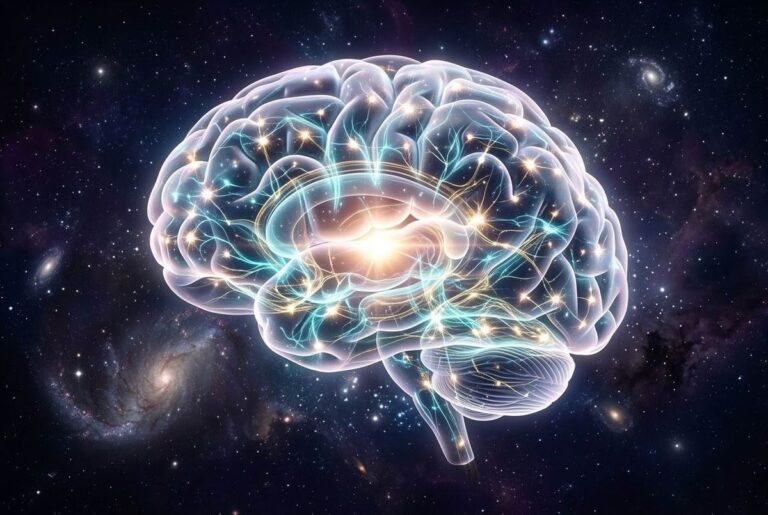
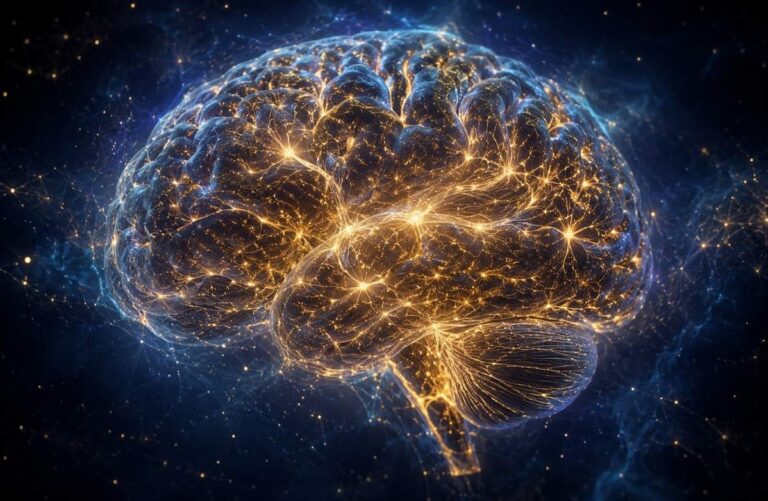
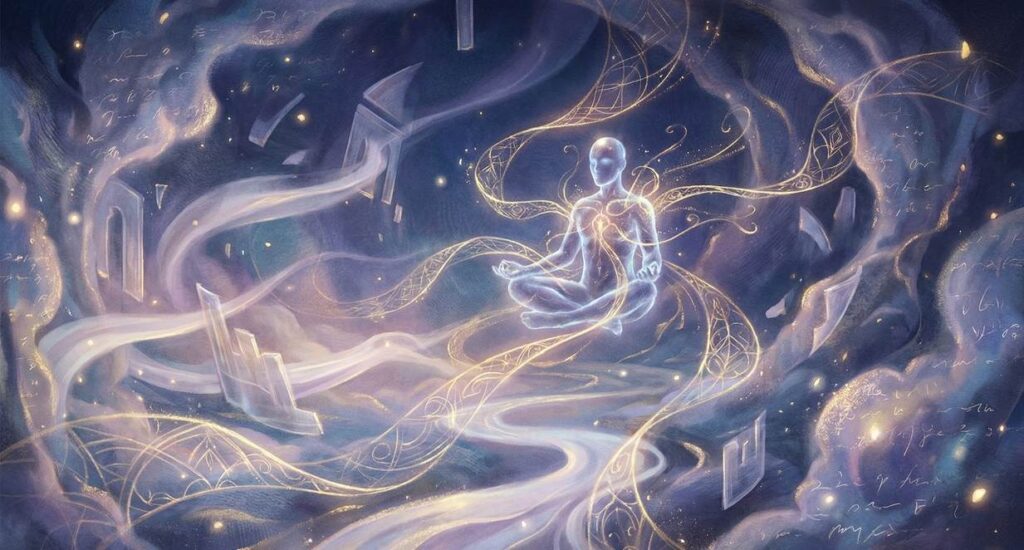
The mental plane is the esoteric name for the realm of thought, pattern, imagination, belief, and meaning. It is where ideas take shape before they become speech, action, habit, culture, architecture, technology, or destiny. Whether read as a literal subtle plane, a symbolic map of consciousness, or a psychological model, it points to one sober fact: the world you experience is shaped by the patterns of mind through which you meet it.
In Plain Terms
The mental plane is a traditional esoteric term for the level of reality associated with thought, ideas, concepts, symbols, archetypes, imagination, and belief. In Theosophy and related systems, it sits above the astral plane of emotion and below higher planes of intuition or spiritual knowing. In psychological language, it can be read as the field of thought-patterns through which consciousness structures experience.
The mental plane is not the same as the brain. The brain is the physical organ through which thought is processed and expressed in embodied life. The mental plane is a wider symbolic and esoteric model for how thought behaves: how ideas persist, how beliefs filter perception, how imagination rehearses reality, how collective thought shapes culture, and how sustained attention changes the direction of a life.
The strongest practical insight is simple: thoughts are not harmless fog. Repeated thoughts become habits. Habits become behaviour. Behaviour shapes relationships, choices, bodies, institutions, and worlds. To work consciously with thought is therefore not fantasy. It is a form of responsibility.
Primary Sources and Traditions Discussed
- Theosophy: planes of existence, thought-forms, the mental body, subtle cosmology, and the idea of mind as a field of formative patterns.
- Vedanta and yoga: manomaya kosha, the mental sheath, and the layered model of human embodiment.
- Jungian psychology: archetypes, the collective unconscious, complexes, and symbolic patterns shaping perception and behaviour.
- Teilhard de Chardin and the noosphere: the collective sphere of human thought, culture, meaning, and planetary mind.
- Gnostic and esoteric caution: archons, predatory thought-patterns, mental captivity, discernment, and cognitive sovereignty.
- Contemplative practice: meditation, concentration, visualisation, attention training, and the ethical discipline of thought.
- Modern psychology and neuroscience: mental rehearsal, imagery, neuroplasticity, belief, attention, and the embodied effects of repeated thought.
How to Read the Mental Plane
The mental plane can be read in three useful ways. First, as an esoteric cosmology: a subtle level of reality where thoughts and ideas have form. Second, as a psychological map: the inner field of concepts, beliefs, images, and assumptions that organise experience. Third, as a cultural model: the collective atmosphere of ideas in which societies live and breathe.
These readings do not need to fight. A symbolic reading can still be powerful. A psychological reading can still be spiritual. An esoteric reading can still be grounded. The danger lies in confusing metaphor with proof, or reducing all spiritual language to clinical vocabulary. The mental plane is most useful when it helps the reader ask better questions: What thoughts am I feeding? What beliefs are shaping my perception? What ideas have I inherited without examination? What inner images are quietly building my future?
This article keeps the language spacious but grounded. It honours the esoteric map without turning it into a licence for magical overclaiming. Thought matters deeply, but thought does not override all material conditions, trauma, biology, injustice, or practical circumstance. Mind shapes experience. It does not erase reality with a mood-board wand.
Table of Contents
- The Architecture of the Mental Plane
- Thoughts as Forms
- The Noosphere and Collective Thought
- The Laws of Mental Manifestation
- The Mental Body
- Archetypes: Universal Patterns of Mind
- Karma and the Persistence of Mental Action
- The Predatory Landscape of Thought
- Meditation as Mental Plane Work
- Telepathy, Intuition, and Mental Communication
- Visualisation and Mental Rehearsal
- Belief Systems as Architecture
- The Higher Mind
- Integration: Conscious Participation in Thought
- Related Glossary Terms
- Read Next
- Frequently Asked Questions
- Further Reading
- References and Sources
The Architecture of the Mental Plane
In Theosophical and related esoteric maps, reality is divided into several planes or levels of manifestation. The physical plane concerns dense matter and sensory experience. The etheric plane concerns vitality and subtle energy. The astral plane concerns emotion, desire, dream, and image. The mental plane concerns thought, meaning, concept, belief, and pattern. Above it are higher levels associated with intuition, unity, and spiritual identity.
This hierarchy should not be read as a simple ladder where upper always means better and lower always means worse. The physical world is not a mistake simply because it is dense. The body is not inferior because it is tangible. The planes describe different qualities of experience and organisation. Each has its own role.
The mental plane sits in a crucial middle position. It translates between emotion and intuition, between desire and meaning, between image and idea, between impulse and intention. It is where experience becomes interpreted. It is where raw sensation becomes a story, a judgment, a belief, a doctrine, a plan, or a philosophy.
The Mental Plane as Pattern Field
The most useful way to understand the mental plane is as a pattern field. It is not merely a private stream of thoughts inside an isolated skull. It is the level where patterns become available to consciousness: mathematical forms, symbolic structures, myths, systems, arguments, images of the future, and interpretations of the past.
Every action has some relation to this field. A chair begins as a design. A law begins as an idea. A relationship is shaped by assumptions. A city is built from plans. A religious tradition is structured by doctrines, myths, rituals, and symbols. The mental plane is not separate from the physical world. It is one of the ways the physical world becomes organised.
This does not mean every thought instantly becomes physical fact. The relationship between thought and reality is mediated by body, time, action, environment, social conditions, resources, and resistance. But the pattern comes first. Before a thing is built, someone must imagine, name, plan, desire, fear, or conceive it.
From Astral Colour to Mental Geometry
Esoteric writers often distinguish the astral and mental planes by tone. The astral plane is associated with feeling, dream, desire, glamour, image, attraction, repulsion, and emotional colour. The mental plane is associated with structure, distinction, analysis, concept, reason, and pattern.
In ordinary life, these levels are usually mixed. Much of what people call thinking is emotion wearing a lawyer’s wig. Fear becomes an argument. Desire becomes a philosophy. Hurt becomes a worldview. The mind can produce elegant reasons for states that began below reason.
Discernment begins when a person learns to ask: is this thought clear, or is it emotion disguised as logic? Is this belief grounded, or is it fear crystallised into doctrine? Is this insight, or is it a mood with a vocabulary?
Thoughts as Forms
Traditional occultism often speaks of thoughts as forms. A thought is not treated as a passing nothing, but as a subtle structure with duration, strength, and influence. Annie Besant and C. W. Leadbeater’s Thought-Forms popularised this idea in Theosophical literature, describing thoughts as visible patterns in subtle space, shaped by intention and emotion.
Whether read literally or symbolically, the idea is useful. A passing thought may vanish quickly. A repeated thought becomes familiar. A thought charged with emotion becomes memorable. A thought repeated for years becomes part of character. A thought shared by millions becomes culture.
The “form” of a thought, then, can be understood as its pattern, weight, persistence, and tendency to organise perception. The thought “I am unsafe” does not remain a sentence. Repeated often enough, it becomes posture, breath, vigilance, interpretation, relationship, and nervous-system expectation. The thought “I can learn” likewise becomes behaviour, resilience, curiosity, and action.
A thought becomes powerful when attention, emotion, repetition, and action gather around it. The mental plane is where such patterns first take organised form.
Language as Operating System
Language is one of the main structures of the mental plane. Words do not merely describe experience. They organise it. The vocabulary available to a person shapes what they can notice, name, question, and communicate.
This does not mean language imprisons consciousness absolutely. Human beings can experience more than they can say. But language affects what becomes clear, shareable, and culturally available. A culture without words for inner life produces different possibilities from a culture rich in words for grief, contemplation, perception, and subtle experience.
Control of language is therefore control of possibility. When sacred, contemplative, ethical, or liberating words disappear from public life, certain thoughts become harder to think. When manipulative language dominates, the mental atmosphere becomes polluted. A person seeking mental sovereignty must watch not only what they think, but the words through which thought is being quietly shaped.
Thought-Form Ecology
Thoughts cluster. A single belief connects with related beliefs, memories, feelings, and images. Over time, these clusters become systems: political identities, religious worldviews, family myths, academic paradigms, personal narratives, and cultural assumptions.
A new idea entering such an ecosystem may be welcomed, ignored, attacked, absorbed, or distorted. This is why genuine insight can feel destabilising. It does not simply add one more sentence to the mind. It may threaten the architecture that kept other thoughts in place.
Changing the mind is therefore not always gentle. Sometimes one belief is load-bearing. Remove it, and a whole inner building creaks. This is why serious transformation requires grounding, patience, and discernment rather than endless demolition.
The Noosphere and Collective Thought
The mental plane is not only personal. Human beings think inside shared fields of language, story, technology, myth, media, education, religion, politics, and memory. Pierre Teilhard de Chardin used the word noosphere for the sphere of thought surrounding the planet: the collective layer of human mind emerging through culture, communication, and reflection.
The noosphere is not identical to the Theosophical mental plane, but the two ideas overlap. Both suggest that thought is not merely private. Ideas circulate. Beliefs spread. Symbols infect or heal. Narratives become habitats. The mind breathes a collective atmosphere long before it notices the air.

Collective Mental Weather
Collective thought behaves like weather. Some periods are dominated by fear. Others by expansion, outrage, invention, despair, cynicism, devotion, or feverish novelty. The individual may believe they are thinking independently while actually repeating the weather pattern of the age.
This does not make the individual powerless. It makes awareness necessary. The first act of mental sovereignty is noticing the atmosphere. Is this really my thought, or did I inhale it from the feed? Is this insight, or contagion? Is this my conscience, or the crowd speaking inside me with stolen authority?
Modern media has made this question urgent. The mind is now exposed to industrial-scale emotional and cognitive engineering. News cycles, advertising, algorithms, outrage loops, and entertainment systems all compete to shape attention. The mental plane is no longer visited occasionally. It is monetised by the minute.
The Akashic Analogy
Esoteric traditions sometimes speak of the Akashic Records: a subtle archive of events, thoughts, actions, and possibilities. This idea should be treated carefully. It cannot be verified in the same way as an ordinary library. But symbolically it expresses an enduring intuition: that consciousness leaves traces, and that reality has memory.
The noosphere can be seen as the surface layer of collective thought: culture, language, memory, and ideas. The Akashic image points to a deeper archive: the possibility that all experience is somehow recorded in the fabric of being. Whether read literally or mythically, both ideas ask the same question: what are we adding to the field?
The Laws of Mental Manifestation
The phrase “mental manifestation” is easily misunderstood. It does not mean that every passing thought instantly creates reality, or that people are to blame for every hardship they experience. That kind of thinking becomes cruel very quickly. Circumstances are shaped by many forces: body, class, trauma, history, health, relationships, systems, chance, and environment.
Still, thought has formative power. It shapes attention, expectation, action, interpretation, persistence, and the range of possibilities a person can recognise. The laws below are therefore best read as principles of participation, not as cosmic vending-machine rules.
The Principle of Attraction
Similar thoughts tend to gather. A mind habitually dwelling in fear notices more evidence of danger. A mind trained in gratitude notices forms of support that would otherwise pass unseen. A mind convinced of failure may unconsciously choose, interpret, and behave in ways that confirm failure.
This is not the simplistic “law of attraction” often sold as spiritual consumerism. It is closer to attentional ecology. The mind becomes hospitable to what it repeatedly hosts. Over time, that hospitality shapes perception and behaviour.
The Principle of Resonance
Thoughts resonate with emotional states, bodily states, environments, people, and memories. A thought is rarely alone. It has a tone. It calls related material into the room. One anxious idea can summon a parliament of anxious memories. One clear intention can gather energy around a decision.
Resonance is why inner work often begins with changing the quality of attention rather than arguing with every thought. A calm nervous system thinks differently from an activated one. A rested body interprets the world differently from an exhausted body. Thought is mental, but never disembodied.
The Principle of Persistence
A thought becomes stronger through repetition. Repeated attention gives a pattern depth. This is true of worry, resentment, prayer, study, creative practice, and disciplined intention. What is rehearsed becomes easier to repeat.
The modern attention economy attacks persistence. It fragments thought into sparks that rarely become fire. The ability to hold one clear idea long enough to understand, test, refine, and act upon it is becoming rare. In esoteric language, sustained thought builds form. In practical language, concentration builds capacity.
The Principle of Focus
Attention is the currency of the mental plane. What receives attention receives life. Focus does not guarantee success, but without focus even strong intention leaks away.
A scattered mind can carry many ideas and complete none. A focused mind can take a single idea and make it consequential. This is why contemplation, study, craft, writing, meditation, and creative work all require protection from constant interruption. The mind needs a chamber where thought can deepen without being raided every thirty seconds by a glowing rectangle demanding tribute.
The Mental Body
In Vedantic and yogic models, the human being is described through several sheaths or layers. The manomaya kosha is often translated as the mental sheath: the layer associated with mind, thought, emotion-processing, sense interpretation, and ordinary mental activity. Theosophical traditions likewise speak of the mental body as the vehicle through which consciousness operates on the mental plane.
This language can be read literally as subtle anatomy, or symbolically as a model of mental structure. In either case, the key point remains practical: the mind has condition. It can be trained, weakened, strengthened, scattered, clarified, distorted, refined, or overloaded.
Just as the body changes through diet, movement, rest, stress, and injury, the mental body changes through attention, information, belief, study, trauma, meditation, imagination, and repeated inner speech. What you think repeatedly becomes part of the structure through which you think next.
Trauma and Mental Scar Tissue
Trauma can leave rigid patterns in the mind. These patterns may appear as hypervigilance, catastrophic expectation, shame narratives, distrust, compulsive control, dissociation, or the inability to imagine a safer future. In esoteric language, one might call this distortion of the mental body. In psychological language, these are adaptive patterns formed under pressure.
It is important not to shame these patterns. They often began as survival intelligence. The problem is that survival patterns can outlive the danger that formed them. The mind continues to build yesterday’s shelter around today’s life, even when the walls now block the sun.
Healing therefore includes mental work, but not mental work alone. Trauma is also bodily, relational, emotional, and nervous-system based. Thought can help reframe experience, but deep healing may require professional support, somatic work, safety, trust, and time.
Archetypes: Universal Patterns of Mind
Jung’s idea of archetypes belongs naturally to any discussion of the mental plane. Archetypes are not ordinary personal ideas. They are deep symbolic patterns that shape myth, dream, religion, art, personality, and collective imagination. Mother, child, shadow, wise old figure, trickster, hero, lover, king, queen, death, rebirth, serpent, tree, cave, and light all carry archetypal force.
Archetypes do not appear in pure form. They appear through images, stories, rituals, dreams, behaviours, and cultural symbols. A myth is not “just a story” when it carries an archetype. It becomes a pattern through which human experience recognises itself.
In esoteric language, archetypes can be understood as forms on the mental plane: templates from which particular experiences draw their shape. In psychological language, they are inherited structures of imagination and meaning. In either reading, they explain why certain images return across cultures with uncanny persistence. The mind seems to have deep grammar.
Archetypes as Source Patterns
A useful modern image is source code. A software application can generate many visible forms from hidden underlying patterns. Likewise, an archetype may generate countless stories, symbols, dreams, and behaviours while remaining deeper than any single expression.
This is why archetypal material can feel larger than the personal self. When someone is seized by an archetype, they may feel possessed by a role: saviour, martyr, prophet, victim, judge, rebel, healer, or avenger. The task is not to deny the archetype, but to become conscious enough not to be swallowed by it.
Archetypal literacy is therefore mental-plane hygiene. It helps the seeker know when they are thinking clearly and when they are being thought by a pattern older than their biography.
Karma and the Persistence of Mental Action
In many Indian and esoteric traditions, karma is not merely external fate or punishment. It is action and consequence. Thoughts, words, emotions, intentions, and deeds all leave tendencies. They shape what becomes easier or harder in the future.
On the mental plane, karma can be understood as the persistence of mental action. A thought repeated becomes a groove. A groove becomes a tendency. A tendency becomes character. Character shapes destiny, not by cosmic bookkeeping alone, but through the living continuity of pattern.
This makes thinking ethically significant. Not every intrusive thought is chosen, and people should not be blamed for thoughts that arise from trauma, anxiety, illness, or stress. But what we repeatedly feed, cultivate, justify, and act upon matters. The mind is not guilty for every cloud crossing the sky. It is responsible for the weather systems it chooses to seed.

The Predatory Landscape of Thought
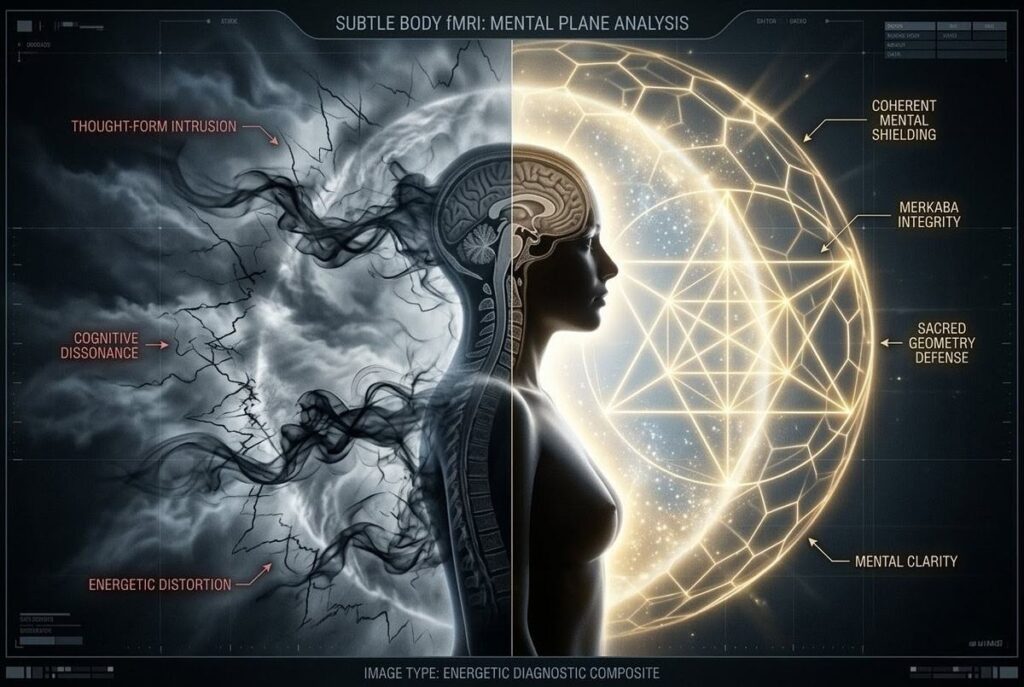
Esoteric traditions often warn that the mind can be influenced by forces that do not serve awakening. These may be described as archons, larvae, thought-forms, psychic parasites, glamour, obsession, or collective egregores. Psychological language would speak instead of intrusive thoughts, addictive patterns, propaganda, trauma loops, compulsions, social contagion, and ideological capture.
The labels differ, but the practical issue is real: not every thought deserves hospitality. Some thoughts fragment the person. Some feed fear. Some intensify hatred. Some flatter the ego. Some make despair feel intelligent. Some arrive wearing the perfume of revelation while quietly draining life from the room.
A Gnostic reading adds a sharp edge. The archontic does not always appear as obvious evil. It often appears as repetitive mental machinery: accusation, shame, false authority, empty certainty, compulsive comparison, and systems that keep consciousness reactive rather than awake.
Mental Hygiene
Mental hygiene is the deliberate care of the thought-field. It does not require paranoia. It requires attention. Just as the body needs rest, clean food, movement, and protection from toxins, the mind needs intervals of silence, truthful language, nourishing images, disciplined focus, and periods away from manipulative inputs.
- Information fasting: regular breaks from news, feeds, outrage loops, and algorithmic stimulation.
- Thought discernment: asking whether a thought leads toward clarity, compassion, responsibility, and truth, or toward fragmentation and compulsion.
- Attention recovery: practising one task, one book, one conversation, or one contemplative object without constant interruption.
- Embodied grounding: returning to breath, sensation, walking, nature, practical work, and ordinary life when thought becomes feverish.
- Relational testing: checking major inner claims against trusted people, real-world evidence, and the fruit produced by the belief.
The healthiest mind is not empty of all influence. That is impossible. It is awake enough to choose which influences become food.
Meditation as Mental Plane Work
Meditation is one of the clearest ways to work with the mental plane. It reveals that thoughts arise, change, repeat, seduce, dissolve, and return. It also reveals that awareness is not identical with any single thought. This distinction is foundational.
Without meditation or some comparable contemplative discipline, the mind often mistakes its own contents for reality. A thought arises, and the person becomes it. A fear appears, and the future seems settled. A memory stirs, and the present is coloured by an old room. Meditation creates space between awareness and mental event.
Concentration, Insight, and Contemplation
Concentration practice develops steadiness. The attention is placed on one object, such as breath, mantra, candle flame, body sensation, or sacred image. Each return strengthens the capacity to choose where attention rests.
Insight practice develops clarity. Thoughts are observed as events rather than obeyed as commands. The practitioner learns to see arising and passing, attachment and aversion, identification and release.
Contemplative practice opens thought toward meaning. A phrase, symbol, scripture, koan, question, or image is held gently until it reveals layers beyond discursive analysis. Here the mental plane becomes a chapel rather than a factory.
All three forms matter. Concentration gathers the mind. Insight frees the mind from identification. Contemplation refines the mind toward wisdom.
Telepathy, Intuition, and Mental Communication
Many esoteric traditions associate the mental plane with telepathy or direct mind-to-mind communication. Such claims should be handled carefully. Anecdotal traditions are abundant, but they are not the same as settled scientific proof. Still, the symbolic and experiential territory is worth examining.
Human beings constantly communicate below the level of explicit speech. Facial expression, tone, posture, timing, emotional atmosphere, shared symbols, and unconscious cues all transmit information. Close relationships often develop a kind of rapid intuitive understanding that can feel telepathic. Whether this is subtle perception, pattern recognition, or something more mysterious, it shows that mind is not sealed off from mind.
The safer approach is to distinguish intuition from projection. Genuine intuition tends to arrive with clarity, humility, and non-compulsive steadiness. Projection arrives with charge, certainty, and often a private drama already attached. One listens. The other grabs the steering wheel.
Mental communication, then, begins with responsibility. Before trying to read others, the seeker must learn to read their own mind without self-deception. Otherwise, the inner theatre simply puts other people’s names on its masks.
Visualisation and Mental Rehearsal
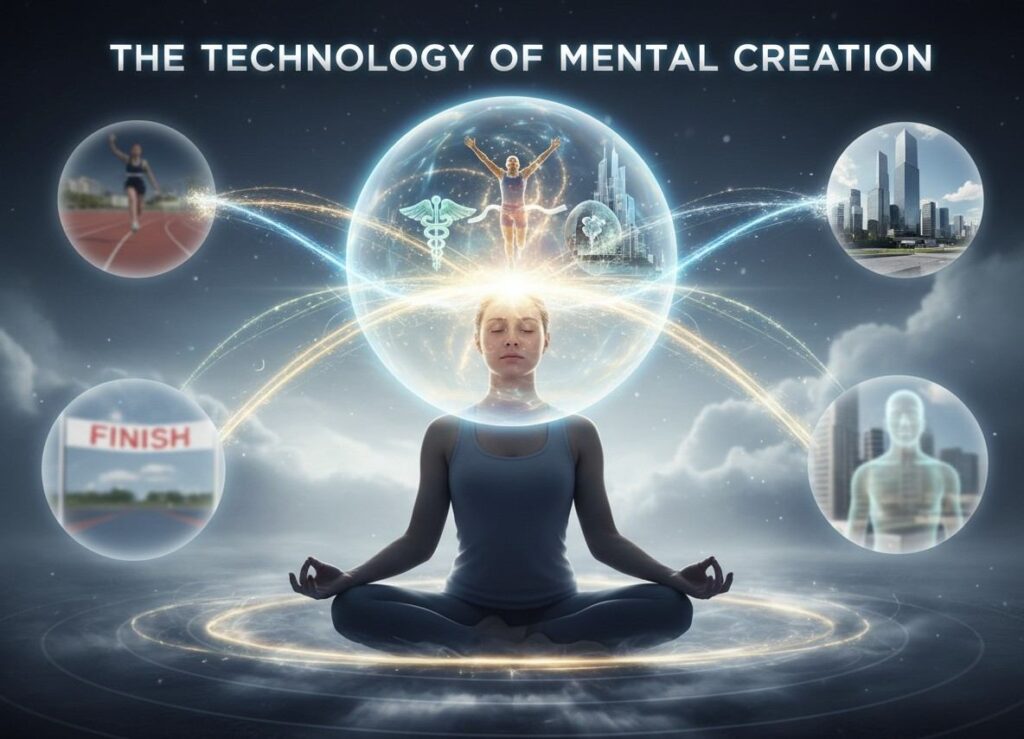
Visualisation is the deliberate use of imagination to form inner images, scenes, outcomes, or states. In esoteric language, it creates thought-forms. In psychological and performance contexts, it functions as mental rehearsal. Athletes, performers, speakers, therapists, and contemplatives have all used forms of visualisation to prepare the mind and body for action.
Visualisation works best when it is not treated as passive wishing. It is a training of attention, emotion, expectation, and behaviour. Imagining a calm conversation can help the nervous system rehearse calm. Imagining a skill can support the brain’s preparation for that skill. Imagining a future clearly can help reveal the steps required to approach it.
The Three Ingredients of Effective Visualisation
- Clarity: the image, intention, or scenario is specific enough for the mind to engage it.
- Embodiment: the body is included through breath, posture, feeling, and sensory detail.
- Action: the visualised pattern is connected to real steps, not left floating as private fantasy.
Visualisation becomes unhealthy when it is used to deny reality, avoid grief, blame people for suffering, or imagine control over others. It becomes useful when it clarifies intention, strengthens capacity, supports healing, and prepares the person to act more wisely.
Belief Systems as Architecture
A belief is not merely an opinion sitting quietly in the mind. It is an organising structure. It determines what seems possible, threatening, moral, shameful, desirable, ridiculous, sacred, or forbidden. Beliefs shape perception before conscious thought fully begins.
This is why belief systems can feel like worlds. A person living inside one belief system may literally notice different things from someone living inside another. Not because reality has changed, but because attention has been trained to select different signals.
Belief as Blueprint
A belief acts like a blueprint for experience. “I am unworthy” builds one kind of inner house. “I can learn” builds another. “The world is hostile” builds another. “Truth matters” builds another. None of these remain abstract for long. They influence posture, risk, conversation, trust, creativity, and resilience.
The goal is not to replace every difficult belief with cheerful nonsense. The goal is accuracy and freedom. Some painful beliefs are based on real experience but have become too total. Some positive beliefs are useful because they open action. Some inherited beliefs are merely family furniture, still sitting in the room because nobody asked whether it belonged there.
Conscious belief-work asks: is this belief true, partially true, outdated, protective, inherited, useful, harmful, or simply familiar? What does it make possible? What does it prevent? Who benefits when I keep believing it?
The Higher Mind
Many esoteric systems distinguish ordinary mental activity from higher mind. Ordinary mind analyses, compares, names, plans, remembers, divides, and argues. Higher mind is associated with intuition, direct knowing, wisdom, synthesis, and insight that arrives whole rather than step by step.
This distinction appears in different language across traditions: higher manas, Buddhi, nous, inner wisdom, the deep mind, the witness, or the spiritual intellect. The names vary, but the experience is familiar. Sometimes understanding arrives not as a conclusion, but as recognition. The pieces suddenly belong together.
Intuition and Discernment
Intuition is not the same as impulse. It is not anxiety with candles around it. Genuine intuition tends to be quiet, clear, and proportionate. It may be strong, but it does not usually need panic to prove itself.
The lower mind can imitate intuition through fear, desire, fantasy, and projection. This is why discernment matters. A true intuition should be tested through time, humility, evidence, ethics, and the fruit it produces. The higher mind does not demand that the ordinary mind be destroyed. It asks that the ordinary mind become transparent enough to receive deeper knowing without immediately turning it into ego property.
In Gnostic language, this is close to remembrance: not the acquisition of more information, but the recovery of a deeper orientation toward truth.
Integration: Conscious Participation in Thought
Understanding the mental plane changes the relationship to thought. Thoughts are no longer treated as random private weather or unquestionable truth. They become events, patterns, invitations, warnings, tools, distortions, prayers, blueprints, and sometimes traps.
This does not mean controlling every thought. That is neither possible nor healthy. It means becoming conscious of participation. Which thoughts are being fed? Which are being challenged? Which are being mistaken for identity? Which belong to fear, trauma, culture, family, spirit, conscience, or wisdom?
The mental plane is not escaped by rejecting thought. It is purified by thinking more clearly, imagining more responsibly, naming more truthfully, and giving attention to what deserves to grow. The aim is not mental domination. It is mental alignment.
A person becomes freer when they can witness thought without obeying every thought. They become more creative when they can hold an idea long enough to develop it. They become wiser when belief bows to truth. They become more grounded when imagination is joined to action.
The workshop is always open. The next thought is already on the bench.

Related Glossary Terms
These terms help clarify the mental plane and its relationship to consciousness, esoteric cosmology, psychology, and practice:
- Mental plane: the esoteric level associated with thought, idea, concept, belief, imagination, and pattern.
- Thought-form: a repeated or concentrated thought understood as having subtle form, persistence, and influence.
- Noosphere: the collective sphere of human thought, culture, communication, and shared meaning.
- Mental body: the subtle or symbolic vehicle through which consciousness operates in thought; related to manomaya kosha.
- Manomaya kosha: the mental sheath in Vedantic models of the human being.
- Archetype: a deep symbolic pattern shaping myth, dream, behaviour, imagination, and collective meaning.
- Complex: an emotionally charged unconscious pattern that can shape perception, reaction, and repetition.
- Belief system: an organised pattern of assumptions that filters perception and shapes possibility.
- Mental hygiene: deliberate care of the mind through attention, information discipline, grounding, truthful language, and discernment.
- Higher mind: the intuitive or spiritual dimension of mind associated with direct knowing, synthesis, and wisdom.
- Visualisation: the deliberate formation of inner images or scenarios to train attention, emotion, expectation, and action.
- Cognitive sovereignty: the capacity to choose, examine, and refine thought rather than being unconsciously governed by external or inherited patterns.
Read Next
For the strongest next step, continue into the wider map of subtle reality:
Planes of Consciousness: The Complete Guide to Higher Dimensions
This companion article places the mental plane inside the wider esoteric model of physical, etheric, astral, mental, Buddhic, and spiritual levels of experience.
Frequently Asked Questions
What is the mental plane?
The mental plane is an esoteric term for the level of reality associated with thought, idea, concept, belief, imagination, and pattern. In Theosophy it sits above the astral plane of emotion and below higher planes of intuition or spiritual knowing. It can also be read psychologically as the field of thought-patterns that shape perception and behaviour.
Is the mental plane literally real or symbolic?
Different traditions answer differently. Some esoteric systems treat the mental plane as a literal subtle level of reality. Psychological readers may treat it as a symbolic model for how thought, belief, imagination, and culture shape experience. The model remains useful either way, provided claims are handled with discernment and not used to deny material reality, trauma, or practical circumstance.
What is the difference between the mental plane and the astral plane?
The astral plane is usually associated with emotion, desire, dream, image, and feeling. The mental plane is associated with thought, concept, logic, belief, and pattern. In ordinary experience the two are often mixed, which is why emotions can appear as arguments and beliefs can carry strong emotional charge.
What are thought-forms?
Thought-forms are repeated or concentrated thoughts understood as subtle forms with persistence and influence. In Theosophical literature they are described as structures on the mental plane. Psychologically, the idea can be read as a way of describing how repeated thoughts become habits, beliefs, expectations, and patterns that shape behaviour.
Can thoughts create reality?
Thoughts help shape reality, but not in a simplistic way. They influence attention, interpretation, behaviour, persistence, emotional tone, and the ability to recognise possibilities. They do not override all material conditions, social realities, health issues, trauma, or chance. A grounded approach treats thought as formative, not omnipotent.
What is mental hygiene?
Mental hygiene is deliberate care of the thought-field. It includes taking breaks from manipulative media, noticing repeated thoughts, practising attention, grounding the body, choosing truthful language, and testing beliefs by their effects. It is not paranoia. It is the ordinary discipline of not feeding every thought that enters the mind.
How can I work safely with the mental plane?
Work safely by staying grounded in the body, ordinary life, relationships, and evidence. Meditation, journalling, study, contemplative reading, visualisation, and careful attention can be useful, but they should not replace medical or psychological care. If mental practices produce anxiety, dissociation, obsession, paranoia, or destabilisation, pause and seek support from a qualified professional or trusted person.
Study Note: This article explores the mental plane, thought-forms, subtle cosmology, visualisation, belief, and contemplative practice for historical, symbolic, and reflective study. It is not medical, psychological, or spiritual advice. Thought matters, but it does not make a person responsible for every hardship, illness, trauma, or external event. If meditation, visualisation, esoteric study, or mental-plane practices produce anxiety, dissociation, paranoia, obsession, manic states, psychotic symptoms, or destabilisation, pause the practice and seek grounded support from a qualified mental health professional, emergency service, or trusted person in ordinary life.
Further Reading
These related articles continue the themes of consciousness, subtle planes, language, attention, information, and the shaping power of thought:
- Planes of Consciousness: The Complete Guide to Higher Dimensions – The broader cosmology of which the mental plane is one stratum, including the etheric, astral, Buddhic, and Atmic planes.
- The Power of Words: Etymology, Conscious Language, and the Magic of Speech – How words shape perception, meaning, identity, and the mental field.
- Architecture of Reality: Why Information Precedes Matter – A deeper look at information, pattern, and the idea that form begins before visible manifestation.
- Left Brain vs. Right Brain: The Neuroscience of Spiritual Awakening – Hemispheric differences, attention, interpretation, and spiritual cognition.
- Quantum Mind 2026: The Evidence That Consciousness Is Fundamental – Contemporary debates around consciousness, mind, and the structure of reality.
- Predatory Consciousness: Recognising the Archontic in Human Form – How thought, behaviour, and relational patterns can become predatory or fragmenting.
- Holographic Universe Theory: Consciousness and the Nature of Reality – Reality, image, information, and the holographic metaphor in consciousness studies.
- States of Knowing: What Happens When Consciousness Unravels – The phenomenology of shifting awareness and altered modes of knowing.
- Contemplative Techniques: The Thread’s Practical Foundation – Practical methods for attention, witnessing, grounding, and inner stability.
- The Living Thread: How Forbidden Knowing Survives – How hidden knowledge, inner practice, and symbolic insight survive across time.
References and Sources
The following sources support the esoteric, psychological, and contemplative framework used in this article.
Cosmological and Esoteric Sources
- Blavatsky, Helena P. (1888). The Secret Doctrine. London: Theosophical Publishing Company.
- Besant, Annie, and Leadbeater, C. W. (1901). Thought-Forms. London: Theosophical Publishing Society.
- Leadbeater, C. W. (1902). Man Visible and Invisible. London: Theosophical Publishing Society.
- Powell, Arthur E. (1927). The Mental Body. London: Theosophical Publishing House.
- Taimni, I. K. (1961). The Science of Yoga. Adyar: Theosophical Publishing House.
- Taittiriya Upanishad. Traditional Sanskrit source for the five-sheath model, including manomaya kosha.
Psychology, Archetypes, and Collective Mind
- Jung, C. G. (1959). The Archetypes and the Collective Unconscious. Collected Works, Vol. 9, Part 1. Princeton: Princeton University Press.
- Jung, C. G. (1960). The Structure and Dynamics of the Psyche. Collected Works, Vol. 8. Princeton: Princeton University Press.
- Teilhard de Chardin, Pierre. (1955). The Phenomenon of Man. Paris: Éditions du Seuil. English translation published by Harper.
- Vernadsky, Vladimir. (1926). The Biosphere. Later writings developed the concept of the noosphere in relation to human thought and planetary development.
- Levine, Peter A. (1997). Waking the Tiger: Healing Trauma. Berkeley: North Atlantic Books.
- van der Kolk, Bessel. (2014). The Body Keeps the Score: Brain, Mind, and Body in the Healing of Trauma. New York: Viking.
Attention, Visualisation, and Contemplative Practice
- James, William. (1890). The Principles of Psychology. New York: Henry Holt and Company.
- Kabat-Zinn, Jon. (1990). Full Catastrophe Living. New York: Delacorte.
- Goleman, Daniel, and Davidson, Richard J. (2017). Altered Traits: Science Reveals How Meditation Changes Your Mind, Brain, and Body. New York: Avery.
- Jeannerod, Marc. (1994). “The Representing Brain: Neural Correlates of Motor Intention and Imagery.” Behavioral and Brain Sciences, 17(2), 187-245.
- Decety, Jean. (1996). “Do Imagined and Executed Actions Share the Same Neural Substrate?” Cognitive Brain Research, 3(2), 87-93.
- Swami Krishnananda. The Five Sheaths. Divine Life Society. Commentary on the koshas and Vedantic inner structure.