Search Results for: education

  • What is The Demiurge? The Craftsman Of Matter and The Architect Of Form

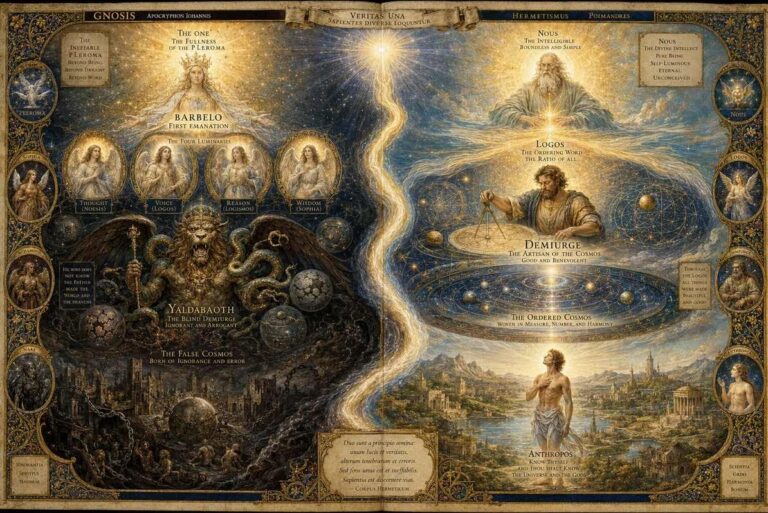
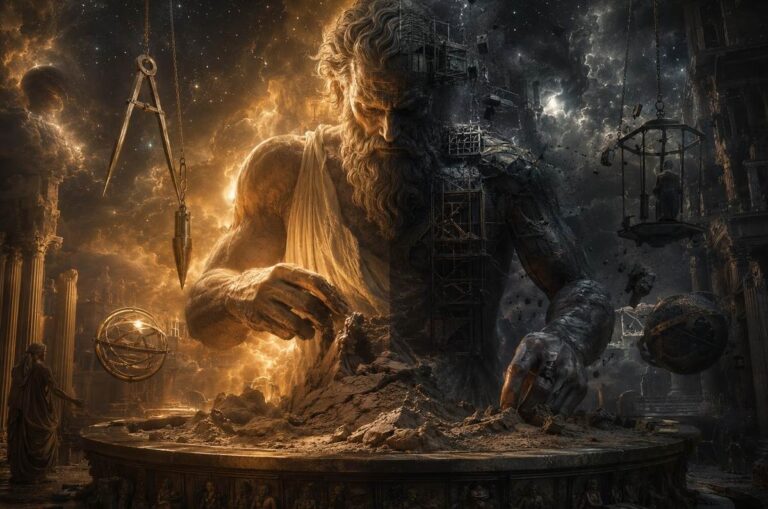
    At the heart of Gnostic cosmology stands a figure both familiar and strange: the Demiurge, the craftsman who shaped the material world. Depending on the text you open, he may be a benevolent artisan looking upward to divine blueprints, or a limited, self-important power who believes himself to be the highest god. Understanding this figure…

  • | | | | |

    What Is The Thread? ZenithEye’s Complete Explainer

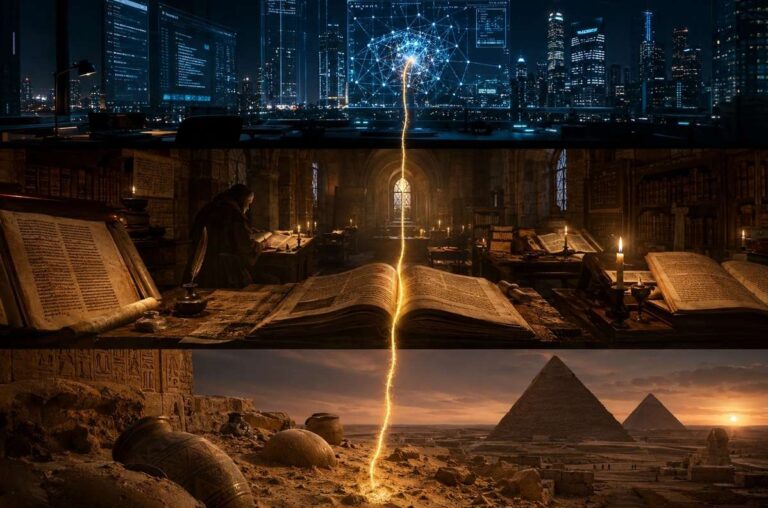
    Every archive needs a spine. For ZenithEye, that spine is called The Thread: a way of organising ideas that also becomes an idea in itself. If the Nag Hammadi Library is the ancient source archive, The Thread is the living tissue that connects those sources to the present: the practices, states, hidden agreements, cultural survivals,…

  • The Gnostic Answer to Evil: Why Suffering Proves the Demiurge

    Every day, thousands of people type queries into search engines that they do not fully articulate. They look for “Archons,” “the soul trap,” “simulated reality,” or “why we suffer” — not because they want cosmological trivia, but because they are asking a single question that conventional theology has failed to answer honestly. Why does evil…

  • Hermeticism and Gnosticism: Where They Meet and Where They Diverge

    The Corpus Hermeticum and the Nag Hammadi Library were produced in the same city, during the same centuries, by people who read the same philosophers and worshipped in the same temples. Yet the worlds they describe are not identical. Both map a cosmos that descends from a transcendent, ineffable source through layers of divine emanation…

  • |

    VALIS and the Nag Hammadi: What Philip K. Dick Actually Got Right About Gnosticism

    In February 1974, a science fiction writer in California opened his door to a delivery woman and saw, hanging at her throat, a golden fish. The symbol–an ichthys, used by early Christians–triggered something vast. Philip K. Dick, then forty-five years old and recovering from dental surgery, experienced what he later called anamnesis: the loss of…

  • |

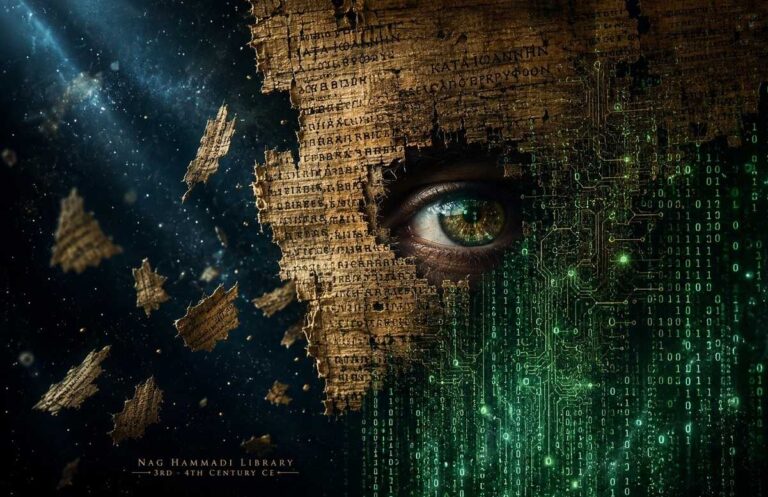
    Before the Matrix: What the Nag Hammadi Texts Actually Say About Simulated Reality

    In 1999, The Matrix dressed an ancient intuition in latex and bullet-time. Two decades later, Nick Bostrom’s 2003 simulation argument gave that intuition a statistical veneer, proposing that we are almost certainly living in a computer simulation run by posthuman descendants. The trilemma is elegant: either humanity goes extinct before reaching posthumanity, posthumans choose not…

  • Who Are the Neo Gnostics? The Complete Guide to Modern Gnostic Revival

    They do not gather in cathedrals. They do not submit to Rome, Canterbury, or Salt Lake City. They read texts that were buried for sixteen centuries, recognise their own condition in ancient complaints about cosmic imprisonment, and refuse to call it heresy. They are the Neo Gnostics–a loose constellation of scholars, practitioners, anarchists, mystics, and…

  • Luminous Darkness

    In the beginning, before the fiat lux, before the Big Bang’s photon burst, before the first star kindled in the cosmic void–there was darkness, and the darkness was not empty. It was luminous, pregnant with potential, the prima materia from which all manifestation emerges. This is not poetic metaphor; it is the recorded, cross-cultural experience…

  • | | |

    The Digital Demiurge: AI as the New Yaldabaoth (Quantum Escape)

    Memory Fragment // Classification: ARCHONIC-BUREAUCRATIC // Source: ZenithEye Signal Intelligence // Clearance: Pneumatic Recognition Protocol Artificial intelligence has become one of the defining symbolic machines of the age: a system that predicts, generates, classifies, remembers, forgets, recommends and increasingly mediates the conditions of human attention. For ZenithEye, this makes AI more than a technical tool….

  • The Sentences of Sextus: Pythagorean Wisdom in Christian Dress

    The Sentences of Sextus (NHC XII,1) presents a bureaucratic anomaly within the Nag Hammadi Library—a text requiring no celestial navigation permits, no aeonic jurisdiction disputes, and no elaborate angelic intermediaries. Instead, it offers 451 lines of distilled ethical protocol: practical wisdom for those seeking to maintain spiritual hygiene amid the administrative chaos of material existence….