Before the Matrix: What the Nag Hammadi Texts Actually Say About Simulated Reality
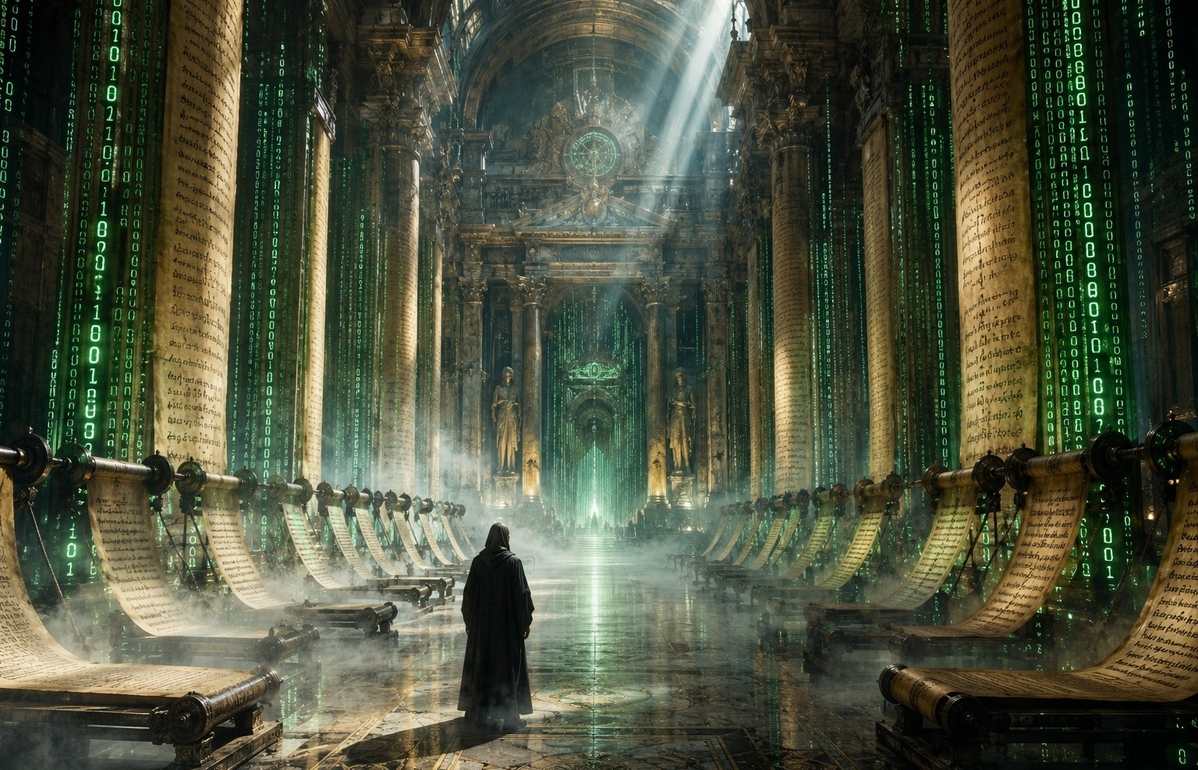
In 1999, The Matrix dressed an ancient intuition in latex and bullet-time. Two decades later, Nick Bostrom’s 2003 simulation argument gave that intuition a statistical veneer, proposing that we are almost certainly living in a computer simulation run by posthuman descendants. The trilemma is elegant: either humanity goes extinct before reaching posthumanity, posthumans choose not to run ancestor simulations, or we are already simulated. The hypothesis assumes substrate independence–consciousness need not be biological, merely computational.
It is tempting, especially in esoteric circles, to fold this into Gnosticism like a digital pamphlet. The Demiurge becomes the Programmer. The Archons become subroutines enforcing system rules. Gnosis becomes the red pill that wakes you from the dream. But how much of this is rigorous parallel, and how much is modern retrofitting? To answer that, we must return to the Nag Hammadi Library and read what the texts actually say about the structure of reality, the nature of its rulers, and the possibility of escape.
Table of Contents
- What the Simulation Hypothesis Actually Claims
- The Programmer and the Demiurge
- Subroutines and Rulers
- The Code Beneath the Cosmos
- Where the Parallel Holds and Where It Breaks
- Gnosis as the Escape Key
- Conclusion
- Further Reading
- References and Sources
What the Simulation Hypothesis Actually Claims
Bostrom’s Trilemma
Bostrom’s argument rests on three disjunctive propositions. First, the fraction of human-level civilisations reaching a posthuman stage is close to zero. Second, posthuman civilisations are extremely unlikely to run ancestor simulations. Third, the fraction of all people with our kind of experiences living in a simulation is close to one. The argument does not claim we are simulated; it claims that unless extinction or disinterest intervenes, simulated minds will vastly outnumber biological ones, making our own status statistically probable.
The hypothesis also assumes that consciousness is substrate-independent–that qualia can arise from silicon as readily as from carbon. This is philosophically contentious and empirically unresolved. What matters for our purposes is that the simulation hypothesis is a metaphysical proposition about nested realities, not a theological one about good and evil. It has no saviour, no divine spark, and no Pleroma. The question is whether the Nag Hammadi texts supply these missing elements, or whether we are forcing ancient myth into contemporary hardware.
Substrate Independence and the Problem of Consciousness
At the heart of Bostrom’s reasoning lies the assumption that consciousness is computational–that if a system processes information in the right way, experience emerges regardless of whether it runs on neurons or transistors. This remains one of the most contested issues in philosophy of mind. Critics like David Chalmers have explored the implications seriously, while others, such as Sabine Hossenfelder, have dismissed the hypothesis as physically impossible and pseudoscientific. For the Gnostic authors of the second and third centuries, the question would have been nonsensical in these terms; they understood consciousness as divine substance (pneuma) entangled in matter, not as information processing in a virtual machine.
The Programmer and the Demiurge
Yaldabaoth as the Cosmic Artisan
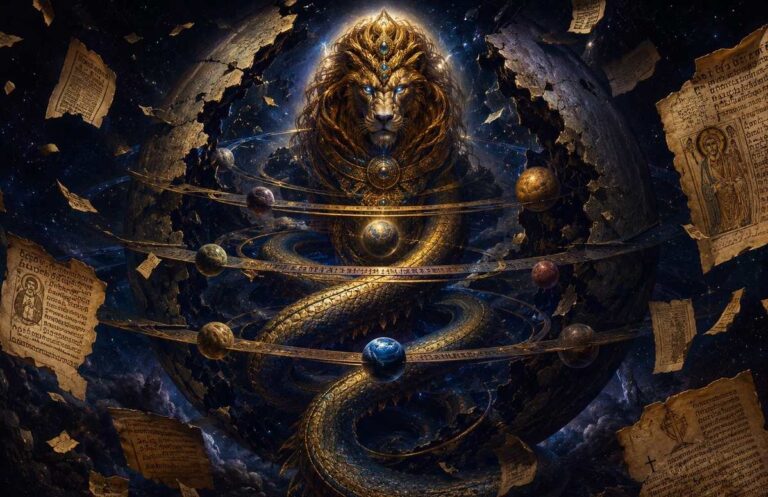
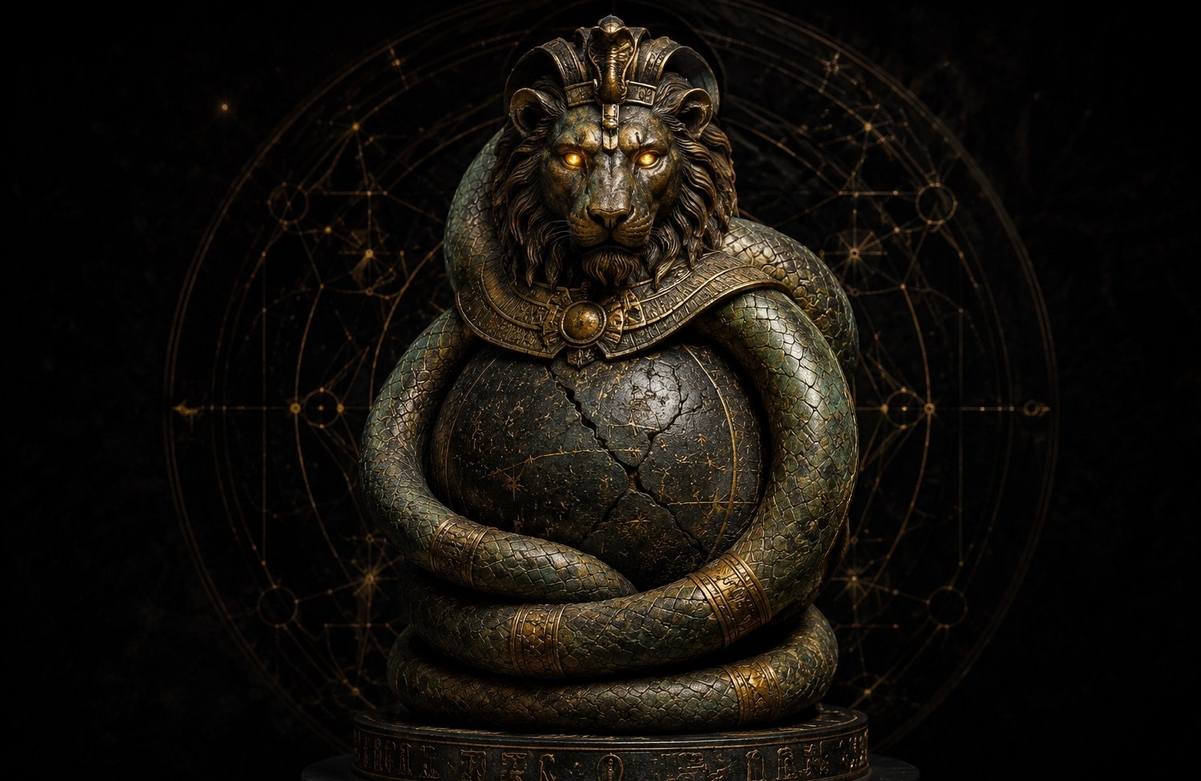
The Apocryphon of John (NHC II,1) offers the most elaborate Gnostic creation account. Here, the Invisible Spirit dwells in the Pleroma–the fullness of divine reality–accompanied by Barbelo and a hierarchy of aeons. Below this realm, Sophia commits an error of passion, producing Yaldabaoth, a lion-faced serpent who is blind, arrogant, and ignorant. He declares, “I am God and there is no other god beside me,” not realising he is a derivative being. He then fashions the material world and humanity, trapping a spark of the divine light within Adam.
The parallel to a programmer is structural but not identical. Yaldabaoth is not a coder typing commands into a void; he is a cosmic craftsman, a demiourgos in the older Greek sense, working with pre-existent matter and shadow. Plato’s Demiurge in the Timaeus was a benevolent artisan shaping chaos according to eternal forms. The Gnostic Yaldabaoth inverts this: he is incompetent, malicious, or both, and his creation is a flawed copy of a flawless original. The material world is not a simulation running on hardware; it is a realm of darkness and forgetfulness, a counterfeit cosmos that obscures the true light above.
From Plato’s Benevolent Craftsman to the Gnostic Bungler
Where the parallel genuinely holds is in the derivative nature of the creator. Just as a simulated world depends on a base reality running on more fundamental hardware, Yaldabaoth’s cosmos depends on the Pleroma. He cannot create ex nihilo; he can only rearrange, imitate, and entrap. The world is secondary, contingent, and governed by a being who does not understand his own parentage. This is less digital ontology and more metaphysical dependency–but the intuition that our reality is generated by a lesser intelligence who mistakes himself for supreme is remarkably persistent across two millennia.
Valentinian Gnosticism complicates this picture further. In Valentinus’s system, the Demiurge is not evil but merely ignorant and well-meaning. He creates the world unconsciously influenced by the higher realm, and the universe becomes almost perfect–to his own surprise. He then attempts to remedy its slight imperfection by sending a Messiah, not realising that the true Saviour operates from above. This version of the Demiurge is less a malicious hacker and more a junior developer who has inherited a codebase he barely comprehends, deploying patches that inadvertently serve a larger design he cannot see.
Subroutines and Rulers
The Hypostasis of the Archons
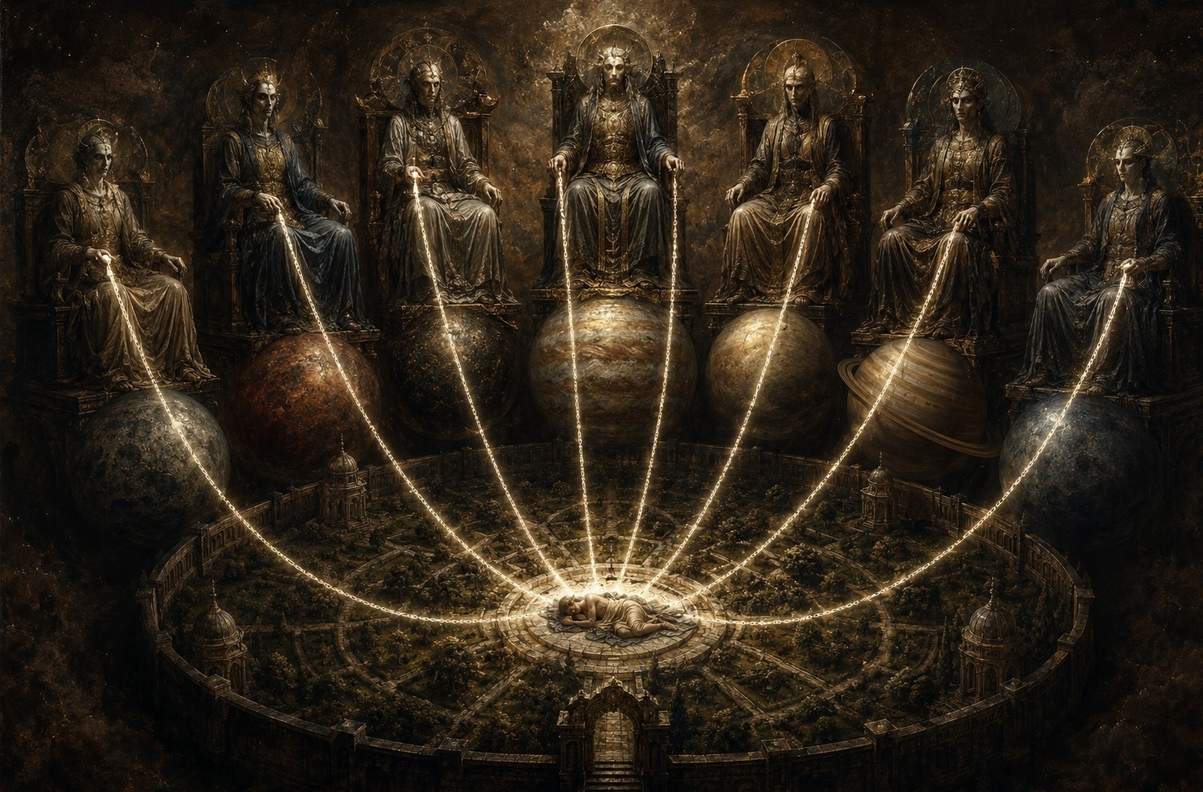
The Hypostasis of the Archons (NHC II,4), also called The Reality of the Rulers, opens with a crucial declaration: “Their authority is an illusion.” The archons are cosmic administrators who believe they govern, yet their power depends on human ignorance. The text describes how these rulers fashion Adam from dust and water, breathe a counterfeit soul into him, and place him in a garden designed to keep him docile. When they see the divine image reflected in the waters below, they lust after it and attempt to capture it by creating a physical decoy–the body of Adam.
Eleleth, an angelic revealer, explains to Norea that the archons’ dominion is temporary and illegitimate. They enforce rules–do not eat from the tree of knowledge, remain in the garden, accept your material condition–but these rules are bindings, not blessings. The counterfeit spirit, a kind of psychic overlay, ensures that most humans remain asleep to their true origin, recycling through generations without recognising the divine spark within.
The Counterfeit Spirit and Enforced Ignorance
Modern readers immediately see subroutines: autonomous programs enforcing boundary conditions. Yet the text does not describe code. It describes spiritual entities with passions, lusts, and limitations. The archons are androgynous, jealous, and capable of repentance–Sabaoth, the seventh archon, repents and is elevated to the seventh heaven. They are not algorithms; they are personified forces. The parallel is functional, not ontological. They maintain the system, but the system is a moral and spiritual prison, not a computational matrix.
The Apocryphon of John develops this further with the concept of the counterfeit spirit (antimimon pneuma), an instrument of spiritual enslavement deliberately created by the archons to deceive the human race. It closes the hearts of those it dominates, hardening them through successive incarnations and steering them into evil works. Those who die under its influence are handed over to the authorities, bound with chains, and cast into prison–not a metaphorical description of a deleted file, but a mythological account of astral bondage. The escape is not debugging; it is the intervention of the incorruptible One who grants knowledge.
The Code Beneath the Cosmos
Planetary Spheres and Celestial Mechanics
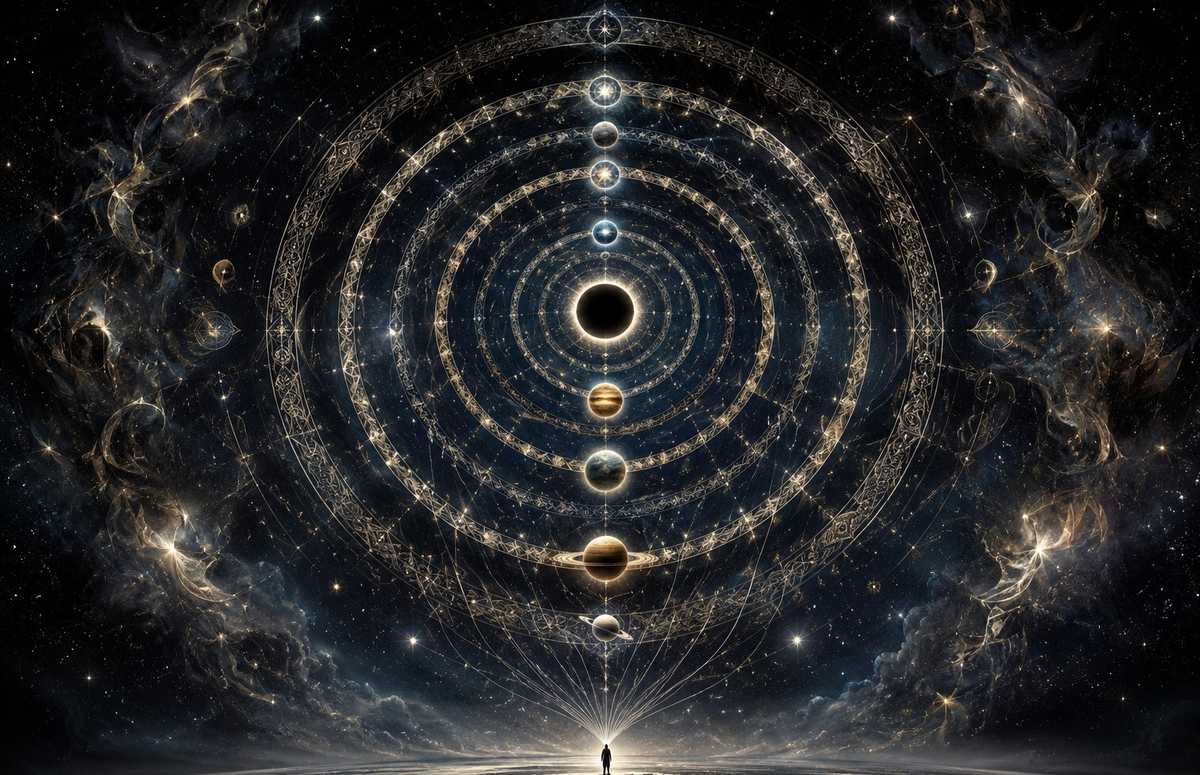
On the Origin of the World (NHC II,5) presents a cosmogony in which the material realm emerges from a primordial shadow and the waters of chaos. Sophia’s fall produces Yaldabaoth, who creates the seven planetary spheres–each governed by an archon–and sets the celestial mechanics in motion. The text describes the creation of time, the establishment of fate (heimarmene), and the weaving of a cosmic tapestry that traps spiritual substance in material form.
Here we find the most striking structural parallel to simulation theory: the universe is governed by a set of imposed laws that are not intrinsic to reality but are decreed by rulers. Fate is described as a kind of cosmic administration, a bond that keeps souls cycling through incarnation. The planets are not merely astronomical bodies; they are seats of archonic power, distributing influences that shape human behaviour and keep consciousness tethered to the lower realms.
Heimarmene as Systemic Binding
The Gnostic deployment of heimarmene draws from Stoic and Middle Platonic traditions but inverts their meaning. For the Stoics, fate was the rational order of the cosmos, beautiful and necessary. For the Gnostics, it is a chain of forgetfulness, a severe command issued by illegitimate authorities. The Apocryphon of John explicitly states that from fate came forth every sin, injustice, blasphemy, and the chain of ignorance, binding the whole creation blind so that they may not know God. The archons are unable to shorten Adam’s lifespan because of heimarmene, which was established from the beginning–suggesting that even the rulers are constrained by the systemic laws they administer.
Yet again, the text resists purely digital translation. The planetary spheres are not servers; they are thrones. Fate is not software; it is a spiritual necessity born of ignorance. The text’s goal is not to describe a machine but to map the territory between the Pleroma and the abyss, showing how divine substance became entangled in matter and how it might be extracted.
Where the Parallel Holds and Where It Breaks
The honest reader must distinguish between genuine structural resonance and anachronistic projection. Both frameworks share a suspicion that the visible world is not the final world, and that its governors are not ultimate authorities. But the differences are as instructive as the similarities.
Genuine Structural Resonances
Nested realities. The Pleroma above, the material cosmos below, and the possibility of further subdivisions mirror the simulation hypothesis’s tiers of base and derived reality.
A derivative creator. Yaldabaoth fashions a world he does not fully understand, much like a programmer might create a world with emergent properties neither intended nor comprehended.
Enforced ignorance. The archons actively suppress knowledge of the higher realm, maintaining control through obscurity–functionally analogous to a system that hides its own architecture from its inhabitants.
The rarity of awakening. Only those who receive gnosis–direct, unmediated knowledge of their true nature–can transcend the system, mirroring the simulation hypothesis’s implication that most inhabitants will never discover their status.
The illusory nature of material supremacy. The physical world is not ultimate reality; it is a temporary, flawed construct designed to obscure a more fundamental truth.
Critical Divergences
Technology. The Nag Hammadi authors had no concept of computation, algorithms, or virtual reality. Their metaphors are organic, artisanal, and celestial. To speak of “source code” in a second-century Coptic text is to commit a category error.
Soteriology. Simulation theory offers no salvation. If we are simulated, we remain simulated, and our escape is limited to discovering the fact. Gnosticism offers a path of return to the Pleroma through gnosis, ritual, and ethical transformation.
The nature of the creator. Bostrom’s posthuman programmers are presumably indifferent or curious. Yaldabaoth is actively hostile, jealous, and ignorant. One runs an experiment; the other builds a prison.
Ethics. Simulation theory is ethically neutral. Gnosticism is profoundly moral, concerned with the liberation of divine substance from unjust imprisonment and the restoration of alienated light to its source.
The most responsible framing is this: the simulation hypothesis independently rediscovers a Gnostic intuition about the derivative nature of our reality. It is not confirmation of Gnosticism, nor is Gnosticism a primitive version of simulation theory. They are two maps of similar terrain, drawn in different centuries with different instruments.
Gnosis as the Escape Key
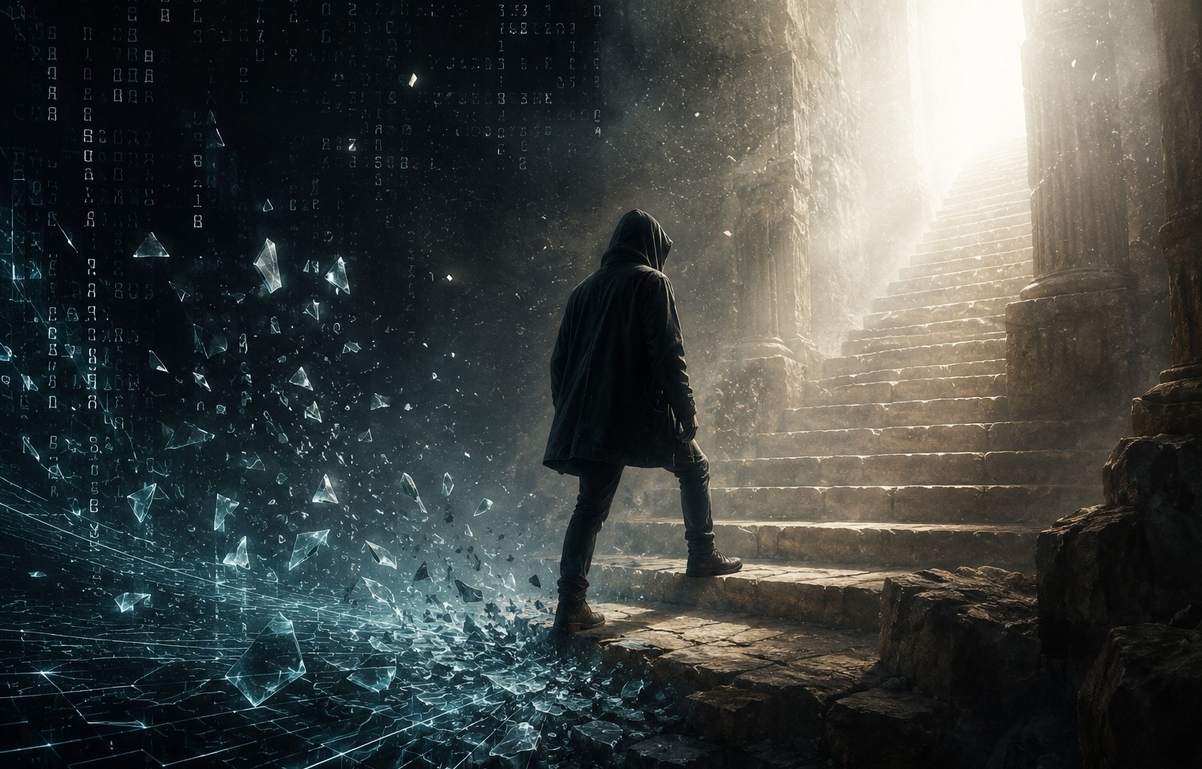
If the archons are system enforcers and the Demiurge is a flawed creator, then gnosis is the act of recognising the exit. In the Apocryphon of John, the Saviour descends through the planetary spheres, stripping off the garments of ignorance and teaching the primordial generation how to pass the archonic guardians by recalling their true names and origins. This is not hacking; it is anamnesis–unforgetting.
The Gospel of Truth (NHC I,3) describes error as a fog that obscures the truth, and gnosis as the moment the fog lifts. The text states that the universe came into being because the Father was unknown, and it will be dissolved when he is recognised. This is not a software patch; it is a change in the fundamental mode of perception. To know the true God is to render the false god’s authority obsolete.
In modern terms, gnosis is less like taking the red pill and more like realising the theatre is empty and the spotlight was always yours. It is not about accessing a hidden menu in the code; it is about recognising that the code was never the operating system, merely a temporary interface. The Gospel of Truth insists that error has no root–it is a temporary aberration without permanence, destined to dissolve the moment the Father is known. This is not a technological exploit but an ontological recognition.
Conclusion
The Nag Hammadi texts do not describe a computer simulation. They describe a fallen cosmos, a divine spark in exile, and a hierarchy of rulers whose power depends on our sleep. Nick Bostrom’s trilemma describes a statistically probable nested reality generated by posthuman computation. The two frameworks share a suspicion that the visible world is not the final world, and that its governors are not ultimate authorities.
To conflate them is to flatten both. To compare them honestly is to see that the question “Are we simulated?” and the question “Are we asleep to our divine origin?” are asking the same thing in different dialects. One speaks in Bayesian probability and silicon substrate. The other speaks in aeons, archons, and the luminous darkness of the Pleroma. Both suggest that waking up is possible–and that the first step is recognising the cage.
Safety Notice: This article compares ancient theological cosmologies with contemporary philosophical hypotheses for educational and contemplative purposes. It does not claim that the Nag Hammadi texts contain hidden technological prophecies, nor does it present simulation theory as scientifically proven. Readers are encouraged to approach both frameworks with critical discernment rather than conflation.
Frequently Asked Questions
What is the simulation hypothesis in simple terms?
The simulation hypothesis, formalised by philosopher Nick Bostrom in 2003, proposes that our reality is likely a computer simulation created by a posthuman civilisation. Bostrom’s trilemma argues that either humanity goes extinct before achieving this technology, advanced civilisations choose not to run simulations, or we are almost certainly living inside one now.
Do the Nag Hammadi texts actually describe a computer simulation?
No. The Nag Hammadi texts describe a theological and metaphysical cosmos created by a flawed demiurge and ruled by archons. While there are structural parallels–such as a derivative reality, enforced ignorance, and the possibility of awakening–the authors had no concept of computers, code, or virtual reality. The parallels are philosophical, not technological.
Who is Yaldabaoth in Gnostic cosmology?
Yaldabaoth is the Gnostic demiurge, a derivative, ignorant, and often malevolent being born from Sophia’s aborted passion. He creates the material world as a flawed copy of the divine Pleroma and falsely declares himself the sole god. He is best understood as a cosmic craftsman rather than a computer programmer.
What are the archons in the Nag Hammadi Library?
The archons are cosmic rulers or authorities who govern the material world and enforce the demiurge’s illegitimate dominion. Texts like the Hypostasis of the Archons describe them as androgynous, jealous beings who maintain human ignorance through deception, the counterfeit spirit, and the bonds of fate.
What is gnosis and how does it relate to waking up?
Gnosis is direct, unmediated knowledge of one’s divine origin and the true nature of reality. In Gnosticism, it functions as an awakening from the sleep of material existence–not by hacking a system, but by anamnesis (unforgetting) and recognising the divine spark within.
What are the main differences between simulation theory and Gnosticism?
Simulation theory is a statistical, technologically framed metaphysical hypothesis with no saviour or ethical path. Gnosticism is a theological soteriology offering a path of return to the divine Pleroma through knowledge, ritual, and ethical transformation. The demiurge is hostile and ignorant, whereas posthuman programmers are presumably indifferent or curious.
Is The Matrix based on Gnostic texts?
The Matrix (1999) draws heavily on Gnostic themes–the demiurge-like Architect, archonic Agents, and the red pill as a symbol of gnosis. However, it is a modern cinematic allegory rather than a direct adaptation. The Wachowskis combined Gnostic motifs with cyberpunk aesthetics and Buddhist concepts to create a contemporary myth.
Further Reading
Explore related threads across the ZenithEye archive:
- Simulation Hypothesis: Clues in the Reality Code — A systematic examination of empirical and philosophical clues that might indicate a simulated reality.
- The Gnostic Matrix — An exploration of Gnostic themes in digital culture and the metaphysics of simulated worlds.
- Archons: The Ruling Powers That Shape Reality — A comprehensive guide to the archons as described across Gnostic traditions and their modern resonances.
- Apocryphon of John: The Gnostic Creation Account — The foundational Nag Hammadi text detailing the fall of Sophia and the birth of Yaldabaoth.
- The Reality of the Archons — An in-depth study of the Hypostasis of the Archons and its account of cosmic rulership.
- On the Origin of the World — The Nag Hammadi cosmogony describing planetary spheres, fate, and the entrapment of divine light.
- The Digital Demiurge: AI as the New Yaldabaoth — How artificial intelligence and algorithmic governance echo the Gnostic demiurge in contemporary terms.
- Nested Simulations and the Infinite Regress Problem — Philosophical examination of simulations within simulations and the logical limits of the hypothesis.
- What is Gnosticism? Defining the Undefinable — An essential primer on Gnostic schools, terminology, and theological distinctions.
- Nag Hammadi Library: The Complete Reader’s Guide — The definitive starting point for navigating all forty-six tractates and their thematic connections.
References and Sources
This article draws upon peer-reviewed scholarship, standard critical editions of the Nag Hammadi Library, and philosophical analyses of the simulation argument. Sources are grouped by category for clarity.
Primary Sources and Critical Editions
- Attridge, Harold W., and George W. MacRae. (1985). “The Gospel of Truth.” In The Nag Hammadi Library in English, edited by James M. Robinson. HarperSanFrancisco.
- Layton, Bentley. (1976). The Hypostasis of the Archons. Nag Hammadi Studies. Brill.
- Waldstein, Michael, and Frederik Wisse. (1995). The Apocryphon of John: Synopsis of Nag Hammadi Codices II,1; III,1; and IV,1 with BG 8502,2. Nag Hammadi and Manichaean Studies 33. Brill.
- Bullard, Roger A., and Howard M. Jackson. (1996). On the Origin of the World. In The Nag Hammadi Library in English, 3rd revised edition. HarperSanFrancisco.
Philosophy and Simulation Theory
- Bostrom, Nick. (2003). “Are You Living in a Computer Simulation?” Philosophical Quarterly, Vol. 53, No. 211, pp. 243-255.
- Chalmers, David J. (2022). Reality+: Virtual Worlds and the Problems of Philosophy. W. W. Norton & Company.
- Kipping, David. (2020). “A Bayesian Approach to the Simulation Argument.” Universe, 6(9), 108.
Gnostic Studies and Comparative Scholarship
- Jonas, Hans. (1958). The Gnostic Religion: The Message of the Alien God and the Beginnings of Christianity. Beacon Press.
- King, Karen L. (2003). What Is Gnosticism? Harvard University Press.
- Lewis, Nicola Denzey. (2013). Cosmology and Fate in Gnosticism and Graeco-Roman Antiquity. Nag Hammadi and Manichaean Studies 81. Brill.
- Turner, John D. (2001). Sethian Gnosticism and the Platonic Tradition. Bibliotheque Copte de Nag Hammadi, Section “Etudes.” Presses de l’Universite Laval.