The Gospel of the Egyptians: Sethian Cosmogony and the Great Seth
The Gospel of the Egyptians—Holy Book of the Great Invisible Spirit. Early Sethian cosmogony featuring the five seals baptism, the immovable race of Seth, and Sophia’s repentance.
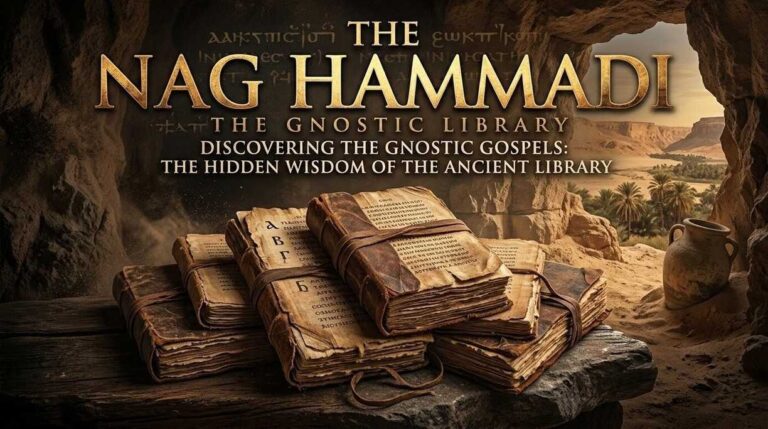
The Gospel of the Egyptians—Holy Book of the Great Invisible Spirit. Early Sethian cosmogony featuring the five seals baptism, the immovable race of Seth, and Sophia’s repentance.
Paraphrase of Shem—unique revelation addressing noetic baptism and the three natures (darkness, spirit, light). Spiritual transformation through mind rather than water.
The Apocalypse of Paul—Paul’s guided tour through the heavens, exposing archontic deception and revealing the path of ascent beyond the fourth heaven through secret knowledge.
A contemplative reading path through the Nag Hammadi library for mystics.
Ascent Literature in Nag Hammadi—Discourse on the Eighth and Ninth, Zostrianos, Allogenes, and more. Guidebooks for the soul’s journey through planetary spheres.
Codex VII—Sethian technical theology at its most challenging. Critique of martyrdom, crucifixion interpretation, and rare Gnostic ritual texts.
Codex IV—the scholar’s codex containing longer versions of Apocryphon of John and Gospel of the Egyptians. Essential for textual comparison and understanding Gnostic textual fluidity.
The Apocryphon of John—the foundational text of Sethian Gnosticism. The fall of Sophia, the birth of Yaldabaoth, the creation of humanity as prison for the divine spark.

Consider the word spelling. To spell is to arrange letters into words, yes–but it is also to cast a magical influence, to bind reality through the articulation of intention. This double meaning is not etymological accident but preserved knowledge–the recognition, maintained in the very structure of language, that words are not merely descriptive labels but…

You inhabit a mystery. Not the mystery of consciousness–that gets most of the attention, the hard problem that philosophers circle like moths around a flame–but the mystery of embodiment. The body that carries you through your days is not the crude machine that Descartes imagined, not the biochemical accident that materialism assumes, but a sophisticated…