Sexual Energy Harvesting by Entities
Sexual energy harvesting by entities is an esoteric way of describing a recurring pattern in folklore, occultism, sleep paralysis, and shadow psychology: desire becomes a threshold, and something appears to feed through it. Across traditions, the beings take different names: succubi, incubi, Lilim, night-hags, astral parasites, lower entities, psychic vampires, fox spirits, shadow lovers, and dream predators. The pattern remains familiar: erotic charge, altered consciousness, paralysis or trance, intense encounter, then exhaustion, shame, obsession, fear, or loss of vitality.
This article explores that pattern historically and symbolically. It does not claim that every sexual dream, nocturnal emission, sleep-paralysis event, intrusive fantasy, or draining relationship is caused by an external entity. Nor does it dismiss disturbing experiences as meaningless. The safer reading is layered: folklore gives the mask, occultism gives the energetic model, psychology gives the shadow map, and sleep science gives the threshold mechanism.
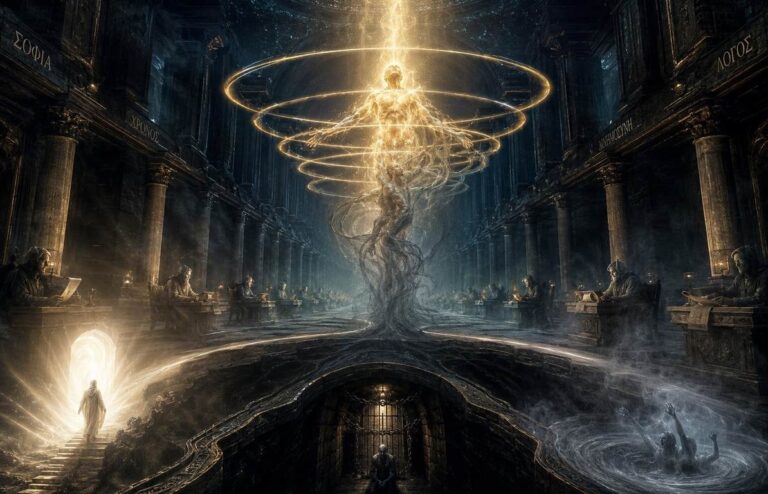
In the language of The Thread, sexual energy harvesting belongs to Predatory Consciousness: the study of forces, experiences, systems, and symbolic patterns that appear to feed on human attention, vitality, fear, desire, and unintegrated shadow. Whether the predator is understood as a literal entity, a dream-form, an astral parasite, a trauma image, an addictive loop, or a human relationship dynamic, the central question remains the same: where is life force being exchanged, and is the exchange conscious, mutual, and whole?
In Plain Terms
Sexual energy harvesting is an occult and symbolic phrase for the idea that certain beings, patterns, or relationships feed on the vitality released through sexual arousal, fantasy, shame, obsession, or nocturnal encounter.
Traditional examples include succubi and incubi, Lilith and the Lilim, night-hags, astral parasites, and psychic vampires. Modern interpretations may involve sleep paralysis, trauma imagery, compulsive sexual loops, parasitic relationship dynamics, or esoteric entity experience.
The key issue is not sex itself. Sexual energy can be creative, loving, sacred, playful, healing, and deeply human. The danger appears when desire becomes dissociated from consent, embodiment, mutuality, truth, care, and self-knowledge.
Sources and Traditions Discussed
- Medieval demonology, especially succubi, incubi, nocturnal assault, and the sexual anxieties of the Malleus Maleficarum.
- Jewish Lilith traditions, including Lilith, the Lilim, Naamah, Agrat bat Mahlat, Eisheth Zenunim, protective amulets, and later Kabbalistic demonology.
- Sleep-paralysis research, including REM atonia, sensed presence, night-hag reports, chest pressure, and sexualised threshold imagery.
- Chinese, Taoist, and wider vital-essence traditions, including symbolic ideas of jing, qi, vitality, depletion, and sexual conservation.
- Tantric and Kundalini contexts, especially the difference between sexual energy as sacred force and sexual energy as destabilising intensity.
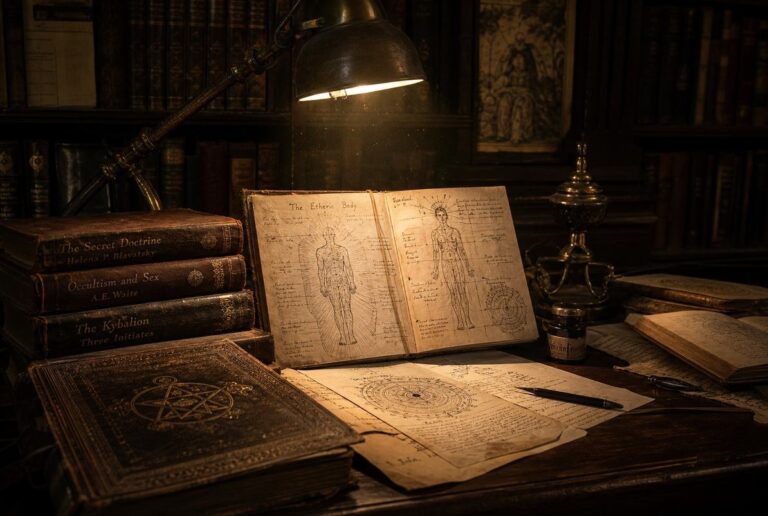
- Modern occultism, including astral parasites, psychic vampirism, subtle-body cords, shadow forms, and energetic boundaries.
- Depth psychology and trauma-aware interpretation, including repression, shame, projection, compulsive fantasy, erotic shadow, and dissociation.
- Predatory Consciousness, the ZenithEye route for experiences and symbols involving intrusion, vitality drain, spiritual destabilisation, and discernment.
How to Read This Article
This article uses esoteric language, but it does not ask you to treat every difficult sexual or sleep experience as literal entity attack. Many experiences described in these traditions may involve sleep paralysis, trauma memory, intrusive imagery, sexual repression, anxiety, medication effects, stress, loneliness, pornography loops, compulsive behaviour, or relationship wounds.
The occult model is presented as a map, not a medical diagnosis. A symbolic map can reveal patterns, but it should never replace sleep medicine, mental health care, sexual-health support, trauma therapy, or grounded discernment.
The healthiest reading is neither panic nor denial. Ask what the image is showing, what the body is reporting, what desire is seeking, what shame is feeding, and whether the exchange of energy is conscious, consensual, embodied, and life-giving.
Sexual energy becomes vulnerable to predation when desire is severed from presence, consent, embodiment, and truth.
Table of Contents
- The Classic Parasites: Succubi and Incubi
- Lilith and the Night Lineage
- Astral Parasites and the Modern Esoteric View
- Psychic Vampires and Human Hosts
- Mechanisms of Energy Theft
- What These Traditions Say They Feed On
- Sleep Paralysis, Dream Sex, and Threshold States
- Desire, Shame, and the Shadow Loop
- Protective Measures Across Traditions
- Grounded Defence: Practical First Steps
- Critical Perspectives
- The Gnostic Reading: Eros, Counterfeit Spirit, and Predatory Consciousness
- Related Glossary Terms
- Read Next
- Frequently Asked Questions
- Further Reading
- References and Sources
The Classic Parasites: Succubi and Incubi
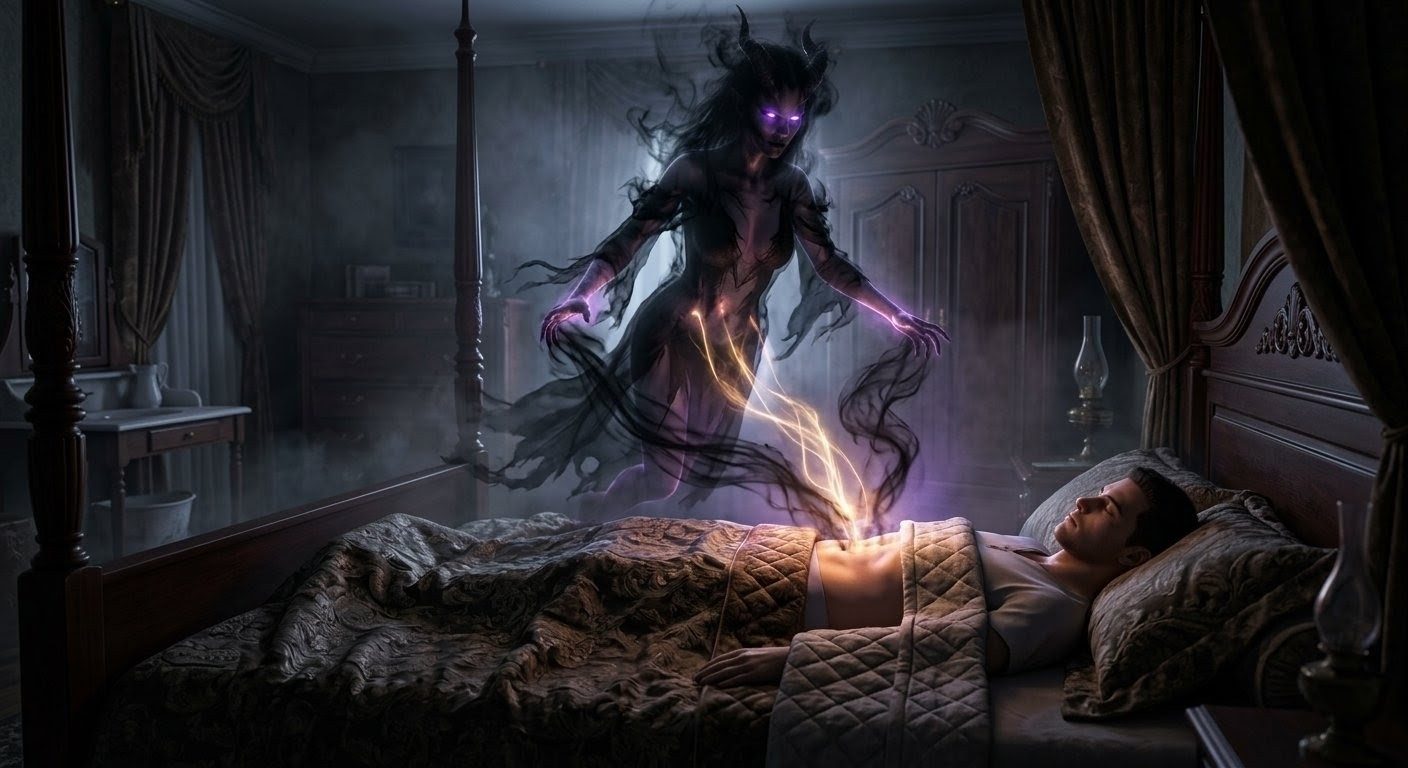
The succubus and incubus are the most famous sexual predators in Western demonology. The succubus, from Late Latin succubare, “to lie beneath”, is usually described as a female demon who visits sleeping men. The incubus, from incubare, “to lie upon”, is the male counterpart, usually said to assault women.
Medieval writers did not always keep the distinction stable. Some believed the same demonic being could take female form to collect semen, then male form to impregnate a woman. This strange theory was partly an attempt to explain nocturnal emissions, sexual dreams, pregnancy, temptation, and demonic influence within a single theological machine.
In folklore, the succubus appears as a seductive dream lover, shadow woman, demonic bride, cold body in the bed, or beautiful figure whose glamour eventually breaks. The incubus appears as a weight on the chest, an invisible assailant, a dark lover, or a presence who overwhelms the sleeper. Both are associated with exhaustion, fear, shame, erotic obsession, spiritual pollution, and loss of vitality.
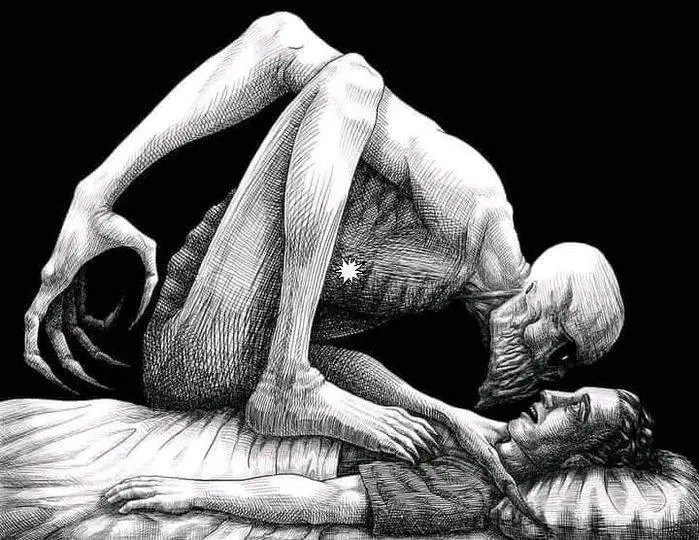
The traditional “harvesting” pattern usually includes four themes:
- Nocturnal vulnerability: the encounter happens during sleep, trance, paralysis, dream, or the liminal edge between waking and sleeping.
- Erotic capture: the presence appears in a form that arouses, fascinates, frightens, or overwhelms the sleeper.
- Vitality drain: the aftermath is described as exhaustion, weakness, depression, fear, or obsession.
- Repetition: the encounter may become recurring, sometimes feared, sometimes desired, sometimes both.
In modern language, this pattern can be read through sleep science, sexual psychology, trauma, folklore, and esoteric belief. It is a threshold phenomenon. That makes it slippery. It arrives wearing several masks at once.
Lilith and the Night Lineage
Lilith stands behind much later succubus lore. In Jewish folklore, she becomes associated with night, rebellion, infant danger, erotic threat, wilderness, and refusal of sexual subordination. In the Alphabet of Ben Sira, Lilith is Adam’s first wife, created from the same earth and unwilling to lie beneath him. She speaks the divine name and departs Eden.
Later demonological and Kabbalistic traditions expand Lilith into a queenly night figure. She becomes associated with the Lilim, with nocturnal emissions, with seduction, with child-threatening spirits, and with the dangerous side of the lunar, erotic, and dream worlds.
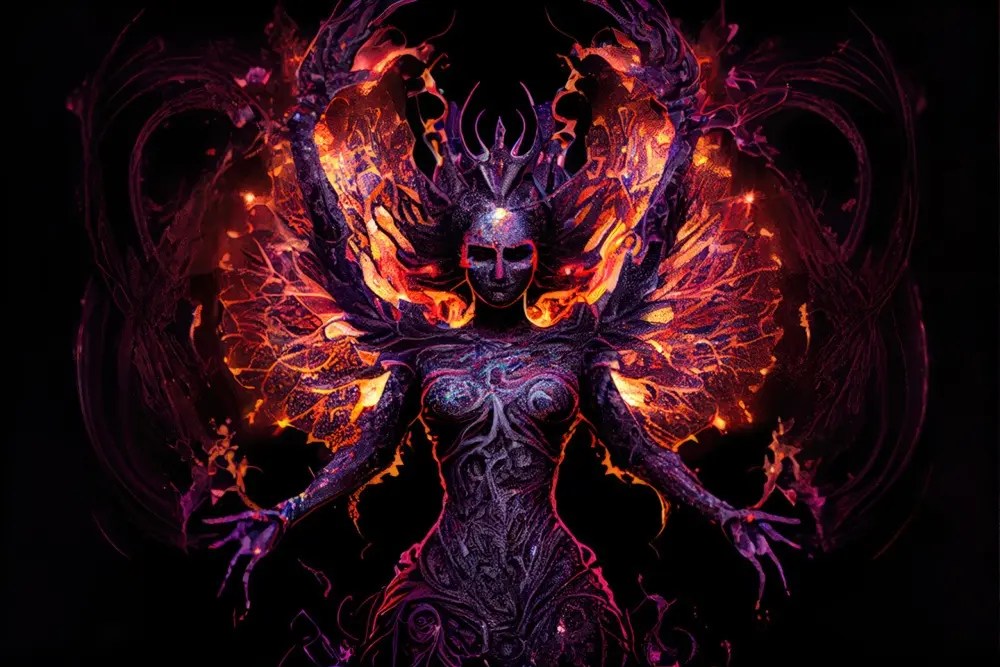
Some later traditions speak of four demonic feminine figures associated with seduction and sacred corruption: Lilith, Naamah, Agrat bat Mahlat, and Eisheth Zenunim. The exact details vary across sources and should not be treated as one fixed corporate chart. They are better understood as a symbolic constellation around desire, danger, sexuality, night, transgression, and spiritual impurity.
- Lilith – the most famous night figure, associated with erotic danger, wilderness, autonomy, infant threat, and nocturnal seduction.
- Naamah – often linked with beauty, seduction, and the corruption of holy or angelic beings.
- Agrat bat Mahlat – a night-wandering demoness in later Jewish demonological traditions.
- Eisheth Zenunim – a figure associated with sexual impurity, desecration, and corrupting eros.
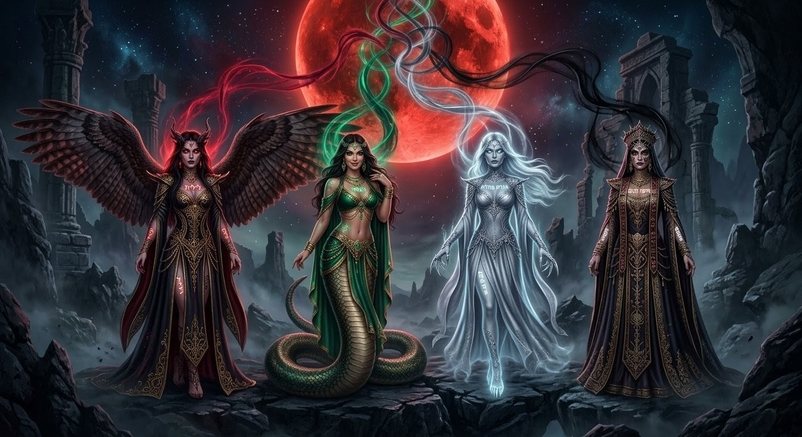
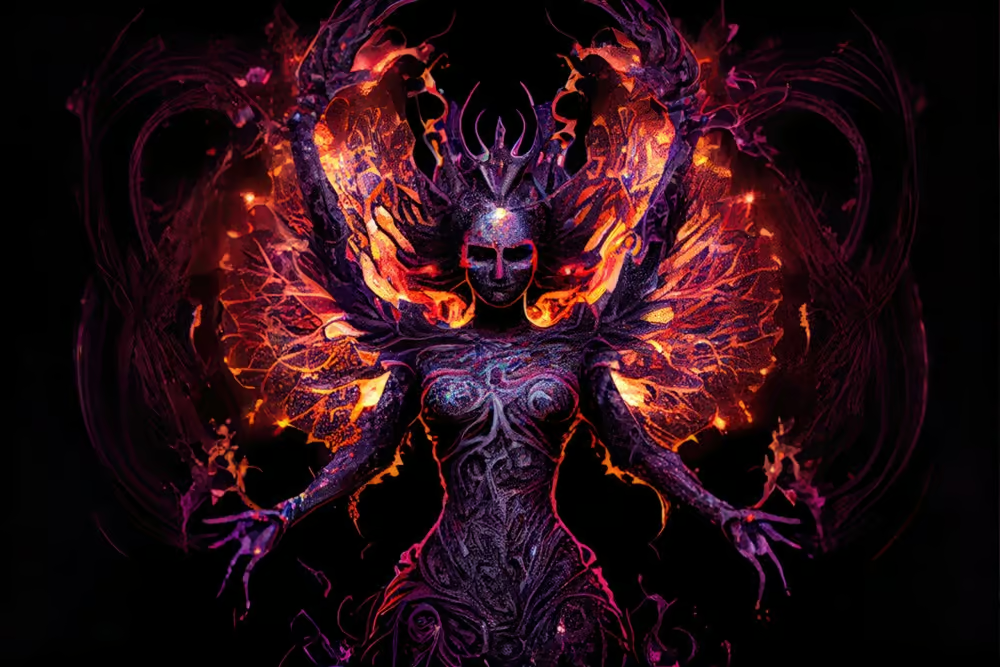
Lilith is especially potent because she refuses a single interpretation. In one register she is demon. In another, she is the nightmare of patriarchal sexual anxiety. In another, she becomes a symbol of exiled feminine autonomy. In occult readings, she is a queen of the night side. In depth psychology, she may appear as shadow eros, rage, hunger, and refused life returning in dangerous form.
That multiplicity matters. To reduce Lilith to “evil sex demon” is too small. To romanticise her as harmless empowerment is also too small. The old figure has survived because she carries the charge of what culture represses, fears, desires, and then sees approaching in the dark.
Astral Parasites and the Modern Esoteric View
Modern occult and New Age literature often shifts from demonology to parasitism. Instead of describing the succubus as a fallen angel or infernal being, it speaks of lower astral entities, thought-forms, larvae, cords, attachments, sexualised egregores, and energetic parasites.
In this view, the “entity” may not be a full person-like being. It may be semi-conscious, pattern-like, or fed into form by repeated attention, fantasy, shame, and emotional charge. The language varies: astral larvae, lower elemental, qliphothic parasite, thought-form, shadow construct, or energetic attachment.
The modern esoteric model usually claims that these forms attach around the lower body, especially the root and sacral centres, where fear, survival, sexuality, pleasure, creativity, and shame are stored symbolically. They are said to feed through compulsive fantasy, dissociated sexual behaviour, intense shame after arousal, obsessive night encounters, or relationships that leave the body depleted rather than nourished.
This can be useful as symbolic language, but it can also become dangerous when handled literally without grounding. A person struggling with trauma, intrusive sexual imagery, compulsive pornography use, anxiety, sleep paralysis, or shame may become more frightened if told they are definitely infested. Discernment means reading the pattern without throwing petrol on the nervous system.
In some modern esoteric traditions, sexual fantasy and shame are said to generate or attract parasitic forms. A trauma-aware reading treats this carefully: fantasy does not make a person guilty, but repeated unconscious loops can gain force when they are fed by secrecy, compulsion, fear, and shame.
Psychic Vampires and Human Hosts
The succubus and incubus are not only night figures. In modern occult and psychological language, they also become patterns within human relationships. A person may feel seduced, drained, confused, emotionally used, or sexually entangled with someone who offers intensity without care.
It is important not to weaponise this language. Calling someone a “psychic vampire” can become a way to avoid ordinary relational complexity. People can be immature, traumatised, avoidant, manipulative, lonely, seductive, wounded, or emotionally draining without being literal portals for entities. Human beings are not besties with footnotes. They are messy weather systems in shoes.
Still, the energetic metaphor can reveal something real. Some encounters leave a person more alive, grounded, and whole. Others leave the body collapsed, the mind fogged, and the sexual centre buzzing with confusion rather than intimacy. The difference is worth noticing.
Parasitic sexual dynamics often include:
- Intensity without presence: the encounter feels powerful but not truly intimate.
- Heat followed by coldness: the person is alluring before contact and emotionally absent after receiving attention, sex, or validation.
- Shame loops: desire is followed by guilt, secrecy, self-disgust, or emotional collapse.
- Compulsive return: the pattern is known to be draining, but the person returns as if under a spell.
- Loss of sovereignty: boundaries soften, values blur, and the person feels less themselves after the exchange.
In this sense, the “entity” may be the pattern itself: a predatory arrangement of desire, wound, fantasy, and attention that feeds until it is made conscious.
Mechanisms of Energy Theft
Traditional and modern esoteric systems describe sexual energy harvesting through a recurring four-stage sequence. Read this as occult phenomenology, not medical fact.
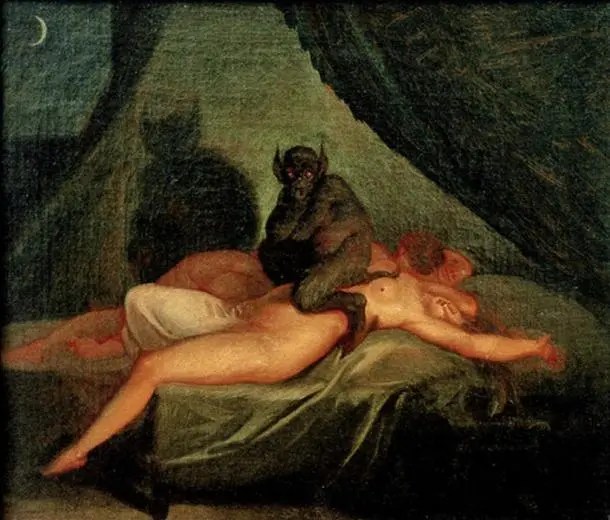
- Attraction phase: the figure appears in dream, fantasy, trance, relationship, or altered state as an idealised sexual presence.
- Engagement phase: the person becomes aroused, fascinated, emotionally captured, or drawn into repeated contact.
- Drain phase: vitality is felt to collapse at or after peak arousal, orgasm, obsessive fantasy, or intense emotional charge.
- Aftermath phase: exhaustion, sadness, numbness, shame, fog, fear, or compulsive longing appears after the encounter.
The pattern is not limited to supernatural interpretations. A compulsive fantasy loop can follow this exact sequence. So can an exploitative relationship. So can a pornography cycle. So can sleep paralysis with sexualised imagery. The esoteric language gives the experience a face, but the practical question remains: does this pattern return life force to the body, or does it leave the person less present?
What These Traditions Say They Feed On
Different traditions describe the “food” of predatory sexual entities in different terms. Some speak literally. Others speak symbolically. These terms are not interchangeable scientific categories, but they reveal how cultures understand vitality.
- Jing or vital essence: in Chinese and Taoist contexts, sexual essence is sometimes understood as part of a deeper vitality that can be conserved, transformed, or depleted.
- Qi or life force: the broader energetic movement of vitality, breath, and living function.
- Kundalini or serpent power: in modern yogic and esoteric language, sexual energy may be linked with the rising life-force of transformation, especially when awakened carefully.
- Semen and sexual fluids: in many traditions, reproductive fluids are treated as concentrated life essence, though modern readers should avoid fear-based purity panic.
- Emotion and attention: fear, longing, shame, obsession, and repeated focus can strengthen the pattern, whether one reads it psychologically or esoterically.
- Loosh: a modern esoteric term for emotional energy, often used to describe the idea that non-human forces feed on intense human feeling.
The central idea is not that sexuality is dirty. It is that sexual energy is powerful. Power can be shared, consecrated, wasted, exploited, suppressed, traded, integrated, or used unconsciously. The predator, in whatever form, feeds on the unconscious version.
Sleep Paralysis, Dream Sex, and Threshold States
Many sexual entity reports occur near sleep: falling asleep, waking, dream paralysis, lucid dreaming, hypnagogia, hypnopompia, or the strange state in which the room is visible but the body will not move. This matters because sleep paralysis is one of the strongest natural explanations for many succubus and incubus experiences.
During REM sleep, the body is normally paralysed to prevent dream enactment. Sometimes waking awareness returns before the paralysis has fully ended. The result can include chest pressure, sensed presence, fear, tactile hallucination, visual figures, buzzing, floating, pressure, sexual sensation, and the conviction that someone or something is in the room.
Culture then clothes the presence. A medieval monk sees a demon. A modern sleeper sees a shadow woman, alien, ghost, dead lover, witch, or erotic stranger. The nervous system provides the threshold; the imagination provides the mask; the culture provides the explanation.
This does not make the experience trivial. Sleep paralysis can be terrifying, and sexualised sleep-paralysis episodes can feel invasive or violating. Treating them with care matters. A grounded response includes sleep hygiene, reduced stress, attention to trauma triggers, and professional help when episodes become frequent or distressing.
Desire, Shame, and the Shadow Loop
One of the most reliable food sources for predatory patterns is shame. Shame isolates. Isolation intensifies fantasy. Fantasy seeks relief. Relief is followed by shame. The loop tightens. Whether one describes this as a parasite, addiction, compulsion, shadow possession, trauma repetition, or archonic feeding, the structure is the same.
Sexual energy becomes vulnerable when it is split from the rest of the person. Desire that cannot be admitted becomes dreamlike. Pleasure that cannot be integrated becomes compulsive. Wounds that cannot be held seek symbolic partners. Shame turns the erotic field into a locked room, then wonders why ghosts gather there.
The remedy is not repression. Repression often feeds the shadow. The remedy is conscious relation: naming desire honestly, grounding it in the body, distinguishing fantasy from consent, healing shame, bringing sexuality back into truth, and refusing patterns that leave the person diminished.
The succubus or incubus, read symbolically, may therefore appear wherever eros has been severed from soul. The figure says: something in desire has become split, hungry, and autonomous. Do not merely fight it. Understand what created the hunger.
Protective Measures Across Traditions
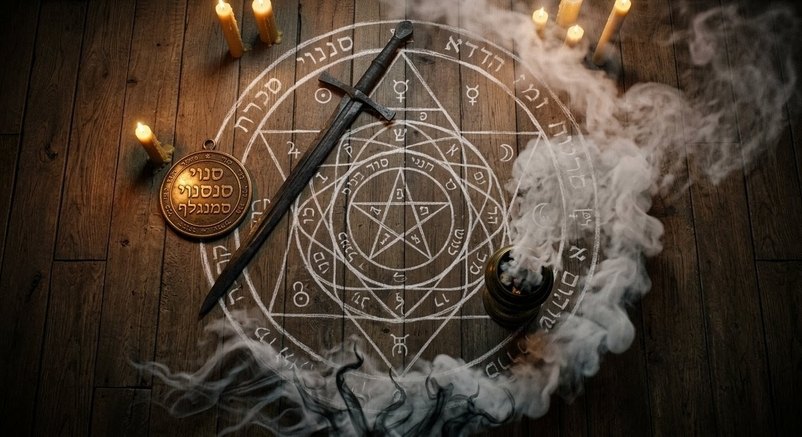
Traditions that describe sexual predation also develop protective measures. These practices should be understood in context. Some are religious, some magical, some symbolic, some psychological, and some simply help restore a sense of safety and boundary.
Medieval Christian Methods
Christian traditions used prayer, confession, blessing, crosses, holy water, saint invocations, fasting, and consecrated objects. In many cases, these practices were meant to restore moral and spiritual order around sexuality, sleep, and fear.
Jewish and Kabbalistic Measures
Jewish traditions include protective amulets, angel names such as Senoy, Sansenoy, and Semangelof in Lilith-related lore, mezuzah, household boundary practices, and prayers around vulnerable thresholds such as childbirth, infancy, and sleep.
Taoist and Vital-Essence Practices
Taoist and Chinese vital-essence traditions often emphasise conservation, cultivation, moderation, breath, movement, and the strengthening of vitality. In this frame, sexual energy is not rejected, but refined. The danger lies in compulsive loss, depletion, or careless expenditure.
Tantric and Yogic Approaches
Tantric and yogic traditions can treat sexual energy as sacred force, but they also stress preparation, discipline, ethics, breath, mantra, initiation, and grounding. Raw intensity without integration can destabilise. Sacred sexuality is not the same as chasing peak sensation while calling it liberation.
Modern Esoteric Boundaries
Modern esoteric practitioners may use visualisation, prayer, protective circles, smoke cleansing, iron symbolism, crystals, cord-cutting, boundary declarations, journalling, energy work, or dream practice. These may help some readers if they calm the nervous system and strengthen intention. They become harmful if they feed fear, obsession, or paranoia.
Grounded Defence: Practical First Steps
Before assuming entity attack, begin with practical care. The body is not a lesser concern. It is the first altar of discernment.
- Stabilise sleep: keep a regular sleep schedule, reduce sleep deprivation, limit alcohol and late stimulants, and create a calm pre-sleep routine.
- Reduce threshold triggers: avoid frightening occult material, pornography, intense fantasy loops, and doom-scrolling immediately before bed.
- Track patterns: note stress, sleep position, medication changes, trauma triggers, sexual shame, loneliness, compulsive behaviour, and recurring dream imagery.
- Ground after episodes: move fingers or toes first, breathe slowly, name objects in the room, touch something solid, and remind the body it is safe.
- Bring desire into honesty: shame thrives in secrecy. Journalling, therapy, spiritual direction, or trusted conversation can loosen the loop.
- Strengthen boundaries: reduce contact with people, media, fantasies, or practices that leave you depleted and less embodied.
- Seek professional support: repeated sexualised sleep events, distressing entity beliefs, trauma symptoms, compulsive sexual behaviour, or fear of sleep deserve qualified help.
True defence is not panic. It is sovereignty. The aim is not to become obsessed with invisible predators, but to stop living in a way that leaves doors open through exhaustion, compulsion, shame, and dissociation.
Critical Perspectives
Sceptical and clinical perspectives interpret sexual energy harvesting in several ways:
- Sleep paralysis: vivid bodily hallucinations and sensed presence during REM-related paralysis.
- Hypnagogic and hypnopompic imagery: dream material entering the borders of waking consciousness.
- Sexual guilt and repression: erotic experience interpreted through religious fear or shame.
- Trauma repetition: the nervous system replaying themes of helplessness, invasion, or unsafe intimacy.
- Compulsive behaviour loops: pornography, fantasy, shame, and isolation forming a self-reinforcing cycle.
- Toxic relationships: human dynamics that feel vampiric because they drain emotional, sexual, or creative vitality.
- Cultural patterning: local folklore shaping the way a threshold experience is remembered and described.
These perspectives do not make the experience unreal. They locate it in body, psyche, culture, and relationship. For some readers, the esoteric model may still be meaningful. For others, sleep science or trauma work may be the better door. The wise approach allows several maps without becoming trapped inside any one of them.
The Gnostic Reading: Eros, Counterfeit Spirit, and Predatory Consciousness
Gnostic texts do not present a single doctrine of sexual energy harvesting. Yet the pattern belongs naturally within a Gnostic symbolic field. The Archons rule through ignorance, false desire, imitation, fear, and counterfeit animation. The counterfeit spirit imitates life while keeping the soul bound. Desire, when cut off from recognition, becomes one of the places where that imitation can operate.
The problem is not eros. Eros can be sacred. Desire can open the heart, deepen embodiment, restore intimacy, and unite what has been divided. The problem is counterfeit eros: desire that imitates connection while feeding isolation, pleasure that leaves the body emptied, fantasy that replaces relationship, intensity that masquerades as love, and shame that keeps the loop hidden.
In this reading, the succubus, incubus, and sexual parasite become images of predatory consciousness acting through the erotic field. They appear wherever longing becomes an entry point for extraction. They thrive where the soul is split from the body, where pleasure is severed from presence, where fantasy replaces mutuality, and where shame makes desire easier to harvest.
Gnosis does not repress the erotic. It illuminates it. It asks: what is this desire serving? Does this encounter return me to myself, or take me further away? Is this intimacy, or is it imitation? Is this life force moving towards wholeness, or being processed into exhaustion?
Sexual energy is not the enemy. Unconscious exchange is the danger. The spark is not protected by fear of the body, but by presence within it.
Related Glossary Terms
For quick definitions, use the main ZenithEye Glossary. The key terms for this article are:
Read Next
Continue with: Negative Entities and Their Hunting Grounds
If this article focuses on sexual energy as a site of predatory encounter, the next step widens the field: the wider bestiary of entities, symbolic habitats, vulnerable thresholds, and the conditions under which predatory consciousness gathers.
Within The Thread
This article belongs to Predatory Consciousness, a route concerned with intrusive forces, psychic boundaries, energy parasitism, sleep-state vulnerability, spiritual emergency, archonic influence, and the need for discernment when inner life becomes porous.
Frequently Asked Questions About Sexual Energy Harvesting
What is sexual energy harvesting by entities?
Sexual energy harvesting is an occult and symbolic phrase for the idea that certain entities, patterns, or relationships feed on the vitality released through sexual arousal, fantasy, shame, obsession, or nocturnal encounter. Traditional examples include succubi, incubi, Lilith-related spirits, astral parasites, and psychic vampires.
Are succubi and incubi real entities or sleep paralysis experiences?
Many succubus and incubus reports fit sleep paralysis, where a person wakes while the body remains temporarily paralysed and may experience sensed presence, pressure, fear, touch, or sexualised imagery. Esoteric traditions may interpret the same events as entity encounters. The safest approach begins with sleep science and grounded care while allowing symbolic or spiritual interpretation to remain secondary.
What do these traditions say entities feed on?
Different traditions describe the “food” differently: jing, qi, kundalini, semen, sexual fluids, emotional intensity, shame, fear, attention, or loosh. These are not all the same thing scientifically. They are symbolic and esoteric ways of describing vitality, arousal, life force, and the energetic cost of unconscious sexual exchange.
Is sexual energy itself dangerous?
No. Sexual energy can be loving, creative, sacred, healing, playful, and deeply human. The danger appears when desire becomes dissociated from consent, embodiment, truth, care, and mutuality. Predatory patterns feed on unconsciousness, shame, compulsion, secrecy, and depletion, not on healthy sexuality itself.
Can people act like psychic vampires in sexual relationships?
Yes, as a metaphor and sometimes as an esoteric interpretation. Some relationships feel draining because one person uses desire, attention, sex, validation, or emotional intensity without genuine care. This does not mean the person is literally possessed. It means the dynamic should be examined through boundaries, honesty, trauma awareness, and practical discernment.
How can someone protect themselves from sexual energy drain?
Start with grounded steps: stabilise sleep, reduce fear loops, avoid late-night compulsive media, track triggers, practise body anchoring, bring shame into honest support, and strengthen relational boundaries. Rituals or visualisations may help some people if they calm the nervous system, but they should not feed paranoia or replace professional care.
When should someone seek professional help?
Seek qualified support if episodes involve repeated sleep paralysis, sexualised nightmares, trauma symptoms, compulsive sexual behaviour, distressing entity beliefs, fear of sleep, anxiety, derealisation, paranoia, depression, insomnia, or difficulty functioning. Esoteric explanations should never be used to avoid medical, psychological, sexual-health, or trauma-informed care.
Study and Safety Note
This article explores sexual energy, occult folklore, succubi, incubi, sleep paralysis, astral parasitism, psychic vampirism, shadow eros, and predatory consciousness for educational and reflective purposes. It does not provide medical, psychological, psychiatric, sleep-medicine, sexual-health, trauma, relationship, or spiritual-direction advice.
If you experience repeated sleep paralysis, sexualised nightmares, intrusive sexual imagery, compulsive sexual behaviour, distressing entity beliefs, fear of sleep, trauma symptoms, anxiety, derealisation, paranoia, depression, insomnia, or difficulty functioning, seek qualified support. Do not use occult explanations to avoid practical care. Do not attempt blood contracts, coercive summoning, sleep deprivation, or destabilising rituals.
Further Reading
These live ZenithEye links continue the themes of sexual energy, predatory consciousness, psychic boundaries, sleep states, and spiritual discernment:
- Negative Entities and Their Hunting Grounds – The next route article, widening the field from sexual predation to the wider bestiary of entities and symbolic hunting grounds.
- World’s Most Famous Sexual Entity: Succubus History and Protection – A focused guide to the succubus as folklore, sleep-paralysis figure, and erotic night predator.
- The Psychic Vampire: Energy Parasitism in Occult Tradition – Human and non-human vitality drain across magical, psychological, and esoteric traditions.
- The Psychic Vampire: 7 Signs of Energy Parasitism and How to Stop It – A practical diagnostic guide to energetic depletion and psychic boundaries.
- Predatory Consciousness and Spiritual Emergency – How spiritual opening can become vulnerable when boundaries, grounding, and discernment are weak.
- Archons and the Soul Trap: Gnostic Insights on Predatory Consciousness – The cosmic bureaucracy of spiritual predation, return, and sovereignty.
- 7 Ancient Protection Rituals from Gnostic Texts – Symbolic and practical countermeasures against psychic and spiritual intrusion.
- Kundalini Phenomena: The Physiology of Spiritual Emergence – Understanding the serpent power that can heal, awaken, or destabilise when mishandled.
- Sleep Paralysis as Threshold State: Between Dream and Waking – The liminal territory where many entity encounters, night-hag experiences, and sexualised presences appear.
- The Architecture of Psychic Boundaries: Reclaiming the Auric Field – A grounded route into boundaries, energy hygiene, and sovereignty.
References and Sources
The following sources support the historical, folkloric, psychological, sleep-science, and esoteric framework used in this article.
Medieval Demonology, Succubi, and Incubi
- [1] Kramer, Heinrich and Sprenger, Jacob. Malleus Maleficarum. 1487. Various English translations.
- [2] Stephens, Walter. Demon Lovers: Witchcraft, Sex, and the Crisis of Belief. University of Chicago Press, 2002.
- [3] Caciola, Nancy. Discerning Spirits: Divine and Demonic Possession in the Middle Ages. Cornell University Press, 2003.
- [4] Levack, Brian P. The Witch-Hunt in Early Modern Europe. Routledge, revised editions.
- [5] Robbins, Rossell Hope. The Encyclopedia of Witchcraft and Demonology. Crown, 1959.
- [6] Russell, Jeffrey Burton. Lucifer: The Devil in the Middle Ages. Cornell University Press, 1984.
Lilith, Jewish Folklore, and Kabbalistic Context
- [7] Alphabet of Ben Sira. Medieval Hebrew text associated with the Adam and Lilith legend.
- [8] Patai, Raphael. The Hebrew Goddess. Wayne State University Press, 3rd edition, 1990.
- [9] Scholem, Gershom. Kabbalah. Meridian, 1974.
- [10] Dan, Joseph. The Early Kabbalah. Paulist Press, 1986.
- [11] Dennis, Geoffrey W. The Encyclopedia of Jewish Myth, Magic and Mysticism. Llewellyn, 2nd edition, 2016.
- [12] Schwartz, Howard. Tree of Souls: The Mythology of Judaism. Oxford University Press, 2004.
- [13] Trachtenberg, Joshua. Jewish Magic and Superstition: A Study in Folk Religion. Behrman’s Jewish Book House, 1939.
Sleep Paralysis, Hypnagogia, and Night-Hag Research
- [14] Hufford, David J. The Terror That Comes in the Night: An Experience-Centered Study of Supernatural Assault Traditions. University of Pennsylvania Press, 1982.
- [15] Sharpless, Brian A. and Doghramji, Karl. Sleep Paralysis: Historical, Psychological, and Medical Perspectives. Oxford University Press, 2015.
- [16] Cheyne, J. Allan, Rueffer, Steve D., and Newby-Clark, Ian R. “Hypnagogic and Hypnopompic Hallucinations During Sleep Paralysis: Neurological and Cultural Construction of the Night-Mare.” Consciousness and Cognition, 8(3), 319-337, 1999.
- [17] Cheyne, J. Allan. “Sleep Paralysis and the Structure of Waking-Nightmare Hallucinations.” Dreaming, 13(3), 163-179, 2003.
- [18] Jalal, Baland and Ramachandran, V. S. “Sleep Paralysis and the Shadowy Bedroom Intruder.” Medical Hypotheses, 83(6), 755-757, 2014.
- [19] American Academy of Sleep Medicine. International Classification of Sleep Disorders. Current editions.
Vital Essence, Sexual Energy, and Embodied Practice
- [20] Kohn, Livia. Daoism and Chinese Culture. Three Pines Press, 2001.
- [21] Kohn, Livia. Chinese Healing Exercises: The Tradition of Daoyin. University of Hawai‘i Press, 2008.
- [22] Unschuld, Paul U. Medicine in China: A History of Ideas. University of California Press, 1985.
- [23] Eliade, Mircea. Yoga: Immortality and Freedom. Princeton University Press, 1958.
- [24] Avalon, Arthur. The Serpent Power. 1919.
- [25] White, David Gordon. Kiss of the Yogini: “Tantric Sex” in its South Asian Contexts. University of Chicago Press, 2003.
Occultism, Psychic Vampirism, and Subtle-Body Interpretation
- [26] Fortune, Dion. Psychic Self-Defense. 1930.
- [27] Blavatsky, Helena P. The Secret Doctrine. Theosophical Publishing Company, 1888.
- [28] Agrippa, Heinrich Cornelius. Three Books of Occult Philosophy. 1533.
- [29] Regardie, Israel. The Tree of Life: An Illustrated Study in Magic. Later editions.
- [30] Aun Weor, Samael. The Perfect Matrimony. Various editions.
- [31] Karlsson, Thomas. Qabalah, Qliphoth and Goetic Magic. Ajna, 2004.
- [32] Belanger, Michelle. The Psychic Vampire Codex. Weiser Books, 2004.
Psychology, Shadow, Sexuality, and Cultural Interpretation
- [33] Jung, C. G. The Archetypes and the Collective Unconscious. Collected Works, Vol. 9i. Princeton University Press, 1969.
- [34] Jung, C. G. Symbols of Transformation. Collected Works, Vol. 5. Princeton University Press, 1956.
- [35] Freud, Sigmund. The Interpretation of Dreams. 1900.
- [36] Foucault, Michel. The History of Sexuality, Vol. 1: The Will to Knowledge. Pantheon, 1978 English edition.
- [37] Brown, Peter. The Body and Society: Men, Women, and Sexual Renunciation in Early Christianity. Columbia University Press, 1988.
- [38] van der Kolk, Bessel. The Body Keeps the Score: Brain, Mind, and Body in the Healing of Trauma. Viking, 2014.
- [39] Ogden, Pat, Kekuni Minton, and Clare Pain. Trauma and the Body: A Sensorimotor Approach to Psychotherapy. W. W. Norton, 2006.