
The Varieties of Ego Dissolution: From Mild to Extreme
The ego–that persistent sense of being a “someone”–is not binary. It is not simply present or absent. It is a spectrum, variable in intensity, quality, and stability. Like a weather system that sometimes operates as gentle mist and other times as a hurricane, the self’s presence waxes and wanes across a continuum of dissolution.
This taxonomy draws its intellectual ancestry from William James’s The Varieties of Religious Experience (1902), which insisted that spiritual phenomena must be studied phenomenologically rather than dogmatically. A century later, neuroscience corroborates what contemplatives mapped long ago: the default mode network (DMN), the brain’s self-referential circuitry, quiets during deep meditation and altered states, producing the very thinning of narrative selfhood described in ancient texts.
Dissolution, likewise, is not a single phenomenon but a range: from a mild thinning of the narrative to a complete, visceral absence. Understanding these varieties is essential for navigation; it allows the practitioner to distinguish productive transformation from pathology, and genuine progress from mere simulation.
Table of Contents
- The Nature of the Spectrum
- Diminution: The Self Thins
- Expansion: The Self Grows
- Fragmentation: The Self Shatters
- Complete Dissolution: The Self Absent
- Navigation Through Recognition
- Integration and the Return
- Frequently Asked Questions
- Further Reading
- References and Sources
The Nature of the Spectrum
The ego is not a thing but a process–a continuous act of self-ing that constructs narrative coherence from raw experience. When this process weakens, the result is not necessarily liberation. It may be transparency, inflation, chaos, or absence, depending on context, preparation, and the ground upon which the experience unfolds.
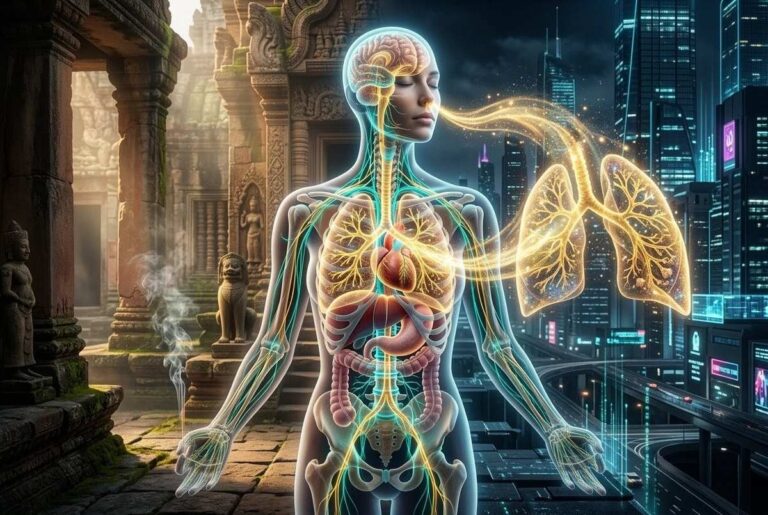
Neuroscience now offers a material correlate. The default mode network (DMN), active during mind-wandering and self-referential thought, shows decreased connectivity during deep meditation, psychedelic experiences, and certain forms of focused attention. When the medial prefrontal cortex and posterior cingulate cortex reduce their chatter, the autobiographical filing system suspends operations. The self does not die; it simply stops talking about itself. This is the neurological signature of diminution–the first variety on our map.
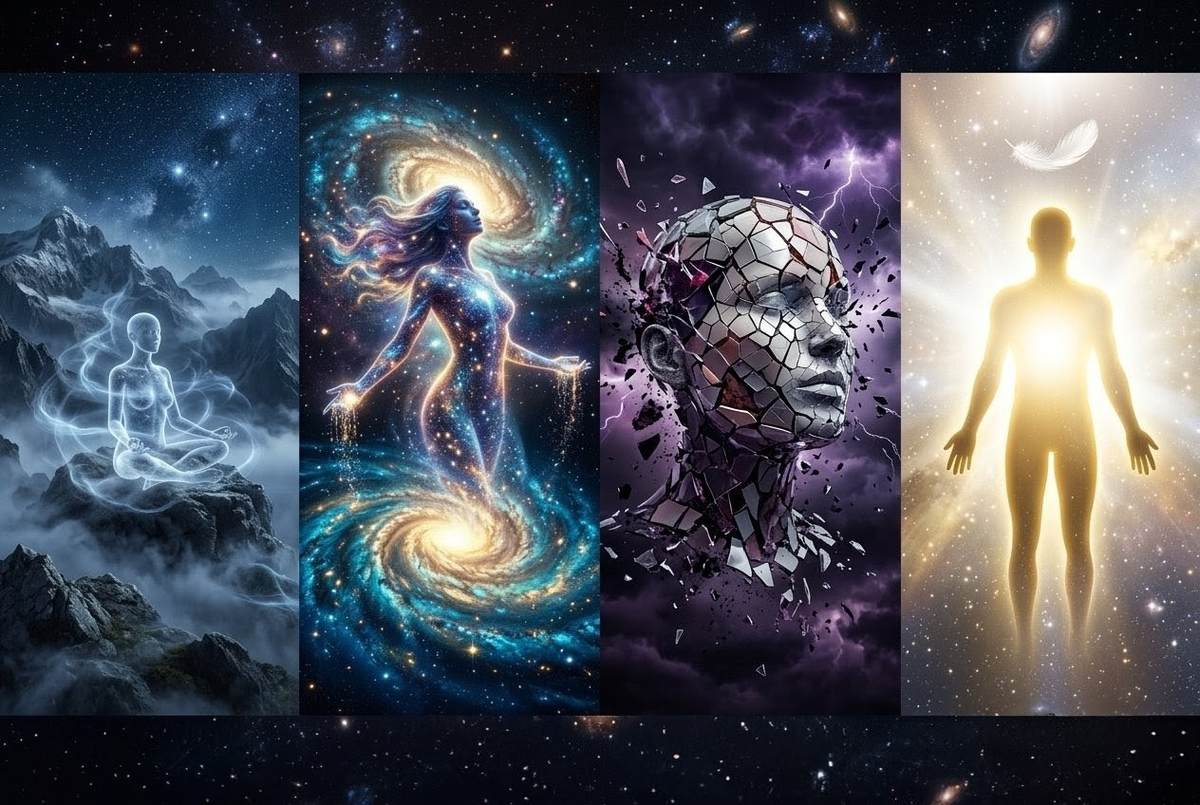
Yet the map is not the territory. These four varieties often blur at the edges, and a single individual may traverse all of them across a lifetime, or even within a single intensive retreat. The task is not to collect peak states but to recognise what is happening while it happens, and to respond with the appropriate medicine.
Diminution: The Self Thins
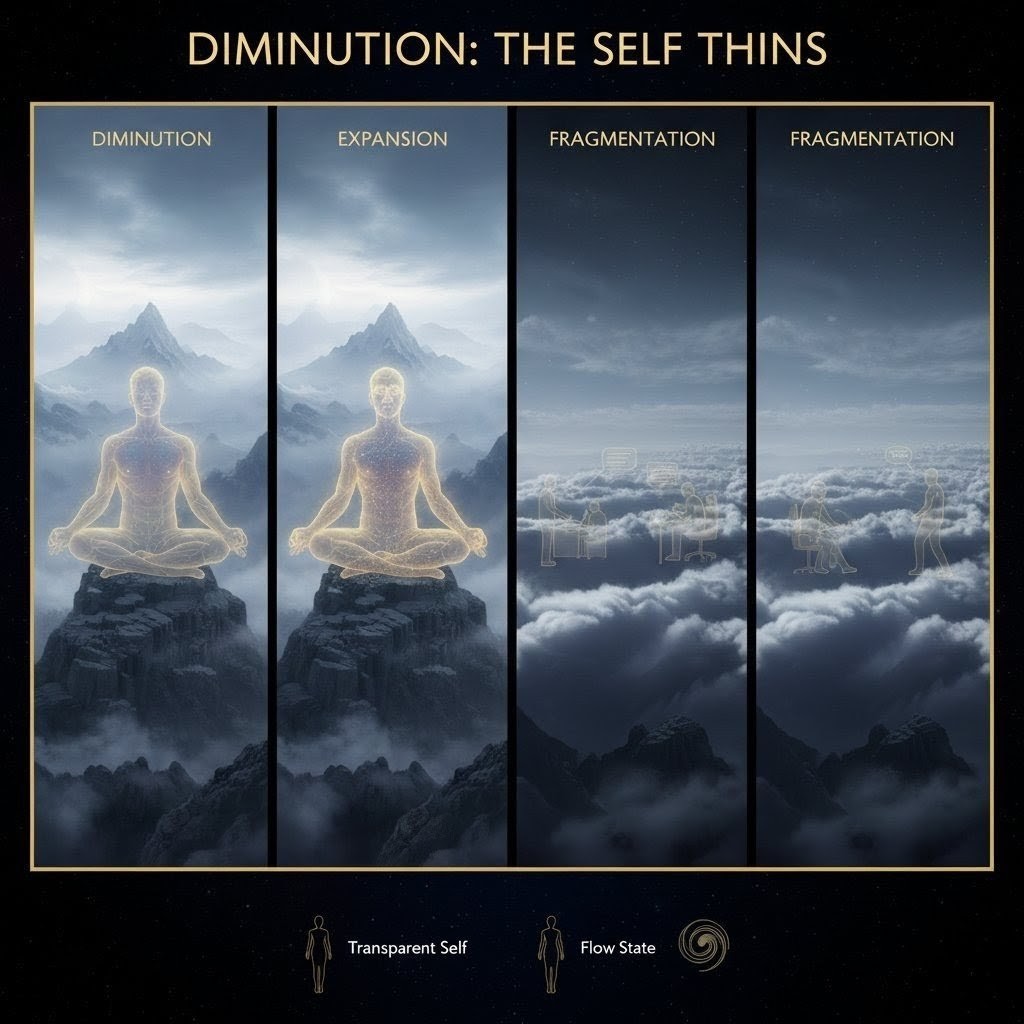
Mild dissolution, or ego diminution, produces a sense of distance from ordinary concerns. The “narrative self”–that compulsive storyteller that files daily reports on your behalf–recedes into the background like a librarian on extended leave.
- Experience: Preferences lose their urgency; autobiographical memories feel less “heavy” or relevant. The self is not gone; it is simply transparent, a ghost in its own machine.
- Context: Often found in deep meditation, “flow states,” or exposure to vast nature where habitual self-referential processing temporarily quiets. Mihaly Csikszentmihalyi’s research on optimal experience (1990) locates this as the condition where self-consciousness vanishes into absorbed attention.
- Integration: Functioning remains intact. You can still work and converse, but you do so with a lighter, less burdened touch–an observer no longer annotating every sensation.
Expansion: The Self Grows
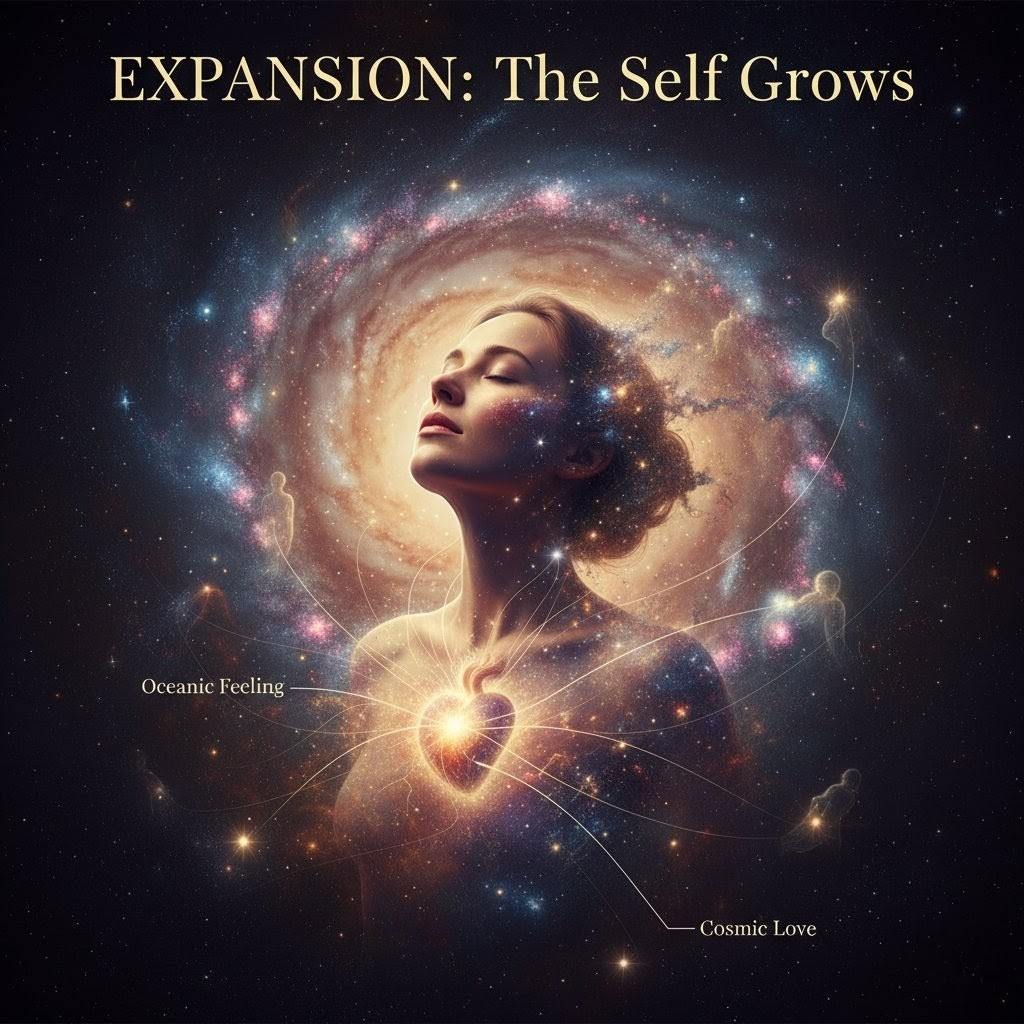
Paradoxically, dissolution can feel like expansion. Instead of the “I” disappearing, the boundaries of the “I” extend to include others, the environment, or the entire cosmos. The sense of self inflates, claiming the cosmos as its own province.
- Experience: Often called “oceanic feeling,” this is characterized by intense love and a sense of profound interconnection. The heart feels as though it contains the entire stellar population.
- The Trap: This state is highly susceptible to inflation. Without grounding, the practitioner may develop a “spiritual ego,” believing themselves to be uniquely chosen or cosmically significant–a demiurge in their own private cosmology.
- Integration: Requires a return to the humility of the limited self and the physical body. The expansion must dissolve into ordinariness, not grandiosity.
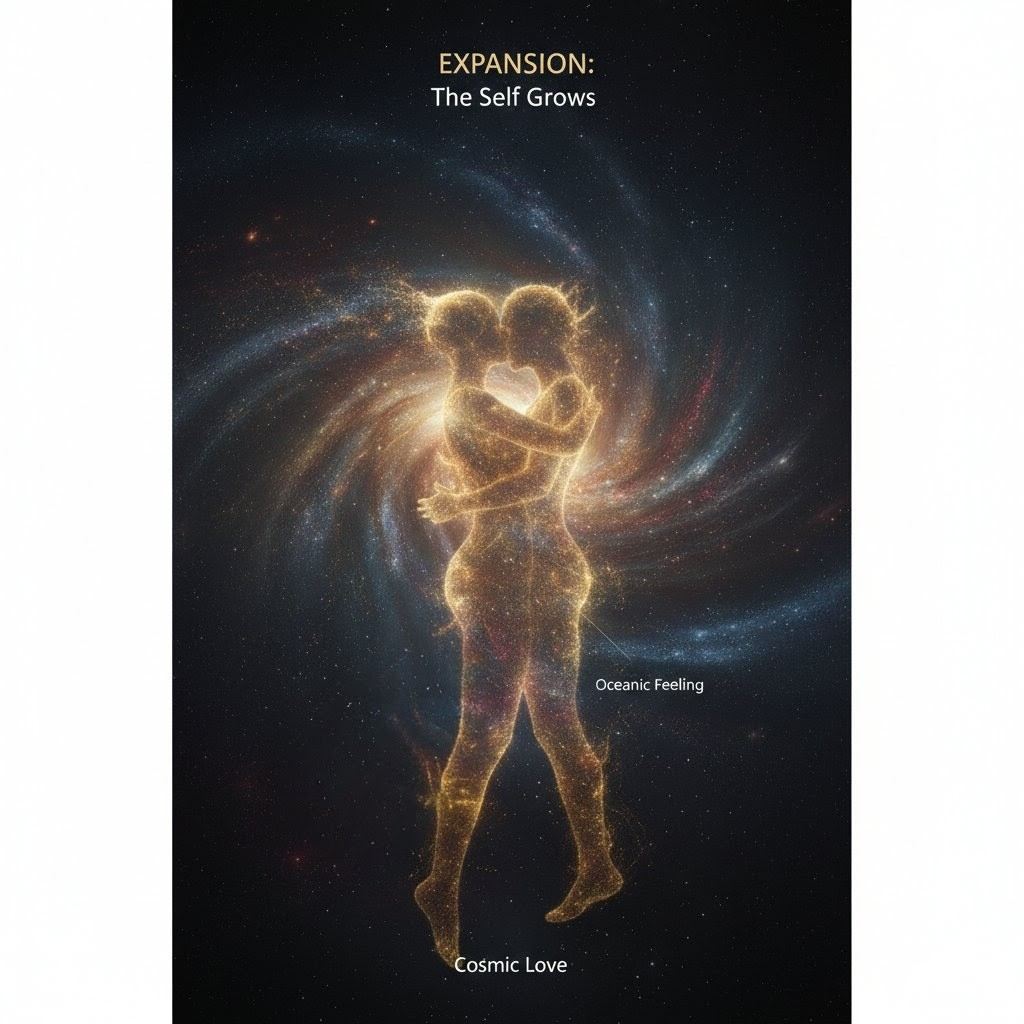
The term oceanic feeling was introduced by the French writer Romain Rolland in his letter to Sigmund Freud dated 5 December 1927. Rolland described it as a sensation of the “eternal” without perceptible limits, common to mystics across traditions and independent of any dogma. Freud subsequently examined the concept in Civilization and Its Discontents (1930), interpreting it regressively as a return to infantile unity. Contemplative traditions, by contrast, treat it as a genuine expansion of consciousness–one that demands grounding to avoid the inflation trap.
Fragmentation: The Self Shatters
Pathological dissolution, or ego fragmentation, is not a spiritual achievement but a psychological emergency. The self does not thin or expand; it shatters into incoherent pieces like a mirror struck by lightning–fragments everywhere, no organisational logic, pure chaotic reflection.
- Experience: Terror, paranoia, and the loss of the “thread” of continuity. The world feels unreal or hostile. The pattern unravels, revealing not governors but malevolent pranksters dismantling the machinery.
- Context: Occurs in psychosis, severe trauma, or overwhelming psychedelic experiences without a safe container.
- Differentiation: Spiritual dissolution dissolves into something (Awareness, Ground, Love). Fragmentation dissolves into nothing (Chaos, Void, Fear). This requires immediate medical or psychological containment, not spiritual guidance.
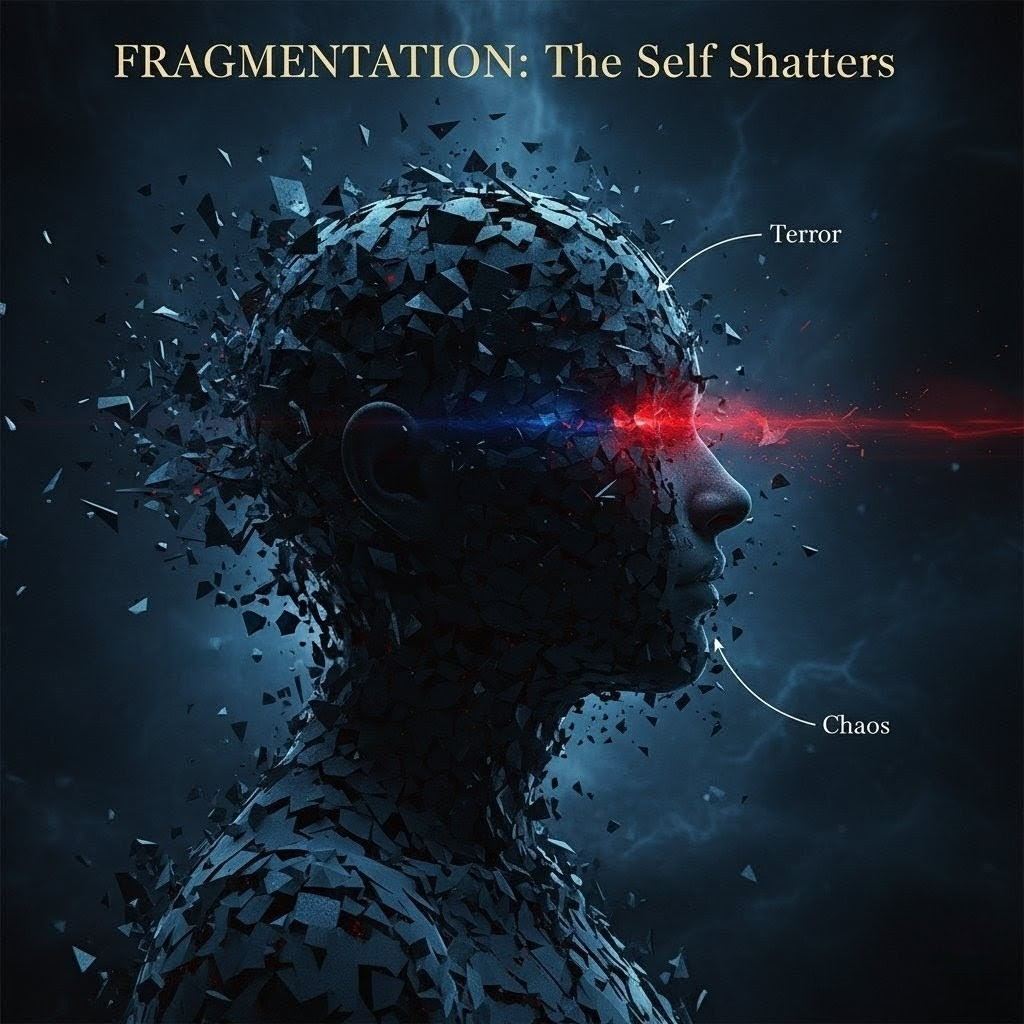
This is the territory Stanislav and Christina Grof mapped as “spiritual emergency”–a crisis of transformation that mimics psychosis but carries the potential for genuine reconstitution at a higher level. The difference lies in whether the dissolution moves toward integration or disintegration. Fragmentation offers no ground; it is the mirror struck by lightning, not the ice melting into water. If reality testing fails, if sleep becomes impossible, if terror persists beyond the acute episode, the situation has crossed from spiritual difficulty into psychiatric emergency.
Complete Dissolution: The Self Absent
This is the “Zero Point.” Ego absence is the visceral realization that there never was a substantial self to begin with–only the function of “self-ing,” the temporary clerk who mistook the job for an identity.
The burden of self-maintenance is lifted. Not unconsciousness, but consciousness without a subject-object structure. Awareness without “awareness of awareness.”
- Experience: This is often reported as a profound relief. It is variously described as Void, Clear Light, or Simple Suchness–the office closed for business, permanently.
- Context: Advanced contemplative practice or near-death experiences where the survival mechanism temporarily suspends its operations.
- Integration: When the self returns to function, it does so as a tool rather than an identity. There is action without an “actor,” and performance without a “performer”–the ultimate efficiency.
This state is variously described in Dzogchen as rigpa (knowing without a knower), in Zen as “ordinary mind” (nothing special), and in Advaita Vedanta as the recognition that Atman and Brahman are not two. The return to function is not a failure but the beginning of true service–what the Tao Te Ching calls “action through non-action.” The self resumes its operations as a temporary garment, donned when useful, set aside when not.

Navigation Through Recognition
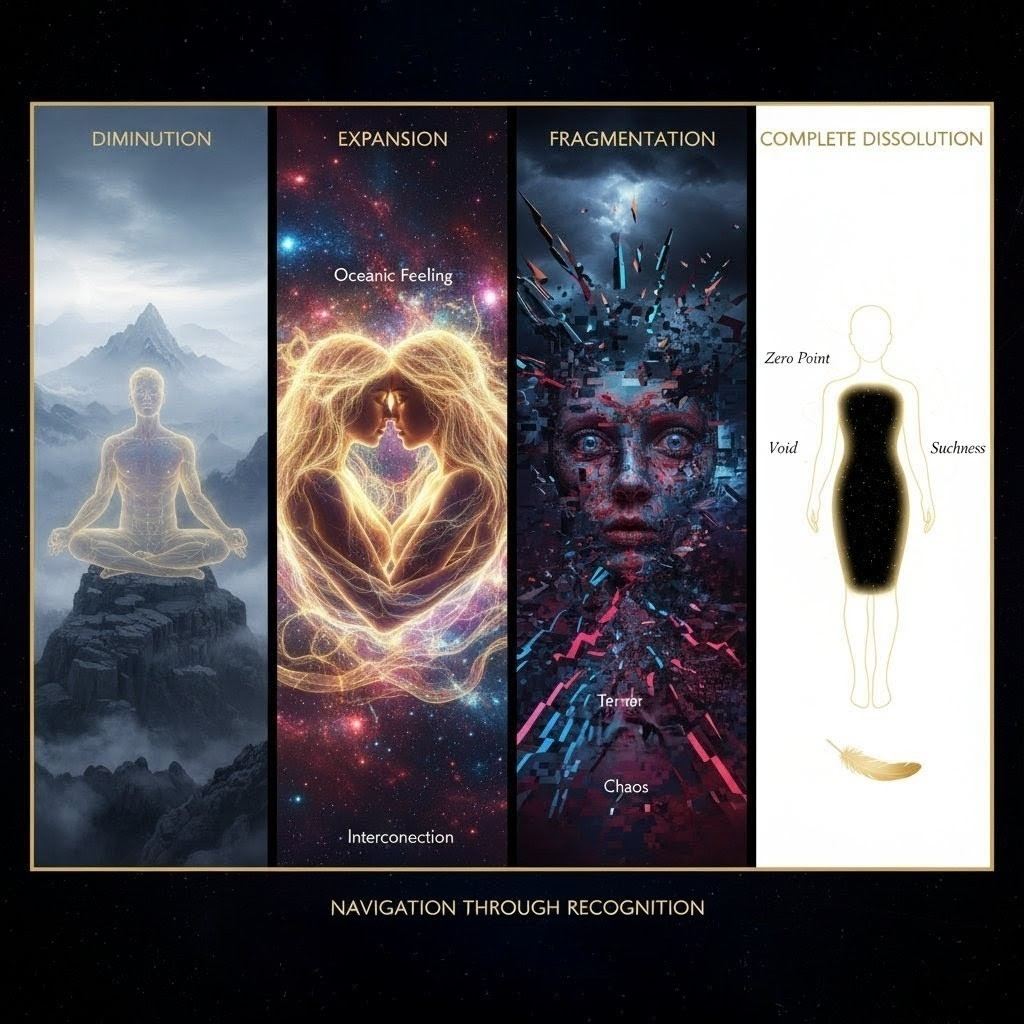
The path is not linear. You may experience complete absence one day and mild thinning the next. The key is to recognise the variety currently manifesting so you can respond appropriately. Confusion thrives on misidentification–calling fragmentation “enlightenment” or diminishing expansion into mere mood.
The following compass offers orientation. Each variety demands a specific response; offering the wrong medicine is worse than offering none at all.

Diminution
Recommended Response: Continue practice; observe the lightness. Do not cling to the transparency, nor fear its departure. The narrative will return–your task is to note its absence while it lasts. Treat it as a preview, not a destination.
Expansion
Recommended Response: Ground carefully; return to physical labour or nature. The spiritual ego inflates rapidly in rarefied atmospheres. Return to the humility of dishes, dirt, and gravity. If you cannot bring the expanded love to a difficult relative or a traffic jam, it was likely mood, not transformation.
Fragmentation
Recommended Response: Seek support; prioritise safety and stability. This is not a “dark night of the soul” but a system emergency. Contact medical or psychological professionals immediately. Do not attempt to “meditate through” psychosis. Stabilise before any spiritual interpretation.
Complete
Recommended Response: Integrate slowly; allow the new perspective to settle. The return of function is not a failure but the beginning of true service–action without the burden of an “actor.” Avoid the trap of teaching too soon; silence is the best sermon.
Integration and the Return
After any variety of dissolution, the return to ordinary functioning is not a step backward but a test of embodiment. The self that re-emerges must be allowed to settle like sediment after a storm. Rushing to interpret, teach, or write about the experience often signals inflation; quiet return to manual labour, relationships, and simple presence signals maturity.
The true mark of dissolution is not the peak experience but the quality of attention brought to washing dishes, walking to the market, or listening to a friend without rehearsing your response. If the experience does not eventually deepen your capacity for ordinary kindness, it was likely spectacle rather than transformation.
The practices of Neti Neti (“Not this, not this”) from the Brihadaranyaka Upanishad create a space between the soul and its experiences. In that space, identification loosens. The self becomes a tool–sharp when needed, set aside when not. This is the ultimate administrative efficiency: function without the fiction of a permanent functionary.
Frequently Asked Questions
What is ego dissolution and is it dangerous?
Ego dissolution refers to the temporary or permanent loss of the sense of being a separate self. It ranges from mild (diminution) to complete absence. While natural in deep meditation, it can be dangerous when it manifests as fragmentation (psychosis) or when inflation occurs during expansion. Proper guidance and context determine safety.
What are the four varieties of ego dissolution?
The four varieties are: (1) Diminution – the self becomes transparent and light; (2) Expansion – boundaries dissolve into oceanic feeling and cosmic love; (3) Fragmentation – the self shatters into chaos and terror (pathological); and (4) Complete Dissolution – the zero point where the self is recognised as never having been substantial.
What is the difference between ego dissolution and ego death?
Ego dissolution is a spectrum ranging from mild thinning to complete absence, often temporary and reversible. Ego death typically refers to the complete, permanent dissolution where the self is recognised as illusory. However, the terms are often used interchangeably in popular discourse.
What is oceanic feeling in spiritual experience?
Oceanic feeling describes the experience of ego expansion where boundaries between self and cosmos dissolve, producing intense love and interconnection. Named by Romain Rolland in his 1927 correspondence with Freud and discussed in Freud’s Civilization and Its Discontents (1930), it characterises the Expansion variety of dissolution where the self grows to include everything rather than disappearing.
How can you tell if ego dissolution is pathological?
Pathological dissolution (fragmentation) involves terror, paranoia, loss of continuity, and inability to function. Spiritual dissolution dissolves INTO something (awareness, love, ground) while fragmentation dissolves into nothing (chaos, void, fear). If reality testing fails or safety is compromised, immediate professional help is required.
What should you do during ego fragmentation?
During ego fragmentation, prioritise immediate safety and professional support. This is a medical/psychological emergency, not a spiritual opportunity. Do not attempt to meditate or practice through it. Seek psychiatric care, ensure physical safety, and stabilise before any spiritual interpretation.
How do you integrate after complete ego dissolution?
Integration requires patience and grounding. Allow the new perspective to settle without forcing functional capacity. Gradually re-engage with ordinary activities–work, relationships, physical labour. The self returns as a tool rather than an identity. Avoid the trap of spiritual inflation by maintaining humility and service.
Further Reading
Navigate deeper into the phenomenology of self-loss and return:
- States of Knowing: What Happens When Consciousness Unravels — The full map of self-loss, altered states, and the phenomenological territory beyond ordinary identity.
- Psychosis and Mysticism: The Shared Territory — Distinguishing fragmentation from genuine spiritual reconstitution with clinical precision.
- The Collapse of the Witness: When Observation Becomes Participation — The specific variety of witness collapse and its transcendence into non-dual awareness.
- Spiritual Emergency: When Transformation Becomes Crisis — Clinical boundaries, containment protocols, and when to seek medical intervention.
- The Transformation: What Actually Changes After Mystical Experience — The long-term integration that follows dissolution across all varieties.
- The Dark Night: Depression or Transformation? — Differentiating the purgative stages of the path from clinical depression and fragmentation.
- The Default Mode Network and the Dissolution of Self — Neuroscience meets contemplative practice: what brain imaging reveals about ego quieting.
- Spiritual Inflation: Recognise Yourself Before You Float Away — The specific dangers of the Expansion variety and how gravity restores perspective.
- Return to Ordinary Life After Awakening — The practical art of bringing dissolved awareness back to the marketplace.
- Integration Practices After Peak Experience — Grounding techniques, stabilisation routines, and the prevention of inflation.
References and Sources
The following sources are grouped by tradition and discipline. Where ancient texts are cited, translations from standard critical editions are used.
Primary Sources and Critical Editions
- Brihadaranyaka Upanishad. (c. 700 BCE; trans. various). — Source of Neti Neti (4.4.22), the method of negation central to Advaita Vedanta.
- Tao Te Ching. (c. 6th century BCE; trans. D.C. Lau, Roger Ames, etc.). — Classical Daoist text on “action through non-action” (wu wei).
- James, W. (1902). The Varieties of Religious Experience: A Study in Human Nature. Longmans, Green, and Co. — Foundational phenomenology of religious and mystical experience.
- Rolland, R. (1927). Letter to Sigmund Freud, 5 December. In Freud-Rolland correspondence. — Origin of the term “oceanic feeling.”
- Freud, S. (1930). Civilization and Its Discontents. (trans. Joan Riviere). Hogarth Press. — Psychoanalytic examination of the oceanic feeling and primary narcissism.
Scholarly Monographs and Neuroscience
- Csikszentmihalyi, M. (1990). Flow: The Psychology of Optimal Experience. Harper & Row. — Research on self-consciousness vanishing into absorbed attention.
- Grof, S., & Grof, C. (Eds.). (1989). Spiritual Emergency: When Personal Transformation Becomes a Crisis. Tarcher. — Clinical framework for distinguishing spiritual crisis from psychosis.
- Brewer, J.A., et al. (2011). “Meditation experience is associated with differences in default mode network activity and connectivity.” Proceedings of the National Academy of Sciences, 108(50), 20254-20259. — Neuroscience of DMN deactivation during meditation.
- Carhart-Harris, R.L., et al. (2012). “Neural correlates of the psychedelic state as determined by fMRI studies with psilocybin.” Proceedings of the National Academy of Sciences, 109(6), 2138-2143. — DMN quieting during psychedelic-induced ego dissolution.
Contemplative Traditions
- Dzogchen tradition. — Rigpa: knowing without a knower; direct recognition of mind’s nature.
- Zen Buddhist tradition. — “Ordinary mind is the way” (Mazu Daoyi); nothing special, nothing lacking.
- Advaita Vedanta tradition. — Atman-Brahman identity; the self is never lost because it was never found as an object.
Safety Notice: This article explores ego dissolution, spiritual emergency, and phenomena that can resemble psychosis. It does not constitute medical, psychological, or spiritual advice. If you experience persistent paranoia, loss of reality testing, suicidal ideation, or inability to care for yourself, please contact professional emergency services or a trauma-informed therapist immediately. Contemplative practice complements but does not replace clinical mental health treatment. Do not attempt to meditate through acute psychiatric symptoms.