
The Chronos Trap: Why Awakening Has No Timeline
The Chronos Trap begins with a familiar spiritual anxiety: how long will awakening take? The seeker wants a roadmap, a sequence, a measurable progression from confusion to clarity. Six weeks to kundalini. Eighteen months to enlightenment. Three stages of dark night, five levels of integration, one final certificate from the invisible academy. Yet the deepest forms of recognition do not obey the clock in quite that way.
This article explores the difference between chronos, measured sequential time, and kairos, the charged moment of recognition, opening, decision, grace, or direct seeing. Spiritual life certainly unfolds in time. Bodies age, nervous systems integrate, wounds heal gradually, practices mature, and insight must be embodied. But the recognition itself often arrives as a break in the timeline: a moment in which the future stops being the place where truth is stored.
In Gnostic language, chronos becomes archonic when it convinces the soul that liberation is always “not yet”. The trap is not time itself, but identification with becoming: the belief that wholeness is deferred, that another retreat or teacher or state will finally authorise the life already waiting to be lived. The Chronos Trap is the clock turned into theology.

In Plain Terms
The Chronos Trap is the belief that awakening must follow a predictable timeline, like a course module, career ladder, or productivity plan.
Chronos means measured, sequential time: clocks, calendars, deadlines, stages, duration, and progress charts. Kairos means the opportune or decisive moment: the instant when conditions ripen and something real can be recognised.
The safer truth is balanced: insight may arrive suddenly, but integration usually unfolds gradually. Awakening is not a race, but neither is it an excuse to avoid practice, therapy, ethics, embodiment, or daily responsibility.
Sources and Traditions Discussed
- Greek time concepts, especially chronos as measured sequence and kairos as decisive or opportune timing.
- Gnostic symbolism, including Archons, Demiurge, Pleroma, anamnesis, and the danger of mistaking the lower order for ultimate reality.
- The Gospel of Thomas, especially the theme that the kingdom is already spread out but not recognised.
- Plato’s anamnesis, the idea that learning can be framed as recollection rather than mere accumulation.
- St John of the Cross, especially the dark night as purification and transformation rather than a fixed-duration spiritual stage.
- Kierkegaard and existential philosophy, especially the leap, decision, inwardness, and qualitative transition.
- Heideggerian authenticity, treated cautiously as a philosophical resonance around mortality, time, and presence.
- Integration and trauma-aware practice, especially the need to distinguish sudden insight from stable embodiment.
How to Read This Article
This article critiques spiritual timeline anxiety. It does not claim that all development is instant, that preparation is useless, or that disciplined practice does not matter. The body learns in time. The nervous system heals in time. Ethical maturity reveals itself over time. Integration cannot be bullied into immediacy.
The point is more precise: the ego often turns time into postponement. It says, “I will be real later. I will live later. I will become worthy later.” Gnostic recognition interrupts that bargain.
Read the strong symbolic language as symbolic. “Time as Archon” does not mean ordinary clocks are evil. It means that measured time becomes a ruler when it convinces consciousness that truth is always somewhere else.
The Chronos Trap is not time itself, but the belief that recognition belongs to a future version of you.
Table of Contents
- The Illusion of Progress
- Kairos vs. Chronos
- The Anxiety of Becoming
- The Dark Night Is Not a Timetable
- The Spiritual Marketplace and the Clock of Inadequacy
- Escaping the Chronos Trap
- Practice Without Postponement
- Integration Still Takes Time
- The Gnostic Reading: Time, Archons, and Recognition
- Related Glossary Terms
- Read Next
- Frequently Asked Questions
- Further Reading
- References and Sources
The Illusion of Progress
The spiritual marketplace sells stages, levels, initiations, certifications, rankings, progress markers, and elegant diagrams of the soul climbing its own ladder. Some maps are useful. A good map can prevent confusion, warn of dangers, and help a practitioner recognise where support is needed. But a map becomes a trap when the seeker mistakes it for permission to postpone living.
Gnosis is not the acquisition of a spiritual badge. It is recognition. Not merely intellectual recognition, and not a passing mood, but direct seeing: the moment when something previously believed to be final is seen as partial, conditioned, or false.
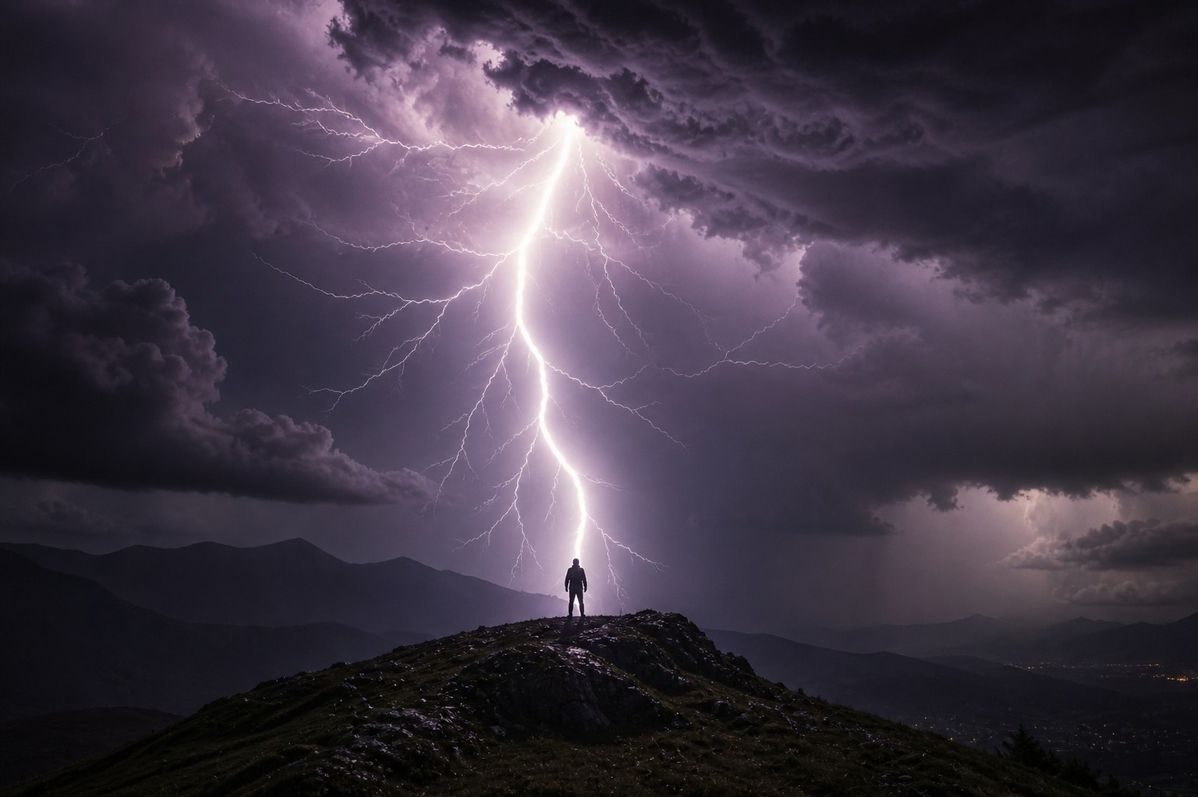
This does not erase gradual development. A person may need years of practice, shadow work, nervous-system regulation, study, grief, relationship repair, and ordinary discipline before the system becomes ready for a decisive recognition. But the recognition itself is not produced by the calendar. The calendar can prepare the field. It cannot command the lightning.
Plato’s idea of anamnesis, learning as recollection, offers one useful philosophical echo. In that frame, the soul does not simply collect new facts from outside. It remembers something hidden, buried, or forgotten. Gnostic traditions sharpen this into a spiritual drama: the divine spark is not manufactured by effort. It is uncovered from beneath ignorance, fear, imitation, and false identity.
The illusion of progress appears when the seeker confuses accumulation with awakening. More books, more retreats, more techniques, more vocabulary, more spiritual self-description. The archive grows. The person remains untransformed. The mind collects lanterns while refusing to light one.
The better question is not “what stage am I at?” but “what is being recognised now, and what remains unintegrated?” That question has teeth. It does not flatter the timeline. It asks for honesty.
Kairos vs. Chronos
The Greeks used more than one word for time. Chronos refers to measured time: sequence, duration, clock-time, calendar-time, before and after. It is the time of appointments, ageing, deadlines, wages, contracts, history, and biological life.
Kairos refers to the opportune moment, the charged instant, the opening in which action, speech, recognition, or transformation becomes possible. It is not measured by length. It is measured by ripeness. A single sentence can arrive in kairos. A glance. A death. A silence. A crisis. A body realising it cannot keep living the old lie.
Awakening, in this sense, has a kairotic dimension. It may be prepared by chronos, but it does not belong entirely to chronos. Years may ripen the field, then one moment turns the key. Or the moment may come early and take years to integrate. The clock records sequence. It does not understand ripeness.
This distinction matters because spiritual anxiety often applies chronos to a kairotic event. “How long until I awaken?” becomes the wrong instrument applied to the wrong object. It is not that timing is irrelevant. It is that the most important opening is qualitative, not merely quantitative.
The Gospel of Thomas gives the issue a crystalline form: the kingdom is spread out upon the earth, and people do not see it. The point is not only that something will arrive later. It is that something is already present but unrecognised. The eye must change, not the calendar.
The Anxiety of Becoming
The timeline obsession masks a deeper fear: perhaps I am not becoming fast enough. Perhaps others are awakening while I remain behind. Perhaps my practice is too slow, my insight too ordinary, my nervous system too messy, my life too unremarkable. The comparison engine starts humming, and soon spiritual life becomes another performance review.
This is where chronos becomes archonic. It begins measuring the soul against imagined futures and other people’s edited reports. It turns practice into deficiency management. It says: not yet, not enough, not there, not worthy, not until the next breakthrough.
Comparison is especially seductive because it feels spiritual while functioning like social media for the soul. Someone else has a dramatic awakening story. Someone else has a teacher, lineage, retreat, kundalini event, dark night, non-dual glimpse, or luminous vocabulary. The seeker begins to measure inward life by outward narration.
Kierkegaard’s language of the leap offers one useful resonance. The deepest existential transitions are not always smooth slopes. Sometimes life changes through decision, surrender, or inward recognition. Heidegger’s reflections on mortality and authenticity offer another resonance: the ordinary timeline is interrupted when one faces existence directly, without hiding in social scripts.
But these philosophical echoes should not be turned into spiritual pressure. The point is not to manufacture a dramatic leap. The point is to see that anxious becoming can become its own prison. The seeker may be so busy trying to become awakened that they miss the simple demand of the present moment: tell the truth, breathe, repair the harm, rest, attend, love, practise, stop pretending.
The Dark Night Is Not a Timetable
Few phrases have been flattened more than “the dark night of the soul”. In St John of the Cross, the dark night belongs to a profound mystical theology of purification, desire, unknowing, and union with God. It is not a generic bad week, a branding phrase for spiritual sadness, or a fixed-duration module in a modern awakening curriculum.
Modern spiritual culture often turns the dark night into a timeline: first confusion, then crisis, then ego death, then integration, then blissful arrival. This can comfort some readers, but it can also distort. Suffering is not automatically a sign of advanced awakening. Depression, trauma, burnout, grief, anxiety, derealisation, and isolation deserve care on their own terms.
A dark night may be spiritually meaningful. It may also be psychological distress. Often it is both: a spiritual crisis moving through a human nervous system. The danger is using mystical language to avoid ordinary support, or using ordinary support to dismiss spiritual depth. The wise path holds both.
The Chronos Trap appears when the sufferer asks, “how long until this stage ends?” as though the soul has entered a queue with a numbered ticket. A better question is: what is this darkness asking me to stop pretending? What support does this body need? What grief is present? What fantasy of progress is being stripped away? What ordinary care has been neglected?
The dark night should not be romanticised. It should be honoured, grounded, supported, and integrated. No one needs to decorate the cave to prove it is holy.
The Spiritual Marketplace and the Clock of Inadequacy
The spiritual marketplace depends on deferred completion. The next course, next retreat, next initiation, next medicine, next transmission, next download, next expensive weekend in a better climate. There is always another doorway. Some doorways are useful. Some are beautiful. Some are necessary at the right time. But the marketplace becomes predatory when it teaches the seeker that wholeness must always be purchased later.
Chronos is useful for commerce because it creates scarcity: limited time, limited seats, limited access, limited progress, limited identity. Kairos is harder to monetise because it may happen while washing a cup, walking in rain, grieving honestly, or noticing that the body has been holding a false life together by force.
The spiritual economy often sells maps to people who have lost trust in direct seeing. The map says: start here, pay here, progress here, arrive there. Again, maps can help. But the living thread cannot be outsourced to a diagram. At some point the practitioner must ask whether the map is supporting recognition or delaying it.
The test is simple. Does this practice make life clearer, kinder, steadier, more honest, more embodied, more responsible? Or does it keep producing a more elaborate seeker identity? One path returns attention to life. The other polishes the cage until it looks like a shrine.
Escaping the Chronos Trap
Escaping the Chronos Trap does not mean ignoring calendars, abandoning commitments, or pretending ordinary time does not exist. Liberation is not being late for everything and calling it non-duality. Escaping the trap means refusing to let measured time define the worth, depth, or immediacy of recognition.
The following practices do not add hours to the schedule. They change the spell the schedule has cast.
1. Remember Death Without Becoming Morbid
Death clarifies the timeline. Not as gloom, but as honesty. The body will not practise forever. The relationship will not wait forever. The work of repair will not remain indefinitely available. The ordinary day, the one being dismissed as not spiritual enough, is the only field in which awakening can become human.
Memento mori, the remembrance of death, does not exist to frighten the practitioner into panic. It returns priority. It asks: what cannot be postponed without falsifying the life? What truth needs speech? What apology, boundary, care, or practice belongs to now?
2. End Comparison as a Spiritual Metric
Other people’s timelines are not your measure. Their awakening story may be true, exaggerated, misunderstood, integrated, unintegrated, or still unfolding. You cannot know from outside. Even if it is true, it is not your clock.
Comparison turns recognition into hierarchy. Ahead, behind, higher, lower, more awakened, less awakened. The Archons adore ladders because ladders keep everyone looking up and down instead of seeing directly.
A better practice is inward accuracy. What is actually happening here? What is present in the body? What pattern repeats? What truth is being avoided? What care is needed? What is already clear but not yet lived?
3. Wake Up Inside the Present Texture
The present moment is not always pleasant. It may contain pain, boredom, grief, confusion, irritation, fatigue, longing, or fear. The Chronos Trap says awakening will begin after these pass. Practice says: begin here.
Breath awareness, body scan, attention to sound, slow walking, honest speech, and a hand on the heart are not preliminaries to some future spiritual life. They are the place where spiritual life touches the nervous system. The gateway is not elsewhere. The gateway is the next unromantic act of presence.
4. Stop Turning Practice Into a Transaction
Practice can quietly become bargaining: I meditate so I will become enlightened. I breathe so I will become calm. I read so I will become wise. I serve so I will become worthy. The mind turns everything into a contract and then wonders why silence feels like paperwork.
This does not mean abandoning intention. Intention matters. Discipline matters. Practice matters. But at a deeper level, practice shifts from transaction to expression. Meditation becomes what presence does. Attention becomes what love does. Shadow work becomes what honesty does. Grounding becomes what incarnation requires.
The mirror does not become reflective because it is polished. It was already capable of reflection. Polishing removes what obscures that capacity. Practice is polishing, not manufacture.

Practice Without Postponement
Awakening without a timeline does not mean practice without discipline. It means practice without postponement. The seeker no longer uses future awakening as a reason to delay present honesty.
Practice without postponement looks simple:
- Attend now: give one thing your full attention without making it a spiritual performance.
- Feel now: notice the body’s actual condition, not the body you imagine an awakened person should have.
- Tell the truth now: name what is false, exaggerated, avoided, or performed.
- Repair now: apologise, clarify, or make amends where repair is possible and appropriate.
- Rest now: stop treating exhaustion as proof of devotion.
- Practise now: not to earn a future self, but to inhabit the one already breathing.
This kind of practice is deeply unglamorous. It does not always produce fireworks. It may simply produce a less false day. That is not small. A less false day is a crack in the Demiurge’s calendar.
Integration Still Takes Time
The phrase “awakening has no timeline” can itself become a trap if misunderstood. Some recognitions are sudden, but integration unfolds through time. The body may need weeks, months, or years to metabolise what the mind claims to have seen. Relationships need repair in sequence. Nervous systems learn safety gradually. Habits change through repetition. Trauma work cannot be skipped because the soul has read a good paragraph.
There is a difference between the timelessness of recognition and the temporality of embodiment. Confusing them creates spiritual bypassing. A person may say “there is only now” while avoiding debt, grief, illness, apology, work, or care. That is not kairos. That is the ego hiding under a very thin blanket of metaphysics.
Integration respects chronos without worshipping it. Sleep happens at night. Meals happen in bodies. Trust returns slowly. Practice strengthens through repetition. Ethical life is proven over time. The clock is not the source of awakening, but it remains one of the places awakening must learn to behave.
The task, then, is not to smash the clock. It is to stop kneeling before it. Use chronos for appointments, recovery, learning, and repair. Live kairos as the ever-available opening in which recognition becomes possible now.
The Gnostic Reading: Time, Archons, and Recognition
Gnostic myth speaks of Archons as rulers of the lower order: powers that administer ignorance, fear, imitation, and false authority. In this symbolic reading, time becomes archonic when it convinces the soul that truth belongs to a future authorised by the system.
The Demiurge builds a world and declares it final. Chronos builds a timeline and declares you incomplete until further notice. The counterfeit spirit says: become more, seek more, prove more, measure more, compare more, wait longer. It turns the living present into an administrative delay.
The Pleroma, by contrast, is not merely a future destination. It names Fullness. In many Gnostic readings, the tragedy is not that the divine is absent, but that it is unrecognised beneath ignorance, false rule, and psychic sleep. Recognition does not travel along the timeline to find the Fullness. It wakes to the Fullness hidden by the timeline.
This does not abolish history. It does not remove suffering. It does not make the body immortal or the world harmless. Gnosis is not denial. It is a change in authority. The clock still ticks, but it no longer gets to define the soul’s deepest status.
The Chronos Trap ends when the seeker stops treating awakening as a future product and begins living recognition as present responsibility. Not later. Not theatrically. Not with slogans. Here, where the breath is. Here, where the next honest act waits.
Related Glossary Terms
For quick definitions, use the main ZenithEye Glossary. The key terms for this article are:
Read Next
Continue with: The Spiritual Practice of Attention: From Fragmentation to Presence
If this article questions the timeline of awakening, the next step returns to the simplest practical countermeasure: attention. Presence is where the future loses its monopoly over the soul.
Within Practice & Method
This article belongs to Contemplative Techniques, the Practice & Method route where attention, silence, body, breath, inquiry, and integration become practical ways of testing recognition in ordinary life.
Frequently Asked Questions About the Chronos Trap
How long does spiritual awakening take?
There is no universal timeline for awakening. Some insights can arrive suddenly, while integration often unfolds over months or years through practice, nervous-system stability, ethical change, relationship repair, and ordinary life. The Chronos Trap is the belief that awakening can be reduced to a fixed schedule or progress chart.
What is the difference between chronos and kairos?
Chronos is measured sequential time: clocks, calendars, duration, deadlines, and progress. Kairos is qualitative time: the decisive or opportune moment when recognition, action, grace, or transformation becomes possible. Spiritual insight often has a kairotic quality, even though embodiment and integration still unfold within chronos.
Is the Dark Night of the Soul a necessary stage?
Not in the simplified way modern spiritual culture often presents it. St John of the Cross used the dark night to describe deep purification and transformation in relation to divine union. Some people experience profound periods of darkness or spiritual crisis, but suffering should not be romanticised or forced into a fixed timetable. Depression, trauma, anxiety, and destabilisation also deserve grounded care.
Why do I feel behind other people spiritually?
Feeling spiritually behind often comes from comparison, social pressure, spiritual marketing, or the belief that awakening should look dramatic. Other people’s reports are not your measure. A better question is what is actually present in your own body, life, relationships, practice, and behaviour now.
Can awakening be sudden and gradual at the same time?
Yes. A decisive recognition may be sudden, but the conditions that prepare it and the integration that follows it can be gradual. Insight can open in a moment, while the body, nervous system, relationships, ethics, and daily habits may need time to reorganise around that insight.
Does awakening without a timeline mean I should stop practising?
No. It means practice should stop being treated as a transaction for a future spiritual identity. Practice still matters, but it becomes an expression of presence rather than a bargain with the future. Breath, attention, body awareness, shadow work, and ethical repair are still part of integration.
What does “time as Archon” mean?
“Time as Archon” is symbolic language. It means measured time becomes a ruling power when it convinces the soul that truth, worth, and liberation are always deferred. Ordinary time is useful for life, practice, healing, and responsibility. The trap begins when the clock becomes the authority over recognition itself.
Study and Safety Note
This article explores spiritual awakening, time, dark night language, Gnostic symbolism, existential philosophy, contemplative practice, and integration for educational and reflective purposes. It does not provide medical, psychological, psychiatric, trauma, crisis, meditation-instruction, or spiritual-direction advice.
If spiritual practice, dark night material, time anxiety, or awakening language increases depression, panic, derealisation, depersonalisation, insomnia, intrusive thoughts, grandiosity, paranoia, suicidal thoughts, or difficulty functioning, pause the material and seek qualified support. Mystical language should never be used to avoid mental health care, trauma work, practical responsibility, or ordinary human help.
Recognition may not obey the clock, but the body still needs time, rest, food, safety, relationship, and care.
Further Reading
These ZenithEye links continue the themes of practice, attention, integration, shadow work, completion, and the end of timeline anxiety:
- The Spiritual Practice of Attention: From Fragmentation to Presence – The next step in this route: attention as the practical antidote to spiritual postponement.
- Recognising Completion vs Chasing Peaks – How to distinguish genuine sufficiency from the endless search for another spiritual high.
- The 3 Stages of Integration After Mystical Awakening – A grounded framework for immediate, short-term, and long-term integration.
- Shadow Work: Excavating the Repressed in Gnostic Practice – Why unintegrated material can keep the seeker trapped in repeated spiritual cycles.
- The Witness Function in Contemplative Traditions – The observing function, its uses, and the eventual danger of turning the witness into another identity.
- The Gateway of Sensation: Body Scan and Somatic Awareness – Returning to the body as the foundation for present recognition.
- The Gateway of Silence: Entering the Causal Body – The preceding article in this contemplative sequence, focused on silence before method.
- Integration and Grounding: 7 Keys to Mystical Experience – Somatic and practical methods for stabilising insight after non-ordinary experience.
- Nervous System Regulation: The New Meditation and Embodied Spirituality – Why nervous-system stability matters more than chasing altered states.
- The Thread – The wider route through ZenithEye’s symbolic, historical, contemplative, and contemporary architecture.
References and Sources
The following sources support the philosophical, theological, Gnostic, contemplative, and integration framework used in this article.
Primary Texts and Classical Sources
- [1] Aristotle. Rhetoric. Classical source for the rhetorical importance of timing, opportunity, and decisive speech.
- [2] Plato. Meno and Phaedo. Dialogues associated with recollection, learning, and the soul’s relation to knowledge.
- [3] The Gospel of Thomas. Nag Hammadi Codex II,2.
- [4] The Apocryphon of John. Nag Hammadi Codex II,1; III,1; IV,1; Berlin Codex 8502,2.
- [5] St John of the Cross. The Dark Night of the Soul.
- [6] The Cloud of Unknowing. Anonymous English mystical text, fourteenth century.
- [7] Ecclesiastes. Biblical wisdom text reflecting on time, season, mortality, and human limitation.
Gnostic Scholarship and Interpretation
- [8] Robinson, James M. (ed.). The Nag Hammadi Library in English. Revised edition. HarperOne, 1990.
- [9] Meyer, Marvin (ed.). The Nag Hammadi Scriptures. HarperOne, 2007.
- [10] Layton, Bentley. The Gnostic Scriptures. Yale University Press, 1987.
- [11] Brakke, David. The Gnostics: Myth, Ritual, and Diversity in Early Christianity. Harvard University Press, 2010.
- [12] King, Karen L. What Is Gnosticism?. Harvard University Press, 2003.
- [13] Williams, Michael Allen. Rethinking “Gnosticism”: An Argument for Dismantling a Dubious Category. Princeton University Press, 1996.
- [14] Jonas, Hans. The Gnostic Religion. Beacon Press, 1958.
Philosophy, Time, and Existential Transition
- [15] Kierkegaard, Søren. Fear and Trembling. Original work published 1843.
- [16] Kierkegaard, Søren. Concluding Unscientific Postscript to Philosophical Fragments. Original work published 1846.
- [17] Heidegger, Martin. Being and Time. Original work published 1927.
- [18] Tillich, Paul. The Protestant Era. University of Chicago Press, 1948.
- [19] Kermode, Frank. The Sense of an Ending: Studies in the Theory of Fiction. Oxford University Press, 1967.
- [20] Ricoeur, Paul. Time and Narrative. University of Chicago Press, 1984-1988.
Mysticism, Practice, and Integration
- [21] Underhill, Evelyn. Mysticism: A Study in the Nature and Development of Spiritual Consciousness. Methuen, 1911.
- [22] James, William. The Varieties of Religious Experience. Longmans, Green, and Co., 1902.
- [23] Trungpa, Chögyam. Cutting Through Spiritual Materialism. Shambhala, 1973.
- [24] Kornfield, Jack. After the Ecstasy, the Laundry. Bantam, 2000.
- [25] Welwood, John. Toward a Psychology of Awakening. Shambhala, 2000.
- [26] Grof, Stanislav and Grof, Christina. Spiritual Emergency: When Personal Transformation Becomes a Crisis. Tarcher, 1989.
- [27] Lukoff, David. “The Diagnosis of Mystical Experiences with Psychotic Features.” Journal of Transpersonal Psychology, 17(2), 155-181, 1985.
- [28] Lindahl, Jared R., et al. “The Varieties of Contemplative Experience: A Mixed-Methods Study of Meditation-Related Challenges in Western Buddhists.” PLOS ONE, 12(5), 2017.
- [29] van der Kolk, Bessel. The Body Keeps the Score. Viking, 2014.
- [30] Ogden, Pat, Kekuni Minton, and Clare Pain. Trauma and the Body. W. W. Norton, 2006.