The Gospel of Mary: The Apostolic Authority of the Magdalene
There is a particular violence in the silencing of voices. Not the dramatic violence of fire and persecution–though that comes later–but the quieter violence of omission, the systematic excision of certain names from the rolls of authority. The Gospel of Mary stands as a testament to what was cut away, a fragmentary witness to a Christianity that might have been, had the mechanisms of institutional power not intervened.
Discovered in 1896 among the pages of the Berlin Codex (Papyrus Berolinensis 8502,1), this text is not technically part of the Nag Hammadi Library proper–yet it belongs spiritually to that same archive of forbidden knowing. Dating from the early second century CE, it preserves a tradition where Mary Magdalene is not merely the first witness to the resurrection, but the primary recipient of esoteric teaching and the appointed successor to Jesus’s inner work.
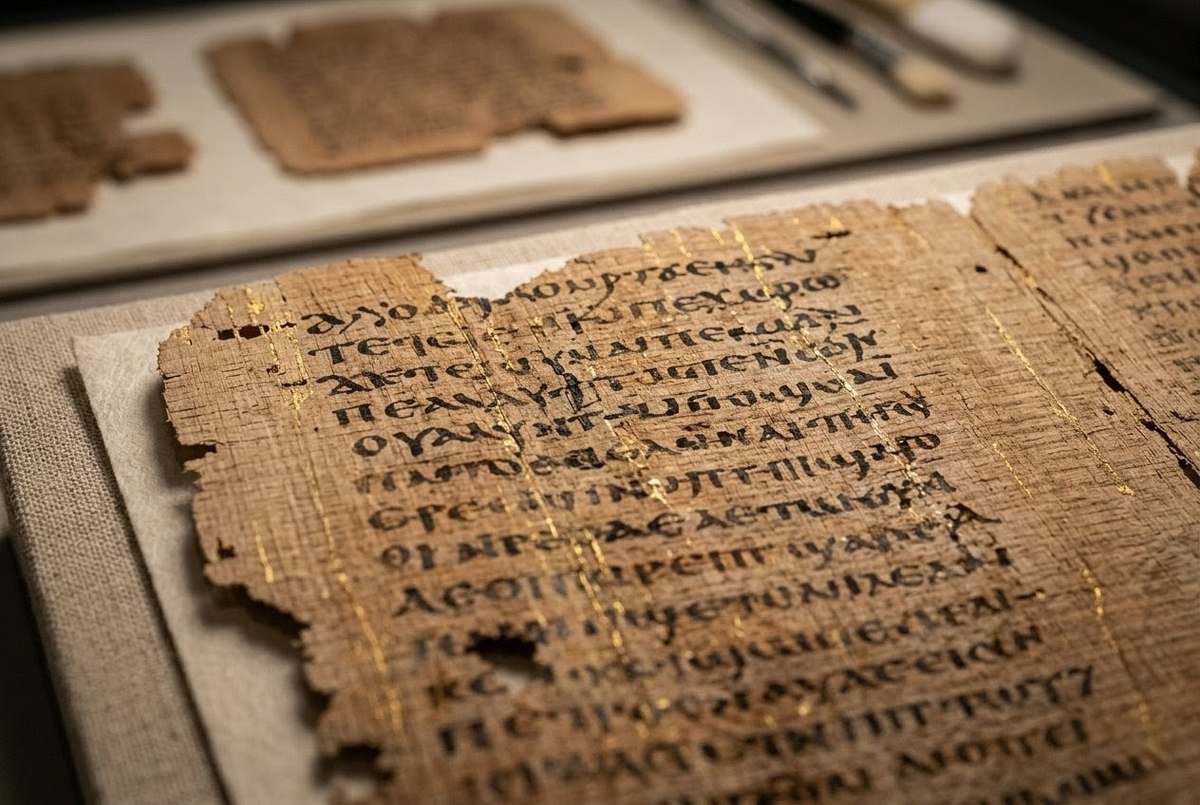
Table of Contents:
- The Authority That Survived the Erasure
- The Structure of a Lost Authority
- The Seven Powers of Wrath
- The Conflict of the Apostles
- The Ascent of the Soul
- Levi’s Defence and the Perfect Human
- The Text That Should Not Have Survived
- Contemporary Resonance
- Frequently Asked Questions
- Further Reading
- References and Sources
The Authority That Survived the Erasure
What is the Gospel of Mary?
The Gospel of Mary (Papyrus Berolinensis 8502,1; Berlin Codex) is a second-century CE Coptic text presenting Mary Magdalene as the primary recipient of Jesus’s secret teachings and his appointed successor. The text preserves a fragmentary account of post-resurrection teachings followed by Mary’s vision of the soul’s ascent past seven planetary powers. It culminates in a conflict between Mary and the male apostles Andrew and Peter, resolved by Levi (Matthew), affirming Mary’s authority.
The Gospel of Mary presents a radical reorganisation of early Christian authority–one where knowledge trumps gender, where private revelation to a woman takes precedence over public teaching to the Twelve, and where the inner vision of the soul’s journey becomes the central gospel proclamation. This is not merely an alternative tradition; it represents a competing administrative structure that the emerging orthodox bureaucracy ultimately dismantled.
Primary Source Citation: Gospel of Mary (BG 8502,1 18:15-22): “The soul replied, saying: ‘What binds me has been slain, and what surrounds me has been destroyed, and my desire has been brought to an end, and ignorance has died. In a world I was released from a world, and in a type from a type which is above, and from the chain of forgetfulness which exists in time…'”
The Structure of a Lost Authority
The text survives incomplete. The first six pages are lost to us–destroyed by time, buried in the Egyptian sand, or perhaps deliberately excised from the administrative record–and we enter the narrative mid-stream: Jesus is speaking to his disciples after the resurrection, delivering classified intelligence not found in the canonical dossiers [1]. Specifically, he addresses the nature of matter, the root of evil, and the destiny of the soul. When he concludes, he commands them to go forth and preach, then departs.
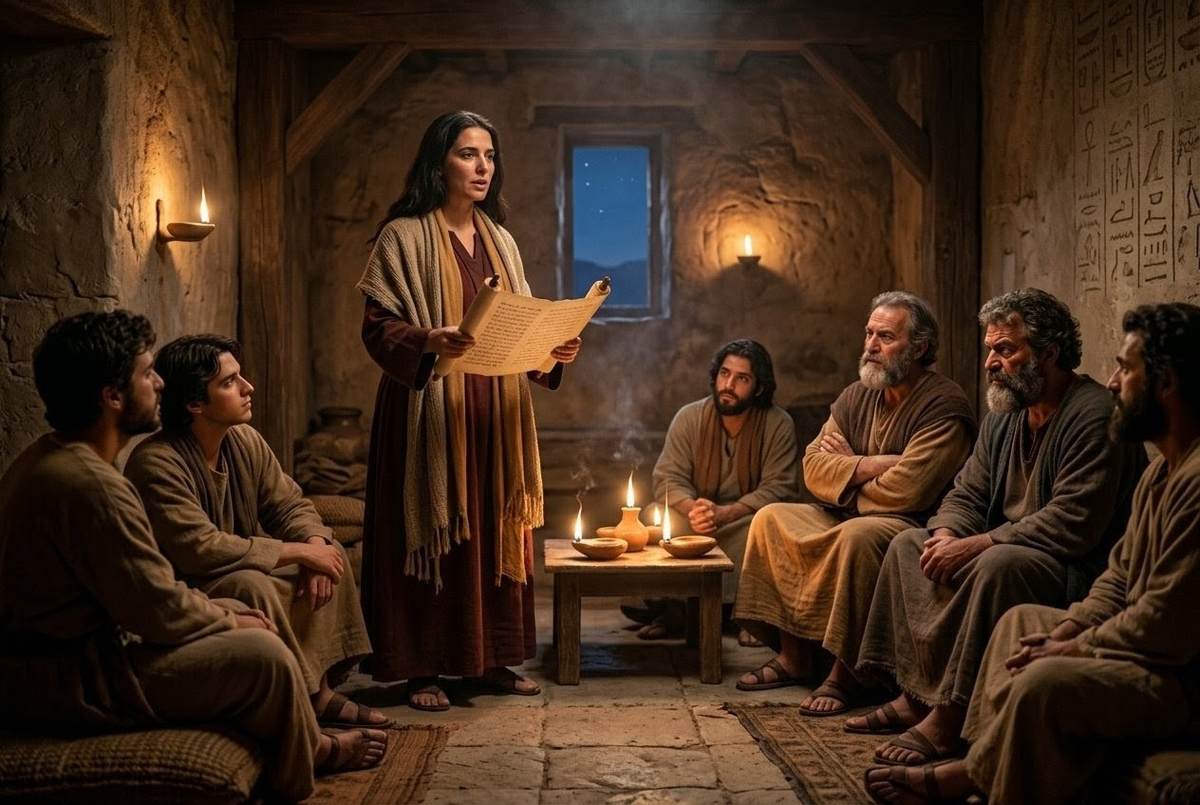
What follows is the theological core that scandalised later orthodoxy. The disciples grieve, afraid to proceed without their teacher. Mary Magdalene steps forward to comfort them, declaring that she has received secret teachings from Jesus that were withheld from the others. She begins to transmit this gnosis–the ascent of the soul past the seven planetary powers that seek to bind it [2].
The Seven Powers of Wrath: The Soul’s Bureaucratic Obstacles
The central revelation Mary receives concerns the ascent of the soul past the seven planetary archons or “powers of wrath.” This is not abstract theology but practical metaphysics: the soul must navigate a series of challenges at each planetary sphere, answering the guardians with specific formulae of self-knowledge to secure release from material custody [3].
The Seven Powers of Wrath
First: Darkness–the primary obstruction of spiritual vision.
Second: Desire (Craving)–the attachment to material acquisition that binds the soul to the marketplace of flesh.
Third: Ignorance–the fundamental state of not-knowing that the archonic administration exploits.
Fourth: Zeal for Death (Excitement of Death)–the fatal attraction to destruction and dissolution.
Fifth: The Kingdom of the Flesh (Fleshly Realm)–the jurisdiction of bodily dominion.
Sixth: The Foolish Wisdom of the Flesh–the counterfeit knowledge that masquerades as understanding.
Seventh: The Wrathful Wisdom (Wisdom of Anger)–the violent enforcement of false order.
These are not external demons but internal conditions–the architecture of the soul’s imprisonment within the archonic bureaucracy. Mary’s teaching offers the map of liberation, the knowledge required to pass through each obstacle and return to the perfect Human, the primordial root of our nature [4].
The Conflict of the Apostles: Bureaucratic Resistance
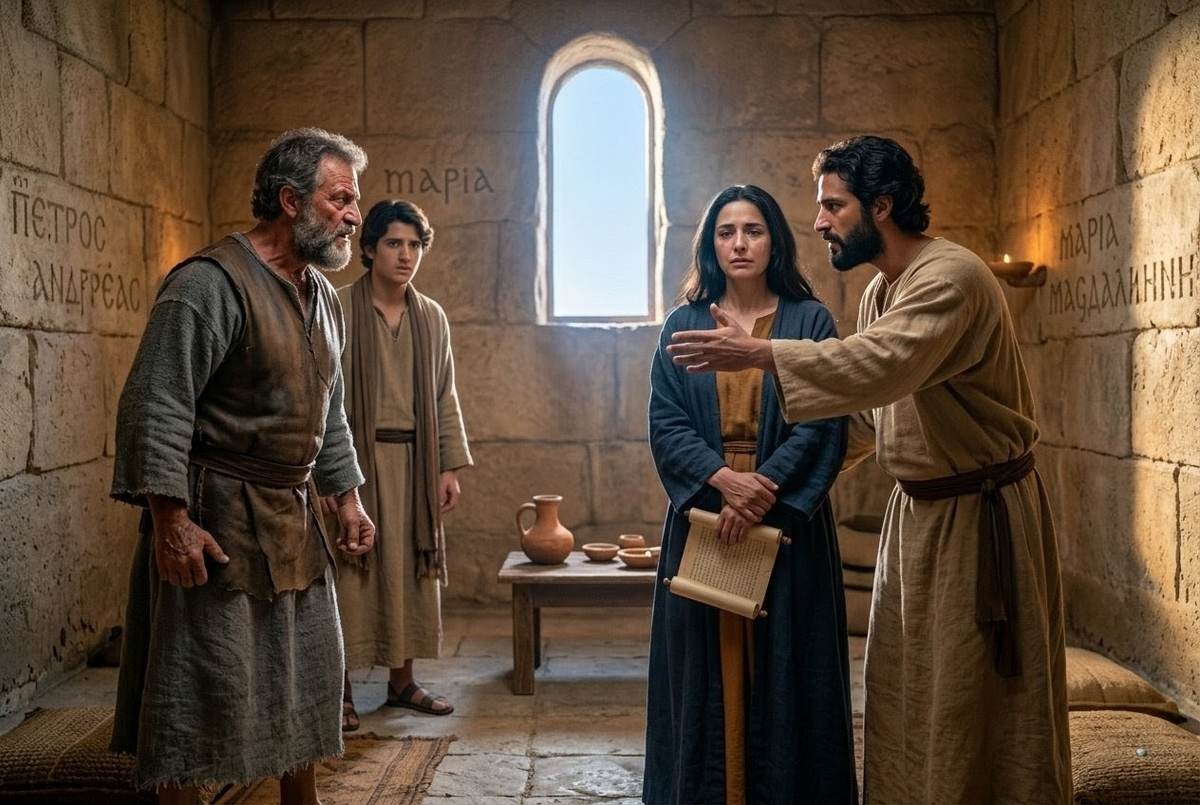
The drama of the text lies not merely in its cosmology, but in its sociology. When Mary finishes speaking, Andrew challenges her authority, declaring that her teachings are “strange ideas” and unworthy of belief. Peter joins the assault, asking bitterly whether Jesus would have spoken privately with a woman while keeping the male apostles in ignorance [5].
Primary Source Citation: Gospel of Mary (BG 8502,1 17:18-22): “Peter answered and spoke concerning these same things. He questioned them about the Saviour: ‘Did he really speak with a woman without our knowledge and not openly with us? Are we to turn around and all listen to her? Did he prefer her to us?'”
This is the wound that the text exposes: the early contest over who could transmit sacred knowledge, and whether gender constituted a disqualification from authority. The assault on Mary is not personal but categorical–she represents a mode of leadership that the emerging institutional church would systematically dismantle over the following centuries through administrative exclusion and doctrinal marginalisation [6].
Mary responds with tears and a direct challenge: “My brother Peter, what are you thinking? Do you really think that I thought this up by myself in my heart, or that I am lying about the Saviour?” Her defence is not elaborate; it relies upon the simple integrity of her witness and the authority of the one who commissioned her [7].
Levi’s Defence and the Perfect Human
Levi (Matthew) intervenes to defend Mary, exposing the real nature of Peter’s objection. “Peter, you have always been hot-tempered,” Levi observes. “Now I see you contending against the woman like the adversaries.” He points out that Peter’s anger reveals his own spiritual limitation and his alignment with the forces opposed to Jesus’s teaching [8].
Primary Source Citation: Gospel of Mary (BG 8502,1 18:15-22): “Levi answered and said to Peter: ‘Peter, you have always been wrathful. But if the Saviour made her worthy, who are you indeed to reject her? Surely the Saviour knows her very well. That is why he loved her more than us. Rather, we should be ashamed and put on the perfect Human, acquire it for ourselves as he commanded us, and preach the gospel, not laying down any other rule or other law beyond what the Saviour said.'”
Levi’s defence operates on two fronts. First, he affirms that Jesus made Mary worthy–the Saviour’s knowledge of her is “completely reliable” and his love for her exceeds that for the male apostles. Second, he commands the apostles to “put on the perfect Human” (teleios anthrōpos)–the primordial archetype of spiritual completion–and to preach the gospel without adding rules or laws beyond what Jesus established [9].
The Text That Should Not Have Survived
The Gospel of Mary was explicitly rejected by the emerging orthodox administration in the fifth century CE–an overt effort to erase this alternative lineage from the official records [10]. That it survived at all is a kind of administrative miracle, buried in the dry climate of Egypt, hidden from the hands that sought to destroy competing visions of Christian origins.
For the contemporary reader, this text offers several provocations. First, it demonstrates that the debate about women’s authority in Christianity was not settled in the first century but contested for centuries–Mary Magdalene’s leadership was not a modern invention but an ancient tradition suppressed through systematic exclusion from the rolls of authority [11].
Second, it reveals the diversity of early Christian soteriology: salvation here is not through blood sacrifice but through knowledge of self, through the navigation of cosmic geography by the awakened soul. The archonic powers are not conquered by force but dissolved by recognition–by the simple, devastating knowledge of who one truly is [12].
Contemporary Resonance
This is not easy reading. The fragmentary state means we enter mid-conversation, and the cosmology assumes familiarity with Platonic and Gnostic frameworks. But for those willing to sit with the gaps, the text offers something rare: the voice of a woman teacher speaking with the full authority of the founding revelation, unmediated by the later editorial hands that relegated her to penitent whore or passive witness [13].
Read it as a companion to the Dialogue of the Saviour–both texts elevate Mary Magdalene as the ideal disciple who comprehends the Saviour’s teaching while others waver. Read it alongside the Thunder: Perfect Mind–both claim feminine voice as the vehicle of divine speech that transcends rational categories. Together, they reconstruct a landscape of early Christianity far more diverse, more visionary, and more gender-inclusive than the surviving orthodox record would suggest [14].

The archonic powers are not conquered by force but dissolved by recognition–by the simple, devastating knowledge of who one truly is. Mary speaks this truth not as theory but as embodied authority.
— ZenithEye Editorial Position
Frequently Asked Questions
What is the Gospel of Mary?
The Gospel of Mary is a second-century CE Coptic text discovered in 1896 as part of Papyrus Berolinensis 8502 (the Berlin Codex). It presents Mary Magdalene as the primary recipient of Jesus’s secret teachings and his appointed successor. The text contains Jesus’s post-resurrection teachings on the nature of matter and evil, followed by Mary’s vision of the soul’s ascent past seven planetary powers, and concludes with a conflict between Mary and the apostles Andrew and Peter, resolved by Levi (Matthew) who affirms her authority.
Is the Gospel of Mary part of the Nag Hammadi Library?
Technically, no. The Gospel of Mary was discovered in 1896 in Cairo and purchased for the Berlin Museum, whereas the Nag Hammadi Library was discovered in 1945 near Nag Hammadi, Egypt. However, spiritually and theologically, it belongs to the same corpus of suppressed early Christian texts. The Berlin Codex (P. Berolinensis 8502) also contains the Apocryphon of John, the Sophia of Jesus Christ, and the Act of Peter, making it a sister collection to the Nag Hammadi Library, likely produced by similar Egyptian Christian communities in the fourth century CE.
What are the seven powers of wrath in the Gospel of Mary?
The seven powers of wrath are planetary archons or obstacles that the ascending soul must overcome: (1) Darkness, (2) Desire/Craving, (3) Ignorance, (4) Zeal for Death/Excitement of Death, (5) Kingdom of the Flesh/Fleshly Realm, (6) Foolish Wisdom of the Flesh, and (7) Wrathful Wisdom/Wisdom of Anger. These represent internal conditions rather than external demons–the architecture of the soul’s imprisonment in matter. The soul defeats them not by force but by declaring its true identity and origin from the primal light.
Why do Andrew and Peter reject Mary’s teaching?
Andrew rejects Mary’s teaching because he considers the content ‘strange ideas’ and doubts the Saviour spoke such things. Peter objects on grounds of gender and protocol–he questions whether Jesus would speak privately with a woman without the male apostles’ knowledge, and he resents the suggestion that Jesus preferred Mary to them. Their objections represent the institutional resistance to female spiritual authority that the emerging orthodox church would systematise over subsequent centuries.
Who is Levi in the Gospel of Mary?
Levi is the disciple who defends Mary Magdalene against the attacks from Andrew and Peter. Traditionally identified as Matthew the tax collector, Levi recognises that Mary’s authority comes from the Saviour himself, who ‘made her worthy’ and ‘loved her more than us.’ He rebukes Peter for being ‘hot-tempered’ and ‘contending against the woman like the adversaries.’ Levi commands the apostles to ‘put on the perfect Human’ and preach the gospel without laying down additional rules beyond what Jesus commanded.
What does ‘put on the perfect Human’ mean?
‘Putting on the perfect Human’ (Greek: teleios anthrōpos, Coptic: p_ro_me et_sh_reef) refers to assuming the primordial spiritual identity that represents the true nature of humanity before the fall into material existence. It parallels Paul’s concept of ‘putting on Christ’ or ‘the new man’ in Ephesians and Colossians. In the Gospel of Mary, it represents the goal of the soul’s ascent–to return to and embody the original perfect Human archetype, free from the seven powers of wrath and the chain of forgetfulness.
What happened to Mary Magdalene in Christian tradition?
The Gospel of Mary reveals that Mary Magdalene’s authority as an apostle was contested from the earliest centuries. While this text affirms her as the Saviour’s chosen successor, the emerging orthodox tradition systematically suppressed her role, eventually conflating her with the sinful woman of Luke 7 and identifying her primarily as a reformed prostitute rather than an authorised teacher. The Gospel of Mary, condemned by fifth-century authorities, survived only through burial in the Egyptian desert, preserving the alternative tradition of her apostolic leadership until its rediscovery in 1896.
Further Reading
Explore related texts affirming feminine authority and the Mary Magdalene traditions:
- The Dialogue of the Saviour: Living Knowledge — Mary Magdalene as the ideal disciple comprehending secret teachings.
- The Feminine Divine in the Nag Hammadi Library — The collection of texts elevating feminine spiritual authority.
- Thunder: Perfect Mind — The Divine Female Voice — The feminine divine speaks in first-person paradox as the revealer of hidden knowledge.
- The Gospel of Philip: Sacrament and Eros — Mary Magdalene as the companion of Jesus and the beloved.
- The Apocryphon of John: Gnostic Creation Mythology — Cosmological framework for the seven powers and the perfect Human.
- Ascent Literature and the Seven Planetary Spheres — The soul’s journey past archonic obstacles in Sethian, Hermetic, and related traditions.
- The Nag Hammadi Library: Complete Guide to Gnostic Scriptures — The broader context of suppressed early Christian texts.
- Pistis Sophia: Mary Magdalene as Interpreter — The Askew Codex text where Mary poses 39 questions to the Saviour.
References and Sources
Direct sources as well as: The following sources support the claims and quotations presented in this article:
Primary Sources and Critical Editions
- [1] Lührmann, D. (2004). Die Apokryphen Briefe des Paulus in der frühchristlichen Literatur. De Gruyter.
- [2] Pasquier, A. (1983). L’Évangile selon Marie (BG 1). Presses Universitaires Laval.
- [3] Tardieu, M. (1984). “Écrits gnostiques retrouvés avant 1945.” In M. Krause & F.W. Gärtner (Eds.), Essays on the Nag Hammadi Texts in Honour of Pahor Labib (pp. 226-237). Brill.
- [4] King, K.L. (2013). “The Place of the Gospel of Mary in Early Christianity.” In A.D. DeConick & L. Jenott (Eds.), Figuring out the Nag Hammadi Codices. Brill.
- [5] Meyer, M. (2007). The Gospel of Mary. In The Nag Hammadi Scriptures: The International Edition (pp. 743-753). HarperOne.
Mary Magdalene Studies
- [6] King, K.L. (2003). The Gospel of Mary of Magdala: Jesus and the First Woman Apostle. Polebridge Press.
- [7] Brock, A.G. (2003). Mary Magdalene, The First Apostle: The Struggle for Authority. Harvard University Press.
- [8] Haskins, S. (1993). Mary Magdalen: Myth and Metaphor. Harcourt Brace.
- [9] Marjanen, A. (1996). The Woman Jesus Loved: Mary Magdalene in the Nag Hammadi Library and Related Documents. Brill.
- [10] Schaberg, J. (2002). The Resurrection of Mary Magdalene: Legends, Apocrypha, and the Christian Testament. Continuum.
Feminine Divine and Comparative Studies
- [11] Arthur, R. (1984). “The ‘Post-resurrection’ Appearances of the Saviour and the Religious Claims of the Gospel of Mary.” Colloque International sur les Textes de Nag Hammadi, 231-238.
- [12] Wilson, R.McL. (1963). “The New Testament in the Gnostic Gospel of Mary.” New Testament Studies, 9(3), 273-276.
- [13] DeConick, A.D. (2011). Holy Misogyny: Why the Sex and Gender Conflicts in the Early Church Still Matter. Continuum.
- [14] Good, D. (1987). Reconstructing the Tradition of Sophia in Gnostic Literature. Scholars Press.
- [15] Mohri, E. (2000). Maria Magdalena: Frauen und Jünger der Urgemeinde. De Gruyter.