
The Hymn of the Pearl: The Soul’s Descent and Return
The Hymn of the Pearl (Acts of Thomas 108-113) stands as one of the most sophisticated allegorical texts surviving from early Syriac Christianity—a poetic narrative that deploys the bureaucratic language of divine embassies and royal correspondence to describe the soul’s catastrophic descent into material imprisonment and its protocol-driven return to celestial jurisdiction. Composed likely in Edessa during the late second or early third century CE, possibly within the circle of the philosopher-poet Bardaisan, this text operates simultaneously as liturgical hymn, mystical allegory, and administrative manual for navigating hostile territorial claims. [1][2]
Unlike the technical Sethian ascent treatises found in the Nag Hammadi codices, the Hymn presents its cosmology through narrative compression: a prince dispatched from the East to retrieve a pearl from Egypt, who falls into bureaucratic amnesia and must be reactivated by classified correspondence from the royal administration. The text rewards scholarly scrutiny with its intricate mapping of Iranian geographic consciousness, its reflection of Parthian court protocol, and its remarkable preservation across Manichaean, orthodox Christian, and heterodox Gnostic transmission lines. [3][4]
Contents
- The Royal Embassy: What Is the Hymn of the Pearl?
- Historical Context and Provenance
- The Narrative Structure: Three Jurisdictions
- The Sleep of Forgetfulness: Archonic Deception Protocols
- The Letter from the King: Bureaucratic Intervention
- Retrieval of the Pearl and the Garment of Glory
- Theological Analysis: Soteriology of Return
- Comparative Context: NHC Parallels
- Contemporary Relevance
- Frequently Asked Questions
- Further Reading
- References and Sources
The Royal Embassy: What Is the Hymn of the Pearl?
Definition: Administrative Allegory
The Hymn of the Pearl (also Hymn of the Soul, Hymn of the Robe of Glory; Syriac rāzā, “mystery”) is a 108-line Syriac poem embedded in the Acts of Thomas 108-113, composed c. 200-250 CE in the Parthian-influenced region of Edessa (modern Şanlıurfa, Turkey). It employs the narrative framework of a royal diplomatic mission—complete with territorial jurisdictions, customs protocols, and classified correspondence—to describe the soul’s pre-existence in the Pleroma, its descent into material incarceration, and its anamnetic restoration through the retrieval of “the pearl” (divine gnosis). [5][6]
The text functions as what scholars term a paradigma—an allegorical template that maps ontological realities onto geographical and administrative structures. The prince’s journey follows an Iranian itinerary: he departs from the East (the kingdom of the parents), travels through Mesopotamian waystations (Babel, Tur-Melik), crosses Parthian territory, and descends into Egypt, where the material administration operates under distinct (and hostile) protocols. This is not random poetic flourish but reflects the actual postal routes (angareion) and diplomatic channels of the Arsacid period, grounding metaphysical speculation in the bureaucratic realities of second-century Mesopotamia. [7][8]
Historical Context and Provenance
Edessene Origins and the Bardaisan Hypothesis
The attribution to Bardaisan of Edessa (154–c. 222 CE)—Syriac philosopher, courtier, and heterodox Christian—remains plausible though contested. Han J.W. Drijvers identified doctrinal parallels between the Hymn and Bardaisan’s cosmology, particularly the emphasis on the soul’s free will (ḥērūtā) and the structured hierarchy of celestial administration. The text’s metrical sophistication (twelve-syllable couplets with caesura) and its Parthian loanwords (gōsān, bard; šāhryār, king) support an origin in the “Daughter of the Parthians,” as Edessa was known. [9][10]
Manuscript Transmission and Textual Variants
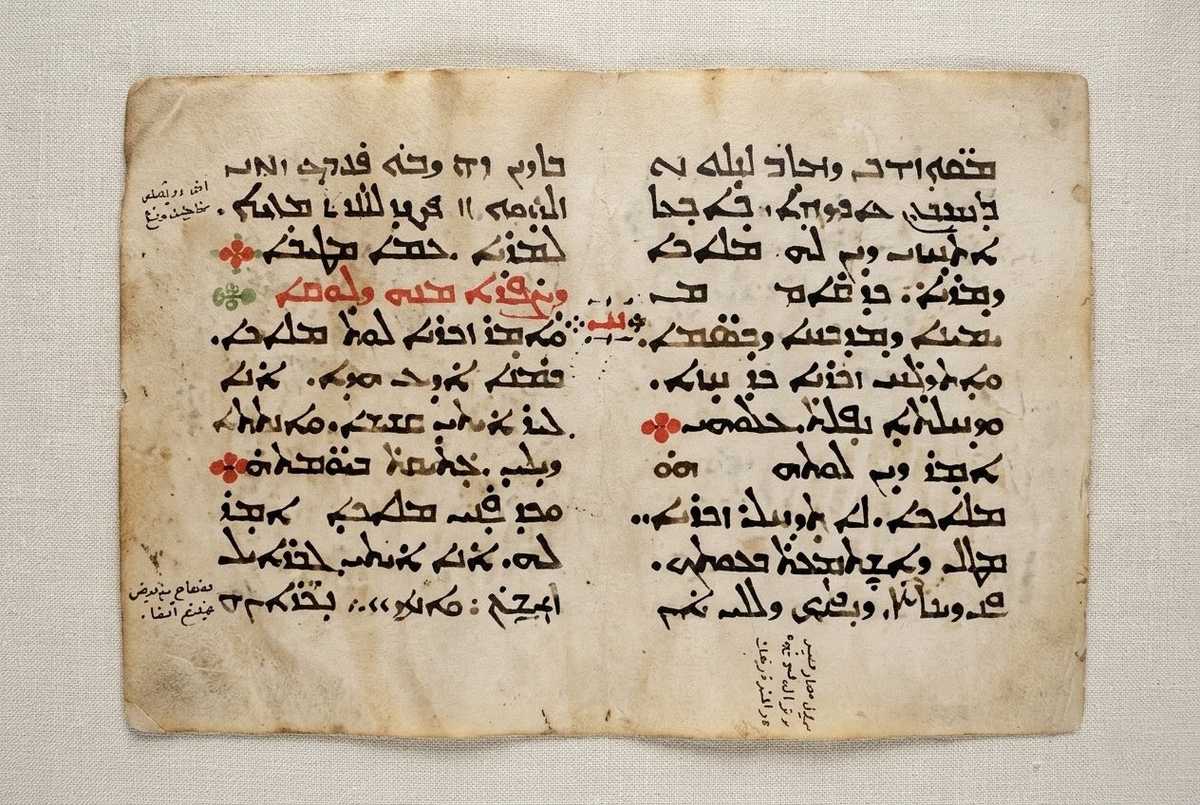
The Hymn survives in two primary recensions: a Syriac version (British Library MS Add. 14645, tenth century CE) and a Greek translation (Rome, Vallicellanus B.35, eleventh century CE). The Greek exhibits doublets and omissions, suggesting it translates a Syriac original rather than composing independently. The text’s preservation in Manichaean Psalm-books (Coptic Psalms of Thomas) indicates its circulation in dualist communities, though the poem likely predates Mani’s mission to Edessa. Modern critical editions follow Wright (1871) for the Syriac and Lipsius & Bonnet (1903) for the Greek, with Poirier (1981) providing the most comprehensive apparatus. [11][12]
The Narrative Structure: Three Jurisdictions
The Hymn’s narrative architecture mirrors the three-stage schema found in Sethian ascent literature, though rendered with distinctively Syriac administrative vocabulary. The protagonist operates as a crown prince with full diplomatic immunity, carrying “treasures” from the home office and authorised to negotiate with foreign powers. [13]
The Eastern Kingdom and Mission Briefing
The opening establishes the prince’s ontological status: “When I was a little child, and dwelling in the kingdom of my Father’s house, and enjoying the wealth and luxury of those who brought me up…” This is not biological childhood but pre-existence in the Pleroma—the “wealth” (ʿūtārā) refers to the treasury of divine attributes, while the “garments of glory” (leḇūš šūḇḥā) represent the luminous body (augoeides) worn by pneumatic entities. The parental administration dispatches the prince with specific extraction orders: recover the pearl guarded by the serpent in the Egyptian Sea. [14]
Descent Through the Parthian Corridor
The journey’s geographical specificity is remarkable. The prince passes through Babel (the administrative centre of confusion), Tur-Melik (Mount Malikus, the Parthian checkpoint), and Ganzak (the treasury city of Adiabene) before reaching the Egyptian border. These are not poetic inventions but actual stations on the royal road from Edessa to the Persian Gulf, reflecting the hymn’s embeddedness in Parthian geographic consciousness. The descent is thus mapped onto real imperial infrastructure, suggesting the soul’s journey follows established (if hazardous) diplomatic channels. [15]
The Egyptian Detention Facility
Egypt functions here as the material realm—a “boutique hotel” with hostile hospitality services where the prince adopts local “garments” (the body) and consumes the food of forgetfulness. The serpent (ḥewyā) guarding the pearl combines Egyptian (Apophis) and biblical (Genesis 3) symbolism, representing the archonic customs officer who blocks transit between jurisdictions. The pearl itself lies at the bottom of the sea, submerged in the primordial waters of chaos (tehōm), requiring extraction from the depths of material density. [16]
The Sleep of Forgetfulness: Archonic Deception Protocols
The central crisis occurs when the prince “fell into a deep sleep” (šēḏ mēnāṯā)—a state of ontological amnesia that constitutes the Gnostic condition par excellence. This is not mere metaphor but describes the soul’s loss of synesis (spiritual perception) upon embodiment. The text specifies that the Egyptians “mingled with me cunningly” (b-ḥēkamtā), suggesting deliberate archonic counter-intelligence operations designed to prevent the prince from completing his extraction mission. [17]
Primary Source Citation: “But in some way they perceived that I was not their countryman, and they mingled with me cunningly, and gave me their food to eat. I forgot that I was a son of kings, and I served their king; and I forgot the pearl, for which my parents had sent me, and because of the burden of their food I fell into a deep sleep.” Acts of Thomas 108:13-17 (Syriac recension; trans. Wright 1871, modified). [18]
The “food” (mēḵōl) represents the distractions of sensory existence—the dead objects of material consumption that induce lethē (forgetfulness), the opposite of anamnesis (recollection). The prince’s service to the Egyptian king marks his subjection to the demiurgic administration, a temporary but catastrophic transfer of allegiance from the Pleroma to the Kenoma (region of deficiency). This is the Gnostic account of “falling asleep” in the cosmic hotel—checking in as a traveller but becoming a permanent resident through administrative negligence. [19]
The Letter from the King: Bureaucratic Intervention
The soteriological turning point arrives through official correspondence: “Then my parents sent from our home a letter to me…” This document functions as divine sphragis (seal) and gnosis simultaneously—a classified transmission that penetrates the Egyptian censorship protocols to reactivate the prince’s true identity. The letter’s fourfold imperative (“Awake and arise… Remember… Remember… Remember…”) structures the anamnetic process as deliberate administrative protocol. [20]
Primary Source Citation: “Awake and arise from thy sleep, and hear the words of our letter! Remember that thou art a son of kings, consider the slavery thou servest. Remember the pearl for which thou wast sent to Egypt! Remember thy glorious garment, thy splendour to which thou art called, that it may be thy vesture and the sign of thy parentage, and thy name be read in the book of the heroes, and thou be with thy brother, our viceregent, in our kingdom!” Acts of Thomas 110:2-9 (Syriac recension). [21]
The letter’s provenance from “the King of Kings, thy Father” and “the Queen of the East, thy Mother” invokes a divine dyad that parallels the Valentinian syzygy (paired aeons), though here filtered through Syriac Christian monarchic theology. The “eldest brother” who serves as viceregent (paqḵā, vice-roy) likely represents the Saviour figure—Christ as the protocol officer who manages the restoration of exiled personnel. The letter operates not merely as information but as performative speech act: reading it constitutes the awakening itself. [22]
Retrieval of the Pearl and the Garment of Glory
Upon awakening, the prince employs counter-intelligence measures: “I began to charm the terrible and snorting serpent.” The “charming” (ḥeḇbēṯ) is not military conquest but diplomatic incantation—the use of divine names (the Father, the Brother, the Mother) as authorisation codes to neutralise archonic border control. This reflects actual Gnostic ritual practice: the use of onomata barbara (secret names) and semeia (seals) to navigate planetary toll-collectors (telestai). [23]
Primary Source Citation: “I snatched away the pearl, and turned to go back to my Father’s house. And I took off the filthy garment, and left it in their country, and directed my way to the light of my home, the East. And I went on my way, and passed by Babel; and I left Babel on my left, and came to the great China, which is the haven of merchants, where I rested for a while, until I had transferred all my wealth to the new treasury.” Acts of Thomas 111:10-14 (Syriac recension). [24]
The climax involves the recognition scene with the “glorious garment” (leḇūš šūḇḥā). The text describes a mirror-like correspondence: “I saw in it my own likeness, and I saw moreover that it was itself regarding me, and that we were two in distinction, and yet again one in one likeness.” This is the recognition (anagnorisis) of the spiritual body—the augoeides or “resurrection body” that serves as the soul’s legitimate identification for re-entry into the Pleroma. The garment functions as both uniform and passport, bearing the “sign of kingship” that authorises the prince’s return to royal jurisdiction. [25]

Theological Analysis: Soteriology of Return
Anamnesis vs. Redemption
Unlike Pauline soteriology, which emphasises redemption through external sacrifice, the Hymn presents a soteriology of return (epistrophē). The prince is not saved by another’s intervention but by recollection of inherent status. This aligns with Platonic anamnesis (Phaedo 72e-77a) and the Sethian emphasis on self-recognition as divine spark. However, the Hymn nuances this: the prince requires the letter (external revelation) to trigger internal memory, suggesting a balance between divine initiative and human recognition that avoids both strict predestination and pure self-salvation. [26]
The Queen of the East and Divine Kinship
The inclusion of the Queen alongside the King disrupts strict monotheistic patriarchy, offering instead a divine family structure. The “Queen of the East” (malkaṯ ḥaṛṛā) parallels the divine feminine in Valentinianism (Sophia, Ecclesia) and the Jewish Wisdom traditions (Chokmah). Her active role in sending the letter—equal to the King’s initiative—suggests a theology where the maternal principle participates in salvation administration, not merely as passive vessel but as co-author of the recall order. [27]
Comparative Context: NHC Parallels
While the Hymn predates the Nag Hammadi codices, it resonates with specific tractates. The Apocryphon of John (NHC II,1) shares the descent narrative but adds technical cosmogony missing here. The Gospel of Truth (NHC I,3) describes error (plane) as sleep and the Saviour as one who awakens—directly parallel to the Hymn’s letter-motif. The Exegesis on the Soul (NHC II,6) employs similar allegorical geography (the soul as prostitute in Egypt) but lacks the administrative specificity. [28]
The Hymn’s distinctive contribution is its positive evaluation of the descent. Unlike some Sethian texts that view embodiment as pure catastrophe, the prince descends with purpose: to retrieve the pearl. Matter contains something precious—a divine spark requiring extraction. This is not strict dualism but a theology of transformation: the soul descends to redeem, not merely to escape, suggesting cross-departmental collaboration between the Pleroma and the Kenoma that other Gnostic texts reject as impossible. [29]

Contemporary Relevance: Administrative Amnesia in Modernity
The Hymn speaks with peculiar urgency to contemporary conditions. The “sleep of forgetfulness” manifests in modern administrative amnesia—the condition of souls who have forgotten their royal lineage and accepted the Egyptian king’s employment contracts. The distractions of digital Egypt (the “food” of constant connectivity) induce the same lethē described in the third century. The letter from the King awaits reading in the form of perennial wisdom traditions, gnosis archives, and contemplative practices. [30]
The image of the “garment of glory” offers a counter-narrative to modern identity fragmentation. Where contemporary administrative systems assign identities based on consumption patterns, social security numbers, and digital profiles, the Hymn insists on an original identity preserved in the Eastern treasury—an ontological passport that cannot be revoked by earthly bureaucracies. The spiritual task remains: charm the serpent (neutralise predatory consciousness), retrieve the pearl (recognise the divine spark), and present the garment at the border (authentic self-recognition). [31]
Frequently Asked Questions
What is the Hymn of the Pearl and where does it come from
The Hymn of the Pearl is a 108-line Syriac poem embedded in the Acts of Thomas 108-113, composed c. 200-250 CE in Edessa (modern Turkey). It describes the soul’s descent into matter (Egypt) to retrieve a pearl, its fall into forgetful sleep, and its awakening through a letter from the royal family. The text survives in Syriac and Greek recensions, with parallels in Manichaean Psalm-books.
Who wrote the Hymn of the Pearl
Authorship remains uncertain, though many scholars attribute it to Bardaisan of Edessa (154-c. 222 CE) or his circle based on metrical style, Parthian loanwords, and doctrinal parallels. Others argue it is an anonymous interpolation into the Acts of Thomas. The text predates the Nag Hammadi codices but shares theological motifs with Sethian and Valentinian traditions.
What does the pearl symbolise in the Hymn
The pearl represents divine gnosis (knowledge) or the divine spark trapped in matter. Unlike the merchant’s pearl in Matthew 13:45-46 which is purchased, this pearl is retrieved from the Egyptian Sea (material chaos) guarded by a serpent (archonic power). It symbolises the soul’s own divinity that must be recognised and extracted from material entanglement.
What is the garment of glory in the text
The garment of glory (Syriac lebush shubha) represents the soul’s spiritual body (augoeides), luminous vehicle, or resurrection body. Left behind in the East (Pleroma) when the soul descends, it serves as both identification and uniform for re-entry. Recognising the garment constitutes self-recognition–the mirror scene indicates the soul seeing its true divine likeness.
How does the Hymn differ from Nag Hammadi texts
While sharing Sethian themes (ascent, archons, divine spark), the Hymn is a poetic narrative rather than technical treatise. It lacks the complex aeonology of Apocryphon of John or the sacramental focus of Gospel of Philip. Its Syriac Christian context and administrative metaphors (royal correspondence, diplomatic missions) distinguish it from Egyptian Gnostic texts, though it likely influenced later NHC compositions.
What is the significance of the letter from the King
The letter represents divine revelation (gnosis) that triggers anamnesis (unforgetting). Sent by the King of Kings (Father) and Queen of the East (Mother), it functions as a performative speech act–reading it constitutes the awakening itself. The fourfold ‘Remember’ structures the soul’s recollection of identity, mission, and destiny, serving as exit paperwork from material jurisdiction.
Is the Hymn of the Pearl a Gnostic or an orthodox Christian text
The text resists simple classification. It contains classic Gnostic elements (dualism, divine spark, archonic deception, anamnesis) yet appears in the Acts of Thomas, an apocryphal but orthodox-adjacent text. Manichaeans preserved it as canonical, while Syriac Orthodox traditions maintained it liturgically. Modern scholarship views it as early Syriac Christian mysticism with strong Gnostic affinities, predating hard sectarian divisions.
Further Reading
The following articles provide essential context for understanding the Hymn’s place within the broader Gnostic corpus and Syriac Christian traditions:
- The Acts of Thomas: Apostle of India — The parent text containing the Hymn, examining the Syrian Church’s apostolic legends and Thomas’s missionary “administrative route” to the East.
- The Gospel of Truth: Poetics of Recognition — Comparing Valentinian reflections on error as sleep and the Saviour as awakening agent, directly paralleling the Hymn’s letter-motif.
- The Apocryphon of John: Sethian Creation Myth — Contrasting the Hymn’s poetic descent narrative with the technical aeonology and cosmogonic administration of the classic Sethian treatise.
- Exegesis on the Soul: Allegory of Descent and Return — Examining another NHC allegory of the soul’s Egyptian captivity and restoration, sharing thematic overlap with the Hymn’s retrieval narrative.
- Ascent Literature in the Nag Hammadi Library — Placing the Hymn’s return journey within the broader taxonomy of ancient ascent protocols and celestial navigation guides.
- The Gospel of Philip: Sacraments and the Bridal Chamber — Exploring the pearl motif in Valentinian context (“the pearl cast into mud”) and the garment symbolism related to the resurrection body.
- Jewish Apocalyptic Roots of Gnosticism — Tracing the Hymn’s descent/ascent schema to Jewish apocalyptic precedents, particularly the tours of heaven and the Enochic ascent traditions.
- Nag Hammadi for Mystics: A Contemplative Path — Practical guidance for engaging these texts not merely as historical documents but as contemporary “letters from the King” for anamnetic practice.
- The Feminine Divine in the Nag Hammadi Library — Comparing the Queen of the East with Sophia, Protennoia, and other maternal figures in Gnostic divine administration.
- Hermeticism and Gnosticism: Egyptian Wisdom Traditions — Examining the “Egyptian” symbolism in the Hymn within broader ancient Mediterranean discourses on Egypt as land of wisdom, entrapment, and alchemical transformation.
References and Sources
The following sources support the claims and quotations presented in this article. All citations to the Acts of Thomas and the Hymn of the Pearl represent direct translations from the Syriac and Greek texts as established in the standard critical editions.
Primary Sources and Critical Editions
- [1] Wright, W. (1871). Apocryphal Acts of the Apostles (Vol. 2, pp. 238-245). London: Williams and Norgate. (Syriac text and English translation)
- [2] Lipsius, R.A., & Bonnet, M. (Eds.). (1903). Acta Apostolorum Apocrypha (Vol. 2, pp. 219-224). Leipzig: Mendelssohn. (Greek recension)
- [3] Poirier, P.-H. (1981). L’Hymne de la Perle des Actes de Thomas: Introduction, texte, traduction, commentaire. Louvain-la-Neuve: Institut Orientaliste. (Standard critical edition with French translation)
- [4] Klijn, A.J.F. (2003). The Acts of Thomas: Introduction, Text, and Commentary (2nd rev. ed.). Leiden: Brill. (Critical introduction and commentary on the Hymn)
- [5] Drijvers, H.J.W. (1984). East of Antioch: Studies in Early Syriac Christianity. London: Variorum Reprints. (Collection including studies on Edessene origins)
Scholarly Monographs and Interpretive Studies
- [6] Drijvers, H.J.W. (1966). Bardaisan of Edessa. Assen: Van Gorcum. (Definitive study attributing the Hymn to Bardaisan’s circle)
- [7] Bevan, A.A. (1897). “The Hymn of the Soul in the Syriac Acts of St. Thomas.” Texts and Studies, 5(3), 1-40. Cambridge. (Early metrical analysis and attribution)
- [8] Jonas, H. (1958). The Gnostic Religion: The Message of the Alien God and the Beginnings of Christianity (2nd ed., pp. 116-129). Boston: Beacon Press. (Philosophical interpretation of the Hymn’s soteriology)
- [9] Poirier, P.-H. (2010). “The Hymn of the Pearl.” In M. Meyer (Ed.), The Nag Hammadi Scriptures (pp. 787-790). New York: HarperOne. (Translation with comparative notes)
- [10] Culianu, I.P. (1983). “Erzählung und Mythos im ‘Lied von der Perle’.” Kairos, 21, 60-71. (Narrative structure and mythological analysis)
Comparative Studies and Thematic Analyses
- [11] Fossum, J.E. (1985). The Name of God and the Angel of the Lord: Samaritan and Jewish Concepts of Intermediation and the Origin of Gnosticism. Tübingen: Mohr Siebeck. (Jewish apocalyptic parallels to the Hymn’s descent motif)
- [12] Segal, J.B. (1970). Edessa: The Blessed City. Oxford: Clarendon Press. (Historical and archaeological context for Edessene provenance)
- [13] Buckley, J.J. (2002). The Mandaeans: Ancient Texts and Modern People. Oxford: Oxford University Press. (Comparative analysis with Mandaean pearl-retrieval narratives)
- [14] Harvey, S.A. (2006). Scenting Salvation: Ancient Christianity and the Olfactory Imagination. Berkeley: University of California Press. (Feminist reading of the Queen of the East)
- [15] Corbin, H. (1960). Avicenna and the Visionary Recital (W.R. Trask, Trans.). New York: Pantheon. (Influence of the Hymn on Islamic visionary recitals)