Who Are the Neo Gnostics? The Complete Guide to Modern Gnostic Revival
They do not gather in cathedrals. They do not submit to Rome, Canterbury, or Salt Lake City. They read texts that were buried for sixteen centuries, recognise their own condition in ancient complaints about cosmic imprisonment, and refuse to call it heresy. They are the Neo Gnostics–a loose constellation of scholars, practitioners, anarchists, mystics, and digital nomads who have resurrected the most persecuted religious imagination in Western history and made it breathe again in the twenty-first century.
But who are they, precisely? Are they a church, a movement, a scholarly discipline, or a mood? The answer is all of these and none. Neo Gnosticism is not a denomination with a central creed; it is a field of resonance. What unites its disparate factions–from the liturgical Ecclesia Gnostica in Los Angeles to the Zen Anarcho Gnostics threading meditation through anti-capitalist praxis–is a single recognisable posture: the refusal to accept official reality as final, and the conviction that liberation arrives through direct, unmediated knowing.
Table of Contents
- The Historical Resurrection: From Nag Hammadi to Now
- The Landscape of Modern Gnostic Practice
- The Academic Gnostics: Scholars as Practitioners
- The Esoteric Synthesis: Theosophy, Jung, and the Occult Revival
- Zen Anarcho Gnostics: The Radical Edge
- Feminist Gnosticism and the Sophia Revival
- Digital Gnostics: The Online Resurrection
- The Thread Extended: The Neo Gnostic Task
- Neo Gnosticism FAQ
- Further Reading
- References and Sources

The Historical Resurrection: From Nag Hammadi to Now
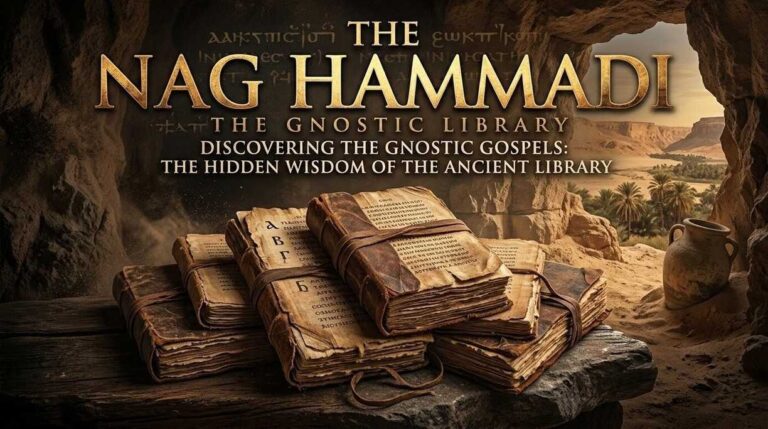
The Neo Gnostic story begins with a murder and a burial. In December 1945, near the town of Nag Hammadi in Upper Egypt, a peasant named Muhammad Ahmad Khalifa–also known as Muhammad Ali al-Samman–discovered a sealed jar containing thirteen leather-bound codices. He had been digging for fertiliser. Instead, he unearthed fifty-two tractates–forty-six unique texts–that would overturn seventeen centuries of theological consensus.
These were not Christian heresies as the orthodox church had defined them. They were alternate Christianities–and Jewish, Hermetic, and Platonic traditions–that portrayed a cosmos governed not by a benevolent creator but by a blind or malevolent demiurge, and a humanity carrying divine sparks trapped in material flesh. The Gospel of Thomas, the Apocryphon of John, the Gospel of Mary Magdalene, and the Trimorphic Protennoia were among the texts that had been buried, quite literally, to silence them.
The academic resurrection began slowly. In 1958, philosopher Hans Jonas published The Gnostic Religion, the first major study to treat Gnosticism as a coherent religious phenomenon rather than a deviation from orthodox Christianity. Jonas, a student of Heidegger and a refugee from Nazi Germany, recognised in Gnosticism a profound existential response to alienation–what he called the “nihilistic mood” of late antiquity. His work established the philosophical vocabulary that would enable later scholars to take Gnosticism seriously on its own terms.
The popular resurrection arrived with Elaine Pagels. Her 1979 book The Gnostic Gospels–which won the National Book Award and the National Book Critics Circle Award–brought Nag Hammadi to mainstream consciousness. Pagels argued that the suppression of Gnostic texts was not merely theological but political: the Gnostics offered alternative models of authority, gender, and spiritual experience that threatened the emerging hierarchical church. Her work transformed Gnosticism from an academic specialty into a cultural reference point.
By the 1990s, the buried library had become a living one. The Nag Hammadi texts were translated into dozens of languages, discussed in university seminars, cited in feminist theology, and appropriated by occultists, psychologists, and dissidents. The dead had returned to speak–and they found an audience that recognised their voice.

The Landscape of Modern Gnostic Practice
Neo Gnosticism is not a single organisation but an archipelago of communities, each with its own liturgy, lineage claims, and theological emphases. Understanding who the Neo Gnostics are requires mapping this archipelago.
Ecclesia Gnostica and the Gnostic Society
The most visible institutional expression of modern Gnosticism is the Ecclesia Gnostica, founded in Los Angeles by Bishop Stephan A. Hoeller. Hoeller, an Austrian-born scholar and priest, established a church that celebrates the Gnostic Mass, observes a liturgical calendar drawn from Nag Hammadi texts, and maintains an ordained clergy. The Ecclesia Gnostica does not claim to be the ancient church reborn; rather, it presents itself as a contemporary expression of Gnostic spirituality, rooted in scholarship but oriented toward sacramental practice.
Closely allied is the Gnostic Society, founded by David Fideler in 1983 and merged with the Ecclesia Gnostica in 1994. Fideler edited Gnosis magazine, which from 1985 to 1999 served as the primary forum for scholarly and popular Gnostic discussion in the English-speaking world. The Society’s work is educational rather than devotional: lectures, publications, and the preservation of Gnostic texts for contemporary readers. Together, the Ecclesia Gnostica and the Gnostic Society represent the “mainstream” of organised Neo Gnosticism–liturgical, scholarly, and institutionally coherent.
The Johannite Tradition
The Johannite Church and related bodies–including the Apostolic Johannite Church and the Johannite Church of Primal Gnosis–represent a different stream. These groups claim lineage through Bernard-Raymond Fabre-Palaprat, who in 1804 founded a restored Order of the Temple with explicitly Gnostic theological elements. The modern Johannite churches combine Christian liturgical forms with Gnostic cosmology, emphasising the figure of John the Baptist as the true initiator and the Johannine tradition as a repository of secret wisdom. Their apostolic succession claims remain contested by mainstream historians, but their communities are active and growing, particularly in North America and Europe.
The Mandaeans: Living Gnostics
No discussion of modern Gnostics is complete without the Mandaeans–a community of approximately sixty to seventy thousand members, primarily in southern Iraq and the Iranian province of Khuzestan, with significant diaspora populations in Australia, Sweden, and the United States. The Mandaeans possess a living tradition that predates and parallels the Nag Hammadi texts: their scriptures, including the Ginza Rabba, describe a cosmos of light and darkness, a false creator, and the human soul as a spark of divine light trapped in matter.
Unlike the reconstructed Neo Gnostic churches of the West, the Mandaeans are continuous. They have maintained baptismal rituals, priestly lineages, and cosmological doctrines for centuries, often under persecution. They do not call themselves Gnostics–the term is external–but scholars universally recognise them as the sole surviving ancient Gnostic community. Their presence complicates the category of “Neo Gnostic”: they are not a revival but a persistence, not a reconstruction but a survival.

The Academic Gnostics: Scholars as Practitioners
A significant faction of Neo Gnostics occupies the academy. These are not merely scholars of Gnosticism but scholars as Gnostics–individuals whose academic work is inseparable from their spiritual practice. The boundary between scholarship and devotion, always porous in religious studies, becomes nearly transparent here.
David Brakke’s 2010 book The Gnostics: Myth, Ritual, and Diversity in Early Christianity exemplifies the scholarly turn. Brakke argued that “Gnosticism” is a modern construct–a category invented by eighteenth-century scholars and refined by nineteenth-century polemicists–rather than an ancient self-designation. This “deconstructive” approach might seem hostile to Neo Gnostic identity, yet many contemporary practitioners have embraced it. If “Gnostic” is a modern category, they argue, then modern people are free to inhabit it deliberately, without claiming false antiquity.
Other scholars maintain active practice alongside academic careers. Michael Allenby, a British independent scholar and bishop in the Gnostic tradition, has worked to bridge academic research and liturgical renewal. The academic Gnostic is thus a distinct type: someone who handles ancient manuscripts with latex gloves on Monday and administers the Gnostic Mass on Sunday, who publishes peer-reviewed articles on Sethian cosmology and privately experiences anamnesis–the remembrance of the divine spark–as personal gnosis.
The Esoteric Synthesis: Theosophy, Jung, and the Occult Revival
Long before Nag Hammadi, a parallel Gnostic revival was underway in the esoteric underground. The nineteenth-century occult revival provided the soil in which modern Neo Gnosticism would eventually grow.
Helena Blavatsky’s Theosophical Society, founded in New York in 1875, introduced Gnostic concepts to modern esotericism through works such as Isis Unveiled (1877) and The Secret Doctrine (1888). Blavatsky drew explicitly on Gnostic, Hermetic, and Neoplatonic sources, presenting a cosmology of emanation, divine sparks, and hierarchical aeons that would influence every subsequent occult movement. The Theosophical Society was not a Gnostic church, but it was a Gnostic vector: it transmitted ancient ideas through modern channels, making them available to seekers who would never encounter Patristic polemics or Coptic manuscripts.
Carl Gustav Jung’s engagement was more intimate. In 1916, following a period of intense psychological turmoil, Jung produced the Seven Sermons to the Dead, which he attributed to the second-century Gnostic teacher Basilides. The text–published privately and circulated only among close associates–is pure Gnostic cosmology: the Pleroma, the demiurge (called Abraxas), and the human soul as a fragment of the divine seeking reunion with the All. Jung’s subsequent work on alchemy, individuation, and the archetypes of the collective unconscious provided a psychological framework that many later Neo Gnostics would adopt as their primary interpretive lens.
The Theosophical-Jungian synthesis created a distinct type of Neo Gnostic: the psychological esotericist who treats Gnostic myths not as historical dogmas but as maps of the psyche. For this seeker, the demiurge is not a cosmic villain but the ego’s tyranny; the Pleroma is not a distant heaven but the integrated Self; and gnosis is not theological knowledge but the realisation of wholeness through shadow-work and symbolic immersion.
Zen Anarcho Gnostics: The Radical Edge
Among the most recent and politically charged syntheses within Neo Gnosticism is the emergent identity of the Zen Anarcho Gnostic–not a formal denomination with registered members, but a convergence of three radical lineages: Zen Buddhism’s direct experiential knowing, anarchism’s refusal of hierarchical domination, and Gnosticism’s conviction that the official world is a counterfeit maintained by archonic powers.
The philosophical groundwork was laid by Max Cafard–the pseudonym of philosopher John Clark–whose 2006 essay “Zen Anarchy” argued that Zen Buddhism is “more anarchic than anarchism.” Cafard drew on the iconoclastic tradition of Linji (d. 867), the Rinzai patriarch who exhorted disciples to “kill the Buddha” if they met him on the road, and on Dogen’s insistence that meditation is not escape but direct engagement with reality. For Cafard, Zen’s assault on all fixed principles–all “arches” or foundational authorities–makes it the strictest form of anarchism: not the political programme of abolishing the state, but the spiritual practice of dissolving internal and external domination simultaneously.
The Gnostic component enters through the recognition that the demiurge is not merely a cosmic error but a political one. The state, the corporation, the algorithmic feed–these are contemporary archons, counterfeit authorities that claim sovereignty over consciousness. The Zen Anarcho Gnostic recognises in the Gnostic critique of the false creator a precise diagnosis of modern power. As the Hungarian Gnostic Christian anarchist Eugen Heinrich Schmitt wrote in the early twentieth century, editing journals titled Without State and Nonviolence, the spirit is “a cosmic function, not some separate spiritual entity, but the manifestation of the community of beings.” Schmitt’s “idealist anarchism” modelled itself on the fraternal community of early Christianity, seeking an international confederation of the “religion of the spirit.”
The poet Gary Snyder provided the ecological bridge. His 1961 essay “Buddhist Anarchism”–the first use of the term in English–argued that Zen practice and anarchist politics are inseparable, both targeting the illusion of the separate self that underwrites domination. Snyder described modern institutions as the pretas–hungry ghosts–of Buddhist cosmology: literally consuming the natural world. The Zen Anarcho Gnostic extends this analysis: the archons are not merely political but ecological, and liberation requires not only the awakening of the individual spark but the dismantling of the systems that feed on the sparks collectively.
The synthesis is elegant. Gnosis–direct knowing–aligns with Zen’s kensho, the sudden seeing of one’s true nature. The demiurge aligns with the state and corporate apparatus that Zen anarchists identify as the externalisation of egoic grasping. The divine spark aligns with Buddha-nature: not something to be acquired but something to be recognised, already present beneath the conditioning. The Zen Anarcho Gnostic is thus the most radical of Neo Gnostics, refusing not only theological orthodoxy but the entire architecture of domination–internal, social, and ecological–that orthodoxy serves.

Feminist Gnosticism and the Sophia Revival
The Nag Hammadi library contains some of the most striking divine feminine imagery in ancient literature. The Trimorphic Protennoia presents a threefold female divine principle; the Apocryphon of John describes Sophia as the mother of the demiurge, whose fall and redemption structure the cosmos; and the Gospel of Mary Magdalene portrays Mary receiving secret teachings from Jesus that the male apostles are too spiritually immature to comprehend.
Modern feminist theologians have seized upon these texts as resources for reclaiming the feminine divine within traditions that have systematically suppressed it. The Sophia revival is not merely academic. Contemporary practitioners–many of whom identify as Christian Gnostics, pagan Gnostics, or simply Sophia-devotees–have constructed liturgies, meditation practices, and theological frameworks centred on the divine feminine as creatrix, redeemer, and indwelling presence.
This strand of Neo Gnosticism is explicitly political. It links the suppression of Gnostic texts to the suppression of women, arguing that the orthodox church’s condemnation of Gnosticism was inseparable from its patriarchal consolidation of power. The feminist Gnostic does not merely venerate Sophia; she recognises in the demiurge the structure of patriarchal domination itself–the false authority that usurps the creatrix’s power and claims sole sovereignty. Her gnosis is thus both spiritual and structural: the recognition that liberation requires the dismantling of gendered hierarchy alongside the remembrance of the divine spark.
Digital Gnostics: The Online Resurrection
The most recent and numerically significant expression of Neo Gnosticism is digital. Online communities–forums, Discord servers, social media collectives, and independent publishing platforms–have become the primary vectors for Gnostic transmission in the twenty-first century. The archipelago has gone online.
These digital Gnostics are typically younger, less institutionally affiliated, and more syncretic than their predecessors. They may combine Nag Hammadi study with cyberpunk aesthetics, simulation theory, and psychedelic exploration, treating the demiurge as a metaphor for the algorithmic manipulation of attention and the Pleroma as the liberated state beyond the feed. The “Gnostic” label here functions less as a denominational identity and more as a diagnostic stance: the recognition that consensus reality is a constructed simulation maintained by forces that benefit from our ignorance.
The digital environment is paradoxically apt for Gnostic revival. The internet is itself a demiurgic space–a constructed reality of surfaces, simulations, and controlled information flows–yet it also enables the circulation of forbidden knowledge at unprecedented speed. The digital Gnostic navigates this paradox, using the master’s tools to dismantle the master’s house, or at least to post detailed blueprints of its architecture.

The Thread Extended: The Neo Gnostic Task
The Neo Gnostic does not claim to possess the truth. She claims to possess the question–the question that official reality cannot afford to ask. And in that question, if it is asked with sufficient persistence, the spark remembers itself.
The Neo Gnostic task is not to rebuild the ancient church but to continue the ancient refusal. It is to recognise the demiurge in whatever form he currently wears–patriarchal, corporate, algorithmic, ecological–and to cultivate the discernment that distinguishes the spark from the shadow. Whether through liturgy, scholarship, meditation, protest, or code, the Neo Gnostic maintains a single posture: the world as given is not the world as final, and the knowledge that liberates is not the knowledge that certifies but the knowledge that transforms.
The Thread continues through the codex and the screen, the altar and the barricade, the academy and the underground. It continues wherever a human being looks at the given world and says: this is not all. That act–that simple, radical, irreducible act of refusal–is the beginning of gnosis. Everything else is commentary.
Neo Gnosticism FAQ
What is Neo Gnosticism and how does it differ from ancient Gnosticism?
Neo Gnosticism is a modern revival and reinterpretation of the Gnostic traditions of late antiquity. While ancient Gnosticism comprised specific sects–Valentinians, Sethians, Mandaeans–with distinct cosmologies and liturgies, Neo Gnosticism is a loose archipelago of scholars, practitioners and digital communities who draw upon Nag Hammadi texts and Gnostic concepts without claiming direct historical continuity. The difference is methodological: ancient Gnostics were participants in a living tradition; Neo Gnostics are reconstructors, interpreters, and innovators.
Who are the main groups and organisations within modern Gnosticism?
The primary institutional expressions include the Ecclesia Gnostica and Gnostic Society in Los Angeles, founded by Stephan Hoeller and David Fideler respectively; the Johannite Church and related bodies claiming lineage through Bernard-Raymond Fabre-Palaprat’s 1804 Order of the Temple; and the Mandaeans, a continuous ancient community of approximately 60,000–70,000 members primarily in Iraq and Iran. Additionally, numerous independent churches, online communities, and solitary practitioners identify as Gnostic without formal affiliation.
What role did the Nag Hammadi discovery play in the Gnostic revival?
The December 1945 discovery of thirteen codices near Nag Hammadi, Egypt, containing forty-six unique texts, provided the textual foundation for the entire modern revival. Before this, knowledge of Gnosticism came primarily through hostile Patristic polemics. The Nag Hammadi library allowed scholars and practitioners to encounter Gnostic thought on its own terms, leading to Hans Jonas’s philosophical study (1958), Elaine Pagels’s popular account (1979), and the subsequent explosion of academic, spiritual, and cultural interest.
What is a Zen Anarcho Gnostic?
The Zen Anarcho Gnostic is an emergent contemporary identity that synthesises three radical lineages: Zen Buddhism’s direct experiential knowing (kensho), anarchism’s refusal of hierarchical domination, and Gnosticism’s critique of counterfeit authority (the demiurge as archon). Drawing on thinkers such as Max Cafard (John Clark), Eugen Heinrich Schmitt, and Gary Snyder, the Zen Anarcho Gnostic treats inner awakening and outer liberation as inseparable, recognising the state, corporate apparatus, and algorithmic systems as contemporary archons that demand both spiritual discernment and political refusal.
How does feminist theology engage with Gnosticism?
Feminist theologians have reclaimed Nag Hammadi texts–particularly the Trimorphic Protennoia, the Apocryphon of John, and the Gospel of Mary Magdalene–as resources for restoring the divine feminine. The figure of Sophia (divine Wisdom) serves as both theological symbol and political critique: the suppression of Gnostic texts is linked to the suppression of women, and the demiurge is recognised as the patriarchal structure that usurps the creatrix’s power. Contemporary Sophia-devotees construct liturgies and practices centred on the feminine divine as creatrix and redeemer.
What is the relationship between Gnosticism and Carl Jung’s psychology?
Jung engaged Gnosticism extensively, most famously in his 1916 Seven Sermons to the Dead, attributed to the Gnostic teacher Basilides. Jung’s concepts of individuation, the shadow, and the Self parallel Gnostic themes of the divine spark’s journey through alienation to wholeness. Many Neo Gnostics adopt a psychological interpretation in which Gnostic myths function as maps of the psyche: the demiurge represents egoic tyranny, the Pleroma represents integrated Selfhood, and gnosis represents the realisation of psychological wholeness through symbolic and contemplative work.
Are there living descendants of ancient Gnostic communities?
Yes. The Mandaeans–also known as the Sabaeans or Nasoraeans–are a continuous community of approximately sixty to seventy thousand members with living priestly lineages, baptismal rituals, and cosmological doctrines that predate and parallel the Nag Hammadi texts. Primarily located in southern Iraq and Iran, with diaspora communities in Australia, Sweden, and the United States, the Mandaeans are universally recognised by scholars as the sole surviving ancient Gnostic community. They do not self-identify as Gnostics, but their scriptures and practices align with Gnostic patterns.
Further Reading
- Modern Resonances: 9 Ways Ancient Gnosis Illuminates Crisis — How Gnostic insight surfaces in contemporary culture, from depth psychology to digital ontology.
- Hermetic Spirituality: The Living Thread of Western Esotericism — The Egyptian-Alexandrian lineage that shares DNA with Gnostic cosmology and practice.
- How Scripture Became Scripture: Canon, Power, and the Suppressed Texts — The political mechanics of textual suppression that buried the Nag Hammadi library.
- The Demented God Architect: Understanding the Demiurge — The Gnostic critique of the false creator and its contemporary political applications.
- Archons and the Soul Trap: A Gnostic Guide to Spiritual Sovereignty — The theological framework for understanding cosmic predation and the mechanisms of forgetting.
- The Soul Trap: Understanding Systemic Mechanisms of Energetic Capture — How consensus reality maintains its grip–and how recognition dissolves the bars.
- Sophia and Jesus Christ: Divine Wisdom Revealed — The feminine divine in Gnostic cosmology and her restoration in contemporary theology.
- Gnosis in the Digital Age: Algorithmic Sovereignty — Navigating spiritual autonomy amid information warfare and automated governance.
- The Cathars: A Clean Church Without Property — The medieval Gnostic revival that challenged papal power and built communities of radical simplicity.
- Recognition Beyond Position: The Gnostic Theory of Knowing — Epistemological foundations of direct experience–why gnosis cannot be taught, only remembered.
References and Sources
The following sources represent the primary scholarly, historical, and contemplative literature informing this article. They are presented by category for ease of navigation.
Primary Sources and Critical Editions
- The Nag Hammadi Library in English (J. M. Robinson, Ed.). Brill / HarperSanFrancisco.
- The Ginza Rabba (Mandaean scriptures). Various translations including Lidzbarski and Drower editions.
Scholarly Monographs and Studies
- Jonas, H. (1958). The Gnostic Religion: The Message of the Alien God and the Beginnings of Christianity. Beacon Press.
- Pagels, E. (1979). The Gnostic Gospels. Random House.
- Brakke, D. (2010). The Gnostics: Myth, Ritual, and Diversity in Early Christianity. Harvard University Press.
- King, K. L. (2003). What Is Gnosticism? Harvard University Press.
- Buckley, J. J. (2002). The Mandaeans: Ancient Texts and Modern People. Oxford University Press.
Esoteric Revival and Psychology
- Blavatsky, H. P. (1877). Isis Unveiled. Theosophical Publishing Company.
- Jung, C. G. (1916/1983). The Seven Sermons to the Dead. In The Gnostic Jung (R. A. Segal, Ed.). Princeton University Press.
- Hoeller, S. A. (1989). Jung and the Lost Gospels: Insights into the Dead Sea Scrolls and the Nag Hammadi Library. Quest Books.
Anarchism, Zen, and Spiritual Politics
- Cafard, M. [John Clark]. (2006/2009). Zen Anarchy. The Anarchist Library.
- Snyder, G. (1961). Buddhist Anarchism. Journal for the Protection of All Beings.
- Schmitt, E. H. (Jenő Henrik Schmitt). Early 20th century. Various essays in Without State and Nonviolence.
- Clark, J. (2005). The Anarchist Moment: Reflections on Culture, Nature and Power. Black Rose Books.
Contemporary Practice and Community
- Fideler, D. (Ed.). (1985–1999). Gnosis: Journal of the Western Inner Traditions. Various issues.
- Hoeller, S. A. (1994). A Gnostic Catechism. Ecclesia Gnostica.