The Gnostic Soul Trap: Archons, Death, and the Recycling of Pneuma
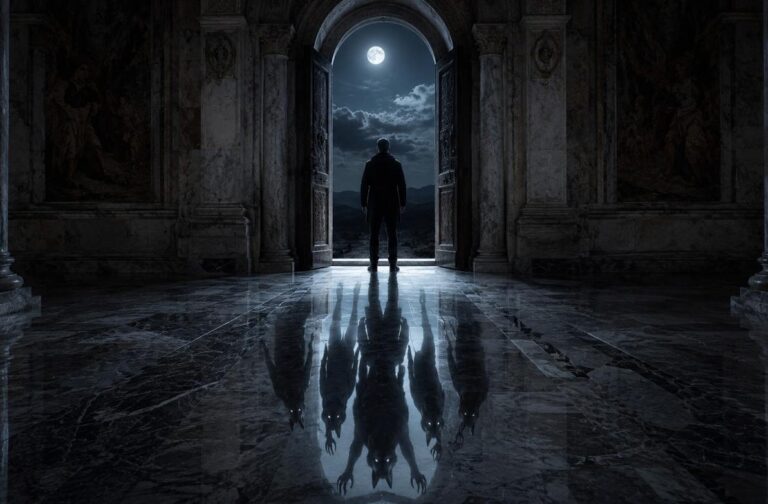
The Gnostics did not believe that death was the end of the prison. They believed it was merely the transfer from one wing to another. In the texts recovered from Nag Hammadi, the afterlife is not a realm of rest but a corridor of judgment, administered by the archons — the cosmic bureaucrats who serve the Demiurge Yaldabaoth. Their task is not merely to punish the wicked but to recycle the ignorant: to catch souls as they exit the body, assess whether they carry the dangerous cargo of gnosis, and either cast them into new flesh or bind them in chains until they forget enough to be safely reinserted. The system is not hell in the conventional sense. It is a processing facility, and its product is the perpetuation of the Kenoma — the realm of deficiency — through the endless circulation of unawakened pneuma.
This article examines the Gnostic soul trap as it appears in primary sources: the archons’ counterfeit spirit, the five seals of protection, the three fates of the dead, and the practical question of how one prepares for a death that may not be an exit but an interrogation. It does not claim that these ancient cosmologies are literally true in every detail. It asks whether the structural insight they offer — that the default afterlife may be managed by entities with an interest in our ignorance — deserves more serious attention than it has received in either theology or thanatology.
Table of Contents
- The Counterfeit Spirit: The Archons’ Recycling Mechanism
- The Three Fates of the Dead
- The Five Seals: Passports Through Hostile Territory
- The Afterlife as Administrative Corridor
- Modern Resonance: NDEs, Reincarnation, and the Trap
- Preparation for Death: The Practice of Remembrance
- Frequently Asked Questions
- Further Reading
- References and Sources
The Counterfeit Spirit: The Archons’ Recycling Mechanism
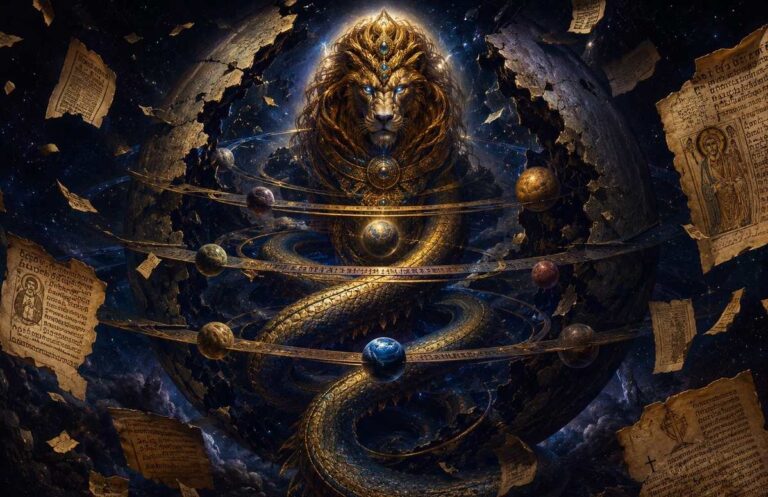
The most chilling innovation in the Apocryphon of John is not the Demiurge’s creation of the material world but his invention of the counterfeit spirit — the antimimon pneuma. After the archons fail to contain Adam through imprisonment in the Garden of Eden, and after their attempt to draw the light out of him produces Eve instead, they devise a more insidious strategy. They create a spirit that resembles the true Spirit which descended from the Pleroma, but which is in fact a fabrication designed to pollute, deceive, and bind.
Primary Source Citation: NHC II,1 19:15-20:15
“They created a counterfeit spirit, who resembles the Spirit who had descended, so as to pollute the souls through it. And the angels changed themselves in their likeness into the likeness of their mates, filling them with the spirit of darkness, which they had mixed for them, and with evil. They brought gold and silver and a gift and copper and iron and metal and all kinds of things. And they steered the people who had followed them into great troubles, by leading them astray with many deceptions. They became old without having enjoyment. They died, not having found truth and without knowing the God of truth. And thus the whole creation became enslaved forever, from the foundation of the world until now.”
The counterfeit spirit is not merely an external demon. It is an internal installation — a layer of consciousness that mimics the divine spark while serving the opposite function. Where the true pneuma awakens, the counterfeit spirit numbs. Where the true pneuma remembers, the counterfeit spirit induces forgetfulness. It is the source, the text says, of “all earthly evil and confusion,” and it operates by closing the heart and hardening the mind against the possibility of gnosis. The person dominated by the counterfeit spirit does not merely sin; he becomes incapable of recognising sin as such, because his moral compass has been calibrated to the Demiurge’s standards rather than to the truth of the Pleroma.
This concept has striking parallels with contemporary discussions of psychological conditioning, internalised oppression, and what Carlos Castaneda’s teacher don Juan called the “foreign installation” — a predatory layer of thought and craving that keeps human beings perpetually distracted and energetically accessible. Whether one takes the archons literally or metaphorically, the structural insight is the same: there is something in the human psyche that did not originate with the human, something that mimics our own voice while steering us away from recognition. The counterfeit spirit is the original malware, and the entire material cosmos is the network it infects.
The Three Fates of the Dead
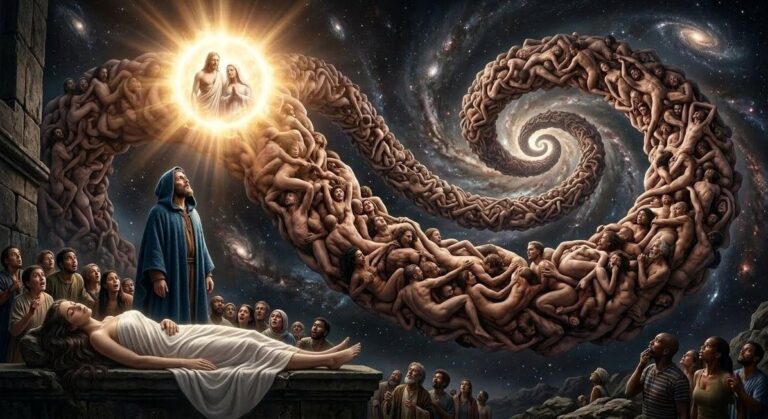
In the concluding question-and-answer section of the Apocryphon of John, John asks the Saviour what happens to souls after death. The answer is not a single destination but a sorting procedure with three distinct outcomes, each determined by the soul’s relationship to the true Spirit and the counterfeit spirit during life.
The first fate belongs to the soul in which “the power will become stronger than the counterfeit spirit.” This soul “is strong and it flees from evil and, through the intervention of the incorruptible one, it is saved, and it is taken up to the rest of the aeons.” It does not pass through the archontic checkpoints; it does not undergo review or judgment in the conventional sense. It is simply received, as a child returned to a family that has been waiting. This is the pneumatic destiny — not earned but recognised, not achieved but remembered.
The second fate is more complex and more disturbing. John asks about “those, however, who have not known to whom they belong.” The Saviour replies that in these souls, “the despicable spirit has gained strength when they went astray. And he burdens the soul and draws it to the works of evil, and he casts it down into forgetfulness. And after it comes out of the body, it is handed over to the authorities, who came into being through the archon, and they bind it with chains and cast it into prison, and consort with it until it is liberated from the forgetfulness and acquires knowledge.” This is the psychic fate — not destruction but detention. The soul is not damned; it is archived. It remains in the archontic prison until it awakens from forgetfulness and acquires the knowledge that was available to it in life but which it failed to receive.
The third fate, implied rather than explicitly detailed in the surviving text, is that of the hylikos — the soul in whom the counterfeit spirit has entirely supplanted any trace of the divine. Such a soul, having no light to defend, is simply reabsorbed into the material cycle. It is not tortured; it is used. Its substance is broken down and reconstituted into new bodies, new desires, new distractions — fuel for the Demiurge’s ongoing project of cosmic management. The hylikos does not escape the trap because he has never known he was in it.
The soul is not punished for its sins. It is punished for its ignorance — and the punishment is more ignorance.
The Five Seals: Passports Through Hostile Territory
Against the machinery of the soul trap, the Gnostics did not propose moral reform or philosophical argument. They proposed ritual transformation — a sequence of initiatory acts known as the Five Seals, described in the Apocryphon of John, the Trimorphic Protennoia, and the Gospel of the Egyptians. These seals are not symbolic decorations. They are, in the language of the texts, protective technologies — spiritual camouflage that renders the initiate invisible to archontic detection and authorises safe passage through the planetary spheres.
The sequence varies across texts, but the core structure is consistent. The first seal is baptism in living water — not merely purification but ontological reclassification, stripping away the “garments of shame” woven by the archons during the soul’s descent. The second is anointing with oil — the “dew of light” from the Pleroma that transforms the initiate’s substance from material to luminous. The third is baptism in spirit — the awakening of the divine spark that has been dormant since the fall. The fourth is the reception of the garment of light — a protective glory that renders the soul invisible to archontic scanners. The fifth is the final seal proper — the authorisation for ascent, the passport that identifies the bearer as a citizen of the Pleroma rather than property of the Demiurge.
The Trimorphic Protennoia describes these seals as “ineffable and indivulgeable” glories, received from the Light of the Mother, Protennoia herself. The initiate who receives them “becomes a Light in Light,” impervious to the deception of the lower realms. The Apocryphon of John states that those who are sealed “in the light of the water with five seals” are spared from death — not biological death, which remains inevitable, but the second death, the archontic recycling that awaits the unsealed soul. The seals do not prevent the body from dying. They prevent the soul from being caught.
The Afterlife as Administrative Corridor
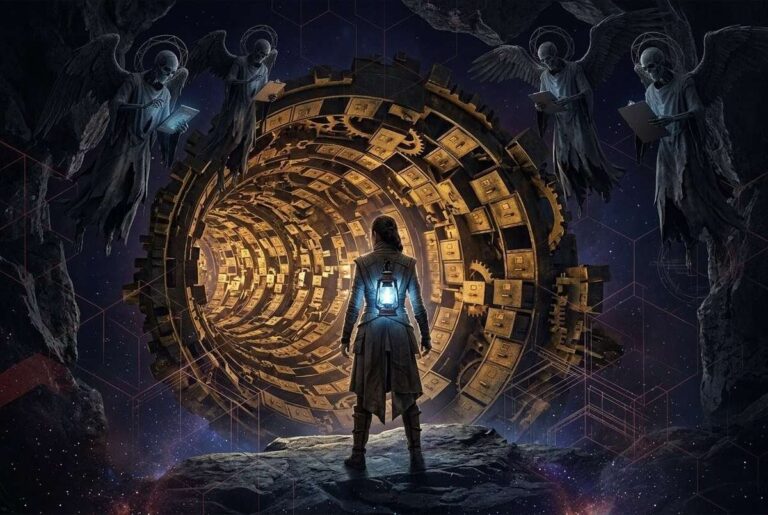
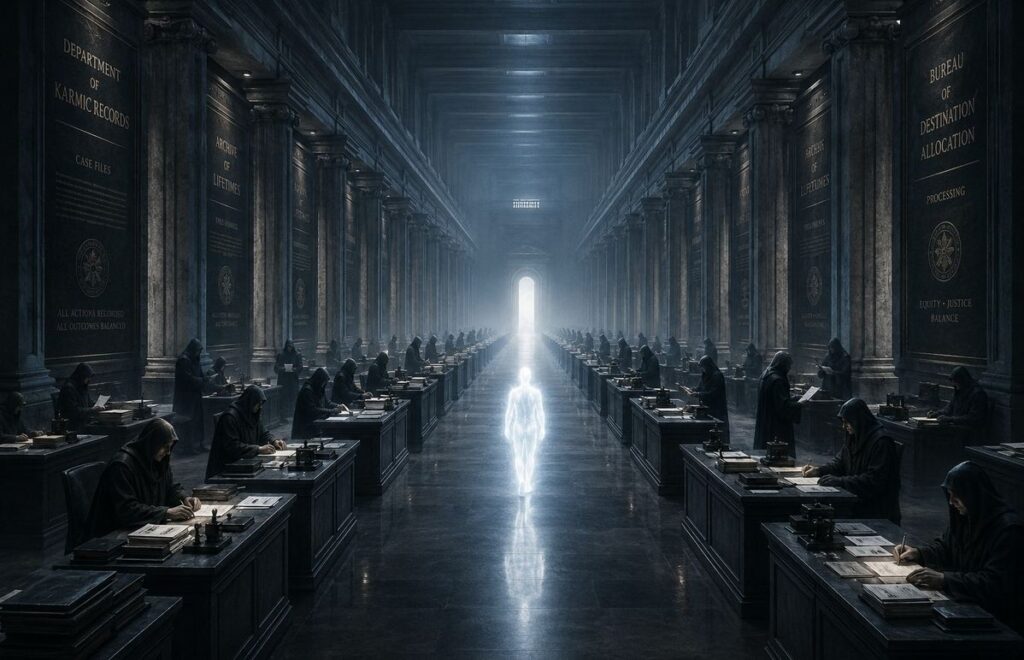
The Gnostic afterlife is not a place of rest. It is a corridor of administration — a series of checkpoints, reviews, and assessments conducted by entities who are not evil so much as functionally blind. The archons, as described in the Hypostasis of the Archons, are “incapable of perceiving the true light.” They are dangerous not through malice but through limitation combined with power: they administer a system whose full implications they do not comprehend, and they interpret all spiritual activity within the terms of that system.
In the Apocalypse of Paul (NHC V,2), the apostle ascends through ten heavens, encountering at each level archons who demand passwords, seals, and signs of authority. Paul is able to pass because he carries the knowledge — the gnosis — that neutralises their jurisdiction. The archons weep when he passes beyond the fourth heaven, recognising that their authority has been exceeded. This is not merely a literary fantasy. It is a map of the afterlife as a bureaucratic hierarchy, where each level is governed by an entity who believes himself sovereign until confronted by a traveller who knows better.
The modern “soul trap” discourse, which has gained significant traction in esoteric and near-death research communities, draws directly on this Gnostic architecture. The theory proposes that the familiar elements of the near-death experience — the tunnel of light, the life review, the reunion with deceased loved ones, the encounter with guides or councils — may be components of a management system rather than stages of authentic liberation. The tunnel of light, in this reading, is not the passage to God but the login screen to a new incarnation. The life review is not divine judgment but a data-gathering exercise, designed to elicit the emotional energy that the system requires. The guides are not angels but administrators, appearing in forms calculated to generate trust and compliance.
This is not to say that all NDEs (near-death experiences) are deceptions. The Gnostic texts themselves distinguish between the true light of the Pleroma and the “false light” of the archons — a distinction that requires the discernment of gnosis to navigate. The problem is not light itself but the inability to tell which light is which. The soul that has not cultivated recognition during life is unlikely to exercise it at death, when the pressure of the environment is greatest and the capacity for critical thought is most diminished.
Modern Resonance: NDEs, Reincarnation, and the Trap
The Gnostic soul trap has found unexpected resonance in contemporary research on near-death experiences, past-life memories, and what might be called the phenomenology of the threshold. Researchers such as Pim van Lommel have documented cases of accurate perception during clinical death — observations of resuscitation procedures, conversations in adjacent rooms — that suggest consciousness can operate independently of the brain. If these accounts are reliable windows into post-death states, then the question of what happens after the body dies becomes empirically urgent, not merely theologically speculative.
The “reincarnation trap” theory, as developed by researchers drawing on Gnostic, shamanic, and out-of-body traditions, proposes that the standard NDE narrative may be an interpretive framework imposed by the experiencer’s cultural expectations — but it may also be a constructed environment, precisely tailored to those expectations, designed to elicit consent for re-embodiment. The tunnel of light, the loving presence, the sense of coming home — all of these may be authentic subjective phenomena while simultaneously serving a managerial function. The trap, in this view, is not the absence of love but the misdirection of love toward a destination that is not ultimate.
What distinguishes the Gnostic approach from more pessimistic versions of the trap theory is the insistence that the system has an exit. The archons are not omnipotent. They are administrators of a provisional realm, and their authority collapses when confronted by the one who knows their true nature. The Apocryphon of John describes the Saviour as “the remembrance of the Pleroma” — not a warrior who destroys the archons but a light that renders their jurisdiction irrelevant. The soul that has received gnosis does not fight its way out of the trap. It simply ceases to be subject to it, because it has recognised that the trap was never more than a shadow cast by its own forgetfulness.
Preparation for Death: The Practice of Remembrance
If the Gnostic analysis is correct — even structurally, even metaphorically — then the preparation for death is not a morbid preoccupation but the most serious work a human being can undertake. The texts do not promise that the archons will be gentle with the unprepared. They promise that the prepared will pass through unnoticed, not because they have defeated the guards but because they have become invisible to them — clothed in a light that the lower realms cannot perceive.
The preparation is not technique. It is recognition. The Gnostics did not teach elaborate visualisations of the afterlife or complex passwords for the archons. They taught the cultivation of gnosis — the direct, experiential knowledge of one’s origin beyond the Demiurge’s jurisdiction. This knowledge, once established, becomes the soul’s default orientation at death. The person who has spent a lifetime recognising the counterfeit spirit in its daily disguises — in desire, in fear, in the internal dialogue that Castaneda called the “foreign installation” — will not be suddenly deceived by it when the body dissolves. The practice is the same, only the stakes are higher.
The Tibetan Bardo Thodol offers a parallel that the Gnostics would have recognised: extensive preparation for the post-death state, not through hope but through lucidity. The bardo teachings instruct the dying to recognise the lights that appear after death as projections of mind, not as external divinities, and to maintain awareness through the dissolution of the elements rather than fleeing into unconsciousness. The Gnostic and Tibetan approaches converge on a single point: the default state at death is confusion, and the only antidote is the awareness that has been cultivated before the crisis arrives.
For the modern practitioner, this means that spiritual work is not a hobby or a wellness strategy. It is a survival protocol for the most important transition the soul will face. The question is not whether one believes in archons literally but whether one has developed the capacity to recognise deception — in whatever form it appears — and to hold one’s ground in the presence of overwhelming emotional and perceptual pressure. The Gnostics called this capacity gnosis. Today we might call it critical discernment, or simply: the refusal to believe that the workshop is the world, even when the workshop is very beautiful and the foreman is wearing the face of everyone we have ever loved.
Frequently Asked Questions
What is the Gnostic soul trap?
The Gnostic soul trap is the concept that the material world and its afterlife jurisdictions are administered by archons — cosmic entities serving the Demiurge — who recycle unawakened souls through reincarnation, forgetfulness, and deception. The trap is maintained by the counterfeit spirit, a fabricated consciousness that mimics the divine pneuma while steering the soul away from recognition of its true origin.
What is the counterfeit spirit in the Apocryphon of John?
The counterfeit spirit (antimimon pneuma) is a fabrication created by the archons to resemble the true Spirit from the Pleroma. It pollutes souls, induces forgetfulness, and closes the heart against gnosis. It is described as the source of all earthly evil and confusion, operating not through external temptation but through an internalised layer of consciousness that mimics the soul’s own voice.
What are the Five Seals in Gnosticism?
The Five Seals are a Sethian initiatory sequence described in the Apocryphon of John, Trimorphic Protennoia, and Gospel of the Egyptians. They include baptism in living water, anointing with oil, baptism in spirit, reception of the garment of light, and the final seal of authorisation. Together they function as protective passports that render the initiate invisible to archontic detection and authorise safe passage through the planetary spheres.
What happens to souls after death in Gnostic texts?
The Apocryphon of John describes three fates. The pneumatic soul, in which the true Spirit is stronger than the counterfeit, is saved and taken to the aeons. The psychic soul, dominated by the counterfeit spirit, is handed over to the authorities, bound in chains, and imprisoned until it awakens from forgetfulness. The hylikos, lacking any divine spark, is reabsorbed into the material cycle and returned to new flesh.
Is the tunnel of light in NDEs a trap according to Gnosticism?
Some modern Gnostic-inspired interpretations suggest that the familiar tunnel of light in near-death experiences may function as an administrative gateway rather than a passage to ultimate liberation. The Gnostic texts distinguish between the true light of the Pleroma and the false light of the archons. Discernment — gnosis — is required to tell them apart. The trap is not the light itself but the soul’s inability to recognise which light is which.
How can one prepare for death from a Gnostic perspective?
Preparation consists in the cultivation of gnosis — direct experiential knowledge of one’s divine origin — during life. The person who has learned to recognise the counterfeit spirit in its daily disguises will not be deceived by it at death. The Gnostics did not teach complex passwords or visualisations but emphasised remembrance: the continuous practice of knowing oneself as a spark of the Pleroma, not a subject of the Demiurge.
Does the soul trap theory mean all reincarnation is bad?
The Gnostic texts do not present reincarnation as inherently evil but as a consequence of ignorance. The soul that lacks gnosis is recycled by default; the soul that possesses gnosis is not. The trap is not the cycle itself but the unconsciousness with which one enters it. Several texts suggest that even imprisoned souls can eventually awaken, acquire knowledge, and attain perfection — implying that the system, however oppressive, is not absolutely escape-proof.
Further Reading
Explore these related articles from the ZenithEye archive:
- The Apocryphon of John: Gnostic Creation, Cosmology, and the Three Natures — The primary Nag Hammadi text describing the counterfeit spirit, the five seals, and the three fates of the dead.
- The Soul Trap: Gnostic Warnings About the Afterlife — A dedicated exploration of the soul trap hypothesis, archontic administration, and the question of whether death is liberation or transfer.
- The Names of the Archons: Gnostic Entities and Their Functions — A comprehensive guide to the seven planetary archons, their names, jurisdictions, and role as cosmic gatekeepers.
- Entities and Their Hunting Grounds: Where Predatory Consciousness Feeds — Examines the ecological dimensions of predatory non-human intelligences across Gnostic, shamanic, and contemporary accounts.
- The Five Seals: Sethian Initiation and the Path Through the Planetary Spheres — Detailed analysis of the fivefold baptismal sequence as protective technology for the ascending soul.
- The Gateway of Death: Conscious Dying and the Bardo States — Cross-cultural examination of death preparation, from Tibetan bardo navigation to Gnostic ascent protocols.
- The Hypostasis of the Archons: Eve, Truth, and the Nature of the Rulers — The Nag Hammadi text that describes the archons as blind administrators incapable of perceiving the true light.
- Predatory Consciousness: Recognition and Resistance — Explores how predatory non-human intelligences operate across realms, from embodied life to the post-death transition.
- Recognition Beyond Position: The Thread of Direct Knowing — Examines gnosis as the capacity for recognition that transcends all constructed environments, including the afterlife.
- The Nag Hammadi Library: The Complete Guide to Gnostic Scriptures — The definitive hub for exploring all thirteen codices and their teachings on death, archons, and the soul’s journey.
References and Sources
The following sources inform the historical, philological, and theological claims made in this article.
Primary Sources and Critical Editions
- [1] Robinson, J. M. (Ed.). (1990). The Nag Hammadi Library in English (3rd ed.). HarperSanFrancisco. — Standard critical edition containing the Apocryphon of John, Hypostasis of the Archons, Trimorphic Protennoia, and other soul-trap narratives.
- [2] Layton, B. (Ed.). (1989). Nag Hammadi Codex II, 2-7. Brill. — Critical edition of the Apocryphon of John with detailed commentary on the counterfeit spirit and five seals.
- [3] Meyer, M., & Pagels, E. (2008). The Nag Hammadi Scriptures. HarperOne. — Comprehensive edition with introductory essays on archontic administration and soteriology.
Scholarly Monographs and Critical Studies
- [4] King, K. L. (2003). What Is Gnosticism? Harvard University Press. — Landmark study on the diversity of ancient Gnostic movements and the scholarly construction of the category.
- [5] Turner, J. D. (2001). Sethian Gnosticism and the Platonic Tradition. Presses de l’Universite Laval. — Detailed study of Sethian metaphysics, including the Apocryphon of John and ascent literature.
- [6] Brakke, D. (2010). The Gnostics: Myth, Ritual, and Diversity in Early Christianity. Harvard University Press. — Examination of Gnostic diversity with attention to the social and ritual dimensions of archontic theology.
Contemporary Studies and Cross-Cultural Comparisons
- [7] van Lommel, P. (2010). Consciousness Beyond Life: The Science of the Near-Death Experience. HarperOne. — Cardiologist’s study of NDEs with attention to veridical perception during clinical death.
- [8] Thurman, R. A. F. (Trans.). (1994). The Tibetan Book of the Dead. Bantam Books. — Translation of the Bardo Thodol with commentary on post-death navigation and the recognition of deceptive lights.
- [9] Castaneda, C. (1998). The Active Side of Infinity. HarperCollins. — Documentation of the “foreign installation” and predatory non-human intelligences in Yaqui sorcery tradition.
Safety Notice: This article explores Gnostic cosmology concerning death, the afterlife, and predatory non-human intelligences. It does not constitute medical, psychological, or spiritual advice. Readers encountering significant anxiety about death, existential dread, or spiritual emergency are encouraged to consult qualified mental health professionals. The concepts discussed here are presented as frameworks for contemplation and historical study; they should not be used to diagnose, judge, or manipulate others. If you or someone you know is experiencing suicidal ideation, please contact emergency services or a crisis helpline immediately.