The Gateway of Death: Conscious Dying and the Bardo States
Memory Fragment // Classification: ARCHONIC-BUREAUCRATIC
Death is the only certainty we collectively deny. While we obsess over optimising every other life transition–birth, puberty, marriage, midlife–death remains buried beneath euphemism and medical institutionalisation, processed through the archonic bureaucracy of terminal care. Yet the esoteric traditions have long maintained that death is not termination but transition, and that the manner of dying determines the quality of what follows. This gateway is not morbid fixation but practical preparation for the most significant event in any incarnation.
The Tibetan Bardo Thodol–literally “Liberation Through Hearing in the Intermediate State”–is perhaps the most sophisticated manual for conscious dying ever compiled. Attributed to Padmasambhava in the 8th century though likely composed in the 14th century, it maps the death process with clinical precision: the stages of physical dissolution, the emergence of the bardo body, the encounter with luminous and wrathful manifestations, and the eventual precipitation into the next embodiment. The text assumes what modernity has forgotten: that death is a skill, and that skill requires training–not mere belief, but direct familiarity with the territories ahead.
Table of Contents
- The Administrative Dissolution: Five Stages of Release
- The Bardo Jurisdiction: Forty-Nine Days of Unembodied Transit
- The Technology of Conscious Dying: Five Protocols for Transition
- The Western Context: Hospice and the Medicalisation of Transition
- The Gift of Mortality: Death as Life’s Sharpening Stone
- Frequently Asked Questions
- Further Reading
- References and Sources
The Administrative Dissolution: Five Stages of Release
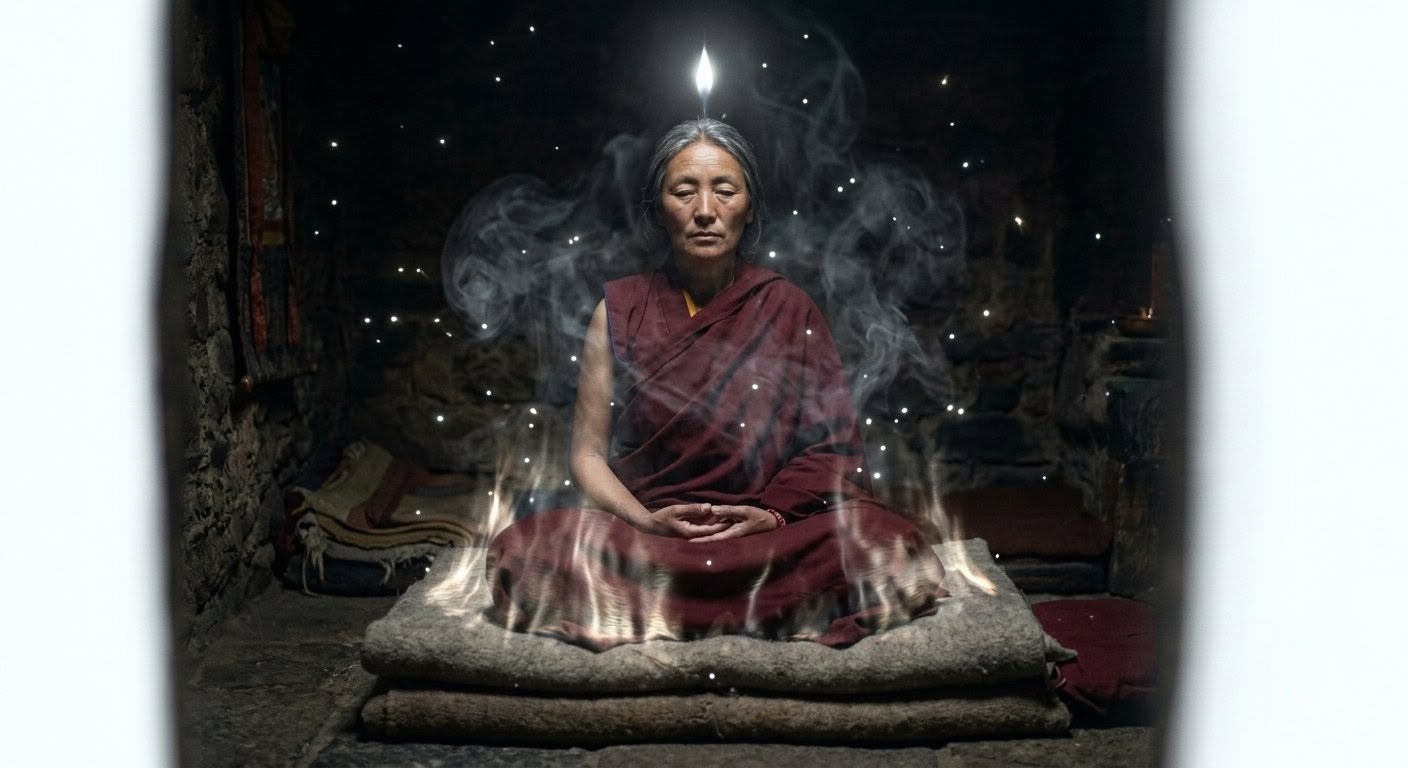
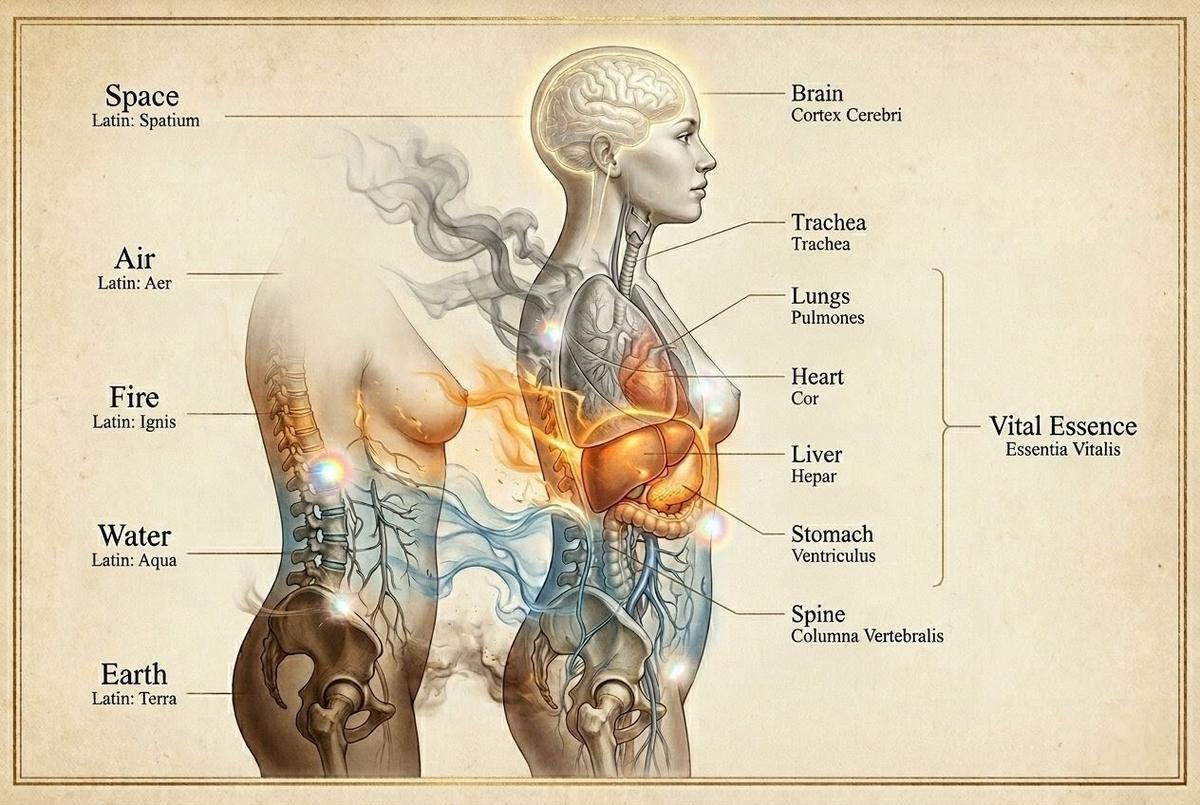
The death process is not the instantaneous flicking of a switch, but a methodical dismantling of the embodied self. It unfolds through five distinct stages, each marked by specific physiological collapse and corresponding perceptual phenomena. Recognition of these stages allows the dying practitioner to maintain awareness through dissolution rather than succumbing to the panic that propels consciousness into unconsciousness.
Earth Surrenders to Water
The solid elements of the body lose their coherence. The practitioner feels heavy, sinking into the mattress, unable to command movement as muscular function degrades. Simultaneously, the mirage-like appearance (thig-le) emerges in the mind’s eye–visions of shimmering light, like heat waves rising from desert sand, indicating the dissolution of the earth element’s binding function. The body ceases to be territory and becomes fluid.
Water Evaporates to Fire
Fluid functions cease their administrative duties. The mouth and throat become arid despite moisture; the blood slows its circulation. The internal smoke-like appearance manifests–grey visions billowing through internal space like incense filling a temple. This marks the dissolution of the water element into fire, the drying of the organism’s aqueous bureaucracy.
Fire Dissipates into Air
Heat leaves the body, concentrating at specific centres that determine subsequent trajectory: the crown for those destined for higher realms, the heart for ordinary beings, the lower centres for less fortunate destinations. The firefly or sparks appearance emerges–flashes of light in the encroaching darkness, like fireflies signalling in the void. The metabolic fire withdraws its jurisdiction.
Air Disperses into Consciousness
The breath becomes shallow, erratic, then ceases its rhythmic labour. The internal lamp-like appearance dawns–clear, steady luminosity without flicker, like a flame in still air. This is the dissolution of the air element into consciousness, the final administrative handover from physical to subtle function.
Consciousness Opens to Space
The final dissolution. The clear light of death manifests–the ground luminosity, empty yet cognisant, the same awareness that preceded birth and persists through all dream and waking states. Recognition of this clear light constitutes liberation. Failure to recognise propels the consciousness into the bardo proper, the intermediate state requiring navigation.
The Bardo Jurisdiction: Forty-Nine Days of Unembodied Transit
For those who do not recognise the clear light, the bardo dawns–a period lasting up to forty-nine days, divided into distinct phases of increasing instability. This is not punishment but process, the dismantling of karmic momentum in the absence of physical ballast.
The Bardo of Dharmata: Days 1-3
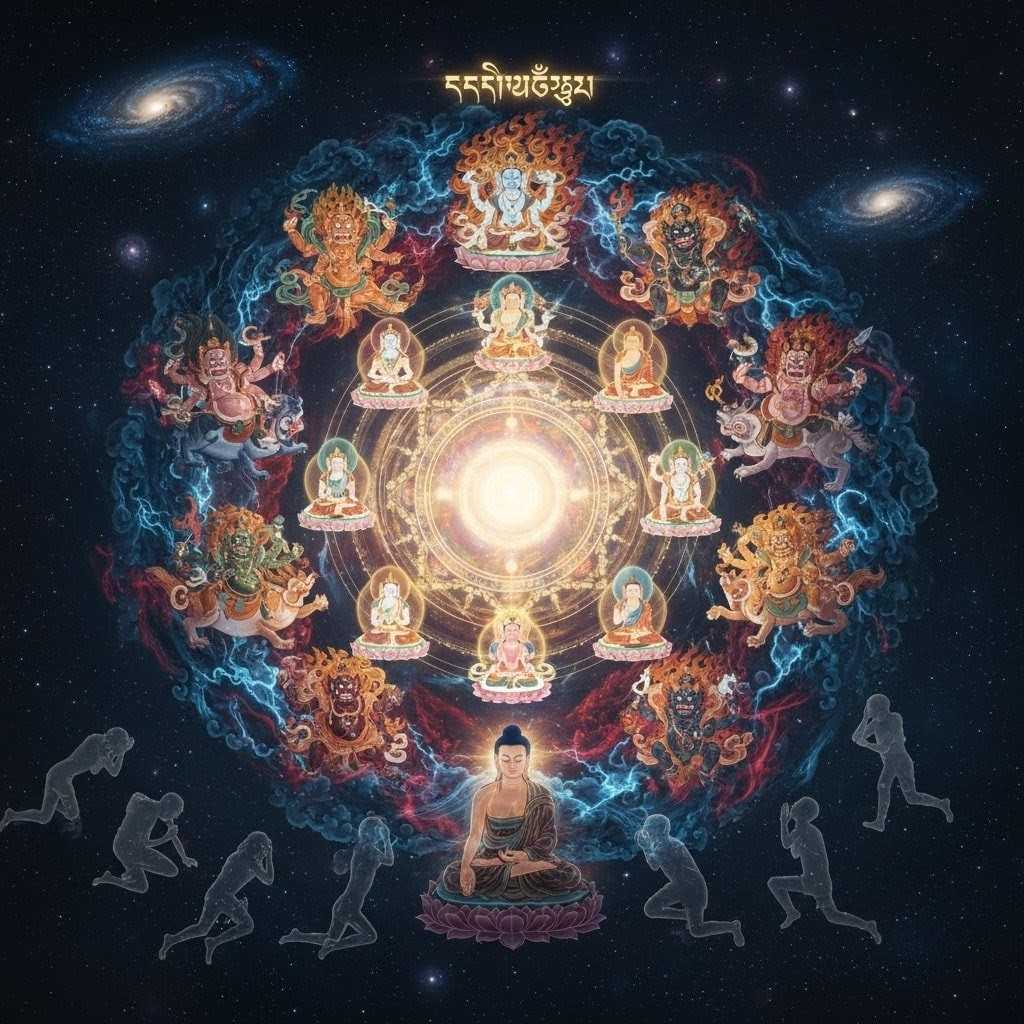
The peaceful and wrathful deities manifest in overwhelming display. These are not external entities imposing from without, but the spontaneous display of the practitioner’s own pure awareness, filtered through cultural conditioning and karmic traces like light through stained glass. The forty-two peaceful deities emerge from the heart centre, representing the sambhogakaya (enjoyment body) of buddhahood in its beneficent aspect. The fifty-eight wrathful deities emerge from the crown centre, representing the same energy in its transformative, aggressive modality–anger converted to wisdom, fear alchemised to clarity.
Recognition is crucial here. These appearances are vast, luminous, terrifying in their intensity–sound and light without physical constraint. The untrained mind flees from the peaceful deities (finding them too bright, too pure, too absolute) and from the wrathful deities (finding them terrifying, demonic, chaotic), thereby missing the opportunity for recognition in both cases. The trained practitioner knows: These are my own projections. I need not fear them. I need not worship them. I need only recognise them as aspects of my own awareness wearing theatrical masks.
The deities are the bureaucracy of your own mind–peaceful departments offering promotion, wrathful departments enforcing restructuring. Neither requires submission; both require recognition.
— Bardo navigation principle
The Bardo of Becoming: Days 4-49
If recognition does not occur during the Dharmata phase, consciousness enters the bardo of becoming. The mental body (yid-lus) forms–complete with all sensory capacities but lacking physical density, able to pass through matter yet limited by the mind’s karmic patterns. The dying practitioner experiences extreme clarity (unfiltered by physical sensation) but also extreme instability, swept along by the winds of karma toward the next rebirth like a leaf in administrative transit.
Here, habitual patterns assert with terrible efficiency. Attachments to the previous life generate suffering proportionate to the attachment. Fear of the unknown creates panic that obscures the clear light. The lights of the six realms appear–attractive destinations corresponding to dominant karmic tendencies–and the consciousness, seeking familiarity, gravitates toward one. The process is not punishment but momentum, the continuation of patterns established in life now operating without physical constraint.

The Technology of Conscious Dying: Five Protocols for Transition
Preparation for this process is not passive acceptance but active training–technologies developed over millennia to optimise the death transition. These are not religious observances but practical psychonautics.
1. Phowa: The Conscious Exit Strategy
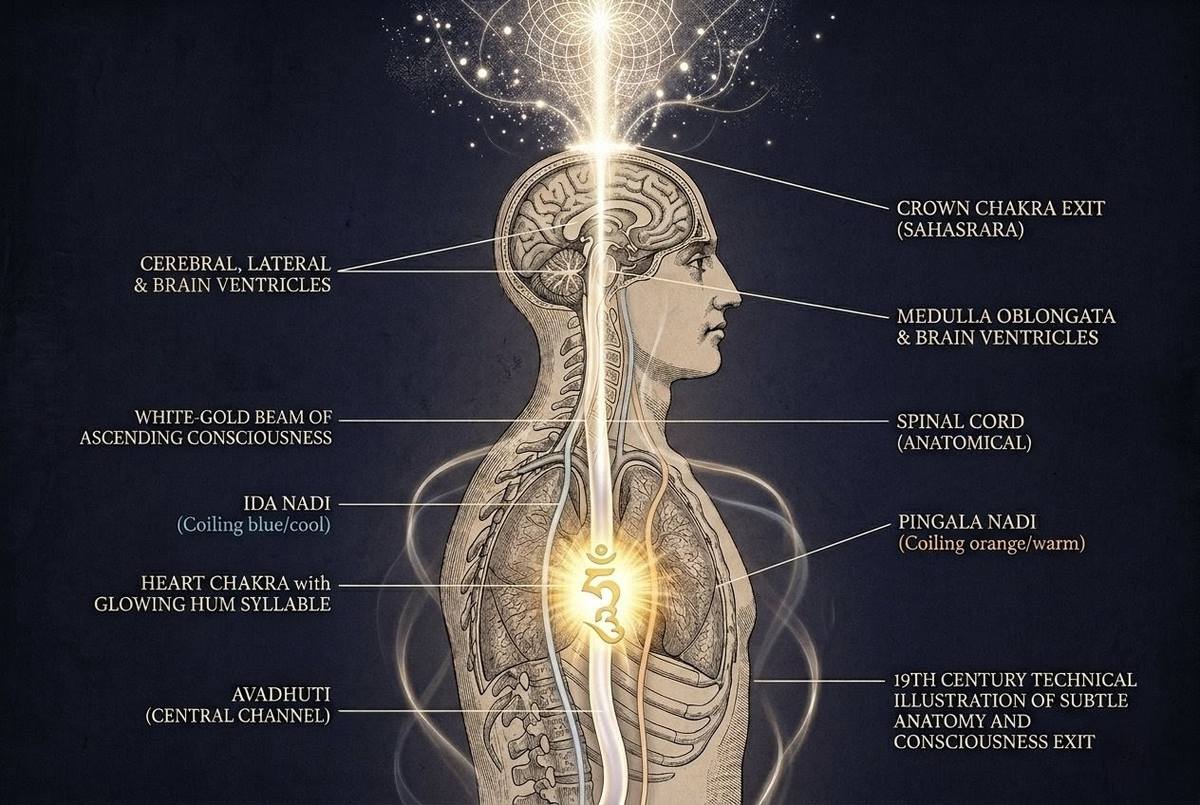
Phowa–transference of consciousness–involves the deliberate projection of awareness out of the body at the moment of death. Traditionally aimed at the crown chakra for rebirth in a pure realm, the principle applies regardless of destination: maintaining awareness while separating from the physical vehicle. Practice involves visualising consciousness as a syllable (typically HUM) or sphere of light at the heart centre, then shooting it upward through the central channel (avadhuti) and out the crown aperture. This is the ultimate exit visa, stamped with awareness rather than panic.
2. Tonglen: Dissolving the Self-Contract
In the bardo, attachment to the previous identity creates suffering through contraction. Tonglen–breathing in the suffering of others and breathing out relief–breaks down the self-other boundary, preparing the consciousness for the dissolutions of death. By dissolving self-cherishing before the physical dissolution, the practitioner ensures that the post-death state is characterised by spaciousness rather than claustrophobic panic. It is the cancellation of the ego’s employment contract before the company collapses.
3. Guru Yoga: Establishing Beacon Signals
Cultivating stable connection with enlightened principles–represented by teachers, deities, or direct recognition of nature of mind–creates orienting landmarks in the confusion of the bardo. These connections activate like lighthouse beams or emergency broadcast signals, orienting consciousness toward recognition rather than reaction. The practitioner who has established these neural pathways in life finds them automatically activated in death.
4. Nature of Mind Recognition: The Ground Pattern
The foundation of all preparation. Daily meditation on the nature of mind–empty yet cognisant, clear yet without location, aware yet without subject-object division–establishes the recognition pattern that will activate during the clear light of death. This is not belief but direct familiarity with the ground state of consciousness. The practitioner learns to recognise the office furniture of awareness itself, so that when the office burns down, the essential space remains familiar.
5. Living the Dharma: Karmic Housekeeping
Ethical preparation determines the filter through which bardo experiences pass. The bardo is not a neutral territory but a projection of karmic traces. A life spent cultivating virtue, wisdom, and compassion creates favourable perceptual conditions; a life spent in harmful action creates obstructions. Death preparation is not separate from life practice–it is the cumulative result of how one has treated the mind and others throughout the employment of embodiment.
The Western Context: Hospice and the Medicalisation of Transition
Modern death care has much to learn from these technologies. The hospice movement recognises the importance of conscious dying but often lacks the technical precision of the bardo teachings, offering comfort without orientation. The hospital system, meanwhile, treats death as organisational failure–an administrative error to be postponed through mechanical intervention regardless of consciousness quality.
The integration of these approaches–palliative care for physical comfort, psychological support for emotional processing, and contemplative training for spiritual preparation–represents optimal end-of-life care. This requires dismantling the taboo that prevents conversation about death until the process has already begun, when preparation time has evaporated.
For the practitioner without access to traditional training, the essentials remain portable: maintain awareness through dissolution, recognise appearances as mind-created rather than externally imposed, do not fear the clear light as annihilation, rest in the nature of mind without grasping. These can be practised through contemplation of death (maranasati), meditation on impermanence, and the cultivation of present-moment awareness that transfers directly to the death state.

The Gift of Mortality: Death as Life’s Sharpening Stone
Death awareness is not morbid; it is clarifying. Recognition that this life is finite strips away the trivial, reveals what matters, and concentrates the mind in a way that no other reflection can. The practitioner who keeps death at their shoulder–as the Stoics recommended through the practice of memento mori–lives with urgency and authenticity rather than the somnambulant drift of the immortalist.
Moreover, death preparation serves life directly. The processes of dissolution–earth to water to fire to air to space–mirror the processes of deep meditation and sleep entry. The clear light of death is the same clear light accessible in dream yoga or advanced contemplative absorption. Training for death is training for the deepest states of consciousness available to the living. To learn to die is to learn to live without reservation.
Death is not the opposite of life but its completion. To die consciously is to seal the meaning of an entire existence, to transition with dignity and awareness, and perhaps–to recognise the clear light that was always already present, merely obscured by the insistence of form.

Read With Discernment
This article touches material where experience, interpretation and symbolic language can easily blur. Read slowly, compare sources, and keep your own discernment intact.
- Editorial Principles — how ZenithEye separates source, interpretation and lived experience.
- Start Here — the reader guide for the wider archive.
- States of Knowing — altered states, dreams, consciousness, perception and direct experience.
- The Transformation — integration, grounding, spiritual emergence and return to ordinary life.
Frequently Asked Questions
How long does the bardo state actually last?
Traditional texts specify up to forty-nine days, though subjective time in the bardo may differ dramatically from earthly measurement. Some traditions suggest the untrained consciousness reincarnates almost immediately, while advanced practitioners may navigate the bardo for extended periods or achieve liberation within the first three days. The period is traditionally divided into seven phases of seven days each.
Can someone without Buddhist training benefit from bardo teachings?
Absolutely. The bardo stages describe universal psychophysical processes, not sectarian doctrines. The recognition of elemental dissolutions and the clear light applies regardless of religious affiliation–what matters is familiarity with one’s own mind, not belief in specific deities. The Bardo Thodol itself was designed to be read aloud to the dying, guiding them through processes that are universal to human consciousness.
What happens if you fail to recognise the clear light of death?
Failure to recognise propels consciousness into the bardo proper, where the mental body forms and karmic momentum determines trajectory. This is not punishment but continuation–the failure simply means one must navigate further transitions rather than achieving immediate liberation. The Bardo Thodol provides instructions for each subsequent phase, offering repeated opportunities for recognition.
Is lucid dreaming really preparation for death?
Yes. The bardo body resembles the dream body–sensory clarity without physical density, responsive to mind rather than physics. Lucid dreaming trains the recognition this is mind-created, the essential skill for bardo navigation. The Bardo Thodol explicitly recommends dream yoga as preparation, and the dissolution stages mirror the process of falling asleep.
How can I help a dying person who hasn’t practised these techniques?
Read the Bardo Thodol aloud during the death process and for forty-nine days after. The text functions as an auditory guide, reminding the dying consciousness of what is occurring. Maintain calm, loving presence without grasping or grief that might bind the departing consciousness. Your peaceful presence is itself a transmission of the stability they need.
What is the difference between the bardo and the astral plane?
The bardo is a specific transitional state between death and rebirth, while astral plane is a broader term for non-physical dimensions. The bardo is temporary and karmically driven, designed for transition rather than habitation. Some Western esoteric traditions conflate them, but precise navigation requires recognising the bardo’s unique characteristics and its limited duration.
Can consciousness get stuck in the bardo?
Traditional texts describe hungry ghosts and intermediate beings who linger due to attachment or confusion, but these states are ultimately temporary. All unliberated consciousness eventually moves toward rebirth. The stuck sensation is simply prolonged bardo residence due to failure to recognise opportunities for liberation. The forty-nine day limit ensures no permanent entrapment.
Further Reading
These links connect conscious dying and bardo navigation to related resources within the ZenithEye library, offering context on dream states, liminal consciousness, integration, and contemplative preparation.
- The Gateway of Dream: Lucidity as Preparation for Death — The structural identity of dream and death states; training the mind to recognise illusion while embodied.
- Hypnagogia: The Threshold State at Sleep Onset — Navigating the hypnagogic border as practice for the dissolution stages.
- Sleep Paralysis as Threshold State — Understanding liminal consciousness and the formation of the subtle body.
- Return to Ordinary Life After Awakening — Integration after profound experience, applicable to near-death and bardo encounters.
- Stages of Integration: Immediate, Short-Term, and Long-Term — Mapping the aftermath of threshold experiences.
- Contemplative Techniques: Methods from the World’s Mystical Traditions — Foundational practices for conscious transition.
- The Psychic Vampire: Energy Parasitism in Occult Tradition — Understanding energetic boundaries relevant to post-death states.
- The Five Gateways: Direct Knowing — Overview of the gateway system including death as the final threshold.
References and Sources
The following sources support the claims and frameworks presented in this article. Primary Tibetan Buddhist texts, scholarly commentaries, and clinical sources are grouped by category.
Primary Tibetan Buddhist Texts
- Evans-Wentz, W. Y. (Ed.). (1927). The Tibetan Book of the Dead: Or the After-Death Experiences on the Bardo Plane. Oxford University Press. (First English translation of the Bardo Thodol)
- Fremantle, F., & Trungpa, C. (Trans.). (1975). The Tibetan Book of the Dead: The Great Liberation Through Hearing in the Bardo. Shambhala.
- Thrangu Rinpoche. Bardo Teachings. A Buddhist Library. (Commentary on the 42 peaceful and 58 wrathful deities)
Scholarly and Practical Commentaries
- Sogyal Rinpoche. (1992). The Tibetan Book of Living and Dying. Rider. (Comprehensive guide to death process and bardo navigation)
- Lama Yeshe. (1981). Powa: Transference of Consciousness at the Time of Death. Lama Yeshe Wisdom Archive.
- Chagdud Tulku Rinpoche. Phowa Practice: Transference of Consciousness. (Traditional instructions for consciousness transference)
- Chodron, P. (1997). When Things Fall Apart: Heart Advice for Difficult Times. Shambhala. (Tonglen and death preparation in contemporary practice)
Classical and Philosophical Sources
- Aurelius, M. (c. 161-180 CE). Meditations. (Stoic memento mori and death contemplation)
- Hayagriva Buddhist Centre. Wheel of Life–Death Process. (Teachings on the eight stages of death dissolution after Geshe Tashi Tsering)
Safety Notice: This article addresses psychological and existential content related to death and dying. If you are experiencing suicidal ideation, please contact emergency services or a crisis helpline immediately. The bardo teachings are for natural death preparation, not self-harm. If supporting a dying person, ensure qualified medical and hospice care remains primary; contemplative support complements but does not replace palliative medicine. The practices described require gradual preparation under qualified guidance; attempting advanced visualisation or breath practices without proper instruction may cause distress.