
Jung, Shadow Work, and Gnostic Pneuma: The Ancient Upstream
The contemporary enthusiasm for shadow work–bringing repressed emotions, fears, and desires into conscious awareness–is rarely traced to its deepest source. Practitioners speak of integration, of retrieving disowned parts of the self, of accelerating personal growth through honest confrontation with the darkness within. The language is psychological, but the architecture is ancient. What modern shadow work calls the retrieval of repressed content, Gnosticism called the recovery of the divine spark from its imprisonment in matter. The correspondence is not merely poetic; it is structural. Both traditions describe a descent into darkness as the necessary precondition for restoration to light.
Carl Gustav Jung stood at the confluence of these currents. A physician by training and an explorer of the unconscious by vocation, Jung studied Gnostic texts extensively, corresponded with leading scientists, and insisted that myths, symbols, and religious systems were not obsolete superstitions but psychic facts–blueprints of the unconscious mind. His analytical psychology, particularly the process of individuation, can be read as a rigorous twentieth-century attempt to translate Gnostic soteriology into the language of the psyche. When we map Jungian shadow work onto Gnostic pneuma retrieval, and when we align the alchemical stages of nigredo, albedo, and rubedo with the Gnostic typology of hylic, psychic, and pneumatic natures, the result is not a forced synthesis but the recognition of a single river flowing through different landscapes.
Table of Contents
- The Jung Codex: When the Unconscious Met Gnosis
- The Shadow as Kenoma: What the Unconscious Hides
- Nigredo, Albedo, Rubedo: The Alchemical Geography of the Soul
- Three Natures, Three Stages: Gnostic Anthropology Meets Jungian Typology
- Individuation as Apokatastasis: The Return to Wholeness
- Frequently Asked Questions
- Further Reading
- References and Sources
The Jung Codex: When the Unconscious Met Gnosis
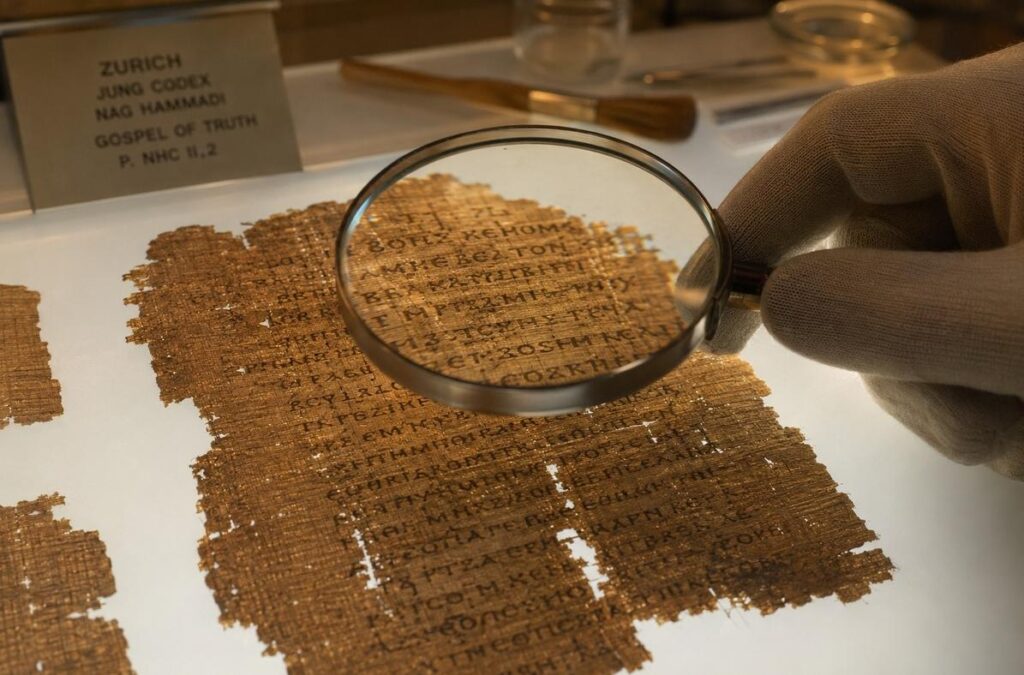
In 1952, the C. G. Jung Institute in Zurich acquired a collection of fourth-century Coptic papyri that would become known as the Jung Codex–now recognised as Codex I of the Nag Hammadi Library. The codex contained the Gospel of Truth, the Treatise on Resurrection, the Tripartite Tractate, and other Valentinian texts. Jung, then in his seventies, had spent decades studying Gnosticism through patristic polemics, the Pistis Sophia, and the Bruce Codex. The arrival of primary Gnostic documents in his own institute was more than an archaeological curiosity; it was a confirmation. Here were the very texts whose myths he had been interpreting psychologically for forty years, now speaking in their own voice.
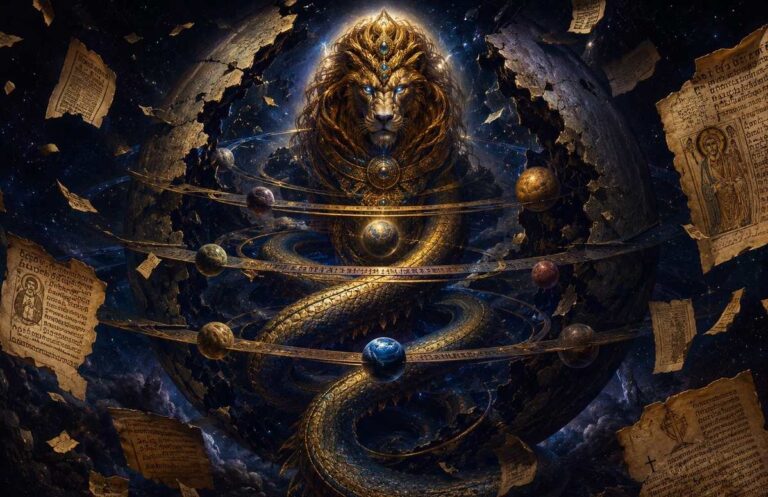
Jung’s interest in Gnosticism was not antiquarian. He believed that Gnostic symbols–the divine spark trapped in matter, the ignorant demiurge, the ascent past planetary archons–were not historical oddities but expressions of the collective unconscious. In his 1951 work Aion, he analysed Gnostic Christology as a projection of the Self archetype. In Psychology and Alchemy (1944), he treated alchemical and Gnostic imagery as a coded record of the individuation process. For Jung, the Gnostics were not heretical theologians; they were early psychologists who lacked the vocabulary of modern depth psychology but possessed an uncanny accuracy in mapping the interior world.
It is worth noting that Jung did not live to see the full publication of the Nag Hammadi Library. Only Codex I reached him; the remaining twelve codices were edited and translated largely after his death in 1961. Yet the discovery of 1945 confirmed what he had already intuited: that the ancient world possessed a sophisticated psychology of transformation, encoded in myth and symbol, awaiting a vocabulary that would not emerge for another two millennia.
The Shadow as Kenoma: What the Unconscious Hides
In Jungian psychology, the shadow is the unconscious aspect of the personality, everything that the conscious ego refuses to acknowledge: instincts, weaknesses, desires, and memories incompatible with the chosen self-image. It is not evil by nature, but it is dark because it has been denied light. The work of integration consists in withdrawing projections, owning the shadow’s contents, and bringing them into relationship with consciousness.
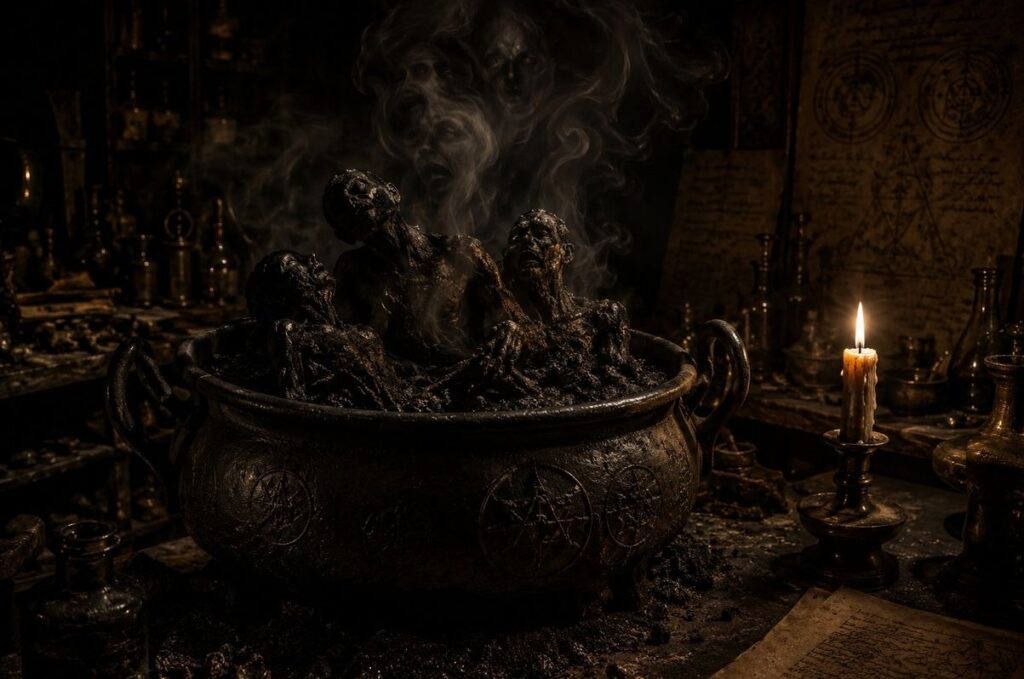
The Gnostic concept of kenoma–the realm of deficiency, emptiness, and forgetfulness–provides a striking parallel. In Valentinian cosmology, the material world arises not from the malice of a wicked demiurge alone but from Sophia’s passion, her fall into ignorance and separation from the Pleroma. The human condition is one of forgetfulness: we do not know who we are or whence we came. The divine spark, the pneuma, lies dormant in matter, covered by the psychic and hylic natures, waiting to be awakened.
Jung’s shadow is the psychological equivalent of this Gnostic forgetfulness. What we repress does not disappear; it falls into the kenoma of the personal unconscious, where it continues to operate as a complex, a splinter psyche, an autonomous fragment that possesses its own will. Shadow work is the psychological equivalent of Gnostic anamnesis: the recovery of what has been lost, the bringing of hidden content into the light of recognition. The shadow, like the pneuma, is not created by the integration process; it is discovered. It was there all along, buried beneath the persona’s respectable facade.
Nigredo, Albedo, Rubedo: The Alchemical Geography of the Soul
Jung found in alchemy a symbolic system that mapped the individuation process with precision. The alchemical magnum opus proceeds through three principal stages: nigredo (blackening), albedo (whitening), and rubedo (reddening). Each corresponds to a distinct psychological transformation.
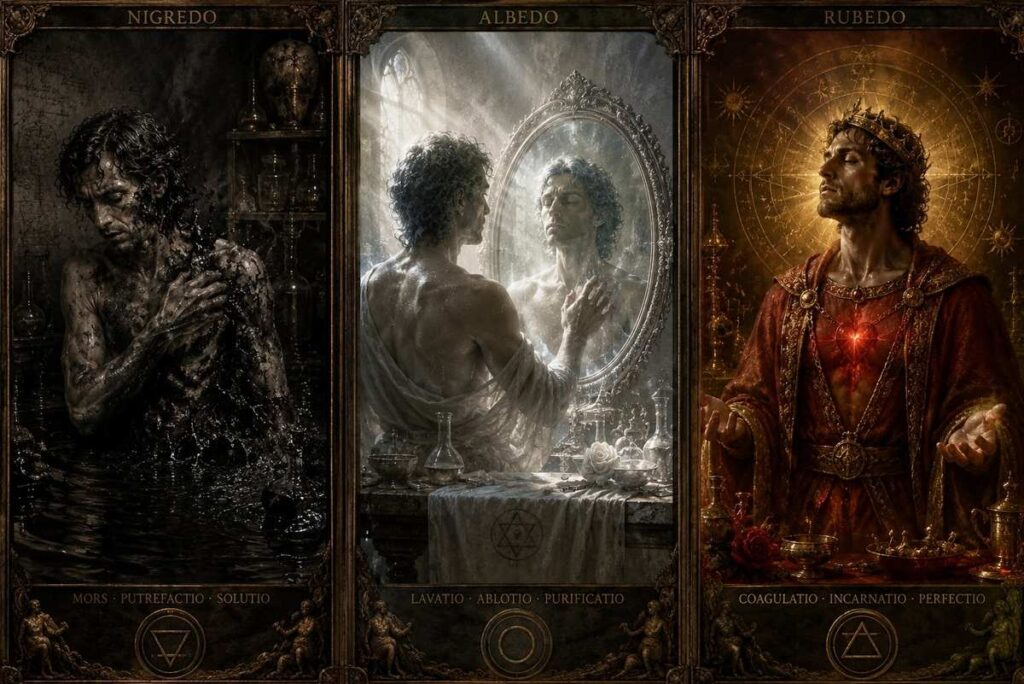
Nigredo is the putrefaction, the death, the dissolution of the old self. It is the depressive phase, the confrontation with the shadow, the experience of being reduced to prima materia–raw, undifferentiated psychic substance. In Gnostic terms, this is the recognition of the kenoma, the admission that one is not merely a respectable citizen but a being in exile, carrying a divine spark that has been thoroughly obscured. The nigredo is not pleasant; it is the dark night of the soul, the collapse of illusions, the moment when the psyche’s defensive structures fail and the shadow floods consciousness.
Albedo follows. The blackened matter is washed, purified, and illuminated. Psychologically, this is the integration of the anima or animus, the encounter with the contrasexual soul-image, and the development of a reflective capacity that can hold opposites without splitting. The Gnostic equivalent is the transition from hylic to psychic existence–the awakening of soul, the capacity for faith, ethical struggle, and the recognition that salvation is possible. The albedo is not yet completion; it is the dawn after a long night, the establishment of a conscious relationship with the unconscious.
Rubedo is the reddening, the marriage of opposites, the production of the philosopher’s stone. Psychologically, this is the realisation of the Self, the emergence of a centre that transcends the ego and can hold the totality of the psyche–shadow included–in a unified field. The Gnostic pneumatic, the one restored to the Pleroma through gnosis, is the analogue. The rubedo is not a return to innocence but an attainment of wholeness that includes all previous stages. The nigredo is not rejected; it has been digested, transformed, and made luminous.
Three Natures, Three Stages: Gnostic Anthropology Meets Jungian Typology
Valentinian anthropology divides humanity into three natures: the hylic, bound to matter and destined for dissolution; the psychic, capable of faith and ethical development, saved through the church and its sacraments; and the pneumatic, the spiritual seed sown by Sophia, restored to the Pleroma through direct recognition. These are not rigid castes but stages of development, modes of consciousness that coexist in every human being in varying proportions.
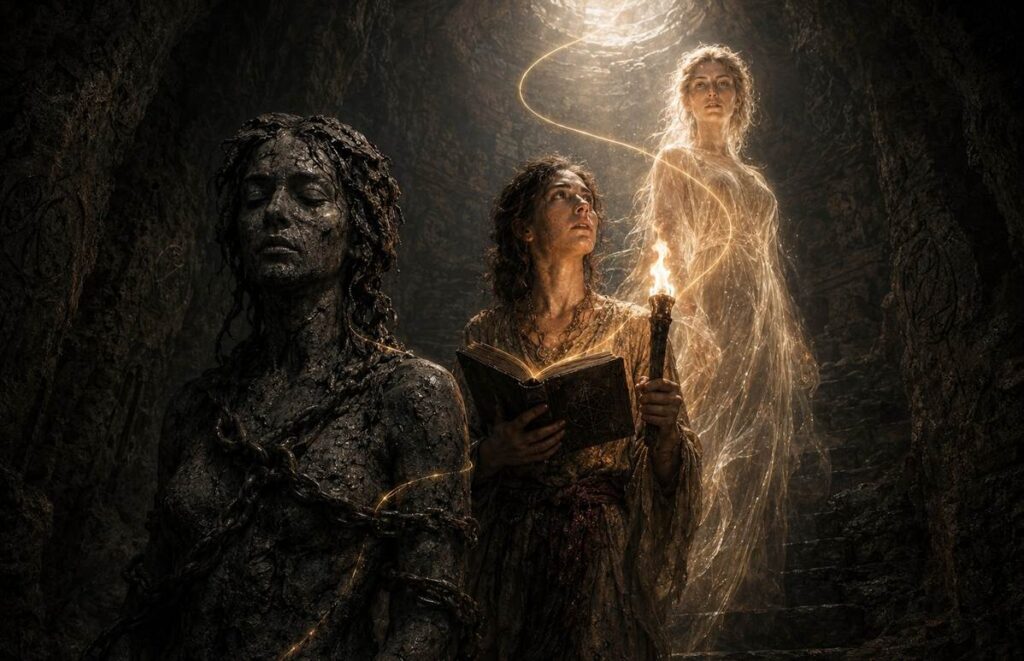
Jung’s psychological typology offers a functional parallel. The hylic corresponds to the state of unconscious identification with the persona–the social mask, the collective expectations, the materialistic adaptation that knows nothing of the depths. The psychic corresponds to the developed ego, the ethical individual who has begun the work of introspection, who struggles with the shadow, who seeks meaning through relationship and symbol. The pneumatic corresponds to the Self-realised individual, the one who has completed the process of individuation, who no longer needs to repress or project because the centre of consciousness has shifted to a transpersonal ground.
Jung’s concept of the transcendent function–the psyche’s innate capacity to unite opposites and generate a third, symbolically mediated position–mirrors the Gnostic syzygy, the conjugal pairing that restores wholeness. The hylic cannot individuate because it lacks the psychic seed; the psychic can individuate through effort and suffering; the pneumatic individuates not by achievement but by recognition–by remembering what it has always been. This is why Jung insisted that individuation is not a matter of will but of cooperation with an unconscious process that knows more than the ego.
Individuation as Apokatastasis: The Return to Wholeness
The Gnostic doctrine of apokatastasis–the restoration of all things to their original state–finds its psychological counterpart in Jung’s individuation. Both describe not an escape from the world but a reintegration of what has been separated. The Gnostic Saviour descends into matter, shares the human condition, and ascends again, opening the path for others. The Jungian analyst descends into the patient’s unconscious, shares the shadow material through the therapeutic relationship, and facilitates the patient’s own ascent to a more inclusive consciousness.
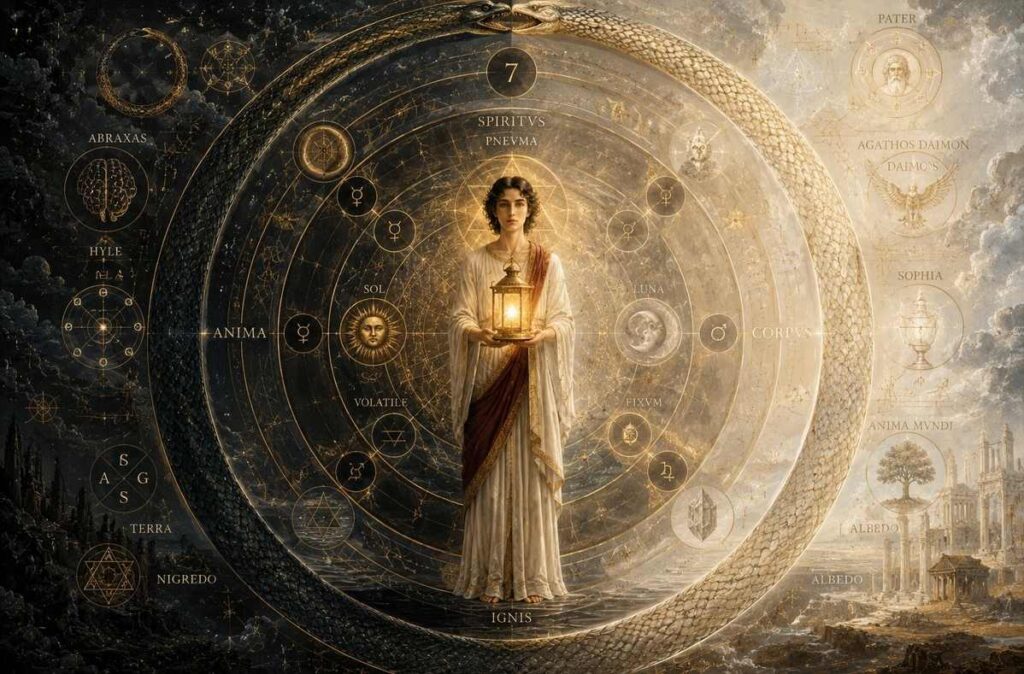
Jung’s correspondence with the physicist Wolfgang Pauli–published as The Interpretation of Nature and the Psyche–reveals his conviction that the psyche and matter are not separate substances but different aspects of a single reality. This is not far from the Gnostic intuition that the Pleroma and the kenoma are not ultimately opposed but related as fullness is related to a temporary disturbance. Individuation does not destroy the ego; it relativises it. The ego becomes a satellite rather than the sun, orbiting the Self as the Self orbits the mystery from which it emanates.
The shadow work trend, for all its contemporary packaging, is participating in this ancient architecture. When a practitioner journals their repressed rage, when they sit with their grief rather than medicating it, when they recognise their projections and withdraw them, they are performing the nigredo. When they develop the capacity to hold ambivalence, to tolerate the tension of opposites without premature resolution, they are living the albedo. When they discover that the very darkness they feared has become a source of insight, creativity, and grounded compassion, they have touched the rubedo. The language has changed, but the geography has not.
Jung once remarked that the Gnostics had mapped the unconscious with an accuracy that would not be matched until the advent of depth psychology. What he did not add–perhaps because he saw it so clearly it needed no stating–is that depth psychology, at its best, is Gnosticism translated into the vernacular of the consulting room. The shadow is the kenoma. Individuation is apokatastasis. The Self is the Pleroma in psychological dress. To do shadow work is to retrieve the divine spark, not from some distant heaven, but from the very matter of the psyche that has been hiding it. The retrieval is not an escape. It is a homecoming.
Frequently Asked Questions
What is the Jung Codex and why is it important?
The Jung Codex is Codex I of the Nag Hammadi Library, acquired by the C. G. Jung Institute in Zurich in 1952. It contains primary Valentinian texts including the Gospel of Truth, the Treatise on Resurrection, and the Tripartite Tractate. For Jung, who had studied Gnosticism for decades through patristic sources and the Pistis Sophia, the codex was a direct confirmation that Gnostic myths were not historical oddities but precise maps of the unconscious mind.
How does Jungian shadow work relate to Gnostic pneuma?
Both describe the retrieval of what has been hidden in darkness. Jung’s shadow is the unconscious aspect of personality–repressed instincts, fears, and desires that the ego refuses to acknowledge. Gnostic pneuma is the divine spark buried in matter, forgotten and dormant. Shadow work brings repressed content into conscious light; Gnostic anamnesis awakens the sleeping spark. The processes are structurally parallel: descent into darkness precedes restoration to wholeness.
What are the three alchemical stages nigredo, albedo, and rubedo?
Nigredo (blackening) is the dissolution of the old self through confrontation with the shadow–depression, putrefaction, and the collapse of illusions. Albedo (whitening) is the purification and illumination that follows, integrating the anima or animus and developing reflective capacity. Rubedo (reddening) is the final stage of wholeness, the marriage of opposites and the realisation of the Self. Jung mapped these stages directly onto the process of individuation.
How do the Gnostic three natures map onto Jungian psychology?
The hylic (matter-bound) corresponds to unconscious identification with the persona and collective expectations. The psychic (soul-capable) corresponds to the developed ego that undertakes ethical struggle and introspection. The pneumatic (spirit-endowed) corresponds to the Self-realised individual who has completed individuation. Jung’s transcendent function–the psyche’s capacity to unite opposites–mirrors the Gnostic syzygy, the paired restoration that heals separation.
Did Jung believe Gnosticism was historically true or psychologically true?
Jung treated Gnostic myths as psychic facts rather than historical reports. He believed religious symbols were expressions of the collective unconscious, accurate descriptions of interior processes cast in the only language available to ancient minds. He did not ask whether the demiurge existed as a physical entity; he asked what psychological reality the demiurge symbolised. For Jung, the Gnostics were early psychologists who mapped the unconscious with remarkable precision.
What is individuation and how does it parallel Gnostic restoration?
Individuation is Jung’s term for the process of becoming a whole, distinct individual by integrating conscious and unconscious contents. It parallels the Gnostic doctrine of apokatastasis–the restoration of all things to their original state. Both describe not an escape from the world but a reintegration of what has been separated. The ego is relativised, not destroyed, and the centre of consciousness shifts to a transpersonal ground that can hold the totality of the psyche.
Is shadow work safe to practice without a therapist?
Self-directed shadow work can be valuable but carries risks. Confronting repressed trauma, rage, or grief without adequate support may lead to overwhelm, dissociation, or spiritual bypassing. Jungian analysis and trauma-informed therapy provide the containment necessary for safe integration. Shadow work complements but does not replace clinical mental health treatment, particularly for individuals with a history of complex trauma or psychosis.
Safety Notice: This article explores psychological transformation through shadow work and Gnostic symbolism. It does not constitute medical, psychological, or spiritual advice. Confronting repressed material without adequate support may trigger overwhelm, dissociation, or spiritual emergency. If you are experiencing acute distress, please contact professional emergency services or a trauma-informed therapist. Shadow work and contemplative practice complement but do not replace clinical mental health treatment.
Further Reading
- Shadow Work: The Transformation Hub — ZenithEye’s dedicated collection on shadow integration, excavation methods, and the meeting of light and darkness.
- Pneumatic, Hylic, and Psychic: The Geography of Awakening — A detailed exploration of the three Gnostic natures and their psychological correlates in contemporary practice.
- The Gnostic Theory of Consciousness: A Psychological Analysis — Mapping triune consciousness, archonic complexes, and the neurobiology of spark recognition.
- Integration of Shadow, Eros, and Trauma as Sacred Fuel — How repressed material becomes the energy source for genuine transformation rather than archonic binding.
- The Alchemical Couple: Gnosis in the Mirror of Relationship — Jungian anima and animus work, the coniunctio, and sacred union as individuation practice.
- Against Spiritual Bypassing: The Refusal to Feel — Why bypassing the shadow prevents genuine integration and how to correct the descent toward embodiment.
- Dark Night: Depression or Transformation? — Navigating the nigredo phase when the shadow floods consciousness and defensive structures collapse.
- Modern Resonances: The Gnostic Revival — The contemporary intersection of Jungian psychology, Gnosticism, and altered states in the digital age.
References and Sources
The following sources represent the scholarly monographs, primary texts, and critical studies underlying this article.
Primary Sources and Critical Editions
- The Gospel of Truth (NHC I,3). In The Nag Hammadi Library in English, 4th revised edition, edited by Marvin Meyer. HarperOne, 2007.
- The Treatise on Resurrection (NHC I,4). In The Nag Hammadi Library in English, 4th revised edition, edited by Marvin Meyer. HarperOne, 2007.
- The Tripartite Tractate (NHC I,5). In The Nag Hammadi Library in English, 4th revised edition, edited by Marvin Meyer. HarperOne, 2007.
- Irenaeus of Lyons. Against Heresies (Adversus Haereses), Books I–II. Translated by Alexander Roberts and James Donaldson. Ante-Nicene Fathers, Vol. 1. Christian Literature Publishing, 1885.
Jungian and Psychological Sources
- Jung, C. G. Aion: Researches into the Phenomenology of the Self. Translated by R. F. C. Hull. Princeton University Press, 1951.
- Jung, C. G. Psychology and Alchemy. Translated by R. F. C. Hull. Princeton University Press, 1944.
- Jung, C. G. The Red Book: Liber Novus. Edited by Sonu Shamdasani. W. W. Norton, 2009.
- Jung, C. G., and Wolfgang Pauli. The Interpretation of Nature and the Psyche. Translated by Priscilla Silz. Pantheon Books, 1955.
- Jung, C. G. Collected Works, Vol. 9, Part II: Aion; Vol. 12: Psychology and Alchemy; Vol. 14: Mysterium Coniunctionis. Princeton University Press, various dates.
Scholarly Monographs and Comparative Studies
- Thomassen, Einar. The Spiritual Seed: The Church of the Valentinians. Brill, 2006.
- Segal, Robert A. The Gnostic Jung: Including Seven Sermons to the Dead. Princeton University Press, 1992.
- Hoeller, Stephan A. The Gnostic Jung and the Seven Sermons to the Dead. Quest Books, 1982.
- Main, Roderick. The Rupture of Time: Synchronicity and Jung’s Critique of Modern Western Culture. Brunner-Routledge, 2004.
- Brakke, David. The Gnostics: Myth, Ritual, and Diversity in Early Christianity. Harvard University Press, 2010.