
The Body Against the Algorithm: Reclaiming Embodiment in Digital Captivity
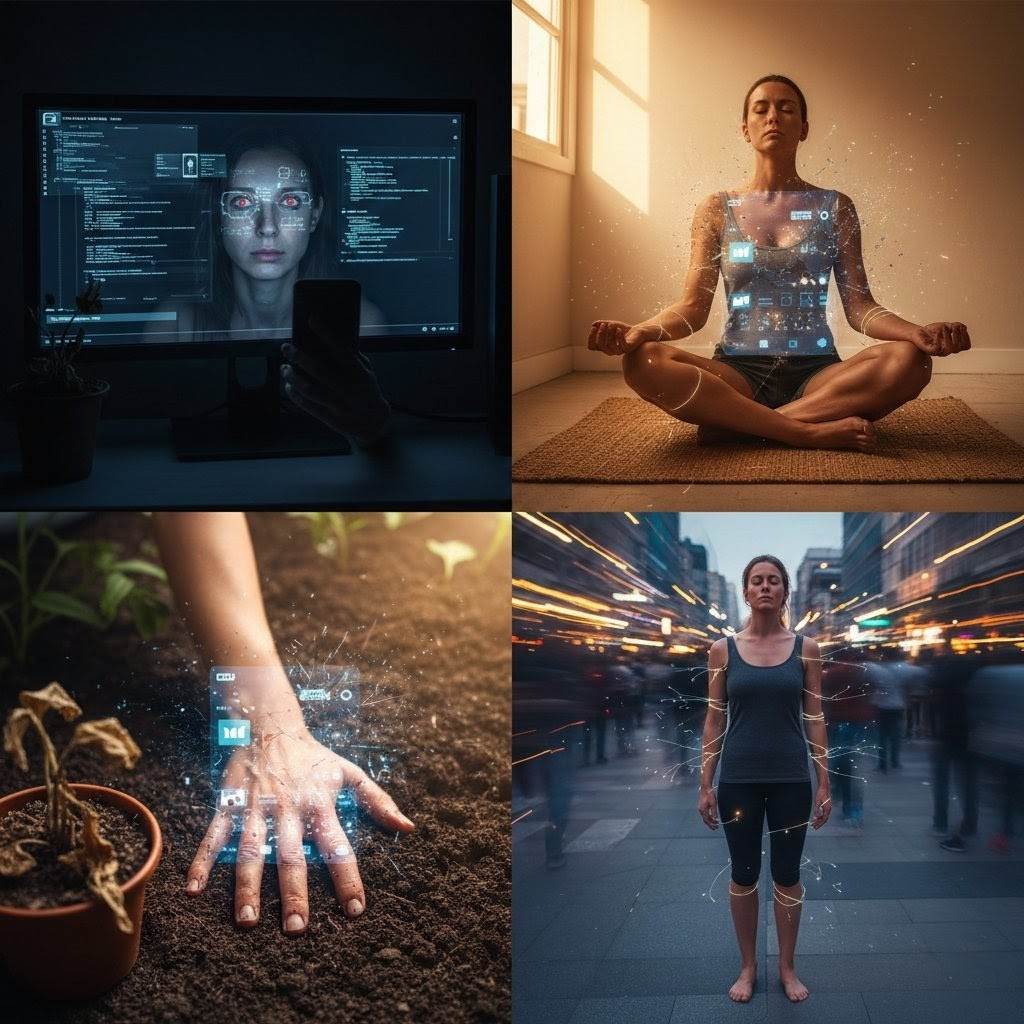
The attention, captured by screen, becomes disembodied. The eye, fixed on glow, forgets the peripheral. The hand, tapping, forgets the tactile. The posture, collapsed, forgets the upright. The breath, shallow, forgets the deep. The body, forgotten, becomes vehicle: the transportation for consciousness between digital engagements, not the ground of being, not the site of knowing, not the thread’s necessary anchor.
The algorithm requires this forgetting. Embodied attention is slow: responsive to sensation, environment, weight, temperature, fatigue, hunger, rhythm and the present that cannot be scrolled. Disembodied attention is fast: reactive to signal, notification, novelty and the next thing replacing this one. The algorithm feeds on speed. The body insists on slowness. The body is an obstacle to optimisation. The optimisation proceeds through the body’s erasure.
The reclamation is resistance. Not romantic, not nostalgic, not anti-technology. Simply necessary: the recognition that the thread requires flesh, that direct knowing arrives through the body, and that transformation is embodied or it is not transformation.

In Plain Terms
The body against the algorithm means reclaiming embodied attention from systems designed to fragment, accelerate and abstract experience. The body is not a distraction from spiritual practice. It is the place where direct knowing becomes stable enough to live.
Digital life often trains consciousness to leave the body: scrolling through fatigue, ignoring breath, collapsing posture, eating without tasting, walking without sensing, and treating the self as a floating mind attached to a screen. Embodiment reverses that spell.
The deeper issue is false authority. A feed, metric, AI adviser, guru or wellness system can begin to tell the seeker what is real while the body quietly says no. The body is the inconvenient witness that refuses clean simulation.
Primary Sources and Traditions Discussed
- Nag Hammadi cosmology: Archons, false rule, embodiment, the Divine Spark and the danger of mistaking abstraction for liberation.
- The Apocryphon of John: the archonic pattern of imitation, forgetfulness and lower-world administration.
- The Hypostasis of the Archons: ruling powers as limited administrators that obstruct recognition.
- Phenomenology: the body as the ground of perception rather than a disposable container for thought.
- Somatic practice: breath, posture, movement, sensation, grounding and the recovery of felt presence.
- Digital attention studies: fragmentation, acceleration, screen posture, reward loops and the abstraction of lived experience.
How to Read This Article
Read this as a grounded practice article, not a purity test. The point is not to reject screens, apps, tools or AI. The point is to restore the body as the first site of discernment, so technology becomes a tool again rather than the atmosphere in which the self dissolves.
Table of Contents
- The Architecture of Digital Capture
- The Dissolution Is Structural
- False Authority and the Body’s Refusal
- The Practices Are Elementary
- The Body as a Test of Guidance
- The Resistance Is Political
- A Daily Embodiment Practice
- The Thread Requires Flesh
- Related Glossary Terms
- Read Next
- Frequently Asked Questions
- Further Reading
- References and Sources
The Architecture of Digital Capture
To reclaim the body, one must first understand the mechanism of its capture. The digital environment is not neutral space. It is an architected environment designed to produce specific states of consciousness. The attention economy, measured in eye-hours, click-throughs, dwell time, engagement metrics and behavioural prediction, requires the transformation of persons into users, and users into data sources.
The capture operates through three principles: fragmentation, acceleration and abstraction. Fragmentation distributes attention across multiple stimuli so it never settles. Acceleration ensures the next arrives before the present is processed. Abstraction turns the body into an interface for consciousness rather than the ground of experience.
The result is not merely distraction. It is dissolution: the gradual disappearance of the embodied self as a coherent centre of experience. The body remains present, of course, but as neglected infrastructure. It carries the head to the screen. It tolerates the chair. It endures the posture. It stores the tension. It absorbs the cost.
The digital minimalist recognises this architecture and withdraws, not from technology entirely, but from the capture apparatus. The withdrawal is not rejection but discrimination: this tool serves function; that tool serves capture. The distinction, maintained, enables strategic engagement.

The Dissolution Is Structural
The digital environment dissolves body through fragmentation. Attention, distributed across multiple windows, tabs, devices and messages, cannot easily maintain coherence. The body requires coherent attention for its signals to be heard. Hunger, fatigue, tension, grief, thirst, pain, excitement and intuition all speak through sensation. When sensation is drowned in input, the body must shout to be noticed.
The shouting arrives as symptom. The jaw tightens. The breath shortens. The shoulders harden. The eyes dry. The stomach knots. Sleep thins. The nervous system remains slightly braced, as if waiting for the next interruption before the current moment has been lived.
The fragmentation is not accidental. The attention economy profits from divided attention. More stimuli create more engagement. More engagement creates more data. More data creates better prediction. Better prediction creates deeper capture. The body, insisting on unity, is enemy to this economy. The body wants to eat, rest, move, touch and breathe. The economy wants the body to scroll, click, consume content and remain available.
The conflict is structural, not incidental. The body is not failing because it cannot flourish inside a system built to ignore it. The system is revealing its nature.

The reclamation requires unification: the gathering of attention into single focus, the return to sensation, the recognition that the body is not obstacle to practice but practice itself. This unification is rarely achieved by willpower alone. It is achieved through limitation, rhythm and repeated return.
The body does not need grand theory before it begins to recover. It needs fewer interruptions. It needs breath. It needs weight. It needs contact with ground. It needs a pace slower than the feed.
False Authority and the Body’s Refusal
False authority thrives when the seeker abandons the body and lives only through abstraction: screen, symbol, metric, feed, doctrine, performance, machine answer or disembodied certainty. The more a person lives in abstraction, the easier it becomes for an external system to define reality on their behalf.
This is the bridge into Neo Gnosticism and False Authority. False authority is not merely a bad teacher or a mistaken answer. It is the theft of the faculty that tests guidance. In digital life, that theft often begins when the body is ignored. The body says tired; the feed says continue. The body says no; the group says obey. The body says tightness; the guru says surrender. The body says dread; the AI adviser gives fluent reassurance.
The body is the inconvenient witness. It does not speak in polished doctrine. It does not optimise for engagement. It does not care whether an idea is fashionable, clickable, impressive or spiritually branded. It reports from the lived field. It trembles, softens, tightens, expands, recoils, warms, cools, contracts, opens.
This does not mean every bodily sensation is final truth. The body carries trauma, habit, fear, memory and conditioning. It must be interpreted with care. But any spiritual path that consistently requires the seeker to override bodily knowing, ignore contraction, dismiss exhaustion, silence fear or perform calm for authority is asking for something dangerous.
The Neo Gnostic response is not bodily absolutism. It is embodied testing. Guidance must pass through breath, posture, conscience, time, relationship and ordinary reality. A true teacher does not need you to abandon your body in order to obey. A true practice does not require numbness. A true path can withstand the body’s questions.
The body is not the enemy of gnosis. It is the place where false authority first begins to fail.
The Practices Are Elementary

The practices are elementary, not simplistic but elemental: foundational, accessible and immediate. They require no equipment, no subscription, no certification. They are not proprietary. They cannot be owned by a platform. This is precisely why they are effective. They escape the capture apparatus entirely.
1. The Breath, Noticed
Not controlled. Not perfected. Not measured. Simply attended. The sensation of air entering. The sensation of air leaving. The pause between. The temperature. The texture. The movement of ribs, belly, shoulders, throat and back. The attention, scattered, gathers. The body, forgotten, returns.
The breath is always available. It requires no app to track it, no device to measure it, no subscription to access it. The gateway of breath is first because it is immediate: the body announcing itself through rhythm, temperature, expansion and release.
Begin with three ordinary breaths before opening a device. Not dramatic. Not performative. Three breaths are enough to remind the nervous system that the screen is not the first authority in the room.
2. The Posture, Adjusted
Not military. Not aesthetic. Simply upright. The spine extended. The shoulders released. The head balanced. The jaw unclenched. The weight distributed. The posture, adjusted, produces alertness. The alertness, sustained, produces clarity. The clarity, available, enables recognition.
The digital body is typically collapsed: head forward, shoulders rounded, spine curved around the device. This posture is not merely physical habit. It becomes a psychological state. The collapsed body is defensive, protective, withdrawn. The upright body is more available, open and present. The adjustment is not cosmetic. It changes the field.
Each time you notice collapse, do not scold the body. Invite it back. Lift gently. Exhale. Let the head return over the spine. Recognition prefers a body that is not folded around obedience.
3. The Movement, Performed
Not exercise. Not fitness. Simply motion. Walking, stretching, reaching, bending, bearing weight, turning the neck, opening the hands, stepping outside. The movement, attended, produces sensation. The sensation, attended, produces presence. The presence, sustained, extends the thread.
The digital body is static, positioned before screen and held in relative stillness for hours. The gateway of sensation restores the body’s natural rhythm of activity and rest. Movement need not be elaborate. The simple act of walking, attended, begins to dissolve the dissociation that prolonged sitting produces.
A useful rule: after deep digital work, let the body move before the mind seeks more input. Stand, walk, stretch, wash a cup, step outside, touch a doorframe, feel the ground. Give the body a vote before the next tab opens.
4. The Touch, Allowed
Not sexual. Not therapeutic. Simply contact. The hand on surface. The foot on ground. The skin on air. The weight of cloth. The pressure of seat. The warmth of cup. The grain of wood. The touch, attended, produces location. The location, recognised, produces embodiment. The embodiment, sustained, grounds the thread.
The digital body is touch-deprived. It interacts with smooth glass surfaces and receives minimal tactile variation. Touch restores the body’s capacity to locate itself in the world, to know where it ends and where the world begins.
This is why ordinary textures matter. Soil. Linen. Stone. Bread. Water. Bark. Paper. Ceramic. Skin. These are not aesthetic accessories to a spiritual life. They are the world reminding consciousness that it has not left the body.
The Body as a Test of Guidance
In a world of fluent answers, the body becomes a necessary test. A machine can produce persuasive language. A teacher can produce impressive certainty. A group can produce emotional pressure. A feed can produce a sense of inevitability. But the body notices what the performance conceals.
Does the guidance make the breath disappear? Does the chest tighten? Does the jaw clench? Does the belly sink? Does the body feel hurried, flattered, frightened, inflated or subtly coerced? These sensations do not automatically prove the guidance false, but they ask for pause. They ask for time. They ask for the return of discernment.
Likewise, not every calm sensation means truth. Familiar bondage can feel soothing. A harmful authority can feel safe when it confirms old patterns. This is why the body must be read with humility. The body is not a simple oracle. It is a living text with memory, context and weather.
The question is not, “What does the body instantly decide?” The better question is, “What becomes clearer when the body is included?” False authority prefers speed. Embodied discernment requires time.
Practice check: Before accepting guidance from a feed, teacher, AI adviser, community or inner voice, pause for three breaths. Feel the feet. Notice jaw, chest, belly and spine. Ask: does this guidance deepen presence, or does it demand dissociation?
The Resistance Is Political
The body’s reclamation is not merely personal. It is political: the refusal of algorithmic capture, the assertion of slowness against speed, depth against surface, presence against notification, sensation against abstraction. The reclamation, individual, becomes example. The example, visible, becomes contagion. The contagion, spreading, becomes culture.
The algorithm knows this. The wellness industry knows it too. Embodiment is often sold back to the disembodied person as product: the meditation app, the fitness tracker, the biohacking supplement, the quantified sleep score, the optimised breathing protocol, the subscription-based calm. Some tools may help. But a tool becomes suspect when it keeps the attention captured by the same apparatus from which it promises relief.
The product, consumed, can simulate reclamation while continuing capture. The attention, directed to wellness, remains captured. The body, optimised, remains resource. The seeker becomes a manager of metrics rather than a participant in flesh.
The genuine reclamation is uncommodified: the practice that requires no purchase, no subscription, no certification. The breath is free. The posture is available. The movement is possible. The touch is immediate. The thread, extended through these, cannot be sold.

A Daily Embodiment Practice
Embodiment becomes real when it is placed inside the ordinary day. The following sequence is deliberately simple. It is not a programme, challenge or identity. It is a rhythm of return.
Morning: Return Before Input
Before the first screen, stand or sit upright. Take three natural breaths. Feel the feet. Notice the room. Let the body arrive before the world begins speaking through the device. This small act changes the order of authority. Body first. Feed second.
Midday: Interrupt the Collapse
At least once during work or study, stand up without taking the phone. Let the eyes look into distance. Roll the shoulders. Walk for two minutes. Touch water. Notice whether the day has become purely mental. Let the body re-enter the conversation.
Evening: Discharge the Screen
After digital input, give the body a closing ritual: wash hands, stretch, breathe, step outside, read paper, prepare tea, touch wood, fold cloth, sweep floor. The point is not symbolism for display. The point is nervous-system completion. The body must be told that the screen-world has ended for now.
Weekly: One Unmeasured Activity
Choose one activity each week that is not tracked, photographed, posted, optimised or measured. A walk without recording. Food cooked without content. Gardening without update. Prayer without performance. Reading without extraction. The unmeasured life is where the algorithm loses its grip.
None of this needs to look spiritual. That is part of its strength. The most effective reclamations are often ordinary enough to escape performance entirely.
The Thread Requires Flesh
Disembodied consciousness is abstraction: the fantasy of escape, the transcendence that leaves behind, the gnosticism that despises matter. The thread is not gnostic in that sense. The thread is incarnate: extended through body, grounded in sensation, expressed through function.
The mystical experience, genuine, is embodied. The breath, suspended, produces vision. The posture, held, produces opening. The movement, repeated, produces transformation. The body is not obstacle. It is instrument: the necessary condition for recognition, the ground from which the thread extends.
The algorithm, defeated, does not disappear. It is placed: the tool, used deliberately, not the environment that shapes attention unconsciously. The digital, integrated, serves function. The body, reclaimed, remains primary. The thread, embodied, extends into digital life without being captured by it.

You are body. Not only body, but never less than body. The recognition, forgotten, returns through breath, weight, sensation, movement, hunger, rest, touch and presence. The thread continues regardless.
Follow the Modern Systems Route
This article belongs to ZenithEye’s modern systems route: AI, attention capture, digital governance, simulation, and the old patterns wearing new technical masks.
- AI, Technology & Archonic Systems – the wider route for AI and control-system articles.
- Digital Attention & Surveillance – attention capture, screens, metrics and behavioural loops.
- The Thread – the main map of the archive.
- Editorial Principles – how ZenithEye frames symbolic and contemporary interpretation.
Related Glossary Terms
These terms help place embodiment inside the wider ZenithEye vocabulary of direct knowing, digital discernment and false-authority testing.
- Gnosis
- Divine Spark
- Archons
- Counterfeit Spirit
- False Authority
- Authority Capture
- Machine Authority
- Embodiment
- Body
- Grounding
- Sensation
- Breath
- Attention
- Digital Minimalism
- Somatic Awareness
- Contemplative Techniques
Read Next
Continue through the embodiment and digital discernment route.
- Neo Gnosticism and False Authority: Gurus, Algorithms and the Theft of Direct Knowing
- Digital Minimalism as Mystical Practice
- Gnosis in the Digital Age: Algorithmic Sovereignty
- The Gateway of Sensation: Body Scan and Somatic Awareness
- Breathwork: Ancient Technology, Modern Application
- Neo Gnosticism and the Body
Frequently Asked Questions
What does the body against the algorithm mean?
The body against the algorithm means reclaiming embodied attention from digital systems that fragment, accelerate and abstract experience. It is not anti-technology. It is the practice of restoring breath, posture, movement and sensation so technology remains a tool rather than the environment that shapes consciousness.
How does screen use create disembodiment?
Screen use can create disembodiment by narrowing vision, collapsing posture, reducing tactile variation, shortening breath and training attention to move quickly between signals. Over time the body becomes background infrastructure for digital engagement rather than the felt ground of experience.
How does embodiment relate to false authority?
Embodiment helps test false authority. A feed, guru, AI adviser, group or metric may sound persuasive, but the body often registers contraction, dread, fatigue or coercion before the mind can explain it. The body is not an infallible oracle, but it is a necessary witness in discernment.
What are the four elementary practices for embodiment?
The four elementary practices are breath noticed, posture adjusted, movement performed and touch allowed. They require no equipment, subscription or certification. They restore the body’s role as the ground of attention and direct knowing.
Is the wellness industry part of the problem?
The wellness industry can help when tools are used consciously, but it can also commodify embodiment through apps, trackers, metrics and optimisation systems. If wellness keeps attention captured by the same apparatus it claims to heal, the body remains a resource rather than a living centre.
Can I use technology after reclaiming embodiment?
Yes. The goal is not rejection but placement. Technology can be used deliberately for function, study, communication and creative work. The key is that the body remains primary, attention remains sovereign and the device is picked up for purpose rather than compulsion.
Why does the thread require flesh?
The thread requires flesh because direct knowing is not merely abstract information. Recognition must be grounded in breath, sensation, posture, movement, relationship and ordinary life. Without embodiment, spiritual insight can remain fantasy, performance or disembodied certainty.
What is a simple daily embodiment practice?
Begin the morning with three breaths before screens. Interrupt digital collapse at midday by standing, walking or stretching. End the evening with a physical closing ritual such as washing hands, reading paper, preparing tea or stepping outside. Once a week, practise one unmeasured activity that is not tracked, photographed or optimised.
Safety Notice: This article explores the psychological and physiological effects of prolonged digital engagement and suggests contemplative practices for embodiment. It does not constitute medical, psychological, legal or spiritual advice. If you experience symptoms of digital addiction, severe anxiety, dissociation, trauma activation, pain or impairment in daily functioning, consult a qualified health or mental health professional. Those with a history of trauma should approach somatic awareness gradually and with appropriate support.
Study Note: This article is the embodiment companion to ZenithEye’s digital discernment route. Read it beside Digital Minimalism as Mystical Practice, Gnosis in the Digital Age and Neo Gnosticism and False Authority when exploring how attention, body and direct knowing resist digital capture.
Further Reading
Continue exploring embodiment, digital resistance and the architecture of attention:
- Neo Gnosticism and False Authority – Gurus, algorithms, AI advisers and the theft of direct knowing.
- The Thread That Binds: Five Gateways to Direct Knowing in an Age of Noise – The complete system and how embodiment fits within it.
- Digital Minimalism as Mystical Practice – The subtraction that enables embodiment.
- The Gateway of Sensation: Body Scan and Somatic Awareness – The foundational practice for reclaiming touch and presence.
- Breathwork: Ancient Technology, Modern Application – The pneumatic foundation from Gnostic sources to contemporary practice.
- Neo Gnosticism and the Body – The wider guide to embodiment, matter and the refusal of body-denying spirituality.
- Contemplative Techniques – Methods for stabilising gnosis through breath, concentration and embodiment.
- Integration and Grounding – Essential guidance for grounding mystical experience and stabilising transformation.
- Digital Suppression: Algorithmic Deplatforming and Modern Censorship – The broader context of algorithmic control and distributed denial of responsibility.
- States of Knowing – Threshold states, perception and the architecture of direct knowing.
References and Sources
Sources are grouped by category for clarity. No in-text citation numbers are used, per The Thread editorial protocol.
Primary Sources and Gnostic Context
- Apocryphon of John. Nag Hammadi Codex II,1; III,1; IV,1. In Robinson, J. M., ed. The Nag Hammadi Library in English. HarperSanFrancisco, revised editions.
- The Hypostasis of the Archons. Nag Hammadi Codex II,4. In Robinson, J. M., ed. The Nag Hammadi Library in English. HarperSanFrancisco, revised editions.
- Gospel of Thomas. Nag Hammadi Codex II,2. In Robinson, J. M., ed. The Nag Hammadi Library in English. HarperSanFrancisco, revised editions.
Phenomenology and Embodiment
- Merleau-Ponty, Maurice. Phenomenology of Perception. Gallimard, 1945.
- Gendlin, Eugene T. Focusing. Bantam, 1978.
- Csikszentmihalyi, Mihaly. Flow: The Psychology of Optimal Experience. Harper and Row, 1990.
- Kabat-Zinn, Jon. Full Catastrophe Living. Delta, 1990.
Digital Culture, Attention and Behaviour
- Zuboff, Shoshana. The Age of Surveillance Capitalism. PublicAffairs, 2019.
- Carr, Nicholas. The Shallows: What the Internet Is Doing to Our Brains. W. W. Norton, 2010.
- Williams, James. Stand Out of Our Light: Freedom and Resistance in the Attention Economy. Cambridge University Press, 2018.
- Newport, Cal. Digital Minimalism: Choosing a Focused Life in a Noisy World. Portfolio, 2019.
Neuroscientific and Somatic Research
- Porges, Stephen W. The Polyvagal Theory: Neurophysiological Foundations of Emotions, Attachment, Communication, and Self-Regulation. W. W. Norton, 2011.
- Sapolsky, Robert M. Behave: The Biology of Humans at Our Best and Worst. Penguin Press, 2017.