From True Will to the Subconscious: Five Currents Behind Modern Manifestation
Modern manifestation did not appear fully formed on a social media feed. It did not begin with vision boards, affirmation loops, algorithmic abundance coaches or short videos promising that reality will rearrange itself if the right sentence is repeated often enough.
Those are late-stage echoes.
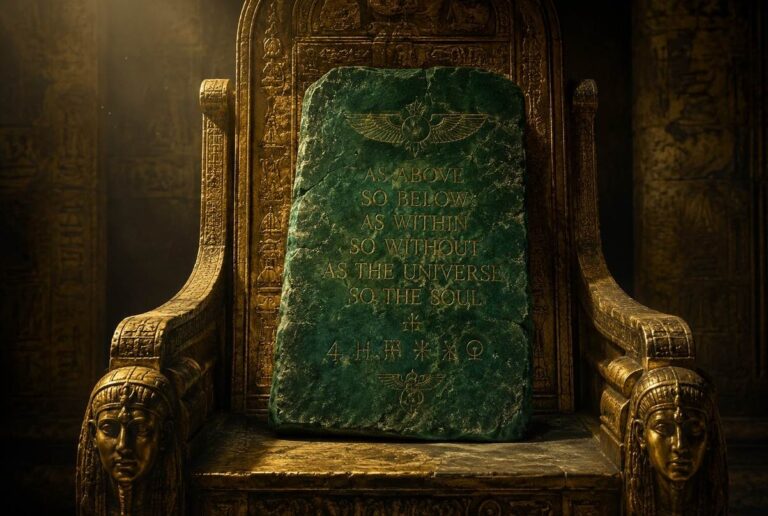
Behind them lies a deeper migration: the movement of magical power from temple, talisman and ceremonial rite into the structure of the mind itself.
Across the early and mid-twentieth century, five figures helped carry this migration. Aleister Crowley placed magic under the sign of True Will. Dion Fortune translated the Qabalah into psychological language. Austin Osman Spare discovered the sigil as a direct route into the subconscious. Franz Bardon preserved the disciplined Hermetic curriculum that others simplified. Neville Goddard completed the inward turn by teaching assumption as the creative act of consciousness.
Together, they did not merely popularise occultism. They helped turn magic into a psychology of consciousness.
The temple did not disappear. It moved inward.
In Plain Terms
Modern manifestation has roots in Western esotericism, ceremonial magic, depth psychology, sigil practice, Hermetic training and mystical imagination. This article traces five major currents behind that migration: Aleister Crowley’s True Will, Dion Fortune’s sacred psychology, Austin Osman Spare’s sigil magic, Franz Bardon’s disciplined Hermetic system and Neville Goddard’s Law of Assumption. Together, they show how magic moved from external ritual into the subconscious mind, and why modern manifestation often preserves the technique while forgetting the training.
Primary Sources and Traditions Discussed
- Aleister Crowley, Thelema and the doctrine of True Will.
- The Hermetic Order of the Golden Dawn and ceremonial magic.
- Dion Fortune, esoteric psychology and The Mystical Qabalah.
- Austin Osman Spare, sigil magic and the subconscious.
- Franz Bardon, Initiation into Hermetics and disciplined Hermetic training.
- Neville Goddard, the Law of Assumption and biblical psychology.
- Western esotericism, magical psychology and practical mysticism.
- Modern manifestation culture and the popularisation of desire-work.
- Gnostic and Neo-Gnostic discernment around desire, false light and the Counterfeit Spirit.
- Symbol, will, imagination, ritual, talisman and the inner architecture of consciousness.
How to Read This Article
Read this as a map of influence and migration, not as a claim that these five figures agreed with each other or formed a single school. They did not. Their lives, methods and metaphysics often diverged sharply. What connects them is a larger movement in Western esotericism: the relocation of magical power from outer rite into inner consciousness. The article asks what this inward turn preserved, what it simplified, and what a modern practitioner can still learn from it.
Table of Contents
- The Migration: From Temple to Subconscious
- Aleister Crowley: Magic as True Will
- What Crowley Still Offers
- Dion Fortune: Magic as Sacred Psychology
- What Fortune Still Offers
- Austin Osman Spare: Magic as Subconscious Symbol
- What Spare Still Offers
- Franz Bardon: Magic as Disciplined Hermetic Training
- What Bardon Still Offers
- Neville Goddard: Magic as Assumption and Imaginative Identity
- What Goddard Still Offers
- The Five Currents Compared
- What Was Preserved in the Migration
- What Was Lost in Translation
- Manifestation Culture and the Problem of Desire
- A Neo-Gnostic Reading: Who Is Doing the Manifesting?
- Which Current Does Your Practice Need?
- The Temple and the Subconscious Were Never Separate
- Conclusion: Beyond Manifestation as Product
- Related Glossary Terms
- Read Next
- Further Reading
- Frequently Asked Questions
- References and Sources

The Migration: From Temple to Subconscious
Older magical systems operated through ritual space, tools, names, correspondences, talismans and initiatory structures. The magician stood in a consecrated circle, invoked hierarchies, traced sigils in the air and bound intention into physical objects. Power was understood to move through a carefully prepared field in which the body, the voice and the symbol worked together as instruments.
Twentieth-century practical mysticism increasingly moved the centre of operation inward. Will, imagination, symbol and subconscious became the real working instruments. The ritual chamber became the psyche. This was not merely a dematerialisation of magic. It was a relocation. What had been enacted in the temple was now understood to be enacted in the depths of consciousness.
Modern manifestation is one simplified descendant of that migration. What appears online as manifestation is often ceremonial magic wearing the clothes of psychology. The wand became will. The talisman became symbol. The ritual chamber became the subconscious. The question is not only whether manifestation works. The deeper question is what kind of consciousness is doing the manifesting.
Modern manifestation is what remains when ceremonial magic is translated into the language of the subconscious.
Aleister Crowley: Magic as True Will
Aleister Crowley stands as the first current in this migration. Trained in the Hermetic Order of the Golden Dawn and later the founder of Thelema, Crowley placed magic under the sign of True Will. For him, magic was not the art of getting what the surface self wants. It was the ordeal of discovering what the deeper self is actually here to do.
Crowley understood ceremony as a technology for stripping away the socialised self. The elaborate rituals, the grades of initiation, the austerity and the symbolism were not ends in themselves. They were methods for revealing a current of will that runs beneath personality, conditioning and appetite. True Will, in Crowley’s vocabulary, is not whim dressed in mystical language. It is alignment with a deeper trajectory of being.
His influence was theatrical, disruptive and often dangerous. Crowley was brilliant, transgressive and not infrequently self-destructive. Yet his contribution to the inward migration of magic is undeniable. He taught that the real instrument of magic is not the wand or the cup, but the disciplined, awakened will. The later contact between occultism and technological modernity found in figures such as Jack Parsons, rocket engineer and Thelemite, shows how far this current travelled beyond the temple walls.

What Crowley Still Offers
Manifestation culture often confuses desire with will. Crowley’s warning is simple: not every desire is your will. Wanting something does not make it aligned. The ego can dress its appetites in spiritual language, and the result is not magic but compulsion with candles.
True Will asks whether the desire belongs to the soul or the socialised ego. It asks whether the goal survives discomfort, delay and transformation. Crowley reminds the modern practitioner that magic without True Will becomes appetite with incense. The discipline he demanded, however theatrical his expression, was a discipline of self-knowledge before self-assertion.
Crowley’s warning to manifestation culture is simple: not every desire is your will.
Dion Fortune: Magic as Sacred Psychology
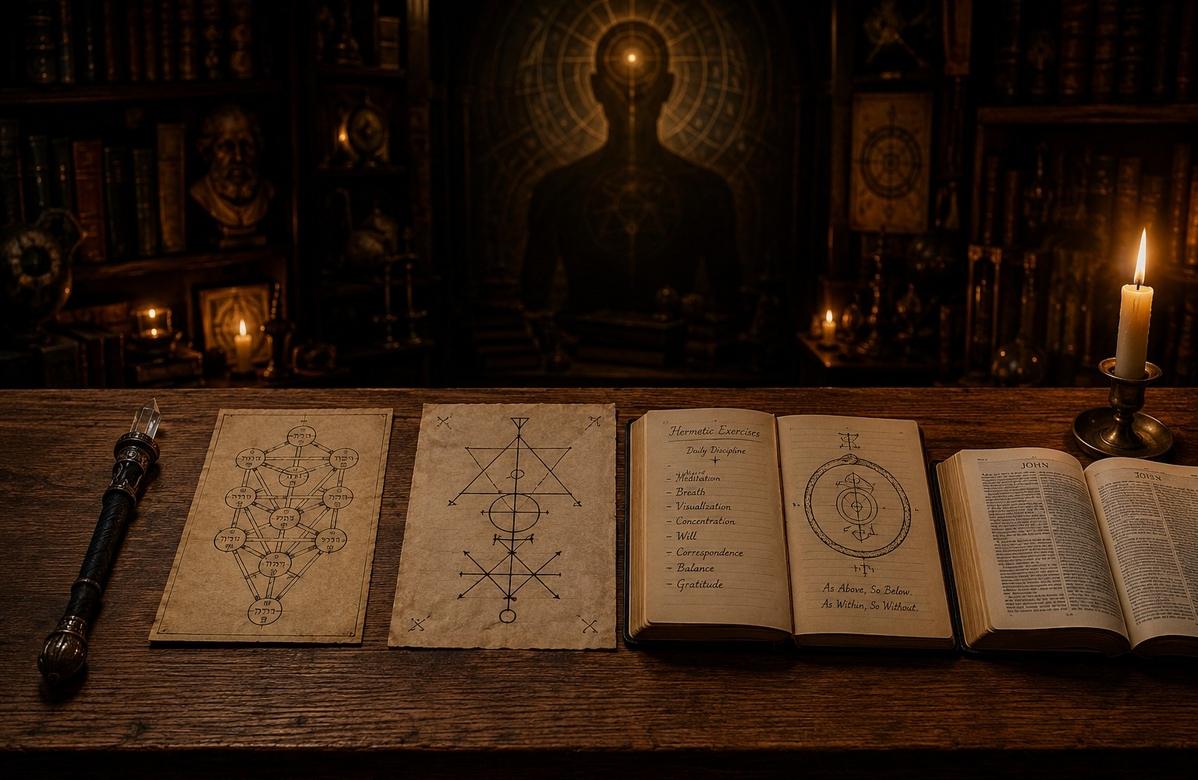
Dion Fortune, born Violet Mary Firth, trained in psychoanalytic ideas before founding the Society of the Inner Light. She became one of the strongest bridges between ceremonial magic and modern spiritual psychology. Her masterwork, The Mystical Qabalah, presented the Tree of Life not as a decorative occult diagram but as a living map of consciousness.
Fortune did not empty magic into psychology. She showed that the soul had always been speaking both languages. The sephiroth became stages of psychological and spiritual development. The paths between them became transitions of insight and crisis. Tarot, astrology and archetype were woven into a coherent inner cartography that made ancient symbols usable for modern seekers.
Her Psychic Self-Defence had already established her concern for psychological integrity in magical work. Fortune understood that magical practice without psychological grounding becomes projection, inflation and vulnerability. She moved the operating theatre from the temple to the inner architecture of the soul, but she never forgot that the architecture has walls, foundations and load-bearing beams.
What Fortune Still Offers
Modern spiritual psychology owes more to Fortune than it often admits. Her insistence that the Qabalah is a map of consciousness rather than a historical curiosity remains vital. When practitioners today speak of inner work, shadow integration or archetypal healing, they are often walking paths that Fortune helped clear.
The risk she identified is still present: reducing the sacred to therapy. Fortune avoided this by maintaining that the map points to a reality beyond the psyche even as it describes the psyche. For the modern seeker, her work offers a way to work with symbol and hierarchy without losing psychological honesty.
Fortune did not empty magic into psychology. She showed that the soul had always been speaking both languages.
Austin Osman Spare: Magic as Subconscious Symbol
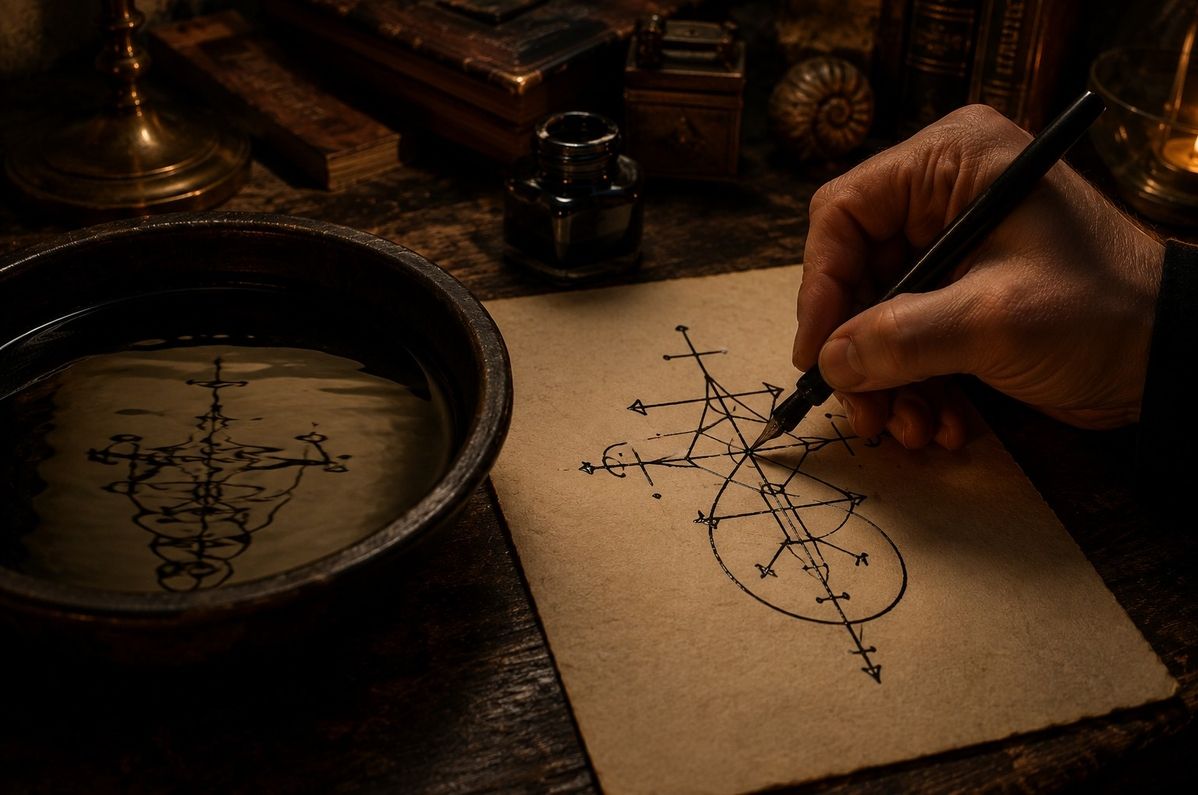
Austin Osman Spare was an artist-magician who removed the middlemen. No temple, no priesthood, no hierarchy: only symbol, desire and the deep mind. His Book of Pleasure introduced sigilisation as a method for compressing intention into a form that bypasses the conscious censor.
Spare’s method is elegant. The practitioner forms a statement of desire, reduces it to a monogram or abstract design, and then charges it with emotional intensity. The crucial step is forgetting. The sigil must be released from conscious memory so that it can take root in the subconscious, where Spare believed all real magical change occurs. The subconscious, he taught, does not respond to anxious surveillance. It responds to symbol, emotion and the state beneath thought.
His anti-system, intuitive approach influenced later chaos magic and much of the modern “let go” language in manifestation culture. Spare discovered that the subconscious is where magical intention takes root, and he built a practice around that discovery with the precision of an artist and the cunning of a locksmith.
What Spare Still Offers
Modern manifestation often tells people to let go without explaining why. Spare gives the mechanism. Obsession traps desire in the conscious mind, where it is monitored, doubted and drained. The sigil works because it escapes that surveillance. Symbol communicates where verbal intention cannot.
Spare also offers a warning. His method is powerful because it is direct. Direct methods without ethical preparation can become manipulative or self-destructive. The subconscious is not a vending machine under the ego’s control. It is a deep field with its own laws, pressures and shadows. Spare knew this. Late manifestation culture often forgets it.
The sigil is desire folded small enough to pass beneath the gate of the conscious mind.
Franz Bardon: Magic as Disciplined Hermetic Training
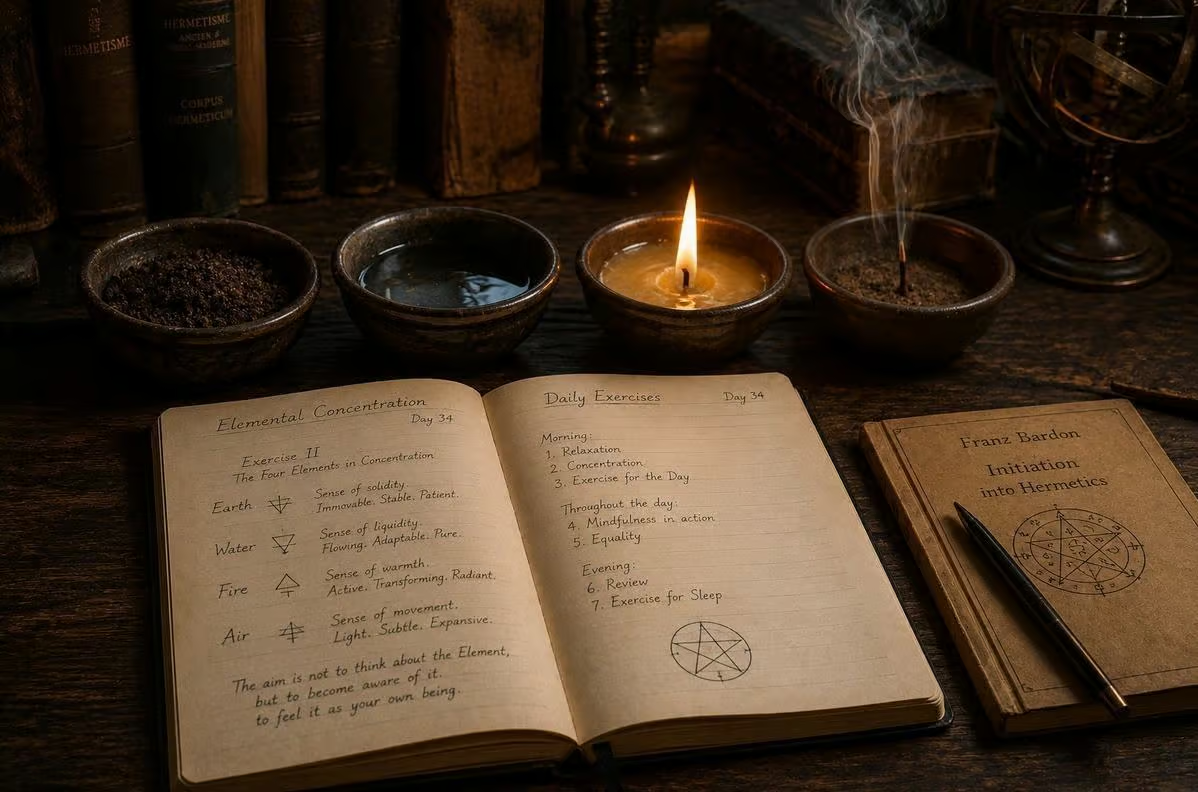
Franz Bardon stands as the counterweight to simplification. Where Spare stripped magic to its psychological bones, Bardon preserved the full skeleton. His Initiation into Hermetics offers a systematic, step-by-step curriculum that develops the student through elemental equilibrium, inner senses and disciplined practice.
Bardon’s approach is Hermetic in the classical sense. Fire, air, water and earth are not only metaphors. They are forces to be balanced within the body, soul and mind. The student does not proceed to advanced work until the foundation is stable. This is not psychology alone. Bardon treats the inner worlds as real geographies with laws, dangers and inhabitants.
He stands at the gate saying: the inner world is not only a metaphor, and not everyone is trained to walk there safely. Bardon preserved the bones of the temple while others translated the temple into mind. His work reminds us that technique without character becomes dangerous, and that reality may be pliable but it is not casual.
What Bardon Still Offers
Modern manifestation often removes training. Bardon insists on preparation. His step-by-step development connects to the older principle that character must precede power. The moral ratio explored in Three Steps Before Vision finds a parallel here: disciplined development before force.
Bardon’s gift is the warning that not everything in magic can be safely reduced to mindset. The inner senses he cultivates are not fantasies. They are perceptual capacities that open once the student has done the work of purification, balance and ethical grounding. For a culture that wants results without apprenticeship, Bardon is the voice that says: the door is locked for a reason.
Bardon stands at the gate saying: the inner world is not only a metaphor, and not everyone is trained to walk there safely.
Neville Goddard: Magic as Assumption and Imaginative Identity
Neville Goddard completed the migration. A Barbados-born teacher who lectured in New York and Los Angeles, Goddard popularised the Law of Assumption as biblical psychology. He taught that consciousness is reality, and that imagination is the creative power through which the world is experienced and reshaped.
Goddard’s method is deceptively simple: assume the feeling of the wish fulfilled. Do not merely wish. Do not merely want. Occupy the state. His readings of biblical stories as inner psychological drama stripped away occult references that might have alienated mainstream audiences. Moses becomes the awakening of the individual. The Promised Land becomes the state of consciousness one inhabits. Scripture becomes a manual of imaginative psychology.
Goddard was not teaching people how to want harder. He was teaching them how to inhabit a different self. He completed the inward turn: magic became controlled imagination, and the temple became the state of consciousness one occupies. His accessibility made him one endpoint of the migration, and, in consumer hands, one of the easiest to dilute.

What Goddard Still Offers
Goddard’s depth is often missed by those who reduce him to a get-rich technique. Assumption is not wishing. It is identity. The world, he taught, is the expression of the state one occupies. Change the state and the world rearranges itself around that state. This is not simple consumer desire. It is metaphysics of identity.
The danger is shallow appropriation. When Goddard is reduced to “imagine and receive,” the practitioner misses the discipline of feeling, the persistence of assumption, and the moral quality of the state being occupied. Goddard assumed that the operator was honest. Modern manifestation culture does not always verify that assumption.
The Five Currents Compared
Each current preserves something. Each becomes dangerous when isolated from the others.
| Figure | Current | Main contribution | Modern echo | Risk when simplified |
|---|---|---|---|---|
| Aleister Crowley | True Will | Alignment with deeper will. | Authentic desire and purpose language. | Egoic desire pretending to be destiny. |
| Dion Fortune | Sacred Psychology | Qabalah as inner map. | Spiritual psychology and archetypal inner work. | Reducing mystery to therapy. |
| Austin Osman Spare | Subconscious Symbol | Sigilisation and forgetting. | Letting go, symbolic intention and subconscious programming. | Technique without ethics or grounding. |
| Franz Bardon | Hermetic Discipline | Step-by-step magical training. | Serious practical esotericism. | Rigidity, elitism or over-systematisation. |
| Neville Goddard | Assumption | Imagination as identity. | Law of Assumption and modern manifestation. | Consumer wish fulfilment and denial of complexity. |
The point is not to declare one current correct and the others incomplete. The point is to see how they reveal different parts of the same hidden machinery: will, map, symbol, discipline and state.
| Magic | Manifestation |
|---|---|
| Contains ritual structure. | Often simplifies ritual into intention. |
| Requires training and preparation. | Is usually presented as accessible technique. |
| Works through symbol, force and correspondence. | Works through imagination, belief and assumption. |
| Recognises danger and distortion. | Often underplays risk. |
| Includes cosmology and discipline. | Often focuses on desire and outcome. |
| Demands transformation of the practitioner. | Can become acquisition without transformation. |
What Was Preserved in the Migration
The inward migration preserved essential insights: the power of symbol, the necessity of will, the role of imagination, the subconscious as active field, the inner life as a real operating space, and the idea that reality is more responsive than materialism allows.
The migration preserved the old magical intuition that consciousness is not merely inside reality; it participates in reality. What the magician called the astral light, the modern practitioner may call the subconscious mind. What the magician called the Great Work, the modern seeker may call transformation. The names change. The current continues.
What Was Lost in Translation
When magic became manifestation, much became accessible. Much also became thinner. What was lost includes ritual containment, ethical preparation, initiatory structure, cosmological depth, community and accountability, awareness of danger, disciplined training, and humility before forces larger than the ego.
The difference between transformation and acquisition was often erased. The temple had walls for a reason. Initiatory structure existed not only to exclude, but to prepare. The talisman was consecrated not to look mystical, but to carry a charge that required respect. When these containers were removed, techniques survived, but the context that made them safer often did not.
When magic became manifestation, much became accessible. Much also became thinner.
Manifestation Culture and the Problem of Desire
Contemporary manifestation culture often revolves around consumer desire. Abundance coaches promise that the right mindset will unlock wealth, love and status. Vision boards collect objects of appetite. Affirmations repeat the language of acquisition. The engine is inherited from magic, but the brakes are often missing.
This is not a criticism of desire itself. It is a criticism of undiscriminated desire. Goddard reduced to acquisition. Spare reduced to technique. Crowley reduced to “do what you want.” Fortune reduced to mindset therapy. Bardon ignored entirely because he is too demanding. Manifestation culture often inherits the engine while forgetting the brakes.
The result can become spiritual capitalism: a system in which the divine is expected to deliver consumer goods on demand, and in which the practitioner is never asked to change, only to receive. This is the Counterfeit Spirit at work, not by denying spirituality, but by imitating it with the goals of the ego intact.
| Desire | True Will |
|---|---|
| Often reactive. | Reveals a deeper orientation. |
| May be socially conditioned. | Clarifies through discipline and time. |
| Can arise from wound or compensation. | Survives discomfort and delay. |
| Seeks acquisition. | Seeks fulfilment of nature. |
| Changes quickly. | Becomes clearer over time. |
| Asks, “What do I want?” | Asks, “What am I here to become?” |
A Neo-Gnostic Reading: Who Is Doing the Manifesting?
The crucial question is not only whether manifestation works. The crucial question is what self is manifesting. Is it the ego, the wound, the divine spark, social conditioning or archonic appetite? Desire can be implanted by systems. “My desire” may not be mine. The advertisements that shaped childhood, the hierarchies that rewarded compliance, the wounds that demand compensation, all of these can wear the mask of personal will.
True Will and gnosis both ask for deeper recognition. They ask the practitioner to look beneath the desire to its source. The Counterfeit Spirit can imitate spiritual power as acquisition. It can make the ego feel enlightened while it remains exactly where it was.
Before asking reality to obey desire, ask who installed the desire.
This is the Neo-Gnostic contribution to the conversation. Not paranoia, but discernment. Not rejection of manifestation, but interrogation of the manifester. The divine spark recognises itself. The counterfeit spark demands more.
Before asking reality to obey desire, ask who installed the desire.
Which Current Does Your Practice Need?
The mature practitioner does not ask which current wins. They ask what their practice lacks.
- If your practice is chaotic, study Bardon.
- If your desire is confused, study Crowley.
- If your symbols are shallow, study Spare.
- If your psychology is unintegrated, study Fortune.
- If your imagination is weak, study Goddard.
- If your practice is consumerist, study all five carefully.
- If your practice lacks ethics, return to Bardon and Steiner.
- If your practice lacks soul, return to gnosis.
This is not eclecticism for its own sake. It is diagnosis. The five currents expose different weaknesses in modern practice. One seeker needs discipline. Another needs symbol. Another needs imagination. Another needs psychological honesty. Another needs to stop confusing appetite with destiny.
The Temple and the Subconscious Were Never Separate
Perhaps the migration was not a betrayal but a revelation. Temple, talisman and rite may always have worked through consciousness. The subconscious may be the inner temple. Ritual may be embodied psychology. Magic and psychology are not identical, but they overlap deeply.
The future of practical mysticism may need both outer form and inner depth. The temple and the subconscious were never separate buildings. One was the architecture outside; the other was the architecture within. The sage has always known that the holy of holies is reached by an inner door.
The temple and the subconscious were never separate buildings. One was the architecture outside; the other was the architecture within.
Conclusion: Beyond Manifestation as Product
Modern manifestation is the popular end of a much older current. Behind the affirmation is the spell. Behind the vision board is the talisman. Behind the assumption is the magical image. Behind the subconscious is the old temple, reduced, translated and carried inward.
Crowley teaches will. Fortune teaches the map. Spare teaches the symbol. Bardon teaches the discipline. Goddard teaches the state. Taken together, they offer more than manifestation. They offer a warning and an invitation. Consciousness may participate in reality, but the quality of that participation depends on the person practising it.
The question is not only whether reality can be changed. The question is what kind of soul is doing the changing.
Related Glossary Terms
These terms help frame the article’s main ideas across the wider ZenithEye archive.
- Gnosis
- Divine Spark
- Counterfeit Spirit
- Archons
- Demiurge
- Symbol & Encryption
- Neo Gnosticism
- Contemplative Techniques
- Shadow Work
- Integration
- Grounding
- Phenomenology
- Spiritual Practice of Attention
- The Humility of Not Knowing
- When Symbols Become Cages
- Three Steps Before Vision
- True Will
- Manifestation
- Law of Assumption
- Subconscious
- Sigil Magic
- Ceremonial Magic
- Thelema
- Qabalah
- Tree of Life
- Hermeticism
- Austin Osman Spare
- Dion Fortune
- Aleister Crowley
- Franz Bardon
- Neville Goddard
- Imagination
- Magical Psychology
- Practical Mysticism
- Desire
- Assumption
- Talisman
- Ritual
- Inner Temple
Read Next
Continue through the manifestation, symbol and discernment route: moral preparation, symbolic restraint, Neo-Gnostic practice and the danger of confusing desire with gnosis.
Further Reading
Articles from ZenithEye that explore manifestation, symbols, attention, discernment, spiritual consumerism and the difference between gnosis and acquisition:
- Three Steps Before Vision – A practical guide to preparing the inner ground before engaging symbolic or imaginative work.
- When Symbols Become Cages – Explores how symbolic systems can become prisons when they replace direct experience.
- Pattern Recognition Without Paranoia – Discernment practices for reading signs and symbols without falling into obsessive interpretation.
- The Discipline of Not Interpreting Everything – Why the mature practitioner learns to let experience be rather than constantly decode it.
- The Humility of Not Knowing – Why spiritual maturity sometimes means not needing certainty.
- What Is Neo Gnosticism? – An introduction to the modern revival of ancient direct knowing and its relevance today.
- Neo Gnostic Practice – Practical methods for contemporary seekers working with Gnostic themes outside institutional structures.
- Gnosis Is Not a Product – A critique of spiritual consumerism and the commodification of inner knowledge.
- What Is the Counterfeit Spirit? – How false imitations of spiritual power can mimic the real while serving the ego.
- Digital Archons: How Algorithms Shape Attention – Examines how modern systems implant desires that masquerade as personal will.
- What Is Gnosis? Meaning, Recognition and Direct Knowing – The foundational ZenithEye explainer on gnosis as direct, unmediated knowledge.
- The Spiritual Practice of Attention – Presence, attention and the disciplined return to what is here.
- The Slow Work of Integration – Why awakening takes time to become stable life.
- Spiritual Emergency and Transformation Crisis – When spiritual opening becomes overwhelming and how to navigate it safely.
Frequently Asked Questions
Where did modern manifestation come from?
How did ceremonial magic become psychological?
What did Aleister Crowley contribute to modern manifestation?
Why is Dion Fortune important to spiritual psychology?
What is Austin Osman Spare’s connection to manifestation?
How does Neville Goddard relate to manifestation culture?
What was lost when magic became manifestation?
References and Sources
The following sources are grouped by category for clarity. This article draws upon historical scholarship, primary esoteric texts and critical studies of Western esotericism.
Primary Sources and Critical Editions
- Crowley, Aleister. Magick in Theory and Practice. Paris: Lecram Press, 1929.
- Crowley, Aleister. Magick: Liber ABA, Book Four.
- Crowley, Aleister. The Book of the Law. 1904.
- Fortune, Dion. The Mystical Qabalah. London: Williams and Norgate, 1935.
- Fortune, Dion. Psychic Self-Defence. London: Rider and Company, 1930.
- Spare, Austin Osman. The Book of Pleasure (Self-Love): The Psychology of Ecstasy. London: self-published, 1913.
- Spare, Austin Osman. The Focus of Life. 1921.
- Bardon, Franz. Initiation into Hermetics. German original Der Weg zum wahren Adepten. Wuppertal: Verlag Hermann Bauer, 1956. First English edition: Osiris Verlag, 1962.
- Bardon, Franz. The Practice of Magical Evocation. 1956.
- Bardon, Franz. The Key to the True Kabbalah. 1957.
- Goddard, Neville. Feeling Is the Secret. 1944.
- Goddard, Neville. The Power of Awareness. 1952.
- Goddard, Neville. Awakened Imagination. 1954.
- Regardie, Israel. The Tree of Life: A Study in Magic. London: Rider and Company, 1932.
Scholarly Monographs and Critical Studies
- Hanegraaff, Wouter J. Western Esotericism: A Guide for the Perplexed. London: Bloomsbury Academic, 2013.
- Partridge, Christopher. The Re-Enchantment of the West: Alternative Spiritualities, Sacralization, Popular Culture and Occulture. 2 vols. London: T&T Clark, 2004-2005.
Safety Notice: This article explores manifestation, magic, subconscious practice, esoteric training, desire, imagination, spiritual psychology and practical mysticism. It does not constitute medical, psychological, financial or therapeutic advice. Practices involving altered states, intense desire-work, ritual, sigils or deep subconscious material can become destabilising if used compulsively or without grounding. If spiritual practice becomes frightening, obsessive, sleep-disrupting, grandiose, paranoid, isolating or unsafe, pause the practice and seek qualified support.
Study Note: This article does not present Crowley, Fortune, Spare, Bardon or Goddard as unquestionable authorities. It studies them as five major currents in the migration of Western magic into consciousness and the subconscious mind. The aim is not to endorse every method or worldview, but to understand how modern manifestation inherited older esoteric technologies, and why depth, ethics and discernment still matter.