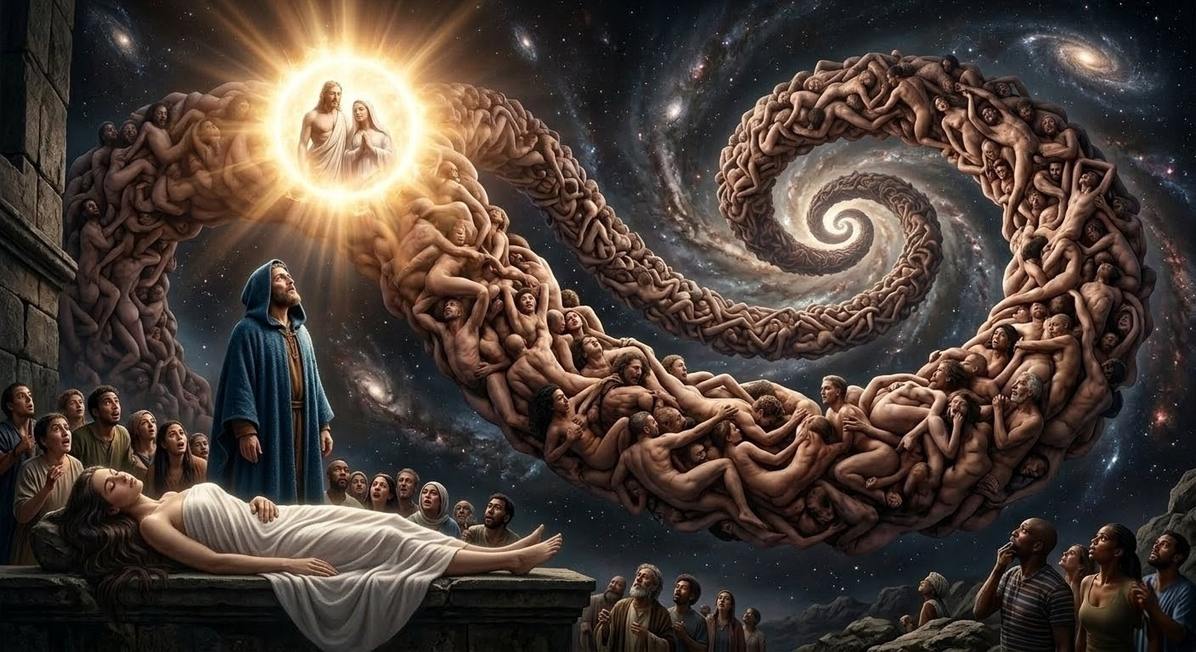
The Gnostic Theory of Consciousness – A Psychological Analysis
The Gnostic tradition offers one of the most provocative ancient maps of consciousness: not a simple split between body and soul, but a layered account of flesh, psyche, spirit, memory, illusion, fear, recognition, and awakening. Read carefully, it becomes less a museum piece and more a psychological mirror.
This does not mean ancient Gnostic teachers secretly possessed modern neuroscience, nor that contemporary psychology merely confirms old myth. That would be too easy, and too noisy. The stronger claim is more interesting: Gnostic texts and modern psychology sometimes describe similar human experiences in different languages. Ego, conditioning, alienation, witness, symbolic imprisonment, spiritual insight, and the strange difference between the personality and the deeper ground of awareness all appear in both territories.
The Gnostic distinction between psyche and pneuma, soul and spirit, gives this article its centre. Psyche is the shaped, reactive, conditioned, socially adapted self. Pneuma is the deeper spiritual principle, the hidden spark, the dimension of consciousness not exhausted by role, fear, memory, status, or habit. Between them sits the ordinary human drama: a personality trying to survive, a body trying to live, and a deeper recognition trying to remember itself without floating away from the world.

In Plain Terms
Gnostic psychology is a modern interpretive way of reading ancient Gnostic ideas about body, soul, spirit, illusion, and liberation. It is not a clinical system in the modern sense, but it can illuminate how identity, conditioning, fear, and spiritual recognition work.
Psyche refers to the soul, personality, or ordinary self: the part of us shaped by memory, emotion, culture, survival, relationship, and time. Pneuma refers to spirit: the deeper principle of recognition or divine life that is not fully reducible to the personality.
The useful question is not “am I hylic, psychic, or pneumatic?” as a fixed label. The better question is: which layer is leading me right now, appetite, ego, fear, conditioning, or recognition?
Primary Sources and Traditions Discussed
- Nag Hammadi texts, especially writings that distinguish body, soul, spirit, Archons, divine spark, and liberation through gnosis.
- Valentinian and related Gnostic anthropology, including hylic, psychic, and pneumatic language, handled carefully rather than as rigid human ranking.
- The Apocryphon of John, especially its mythic account of the soul, the rulers, and the hidden spiritual origin of humanity.
- Jungian depth psychology, including ego, Self, complexes, individuation, shadow, projection, and the symbolic reading of ancient material.
- Modern consciousness studies, including self-models, default mode network research, altered states, meditation, and the narrative self.
- Contemplative practice, including witness consciousness, attention, body awareness, integration, and spiritual discernment.
- Trauma-aware interpretation, especially the need to distinguish spiritual alienation from clinical distress, dissociation, depression, or destabilisation.
How to Read This Article
This article reads Gnostic myth through psychological lenses. It does not claim that the ancient texts were secretly modern neuroscience, nor that Jung, depth psychology, or brain research proves Gnosticism. The aim is interpretive resonance: placing ancient symbolic maps beside modern accounts of identity, conditioning, selfhood, and transformation.
Do not use hylic, psychic, and pneumatic language to rank people. That is the little tyrant of spiritual superiority trying on antique jewellery. These terms are better read as modes of consciousness, tendencies, or layers within human experience.
Finally, spiritual alienation should be handled carefully. Feeling that the world is false, hostile, meaningless, or unreal can be part of existential inquiry, but it can also signal depression, trauma, derealisation, psychosis, or other forms of distress. Gnosis should deepen life, not detach a person from care, embodiment, relationship, or help.
Gnostic psychology begins when the ordinary self is seen as real enough to function, but not deep enough to be the whole truth.
Table of Contents
- The Question at Hand
- Historical Context: The Three-Storey Self
- The Hylic Layer: Body, Matter, Appetite, Survival
- The Psychic Layer: Ego, Soul, Story, Adaptation
- The Pneumatic Layer: Spirit, Spark, Recognition
- The Gnostic Ego and the Modern Self
- The Archons as Psychological Complexes
- The Phenomenology of Gnostic Experience
- Convergences with Contemporary Research
- The Archons in the Consulting Room
- Practical Technologies of Transformation
- The Danger: Pneumatic Inflation
- The Map and the Territory
- The Gnostic Reading: Psyche as Instrument, Not Tyrant
- Related Glossary Terms
- Read Next
- Frequently Asked Questions
- Further Reading
- References and Sources
The Question at Hand
What is the nature of human consciousness, and why does it feel both bound and boundless? Why does a person feel trapped in body, memory, status, fear, and habit, while also sensing something deeper that does not seem reducible to those things?
This is not only an abstract philosophical question. It appears in the quiet moments: when success fails to satisfy, when identity feels too small, when old wounds keep repeating, when a thought is clearly present but the one who notices the thought seems larger than the thought itself.
Ancient Gnostic teachers approached this problem through mythic anthropology. They spoke of body, soul, spirit, divine spark, rulers, ignorance, sleep, awakening, and return. Modern psychology speaks of ego, complexes, conditioning, trauma, self-models, dissociation, integration, projection, and awareness. The languages differ, but the human pressure beneath them is recognisable.
The question is simple enough to fit in one hand and deep enough to swallow a library: who are you before the story of you begins speaking?
Historical Context: The Three-Storey Self
The Nag Hammadi library, discovered in Egypt in 1945, preserved a remarkable collection of Coptic texts associated with early Christian, Gnostic, Sethian, Valentinian, Hermetic, and related currents. These writings do not present one neat doctrine. They are diverse, layered, and sometimes difficult. But they often share a deep concern with the structure of the human being and the possibility of awakening from ignorance.
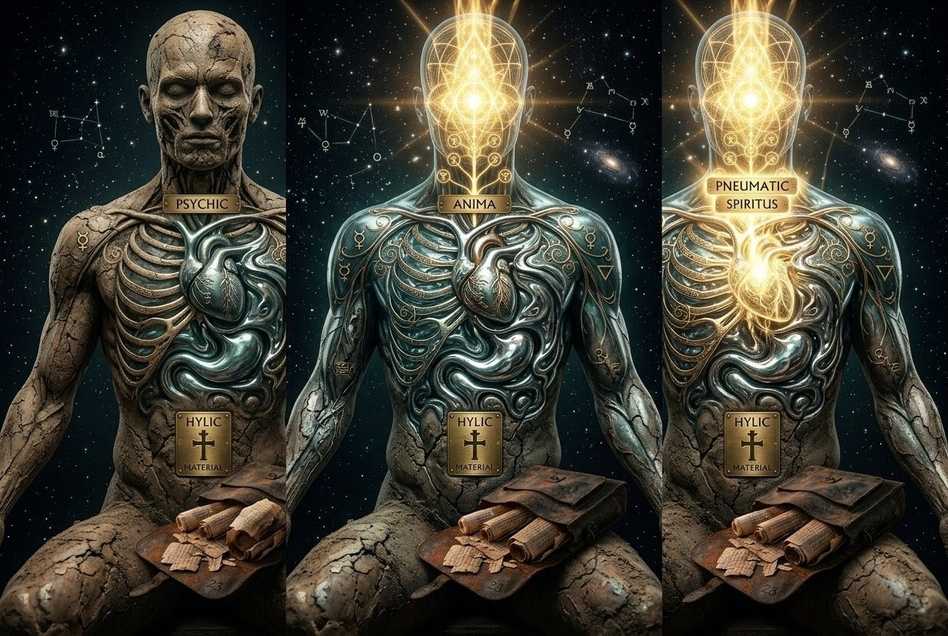
Some ancient systems, especially those associated with Valentinian thought, distinguish between three broad orientations or layers: hylic, psychic, and pneumatic. These terms are easy to misuse. They should not become a caste system for spiritual vanity. They are more fruitful when read as modes of consciousness or levels of identification.
Every person knows the hylic pull of bodily need. Every person knows the psychic drama of identity, memory, emotion, and social selfhood. Every person may glimpse, however briefly, the pneumatic dimension: the strange recognition that awareness is not fully contained by its own stories.
The Hylic Layer: Body, Matter, Appetite, Survival
Hylic comes from the Greek hyle, meaning matter or stuff. In Gnostic anthropology, the hylic level is associated with embodiment, appetite, survival, instinct, and attachment to the material order. It is the layer concerned with food, sex, shelter, comfort, status, fear, pain, and physical continuity.
This layer is not evil. It is clay, and clay matters. You need a body to breathe, walk, eat, heal, touch, speak, sleep, and practise. Treating the body as worthless is not wisdom. It is often dissociation wearing spiritual robes.
The problem begins when the hylic layer becomes the whole identity. If appetite rules everything, the person becomes reducible to consumption. If fear rules everything, life becomes mere survival. If status rules everything, the body becomes a billboard for social ranking. In this sense, the hylic layer is not a sin to be hated, but a ground to be integrated.
The Psychic Layer: Ego, Soul, Story, Adaptation
The psychic layer belongs to soul, personality, meaning, emotion, memory, imagination, morality, belief, and social adaptation. This is the self most people recognise as “me”: the story built from family, culture, wounds, achievements, preferences, shame, longing, and the little theatre of daily identity.
The psychic self is necessary. It pays bills, remembers names, keeps promises, apologises, plans meals, writes articles, answers messages, and knows not to shout mystical declarations in the supermarket queue. A functioning psyche is not the enemy.
But the psyche suffers when it mistakes itself for the whole of consciousness. It is built from time and therefore fears time. It is shaped by approval and therefore fears rejection. It depends on narrative and therefore panics when the narrative cracks. It is a useful instrument that can become a tyrant when it forgets it is an instrument.
Modern psychology has many terms for this territory: ego, self-concept, narrative identity, internal working models, complexes, conditioning, attachment patterns, defence mechanisms, and self-schema. Gnostic language names the same storm differently: psyche caught in the lower order, mistaking the world of formation for final truth.
The Pneumatic Layer: Spirit, Spark, Recognition
Pneuma means spirit, breath, or wind. In Gnostic contexts, the pneumatic dimension is the deeper spiritual principle, the hidden origin, the spark of divine life not fully reducible to body, social identity, memory, or psychological conditioning.
To speak of pneuma is not to deny the body or bypass the psyche. It is to say that the person is not exhausted by either. There is an element of consciousness capable of recognising the drama without being identical to every role in it.
This recognition is not merely belief. You can believe in spirit and still be entirely ruled by fear. Pneumatic recognition is closer to direct knowing: the felt shift in which awareness is no longer completely fused with the voice in the head, the wound in the memory, or the mask worn for others.
The spark does not need to be manufactured. It needs to be noticed, protected, and integrated. It does not make the ordinary self disappear. It changes the ordinary self’s place in the inner order.
The Gnostic Ego and the Modern Self
Carl Jung was deeply interested in Gnostic material, alchemy, symbolic religion, and the structure of the psyche. He did not read the complete Nag Hammadi library in the way modern readers can, because the full collection was not widely available during most of his life. But Gnostic themes run through his work, and Codex I from Nag Hammadi became famously associated with him as the Jung Codex.
Jung’s depth psychology gives useful language for reading Gnostic anthropology. The ego is the centre of ordinary consciousness, necessary but partial. The Self, in Jung’s terms, is a wider organising principle of psychic wholeness. Complexes are semi-autonomous patterns charged with emotion. Shadow material contains what the conscious ego refuses to own. Individuation is the long work of integrating the psyche around a deeper centre.
These ideas are not identical to Gnosticism. Jung is not simply a modern Gnostic, and Gnostic myth is not Jungian psychology in costume. But the resonance is strong. Both frameworks warn that ordinary identity is partial. Both attend to hidden forces within the psyche. Both treat transformation as a shift in relation to the self rather than a mere improvement of behaviour.
The ego is useful, persistent, and often frightened. It builds coherence. It defends continuity. It tries to keep the organism socially and emotionally intact. But when it mistakes itself for the whole of being, it becomes anxious, defensive, and easily captured by images of status, purity, specialness, shame, and threat.
The Gnostic move is not to smash the ego with a spiritual hammer. That only leaves fragments on the floor and a very smug hammer. The healthier movement is dethronement: ego becomes servant, not sovereign.
The Archons as Psychological Complexes
In Gnostic cosmology, the Archons are ruling powers associated with limitation, ignorance, administration, imitation, and the maintenance of the lower order. They appear as cosmic figures in myth, but their symbolic force can be read psychologically.
Psychologically, Archons resemble internalised authorities and autonomous complexes: the voice that says you must not change, the inherited shame that speaks before you do, the social rule that feels like nature, the family commandment that becomes destiny, the fear-pattern that keeps reappearing in new costumes.
This does not mean Archons are “only” psychology. It means psychological life is one of the places where archonic patterns can be recognised. Myth gives faces to forces that otherwise remain invisible. Psychology gives language for how those forces operate inside memory, identity, and behaviour.
Every “you cannot”, “you must”, “you are nothing without this role”, “you will be rejected if you become real”, or “this wound is your identity” may function as an inner ruler. These patterns claim authority, but their authority is often inherited rather than true.
Gnosis begins when a ruling pattern is recognised as a pattern. It may still be strong. It may still have history behind it. But it is no longer mistaken for ultimate truth.
The Phenomenology of Gnostic Experience
What might Gnostic recognition feel like from the inside? Ancient texts are not clinical case notes, and they should not be treated as if they were. Yet they often preserve subtle experiential patterns: alienation, awakening, inner light, dual awareness, fear of rulers, recognition of origin, and the difference between ordinary identity and deeper knowing.
The Spark Recognition
The divine spark is one of the most enduring images in Gnostic interpretation. It names the hidden light within the human being: the element that belongs not to the lower order alone, but to a deeper source.
Psychologically, spark recognition can be understood as a shift in identification. A person may suddenly recognise that they are not merely the voice in the head, the wound in the story, the role in the family, or the fear-pattern they have lived through for years. Something in awareness stands free enough to notice all of that.
This can be gentle or disruptive. It may arrive in contemplation, grief, awe, crisis, prayer, meditation, art, illness, solitude, or ordinary exhaustion. It should not be chased for spectacle. The spark is less a fireworks display than a quiet refusal to be reduced.

Dual Awareness
Many contemplative traditions describe a shift in which thoughts, emotions, and roles are still present, but awareness is no longer fully fused with them. One can feel anxiety and notice anxiety. One can think a thought and notice the thinking. One can play a social role while recognising that the role is not the whole person.
In a Gnostic reading, this resembles the emergence of the spiritual dimension within the psychic person. The psyche continues to function. The body continues to live. But a deeper witness has appeared, not as a dissociative escape, but as a wider holding.
This distinction matters. Dissociation often involves disconnection, numbness, unreality, or loss of grounding. Healthy witness consciousness is more embodied, more present, more compassionate, and more capable of ordinary responsibility. The balcony is useful only if one can still return to the room.
Alienation as Spiritual Signal, or Psychological Pain?
Gnostic texts often speak from a place of cosmic estrangement. The awakened person feels out of place in a world ruled by ignorance. This can resonate strongly with modern readers who feel that ordinary social life is built on performance, denial, violence, distraction, and conformity.
But alienation is a double-edged sign. Sometimes it reflects genuine discernment: the sense that a culture is spiritually thin, violent, manipulative, or false. Sometimes it reflects trauma, depression, isolation, derealisation, social injury, or nervous-system exhaustion. Often it is mixed.
A grounded Gnostic psychology does not romanticise suffering. It asks what the alienation is revealing, and what care it requires. The aim is not to feel superior to the world, but to see clearly enough to live truthfully within it.
Convergences with Contemporary Research
Modern consciousness studies do not confirm Gnosticism in any simple sense. Still, several areas of research create useful points of conversation with Gnostic psychology.
Neuroplasticity and Spiritual Practice
Research on meditation and contemplative practice suggests that repeated attention training can alter patterns of attention, emotion regulation, self-reference, and bodily awareness. This does not “prove” pneuma. It does show that the human organism can be trained, reshaped, and refined by disciplined practice.
The Gnostic idea of transformation through recognition and practice becomes psychologically plausible here. A person does not merely adopt new beliefs. They change the habits through which reality is perceived. The psyche learns new pathways. Attention becomes less captive. The inner rulers lose some of their automatic force.
The Default Mode Network and the Narrative Self
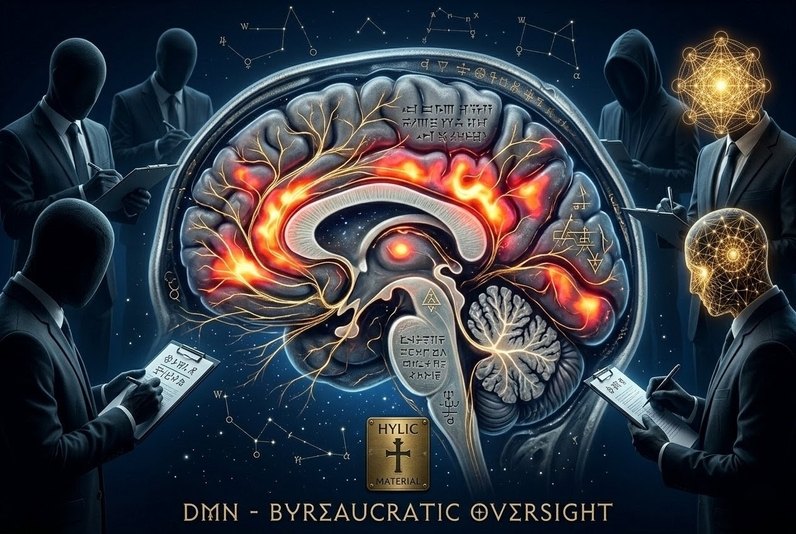
The default mode network is associated with self-referential thought, autobiographical memory, mind-wandering, and narrative identity. Meditation, psychedelics, and some altered states have been linked with changes in default mode activity and connectivity, though the details vary by method, person, and study.
It is too strong to say that ancient Gnostic writers mapped the default mode network before neuroscience existed. What they did describe, in symbolic language, was the instability of ordinary identity and the possibility of awareness loosening from the story of self. That is an interpretive resonance, not a neuroscientific prophecy.
Altered self-experience can involve changes in networks associated with self-reference, attention, salience, interoception, and integration. The details vary by practice, context, nervous-system state, and person. The important point is not that one brain network simply switches off, but that the ordinary self-story can loosen, allowing awareness to relate differently to thought, memory, body, and identity.
The point is not that pneuma equals a brain state. The point is that the self we usually defend may be more process than essence. That insight is shared by contemplative practice, depth psychology, cognitive science, and Gnostic myth, each in its own dialect.
Altered States and Noetic Quality
William James famously described mystical experiences as having a “noetic” quality: they feel like direct insight rather than ordinary opinion. Gnostic language places heavy emphasis on gnosis, knowing, as distinct from mere belief or external authority.
This does not mean every intense experience is true. Altered states can clarify, confuse, heal, inflate, destabilise, or deceive. The noetic feeling of certainty is not enough by itself. Discernment, ethics, embodiment, and integration must follow.
Gnosis, in its healthiest sense, is not a private thunderbolt that excuses the person from reality. It is a recognition that makes life more truthful, less ruled by fear, and more responsible.
The Archons in the Consulting Room
How might these ancient insights translate into contemporary therapeutic or reflective work? Carefully. Gnostic symbolism can support self-inquiry, but it should not replace therapy, diagnosis, trauma care, or clinical judgement.
That said, the Archons can be a powerful metaphor for internalised constraints. In therapy, coaching, journalling, spiritual direction, or solitary reflection, a person may encounter voices that feel strangely authoritative: “you will never change”, “you are unworthy”, “you must perform”, “you must be pleasing”, “you cannot rest”, “your value depends on approval”.
These voices are often not chosen. They may come from family systems, trauma, culture, religion, schooling, economic pressure, shame, or repeated survival strategies. They behave like inner rulers because they once helped the psyche survive. But survival strategies can become prisons once their original context is gone.
The Gnostic question is alchemical: who is aware of this voice? Not as a clever trick, and not as a way to dismiss pain, but as a shift in identification. When a person can notice the inner ruler, they are not identical with it. A small kingdom has opened.
Practical Technologies of Transformation
The Gnostic path is not theory alone. It is recognition practised. The following approaches translate the psychology of psyche and pneuma into grounded forms of self-inquiry.
1. Attention as Alchemical Instrument
Attention changes the material it touches. When fear is unconscious, it rules. When fear is noticed with steadiness, it becomes workable. When a thought is fused with identity, it becomes fate. When a thought is seen as thought, space appears around it.
Simple practice: sit quietly and notice what appears. Thought, sensation, sound, memory, mood, image, planning, resistance. Do not try to become special. Notice the one who wants to become special. Do not try to destroy the psyche. Let the psyche be seen.
In Gnostic language, attention turns towards the spark. In psychological language, awareness begins to disidentify from automatic content. In ordinary language, you stop believing every inner memo delivered by the anxiety department.
2. The Examination of Projections
Projection occurs when disowned material is experienced as belonging entirely to someone or something else. Jungian psychology places great weight on this, and Gnostic myth gives it a cosmic theatre: the rulers outside may also reveal forces inside.
When a person, group, institution, or symbol carries excessive charge, ask: what part of my own fear, longing, rage, shame, envy, or authority has gathered around this image? This does not excuse real harm. It simply asks whether the outer object has also become a screen for inner material.
To withdraw projection is not to lose moral clarity. It is to stop feeding the Archons with unexamined psychic energy.
3. The Cultivation of Witness Consciousness
Witness consciousness is the capacity to notice experience without being completely swallowed by it. Anxiety appears. Anger appears. Desire appears. Shame appears. The witness does not deny them. It gives them space.
This practice must remain embodied. If witnessing becomes numbness, superiority, dissociation, or avoidance, it has drifted into bypassing. A healthy witness is warm, steady, and capable of returning to the body, the relationship, and the unfinished conversation.
In Gnostic language, the pneumatic dimension informs the psyche. In therapeutic language, regulation increases and identification loosens. In human language, you can feel the feeling without letting it drive the chariot into a wall.
4. Grounding the Spark in Ordinary Life
Every recognition must eventually pass through breakfast, sleep, bills, grief, touch, work, apology, and repair. If spiritual insight cannot descend into ordinary life, it remains vapour.
Grounding practices include walking, cooking, cleaning, tending animals or plants, body scan, slow breathing, therapy, honest conversation, movement, sunlight, and keeping promises. The divine spark does not become less divine because it remembers to drink water.
The Danger: Pneumatic Inflation
The Gnostic map is powerful, and powerful maps can distort. The discovery of a deeper spiritual dimension can lead to inflation: the ego identifies with transcendence and becomes grandiose, detached, superior, or allergic to ordinary human limitation.
This is spiritual bypassing with a heavenly accent. The person uses spirit to avoid body, psychology, grief, sexuality, money, apology, family patterns, medical care, and the ordinary humiliations of being human. The psyche declares itself pneumatic and orders new curtains for the throne room.
A grounded Gnostic reading refuses this. Pneuma does not abandon psyche. It illuminates it. The spark does not despise clay. It teaches clay how to become transparent to light. The goal is not to float away from the world, but to bring recognition into the messy reality of bodies, bills, ageing, tenderness, conflict, and repair.
Any spirituality that makes a person less kind, less honest, less embodied, or less responsible should be questioned, even if it speaks fluent ancient Greek and owns excellent incense.
The Map and the Territory
The Gnostic theory of consciousness is not a finished psychological system. It is a symbolic map. Like all maps, it reveals some things and hides others. It can help distinguish personality from awareness, conditioning from recognition, inner rulers from genuine authority, and spiritual insight from mere ego improvement.
Modern depth psychology, neuroscience, contemplative studies, and trauma-informed practice can sharpen the map. They remind us that the psyche is not only illusion, but also wound, memory, body, attachment, nervous system, and relational history. The Gnostic vocabulary needs grounding if it is to heal rather than inflate.
Still, the old myth has teeth. The psyche is not the whole person. The Archons are not final authorities. The spark is not manufactured by belief. Gnosis is not information. The self we defend so fiercely may be only the scaffolding around a deeper architecture of awareness.
The psyche is the instrument, not the musician. But without the instrument, the song has nowhere to sound.
The Gnostic Reading: Psyche as Instrument, Not Tyrant
Gnostic psychology begins with a refusal: the ordinary self is not ultimate. The social personality, the wound-story, the fear-pattern, the appetite, the belief system, the inherited role, and the inner critic are not the deepest truth of the person.
But Gnostic psychology also needs a second refusal: the ordinary self is not worthless. The psyche is not rubbish to be burned. It is the instrument through which recognition must learn to live. The soul needs healing, not contempt. The ego needs proportion, not annihilation. The body needs care, not metaphysical insults.
The Archons rule wherever a partial pattern claims total authority. The Demiurge appears wherever a constructed world says, “there is nothing beyond me.” The spark awakens wherever awareness recognises that the ruler is not the source.
In that recognition, the self does not vanish. It bows. The psyche becomes transparent enough for pneuma to move through it. The body remains. The world remains. The old patterns may still speak. But they no longer own the microphone entirely.
Related Glossary Terms
For quick definitions, use the main ZenithEye Glossary. The key terms for this article are:
Read Next
Continue with: Pneumatic, Hylic, and Psychic: The Three Natures and the Geography of Awakening
If this article gives the psychological frame, the next step explores the three natures more directly: not as fixed spiritual castes, but as modes of consciousness, orientation, and awakening within the human being.
Within The Thread
This article belongs to The Architecture of Perception, a layer of The Thread concerned with how reality is filtered, framed, narrated, embodied, and mistaken for the whole. Gnostic psychology belongs here because the psyche itself is one of the first architectures through which reality is interpreted.
Frequently Asked Questions About Gnostic Psychology
The following questions address practical and theoretical concerns regarding the Gnostic model of consciousness.
What is the difference between psyche and pneuma in Gnosticism?
Psyche refers to the soul or ordinary self: the layer shaped by memory, emotion, culture, morality, identity, and time. Pneuma refers to spirit, breath, or the deeper spiritual principle often associated with the divine spark. In practical terms, psyche is the self that navigates the world, while pneuma is the deeper recognition that the self is not the whole of awareness.
Are hylic, psychic, and pneumatic fixed types of people?
They are best read carefully as modes of consciousness or layers of identification, not as rigid labels for ranking people. Hylic refers to matter-bound or survival-oriented consciousness, psychic to soul, identity, and belief, and pneumatic to spiritual recognition. Most people move through all three modes in different ways.
Did Carl Jung study Gnosticism?
Yes, Jung was deeply interested in Gnostic, alchemical, and religious symbolism, and Codex I from Nag Hammadi became known as the Jung Codex. However, Jung did not have access to the complete Nag Hammadi library in the way modern readers do. His psychology can be placed in conversation with Gnosticism, but it should not be treated as identical with ancient Gnostic teaching.
What is the divine spark?
The divine spark is a symbolic Gnostic image for the hidden spiritual principle within the human being. Psychologically, it can be read as the moment a person recognises they are not merely their thoughts, wounds, roles, or social identity. The spark is not a new ego identity, but a deeper orientation of awareness.
Are the Archons real entities or psychological metaphors?
Different readers answer this differently. In ancient texts, the Archons appear as cosmic ruling powers. Psychologically, they can also be read as internalised constraints, complexes, inherited scripts, and social patterns that claim authority over consciousness. The symbolic reading does not settle the metaphysical question, but it makes the material practically useful.
Does neuroscience prove Gnostic psychology?
No. Neuroscience does not prove Gnosticism. Research on the default mode network, meditation, self-models, and altered states can resonate with Gnostic themes, but the connection is interpretive rather than direct proof. The safer claim is that both ancient myth and modern research explore how identity, perception, and awareness can shift.
Can Gnostic psychology replace therapy?
No. Gnostic psychology can support symbolic reflection, self-inquiry, and spiritual practice, but it does not replace therapy, trauma care, diagnosis, medication, crisis support, or qualified professional help. If spiritual inquiry increases distress, dissociation, paranoia, grandiosity, depression, or difficulty functioning, seek grounded support.
Study and Safety Note
This article explores Gnostic symbolism, psychology, consciousness studies, altered states, and contemplative practice for educational and reflective purposes. It does not provide medical, psychological, psychiatric, neurological, therapeutic, or spiritual-direction advice.
Gnostic language can be powerful, but it should not be used to diagnose yourself or others, rank people spiritually, dismiss the body, avoid therapy, or romanticise distress. If spiritual inquiry increases depression, anxiety, derealisation, dissociation, paranoia, grandiosity, insomnia, panic, or difficulty functioning, pause the material and seek grounded support from qualified professionals.
Further Reading
These live ZenithEye links continue the themes of Gnostic psychology, altered states, consciousness, witness, shadow, and embodied integration:
- Pneumatic, Hylic, and Psychic: The Three Natures and the Geography of Awakening – A deeper look at the three natures as modes of consciousness rather than fixed spiritual castes.
- States of Knowing: What Happens When Consciousness Unravels – Altered states, destabilisation, perception, and the shifting conditions of awareness.
- The Apocryphon of John: Gnostic Creation and the Three Natures – A primary-source route into mythic anthropology, the rulers, and human spiritual origin.
- The Varieties of Ego Dissolution: A Spectrum of Experience – Distinguishing between healthy loosening, mystical insight, destabilisation, and pathological ego disruption.
- The Witness Function in Contemplative Traditions – Practical and comparative approaches to observing awareness.
- Shadow Work: Excavating the Repressed – Working with unconscious material, projection, and the forces that block recognition.
- The Default Mode Network: Neuroscience of the Narrative Self – The self-storying network and what happens when the narrator loosens.
- The Glitch in the Zenith: Recognising the Code of the Self – Predictive processing, selfhood, perception, and the moment the model sees itself.
- Recognition Beyond Position – Direct recognition without turning awareness into another identity project.
- The Thread – The main route through ZenithEye’s symbolic, historical, contemplative, and contemporary architecture.
References and Sources
The following sources support the Gnostic, psychological, contemplative, and interpretive framework used in this article.
Gnostic Primary Sources and Scholarship
- [1] Apocryphon of John. Nag Hammadi Codex II,1; III,1; IV,1; Berlin Codex 8502,2.
- [2] Hypostasis of the Archons. Nag Hammadi Codex II,4.
- [3] On the Origin of the World. Nag Hammadi Codex II,5; XIII,2.
- [4] Tripartite Tractate. Nag Hammadi Codex I,5.
- [5] Robinson, James M. (ed.). The Nag Hammadi Library in English. Revised edition. HarperOne, 1990.
- [6] Meyer, Marvin (ed.). The Nag Hammadi Scriptures. HarperOne, 2007.
- [7] Thomassen, Einar. The Spiritual Seed: The Church of the Valentinians. Brill, 2006.
- [8] Brakke, David. The Gnostics: Myth, Ritual, and Diversity in Early Christianity. Harvard University Press, 2010.
- [9] Williams, Michael Allen. Rethinking “Gnosticism”: An Argument for Dismantling a Dubious Category. Princeton University Press, 1996.
- [10] King, Karen L. What Is Gnosticism?. Harvard University Press, 2003.
- [11] Jonas, Hans. The Gnostic Religion. Beacon Press, 1958.
Jungian and Depth Psychology
- [12] Jung, C. G. Aion: Researches into the Phenomenology of the Self. Collected Works, Vol. 9ii. Princeton University Press, 1959.
- [13] Jung, C. G. Psychology and Alchemy. Collected Works, Vol. 12. Princeton University Press, 1968.
- [14] Jung, C. G. The Archetypes and the Collective Unconscious. Collected Works, Vol. 9i. Princeton University Press, 1969.
- [15] Jung, C. G. Memories, Dreams, Reflections. Vintage, 1989.
- [16] Hoeller, Stephan A. The Gnostic Jung and the Seven Sermons to the Dead. Quest Books, 1982.
- [17] Segal, Robert A. The Gnostic Jung. Princeton University Press, 1992.
Consciousness, Selfhood, and Neuroscience
- [18] James, William. The Varieties of Religious Experience. Longmans, Green, and Co., 1902.
- [19] Raichle, Marcus E., et al. “A Default Mode of Brain Function.” Proceedings of the National Academy of Sciences, 98(2), 676-682, 2001.
- [20] Buckner, Randy L., Jessica R. Andrews-Hanna, and Daniel L. Schacter. “The Brain’s Default Network: Anatomy, Function, and Relevance to Disease.” Annals of the New York Academy of Sciences, 1124, 1-38, 2008.
- [21] Brewer, Judson A., et al. “Meditation Experience Is Associated with Differences in Default Mode Network Activity and Connectivity.” Proceedings of the National Academy of Sciences, 108(50), 20254-20259, 2011.
- [22] Metzinger, Thomas. Being No One: The Self-Model Theory of Subjectivity. MIT Press, 2003.
- [23] Seth, Anil. Being You: A New Science of Consciousness. Faber & Faber, 2021.
- [24] Damasio, Antonio. Self Comes to Mind: Constructing the Conscious Brain. Pantheon, 2010.
Contemplative Practice, Integration, and Trauma-Aware Context
- [25] Kornfield, Jack. After the Ecstasy, the Laundry: How the Heart Grows Wise on the Spiritual Path. Bantam, 2000.
- [26] Welwood, John. “Toward a Psychology of Awakening.” Shambhala, 2000.
- [27] Kabat-Zinn, Jon. Full Catastrophe Living. Delacorte, 1990.
- [28] Goleman, Daniel and Richard J. Davidson. Altered Traits: Science Reveals How Meditation Changes Your Mind, Brain, and Body. Avery, 2017.
- [29] van der Kolk, Bessel. The Body Keeps the Score: Brain, Mind, and Body in the Healing of Trauma. Viking, 2014.
- [30] Ogden, Pat, Kekuni Minton, and Clare Pain. Trauma and the Body: A Sensorimotor Approach to Psychotherapy. W. W. Norton, 2006.