Scrying the Enochian Aethyrs: The Ultimate Guide to Higher Dimensional Gnosis
Scrying the Enochian Aethyrs belongs to one of the strangest and most influential currents in Western esotericism. In the angelic work of John Dee and Edward Kelley, the Aethyrs, or Aires, form a visionary sequence of thirty subtle regions named from TEX, the 30th, to LIL, the 1st. Later occultists treated them as a map of ascent, ordeal, symbolic revelation, angelic encounter, and the dissolution of ordinary identity before deeper gnosis.
This article reads the Aethyrs historically and carefully. Dee’s original angelic conversations belong to late Renaissance magic, Christian angelology, cryptography, mathematics, astrology, imperial imagination, and a world where revelation and calculation could share the same desk. Later interpretations, especially Aleister Crowley’s The Vision and the Voice, turned the Aethyrs into a dramatic initiatory journey through the Abyss, Choronzon, the City of the Pyramids, and the annihilation of the personal ego.
The Aethyrs can be approached as spiritual realities, visionary states, symbolic structures, ritual maps, altered-state material, or psychological thresholds. They should not be treated as a casual adventure trail or a guaranteed route to higher dimensions. Scrying can open powerful imagery, emotion, disorientation, fear, and inflation. The question is not merely what the mirror shows. The question is whether the seeker can return with discernment, humility, groundedness, and a life more whole than before.
In Plain Terms
The Enochian Aethyrs are thirty visionary regions from John Dee’s angelic magical system. They are traditionally numbered from TEX, the 30th Aethyr, to LIL, the 1st.
Scrying means using a reflective or receptive medium, such as a black mirror, crystal, bowl of water, or inward vision, to enter a focused visionary state.
The 19th Enochian Call is the call later used in Enochian practice to open the Aethyrs by inserting the name of the specific Aethyr being addressed. This article discusses it historically and symbolically, not as a practical ritual manual.
The safest approach is source-aware and grounded. The Aethyrs may produce insight, but they can also intensify projection, fear, dissociation, grandiosity, or spiritual emergency when approached without preparation.
Primary Sources and Traditions Discussed
- John Dee and Edward Kelley: the angelic conversations, diaries, tables, calls, names, governors, and the late Elizabethan magical context.
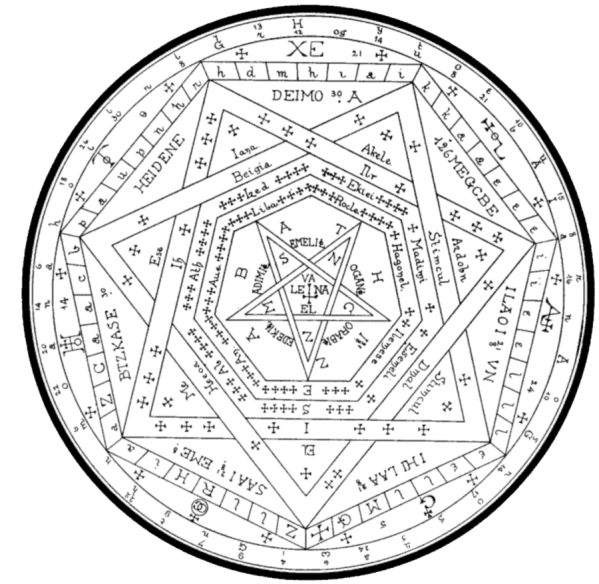
- Dee’s Enochian corpus: including the angelic calls, the Aethyrs or Aires, the Sigillum Dei Aemeth, the Holy Table, Liber Loagaeth, and related manuscripts.
- The 30 Aethyrs: the visionary sequence from TEX to LIL, later used as a map of ascent, ordeal, and revelation.
- The 19th Enochian Call: discussed as the call associated with opening individual Aethyrs, with emphasis on historical context rather than operational instruction.
- Aleister Crowley’s The Vision and the Voice: the major modern occult reinterpretation of the Aethyrs, especially ZAX, Choronzon, and the Abyss.
- Hermetic Qabalah and Renaissance magic: the wider symbolic language of ascent, angels, planetary intelligences, seals, names, and spiritual hierarchy.
- Gnostic discernment: the need to distinguish genuine recognition from projection, false light, archonic imitation, psychic inflation, and spiritual bypass.
- Modern altered-state caution: grounding, journalling, psychological stability, nervous-system care, and the importance of stopping when practice becomes destabilising.
How to Read This Article
This article is educational, historical, symbolic, and contemplative. It does not provide a full ritual script, magical training, initiation, guarantee of contact, or instruction to perform Enochian operations. Enochian material has a reputation for psychological intensity, and readers should approach it with respect, caution, and grounded discernment.
Three layers should be kept separate. Dee’s source material belongs to a Renaissance angelic-magical context. Crowley’s Aethyr visions belong to a later Thelemic and initiatory interpretation. Modern “higher dimensional” language belongs to contemporary esoteric and consciousness discourse. These layers can speak to each other, but they should not be collapsed into one timeless system.
The central question is not whether the Aethyrs are “real” in one simple way. The better question is what kind of experience, transformation, risk, and discernment the Aethyr map brings into view.
The Aethyrs are not trophies of occult travel. They are thresholds where vision tests whether the seeker has mistaken intensity for gnosis.
Table of Contents
- John Dee, Edward Kelley, and the Angelic Archive
- What Are the 30 Enochian Aethyrs?
- The Architecture of the Aethyrs: TEX to LIL
- Scrying as Visionary Method
- The 19th Enochian Call: Key, Gate, and Caution
- ZAX, Choronzon, and the Abyss
- Higher Dimensional Gnosis or Symbolic Vision?
- Preparation Without Recklessness
- Integration: Returning from the Vision
- The Gnostic Reading: Test Every Light
- Related Glossary Terms
- Read Next
- Frequently Asked Questions
- Further Reading
- References and Sources
John Dee, Edward Kelley, and the Angelic Archive
John Dee was one of the most remarkable figures of the Elizabethan world: mathematician, astrologer, imperial theorist, collector, adviser, cryptographer, and Christian magus. His magical work was not a side hobby attached to scholarship. It grew from the same hunger that shaped his mathematics and navigation: the desire to understand the hidden order of creation.
Edward Kelley entered Dee’s life as a scryer, or “skryer”, whose role was to see and report what appeared in the crystal or shew-stone while Dee recorded the proceedings. Their angelic conversations produced one of the most complex magical archives in Western esotericism: tables, seals, letters, calls, angelic names, cosmological arrangements, and a language later called Enochian.
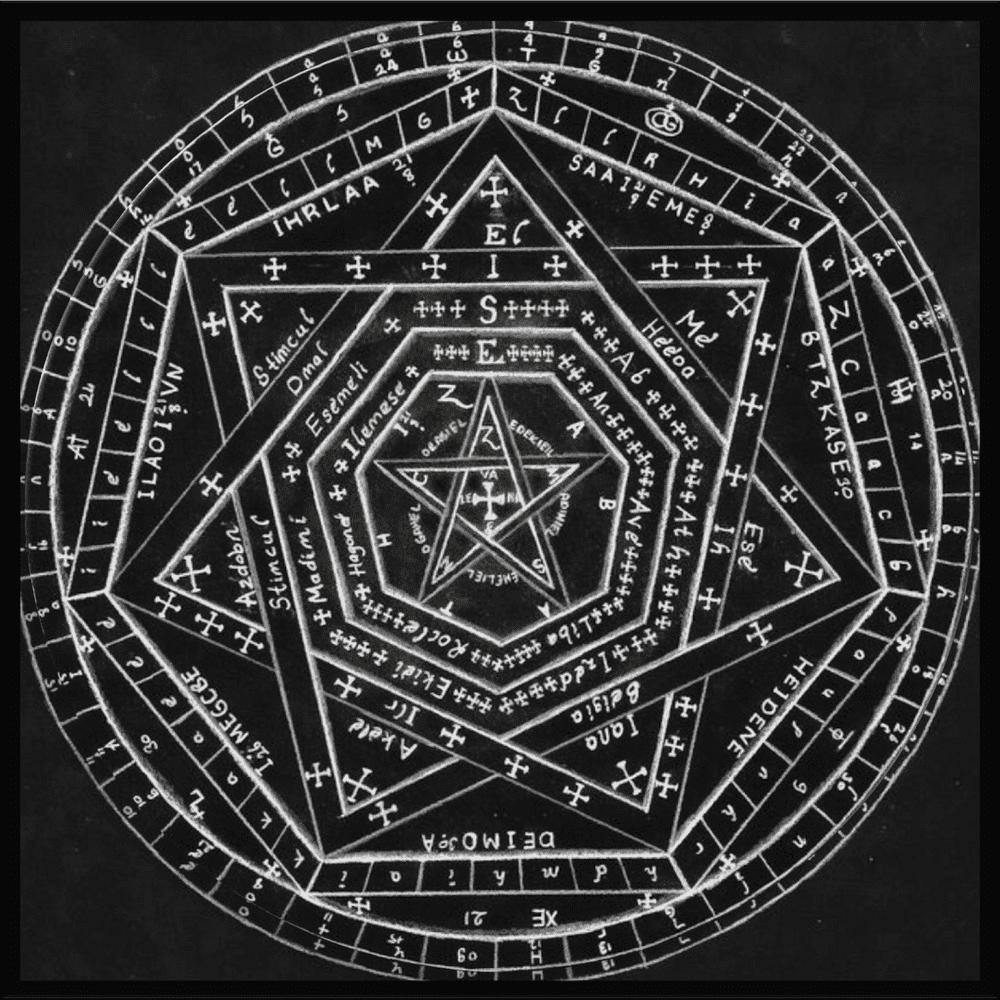
The system is not simple. It includes the Sigillum Dei Aemeth, the Holy Table, planetary and angelic structures, the Heptarchic material, the elemental Watchtowers, angelic calls, and the Aethyrs or Aires. Later occultists organised and interpreted this material in ways Dee himself may not have recognised fully.
That distinction matters. When modern readers speak of “Enochian magic”, they often mean a layered tradition that includes Dee and Kelley, Golden Dawn systematisation, Crowley’s visionary work, and later ceremonial magic. The original archive is the root. The later occult tree has grown many strange branches.
What Are the 30 Enochian Aethyrs?
The 30 Enochian Aethyrs, also called Aires, are a sequence of visionary regions in Dee’s angelic system. They are named with short Enochian words and traditionally numbered from the outermost, TEX, to the innermost or highest, LIL. Each Aethyr can be addressed through the 19th Call by inserting its name into the call.
In later occult interpretation, the Aethyrs become a map of progressive ascent. The practitioner moves from more accessible visionary fields through increasingly subtle, intense, and identity-dissolving realms. The lower Aethyrs often appear as symbolic, imaginal, and psychologically charged. The higher Aethyrs are treated as more abstract, luminous, impersonal, and difficult to translate into ordinary language.
Dee’s original materials also associate the Aethyrs with governors, regions, and a complex angelic administration. This is why the language of jurisdictions, seals, names, and hierarchy can be useful, provided it remains poetic rather than too literal. The Aethyrs are not neatly labelled hotel floors in a celestial tower. They are a map of visionary access, symbolic ordeal, and spiritual testing.
Modern readers should therefore avoid two errors. The first is dismissing the Aethyrs as mere fantasy because they do not fit modern materialist categories. The second is treating every vision as objective fact. The middle path is more demanding: experience may be meaningful without being simple.
The Architecture of the Aethyrs: TEX to LIL
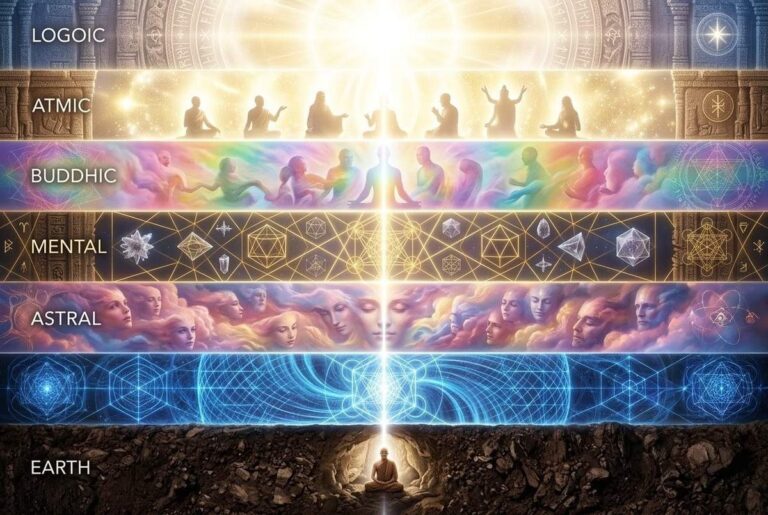
The Aethyrs are often imagined as concentric regions, subtle atmospheres, or ascending zones of visionary consciousness. The journey begins at TEX, the 30th Aethyr, closest to ordinary experience, and moves towards LIL, the 1st Aethyr, associated in later esoteric reading with the most rarefied level of the sequence.
The thirtyfold structure resists easy simplification, but a working map can be helpful.
- Outer Aethyrs, 30-21: visionary threshold zones where symbolic imagery, personal material, dreamlike figures, elemental atmospheres, and lower-level testing may predominate.
- Middle Aethyrs, 20-11: deeper initiatory regions where the visionary field becomes more charged, abstract, confrontational, and difficult to separate from shadow, projection, and spiritual ambition.
- ZAX, the 10th Aethyr: in Crowley’s later interpretation, the Abyss and encounter with Choronzon, the force of dispersion, fragmentation, and egoic breakdown.
- Higher Aethyrs, 9-1: rarefied visionary levels where later occult texts speak of the City of the Pyramids, the loss of personal identity, angelic transmission, and contact with increasingly impersonal mysteries.
This arrangement should not be treated as a rigid spiritual ladder. Visionary experience is rarely tidy. A lower Aethyr may expose a profound truth. A higher-sounding vision may be vanity wearing ceremonial robes. The order gives structure, not automatic authority.
Scrying as Visionary Method
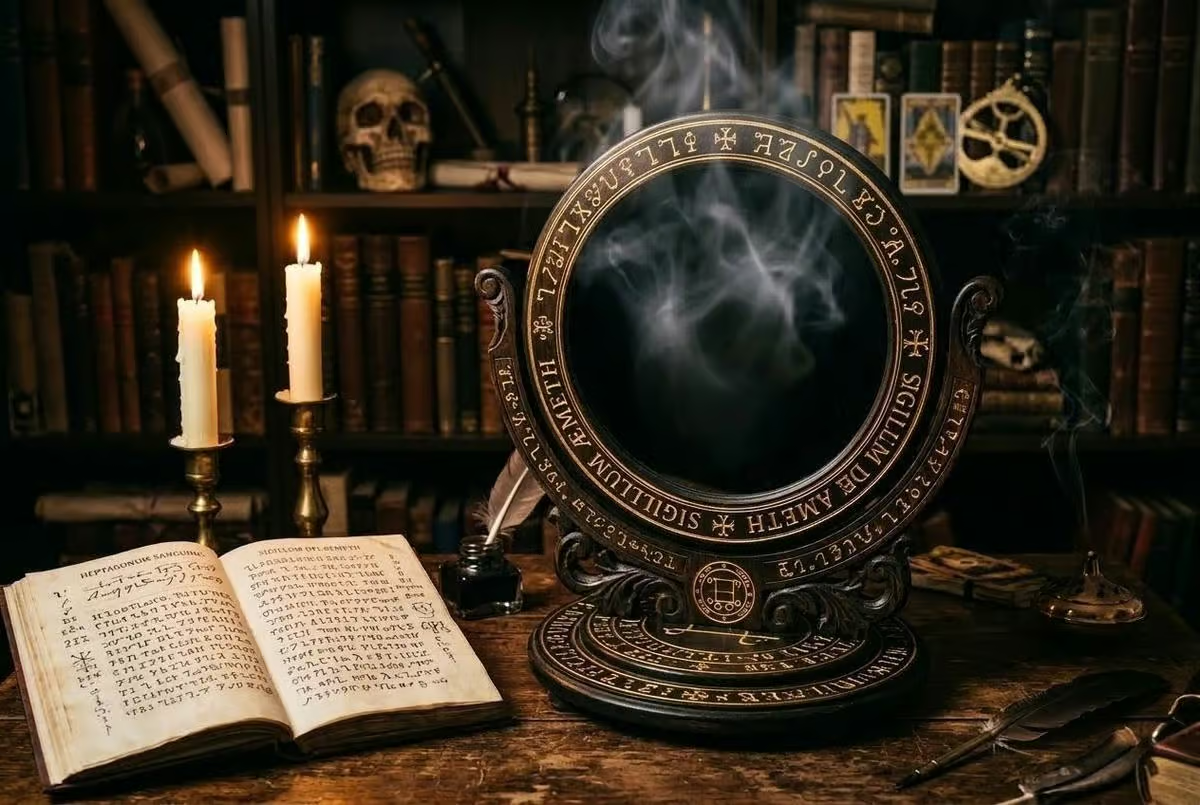
Scrying is the practice of entering a receptive visionary state through concentrated attention. The external medium may be a black mirror, crystal, bowl of water, polished stone, candle flame, ink, or darkness. The medium gives the eye something simple enough to rest upon while the imagination, deeper mind, and symbolic field begin to organise experience.
In a careful reading, scrying is not simply “seeing spirits”. It is a disciplined threshold state. The ordinary mind quietens. Visual noise becomes meaningful. Images arise. Inner and outer perception blur. The practitioner may receive symbolic scenes, phrases, presences, geometric forms, emotional atmospheres, bodily sensations, or sudden knowing.
Modern language might describe this as altered attention, hypnagogic imagery, trance, active imagination, visualisation, dissociation risk, ritual imagination, or visionary cognition. Esoteric language may describe it as contact with subtle realms or angelic intelligences. These interpretations do not need to be reduced to one mechanism.
The danger is not imagination. Imagination is the organ of symbol. The danger is losing discernment. A vision should be recorded, tested, grounded, and integrated. It should not be obeyed automatically, especially if it produces fear, grandiosity, secrecy, contempt, pressure, or loss of ordinary function.
The 19th Enochian Call: Key, Gate, and Caution
The Enochian Calls, or Keys, are among the best-known parts of Dee’s angelic system. In later practice, the 19th Call is used for the Aethyrs by substituting the name of a particular Aethyr into the call. This is why it is sometimes described as the key for opening the thirty Aethyrs.
This article will not provide a full operational script. That is deliberate. The call belongs to a ritual and textual context, not a decorative phrase to paste into curiosity. Spoken sacred language can have psychological force even when treated symbolically. The combination of gaze, voice, expectation, isolation, ritual atmosphere, and altered attention can produce intense states.
The wiser approach is to study before attempting. Read the source history. Understand the difference between Dee, the Golden Dawn, Crowley, and modern reconstructions. Know your own psychological baseline. Have grounding methods. Avoid practice during sleep deprivation, grief crisis, mania, substance instability, trauma activation, paranoia, or spiritual emergency.
The 19th Call may be viewed as a gate. But not every gate should be opened simply because the handle is visible.
ZAX, Choronzon, and the Abyss
The 10th Aethyr, ZAX, became famous through Aleister Crowley’s account in The Vision and the Voice. In that later interpretation, ZAX is linked with the Abyss and with Choronzon, the force of dispersion, ego-fragmentation, illusion, and disintegrating selfhood. This is one of the most dramatic episodes in modern ceremonial magic.
It is important to label this correctly. Choronzon and the Abyss are not simply Dee’s original Aethyr doctrine reproduced unchanged. They are part of a later occult reading that fused Enochian material with Thelemic initiation, Hermetic Qabalah, and the psychology of ego-death. Crowley’s vision is powerful, but it is not the whole of Dee.
Symbolically, ZAX names a real danger in any intense path: the collapse of identity before wisdom has stabilised. The seeker may mistake fragmentation for liberation, terror for truth, grandiosity for initiation, or inner chaos for cosmic instruction. Choronzon, read psychologically, is the scattering power that turns the mind into a thousand arguments, masks, anxieties, and self-defences.
The way through is not heroic combat. Fighting fragmentation can multiply it. The deeper task is recognition: seeing the masks without becoming them, allowing false identity to lose authority without letting the nervous system fall into chaos.
Higher Dimensional Gnosis or Symbolic Vision?
The phrase higher dimensional gnosis can be useful if handled carefully. It does not mean that scrying has scientifically confirmed access to measurable higher spatial dimensions. In this article, “higher dimensional” means subtler modes of consciousness, visionary depth, symbolic reality, spiritual perception, and experiences that exceed ordinary waking interpretation.
The Aethyrs can be read in several ways:
- Literal-spiritual: as real subtle regions inhabited by intelligences and governed by angelic structures.
- Visionary-symbolic: as an ordered map through imaginal realms and initiatory thresholds.
- Psychological: as stages through projection, shadow, ego dissolution, archetype, and transpersonal identity.
- Ritual-technological: as a system that uses name, voice, symbol, gaze, and expectation to shape altered states.
- Gnostic: as a test of whether the soul can distinguish direct knowing from false authority, spectacle, and imitation light.
None of these readings should bully the others out of the room. The Aethyrs are a prism. The beam that passes through them may split into history, magic, psychology, theology, poetry, and ordeal. The art is not to flatten the spectrum into one grey doctrine.
Preparation Without Recklessness
Traditional magical systems emphasise preparation for a reason. A strong visionary practice changes the state of the practitioner. That change can be illuminating, but it can also disturb sleep, emotion, identity, attention, and ordinary functioning. Preparation is not superstition. It is vessel work.
The following principles are safer than rushing into ritual intensity:
- Study before practice: understand the source history before treating the Aethyrs as a modern consciousness game.
- Keep sessions short: do not intensify altered states beyond your ability to return calmly.
- Record, then pause: write down impressions, but avoid immediate grand interpretations.
- Ground the body: eat, walk, hydrate, sleep, and return to ordinary sensory contact after visionary work.
- Avoid unstable conditions: do not practise during mania, psychosis, severe anxiety, trauma flashbacks, sleep deprivation, substance instability, or crisis.
- Keep ethical boundaries: no vision, angel, teacher, or inner voice should override consent, conscience, health, or ordinary responsibility.
- Have support: visionary work is safer when there are grounded people who can help restore proportion.
Enochian language is full of gates, names, keys, seals, and powers. The most important gate may still be the humble one: knowing when not to open the next door.
Integration: Returning from the Vision
A vision that cannot return to life remains unfinished. The Aethyrs should not become spiritual tourism, a trophy cabinet of exotic inner weather, or a ladder for occult status. The real test of any visionary map is integration.
Integration begins with accurate recording. Use a journal. Separate what was seen from what you think it means. Note bodily state, mood, sleep, context, practice duration, emotional charge, and later effects. Return to the record after time has passed. Some visions look profound at midnight and theatrical by breakfast. Others grow in meaning quietly after the initial charge fades.
Ask practical questions. Does the experience make you more honest? More grounded? More compassionate? More capable of ordinary responsibility? Does it expose a pattern that needs repair? Does it clarify a discipline? Does it leave you less dependent on spectacle?
Without integration, the Aethyrs become an ornate maze. With integration, they become mirrors: strange, severe, luminous mirrors that show where consciousness still confuses intensity with freedom.
The Gnostic Reading: Test Every Light
Gnostic traditions are suspicious of false rulers, counterfeit spirits, dazzling authorities, and powers that demand obedience without true knowledge. This makes the Aethyrs especially interesting from a Gnostic angle. The visionary ascent is not automatically liberation. A subtle realm can still contain hierarchy. A shining voice can still be a test. A gate can open into deeper recognition or deeper fascination.
The Gnostic reader therefore does not worship the map. They test the light. Does the experience awaken direct knowing, or does it create dependency on visions? Does it restore the divine spark to memory, or inflate the personality into occult importance? Does it clarify the soul, or merely decorate the ego with angelic vocabulary?
The archonic pattern can appear in matter, institution, technology, ideology, and spiritual theatre. It can also appear in the visionary field. Anything that demands surrender of discernment, conscience, or embodied life deserves resistance.
True gnosis is not a classified document delivered by celestial administration. It is direct recognition. The Aethyrs may help some seekers approach that recognition, but they do not own it. No angelic map, however magnificent, outranks the awakened spark itself.
Related Glossary Terms
For quick definitions, use the main ZenithEye Glossary. The key terms for this article are:
Read Next
Continue with: Heptarchia Mystica: Commanding John Dee’s 7 Planetary Kings
If the Aethyrs reveal Dee’s visionary map of subtle ascent, the Heptarchia opens the companion layer of planetary angelic governance, ritual structure, names, kings, princes, and Renaissance magical order.
Within States of Knowing
This article belongs to Aethyric Navigation & Altered States, the States of Knowing layer where visionary ascent, altered perception, dreamlike cognition, subtle worlds, and direct experience are read with grounding and discernment.
Frequently Asked Questions About Scrying the Enochian Aethyrs
What are the 30 Enochian Aethyrs?
The 30 Enochian Aethyrs, also called Aires, are visionary regions in John Dee and Edward Kelley’s angelic magical system. They are traditionally numbered from TEX, the 30th Aethyr, to LIL, the 1st. Later occultists treated them as a map of ascent, ordeal, revelation, and altered consciousness.
Is scrying the Aethyrs historically part of John Dee’s work?
The Aethyrs belong to Dee and Kelley’s angelic corpus, but many modern interpretations of Aethyr scrying come through later occult systems, especially the Golden Dawn and Aleister Crowley’s The Vision and the Voice. Dee’s source material and later initiatory interpretations should be kept distinct.
What is the 19th Enochian Call?
The 19th Enochian Call is the call associated in later practice with opening the Aethyrs. The name of a specific Aethyr is inserted into the call to address that region. It should be studied in its historical and ritual context rather than treated as a casual phrase or guaranteed access code.
What is ZAX in the Enochian Aethyrs?
ZAX is the 10th Aethyr. In Aleister Crowley’s later interpretation, it is associated with the Abyss and the figure of Choronzon, a force of dispersion, ego-fragmentation, and initiatory ordeal. This association is especially important in Thelemic and modern ceremonial readings of the Aethyrs.
Is Enochian scrying safe for beginners?
Enochian scrying is not usually recommended as casual beginner work. It can intensify altered states, symbolic material, fear, projection, grandiosity, or dissociation. Anyone studying it should begin with history, grounding, psychological stability, journalling, and discernment, not with intense solitary ritual work.
Are the Aethyrs higher dimensions?
They can be interpreted that way within esoteric language, but not as scientifically proven extra dimensions. The Aethyrs may be read as subtle realms, visionary states, symbolic thresholds, psychological maps, ritual structures, or modes of consciousness beyond ordinary waking perception.
How does Aethyr scrying relate to Gnosticism?
Aethyr scrying is not ancient Gnosticism. It belongs to Renaissance and later Western esotericism. However, it can be read through a Gnostic lens because both traditions involve ascent, rulers, hidden knowledge, testing of visionary authority, and the need to distinguish true gnosis from false light or spiritual spectacle.
What is the safest way to approach the Enochian Aethyrs today?
Approach them first as a historical and symbolic system. Study Dee, Kelley, the Golden Dawn, Crowley, and modern scholarship before attempting any practice. Avoid ritual intensity during psychological distress, sleep deprivation, substance instability, mania, paranoia, or trauma activation. Ground, journal, seek support, and stop if the material becomes destabilising.
Study and Safety Note
This article explores Enochian magic, scrying, altered states, visionary practice, angelic systems, the Aethyrs, Choronzon, the Abyss, and higher-dimensional gnosis for educational and reflective purposes. It does not provide magical training, medical advice, psychological advice, psychiatric advice, crisis support, or spiritual-direction advice.
Do not intensify scrying, ritual, breathwork, sleep deprivation, fasting, or trance practices if you are experiencing panic, mania, psychosis, severe dissociation, paranoia, frightening voices, command experiences, trauma flashbacks, suicidal thoughts, substance instability, or difficulty functioning. Seek qualified support where needed.
Visionary work should deepen discernment, humility, ethical clarity, and embodied presence. If a practice makes you more frightened, grandiose, isolated, sleepless, obsessive, or unable to function, stop and return to grounding, ordinary support, and qualified care.
Further Reading
These ZenithEye links continue the themes of John Dee, Enochian magic, angelic communication, cryptographic systems, altered states, spiritual sovereignty, and grounded visionary practice:
- Heptarchia Mystica: Commanding John Dee’s 7 Planetary Kings – Dee’s parallel system of planetary angelic order, ritual structure, kings, princes, and Renaissance magical cosmology.
- The 19 Occult Arts: John Dee’s Complete Renaissance Magic Curriculum – Dee’s wider magical curriculum, showing how angelic communication, cryptography, astrology, ritual structure, and contemplative discipline formed part of a larger Renaissance programme of sacred knowledge.
- The Table of Trithemius: Decoding Celestial Cryptography – Angelic communication, hidden writing, cryptographic imagination, and the code-world behind Renaissance magic.
- The Steganographia: 400 Years on the Vatican’s Banned List for Hacking the Angelic Mainframe – Trithemius, secret writing, angelic transmission, and the strange overlap between cryptography and occult communication.
- Gnosis in the Digital Age: Reclaiming Your Sovereignty from the Algorithm – A modern reading of attention, algorithmic influence, and spiritual sovereignty.
- Archons: The Ruling Powers That Shape Reality – The Gnostic rulers, false authority, lower-world administration, and the problem of spiritual sovereignty.
- Planes of Consciousness: The 7 Dimensions You Already Inhabit – A broader map of subtle bodies, planes, higher dimensions, and altered-state interpretation.
- The Five Gateways to Direct Knowing – Breath, sensation, sound, vision, and movement as safer embodied entrances into direct experience.
- Integration and Grounding: 7 Keys to Mystical Experience – Practical grounding after visionary, mystical, or destabilising experience.
References and Sources
The following sources support the historical, esoteric, textual, psychological, and safety framework used in this article.
Primary Enochian and Dee Sources
- Dee, John. The Private Diary of Dr. John Dee. Edited by James Orchard Halliwell. Camden Society, 1842.
- Casaubon, Meric, ed. A True & Faithful Relation of What Passed for Many Years Between Dr. John Dee and Some Spirits. London, 1659.
- Dee, John. John Dee’s Five Books of Mystery: Original Sourcebook of Enochian Magic. Edited by Joseph H. Peterson. Weiser Books, 2003.
- Dee, John. The Enochian Evocation of Dr. John Dee. Edited and reconstructed by Geoffrey James. Heptangle Books, 1984.
- British Library Sloane Manuscripts relating to John Dee’s angelic conversations, including Dee’s records of the spiritual actions.
- Crowley, Aleister. The Vision and the Voice. Liber 418. First published in The Equinox, later editions various.
Historical Scholarship on Dee and Renaissance Magic
- Harkness, Deborah E. John Dee’s Conversations with Angels: Cabala, Alchemy, and the End of Nature. Cambridge University Press, 1999.
- Clucas, Stephen, ed. John Dee: Interdisciplinary Studies in English Renaissance Thought. Springer, 2006.
- French, Peter J. John Dee: The World of an Elizabethan Magus. Routledge, 1972.
- Yates, Frances A. The Occult Philosophy in the Elizabethan Age. Routledge, 1979.
- Sherman, William H. John Dee: The Politics of Reading and Writing in the English Renaissance. University of Massachusetts Press, 1995.
- Woolley, Benjamin. The Queen’s Conjuror: The Science and Magic of Dr. John Dee. Henry Holt, 2001.
- Asprem, Egil. Arguing with Angels: Enochian Magic and Modern Occulture. SUNY Press, 2012.
Modern Enochian and Ceremonial Magic Context
- Skinner, Stephen and Rankine, David. The Practical Angel Magic of Dr John Dee’s Enochian Tables. Golden Hoard Press, 2004.
- Skinner, Stephen and Rankine, David. The Keys to the Gateway of Magic. Golden Hoard Press, 2005.
- Regardie, Israel. The Golden Dawn. Llewellyn, revised editions.
- DuQuette, Lon Milo. Enochian Vision Magick: An Introduction and Practical Guide to the Magick of Dr. John Dee and Edward Kelley. Weiser Books, 2008.
- Turner, Robert. Elizabethan Magic: The Art and the Magus. Element Books, 1989.
- Tyson, Donald. Enochian Magic for Beginners. Llewellyn, 1997.
- Schueler, Gerald and Betty. Enochian Magic: A Practical Manual. Llewellyn, 1984.
Visionary Experience, Scrying, and Altered States
- Tart, Charles T. Altered States of Consciousness. Wiley, 1969.
- Jung, C. G. The Archetypes and the Collective Unconscious. Collected Works, Vol. 9, Part I. Princeton University Press.
- Jung, C. G. Psychology and Alchemy. Collected Works, Vol. 12. Princeton University Press.
- Hillman, James. The Dream and the Underworld. Harper & Row, 1979.
- Grof, Stanislav and Grof, Christina. Spiritual Emergency: When Personal Transformation Becomes a Crisis. Tarcher, 1989.
- Lindahl, Jared R., et al. “The Varieties of Contemplative Experience: A Mixed-Methods Study of Meditation-Related Challenges in Western Buddhists.” PLOS ONE, 12(5), 2017.
- Treleaven, David A. Trauma-Sensitive Mindfulness: Practices for Safe and Transformative Healing. W. W. Norton, 2018.
Gnostic and Comparative Ascent Context
- Robinson, James M., ed. The Nag Hammadi Library in English. Revised edition. HarperOne, 1990.
- Meyer, Marvin, ed. The Nag Hammadi Scriptures. HarperOne, 2007.
- Layton, Bentley. The Gnostic Scriptures. Yale University Press, 1987.
- Brakke, David. The Gnostics: Myth, Ritual, and Diversity in Early Christianity. Harvard University Press, 2010.
- King, Karen L. What Is Gnosticism?. Harvard University Press, 2003.
- Copenhaver, Brian P. Hermetica: The Greek Corpus Hermeticum and the Latin Asclepius. Cambridge University Press, 1992.
- Dodds, E. R. The Greeks and the Irrational. University of California Press, 1951.
- Hanegraaff, Wouter J., ed. Dictionary of Gnosis and Western Esotericism. Brill, 2005.