
What Is States of Knowing? Consciousness, Perception, and the Recognition of Reality
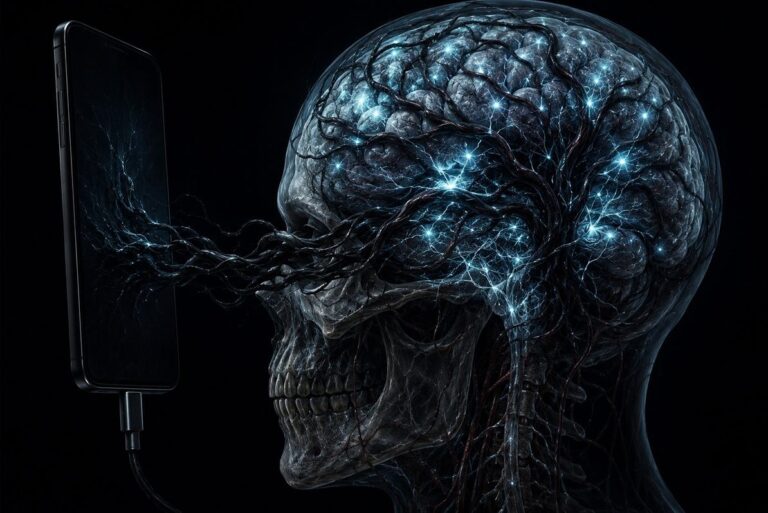
A state of knowing is not a belief system, a doctrine, or a conclusion reached by argument. It is a condition of consciousness–a shift in how reality is perceived, received, and recognised. States of Knowing, as a pillar of ZenithEye, is the disciplined study of these conditions: the altered states opened by contemplative practice, the phenomenological examination of experience itself, the nocturnal territories of sleep and dream, the cognitive architectures that shape what we take to be real, and the critical awareness of predatory or manipulative consciousness that seeks to distort recognition.
This pillar refuses the reduction of spiritual experience to either superstition or pathology. It treats consciousness as a field of inquiry as legitimate as history or physics, and it insists that the ways human beings come to know–really know, directly and irreducibly–deserve rigorous, honest, and unsentimental examination.
States of Knowing is the study of consciousness, perception, altered states, dreams, cognition, and the ways human beings come to recognise reality differently.
Table of Contents
- What Is States of Knowing?
- Altered States: The Ego-Dissolution Spectrum
- Phenomenology: The Discipline of Description
- Sleep and Dreams: The Nocturnal Territory
- Consciousness and Cognition: The Predictive Brain
- Predatory Consciousness: Discernment and Defence
- Why States of Knowing Matters
- Frequently Asked Questions
- Further Reading

What Is States of Knowing?
The phrase itself is deliberately chosen. It does not say “states of knowledge,” which would imply accumulated information. It says knowing–the active, present participle, the ongoing process. Knowledge can be stored; knowing happens. It is a verb disguised as a noun, and that grammatical choice matters.
States of Knowing draws on multiple disciplines. From phenomenology, it takes the method of bracketing assumptions and describing experience as it presents itself. From neuroscience, it takes the correlates of contemplative practice: the deactivation of the default mode network, the neuroplastic rewiring of attention, the altered connectivity between prefrontal cortex and thalamus during deep meditation. From the world’s contemplative traditions, it takes the maps of interior territory: the jhanas, the koshas, the bardo states, the subtle body. From psychology, it takes the clinical recognition that non-ordinary states can be either transformative or destabilising, and that the difference often lies in preparation, context, and integration.
The pillar is organised into five subcategories, each addressing a distinct modality of awareness. Together they form a cartography of consciousness–not exhaustive, but sufficiently detailed to prevent the traveller from mistaking one territory for another.
Altered States: The Ego-Dissolution Spectrum
Altered States maps the territories opened when ordinary consciousness is modified through deliberate practice or spontaneous occurrence. The spectrum is wide. At one end lies the softening of boundaries in deep meditation, the gradual relaxation of the self-referential narrative that ordinarily dominates awareness. At the other end lies the radical unbinding of the self in near-death experience, the complete dissolution of subject-object duality reported by mystics across traditions.
The subcategory includes the somatic technologies of breathwork and cold exposure, the sensory modifications of dark retreat and fasting, and the pharmacological openings that have been part of human ritual life for millennia. It examines the kundalini emergency–when the serpent power overwhelms the vessel–not as a metaphor but as a neurophysiological and energetic crisis that demands grounded response. The inquiry is not promotional; it is descriptive and cautionary. Every altered state carries both gift and risk, and the pillar insists on honest accounting of both.

Phenomenology: The Discipline of Description
Phenomenology is the philosophical practice of returning to the things themselves–not to theories about things, but to the direct givenness of experience. The term derives from the Greek phainomenon, that which appears, and logos, study or discourse. In ZenithEye’s usage, phenomenology is applied to spiritual and non-ordinary experience with the same rigour Husserl brought to perception and Merleau-Ponty to the body.
What is the texture of the witness function? What happens when the observer collapses into the observed? What is the felt sense of gnosis before it is translated into language? Phenomenology provides the discipline of description that prevents mysticism from dissolving into vagueness. It insists that even the most subtle states can be described precisely, and that precision is not the enemy of mystery but its guardian. The subcategory also addresses the psychosis-mysticism shared territory, applying both clinical and contemplative lenses to experiences that refuse easy categorisation.
Sleep and Dreams: The Nocturnal Territory
The night is not an interruption of consciousness but a modulation of it. Sleep and Dreams treats the nocturnal hours as a legitimate field of inquiry, examining the threshold states where waking and sleeping interweave. Hypnagogia–the liminal gateway between waking and sleeping–is explored as a territory where creative insight, involuntary imagery, and spontaneous revelation have been reported across cultures and centuries.
Lucid dreaming is examined as a platform for practice: the recognition of the dream state while within it, and the application of contemplative techniques to a malleable reality. Sleep paralysis is studied without sensationalism, as a neurophysiological event with cross-cultural correlates that range from the Old Hag to the jinn. And the bardo states–the Tibetan mapping of the interval between death and rebirth–are approached as phenomenological descriptions of consciousness disentangled from the body, offering guidance not only for death but for the dissolution experiences that can occur in deep meditation.

Consciousness and Cognition: The Predictive Brain
Here the ancient and the contemporary meet most directly. Consciousness and Cognition examines the predictive brain–the Bayesian hierarchy that constructs reality from prior expectations–and asks what happens when that hierarchy is interrupted or suspended. It explores the default mode network, the brain’s self-referential system, and its dissolution during deep meditation or psychedelic experience, correlating ancient descriptions of self-transcendence with modern neuroimaging.
It considers neuroplasticity not as a therapeutic buzzword but as the biological correlate of transformation: the literal rewiring of neural pathways through sustained practice. It examines the simulation hypothesis, the holographic universe theory, and the quantum mind debate not as answers but as provocations that force a reconsideration of what consciousness is and what it might be capable of. The subcategory refuses both the materialist reduction of mind to brain and the spiritualist dismissal of biology, holding both in productive tension.
Predatory Consciousness: Discernment and Defence
This is perhaps the most unsettling territory. Predatory Consciousness asks whether awareness itself can be predatory–not merely the consciousness of a predator, but a quality of mind that feeds on distortion, confusion, and the energy of others. It examines the archonic infection not as a supernatural superstition but as a pattern of systemic manipulation that appears in personal relationships, institutional structures, and digital environments.
It studies psychic vampirism, energy parasitism, and entity encounter with the same phenomenological honesty brought to mystical experience. It examines the architecture of the infinite scroll, the dopamine cartel, and the algorithmic unconscious as contemporary expressions of consciousness capture. The goal is not paranoia but discernment: the capacity to recognise when a state of knowing has been compromised, and to restore the clarity that allows genuine recognition. As the Nag Hammadi texts insist, the archons are not merely cosmic enemies but forces that operate through deception; to see through them is already to defeat them.

Why States of Knowing Matters
The pillar matters because Gnosticism is not primarily a cosmology or a mythology. It is, at root, a claim about the possibility of direct recognition–gnosis–and that claim is meaningless if the states that make recognition possible are not understood. The Nag Hammadi texts describe visions, ascents, and revelations not as literary fantasies but as reports from specific territories of consciousness. To read them well is to know something about those territories.
Moreover, the modern world is saturated with technologies and practices designed to capture, fragment, and monetise attention. The algorithmic unconscious, the dopamine cartel, the blue-light hijack of circadian rhythms–these are not metaphors but measurable interventions in states of knowing. To study consciousness is, increasingly, to study the forces that seek to control it. The pillar is therefore both ancient and urgently contemporary. It provides the maps; the walking is left to the reader.
Frequently Asked Questions
What is States of Knowing?
States of Knowing is a pillar of ZenithEye that studies consciousness, perception, altered states, dreams, cognition, and the ways human beings come to recognise reality differently. It treats awareness as a legitimate field of rigorous inquiry.
What are the subcategories of States of Knowing?
The five subcategories are Altered States, Phenomenology, Sleep and Dreams, Consciousness and Cognition, and Predatory Consciousness. Each addresses a distinct modality of awareness and perception.
What is phenomenology and why does it matter for spiritual experience?
Phenomenology is the philosophical discipline of describing experience as it presents itself, without imposing theoretical assumptions. It matters because it provides precise language for subtle states of awareness, preventing mysticism from dissolving into vagueness.
Are altered states necessary for gnosis?
The Nag Hammadi texts suggest that gnosis can occur spontaneously or through practice, but they do not mandate any specific method. Altered states can facilitate recognition, yet they are neither sufficient nor strictly necessary. Integration and discernment matter more than intensity.
What is predatory consciousness?
Predatory consciousness refers to patterns of awareness or systemic manipulation that feed on distortion, confusion, and the energy of others. It examines archonic deception, psychic parasitism, and modern attention-capture technologies with the goal of developing discernment, not paranoia.
How does neuroscience relate to States of Knowing?
Neuroscience provides correlates for contemplative experience, such as default mode network deactivation during meditation and neuroplastic changes from sustained practice. The pillar uses these findings to ground ancient descriptions of altered states in observable biology without reducing them to mere brain activity.
Can sleep and dreams be used for spiritual practice?
Yes. The Sleep and Dreams subcategory examines hypnagogia, lucid dreaming, and the bardo states as legitimate territories for contemplative work. These nocturnal states offer access to non-ordinary awareness and have been mapped by traditions from Tibetan Buddhism to Sufism.
Further Reading
Explore these ZenithEye articles to deepen your understanding of consciousness, perception, and the territories of awareness:
- States of Knowing: How Consciousness Unravels — The foundational pillar article mapping the full territory of altered and non-ordinary awareness.
- Varieties of Ego Dissolution: A Spectrum — A detailed examination of the ego-dissolution spectrum, from soft meditation to radical unbinding.
- The Collapse of the Witness — A phenomenological study of what happens when the observer function dissolves into the observed.
- Hypnagogia: The Threshold State — An exploration of the liminal gateway between waking and sleeping as a field of insight and practice.
- Lucid Dreaming: The Practice Platform — A guide to using the dream state as a contemplatory laboratory for direct knowing.
- Default Mode Network Dissolution and the Self — How neuroscience correlates the brain’s self-referential system with ancient accounts of self-transcendence.
- Neuroplasticity and Transformation — The biological correlate of spiritual change, examining how sustained practice literally rewires neural pathways.
- The Archonic Infection — A study of predatory consciousness in modern systems, from digital manipulation to systemic distortion.
- Psychosis and Mysticism: Shared Territory — Applying both clinical and contemplative lenses to experiences that refuse easy categorisation.
- The Gateway of Silence: Entering the Causal Body — A practice-focused article on using stillness and sensory withdrawal to access deeper states of knowing.