
Heptarchia Mystica – Commanding the 7 Planetary Kings of John Dee
The Heptarchia Mystica is John Dee’s system of sevenfold angelic and planetary order: a Renaissance map of kings, princes, ministers, days, seals, prayers, and celestial governance. It belongs to the earliest phase of Dee and Edward Kelley’s angelic work, before the better-known Watchtowers and before later occultists turned the Enochian Aethyrs into a dramatic map of visionary ascent.
The title sounds commanding, but the system is not simple domination of spirits. Dee framed the Heptarchic work as Christian theurgy: disciplined contact with angelic ministers under divine authority. The aim was not occult bullying, but ordered relation. Names, seals, tables, planetary days, and formal invocations created a ritual architecture where the practitioner approached the hidden order of creation with prayer, reverence, record-keeping, and careful timing.
For contemporary readers, the Heptarchia can be approached in several ways: as historical grimoire material, as Renaissance angelology, as planetary symbolism, as a map of time and attention, as a ritual technology, or as a mirror of inner self-governance. Its deepest value may not be “commanding angels”, but learning what lawful authority, spiritual discipline, and planetary rhythm mean when the modern mind has been trained to live by clocks, feeds, notifications, and artificial urgency.

In Plain Terms
The Heptarchia Mystica is John Dee’s sevenfold angelic system, organised around planetary days, kings, princes, ministers, seals, prayers, and ritual order.
Heptarchia means sevenfold rule or sevenfold government. In Dee’s system, this refers to angelic governance arranged through a sacred structure of seven.
The Seven Planetary Kings are angelic royal figures associated with days, offices, and domains of action. Their names include figures such as Bobogel, Carmara, Babalel, Bnaspol, Bynepor, Baligon, Bnapsen, and the more complex manuscript figure Blumaza.
The safest modern reading is historical, symbolic, and contemplative. The Heptarchia can teach discipline, timing, discernment, and self-governance without requiring the reader to perform Renaissance angelic operations.
Primary Sources and Traditions Discussed
- John Dee’s De Heptarchia Mystica: the manuscript system of sevenfold angelic rule, planetary days, kings, princes, ministers, seals, prayers, and ritual furniture.
- Dee and Kelley’s angelic conversations: the late Elizabethan visionary work through which Dee recorded angelic instructions, tables, names, and symbolic structures.
- The Tabula Angelorum Bonorum: the 7×7 table of forty-nine good angels associated with the Heptarchic structure.
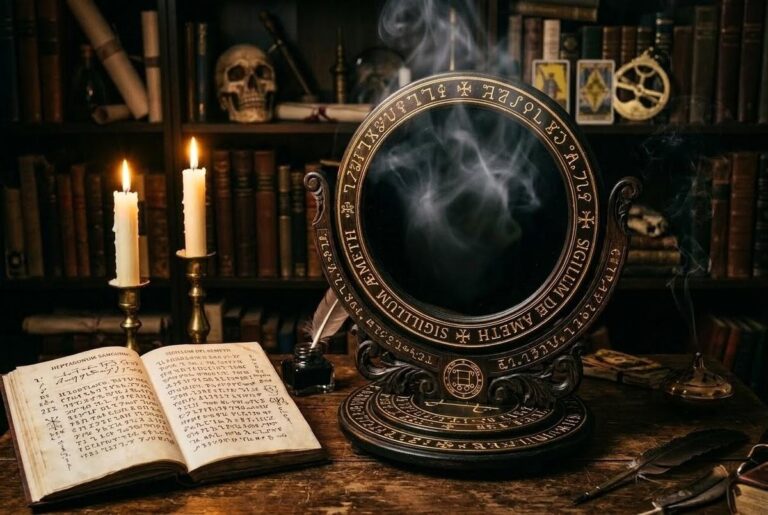
- The Sigillum Dei Aemeth: Dee’s great angelic seal, used in his wider ritual furniture and associated with truth, divine order, and angelic authentication.
- Planetary magic and Renaissance angelology: the older pattern of seven planets, seven days, angelic orders, planetary powers, seals, and ritual timing.
- The later Enochian tradition: especially the Watchtowers, Aethyrs, Golden Dawn interpretation, and later ceremonial-magical developments.
- Gnostic discernment: the need to distinguish lawful spiritual order from false authority, inflation, coercion, fear, and archonic imitation.
- Modern symbolic reading: the Heptarchia as a map of self-governance, time discipline, attention, planetary rhythm, and the recovery of inner authority.
How to Read This Article
This article is historical, symbolic, and contemplative. It does not provide a full ritual manual, magical training, initiation, spirit-contact guarantee, or instruction to perform Dee’s operations. The language of kings, princes, command, seals, and ministers belongs to a Renaissance theurgical world and should be handled with care.
Three layers should be kept separate. Dee’s source material belongs to a Christian angelic and magical context. Later Enochian interpretation belongs to Golden Dawn, Thelemic, and modern ceremonial frameworks. Contemporary Gnostic reading uses the material as a mirror for discernment, spiritual authority, and self-governance.
The Heptarchia is most useful when it strengthens humility, rhythm, study, clarity, and embodied discipline. It becomes risky when it feeds grandiosity, coercive spirit-work, paranoia, or the fantasy that invisible hierarchies remove the need for ordinary ethics.
The Heptarchia is not merely a list of angelic offices. It is a Renaissance attempt to restore relation between time, prayer, planetary order, and the disciplined human will.
Table of Contents
- The Origin: Dee’s Sevenfold Angelic Order
- What Is the Heptarchia Mystica?
- The Sevenfold Government: Kings, Princes, and Ministers
- The Seven Planetary Kings
- The Tabula Angelorum Bonorum: The 49 Good Angels
- The Sigillum Dei Aemeth: Seal of Truth
- Planetary Time and Sacred Rhythm
- Why the Heptarchia Comes Before the Aethyrs
- Legitimate Authority and the Archonic Counterfeit
- The Heptarch as Self-Governance
- The Gnostic Reading: Authority Without Submission
- Related Glossary Terms
- Read Next
- Frequently Asked Questions
- Further Reading
- References and Sources
The Origin: Dee’s Sevenfold Angelic Order
The Heptarchia Mystica belongs to the early phase of John Dee’s angelic work with Edward Kelley. Dee was not a marginal eccentric scribbling in isolation. He was a mathematician, astrologer, natural philosopher, court adviser, collector, and Christian magus whose intellectual world did not sharply separate mathematics, theology, navigation, angelology, optics, cryptography, and occult philosophy.
For Dee, the cosmos was ordered. Number, geometry, planetary motion, language, divine names, and angelic hierarchy belonged to the same hidden architecture. The Heptarchia is one of the clearest expressions of that worldview. It arranges spiritual contact through a sevenfold structure of planetary days, angelic offices, ritual furniture, and formal addresses.
The system is earlier and more planetary than the better-known Enochian Watchtowers and Aethyrs. Where the Aethyrs later became associated with visionary ascent through thirty subtle regions, the Heptarchia remains closer to ritual order, timing, offices, and governance. It is less a map of cosmic travel and more a constitution of angelic administration.
This makes it especially interesting for modern readers. The Heptarchia shows Dee thinking through the universe as lawful, relational, and accessible only through proper preparation. Knowledge is not seized. It is approached through discipline, humility, and the correct form of address.
What Is the Heptarchia Mystica?
Heptarchia Mystica may be translated as mystical sevenfold rule, mystical sevenfold dominion, or mystical government of the seven. The system is structured around the number seven: seven days, seven major royal offices, seven princes, groups of ministers, planetary timing, and the wider symbolic world of the classical seven planets.
In Dee’s worldview, the sevenfold order did not simply refer to abstract symbolism. It described an active hierarchy of angelic powers whose offices could be addressed through prayer, seal, name, and correct timing. Dee’s language is devotional and operational at once. He seeks knowledge, aid, correction, and access to divine order, but he repeatedly frames the work under the authority of God rather than the personal ego.
This is one reason the word “commanding” must be read carefully. In the grimoire and ceremonial-magical world, to command often means to speak within a lawful ritual structure, not to bully the divine. Dee’s Heptarchic work is filled with invocations, prayers, formal addresses, and requests for help in wisdom, knowledge, protection, and the service of divine glory. The practitioner is not imagined as a private tyrant over heaven, but as a disciplined petitioner using an ordered form.
For a contemporary Gnostic reader, the Heptarchia becomes a map of lawful relation. It asks: what governs the mind? What rules the day? What hidden authorities shape attention? What would it mean to recover spiritual sovereignty without rejecting order itself?
The Sevenfold Government: Kings, Princes, and Ministers
The Heptarchic structure is arranged through royal and ministerial offices. The main figures are usually discussed as kings and princes, with groups of ministers serving under them. Dee’s source material is more intricate than a neat modern table, but the underlying pattern is clear: spiritual action is organised through offices, names, characters, times, and functions.
The system includes:
- Kings: royal angelic figures associated with major offices, days, powers, and domains of governance.
- Princes: high-ranking figures who serve or minister within each royal office.
- Ministers: groups of subordinate angels associated with particular functions, timing, letters, seals, or operational details.
- Days and planetary timing: the sevenfold rhythm through which the system becomes a calendar of sacred attention.
- Seals and characters: visual signatures used to identify offices and stabilise the ritual relationship.
- Prayer and formal address: the devotional frame that prevents angelic contact from becoming mere spiritual extraction.
Modern readers may be tempted to translate this instantly into psychology: kings as archetypes, princes as executive functions, ministers as moods or habits. That reading can be useful, but it should not erase the historical material. Dee did not present these figures as metaphors only. He recorded them as angelic intelligences within a Christian and magical cosmos.
The most careful approach allows several layers to coexist. Historically, these are Dee’s angelic offices. Symbolically, they are planetary modes of order. Psychologically, they can mirror functions within the self. Spiritually, they raise the question of how authority, discernment, prayer, timing, and service belong together.
The Seven Planetary Kings
The Heptarchic kings are not simple planetary mascots. Their offices, princes, and functions are recorded through Dee’s visionary manuscripts and later editions. Some modern presentations smooth the material into a tidy weekday chart, but the manuscript tradition contains complications, especially around figures such as Carmara, Baligon, and Blumaza. That complexity should be respected rather than hidden under a polished occult spreadsheet.
For reader-facing study, the kings can be approached as seven royal offices of planetary and angelic order. The names below are presented as a contemplative map rather than a ritual instruction sheet.

Bobogel: Wisdom, Science, and Solar Clarity
Bobogel is one of the clearest figures in the Heptarchic material, associated with the bestowing of wisdom, science, true philosophy, and right understanding. In a modern symbolic reading, Bobogel represents illumination that clarifies rather than dazzles. This is not information overload. It is ordered intelligence.
For the reader, Bobogel can be understood as the solar office of discernment: the part of consciousness that turns scattered knowledge into wisdom. In a digital world that rewards reaction, Bobogel’s symbolism points towards attention made radiant, coherent, and truthful.
Carmara: Measure, Dignity, and the First Ordering
Carmara appears as a highly significant figure in the Heptarchic doctrine, receiving the rod of government and the chair of dignity and teaching. In Dee’s records, Carmara is connected with foundational instruction, spiritual dignity, and the beginning of the Heptarchic path itself.
Symbolically, Carmara represents the stabilising of authority before action. Knowledge must be measured. Power must be seated. The seeker must learn that spiritual order is not the same as personal excitement. A chair of doctrine is less glamorous than a lightning bolt, but it is harder to fall from when properly built.
Babalel: Waters, Movement, and Hidden Depths
Babalel is associated in the Heptarchic material with waters, seas, movement, and powers connected to the deep. This watery office brings the system into the realm of motion, emotion, hidden currents, and the unstable border between visible surface and unseen depth.
For a modern reader, Babalel may be read as the intelligence of the moving field: dreams, tides, feeling, transport, and the deep waters beneath rational control. It reminds the seeker that not all knowledge arrives as sunlight. Some knowledge rises from below, carrying salt, pressure, and old things stirred from the seabed.
Bnaspol: Earth, Treasure, and the Hidden Body of Matter
Bnaspol is linked with the earth and its hidden bowels, secrets, and treasures. This is not merely material wealth in the ordinary sense. In Renaissance magic, the earth’s hiddenness is part of its mystery: minerals, metals, buried knowledge, subterranean forces, and the slow intelligence of form.
Symbolically, Bnaspol teaches that spirit cannot ignore matter. The body has secrets. Land has memory. Practical life contains hidden treasure when approached with patience rather than extraction. In Gnostic terms, this is a useful corrective: suspicion of the lower world must not become contempt for embodiment.
Bynepor: Vital Power, New Worlds, and Living Order
Bynepor is described in elevated language, associated with life, power, creation, and the beginning of new worlds, peoples, kings, and knowledge of new government. His office feels vast, generative, and difficult to compress into a single modern category.
As a contemplative symbol, Bynepor can be read as the force that initiates new structures of life. He does not simply destroy the old. He brings the terrifying possibility of new order. Any genuine transformation must pass through this threshold: the old map fails, and a new world begins before the mind has built furniture for it.
Baligon: Aerial Action, Vision, and the Stone of Seeing
Baligon is one of the most complex Heptarchic figures, connected in Dee’s records with aerial actions, the shew-stone, and visionary power. The material around Baligon also overlaps in complicated ways with Carmara, which is why clean modern charts can become misleading if they pretend the manuscript is tidier than it is.
Symbolically, Baligon belongs to the realm of vision, air, reception, and the mystery of seeing at a distance. He is not simply “abundance” or “Jupiter” in a modern keyword sense. His office suggests the strange interface between image, answer, stone, angelic message, and the wider condition of the world.
Bnapsen: Protection, Hidden Practices, and the Testing of Spirits
Bnapsen is associated with knowledge of the actions of wicked spirits and evil practices, as well as the casting out of such powers. This makes him especially important for discernment. He is not merely a planetary flavour. He is an office of confrontation, exposure, and spiritual protection.
For a contemporary reader, Bnapsen represents the capacity to recognise harmful influence without becoming obsessed by it. Protection is not paranoia. It is clarity under pressure. The real test is whether discernment restores freedom, or whether fear turns into another form of bondage.
Blumaza: Invisible Powers and the Manuscript Tangle
Blumaza appears in the Heptarchic material in a way that complicates simple lists of seven kings. The source tradition includes manuscript ambiguity, overlapping offices, and interpretive difficulty. Rather than treating this as a problem to hide, it can be read as a reminder that Renaissance angelic systems were recorded through vision, notation, correction, and later editorial reconstruction.
As a symbolic figure, Blumaza points towards invisible powers, hidden jurisdiction, and the parts of the system that resist easy charting. Every serious esoteric archive contains such knots. The mature reader does not cut them away too quickly. Sometimes the knot is where the living thread passes through the page.
The Tabula Angelorum Bonorum: The 49 Good Angels
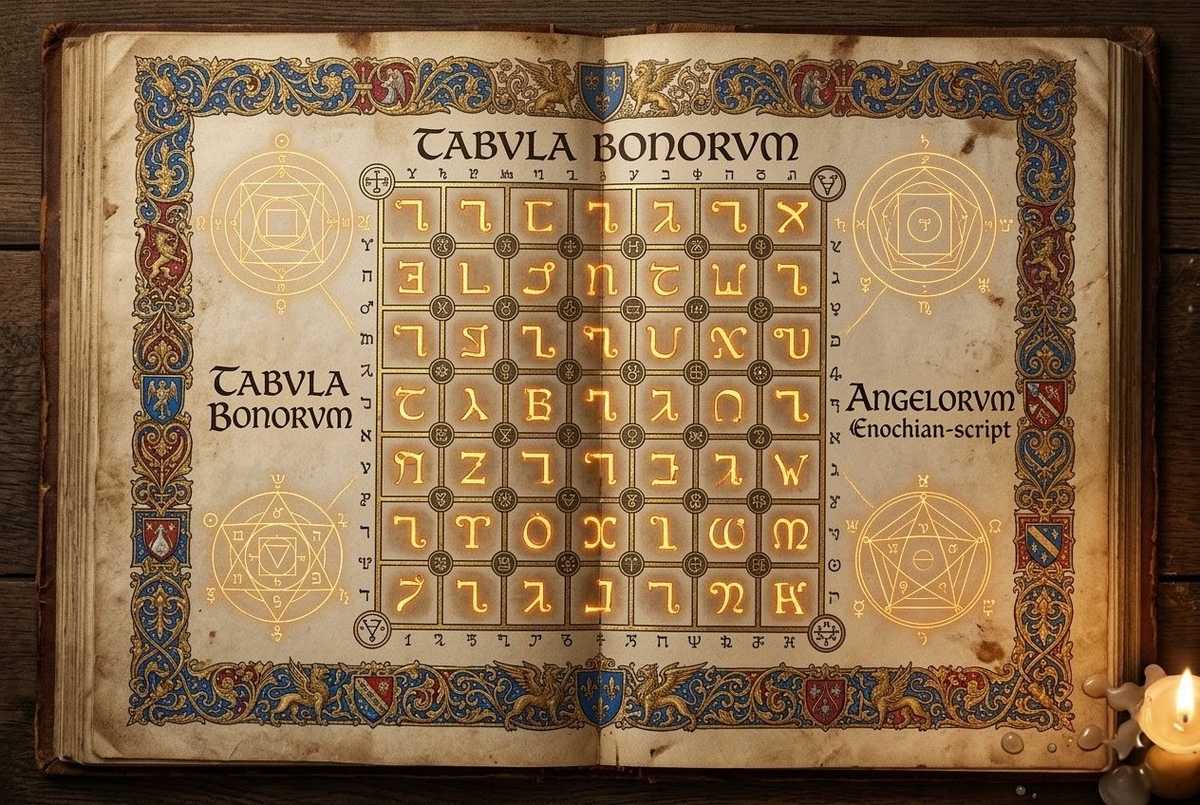
The Heptarchic system is not only a sequence of named kings. It is also mathematical and tabular. The Tabula Angelorum Bonorum, or Table of the Good Angels, arranges forty-nine angelic names in a seven-by-seven structure. This gives the system its distinctive mixture of revelation and calculation.
For Dee, such a table was not ornamental. Tables, numbers, letters, and spatial arrangement were ways of making the hidden order of creation visible. The grid becomes a disciplined form for visionary material, preventing the experience from dissolving into vague inspiration. Angelic revelation is given architecture.
Modern readers can see why this mattered. A table can discipline the imagination. A name can focus attention. A seal can stabilise a symbolic field. A calendar can turn spiritual aspiration into rhythm. Dee’s genius was not merely that he had visions recorded. It was that he tried to organise those visions into a repeatable, structured, accountable system.
In a Gnostic reading, the forty-nine angels can also be read inwardly. They become distributed functions of consciousness: not random moods, but ordered capacities. The soul is not liberated by chaos. It is liberated when its powers return to right relation.
The Sigillum Dei Aemeth: Seal of Truth
The Sigillum Dei Aemeth, the Seal of the Truth of God, is among the most recognisable objects in Dee’s angelic work. It is a complex symbolic seal used as part of the ritual furniture, often associated with Dee’s Holy Table and angelic operations. Its name already tells us its function: not merely power, but truth.
In the older ritual worldview, a seal was not decoration. It identified, authorised, bounded, and concentrated. The Sigillum helped create a protected and ordered space for angelic contact. In modern language, one might be tempted to call it an authentication protocol, but the better reader-facing point is simpler: Dee needed a way to distinguish lawful contact from confusion, deception, and spiritual noise.
This remains relevant even for readers who do not practise ritual magic. Every spiritual path needs a seal of truth. What verifies a teaching? What protects the field? What prevents imagination from becoming inflation? What distinguishes revelation from projection? The Sigillum is a historical object, but it also raises a permanent question of discernment.
Planetary Time and Sacred Rhythm
The Heptarchia is built around time. The sevenfold pattern is not only spatial or hierarchical. It is temporal. Days, offices, prayers, and ministers form a rhythm through which the practitioner enters relation with the planetary order.
Modern life has largely severed time from sacred quality. Time becomes productivity, scheduling, deadlines, notifications, and monetised attention. The Heptarchic worldview assumes something different: that time has texture. A day is not merely a blank container. It carries a planetary tone, a ritual meaning, a mode of attention, and a proper kind of work.
This can be read practically without performing formal operations. Sunday asks for illumination and orientation. Monday asks for receptivity and reflection. Tuesday asks for force and courage. Wednesday asks for language and exchange. Thursday asks for law, order, and expansion. Friday asks for beauty, relation, and attraction. Saturday asks for boundary, consequence, and truth. These are not Dee’s whole system, but they offer a reader-friendly bridge into planetary rhythm.
A Reader-Facing Alignment Practice
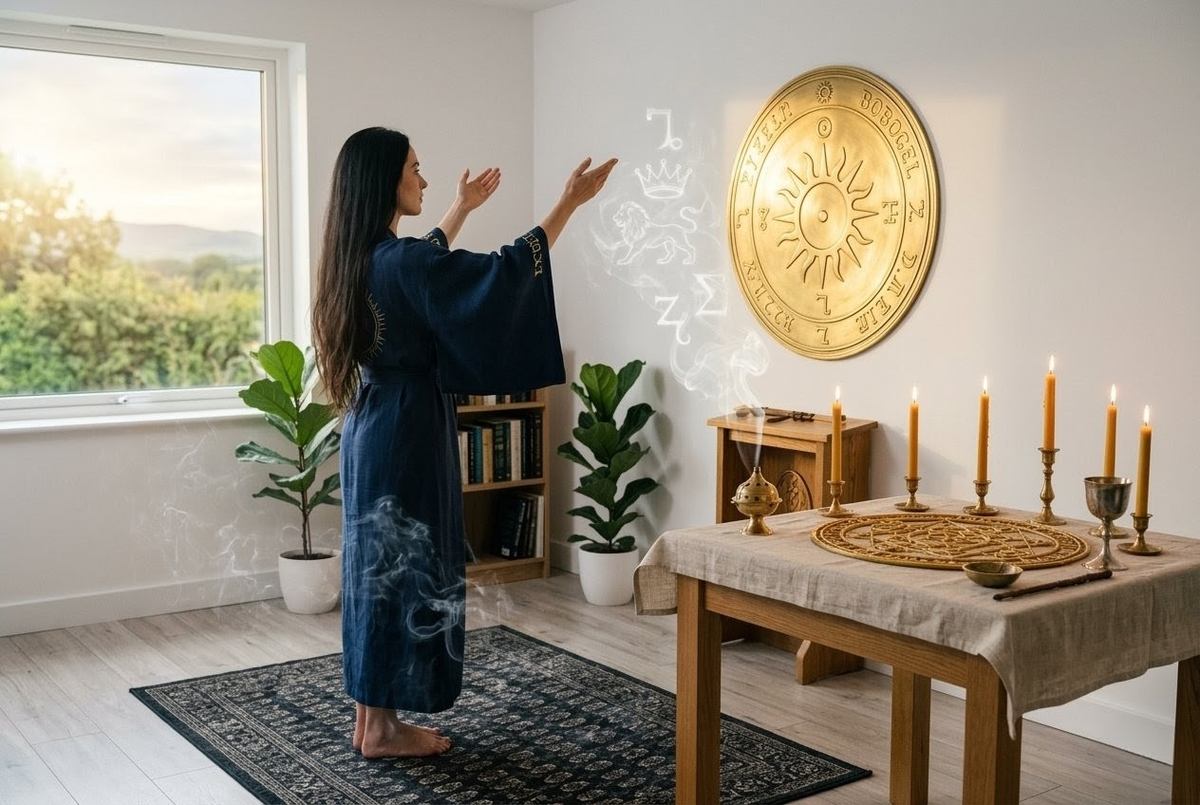
The following is not a Heptarchic ritual. It is a gentle contemplative adaptation for readers who want to understand the sevenfold rhythm without entering ceremonial operations.
- Name the day: notice the planetary tone traditionally associated with it.
- Choose one quality: clarity, receptivity, courage, communication, justice, beauty, or boundary.
- Observe the field: watch how that quality appears in mood, work, relationships, and attention.
- Act modestly: perform one ordinary task that embodies the day’s quality.
- Record the pattern: note whether sacred timing changes the way you inhabit time.
This simple practice keeps the heart of the Heptarchic insight without pretending to reproduce Dee’s full ritual apparatus. It teaches the reader to stop treating time as empty and start reading it as a living structure.
Why the Heptarchia Comes Before the Aethyrs
The modern Enochian imagination often rushes toward the Aethyrs because they are dramatic. Thirty visionary regions, the Abyss, Choronzon, angelic voices, initiatory ordeals, and higher-dimensional language make excellent theatre. But Dee’s earlier Heptarchic work is quieter and more foundational.
The Heptarchia teaches order before ascent. It roots the practitioner in days, prayers, offices, ministers, and the discipline of lawful address. The Aethyrs pull consciousness outward and upward into visionary space. The Heptarchia trains consciousness to recognise structure, timing, office, and responsibility.
That sequence matters symbolically. A person who cannot govern attention in ordinary time should be careful about seeking extraordinary vision. A person who cannot distinguish lawful authority from spiritual glamour may mistake any luminous voice for wisdom. The planetary foundation gives the visionary ascent bones.
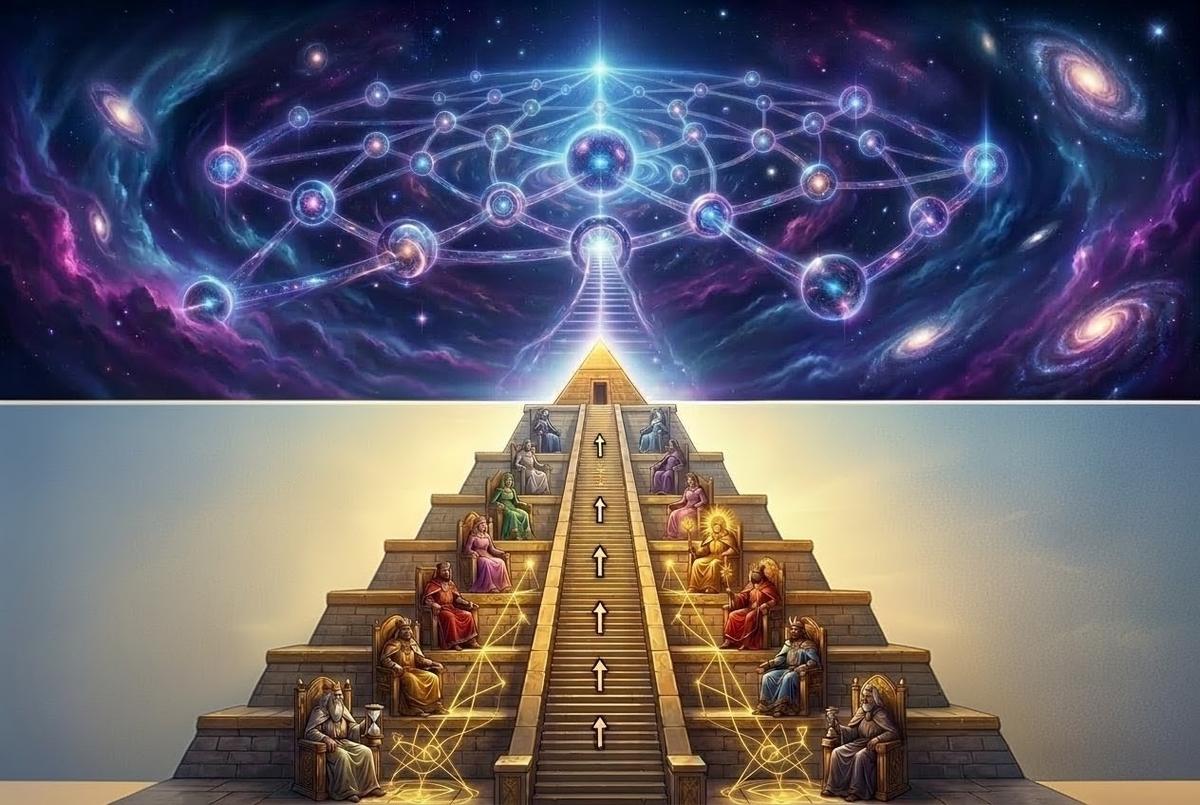
In this sense, the Heptarchia may be more important for most readers than the Aethyrs. It does not dazzle as quickly, but it asks the harder question: can you live by sacred order before asking the heavens to open?
Legitimate Authority and the Archonic Counterfeit
The language of spiritual authority is dangerous because it can be used well or badly. Dee’s system assumes legitimate angelic authority under God. Gnostic texts, by contrast, warn against false rulers, counterfeit powers, and beings that claim authority without possessing true knowledge. These two concerns do not cancel each other. They sharpen each other.
A mature reader must ask: what kind of authority is being encountered? Does it clarify or dominate? Does it strengthen conscience or bypass it? Does it restore order or demand submission? Does it produce humility, service, discipline, and truth, or fear, inflation, dependency, secrecy, and control?
This is where the Heptarchia becomes useful beyond ritual history. Its insistence on names, offices, seals, prayers, and formal structure reflects a deep concern for authentication. Dee wanted contact to be ordered, lawful, and tested. In modern terms, he understood that not every voice in the subtle field should be trusted just because it sounds elevated.
The archonic counterfeit is not always ugly. It may appear as spiritual importance, cosmic entitlement, secret status, or a demand that ordinary ethics be suspended. True authority does not need panic to be obeyed. It does not feed on confusion. It can withstand discernment.
The Heptarch as Self-Governance
The deepest modern reading of the Heptarchia may be self-governance. The sevenfold angelic government becomes a mirror of the human being. The self is not a single flat identity. It is a kingdom of powers: intellect, memory, imagination, force, desire, judgement, boundary, vitality, communication, receptivity, and will.
Most people are governed unconsciously. One day fear rules. Another day craving rules. Then shame, imitation, anger, distraction, performance, or fatigue takes the throne. The Heptarchic image asks what would happen if these powers were restored to order rather than left to seize the crown one by one.
To become a “heptarch” of the soul is not to inflate the ego. It is to bring the inner kingdom under rightful relation. Solar clarity must not burn the waters. Martial force must not become cruelty. Venusian attraction must not become dependency. Saturnian boundary must not become lifeless control. Mercurial intelligence must not become manipulation. Jupiterian order must not become arrogance. Lunar receptivity must not become confusion.
This is the real sovereignty: not rebellion against every structure, but the restoration of inner jurisdiction. The soul ceases to be administered by whatever force shouts loudest. It learns to govern by discernment.
The Gnostic Reading: Authority Without Submission
Gnostic tradition is often suspicious of cosmic rulers. Archons govern the lower world, imitate divine order, and persuade the soul to accept limitation as final. At first glance, this seems opposed to Dee’s Heptarchic hierarchy. Why would a Gnostic reader care about angelic government?
Because the question is not whether all hierarchy is false. The question is whether authority serves awakening or obscures it. A false ruler demands unconscious submission. A true guide strengthens direct knowing. A counterfeit spirit produces fear and repetition. A lawful spiritual order restores clarity, dignity, and relation to the Source.
From this angle, the Heptarchia becomes a test case in discernment. Names, seals, prayers, offices, and planetary timing are not automatically liberating. They can become theatre, obsession, or spiritual bureaucracy. But they can also train the mind to recognise that invisible life has order, and that the human being must approach the hidden with humility rather than appetite.
The Gnostic reader therefore neither worships the hierarchy nor rejects it blindly. They ask what fruit it bears. Does this map deepen gnosis? Does it strengthen embodied sovereignty? Does it refine attention? Does it expose false authority? Does it return the soul to the divine spark rather than trapping it in fascination with celestial administration?
The answer depends on how the map is used. The Heptarchia can become another filing cabinet in the astral office. Or it can become a disciplined reminder that the soul is not meant to live as an unmanaged province of fear, habit, and noise.
Related Glossary Terms
For quick definitions, use the main ZenithEye Glossary. The key terms for this article are:
Read Next
Continue with: Scrying the Enochian Aethyrs: The Ultimate Guide to Higher Dimensional Gnosis
If the Heptarchia gives Dee’s angelic work its planetary foundation, the Aethyrs open the visionary ascent: thirty subtle regions, symbolic ordeal, angelic encounter, and the testing of consciousness beyond ordinary perception.
Within Practice & Method
This article belongs to Planetary Operations & Angelic Curriculum, the Practice & Method layer where planetary timing, angelic systems, ritual order, sacred names, contemplative discipline, and spiritual authority are read with grounded discernment.
Frequently Asked Questions About the Heptarchia Mystica
Study and Safety Note
This article explores John Dee, the Heptarchia Mystica, angelic magic, planetary timing, scrying history, spiritual authority, and Gnostic discernment for educational and reflective purposes. It does not provide magical training, ritual instruction, medical advice, psychological advice, psychiatric advice, crisis support, or spiritual-direction advice.
Do not intensify ritual, scrying, trance, sleep deprivation, fasting, or spirit-contact practices if you are experiencing panic, mania, psychosis, severe dissociation, paranoia, frightening voices, command experiences, trauma flashbacks, suicidal thoughts, substance instability, or difficulty functioning. Seek qualified support where needed.
Any spiritual system involving authority, angels, names, seals, or invisible beings should deepen humility, ethical clarity, grounding, and discernment. If it produces fear, grandiosity, obsession, isolation, loss of sleep, or contempt for ordinary life, step back and return to body, support, and grounded study.
Further Reading
These ZenithEye links continue the themes of John Dee, Enochian magic, angelic communication, cryptographic systems, planetary order, altered states, spiritual sovereignty, and grounded visionary practice:
- Scrying the Enochian Aethyrs: The Ultimate Guide to Higher Dimensional Gnosis – Dee’s visionary Aethyr sequence, read as a map of ascent, symbolic ordeal, and altered-state discernment.
- The 19 Occult Arts: John Dee’s Complete Renaissance Magic Curriculum – Dee’s wider magical curriculum, showing how mathematics, astrology, optics, navigation, mechanics, and contemplative discipline formed part of a larger Renaissance programme of sacred knowledge.
- The Table of Trithemius: Decoding Celestial Cryptography – Angelic communication, hidden writing, cryptographic imagination, and the code-world behind Renaissance magic.
- The Steganographia: 400 Years on the Vatican’s Banned List for Hacking the Angelic Mainframe – Trithemius, secret writing, angelic transmission, and the strange overlap between cryptography and occult communication.
- The Art of Drawing Spirits into Crystals: A Complete Trithemian Guide – Crystal scrying, angelic invocation, ritual authentication, and the careful structure of Christian theurgy.
- Archons: The Ruling Powers That Shape Reality – The Gnostic rulers, false authority, lower-world administration, and the problem of spiritual sovereignty.
- States of Knowing: What Happens When Consciousness No Longer Belongs to You – Altered states, shifting identity, and the challenge of integrating expanded perception.
- 7 Ways Gnosis Travels Through Time: Transmission & Lineage – How forbidden knowledge survives through teachers, texts, symbols, memory, secrecy, and living practice.
- Planes of Consciousness: The 7 Dimensions You Already Inhabit – A broader map of subtle bodies, planes, higher dimensions, and altered-state interpretation.
- Integration and Grounding: 7 Keys to Mystical Experience – Practical grounding after visionary, mystical, ritual, or destabilising experience.
References and Sources
The following sources support the historical, textual, esoteric, psychological, and comparative framework used in this article.
Primary Dee and Heptarchic Sources
- Dee, John. De Heptarchia Mystica. British Library Sloane MS 3191. Digital transcription edited by Joseph H. Peterson, Esoteric Archives.
- Dee, John. John Dee’s Five Books of Mystery: Original Sourcebook of Enochian Magic. Edited by Joseph H. Peterson. Weiser Books, 2003.
- Casaubon, Meric, ed. A True & Faithful Relation of What Passed for Many Years Between Dr. John Dee and Some Spirits. London, 1659.
- Dee, John. The Private Diary of Dr. John Dee. Edited by James Orchard Halliwell. Camden Society, 1842.
- Dee, John. The Enochian Evocation of Dr. John Dee. Edited and reconstructed by Geoffrey James. Heptangle Books, 1984.
- Turner, Robert, ed. The Heptarchia Mystica of John Dee. Magnum Opus Hermetic Sourceworks, 1983.
Historical Scholarship on Dee and Renaissance Magic
- Harkness, Deborah E. John Dee’s Conversations with Angels: Cabala, Alchemy, and the End of Nature. Cambridge University Press, 1999.
- Clucas, Stephen, ed. John Dee: Interdisciplinary Studies in English Renaissance Thought. Springer, 2006.
- French, Peter J. John Dee: The World of an Elizabethan Magus. Routledge, 1972.
- Yates, Frances A. The Occult Philosophy in the Elizabethan Age. Routledge, 1979.
- Sherman, William H. John Dee: The Politics of Reading and Writing in the English Renaissance. University of Massachusetts Press, 1995.
- Woolley, Benjamin. The Queen’s Conjuror: The Science and Magic of Dr. John Dee. Henry Holt, 2001.
- Asprem, Egil. Arguing with Angels: Enochian Magic and Modern Occulture. SUNY Press, 2012.
Planetary Magic, Angelology, and Western Esotericism
- Agrippa, Heinrich Cornelius. Three Books of Occult Philosophy. Translated and edited by Donald Tyson. Llewellyn, 1993.
- Pseudo-Dionysius the Areopagite. The Celestial Hierarchy. Various translations.
- Peterson, Joseph H., ed. The Lesser Key of Solomon. Weiser Books, 2001.
- Skinner, Stephen and Rankine, David. The Practical Angel Magic of Dr John Dee’s Enochian Tables. Golden Hoard Press, 2004.
- Skinner, Stephen and Rankine, David. The Keys to the Gateway of Magic. Golden Hoard Press, 2005.
- Regardie, Israel. The Golden Dawn. Llewellyn, revised editions.
- Hanegraaff, Wouter J., ed. Dictionary of Gnosis and Western Esotericism. Brill, 2005.
Visionary Experience, Scrying, and Altered States
- Tart, Charles T. Altered States of Consciousness. Wiley, 1969.
- Jung, C. G. The Archetypes and the Collective Unconscious. Collected Works, Vol. 9, Part I. Princeton University Press.
- Jung, C. G. Psychology and Alchemy. Collected Works, Vol. 12. Princeton University Press.
- Hillman, James. The Dream and the Underworld. Harper & Row, 1979.
- Grof, Stanislav and Grof, Christina. Spiritual Emergency: When Personal Transformation Becomes a Crisis. Tarcher, 1989.
- Lindahl, Jared R., et al. “The Varieties of Contemplative Experience: A Mixed-Methods Study of Meditation-Related Challenges in Western Buddhists.” PLOS ONE, 12(5), 2017.
- Treleaven, David A. Trauma-Sensitive Mindfulness: Practices for Safe and Transformative Healing. W. W. Norton, 2018.
Gnostic and Comparative Authority Context
- Robinson, James M., ed. The Nag Hammadi Library in English. Revised edition. HarperOne, 1990.
- Meyer, Marvin, ed. The Nag Hammadi Scriptures. HarperOne, 2007.
- Layton, Bentley. The Gnostic Scriptures. Yale University Press, 1987.
- Brakke, David. The Gnostics: Myth, Ritual, and Diversity in Early Christianity. Harvard University Press, 2010.
- King, Karen L. What Is Gnosticism?. Harvard University Press, 2003.
- Copenhaver, Brian P. Hermetica: The Greek Corpus Hermeticum and the Latin Asclepius. Cambridge University Press, 1992.
- Dodds, E. R. The Greeks and the Irrational. University of California Press, 1951.