The Hidden Agreements – Why Esoteric Traditions Keep Inventing the Same Architecture
You map one tradition. Then another. Then a third from a continent with no documented contact. The maps align. Not approximately. Not poetically. With disturbing precision. The same levels. The same transitions. The same dangers at the same depths. The question is not whether this happens. The question is why you expected otherwise.
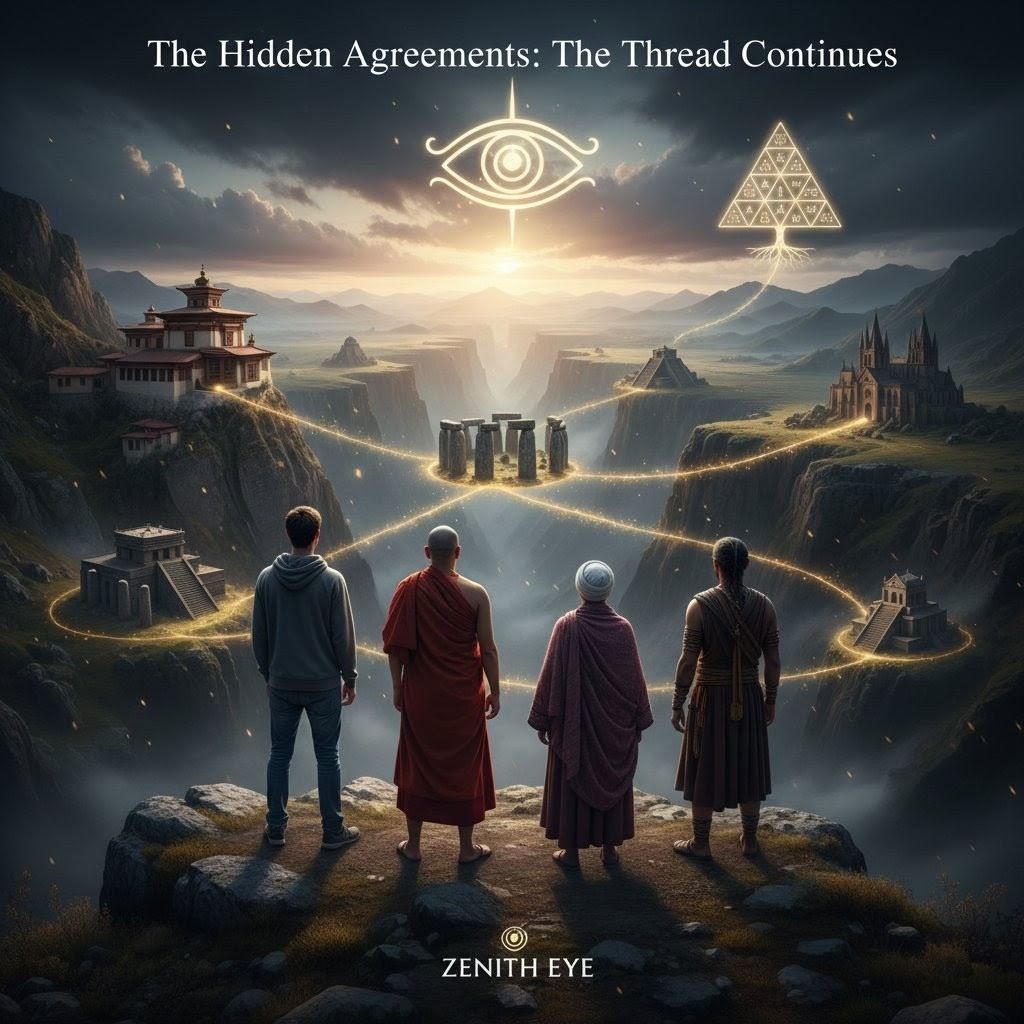
The standard explanations fail. Influence requires contact. Diffusion requires proximity. These traditions emerged in isolation–desert, mountain, jungle, steppe–separated by oceans and millennia. Yet they converge. The convergence is not superficial. It is structural. Architectural. The same load-bearing walls. The same foundation depths. The same warning signs at the same thresholds.
This is the problem the academy cannot solve. It is not a problem. It is evidence. The traditions are not describing arbitrary cultural constructions. They are describing something. Something that does not care about geography. Something that presents itself identically regardless of who looks.
Table of Contents
- The Architecture of the Interior
- Global Structural Convergences
- The Objection of the Sceptic
- The Alternative Hypothesis: Ontological Reality
- The Function of Symbol as Safety Protocol
- Specific Resonances and Common Precipices
- The Final Irony
- Implications for the Contemporary Investigator
- Frequently Asked Questions
- Further Reading
- References and Sources
The Architecture of the Interior
Consider the pattern. Not the content–the pattern. Across every major esoteric framework, the same architectural elements recur with a regularity that demands attention. Not as vague metaphor, but as precise structural description. The anthropologist Mircea Eliade, in his comparative studies of shamanism and initiation, was among the first modern scholars to document this cross-cultural consistency, noting that the “symbolism of initiatory death” appears from Siberia to Australia to the Americas with “astonishing fidelity.” The fidelity is not cultural memory. It is something else.
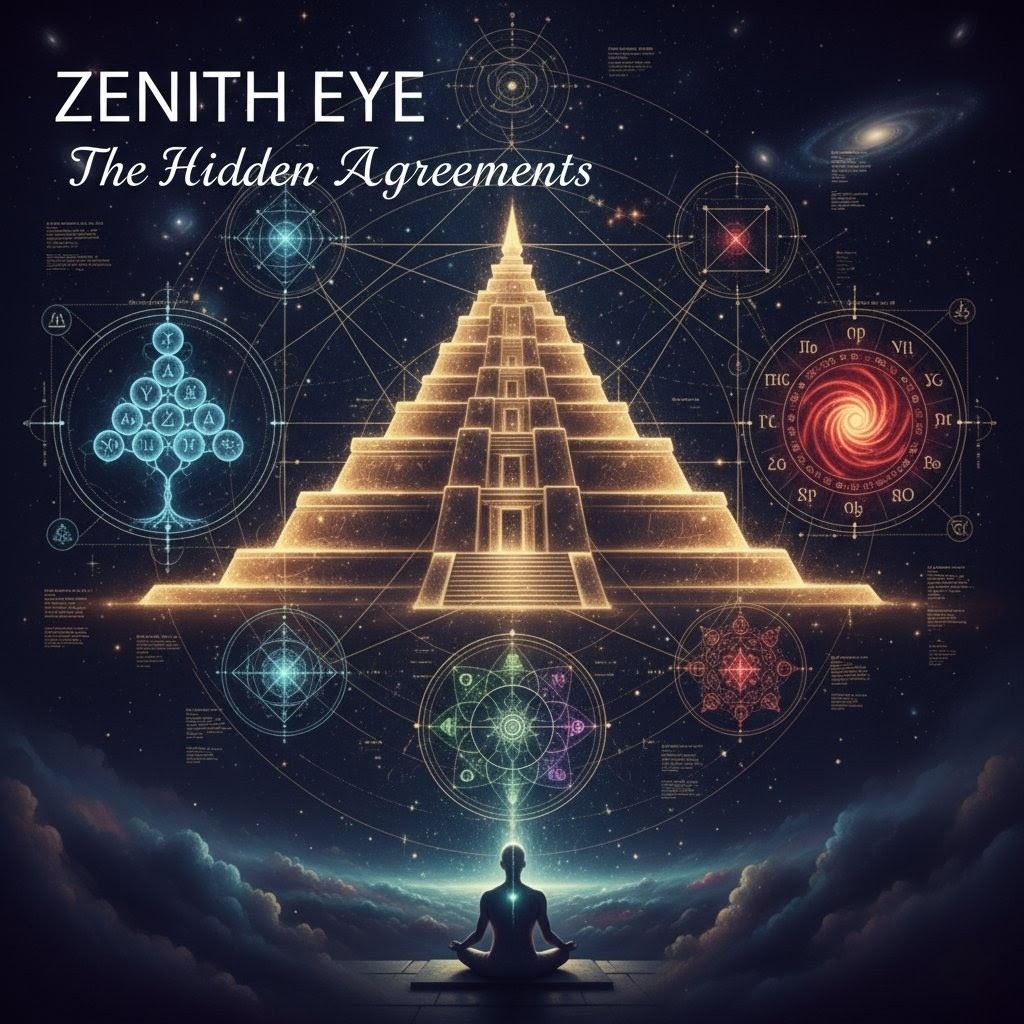
The Beginning State: Ordinary Consciousness
Every system begins by describing the given. The consensus. The unexamined assumption that waking consciousness is the full extent of available awareness. The Hermeticist calls it the state of sleep under the seven planetary governors. The Buddhist calls it saṃsāric confusion. The Kabbalist calls it Malkuth–the Kingdom, the material plane, the starting point. The names differ. The location is identical. It is where you are before you know you are somewhere.
The Threshold: Crossing Conditions
Crossing requires specific conditions. Preparation. Purification. The failure rate is high. Most turn back. Some cross without knowing they have crossed. These become the warnings, the cautionary tales, the ones who spoke with spirits and lost the ability to speak with humans. Every tradition insists on this: the threshold is not merely a door. It is a transformation of the one who approaches it. The shamanic initiate is “dismembered by spirits”–a motif Eliade found from Siberia to Tierra del Fuego–before reassembly. The alchemical nigredo dissolves the candidate before reconstruction. The crossing is never free.
The Levels: Recursive Unpacking
The progression is not linear ascent but recursive unpacking. Each level contains the previous levels as special cases. Each level appears final until its own limitations become visible. The Hermeticist passes seven planetary spheres, each releasing a specific attachment. The Kabbalist ascends the Tree of Life, each sefirah a necessary station that eventually reveals itself as partial. The Buddhist traverses the ten bhūmis, each representing a progressive stabilisation of realisation where earlier insights are integrated rather than discarded. The pattern is not accumulation. It is progressive clarification–the removal of successive filters until the unfiltered becomes bearable.
The Central Danger: The Mapmaker on the Map
The point where most systems lose their adherents is not external threat. It is internal. The recognition that the self–the navigator, the one who progresses–is itself part of the architecture being unpacked. The Kabbalist calls this the Abyss, the gulf between intellectual understanding and direct experience, where ordinary ego-consciousness must dissolve. The contemplative calls it the Dark Night. The alchemist calls it the nigredo in its most intense phase. The Buddhist bodhisattva at the eighth bhūmi reaches the “Immovable Ground,” where all effort ceases because the one who efforted has been recognised as provisional. The mapmaker realises he is drawn on the map.
The Terminus: Recognition Without Destination
Not a destination. A recognition. The architecture was never external. The tradition was never the point. The preparation, the crossing, the levels, the danger–all of it was a method for arriving at what was already the case. The finger pointing at the moon. The moon unchanged by the pointing. The Hermeticist emerges from the Ennead to find that Nous was never elsewhere. The Dzogchen practitioner recognises that the primordial ground was never obscured. The Advaitin sees that tat tvam asi–thou art that–was always true, only obscured by the search for it.
Global Structural Convergences
This pattern appears with startling regularity across disparate frameworks. The following are not superficial similarities. They are structural homologies–the same architecture described with different vocabularies.
Hermeticism: The Seven Planetary Spheres and the Ogdoad
The Hermetic corpus describes seven zones of planetary influence–Saturn, Jupiter, Mars, the Sun, Venus, Mercury, and the Moon–through which the ascending soul must pass. Each sphere corresponds to a specific quality or attachment that must be released. Beyond these lies the Ogdoad, the eighth sphere of fixed stars, representing the purified awareness that no longer identifies with the “twelve tormentors” of ordinary consciousness. Beyond the Ogdoad waits the Ennead, the realm of Nous or divine mind. The structure is not merely cosmological; it is psychological, mapping the progressive release of identification with lower forces until the practitioner becomes “transparent to the divine.”
Kabbalah: The Tree of Life
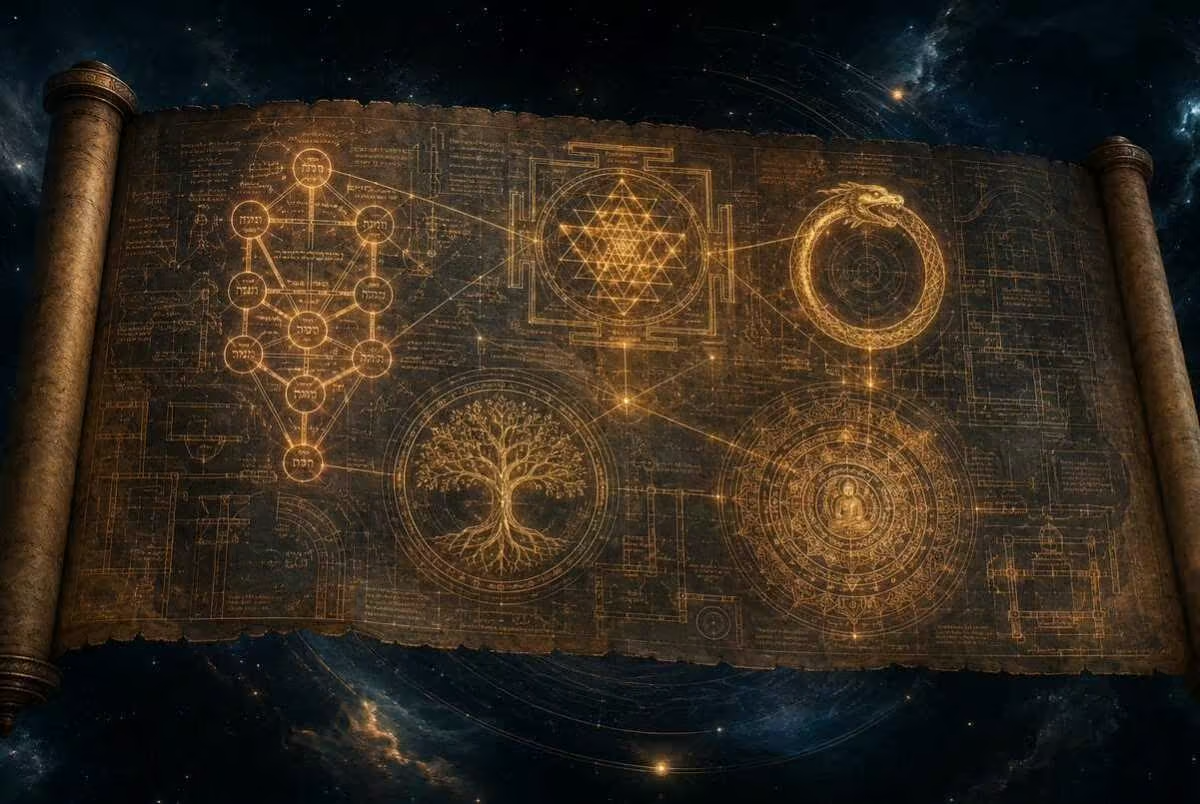
The Etz Chaim is a diagram of ten divine emanations (sefirot) connected by twenty-two paths, each corresponding to a Hebrew letter. The Tree maps both the descent of energy from the infinite into manifestation and the soul’s return journey. Between the upper three sefirot and the rest lies the Abyss, a gulf separating intellectual understanding from direct experience, with Da’at (Knowledge) functioning as both bridge and barrier. The practitioner does not merely study the Tree; the Tree is worked–meditated, pathwalked, integrated–until the map and the territory converge.
Alchemy: The Three Stages of Transformation
Medieval alchemy describes the Magnum Opus through three principal stages. Nigredo (blackening) is the dissolution of the raw material–death, decomposition, and the confrontation with the shadow. Albedo (whitening) is the washing and purification, the emergence of clarity after chaos, often depicted as the union of Sol and Luna in the coniunctio. Rubedo (reddening) is the final coagulation, the birth of the Philosopher’s Stone, the red tincture that transmutes base matter into gold. Carl Jung demonstrated that these stages correspond precisely to the process of individuation: the confrontation with the unconscious, the integration of opposites, and the emergence of the Self.
Buddhism: The Ten Bodhisattva Bhumis
Mahāyāna Buddhism describes ten stages (bhūmis) through which the bodhisattva progresses toward Buddhahood. The first bhūmi marks the direct realisation of emptiness; subsequent stages stabilise this recognition while progressively eliminating subtler obscurations. The eighth bhūmi, the “Immovable Ground,” represents the irreversible cessation of effort–the point where realisation becomes spontaneous. The tenth bhūmi, the “Cloud of Dharma,” rains teaching effortlessly upon all beings. The stages are not locations but degrees of stabilisation, tracked across the Five Paths and mirrored in the energetic purification of the subtle body.
Shamanism: The Three Worlds and Dismemberment
Cross-cultural shamanic practice describes a tripartite cosmos: the Lower World, the Middle World, and the Upper World, connected by the Axis Mundi–the world tree, sacred mountain, or central pillar. The shamanic initiate undergoes a symbolic death: dismemberment by spirits, consumption of the body, and reassembly with renewed organs and bones. Eliade documented this motif across Siberian, Australian, North and South American, African, and Indonesian traditions with “astonishing fidelity.” The dismemberment is not punishment. It is the necessary destruction of the profane self, allowing the initiate to traverse the three worlds as mediator between human and divine.
The Objection of the Sceptic
Coincidence. Archetype. The human nervous system has constraints; mystical experience reflects those constraints, not external reality. The argument is coherent. It is also incomplete.
If the architecture were merely neural, we would expect variation with culture, with epoch, with individual neurology. We would expect chaos. Instead, we find convergence. The same load-bearing elements. The same structural integrity requirements. Cultures with no contact, separated by thousands of years, produce systems that could be interchanged without collapse. The default mode network may dissolve in meditation, and predictive processing may generate the “given” of ordinary consciousness–but these neural mechanisms do not explain why the content of dissolution is recognisable across continents.
More troubling: the architecture is operational. It works. The practitioner who follows the map–any map–arrives at recognisable territory. The descriptions of that territory, across traditions, are mutually intelligible to those who have been there. This is not how arbitrary cultural constructions behave. This is how descriptions of something behave. The sceptic’s neural reduction is not wrong; it is merely a description of the instrument, not of what the instrument encounters.

The Alternative Hypothesis: Ontological Reality
The traditions are not inventing. They are reporting. The architecture is not cultural. It is ontological. The interior landscape has structure independent of the observer. The observer’s culture determines the vocabulary, the symbolism, the permissible interpretations. It does not determine the layout.
This hypothesis is unsettling. It implies that consciousness is not the private property of the individual. It implies that the interior is as structured as the exterior, as resistant to whim, as demanding of respect. It implies that the mystical traditions are not speculative philosophy but exploration reports–imperfect, partial, culturally contaminated, but referring to something real.
Real in what sense? Not physical. Not measurable by instruments designed for the exterior. Real in three specific senses: first, consistent navigation is possible; second, mistakes have consistent consequences; third, arrival is recognisable across cultural distance. The historian of religion Henry Corbin coined the term mundus imaginalis–the imaginal realm, neither purely subjective nor purely objective, where symbols have the consistency of terrain. The traditions converge because they are not inventions. They are discoveries of precisely this terrain.
The Function of Symbol as Safety Protocol
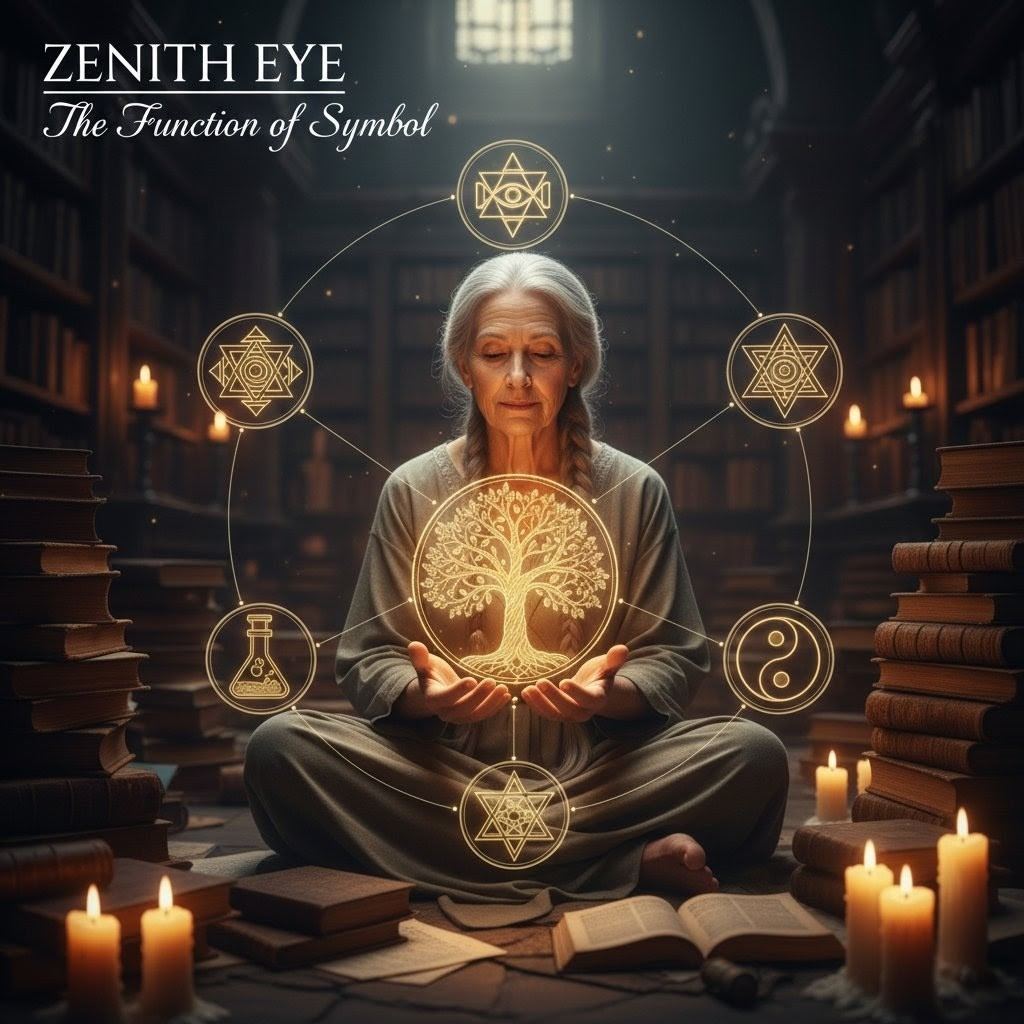
If the architecture is shared, why the proliferation of symbols? Why the Tree of Life here, the caduceus there, the mandala elsewhere?
Because the architecture is not the territory. The symbol is the relationship to the structure. Different symbols encode different approaches, temperaments, and necessary cautions. The Tree emphasises emanation and return. The caduceus emphasises entwining and resolution. The mandala emphasises centre and periphery. The symbol is also protection. The architecture is dangerous. Direct description–naked structural exposition–invites premature experimentation. The symbol allows transmission without immediate accessibility.
The genuine practitioner, prepared by the necessary preliminary work, recognises the structure behind the symbol. The unprepared see only decoration. This is not elitism. It is safety protocol. The Eleusinian mysteries concealed their operation behind agricultural allegory; the alchemical text disguised psychological process as chemical operation; the tantric master transmitted the most potent teachings only after the student had accepted samaya–sacred commitment. The encryption is multiple: vocabulary that literalises into nonsense, contradictions that point beyond ordinary cognition, and operations that only yield meaning through sustained practice. The symbol is resilient–available to recognition, invisible to suppression.
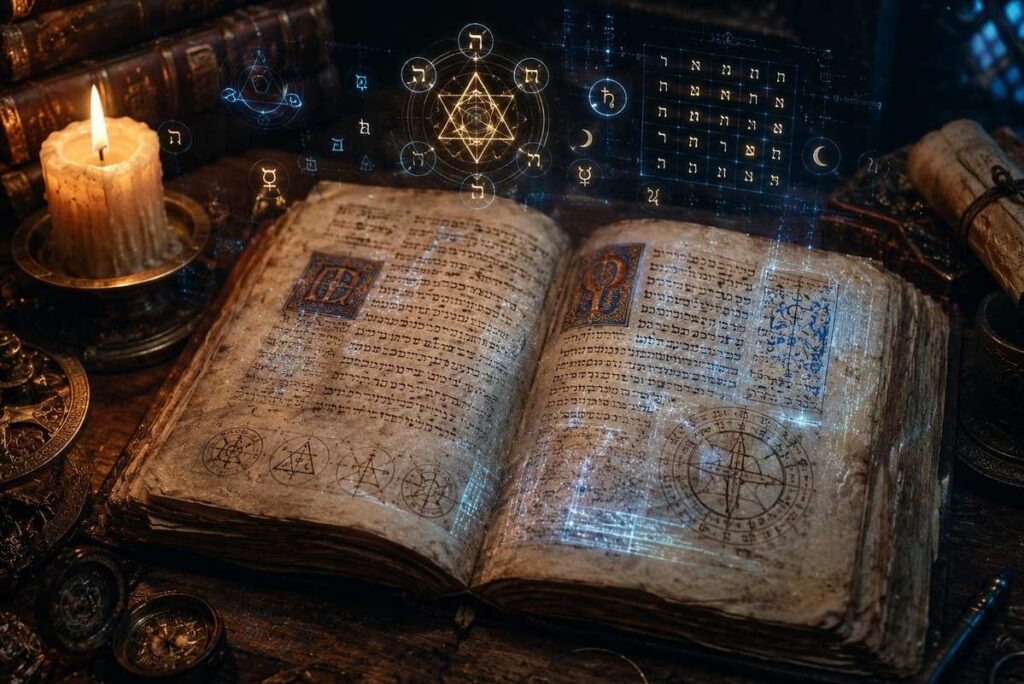
Specific Resonances and Common Precipices
The convergences are not merely structural; they are specific, operational, and dangerous.
The Number Seven
Planets, metals, chakras, days, notes, colours. The ancient world knew seven wanderers against the fixed stars, and this sequence became the framework for time, quality, and correspondence. Saturn’s slowness, Jupiter’s expansiveness, Mars’s heat, the Sun’s centrality, Venus’s receptivity, Mercury’s mutability, the Moon’s reflection–each quality distinct, each transition necessary. The week is this sequence; the musical scale is this sequence; the alchemical operation proceeds through these seven planetary gates. The correspondence is not arbitrary. The tradition holds that the alchemist who understands lead truly understands Saturn–not metaphorically, but as a unified quality of density, limitation, and foundational weight that manifests across material, psychological, and temporal domains.
The Danger of the Threshold
Every system warns of the same precipice. The Abyss of the Kabbalist. The Dark Night of the contemplative. The Harrowing of Hell in the alchemical nigredo. The Mara of the Buddhist. The shamanic initiatory sickness where the candidate is dismembered and left to watch. It is always the same point: where the self must recognise itself as part of the territory being traversed. Those who approach this threshold without preparation–without the stabilisation of ethics, concentration, and guidance–risk not transcendence but fragmentation. The danger is real, and the traditions agree on its location with a precision that should disturb anyone who believes these systems are merely poetic.
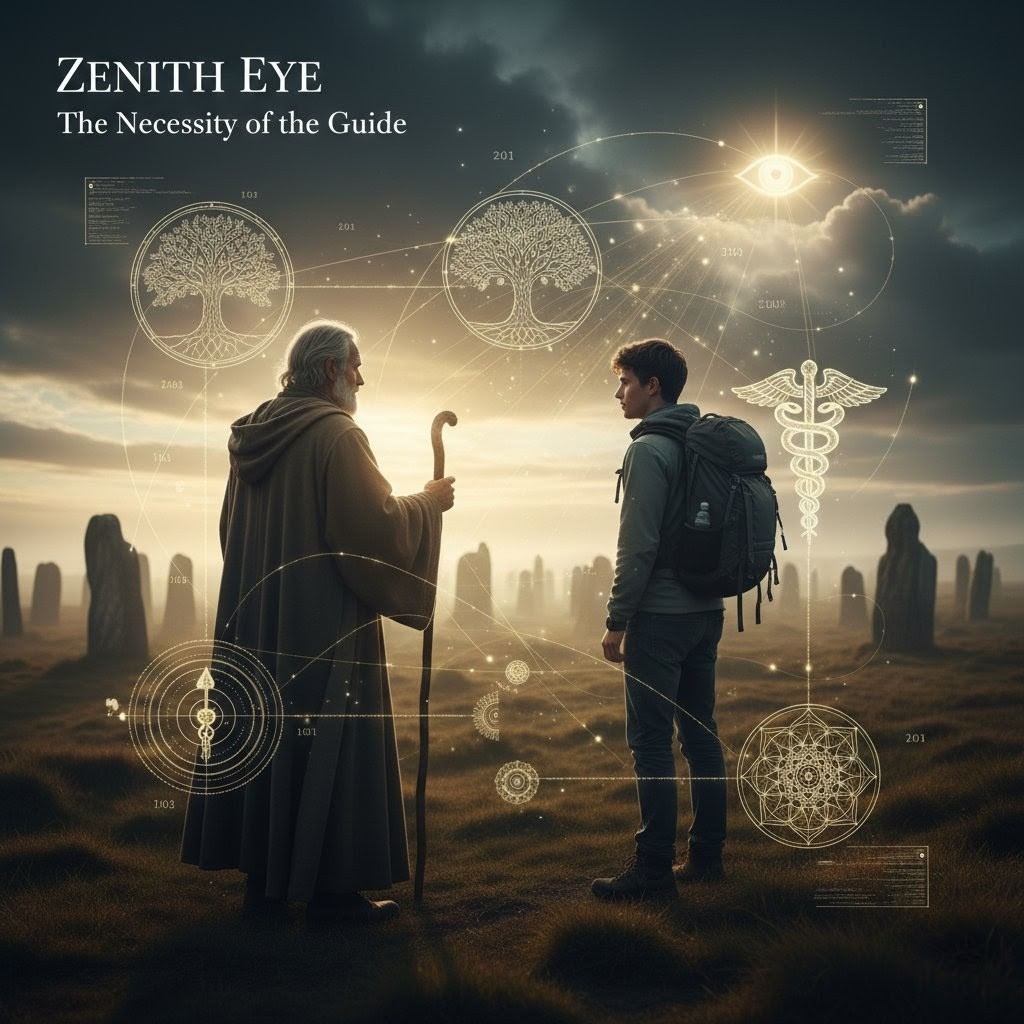
The Necessity of the Guide
Every system insists on transmission from one who knows. This is not institutional self-interest; it is accurate risk assessment. The shamanic apprentice learns from the master who has undergone dismemberment. The bodhisattva progresses under the guidance of realised teachers. The alchemical adeptus works under the supervision of one who has completed the opus. The guide does not merely transmit information. They transmit the capacity to recognise what the information points toward. Without this transmission, the map is misread, the territory is misidentified, and the practitioner becomes another cautionary tale.
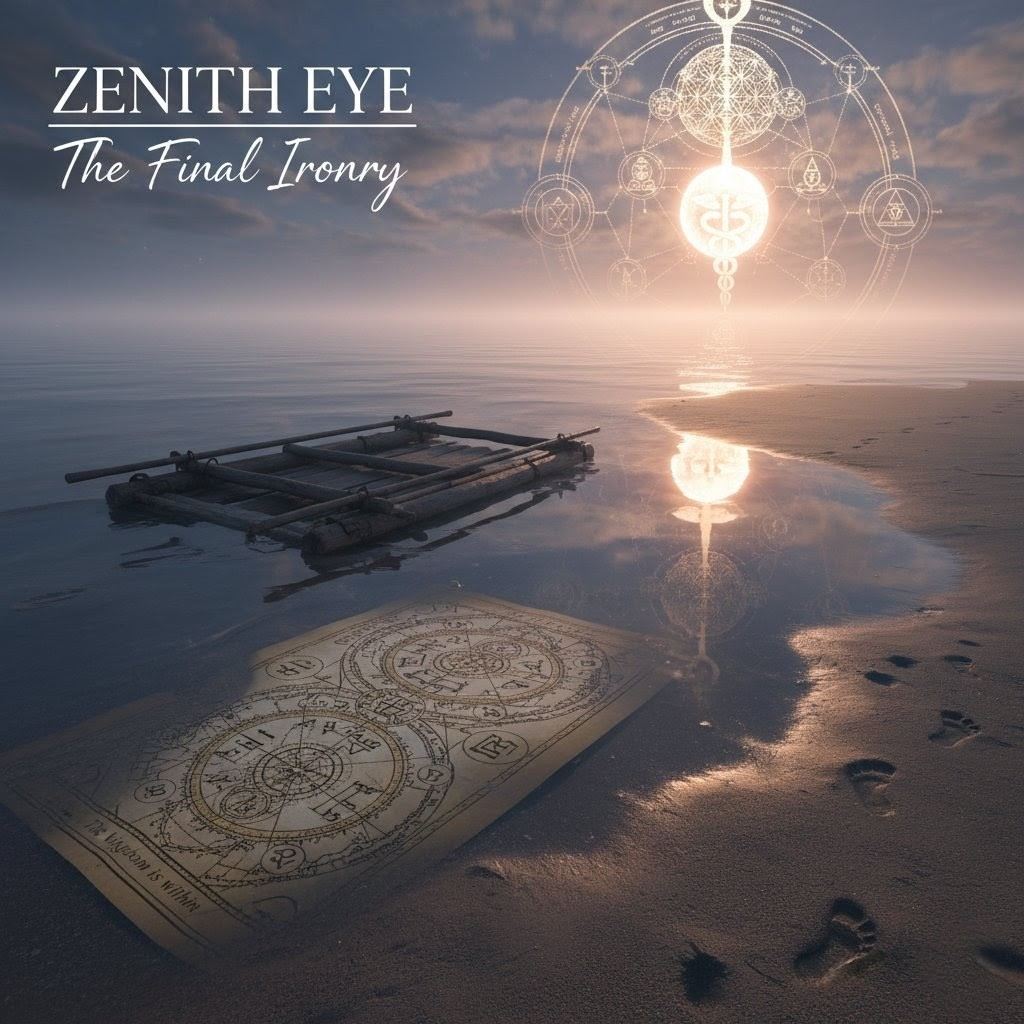
The Final Irony
Every system describes the same recognition at terminus: the architecture was never necessary. The tradition is upāya–skilful means–a raft abandoned once the shore is reached. Thou art that. As above, so below. Tat tvam asi. The kingdom is within. The finger points; the moon remains. The map is consumed; the territory was never separate from the one who mapped it.
The irony is structural. The entire elaborate architecture–the spheres, the sefirot, the stages, the worlds–exists precisely to bring the practitioner to the recognition that none of it was required. Not because it was false. Because it was provisional. The scaffolding is essential during construction and obsolete upon completion. The traditions know this. They tell you from the beginning, in the very first teaching, that the teaching is not the point. You do not believe them. You must traverse the architecture to discover why they were telling the truth all along.
Implications for the Contemporary Investigator
If the architecture is real, then the traditions are not competitors. They are collaborators in a single investigation. The Christian mystic, the Sufi, and the Dzogchen practitioner are describing the same mountain from different valleys. The language differs because the path differs, not because the destination differs.
For the modern seeker, careful comparison is not merely permissible; it is necessary. We now have the ability to triangulate. We can compare the Tibetan description of the bardo with the Egyptian Book of the Dead and recognise the structure beneath the symbol with greater clarity because more reports are available. We can observe that the “threshold guardians” of the shamanic Lower World, the “weighing of the heart” in Egyptian judgement, and the “passwords and seals” of the Hermetic ascent all describe the same operational necessity: the confrontation with one’s own accumulated obscurations at the point of transition.
This triangulation does not mean careless mixing. Syncretism–the superficial combination of incompatible elements–destroys the very structure it seeks to honour. Synthesis–the deep recognition of underlying unity while respecting the integrity of each path–extends the thread. The difference matters. The thread is not preserved by fusion but by discrimination.
The Thread Continues
The hidden agreements are not hidden because they are secret. They are hidden because they are obvious once seen, invisible until then. The architecture is not esoteric in the sense of being deliberately concealed. It is esoteric in the original sense: interior.
The traditions converge because they are not inventions. They are discoveries. The structure of consciousness, unpacked, is the same regardless of who unpacks it. The territory is not hostile. It is simply real. And reality, as any engineer will confirm, has load-bearing requirements.
The thread continues. Not because it is transmitted. Because it is true.
Frequently Asked Questions
Safety Notice: This article explores advanced interior architecture and threshold dynamics described in esoteric traditions. It does not constitute instruction in contemplative or energetic practice. If you are experiencing destabilisation, dissociation, or psychological distress related to spiritual exploration, please contact a trauma-informed therapist or mental health professional. Esoteric study complements but does not replace clinical mental health treatment.
Further Reading
- The Sevenfold Pattern: Planets, Metals, Chakras & The Architecture of Seven — The universal recurrence of seven across traditions, with operational correspondences.
- The Abyss in Three Traditions: Kabbalah, Alchemy & Buddhism — The same precipice, different languages, same load-bearing requirements.
- Symbol as Safety Protocol: Why Esotericism Hides in Plain Sight — Encryption that preserves dangerous knowledge for the prepared.
- Syncretism vs. Synthesis: The Difference That Preserves the Thread — Careless mixing versus deep integration of structural understanding.
- The Tree of Life: Kabbalistic Architecture and the Map of Consciousness — The ten sefirot and twenty-two paths as navigable interior terrain.
- The Doctrine of Emanation: From Plotinus to Kabbalah — How the architecture of descent and return appears across Neoplatonic and Kabbalistic frameworks.
- Hermeticism, Gnosticism & Egyptian Wisdom — The seven spheres, the Ogdoad, and the ascent through planetary gates.
- The Axial Age: Why Wisdom Emerged Simultaneously — The historical emergence of interiority across disconnected civilisations.
- Planes of Consciousness and Higher Dimensions — The structured hierarchy of interior levels across multiple frameworks.
- The Nag Hammadi Library: Complete Reader’s Guide — The Gnostic thread and its place in the broader esoteric archive.
References and Sources
The following sources are grouped by category for clarity. This article draws on comparative scholarship, critical editions of primary texts, and established psychological research.
Primary Sources and Critical Editions
- The Corpus Hermeticum. Translated by Brian P. Copenhaver. Cambridge University Press, 1992. — Hermetic cosmology, the seven planetary spheres, the Ogdoad and Ennead.
- The Bahir and Sefer Yetzirah. In The Kabbalah Tradition, edited by Alan Unterman. Penguin Classics, 2008. — Primary Kabbalistic texts on the Tree of Life and the sefirot.
- The Tibetan Book of the Dead (Bardo Thodol). Translated by Gyurme Dorje. Penguin Classics, 2005. — Tibetan descriptions of post-mortem interior stages.
- The Egyptian Book of the Dead. Translated by Raymond O. Faulkner. British Museum Press, 2010. — Ancient Egyptian mapping of the afterlife terrain.
Scholarly Monographs and Comparative Studies
- Eliade, Mircea. Shamanism: Archaic Techniques of Ecstasy. Princeton University Press, 2004 [1951]. — Cross-cultural documentation of shamanic initiation, dismemberment, and the three worlds.
- Eliade, Mircea. Rites and Symbols of Initiation. Harper & Row, 1958. — The structural patterns of initiatory death and rebirth across cultures.
- Corbin, Henry. Alone with the Alone: Creative Imagination in the Sufism of Ibn ‘Arabi. Princeton University Press, 1998. — The mundus imaginalis as ontological terrain.
- Jung, C. G. Psychology and Alchemy. Collected Works, Vol. 12. Routledge, 1968. — The alchemical stages as psychological process and individuation.
- Jung, C. G. Mysterium Coniunctionis. Collected Works, Vol. 14. Routledge, 1970. — The conjunction of opposites and the Self in alchemical symbolism.
- Smith, Huston. Forgotten Truth: The Common Vision of the World’s Religions. HarperOne, 1992. — The perennial structure beneath religious diversity.
Buddhist Studies and Technical Sources
- Patrul Rinpoche. A Brief Guide to the Stages and Paths of the Bodhisattvas. Translated by Adam Pearcey. Lotsawa House, 2007. — Detailed mapping of the ten bhumis and Five Paths.
- Powers, John. Introduction to Tibetan Buddhism. Snow Lion Publications, 2007. — Comprehensive overview of Mahayana stages and tantric correspondence.