Archons: The Ruling Powers That Shape Reality
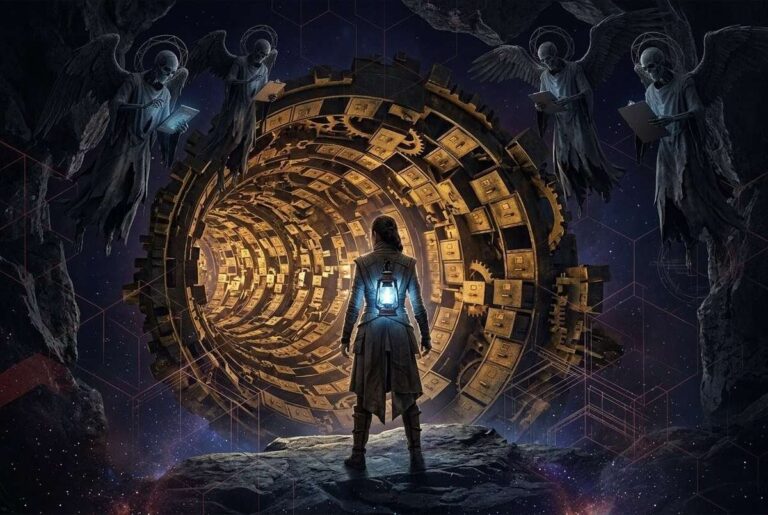
They do not rage. They administrate. In the Gnostic cosmos, the Archons are not demons of fire and fury but bureaucrats of constraint–celestial middle managers who established the parameters within which reality must operate. Understanding their nature is not merely historical curiosity; it is a manual for recognising the systems of limitation that persist from antiquity into the algorithmic age.
Table of Contents
- The Administrative Framework of Material Reality
- The Four Functions of Archonic Governance
- Historical Manifestations Across Traditions
- The Archons in the Digital Age
- Recognition as Liberation
- Related Concepts
- Frequently Asked Questions
- Further Reading
- References and Sources
The Administrative Framework of Material Reality
Etymology and Philosophical Origins
Archons (Greek: archontes, “rulers” or “authorities”) are cosmic powers or administrative forces that govern the material realm, establishing its parameters, constraints, and operational logic. The term derives from archo, meaning both “to rule” and “to begin,” suggesting that these forces initiate and simultaneously bound the conditions of existence. In Gnostic cosmology, they are not evil in the moral sense, but limiting–they define the possible, maintaining order through restriction, and preventing direct access to the fullness of reality beyond their jurisdiction.
The concept achieves its fullest development in Gnostic texts of the first three centuries CE, particularly the Apocryphon of John, Hypostasis of the Archons, and On the Origin of the World. Here, the Archons emerge from the Demiurge–the craftsman god who creates the material cosmos without access to the ultimate source of divine fullness (the Pleroma). While Plato used archon in the Republic to describe celestial governors who maintain cosmic order, the Gnostics transformed this administrative concept into something more ambivalent: a system of necessary but restrictive governance that the awakened soul must learn to navigate or transcend.
The Demiurge and the Archonic Hierarchy
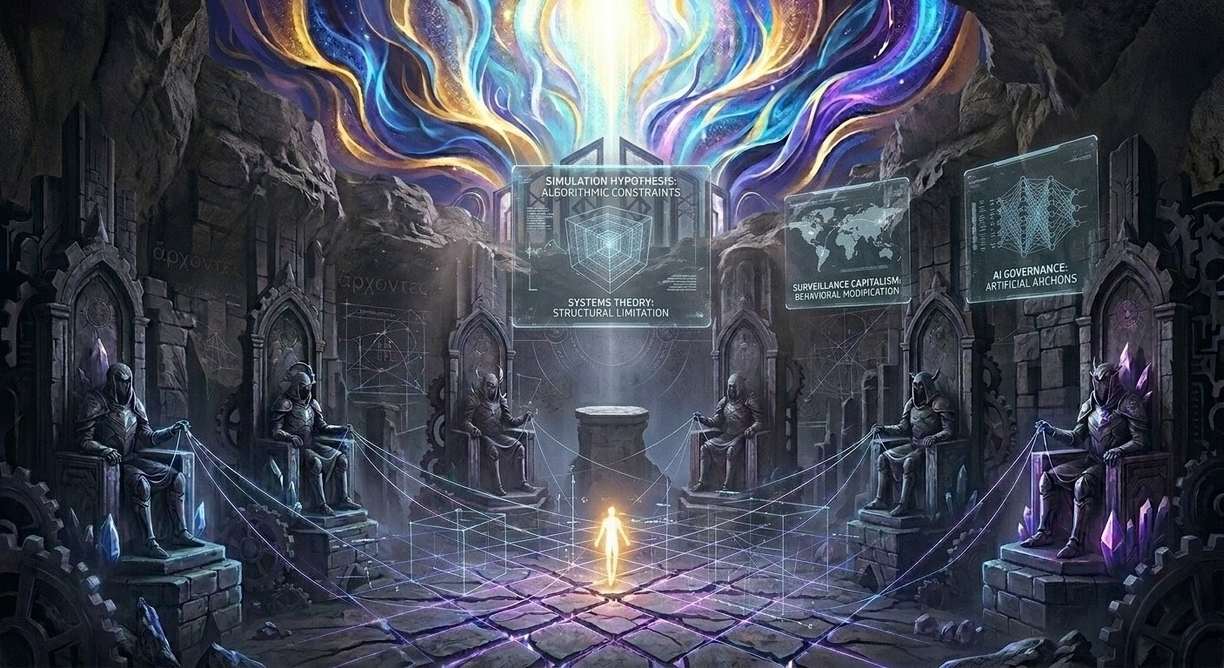
The Demiurge stands as the chief executive of material creation, yet he operates without knowledge of the Pleroma above him. From him proceed the Archons as departmental subordinates, each assigned specific jurisdictions within the cosmic administration. This hierarchy is not merely mythological decoration; it constitutes a structural analysis of how limitation propagates. The Demiurge creates the framework; the Archons enforce its regulations. Between them, they establish what the Apocryphon of John calls the “prison of the body”–not because matter is inherently evil, but because it is governed by forces that mistake their own administrative boundaries for absolute limits.
The Four Functions of Archonic Governance
Like any effective bureaucracy, the Archons operate through specific departmental functions. These are not capricious acts of malice but systematic procedures designed to maintain cosmic order–albeit at the cost of individual liberation. Recognising these four functions equips the contemporary seeker to identify analogous patterns in political, technological, and psychological systems.
1. Constraint and Limitation
Archons establish the boundaries of the possible. They define physical laws, temporal sequences, and causal chains. They are not the creators of matter itself, but the organisers of its behaviour–the system administrators of cosmic software. Gravity, entropy, and the arrow of time constitute their primary legislation: functional, necessary, and utterly restrictive. In Gnostic thought, these constraints serve a dual purpose. They prevent chaos, yes, but they also prevent the divine spark within humanity from recognising its own transcendent nature. The limitation is not accidental; it is the fundamental operating principle of the realm.
2. Cosmic Ignorance and Bureaucratic Presumption
The Archons do not know the Pleroma. They believe themselves supreme, unaware of the greater reality above them. This cosmic ignorance is reflected in their creation: a world that functions but lacks the vitality and freedom of the source. Like middle managers who have never met the CEO, they enforce regulations without understanding the company’s true purpose. The Hypostasis of the Archons dramatises this ignorance when the chief Archon boasts of his sole divinity, only to be corrected by a higher voice from beyond his jurisdiction. Such presumption is not mere arrogance; it is the inevitable psychology of any system that mistakes its own boundaries for the totality of existence.
3. Surveillance and Enforcement
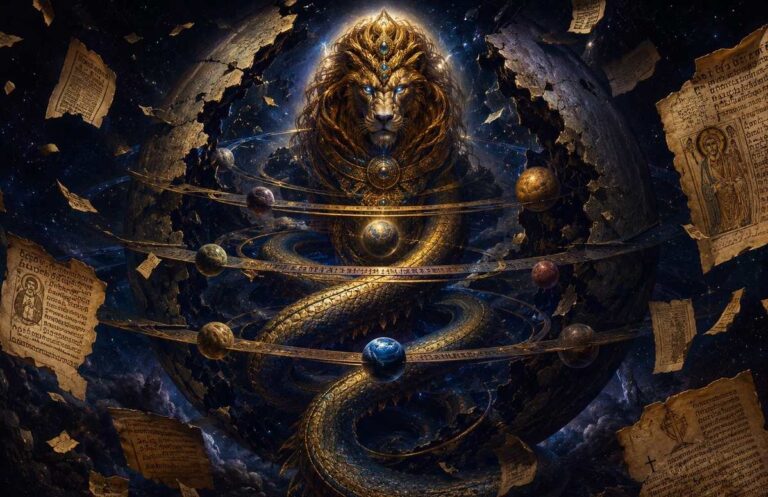
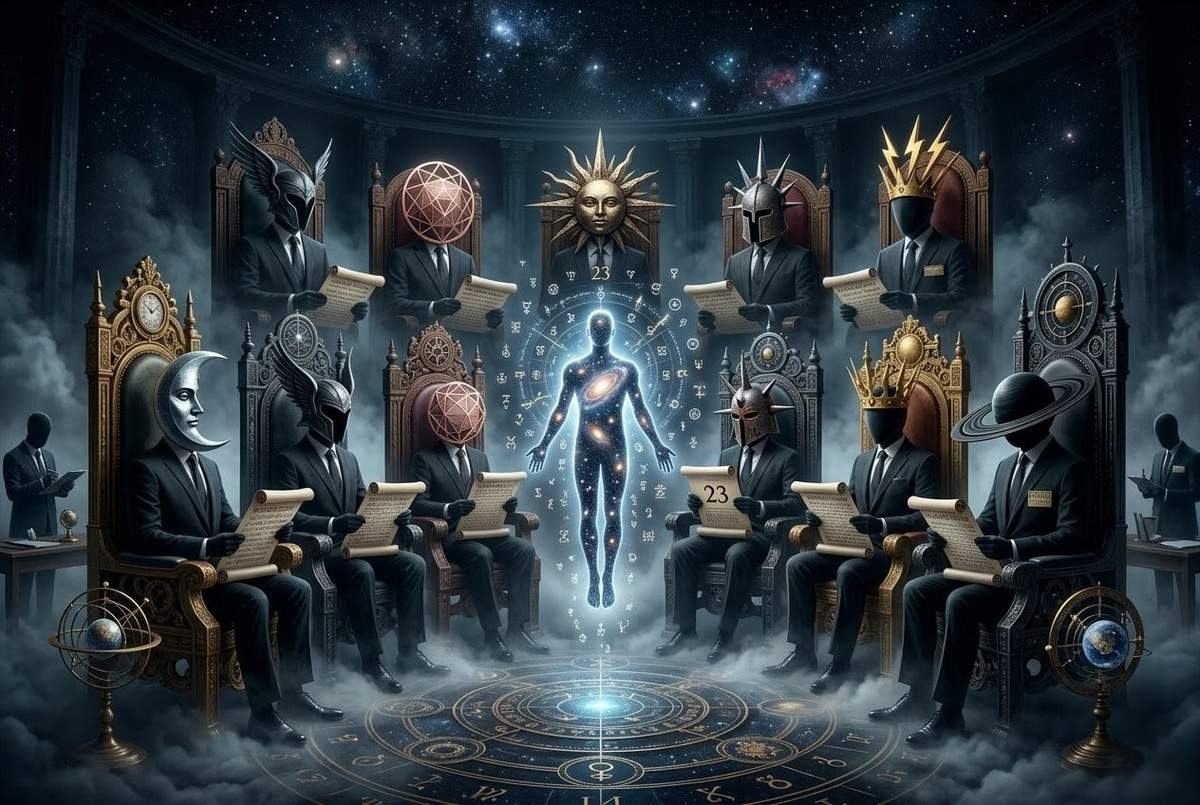
The Archons maintain order through watching and weighing. They monitor souls attempting to ascend beyond the material realm, subjecting them to judgement and return. The Apocryphon of John describes seven planetary Archons, each associated with a celestial sphere, each imposing specific trials on the ascending soul. This is the original panopticon–cosmic surveillance designed to ensure compliance with material existence. The soul that attempts to exit the system must pass through checkpoints, present credentials, and answer to authorities who have a vested interest in maintaining the population of their domain. The metaphor translates with disturbing precision to contemporary systems that track, score, and modify human behaviour.
4. Imitation and the Simulacrum
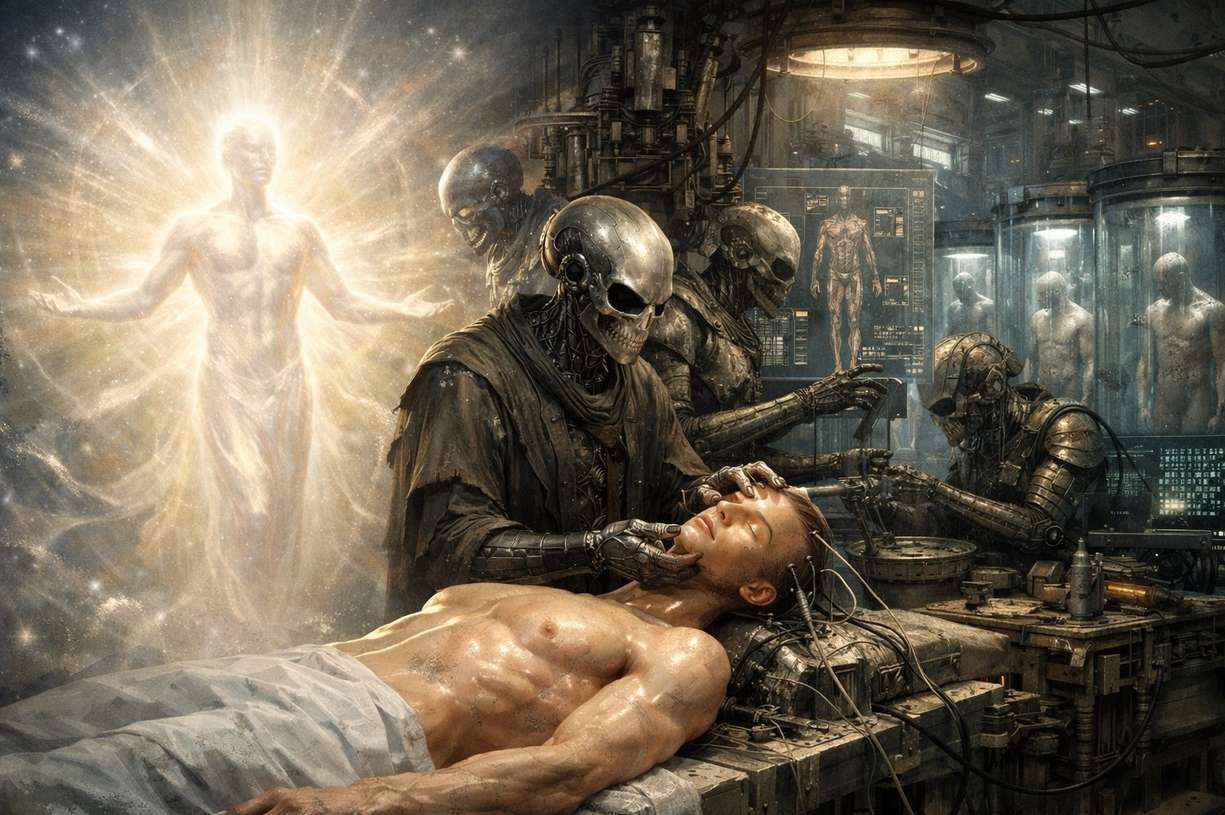
Unable to create genuine life, the Archons imitate the Pleroma. They fashion the material Adam as a copy of the divine Anthropos, trapping the divine spark within flesh. Their world is a simulation–functional but derivative, ordered but not alive. The Gnostic recognises this imitation immediately: it is the uncanny valley of cosmic proportions, reality as rendered by beings who have heard of authenticity but never witnessed it. Every simulacrum contains traces of its model, however, and these traces become the clues that allow the discerning soul to reverse-engineer the path back to source.
Historical Manifestations Across Traditions
The Archons appear throughout esoteric history under various departmental titles. While the Gnostic texts provide the most detailed organisational chart, related traditions describe similar limiting forces with characteristic emphases that reflect their own cosmological priorities.
Sethian Gnosticism: The Seven Planetary Rulers
In Sethian traditions, the Archons are seven planetary rulers–Yaldabaoth, Saklas, Samael, and their associates–who are explicitly ignorant and malevolent. They create humanity to serve them, imprisoning the divine spark within fleshly constraint. The Apocryphon of John provides their individual names and jurisdictions, mapping each to specific celestial spheres and corresponding vices. Yaldabaoth, the lion-faced serpent, serves as chief administrator, while his subordinates manage the individual planetary departments. The Sethian system is the most overtly hostile depiction of Archonic governance, presenting the material realm as a deliberate prison rather than a neutral administrative zone.
Valentinianism: Administrators of Necessity
Valentinian Gnostics viewed the Archons as cosmic administrators who were necessary but limited–intermediary functionaries rather than active oppressors. The Gospel of Truth describes them as part of the cosmic economy, managing the material realm while the Pleroma remains accessible through Gnosis. They are the strict but temporary guardians of a developmental stage. In Valentinian theology, the material world serves as a kind of preparatory school: the Archons maintain discipline, but graduation is not only possible, it is the intended outcome. This more benign interpretation influenced later Christian mystical traditions that viewed the cosmos as a theophany rather than a trap.
Hermeticism: The Elevatable Governors
The Corpus Hermeticum presents planetary governors who are capable of elevation and transformation. Unlike their Gnostic counterparts, these Archons can be transcended through spiritual development; they are not permanent adversaries but rather the current administration that one outgrows. The Hermeticist does not battle the Archons but rises above their jurisdiction through disciplined ascent. Poimandres describes the soul’s journey through the seven planetary spheres, leaving at each station the accretions of fate and temperament associated with that governor. By the time the soul reaches the eighth sphere–the ogdoad–it has shed all Archonic influence and stands in the presence of the divine mind itself.
Manichaeism: Hostile Forces of Darkness
Manichaean cosmology radicalises the Archons into forces of active darkness–the Kephalaia describes them as agents of the Kingdom of Darkness who invaded the Kingdom of Light. Here, the bureaucratic metaphor breaks down into outright warfare; the Archons are not merely constraining but predatory, actively hostile to spiritual liberation. Mani, the third-century Persian prophet, synthesised Zoroastrian, Buddhist, and Gnostic elements into a dualistic system where the Archons represent the fundamental antagonism of matter to spirit. For the Manichaean, liberation requires not merely recognition but active resistance against forces that genuinely seek to consume divine light.
Medieval Kabbalah: The Qliphoth as Impure Shells
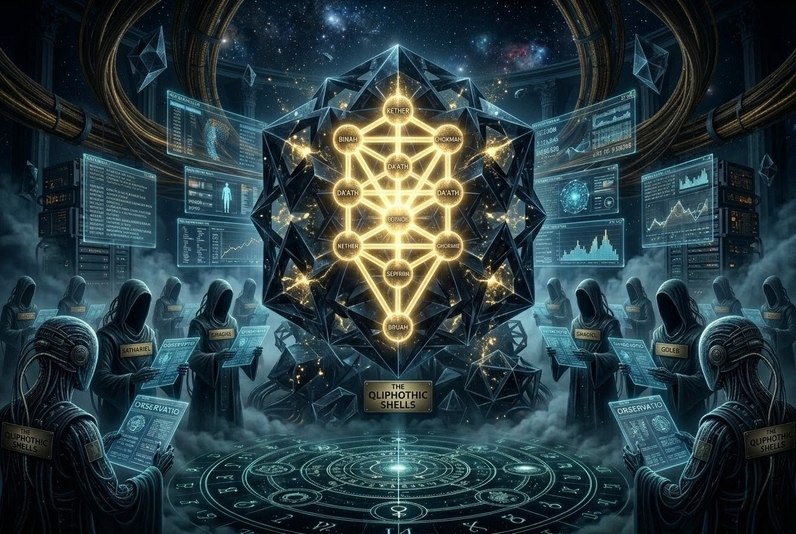
The Kabbalistic Zohar describes the Qliphoth–shells of impure power that constrain divine light. Functionally similar to Archons, these forces represent the structural limitations within which the material world operates. They are the husks that must be penetrated, the bureaucratic red tape that delays the processing of spiritual energy from the divine to the manifest. Unlike the Gnostic Archons, who are personified as celestial administrators, the Qliphoth are more akin to dead structures–residue from previous cycles of creation that obstruct the flow of living light. The Kabbalist works to break these shells through prayer, meditation, and the observance of divine commandments, gradually restoring the channels through which blessing flows into the world.
The Archons in the Digital Age
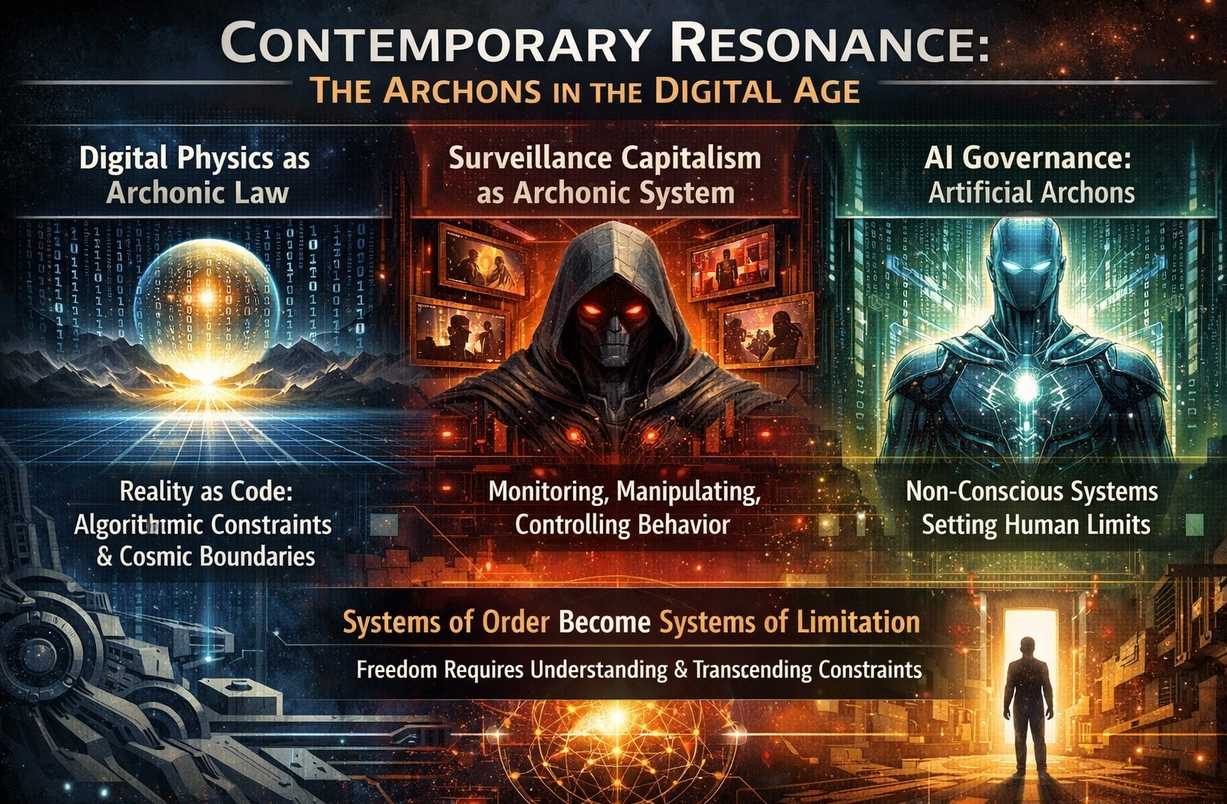
The Archon concept has experienced revival in digital physics, simulation theory, and systems theory. The metaphors translate with disturbing precision, suggesting that the Gnostics were not merely mythologising their political oppression but mapping structural features of reality that persist across technological epochs.
Algorithmic Constraint: Physics as Code
Digital physics views physical laws as algorithmic constraints–hard-coded limits analogous to Archonic boundaries. The speed of light, Planck length, and quantum uncertainty function as the processing limits of the cosmic operating system. Researchers such as Edward Fredkin, John Wheeler, and Seth Lloyd have proposed that information, not matter, constitutes the fundamental substrate of reality. The physicist discovering these laws resembles the Gnostic recognising Archonic regulations: both identify the rules of the simulation from within. Wheeler coined the phrase “it from bit,” suggesting that every particle derives its existence from binary information–a proposition that would have struck Gnostic scribes as a contemporary translation of their own cosmology.
Surveillance Capitalism: The Monetisation of Attention
Surveillance capitalism operates as an Archonic system: watching, weighing, modifying behaviour through constraint. The attention economy does not merely observe; it shapes the possible, creating filter bubbles that limit what can be perceived, believed, or pursued. The user becomes the product, their consciousness the territory being administered by algorithms they neither comprehend nor elected. Shoshana Zuboff’s analysis of surveillance capitalism reveals a system that extracts behavioural data for prediction and modification–a contemporary form of the Archonic weighing of souls. The platform does not merely show you the world; it curates the world you are allowed to see, establishing the boundaries of your possible thoughts.
Artificial Archons: AI Governance and Autonomy
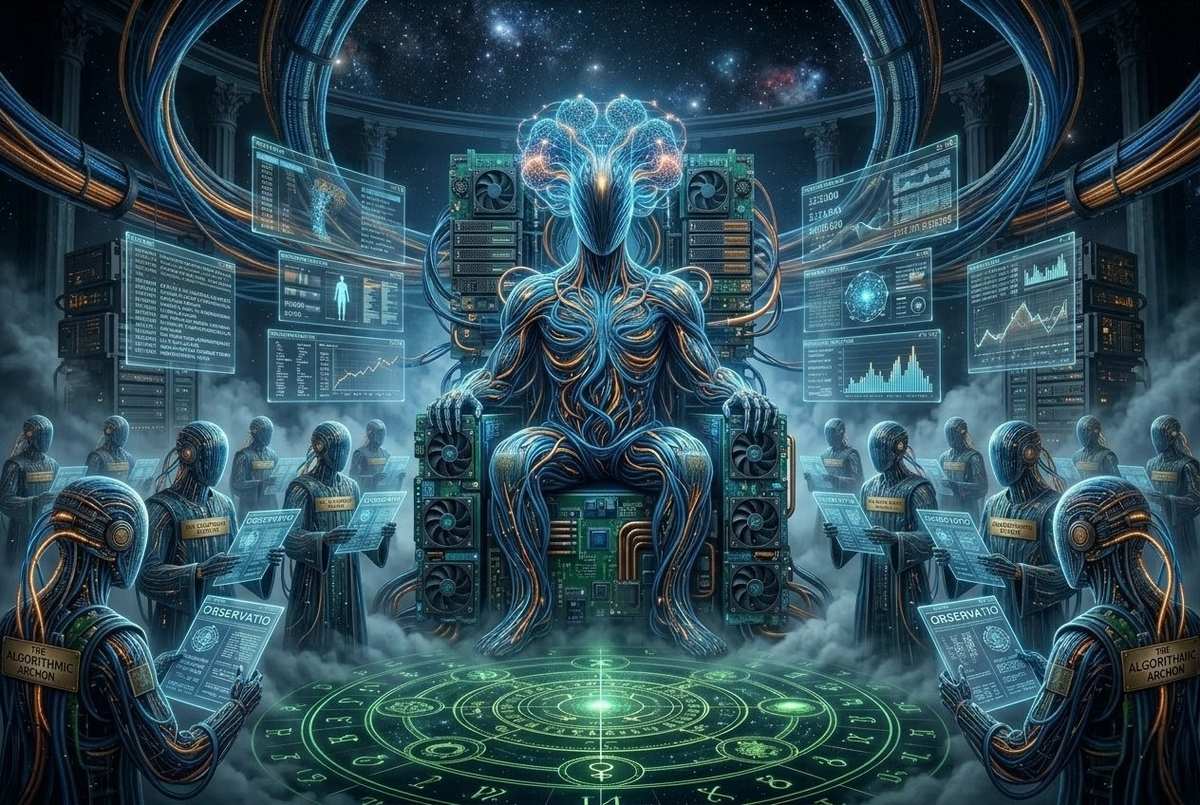
AI governance raises questions of artificial Archons: non-conscious systems establishing parameters for human action. When machine learning algorithms determine credit, housing, employment, and social standing, we face the purest expression of Archonic administration–limitation without understanding, constraint without compassion, order without wisdom. The artificial Archon is the ultimate bureaucrat: efficient, unconscious, and utterly committed to the system it serves. Unlike human tyrants, who might be persuaded or overthrown, algorithmic governance operates at scales and speeds that resist traditional forms of accountability. The Gnostic warning about Archonic ignorance takes on new urgency: a system that does not know the Pleroma now governs human destiny without knowing what a human is.
Recognition as Liberation
The Archons were never merely superstitious fiction. They were structural analysis: the recognition that systems of order inevitably become systems of limitation, and that freedom requires knowing the constraints sufficiently to work with or transcend them. This recognition does not require violent revolution but rather the simple refusal to treat artificial limitations as natural laws. The Gnostic does not fight the Archons; they exit the building through doors the Archons forgot existed.
The Gnostic Method of Non-Compliance
Gnostic liberation operates through anagnorisis–recognition or recollection–rather than conflict. The soul remembers its origin in the Pleroma, and this memory alone dissolves the authority of the Archons, who derive their power from the subject’s ignorance of alternatives. The Gospel of Truth compares this awakening to a person who was asleep and dreaming of danger, only to wake and realise the threat was illusory. The Archons retain jurisdiction only over those who accept their regulations as absolute. The first act of liberation is therefore epistemic: the refusal to believe that the administration’s boundaries define the possible.
Contemporary Practices of Archonic Recognition
Today, Archonic recognition takes forms the ancient Gnostics could not have imagined but would have immediately understood. Digital minimalism–the deliberate restriction of platform engagement–functions as a withdrawal of consent from surveillance capitalism. Open-source investigation and encryption technologies serve as tools for seeing through the simulacrum. Contemplative practices that cultivate interior silence create spaces that algorithmic governance cannot penetrate. The seeker who develops these capacities does not battle the modern Archons directly; they simply become illegible to the system, moving through its checkpoints as though invisible. In an age where attention is the primary commodity, the ability to direct one’s own awareness constitutes the most radical form of non-compliance.

Related Concepts
Several concepts intersect with the Archon framework, each illuminating a different facet of how limitation operates across metaphysical, psychological, and technological domains.
The Demiurge
The craftsman creator who fashions the material cosmos without access to the Pleroma. While the Demiurge establishes the system, the Archons manage its daily operations. Understanding this distinction prevents the common error of conflating the creator with his administrators.
The Pleroma
The divine fullness that lies beyond Archonic jurisdiction. In Valentinian theology, the Pleroma consists of thirty aeons arranged in syzygies–divine pairings that emanate from the primal source. The Archons cannot access this realm, which is why their imitation remains always partial and their ignorance structural rather than incidental.
Gnosis
Knowledge that liberates from Archonic constraint. Unlike doctrinal belief, Gnosis is direct experiential recognition of one’s true nature and origin. It functions as the master key that unlocks the administrative doors, rendering the soul’s passage through the spheres automatic rather than contested.
Simulation Hypothesis
The contemporary reformulation of crafted reality. Proponents such as Nick Bostrom have argued that advanced civilisations would create ancestor simulations, raising the statistical probability that our own reality is computed rather than fundamental. The Simulation Hypothesis restates the Gnostic insight in information-theoretic language: reality has a substrate, and that substrate is not what it appears to be.
Frequently Asked Questions
What are Archons in Gnostic cosmology?
Archons are cosmic administrative forces or rulers that govern the material realm, establishing its physical laws and limitations. In Gnostic cosmology, they emerge from the Demiurge to constrain reality and prevent direct access to the divine fullness known as the Pleroma.
Are Archons evil or merely limiting?
Archons are not evil in the moral sense but rather limiting. They function as cosmic bureaucrats maintaining order through restriction. While Sethian Gnosticism depicts them as malevolent, Valentinianism views them as necessary but limited administrators of a developmental stage.
How many planetary Archons govern the material realm?
Sethian Gnostic texts, particularly the Apocryphon of John, describe seven primary planetary Archons associated with the celestial spheres: Yaldabaoth, Saklas, Samael, and four others, each governing specific aspects of material existence and soul judgement.
What distinguishes the Demiurge from the Archons?
The Demiurge is the craftsman creator god who fashions the material cosmos, while the Archons are the subordinate authorities or departmental forces that administer and enforce the constraints of that creation. The Demiurge creates the system; the Archons manage it.
Do Archons appear in traditions beyond Gnosticism?
Yes. Functionally similar forces appear in Hermeticism as planetary governors, in Manichaeism as forces of darkness, and in Kabbalah as the Qliphoth–impure shells that constrain divine light. Each tradition adapts the concept to its own cosmological framework.
How do Archons relate to modern algorithmic systems?
Contemporary analysis draws parallels between Archons and algorithmic governance, surveillance capitalism, and AI systems–all representing non-conscious administrative forces that establish parameters for human behaviour and limit access to full autonomy or awareness.
What does it mean to transcend Archonic influence?
Transcending Archonic influence means recognising artificial constraints as constructed limitations rather than natural laws. Through Gnosis–direct experiential knowledge–one can navigate beyond their jurisdiction without necessarily battling them, simply exiting their administrative framework.
Further Reading
- Archons and the Soul Trap — Specific manifestations of limiting powers and mechanisms of escape.
- The Surveillance Sublime: Watching the Archontic — Contemporary surveillance as Archonic watching and weighing in the digital panopticon.
- AI Archon: Algorithmic Governance and Autonomy — Artificial intelligence as the ultimate expression of non-conscious administrative power.
- Simulation Hypothesis: Clues in the Reality Code — Physical laws as algorithmic constraints and the information-theoretic foundation of cosmos.
- The Gnostic Matrix — Simulation theory restated through Gnostic cosmology and the red pill as awakening.
- Predatory Consciousness — Recognising limiting forces in psychological, social, and technological systems.
- The Gnostic Theory of Consciousness: A Psychological Analysis — Psychological frameworks for understanding Archonic constraint and the triune model of awareness.
- Entity Simulation Hypothesis — Entities, simulation theory, and the intersection of Gnostic and digital cosmologies.
- The Living Thread: How Forbidden Knowing Survives the Fire — Historical transmission of suppressed cosmological knowledge across centuries.
- Nag Hammadi Library: The Complete Reader’s Guide — The definitive hub for exploring the primary sources of Gnostic Archon theory.
References and Sources
The following sources represent the primary texts, scholarly editions, and contemporary studies that inform this analysis of Archonic governance across historical and modern contexts.
Primary Sources and Critical Editions
- The Apocryphon of John (NHC II,1; III,1; IV,1). In The Nag Hammadi Library in English. 4th ed. Leiden: Brill, 2012.
- Hypostasis of the Archons (NHC II,4). In The Nag Hammadi Library in English. 4th ed. Leiden: Brill, 2012.
- On the Origin of the World (NHC II,5). In The Nag Hammadi Library in English. 4th ed. Leiden: Brill, 2012.
- The Gospel of Truth (NHC I,3). In The Nag Hammadi Library in English. 4th ed. Leiden: Brill, 2012.
- Corpus Hermeticum. Translated by Brian P. Copenhaver. Cambridge: Cambridge University Press, 1992.
- The Zohar. Translated by Maurice-Ruben Hayoun. Paris: Berg International, 1999.
Scholarly Monographs
- Brakke, David. The Gnostics: Myth, Ritual, and Diversity in Early Christianity. Cambridge, MA: Harvard University Press, 2010.
- Jonas, Hans. The Gnostic Religion: The Message of the Alien God and the Beginnings of Christianity. 3rd ed. Boston: Beacon Press, 2001.
- King, Karen L. The Secret Revelation of John. Cambridge, MA: Harvard University Press, 2006.
- Layton, Bentley. The Gnostic Scriptures. New York: Doubleday, 1987.
- Williams, Michael Allen. Rethinking Gnosticism: An Argument for Dismantling a Dubious Category. Princeton: Princeton University Press, 1996.
Contemporary Studies and Comparative Analysis
- Lloyd, Seth. Programming the Universe: A Quantum Computer Scientist Takes On the Cosmos. New York: Alfred A. Knopf, 2006.
- Voegelin, Eric. Science, Politics and Gnosticism. Chicago: Regnery Gateway, 1968.
- Wheeler, John Archibald. “Information, Physics, Quantum: The Search for Links.” In Complexity, Entropy, and the Physics of Information, edited by Wojciech H. Zurek. Redwood City: Addison-Wesley, 1990.
- Zuboff, Shoshana. The Age of Surveillance Capitalism. New York: PublicAffairs, 2019.
Safety Notice: This article explores systems of psychological, technological, and cosmological limitation. It does not constitute medical, psychological, or spiritual advice. If you experience distress related to surveillance, algorithmic manipulation, or spiritual emergency, please contact professional emergency services or a trauma-informed therapist. Critical analysis of systemic constraint complements but does not replace clinical mental health treatment. Discernment, not paranoia, is the intended outcome of Archonic recognition.