The Blue Light Conspiracy: Circadian Capture and the Solar Hijack
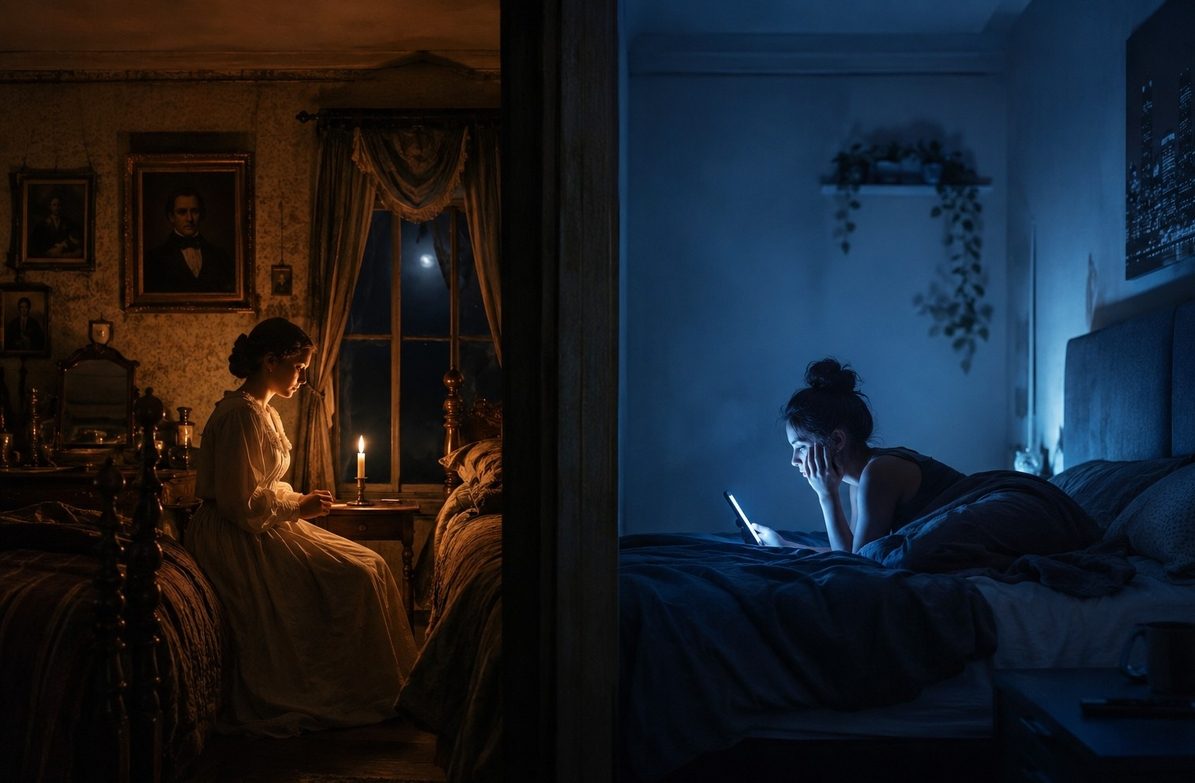
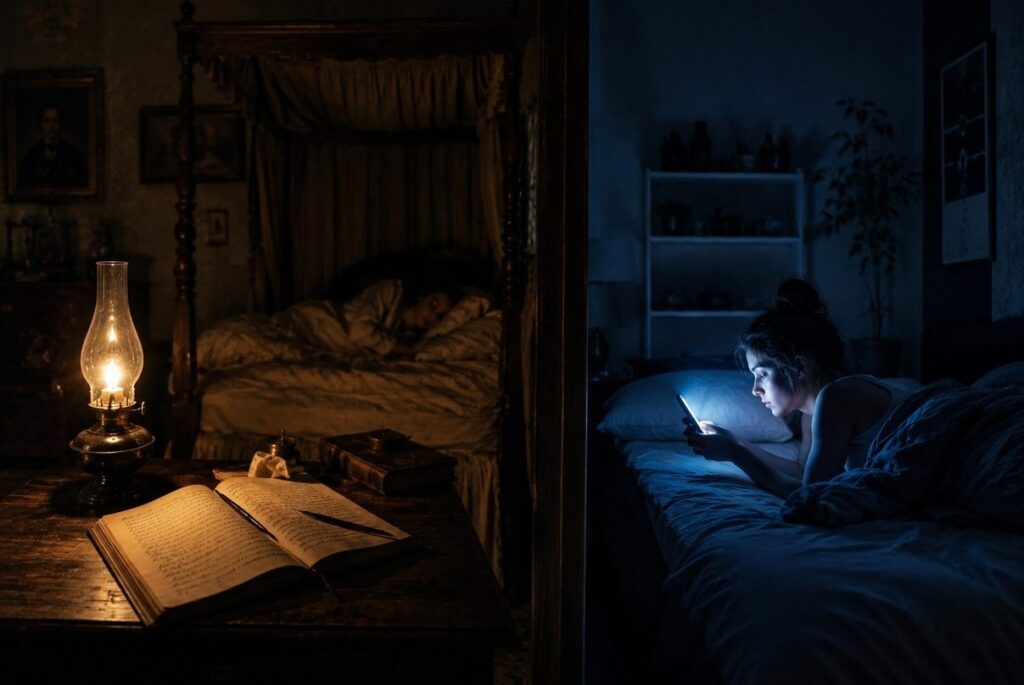
Before Edison, sleep was a different country. The sun set, the fire burned low, the body responded to melatonin–the hormone of darkness, the chemical signal that it was time to descend into the unconscious. Now, the sun never sets. The blue light of screens blazes into the retinas until the moment of attempted sleep, and the body, confused, produces cortisol instead of melatonin, treating the night as perpetual day. This is not a side effect. This is circadian capture–the hijacking of the biological clock by digital light.
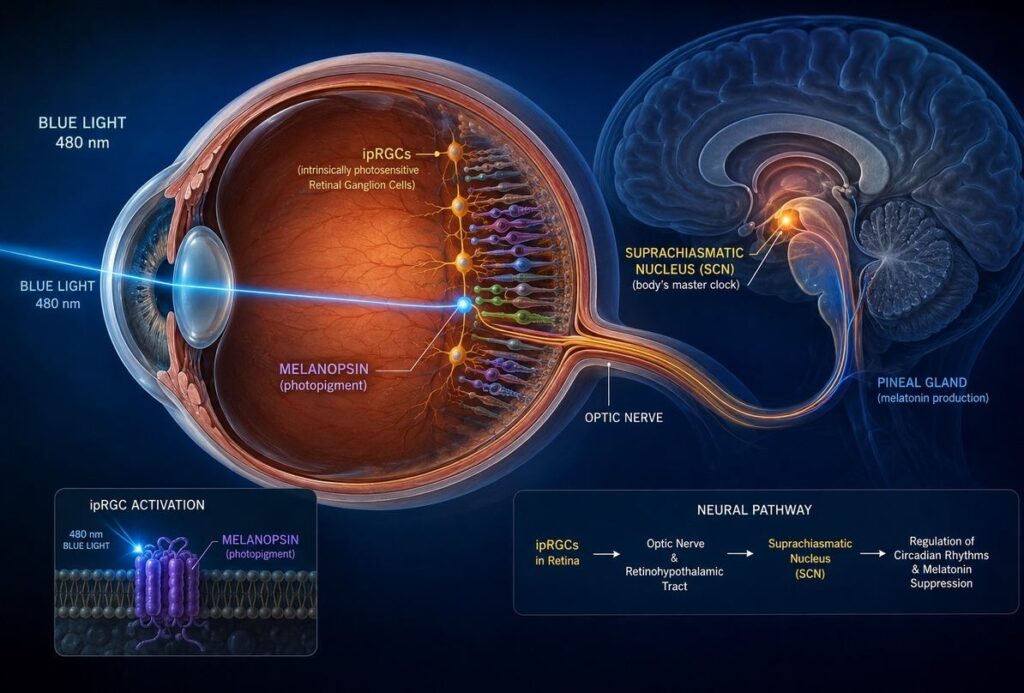
The “blue light” emitted by LEDs and screens is particularly effective at suppressing melatonin because its wavelength (~480nm) aligns precisely with the sensitivity peak of the intrinsically photosensitive retinal ganglion cells (ipRGCs) that regulate the suprachiasmatic nucleus–the brain’s timekeeper. The melanopsin photopigment in these cells absorbs maximally in the blue spectrum, making artificial illumination after sunset a potent endocrine disruptor disguised as convenience.
Table of Contents
- The Theft of the Night
- The Photochemistry of Insomnia
- The Physiological Consequences
- The Gnostic Dimension: The Theft of Dreams
- The Architecture of the Digital Sunset
- Frequently Asked Questions
- Further Reading
- References and Sources
The Theft of the Night
Historical evidence indicates that sleep before electricity was biphasic–there was a “first sleep” lasting several hours, then a period of wakefulness either in the dark or with a small fire, followed by a second sleep. A. Roger Ekirch, historian at Virginia Tech, argues that this pattern evolved over millennia and has been lost in the contemporary world. The modern compacted sleep is typically confined to a seven or eight hour period of relative dimness–few people sleep in complete darkness. On this basis, Ekirch speculates that one of the losses due to compacted sleep is that of dream consolidation, with potential impact on psychological health.
The introduction of electric light did more than extend the day. It restructured the architecture of human consciousness. Before Edison’s bulb (1879), the night was a territory of its own–governed by fire, moon, and stars. After Edison, the night became a dimmed version of the day, and the body, which had evolved over 300,000 years to respond to natural light-dark cycles, found itself marooned in perpetual twilight. The circadian rhythm, once anchored to the rotation of the earth, was set adrift.
The Photochemistry of Insomnia
Light enters the eye, not merely as image but as signal. The ipRGCs are not concerned with what you see; they are concerned with when it is. Blue light signals “daytime” to the primitive brain, triggering a cascade of hormonal adjustments: cortisol rises (be alert), melatonin falls (do not sleep), digestion slows (this is not the time for rest), and the body temperature drops more slowly (remain ready for action).
Researchers at Harvard University and their colleagues conducted an experiment comparing the effects of 6.5 hours of exposure to blue light against exposure to green light of comparable brightness. The blue light suppressed melatonin for about twice as long as the green light and shifted circadian rhythms by twice as much–3 hours versus 1.5 hours. In another study at the University of Toronto, researchers compared melatonin levels of people exposed to bright indoor light while wearing blue-light-blocking goggles against people exposed to regular dim light without goggles. The hormone levels were approximately the same in both groups, strengthening the hypothesis that blue light is a potent suppressor of melatonin and suggesting that shift workers and night owls could protect themselves with appropriate eyewear.
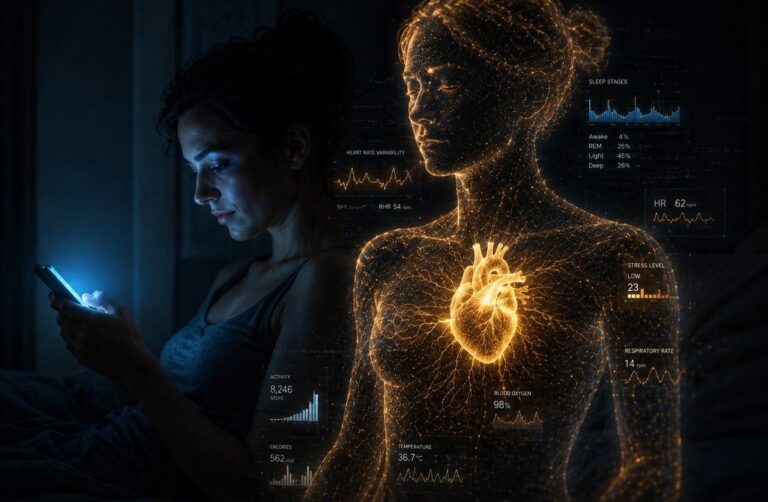
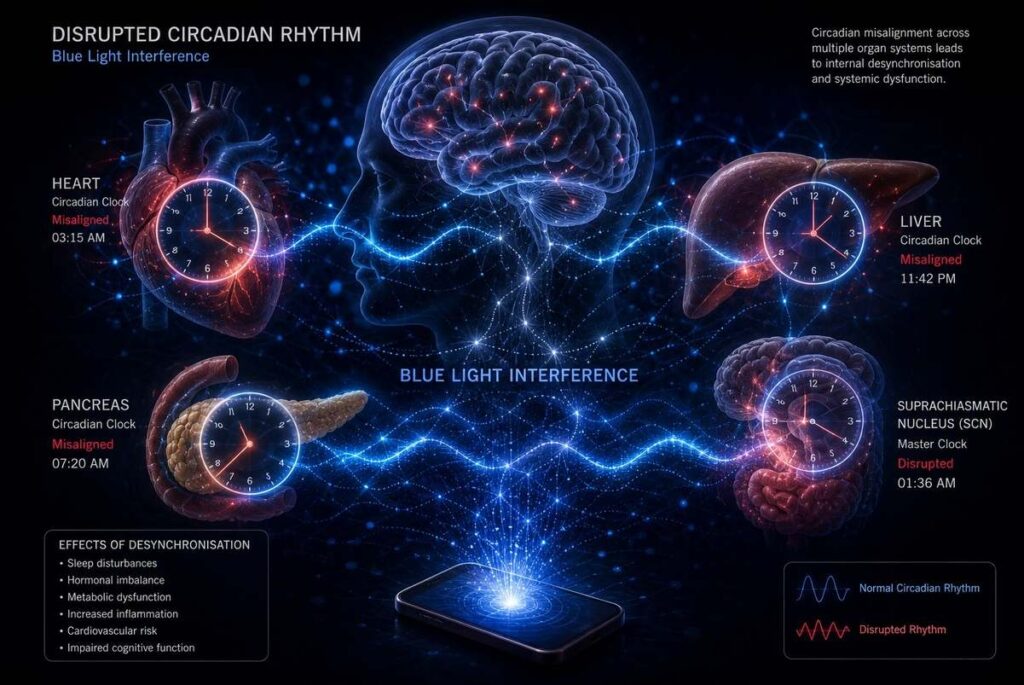
When this signal is received at 23:00, the circadian rhythm is phase-delayed–the body thinks it is several hours earlier than it is. The result is “social jetlag”: the exhaustion of someone who has crossed multiple time zones without leaving their bedroom. Unlike travel jetlag, which resolves in days, social jetlag is chronic–maintained night after night by the insistence of the screen. Systematic reviews have shown that social jetlag correlates with poorer psychological health, higher prevalence of obesity, adverse metabolic parameters including elevated fasting glucose, and increased cardiovascular risk. The circadian clock governs virtually all processes in the human body; when it is misaligned, the consequences propagate through every system.
The Physiological Consequences
Chronic circadian disruption is not merely a matter of feeling tired. In June 2019, the International Agency for Research on Cancer (IARC) concluded that “night shift work” is probably carcinogenic to humans (Group 2A). The classification was based on sufficient evidence of cancer in experimental animals and strong mechanistic evidence linking disturbed chronobiology to carcinogenicity. The biological basis is clear: melatonin suppression removes a natural anticancer mechanism, while circadian misalignment disrupts DNA repair, cell cycle regulation, and immune surveillance.
Melatonin is not merely a sleep hormone. It is a direct radical scavenger and an indirect antioxidant through upregulation of superoxide dismutase, catalase, and glutathione peroxidase. It modulates both innate and adaptive immune responses, promotes natural killer (NK) cell activity, and influences macrophage polarization toward antitumor phenotypes. Its suppression by artificial light is therefore not simply a sleep issue but an immunological and oncological vulnerability. Research published in 2025 confirms that melatonin influences macrophage polarization, favouring antitumor M1 phenotypes over pro-tumoral M2 states, while attenuating chronic inflammation and restoring mitochondrial function within the tumor microenvironment.
The health effects of circadian disruption extend across the entire organism:
Immune Suppression
Melatonin’s suppression leaves the body vulnerable to infection and inflammation. Mice with aberrant melatonin production exhibit increased mortality following viral infection, attributed to melatonin-mediated suppression of mast cell activation and inflammatory cytokine dysregulation. The hormone’s immunomodulatory functions are evolutionarily conserved and operate across innate and adaptive immunity.
Metabolic Dysregulation
The body processes glucose differently when sleep-deprived, contributing to insulin resistance, weight gain, and type 2 diabetes. Social jetlag is associated with higher caffeine intake, unhealthy food choices (high sugar, low fibre), and increased sedentary behaviour. The metabolic consequences are not secondary to sleep loss alone but directly mediated by circadian misalignment of the hypothalamic-pituitary-adrenal axis and peripheral clocks in the liver, pancreas, and adipose tissue.
Mental Health Degradation
The correlation between screen time and depression is mediated partly by sleep disruption. A 2024 Swedish prospective cohort study of 4,810 adolescents found that screen time deteriorated sleep within three months, with effects mediated through sleep quality, duration, and chronotype. Among girls, 38-57% of the association between screen time and depression was attributable to sleep displacement. A separate meta-analysis of 237,146 participants across seven countries found that screen time exceeding one hour per day was associated with higher depression risk, with effects strongest among young women. The tired brain is not merely the depressed brain; it is the brain whose circadian scaffolding has been dismantled.
The Gnostic Dimension: The Theft of Dreams
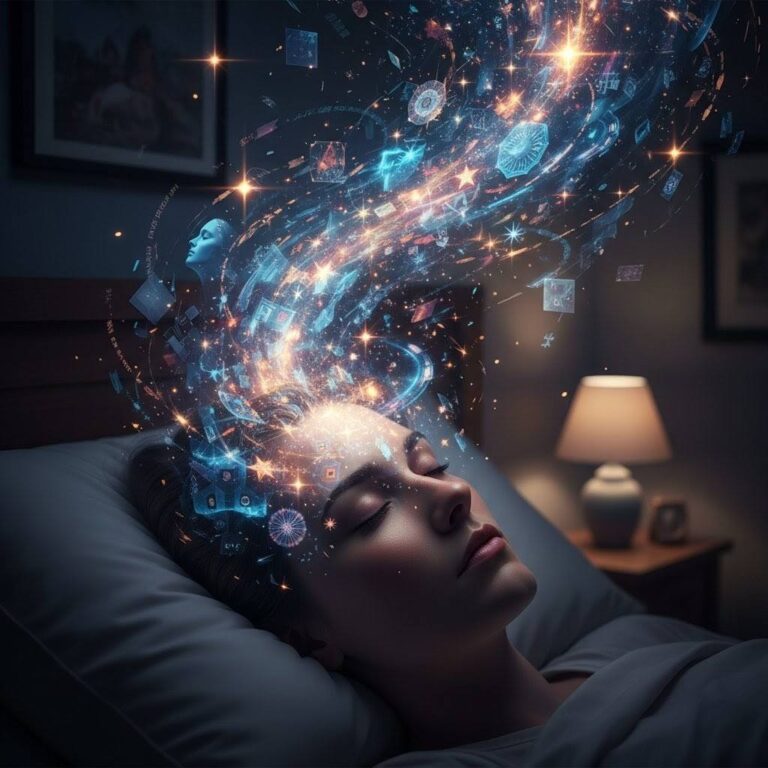
Sleep is not merely rest; it is the portal to the oneiros–the dream realm where the unconscious processes, integrates, and sometimes receives transmission. By disrupting sleep architecture, blue light severs the connection to this realm. The user wakes unrefreshed, unremembering, unmoored from the deep self.
The Gnostic tradition has always valued the night as the time of anamnesis–the un-forgetting that occurs when the conscious mind is offline. The “darkness visible” of the dream is the territory of the mystic. To pollute the night with artificial day is to wall off the pleroma (the divine fullness), to remain trapped in the kenoma (the emptiness of material existence) of perpetual waking. The Nag Hammadi texts describe the material world as a prison of forgetfulness; the night, in this framework, is the scheduled parole hearing–the interval when the soul may review its case file and remember its origins.
This is not mere metaphor. REM sleep–the phase most disrupted by blue light exposure and artificial schedules–is the primary neurobiological substrate of dreaming. During REM, the brain consolidates emotional memories, processes unresolved conflicts, and engages in creative recombination. The biphasic sleep of the pre-industrial world included a “watching” period between sleeps–a liminal interval of heightened creativity, spiritual reflection, and dream recall. Edison’s light bulb did not merely extend the day; it amputated this interval, compressing the night into a single exhausted block and truncating the dream work that the pre-industrial mind performed in two movements.
The Architecture of the Digital Sunset
Reclaiming the night requires treating light as diet–a substance to be consumed mindfully, at appropriate times, in appropriate quantities. The following protocol is not asceticism but hygiene–the restoration of conditions under which the body evolved to function.
1. The Digital Sunset
Two hours before intended sleep, all screens cease. This is not negotiable. The body requires time to clear the cortisol and generate the melatonin. Research from the Lighting Research Center confirms that “night mode” and blue-light filters alone are insufficient: a 2018 iPad study found that Night Shift at its warmest setting (2837 K) still suppressed melatonin by 10%, while the cooler setting (5997 K) suppressed it by 17%. Only the combination of blue-light reduction and significant dimming produced no melatonin suppression. The intensity of the light itself is alerting, regardless of colour temperature. The digital sunset is not a filter. It is a cessation.
2. The Amber Transition
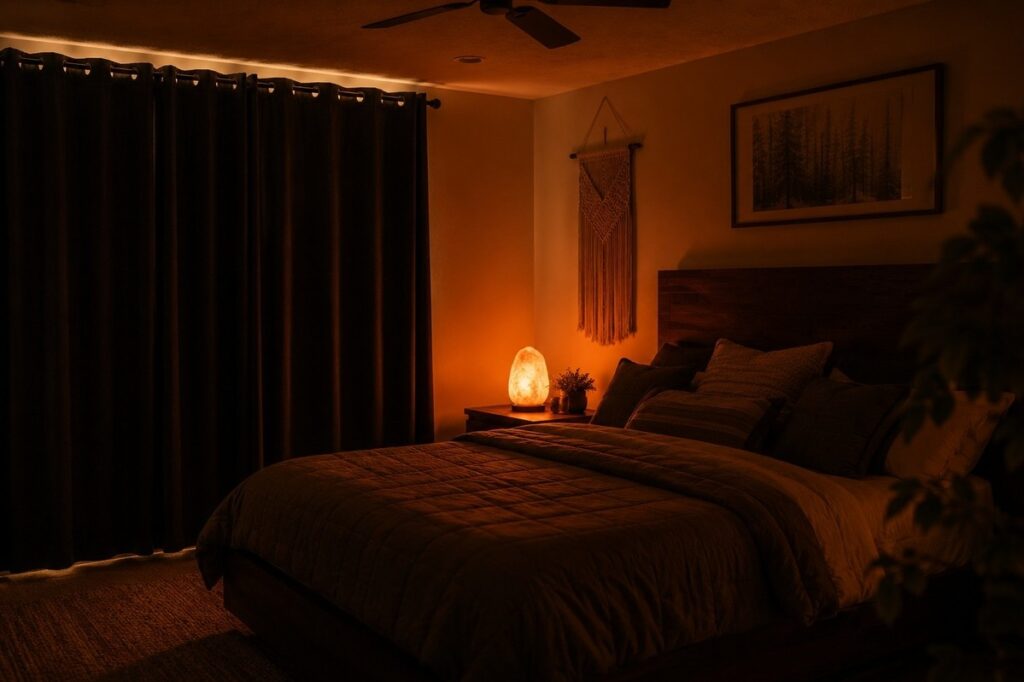
Replace blue-rich LEDs with amber or red lighting after dark. These wavelengths do not trigger the ipRGCs. A 2024 study comparing lamp technologies found that “warm” CCT fixed-LEDs offer a 3.4-fold reduction in melatonin suppression compared to cool-LEDs. Incandescent lamps–the older technology–exert the least circadian impact due to their low short-wavelength irradiance. The effect is immediate and palpable: a sudden, profound drowsiness that modernity has trained us to ignore with caffeine. The body remembers darkness, even when the mind has forgotten it.
3. The Morning Drench
Conversely, expose yourself to bright, blue-rich light immediately upon waking. This anchors the circadian rhythm, making the night-time darkness more effective. The sun is the original alarm clock; use it. Morning light exposure of sufficient intensity and duration (ideally 30 minutes outdoors) entrains the suprachiasmatic nucleus to the solar day, strengthening the amplitude of the circadian oscillation and improving both sleep quality and daytime alertness. Those who receive strong morning light fall asleep more easily and experience more restorative slow-wave sleep.
4. The Blackout
Sleep in complete darkness. Even the LED of a charger is sufficient to disrupt melatonin production. The bedroom should be a cave–a return to the prehistoric night. Blackout curtains, eye masks, and the removal of all light-emitting devices create the conditions under which the pineal gland can produce melatonin without inhibition. The goal is not merely darkness but signal silence: the complete absence of the photic cues that tell the brain it is still daytime.
Frequently Asked Questions
What is blue light and why does it affect sleep?
Blue light is short-wavelength light (~480nm) emitted by LED screens and energy-efficient bulbs. It aligns with the peak sensitivity of melanopsin in intrinsically photosensitive retinal ganglion cells (ipRGCs), which signal the suprachiasmatic nucleus–the brain’s master clock. This signal suppresses melatonin production and delays circadian phase, tricking the body into thinking it is daytime.
Is night mode or blue light filter enough to protect sleep?
No. Research from the Lighting Research Center found that iPad Night Shift at its warmest setting still suppressed melatonin by 10%, while the cooler setting suppressed it by 17%. Only the combination of blue-light reduction AND significant dimming produced no melatonin suppression. The intensity of light itself is alerting regardless of colour temperature. A digital sunset–complete cessation of screens–is more effective than filters.
What is social jetlag and how is it related to screen time?
Social jetlag is the discrepancy between biological time and social obligations, quantified as the difference in sleep midpoint between workdays and free days. It is caused by circadian misalignment–when the body’s internal clock is out of phase with external schedules. Screen time contributes by phase-delaying the circadian rhythm through evening blue light exposure, making it harder to fall asleep at socially required times.
Does circadian disruption really cause cancer?
In 2019, the International Agency for Research on Cancer (IARC) classified night shift work as a Group 2A probable carcinogen. The mechanism involves melatonin suppression (melatonin has direct antioxidant and immune-modulating anticancer properties), circadian misalignment of DNA repair and cell cycle regulation, and disruption of immune surveillance. While individual risk varies, chronic circadian disruption is a recognised health hazard.
How long before bed should I stop using screens?
The evidence supports a minimum of two hours before intended sleep. This allows cortisol to decline and melatonin to rise naturally. The two-hour window is based on the half-life of melatonin suppression following light exposure and the time required for the hypothalamic-pituitary-adrenal axis to downregulate from its alert state.
Can I use melatonin supplements to counteract blue light exposure?
Melatonin supplements can help initiate sleep but do not fully replicate the complex physiological role of endogenous melatonin, which includes immune modulation, antioxidant activity, and circadian entrainment. Supplements are a temporary aid, not a substitute for light hygiene. The optimal approach is to remove the cause–blue light exposure–rather than compensating for it pharmacologically.
What is the best type of evening lighting for sleep?
Amber or red lighting with low correlated colour temperature (CCT below 2700 K) and low overall illuminance. Incandescent bulbs or warm LED lamps produce minimal short-wavelength irradiance. Avoid cool-white LEDs and fluorescent lights after sunset. Tunable LED lamps that shift to warm CCT in the evening offer an optimal solution, providing beneficial cool light by day and circadian-safe warmth at night.
Further Reading
- Hypnagogia: The Threshold State Between Waking and Sleep — The liminal territory where consciousness hands over to the night staff.
- Sleep Paralysis as Threshold State: Between Dream and Waking — When REM atonia persists into consciousness, the threshold becomes visible.
- Lucid Dreaming Practice and the Tibetan Milam: A Complete Guide — Reclaiming the night for transformation and the liminal Gospel of dream yoga.
- Digital Minimalism as Mystical Practice — The disciplined reduction of screen dependency as a contemplative technology.
- The Physiology of Mystical Experience: How Awakening Changes the Brain — Neurological changes associated with sustained spiritual practice and altered states.
- The Transformation After Mystical Experience — Navigating the return to ordinary life while preserving awakened awareness.
- 7 Contemplative Techniques for Permanent Gnostic Awareness — Methods for stabilising gnosis and extending momentary recognition into continuous awareness.
- 7 Integration Practices After Mystical Experience — Essential guidance for grounding peak experiences and stabilising transformation.
References and Sources
This article draws upon peer-reviewed chronobiology research, clinical studies, and historical scholarship. Sources are grouped by discipline for clarity.
Chronobiology and Sleep Science
- Ekirch, A. R. (2005). At Day’s Close: Night in Times Past. W. W. Norton. — Historical documentation of biphasic sleep patterns before industrialisation.
- Stevens, R. G., et al. (2014). “Meeting report: the role of environmental lighting and circadian disruption in breast cancer and other diseases.” Environmental Health Perspectives, 115(9), 1357-1362.
- Wright, K. P., et al. (2013). “Entrainment of the human circadian clock to the natural light-dark cycle.” Current Biology, 23(16), 1554-1558.
- Chang, A. M., et al. (2015). “Evening use of light-emitting eReaders negatively affects sleep, circadian timing, and next-morning alertness.” Proceedings of the National Academy of Sciences, 112(4), 1232-1237.
Blue Light, Melanopsin, and Melatonin Suppression
- Harvard Health Publishing. (2024). “Blue light has a dark side.” Harvard Health. — Harvard study: blue light suppresses melatonin twice as long as green and shifts circadian rhythms by 3 hours vs. 1.5 hours.
- Berson, D. M., Dunn, F. A., & Takao, M. (2002). “Phototransduction by retinal ganglion cells that set the circadian clock.” Science, 295(5557), 1070-1073. — Discovery of ipRGCs and melanopsin.
- Figueiro, M. G., & Rea, M. S. (2018). “The effects of red and blue lights on circadian variations in cortisol, alertness, and sleep.” Lighting Research Center, Rensselaer Polytechnic Institute. — iPad Night Shift study showing continued melatonin suppression despite blue-light filtering.
- Herzog, E. D., et al. (2024). “Home lighting, blue-light filtering, and their effects on circadian metrics.” ACS Omega. — Comparison of lamp technologies and mitigation strategies; warm LEDs offer 3.4-fold reduction in melatonin suppression.
Carcinogenicity and Health Consequences
- IARC Working Group. (2019). “Night shift work.” IARC Monographs on the Evaluation of Carcinogenic Risks to Humans, 124. — Group 2A classification of night shift work as probably carcinogenic.
- Garcia-Macia, M., et al. (2025). “Melatonin at the Crossroads of Oxidative Stress, Immunity, and Cancer Therapy.” International Journal of Molecular Sciences. — Comprehensive review of melatonin’s antioxidant, immunomodulatory, and anticancer mechanisms.
- Hu, Y., et al. (2022). “Melatonin: a natural guardian in cancer treatment.” Frontiers in Oncology, 12. — Melatonin’s role in cancer prevention and immune modulation.
- Kantermann, T., et al. (2023). “The association between social jetlag and poor health and its (nutritional) mechanisms.” Nutrition Reviews. — Systematic review of social jetlag’s health consequences.
Screen Time, Sleep, and Mental Health
- Hökby, S., et al. (2024). “Adolescents’ screen time displaces multiple sleep pathways and elevates depressive symptoms over twelve months.” PLOS Global Public Health. — N=4,810 Swedish adolescents; 38-57% mediation of screen time-depression link through sleep.
- Wang, X., et al. (2022). “Screen time and depression risk: A meta-analysis of cohort studies.” BMC Public Health. — 237,146 participants; screen time >1h/day associated with higher depression risk.
- Hale, L., & Guan, S. (2015). “Screen time and sleep among school-aged children and adolescents: a systematic literature review.” Sleep Medicine Reviews, 21, 50-58.
Gnostic and Esoteric Sources
- Nag Hammadi Library. (4th century CE). Robinson, J. M. (ed.). (1990). The Nag Hammadi Library in English. HarperSanFrancisco. — Primary source for Gnostic concepts of pleroma, kenoma, and anamnesis.
- Plato. (4th century BCE). Meno and Phaedo. In: Plato: Complete Works. Cooper, J. M. (ed.). (1997). Hackett Publishing. — Classical formulation of anamnesis as the soul’s recollection of pre-existence.
- Jonas, H. (1958). The Gnostic Religion: The Message of the Alien God and the Beginnings of Christianity. Beacon Press. — Standard scholarly treatment of Gnostic cosmology and the pleroma/kenoma distinction.
Safety Notice: This article explores sleep hygiene, circadian health, and the physiological consequences of light exposure. It does not constitute medical advice. If you experience chronic insomnia, depression, or symptoms of circadian rhythm disorder, please consult a qualified healthcare provider. Those with bipolar disorder or seasonal affective disorder should approach light exposure modifications cautiously, as circadian interventions can affect mood stability. The techniques described complement but do not replace clinical sleep medicine or mental health treatment.