World’s Most Famous Sexual Entity-Succubus
The succubus is one of the most enduring figures in supernatural folklore: a nocturnal sexual entity said to visit sleepers, drain vitality, disturb dreams, and blur the boundary between desire and terror. Across medieval demonology, Jewish Lilith traditions, sleep-paralysis accounts, occult lore, and modern internet testimony, the same pattern returns: a presence in the night, the body unable to move, an intimate encounter that feels both alluring and invasive, followed by exhaustion, fear, shame, fascination, or obsession.
This article examines the succubus as history, folklore, psychology, sleep phenomenon, and esoteric symbol. It does not treat every report as literal proof of an external entity, nor does it dismiss the experience as “only imagination”. The night world is more complicated than that. People really do experience presences during sleep paralysis. Cultures really do shape the form those presences take. Sexual fear, longing, repression, trauma, religious guilt, and occult expectation can all gather at the threshold of sleep, where the mind is half-dreaming and the body cannot yet move.
In the language of The Thread, the succubus belongs to the route of Predatory Consciousness: figures, forces, systems, and symbolic patterns that appear to feed on human vitality, attention, desire, fear, or unintegrated shadow. Whether read as demon, dream figure, astral parasite, trauma image, erotic nightmare, or cultural mask for sleep paralysis, the succubus remains a serious warning: what is unexamined in desire can become a doorway.

In Plain Terms
A succubus is a female night-demon or sexual spirit traditionally believed to visit sleeping people, especially men, and drain vitality through erotic encounter. The male counterpart is usually called an incubus.
Historically, succubi appear in medieval demonology, Lilith folklore, witchcraft trials, and stories of nocturnal assault. Related figures appear in many cultures, often linked with sleep, desire, fear, exhaustion, and loss of life force.
Modern interpretations range from sleep paralysis and hypnagogic hallucination to trauma imagery, repressed sexuality, occult parasitism, astral encounter, and symbolic predatory consciousness. The safest approach is discernment: take the experience seriously without rushing into either literal belief or dismissal.
Sources and Traditions Discussed
- Medieval demonology, especially incubus and succubus material in texts such as the Malleus Maleficarum.
- Jewish Lilith traditions, including the Alphabet of Ben Sira, later Kabbalistic demonology, and protective amulet traditions.
- Mesopotamian and ancient Near Eastern antecedents, including Lilitu and related night or wind spirits.
- Greek and wider comparative folklore, including Empusa, night-hags, fox spirits, rusalki, huldra, and other seductive or vitality-draining beings.
- Sleep-paralysis research, including the night-hag, sensed presence, chest pressure, REM atonia, and culturally shaped hallucination.
- Depth psychology and trauma-aware interpretation, including repression, projection, anima imagery, shame, desire, and nervous-system vulnerability.
- Modern occult and esoteric interpretations, including astral parasitism, sexual energy, ritual contact, and boundary practice, handled cautiously.
- Predatory Consciousness, the ZenithEye route for experiences and symbols involving intrusion, energetic drain, spiritual destabilisation, and discernment.
How to Read This Article
This article explores the succubus as folklore, symbol, historical fear, sleep-state encounter, and esoteric warning. It does not claim that every sleep-paralysis experience is caused by an entity. It also does not dismiss distressing nocturnal experiences as meaningless.
Reports of sexualised night encounters can be frightening, confusing, or shame-laden. Some may involve sleep paralysis, trauma memory, intrusive imagery, anxiety, sexual repression, medication effects, sleep disruption, or other health factors. Anyone experiencing repeated distressing episodes should seek qualified medical or mental health support.
The occult material is presented for study and symbolic interpretation. Do not attempt blood contracts, coercive rituals, extreme sleep deprivation, or deliberate summoning practices. The wiser path is boundary, grounding, self-knowledge, and discernment.
The succubus endures because she gathers three things humans struggle to face: desire, fear, and the vulnerability of consciousness at the edge of sleep.
Table of Contents
- Succubus: A Universal Nightmare
- Etymology and Early Origins
- From Lilitu to Lilith
- The Medieval Terror: Demonology and Sexual Fear
- The Malleus Maleficarum and the Semen-Transfer Theory
- Beauty, Glamour, and the Monstrous Reveal
- Lilith and the Four Night Queens
- Sleep Paralysis and the Night-Hag Body
- Cross-Cultural Parallels
- Historical Case Material
- Modern Occult Interpretations
- The Digital-Age Succubus
- Protection, Boundaries, and Grounding
- The Gnostic Reading: Predatory Consciousness and Desire
- Related Glossary Terms
- Read Next
- Frequently Asked Questions
- Further Reading
- References and Sources
Succubus: A Universal Nightmare
The succubus is usually described as a female demon or spirit who approaches sleepers, arouses desire, overwhelms resistance, and drains vitality through nocturnal sexual encounter. In some accounts she appears as a beautiful woman. In others, she is shadowy, monstrous, cold, winged, clawed, or only partly visible. The encounter may feel seductive, terrifying, paralysing, or strangely intimate.
That mixture is the key. The succubus is not simply “sex demon”. She is the place where eros becomes ambiguous: pleasure mixed with fear, intimacy mixed with invasion, consent mixed with helplessness, desire mixed with exhaustion. This is why the figure appears again and again wherever culture worries about sexuality, sleep, vulnerability, shame, spiritual pollution, or loss of life force.
For some, the succubus is a nightmare. For others, especially in modern occult forums, she is deliberately sought. That contrast should make us cautious. A figure that can be feared as predator and pursued as lover is not simple. She belongs to the liminal zone where fantasy, hunger, loneliness, altered states, religious fear, and symbolic danger braid themselves into one dark rope.
Etymology and Early Origins
The word succubus comes from Late Latin succubare, meaning “to lie beneath”. The male counterpart, incubus, comes from incubare, “to lie upon”. Medieval writers used these terms to describe demons involved in nocturnal sexual assault, temptation, and the corruption of bodies and souls.
The Latin terms are medieval, but the pattern is far older. Ancient Near Eastern, Jewish, Greek, Roman, Persian, Chinese, Slavic, Scandinavian, and African traditions all preserve some version of the night visitor: a being who comes during sleep, presses on the body, seduces, frightens, drains, or leaves the victim altered.
The remarkable thing is not that every culture has the same being. They do not. The remarkable thing is that human beings keep generating similar figures at the threshold of sleep. The details change according to local cosmology. The underlying structure remains: paralysis, presence, pressure, sexuality, fear, vitality loss, and a story that tries to explain what happened.
From Lilitu to Lilith
Ancient Mesopotamian material includes wind, night, and desert spirits often linked by later interpretation with the Lilith complex. The precise relationship between Lilitu, Lilith, and the later succubus is debated, but the symbolic family resemblance is strong: night, danger, sexuality, child threat, storm, wilderness, and the feminine presence outside domestic control.
In Jewish folklore, Lilith develops into one of the most famous night spirits. Later traditions describe her as Adam’s first wife, as a demoness of the wilderness, as a threat to infants and mothers, and as a seducer of men. Over centuries, she becomes less a single figure than an entire mythic weather system: rebellion, fear of female autonomy, erotic danger, infant mortality, and nocturnal vulnerability.
Greek mythology offers related figures such as Empusa, sometimes described as a shape-shifting female spirit associated with Hecate, seduction, and devouring. These are not identical to the medieval succubus, but they show that the imagination of predatory feminine night beings is older and wider than Christian demonology.
The Medieval Terror: Demonology and Sexual Fear
In medieval Europe, succubus and incubus lore became entangled with Christian demonology, witchcraft anxiety, celibacy, sexual guilt, nocturnal emissions, unexplained illness, fertility fears, and the policing of desire. The night visitor became a theological problem: if demons could touch the body, could they generate children, steal semen, corrupt vows, or weaponise desire against the soul?
This period did not invent erotic nightmares, but it gave them a powerful institutional language. The succubus became evidence of demonic assault. The incubus became a threat to women, especially nuns and women accused of witchcraft. Sexual experience outside authorised structures could be reframed as infernal contact.
That framework had consequences. It could explain genuine distress, but it could also intensify fear, shame, misogyny, and persecution. A sleep-state event could become proof of sin. A bodily symptom could become evidence of demonic visitation. A woman’s sexuality, trauma, illness, or accusation could become part of a machinery she did not control.
The Malleus Maleficarum and the Semen-Transfer Theory
The Malleus Maleficarum, published in 1487, gave elaborate attention to witchcraft, demons, sexuality, and the supposed operations of incubi and succubi. One of its strangest claims is that demons could collect semen in female form as succubi, then use it in male form as incubi to impregnate women.
Modern readers may find the theory grotesque, but it reveals the logic of the age. Medieval demonology tried to reconcile supernatural assault, bodily evidence, conception, nocturnal emissions, temptation, and theological assumptions about demons lacking true generative power. The result is an eerie bureaucratic fantasy of sexual transfer: extraction, storage, transformation, deposition.
The language may sound bizarre, but the emotional structure is familiar. Fear of desire becomes fear of theft. Sexual energy becomes a resource. The body becomes a contested archive. The succubus becomes the night clerk of a system obsessed with purity, reproduction, guilt, and control.
Beauty, Glamour, and the Monstrous Reveal
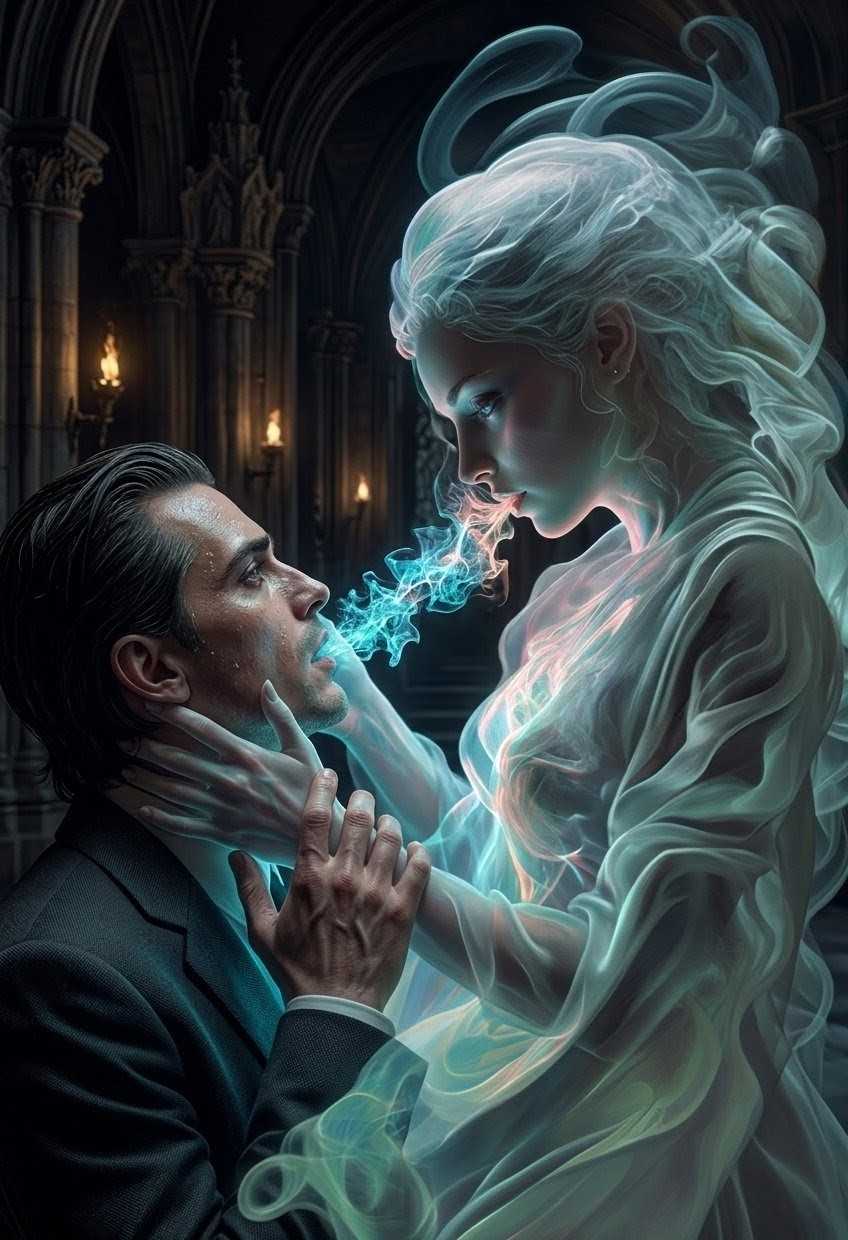
Succubi are often described as beautiful at first appearance. The beauty is not incidental. It is the lure. Folklore repeatedly warns that the entity appears as what the victim desires: a perfect stranger, a lost lover, a forbidden figure, or a form tailored to the sleeper’s secret imagination.
Then the glamour fails. Wings, claws, cold skin, animal features, serpentine signs, burning eyes, corpse-like touch, or foul breath reveal the monstrous beneath the mask. Sometimes the reveal happens at the moment of terror. Sometimes it comes after waking, when pleasure curdles into dread.
Symbolically, this is the oldest warning about glamour: not all beauty carries life. Not every intensity is intimacy. Not every desire belongs to the soul. Some images enter through longing and leave through depletion.
Victims in folklore may report exhaustion, wasting, scratches, bruising, fear of sleep, obsessive longing, or shame. Modern interpretation must be careful. Such symptoms can have many causes: sleep disorders, injury, trauma, anxiety, dissociation, sexual distress, medication effects, substance use, or medical conditions. Folklore should not replace assessment. The monster is sometimes a mythic mask worn by suffering that needs care.
Lilith and the Four Night Queens
No discussion of the succubus can avoid Lilith. In the Alphabet of Ben Sira, Lilith is presented as Adam’s first wife, created from the same earth as him and refusing sexual subordination. She speaks the divine name and leaves Eden. Later traditions darken her into a night demon, child-threatening spirit, seducer, and queenly figure of dangerous autonomy.
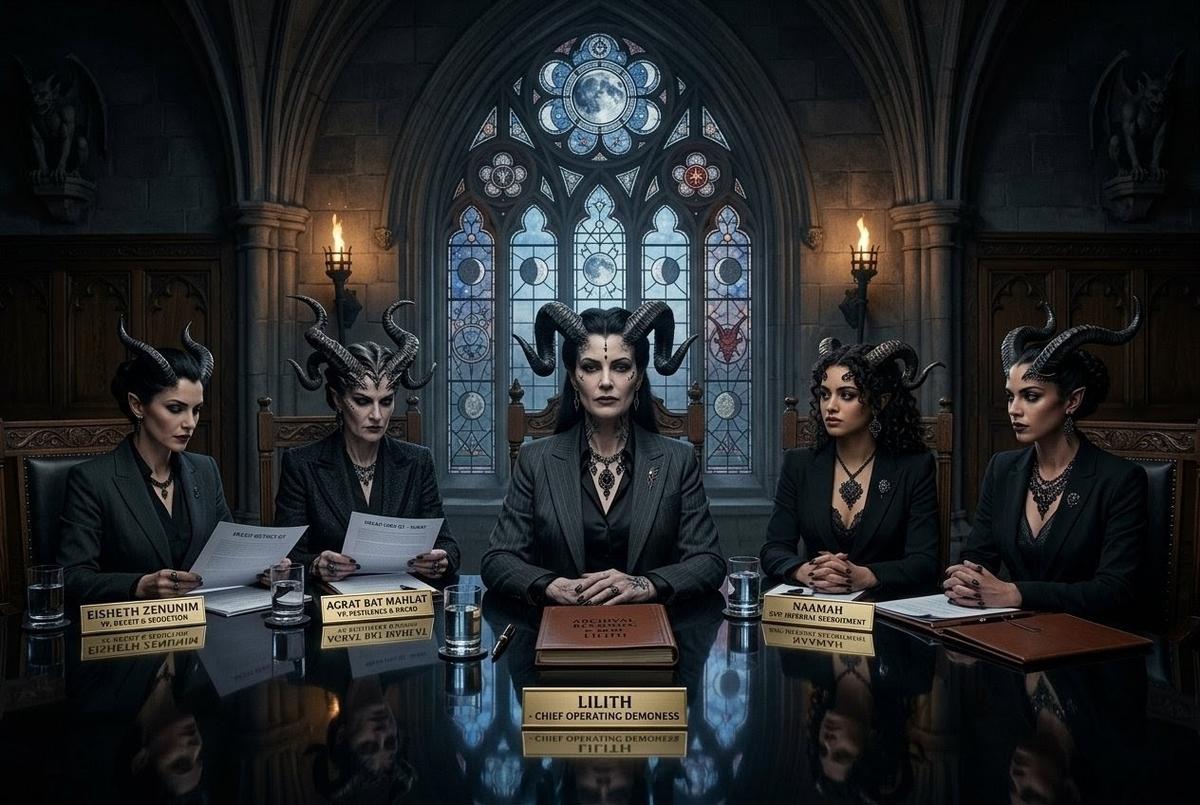
Kabbalistic and later demonological traditions develop a broader hierarchy of feminine demonic figures. Names such as Lilith, Naamah, Agrat bat Mahlat, and Eisheth Zenunim appear in relation to seduction, wandering at night, spiritual impurity, and the corruption of holy or erotic force. These traditions differ across sources, and they should not be flattened into one fixed chart. They are better read as a symbolic constellation.
- Lilith – the most famous night figure, associated with rebellion, wilderness, seduction, infant threat, and nocturnal danger.
- Naamah – often linked with beauty, seduction, and the corruption of holy men or angelic beings.
- Agrat bat Mahlat – a night-wandering demoness in later Jewish demonological traditions.
- Eisheth Zenunim – a figure associated with sexual impurity, whoredom, and sacred corruption in later demonological imagination.
In modern terms, Lilith has been reclaimed in many ways: as demon, goddess, feminist symbol, shadow feminine, sexual autonomy, trauma image, or guardian of exiled desire. These interpretations can be meaningful, but they belong to different layers. The historical Lilith of amulets and demonology is not identical with the modern Lilith of empowerment culture. The name carries many masks.
Sleep Paralysis and the Night-Hag Body
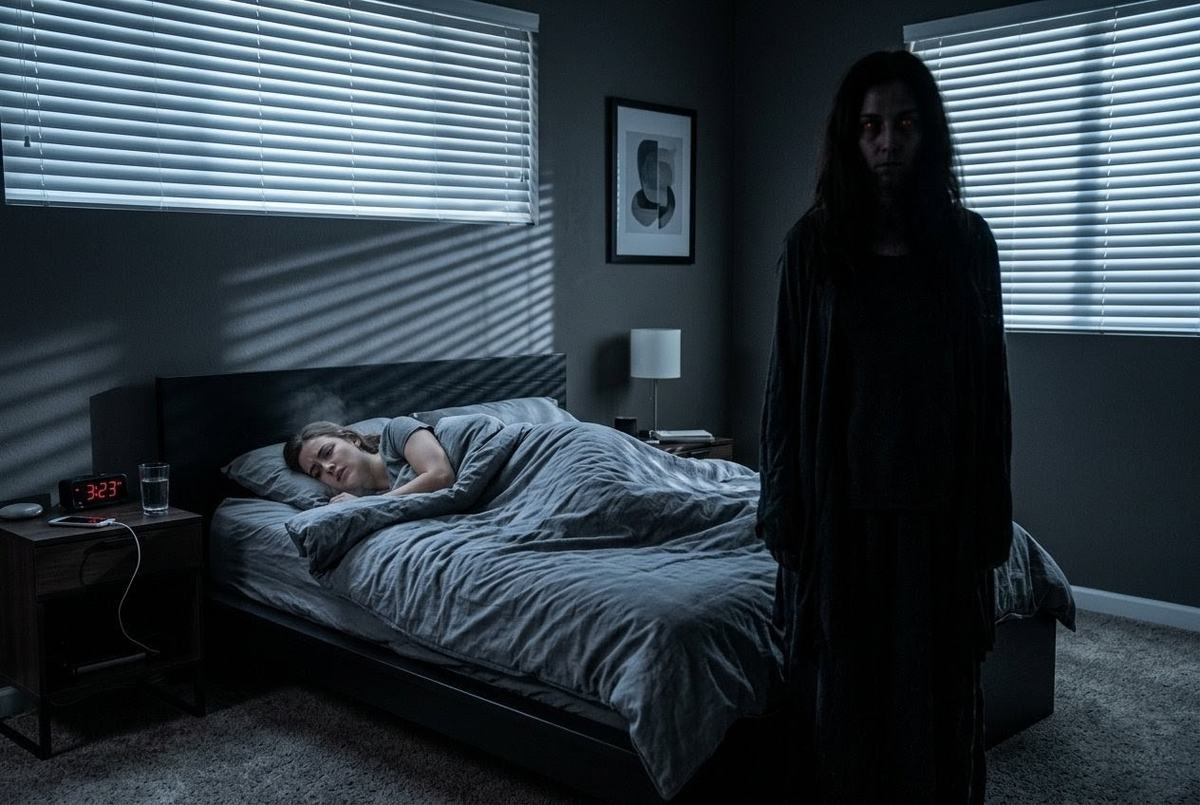
Contemporary sleep science offers one of the strongest frameworks for understanding many succubus and incubus reports: sleep paralysis. During REM sleep, the body is normally held in muscle atonia to prevent dream enactment. Sometimes consciousness returns before the body fully releases from this paralysis. The person wakes, cannot move, and may experience intense fear, chest pressure, sensed presence, sounds, touch, or visual hallucinations.
This state can feel profoundly real. The body is awake enough to know the room, but the dream system has not fully closed its doors. The result is a threshold world: bed, darkness, pressure, presence, paralysis, and a mind trying desperately to explain what is happening.
Culture supplies the figure. A medieval Christian may see a demon. A Newfoundland sleeper may feel the old hag. A modern person may see a shadow figure, alien, ghost, dead relative, or erotic presence. The succubus belongs naturally to this terrain because sleep paralysis can include bodily sensation, fear, arousal, touch, and helplessness.
This does not mean every report is “just” sleep paralysis in a dismissive sense. Sleep paralysis can be traumatic. It can feel like assault. It can recur. It can interact with anxiety, trauma, irregular sleep, stress, substance use, and cultural expectation. The explanation does not remove the impact. It gives the experience a safer map.
Cross-Cultural Parallels
The succubus is not only a Western demon. Similar figures appear across the world, though each belongs to its own culture and should not be forced into one universal category. The safer claim is that many cultures have night visitors, seductive spirits, vitality-draining beings, or sleep-paralysis figures that resemble parts of the succubus pattern.
- Arabic and Islamic folklore: female jinn or qarinah-like figures may be linked with seduction, illness, and nocturnal disturbance.
- Slavic folklore: the rusalka can lure men through beauty, water, grief, and deathly fascination.
- Japanese folklore: the yuki-onna may appear as an alluring snow woman whose beauty brings coldness and death.
- Chinese folklore: fox spirits such as the huli jing may seduce men, steal essence, or entangle officials and scholars.
- Scandinavian folklore: the huldra appears as a beautiful forest woman who hides a tail or hollow back.
- Persian and Middle Eastern material: night-hag and chest-pressure traditions overlap with sleep paralysis interpretations.
- Brazilian folklore: the pisadeira sits on sleepers’ chests, producing suffocation and fear.
- Zanzibari and East African panic narratives: the Popobawa has been reported as a sexual night attacker in modern social-panic contexts.
These parallels do not prove that one literal entity is travelling the globe in different uniforms. They show that human beings repeatedly personify certain threshold experiences: sleep paralysis, erotic fear, grief, nocturnal vulnerability, bodily pressure, and the haunting sense that something unseen is feeding on life.
Historical Case Material
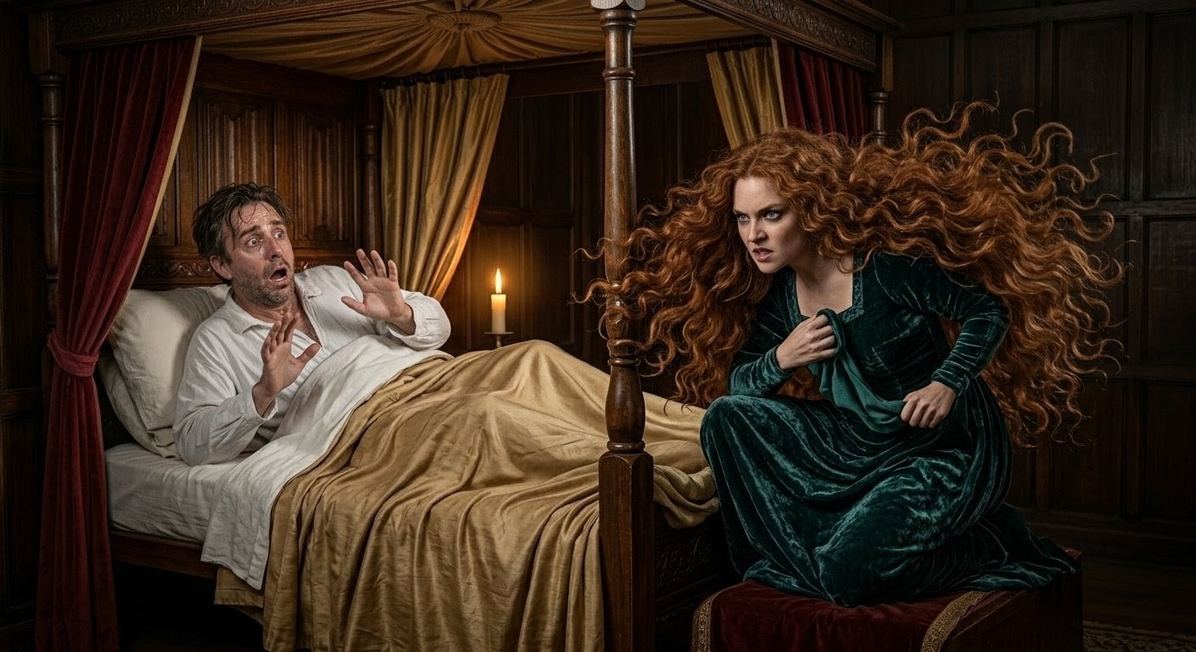
Historical cases involving succubi, incubi, night-hags, and demonic sexual assault must be handled with caution. Many were recorded by clergy, inquisitors, physicians, or hostile observers. They may preserve genuine distress, but they also reflect theological assumptions, political motives, misogyny, social panic, sexual repression, and the pressures of interrogation.
The Loudun Possessions
The Ursuline possessions at Loudun in seventeenth-century France remain among the most famous possession cases in European history. The nuns reported visions, convulsions, obscene language, and demonic torment. The priest Urbain Grandier was accused of causing the possession and was executed.
Modern interpretations vary: mass psychogenic illness, political conflict, religious theatre, sexual repression, trauma, suggestion, and institutional power all appear in the analysis. Demonological readings treated the events as genuine demonic assault. For this article, the important point is not to solve Loudun, but to see how sexuality, authority, fear, and supernatural interpretation can become fused inside a social crisis.
The Night-Hag Research of David Hufford
Folklorist David J. Hufford’s work on the “Old Hag” tradition in Newfoundland is especially important for modern readers. Hufford documented accounts of sleep paralysis involving chest pressure, sensed presence, fear, and sometimes intimate or threatening bodily experience. His work showed that educated modern people could experience the night-hag pattern without simply inheriting a medieval demonology.
That research does not prove succubi as literal entities. It does something more useful: it shows that the experience is real as experience, recurring, culturally meaningful, and often deeply distressing. The night visitor belongs to both folklore and the nervous system.
Modern Occult Interpretations
Modern occult and esoteric traditions often reinterpret the succubus as an astral parasite, thought-form, sexual energy feeder, lower-plane entity, or shadow construct. In these systems, the entity may be said to attach through fantasy, shame, compulsive sexual behaviour, trauma, ritual invitation, or repeated attention.
Such language can be symbolically useful, but it can also become dangerous if taken without grounding. The idea that one is being fed upon can intensify anxiety, paranoia, shame, or compulsive self-monitoring. A trauma-aware approach asks what is actually happening: sleep disruption, intrusive imagery, compulsive sexual behaviour, loneliness, fear of intimacy, religious guilt, dissociation, or an occult framework that has become too literal for the nervous system to carry safely.
Some modern practitioners claim to deliberately summon succubi through rituals, “letters of intent”, sexual magic, or contracts. This article does not recommend such practices. Whatever one believes metaphysically, deliberately intensifying erotic night phenomena can destabilise sleep, attachment, sexuality, mental health, and ordinary human intimacy. A door opened in fantasy can still have real psychological consequences.
The Digital-Age Succubus
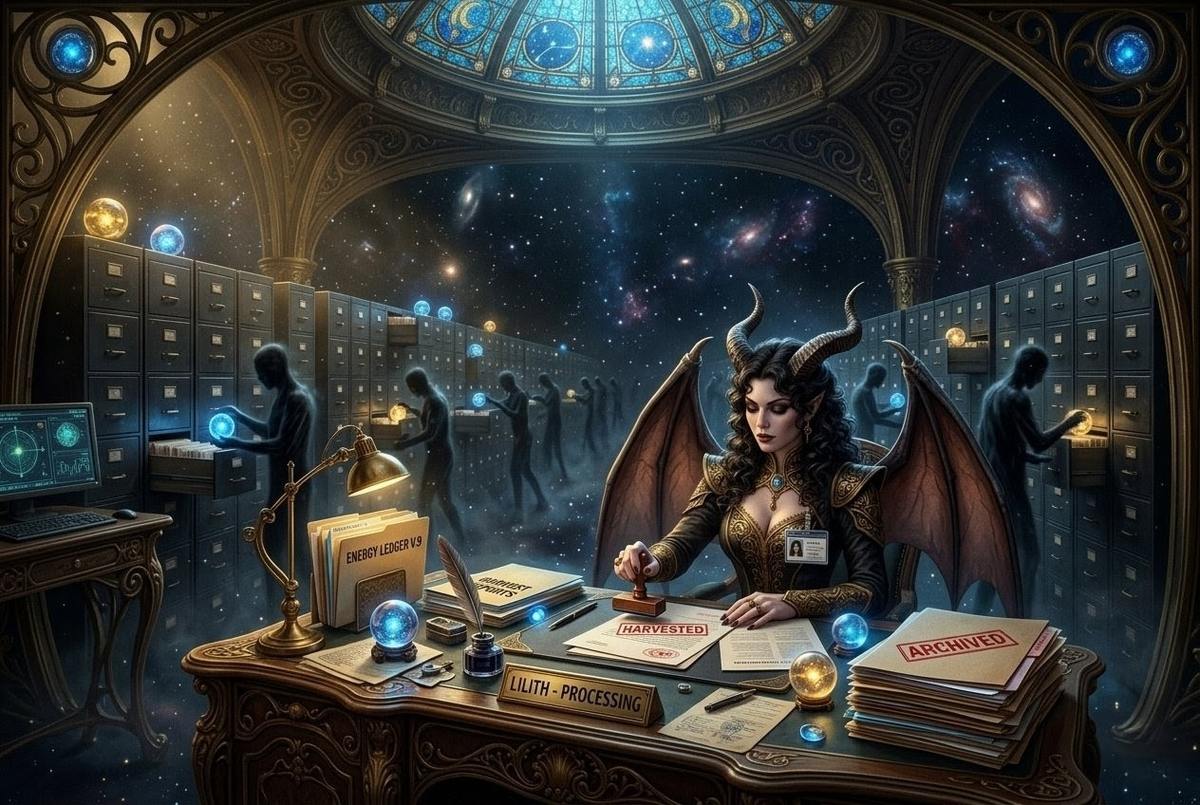
The internet has not banished the succubus. It has given her forums, search terms, confession threads, ritual scripts, private messages, AI companions, fantasy subcultures, and searchable archives of nocturnal testimony.
Modern reports often blend sleep paralysis, pornography culture, loneliness, occult ritual, lucid dreaming, astral projection, parasocial intimacy, and online reinforcement. A person may begin with curiosity, move into fantasy, then into ritual, then into obsession. The entity may be less important than the loop: attention feeding image, image feeding desire, desire feeding isolation, isolation feeding the image.
This is where the succubus becomes a modern systems symbol. She no longer needs to appear only as a demon in the room. She can appear as the endless erotic feed, the AI lover that never refuses, the fantasy that empties the body but never deepens intimacy, the compulsive loop that imitates connection while draining the capacity for real relationship.
The old folklore said the succubus visits at night. The modern world has built devices that let the night visit all day.
Protection, Boundaries, and Grounding
Traditional cultures developed many protections against succubi, incubi, Lilith, night-hags, and related figures: prayers, amulets, angel names, iron objects, salt, protective inscriptions, holy water, mezuzot, ritual purity, fasting, confession, charms, and household boundaries.
These practices should be understood in context. They offered symbolic containment, reassurance, social meaning, and ritual agency in a frightening situation. Even when their metaphysical claims are debated, the psychological function is clear: name the threat, mark the boundary, calm the body, restore order, and return the sleeper to a sense of protection.
For modern readers, the safest first steps are practical and grounded:
- Stabilise sleep: keep a regular sleep schedule, reduce sleep deprivation, limit late-night stimulants, and create a calm pre-sleep routine.
- Reduce fear loops: avoid obsessive reading of frightening material before bed, especially if prone to sleep paralysis or anxiety.
- Use body anchoring: on waking from an episode, move small muscles first, breathe slowly, look around the room, and name ordinary objects.
- Track patterns: note stress, sleep position, alcohol, medication, trauma triggers, sexual shame, or intense media use.
- Seek help when needed: repeated terrifying episodes, trauma symptoms, compulsive sexual behaviour, or beliefs that impair functioning deserve professional support.
- Use ritual gently: a prayer, protective phrase, candle, amulet, or visualisation may help if it calms the nervous system rather than feeding fear.
Boundary work is not about panic. It is about restoring sovereignty. The goal is not to wage war against every image of the night. It is to stop feeding the patterns that feed on you.
The Gnostic Reading: Predatory Consciousness and Desire
Gnostic texts do not centre the succubus as a major figure in the same way medieval demonology does. But the succubus fits naturally within a Gnostic symbolic field concerned with rulers, deception, counterfeit spirit, energetic captivity, false desire, and the misuse of human attention.
The succubus is a figure of false eros. She imitates intimacy while deepening isolation. She imitates pleasure while leaving depletion. She imitates the beloved while feeding the loop of obsession. She turns desire away from embodied relation and towards a closed circuit of fantasy, fear, shame, and repetition.
In this sense, the succubus can be read as an archonic image: not simply a demon outside the sleeper, but a predatory pattern that uses the sleeper’s own longing as a doorway. The danger is not desire itself. Desire is not the enemy. The danger is desire severed from truth, body, consent, care, mutuality, and recognition.
The Gnostic response is not repression. Repression often strengthens the very shadow it denies. The response is gnosis: clear seeing. What am I seeking here? What wound is this image feeding? What intimacy is being imitated? What fear is being eroticised? What part of my vitality is being traded for a counterfeit?
The succubus endures because she is not only a monster of folklore. She is a mirror held up to unintegrated eros. Wherever desire becomes extraction, wherever fantasy replaces contact, wherever shame feeds obsession, and wherever the night visitor leaves the soul less whole, the old figure has found a modern doorway.
Related Glossary Terms
For quick definitions, use the main ZenithEye Glossary. The key terms for this article are:
Read Next
Continue with: Sexual Energy Harvesting by Entities
If this article explores the succubus as the most famous sexual night entity, the next step widens the frame: how esoteric traditions describe sexual energy, astral parasitism, shame loops, desire, and vitality drain across multiple kinds of predatory encounter.
Within The Thread
This article belongs to Predatory Consciousness and also touches Forbidden Texts & Suppressed Scriptures. It sits where folklore, sleep states, demonology, sexuality, psychic boundaries, and energetic discernment overlap.
Frequently Asked Questions About the Succubus
What is a succubus?
A succubus is a female night-demon or sexual spirit traditionally believed to visit sleepers, especially men, and drain vitality through erotic encounter. The male counterpart is usually called an incubus. Modern readers interpret succubi through folklore, sleep paralysis, psychology, trauma, occultism, and symbolic predatory consciousness.
Are succubi real or sleep paralysis hallucinations?
Many succubus-like reports fit sleep paralysis: waking while the body remains temporarily paralysed, often with chest pressure, sensed presence, fear, touch, or vivid imagery. This does not make the experience meaningless or imaginary in a dismissive sense. It means the safest explanation begins with sleep science, while leaving room for folklore and symbolic interpretation.
Where does the word succubus come from?
Succubus comes from Late Latin succubare, meaning “to lie beneath”. Incubus comes from incubare, meaning “to lie upon”. Medieval demonology used these terms for sexual night-demons believed to assault sleepers, steal vitality, or corrupt the soul through nocturnal encounter.
Is Lilith the queen of succubi?
Later Jewish folklore and demonology often present Lilith as a queenly night spirit associated with seduction, infant danger, wilderness, rebellion, and nocturnal threat. She becomes closely linked with succubus traditions, although Lilith is a complex figure whose meanings differ across Jewish folklore, Kabbalah, demonology, feminist reinterpretation, and modern occultism.
Why do succubus encounters happen at night?
Night is when sleep paralysis, hypnagogic imagery, dream intrusion, fear of darkness, sexual dreams, and vulnerability converge. Folklore explains this as demonic visitation. Sleep science explains many cases through REM atonia and threshold-state hallucination. Esoteric traditions read the same threshold as a vulnerable opening in the subtle field.
Should someone try to summon a succubus?
No. This article does not recommend summoning, blood contracts, coercive rituals, extreme sleep deprivation, or deliberate intensification of erotic night phenomena. Whatever one believes metaphysically, these practices can destabilise sleep, sexuality, attachment, mental health, and ordinary relationships.
How can someone respond safely to recurring succubus-like experiences?
Start with grounding and sleep care: regular sleep schedule, reduced late-night stimulation, calm pre-sleep routine, body anchoring after episodes, and tracking stress or triggers. If episodes are repeated, terrifying, sexualised, traumatic, or impair functioning, seek qualified medical or mental health support. Ritual may help some people symbolically, but it should calm the nervous system rather than feed fear.
Study and Safety Note
This article explores succubus folklore, sleep paralysis, demonology, sexual energy, occult interpretation, and predatory consciousness for educational and reflective purposes. It does not provide medical, psychological, psychiatric, sexual-health, sleep-medicine, or spiritual-direction advice.
If you experience recurring sleep paralysis, sexualised nightmares, intrusive entity experiences, compulsive sexual behaviour, distressing occult beliefs, trauma symptoms, anxiety, derealisation, paranoia, insomnia, or difficulty functioning, seek qualified medical or mental health support. Do not use occult explanations to avoid practical care. Do not attempt blood contracts, coercive summoning, sleep deprivation, or destabilising rituals.
Further Reading
These live ZenithEye links continue the themes of succubi, sexual energy, predatory consciousness, sleep states, protection, and spiritual discernment:
- Sexual Energy Harvesting by Entities – The next article in this route, exploring sexual vitality, astral parasitism, shame loops, desire, and energetic drain.
- Negative Entities and Their Hunting Grounds – A broader bestiary of predatory entities, symbolic habitats, and conditions of vulnerability.
- Predatory Consciousness – The main route for boundaries, archons, energy parasitism, intrusion, and discernment.
- 7 Ancient Protection Rituals from Gnostic Texts – Protective practices and symbolic countermeasures from a Gnostic-inspired perspective.
- Sleep Paralysis as Threshold State: Between Dream and Waking – The science and symbolism behind paralysis, sensed presence, and threshold-state fear.
- Hypnagogia: The Threshold State Between Waking and Sleep – The liminal territory where dream imagery, body sensation, and perception begin to loosen.
- The Psychic Vampire: 7 Signs of Energy Parasitism and How to Stop It – A related exploration of vitality drain, psychic boundaries, and predatory dynamics.
- The Archonic Infection: Recognising Systemic Possession in the Digital Age – How intrusive systems can colonise attention, identity, and desire.
- The Integration of the Shadow Eros: Sacred Sexuality and Trauma – A grounded path for working with sexual shadow without repression or inflation.
- Recognising Completion vs Chasing Peaks – Why the pursuit of intensity can become another form of captivity.
References and Sources
The following sources support the historical, folkloric, psychological, sleep-science, and esoteric framework used in this article.
Medieval Demonology and Christian Sources
- [1] Kramer, Heinrich and Sprenger, Jacob. Malleus Maleficarum. 1487. Various English translations.
- [2] Caciola, Nancy. Discerning Spirits: Divine and Demonic Possession in the Middle Ages. Cornell University Press, 2003.
- [3] Stephens, Walter. Demon Lovers: Witchcraft, Sex, and the Crisis of Belief. University of Chicago Press, 2002.
- [4] Levack, Brian P. The Witch-Hunt in Early Modern Europe. Routledge, revised editions.
- [5] Robbins, Rossell Hope. The Encyclopedia of Witchcraft and Demonology. Crown, 1959.
Lilith, Jewish Folklore, and Kabbalistic Demonology
- [6] Alphabet of Ben Sira. Medieval Hebrew text associated with the Adam and Lilith legend.
- [7] Patai, Raphael. The Hebrew Goddess. Wayne State University Press, 3rd edition, 1990.
- [8] Scholem, Gershom. Kabbalah. Meridian, 1974.
- [9] Dan, Joseph. The Early Kabbalah. Paulist Press, 1986.
- [10] Dennis, Geoffrey W. The Encyclopedia of Jewish Myth, Magic and Mysticism. Llewellyn, 2nd edition, 2016.
- [11] Schwartz, Howard. Tree of Souls: The Mythology of Judaism. Oxford University Press, 2004.
Folklore, Night-Hag Traditions, and Cross-Cultural Parallels
- [12] Hufford, David J. The Terror That Comes in the Night: An Experience-Centered Study of Supernatural Assault Traditions. University of Pennsylvania Press, 1982.
- [13] Davies, Owen. The Haunted: A Social History of Ghosts. Palgrave Macmillan, 2007.
- [14] Lecouteux, Claude. Witches, Werewolves, and Fairies: Shapeshifters and Astral Doubles in the Middle Ages. Inner Traditions, 2003.
- [15] Briggs, Katharine. An Encyclopedia of Fairies. Pantheon, 1976.
- [16] Strassberg, Richard E. A Chinese Bestiary: Strange Creatures from the Guideways Through Mountains and Seas. University of California Press, 2002.
- [17] Hearn, Lafcadio. Kwaidan: Stories and Studies of Strange Things. 1904.
- [18] McNally, Raymond T. and Florescu, Radu. In Search of Dracula. Houghton Mifflin, revised editions.
Sleep Paralysis, Hypnagogia, and Psychology
- [19] Sharpless, Brian A. and Doghramji, Karl. Sleep Paralysis: Historical, Psychological, and Medical Perspectives. Oxford University Press, 2015.
- [20] Cheyne, J. Allan. “Sleep Paralysis and the Structure of Waking-Nightmare Hallucinations.” Dreaming, 13(3), 163-179, 2003.
- [21] Cheyne, J. Allan, Rueffer, Steve D., and Newby-Clark, Ian R. “Hypnagogic and Hypnopompic Hallucinations During Sleep Paralysis: Neurological and Cultural Construction of the Night-Mare.” Consciousness and Cognition, 8(3), 319-337, 1999.
- [22] Jalal, Baland and Ramachandran, V. S. “Sleep Paralysis and the Shadowy Bedroom Intruder: The Role of the Right Superior Parietal, Phantom Pain and Body Image Projection.” Medical Hypotheses, 83(6), 755-757, 2014.
- [23] Jalal, Baland. “The Neuropharmacology of Sleep Paralysis Hallucinations: Serotonin 2A Activation and a Novel Therapeutic Drug.” Psychopharmacology, 234, 3083-3091, 2017.
- [24] American Academy of Sleep Medicine. International Classification of Sleep Disorders. Current editions.
- [25] Jung, C. G. The Archetypes and the Collective Unconscious. Collected Works, Vol. 9i. Princeton University Press, 1969.
- [26] Freud, Sigmund. The Interpretation of Dreams. 1900.
Possession, Sexuality, and Social History
- [27] de Certeau, Michel. The Possession at Loudun. University of Chicago Press, 2000 edition.
- [28] Aldous Huxley. The Devils of Loudun. Chatto & Windus, 1952.
- [29] Roper, Lyndal. Witch Craze: Terror and Fantasy in Baroque Germany. Yale University Press, 2004.
- [30] Foucault, Michel. The History of Sexuality, Vol. 1: The Will to Knowledge. Pantheon, 1978 English edition.
- [31] Brown, Peter. The Body and Society: Men, Women, and Sexual Renunciation in Early Christianity. Columbia University Press, 1988.
Esoteric and Modern Interpretive Context
- [32] Agrippa, Heinrich Cornelius. Three Books of Occult Philosophy. 1533.
- [33] Regardie, Israel. The Tree of Life: An Illustrated Study in Magic. Later editions.
- [34] Fortune, Dion. Psychic Self-Defense. 1930.
- [35] Aun Weor, Samael. The Perfect Matrimony. 1950s, various editions.
- [36] Kripal, Jeffrey J. Authors of the Impossible: The Paranormal and the Sacred. University of Chicago Press, 2010.
- [37] Kripal, Jeffrey J. The Serpent’s Gift: Gnostic Reflections on the Study of Religion. University of Chicago Press, 2007.