Seven Powers of Wrath: What the Gospel of Mary Magdalene Reveals
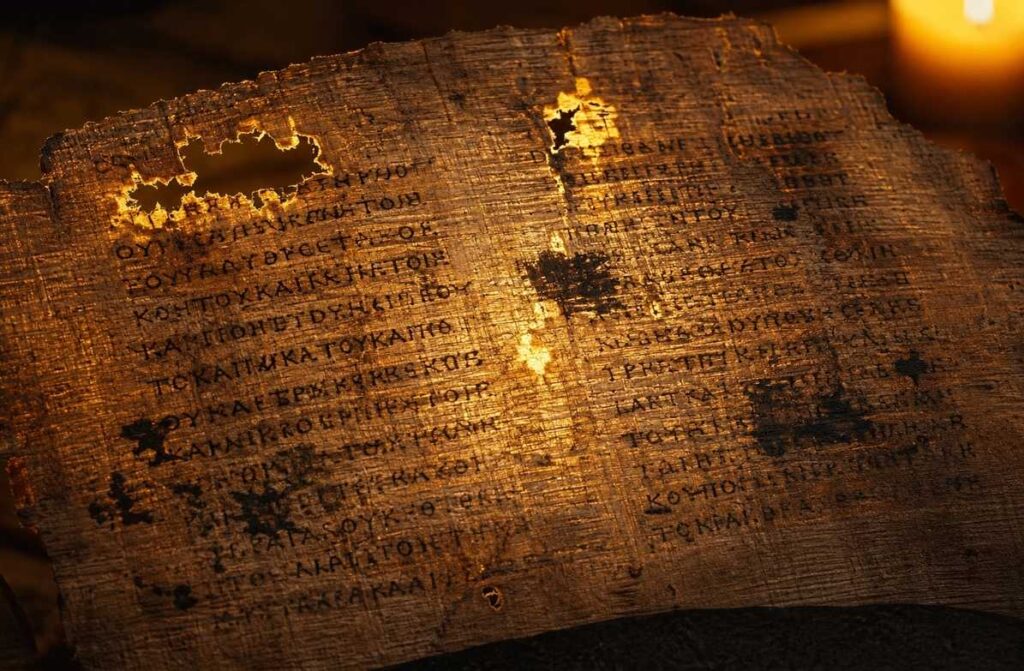
Some texts do not merely survive; they resurrect. In January 1896, a German diplomat named Carl Reinhardt purchased a fifth-century papyrus codex from a Cairo antiquities dealer who claimed it had been found wrapped in feathers, sealed in a niche at a Christian burial site in Akhmin, Egypt. The dealer had no idea what he held. Neither did Reinhardt, initially.
But within those fragile, Sahidic Coptic pages lay a bombshell that would take nearly sixty years to fully detonate–a gospel bearing the name of Miriam of Magdala, written in the early second century, containing teachings so subversive that no complete copy survives today.
The Gospel of Mary is not merely missing a few verses. It has been gutted. Pages 1 through 6 are gone–approximately one-third of the text, likely containing the opening teachings of the Saviour to his disciples. Then, cruelly, after Mary begins recounting her visionary dialogue with Christ, pages 11 through 14 vanish as well–the precise section containing the heart of her mystical ascent. What remains is a fragmentary masterpiece: nine pages of Coptic text from the Berlin Codex (Papyrus Berolinensis 8502), supplemented by two small Greek fragments discovered at Oxyrhynchus and in the Rylands Library.
Yet these surviving shards contain enough voltage to illuminate why the institutional Church issued edicts to ban this gospel, remove its pages, and burn every copy they could locate. This article examines the architecture of the missing, the seven Powers that were never demons, and the controversy of authority that concludes the surviving text–drawing on the Berlin Codex, scholarly reconstruction, and the esoteric hermeneutics of the Magdalene tradition.
Table of Contents
- The Manuscript That Refused to Stay Buried
- The Architecture of the Missing
- The Seven Demons That Were Never Demons
- The Ascent as Cosmic Litigation
- The Inner Journey vs. the Outer Law
- The Controversy of Authority
- What Rises from the Tomb
- Frequently Asked Questions
- Further Reading
- References and Sources
The Manuscript That Refused to Stay Buried
The Berlin Codex–Papyrus Berolinensis 8502–was acquired in 1896, decades before the more famous Nag Hammadi discovery of 1945. It contains four texts: the Gospel of Mary, the Apocryphon of John, the Sophia of Jesus Christ, and the Act of Peter. All four share a radical theological perspective that places direct inner knowing above institutional authority, and all four were suppressed with varying degrees of thoroughness by the emerging orthodox Church.
The Gospel of Mary does not portray its namesake as a penitent prostitute–a fiction invented by Pope Gregory the Great in his Homily 33 of September 591 CE, which conflated three distinct biblical women into a single figure of moral degradation. That fiction persisted for fourteen centuries, until the Catholic Church formally repudiated it in 1969. Instead, the Gospel of Mary presents Miriam of Magdala as the disciple whom Jesus loved most deeply, the initiate entrusted with his most esoteric teachings, the visionary who understood that salvation arrives not through obedience to external law, but through direct knowing–gnosis–of the divine light within.
The Akhmin Discovery and the Cairo Trade
The codex was allegedly discovered at Akhmin (ancient Panopolis) in Upper Egypt, wrapped in feathers and sealed in a burial niche–a method of preservation that suggests both reverence and concealment. The Cairo antiquities market of the 1890s was a chaotic bazaar where Christian, Jewish, and pagan manuscripts changed hands without provenance records, often separating texts from their archaeological context forever. Reinhardt’s purchase was fortunate; without his intervention, the codex might have been dismembered and sold page by page to tourists. Instead, it reached the Berlin Museum, where it remained largely unstudied until the mid-twentieth century, when scholars finally recognised what the Coptic pages contained.
The Architecture of the Missing
The lacunae in the Berlin Codex are not random. They are surgical. The missing opening would have established the setting: a post-resurrection appearance where the Saviour dialogues with his disciples about the nature of matter, the illusion of sin, and the path to inner tranquillity. We catch fragments of this teaching in the surviving text–Christ warning against those who say “Look, he is here!” or “There!” for the Kingdom is within.
But it is the gap at pages 11-14 that feels most deliberate, most maddening, most suggestive of intentional suppression. The text breaks off mid-sentence with Mary asking the Saviour whether visions are seen through the soul or the spirit. Jesus responds that it is the mind–existing between soul and spirit–that truly sees. Then: silence. Four pages of darkness.
When the narrative resumes on page 15, we are plunged into the deep waters of Mary’s visionary ascent. The transition is abrupt, disorienting, electrifying. We are no longer reading a dialogue; we are witnessing the soul’s perilous journey upward through hostile territories, narrated by Mary as a revelation granted to her in vision. Scholar Karen L. King notes that these missing pages likely contained the crucial transition–the mechanics of the ascent, the specific instructions given to Mary about how to navigate the powers. The absence is not accidental; it is archival violence, the excision of the very heart of the teaching.
The Seven Demons That Were Never Demons
The canonical Gospels mention that Jesus cast seven demons out of Mary Magdalene (Luke 8:2). For centuries, this verse was weaponised against her–the seven demons proof of her former depravity, the necessary precondition for her later devotion. The prostitute narrative required a backstory of degradation; the seven demons provided it.
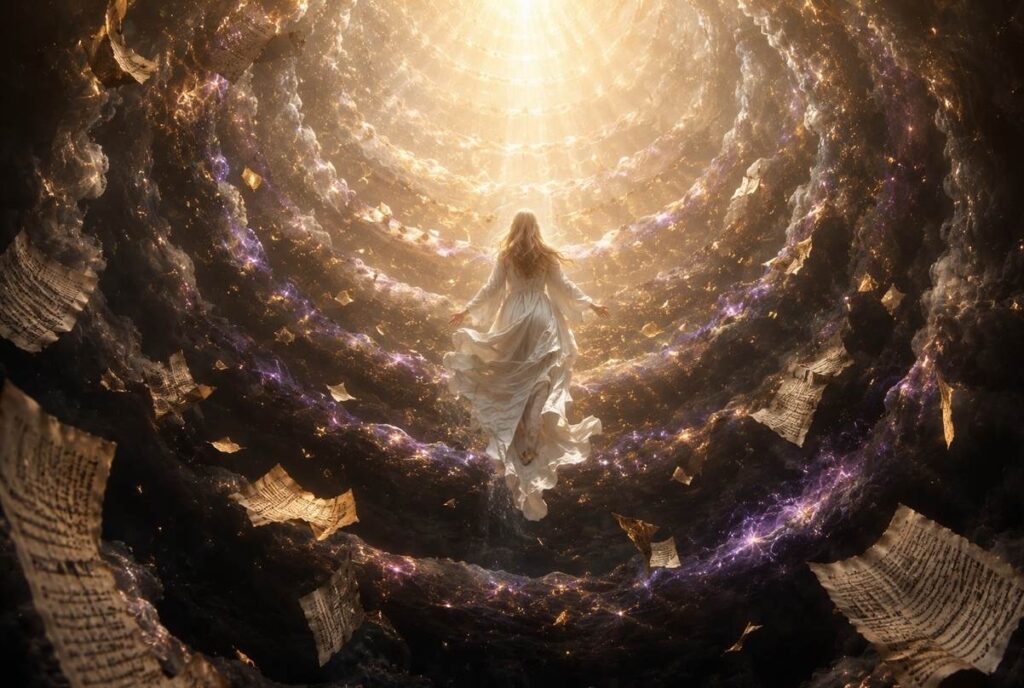
But the Gospel of Mary reclaims this narrative with devastating precision. The “seven demons” were never demons. They were Powers–authorities or archonic forces that every soul must confront on its journey home. In Mary’s vision, the soul ascends past seven adversarial Powers that attempt to block its return to the Source. The fourth Power, encountered after the soul has already bested Desire and Ignorance, manifests seven distinct forms:
- Darkness — The condition of feeling alone, cut off from the Beloved.
- Desire (or Craving) — The compulsion for things to be other than they are.
- Ignorance — The fundamental forgetting of one’s true origin.
- Zeal for Death (or Excitement of Death) — The addiction to imbalance, to excess that destroys.
- The Kingdom of the Flesh — The illusion that we are merely material bodies.
- The Foolish Wisdom of the Flesh — The ego’s counterfeit knowledge that denies the spirit.
- The Wisdom of the Wrathful Person — Violent judgement; the rage that destroys rather than the sacred rage that liberates.
These are the Seven Powers of Wrath–not external devils infesting a woman, but internal and systemic forces that bind every incarnated soul. The Gospel of Mary thus performs a radical hermeneutic reversal: what orthodoxy read as evidence of Mary’s corruption, the text reveals as the universal architecture of spiritual bondage. Every soul, not merely Magdalene’s, must pass through these seven gates. The difference is that Mary–possessing gnosis–recognises them for what they are, while those trapped in ignorance mistake the Powers for their own identity.
The Garment and the True Self
The metaphor of the “garment” runs throughout the text. The body is a garment worn by the soul; the material world is a garment worn by the divine. The Powers mistake the garment for the wearer, the container for the contained. This is the fundamental archonic error: the confusion of appearance with essence, of form with spirit. Mary’s vision demonstrates that the soul, armed with gnosis, can see through the garment while the Powers cannot–a perceptual advantage that renders their jurisdiction illegitimate.
The Ascent as Cosmic Litigation
Each Power acts as a kind of corrupt customs official or false judge, interrogating the ascending soul, attempting to establish jurisdiction over it through false claims of ownership. The scene is not military but legal–a courtroom drama in which the soul must demonstrate that the Powers have no legitimate authority.
Desire speaks first: “I did not see you descending, but now I see you ascending. Why do you lie since you belong to me?”. The soul’s response is both playful and devastating: “I saw you. You did not see me nor recognise me. I served you as a garment and you did not know me”.
Note the reversal. The Power mistakes the body–the “garment”–for the true self. The soul possesses the discernment to see the Power clearly while remaining invisible to it. This is gnosis in action: the capacity to recognise archontic deception without being captured by it. The soul does not fight the Power; it simply demonstrates that the Power’s claim is based on a category error. The lawsuit is dismissed for lack of standing.
Next comes Ignorance, perhaps the most insidious. It interrogates the soul: “Where are you going? In wickedness are you bound. Indeed you are bound! Do not judge!”. The irony is weaponised. Ignorance commands the soul not to judge, yet it is itself pronouncing judgement. The soul’s reply dismantles this legalistic trap: “Why do you judge me, since I have not judged? I was bound, though I have not bound. I was not recognised, but I have recognised that the All is being dissolved, both the earthly things and those of heaven”.
The soul’s defence rests on a single devastating recognition: the All is being dissolved. The archontic world–the kingdom of the flesh, the wisdom of wrath, the domain of Darkness–is not eternal. It is temporary, contingent, already passing away. To recognise this is to recognise that the Powers’ jurisdiction is limited by time itself. They cannot hold what is already dissolving.
The Inner Journey vs. the Outer Law
The Gospel of Mary presents a soteriology that is radically interior. “There is no such thing as sin,” the Saviour declares in the surviving fragments. “Only because of the domination of the flesh does sin even appear to exist”.
The text suggests that the Powers maintain control through the ideology of sin–through systems of judgement and punishment that keep souls trapped in cycles of shame and obedience. The ascent narrative demonstrates that these systems are fundamentally illegitimate. The soul that recognises its true nature is no longer subject to archontic law, because that law was always a fiction enforced by those who mistook the garment for the wearer.
This is why the institutional Church feared this text. It bypasses the mediating power of priests, bishops, and canon law. It places the authority for spiritual knowledge directly in the hands of the individual–particularly, in the hands of a woman who had “seen the Lord” in ways the male disciples had not. The Gospel of Mary does not merely challenge patriarchal authority; it renders it irrelevant by establishing direct gnosis as the sole criterion of spiritual legitimacy.
The Magdalene as Gnostic Exemplar
In the symbolic economy of the Gospel of Mary, Miriam of Magdala functions not merely as a historical figure but as an archetype–the anima christi, the feminine face of Christ’s own knowing. She is the one who receives the secret teaching, the one who preserves it through vision, the one who demonstrates that the ascent is possible. The male disciples, by contrast, are characterised by doubt, jealousy, and literal-mindedness. The gender politics are unmistakable: the feminine principle is identified with gnosis, while the masculine principle–at least in its unawakened form–is identified with archonic legalism.
The Controversy of Authority
The surviving text concludes not with theological abstraction, but with human conflict. After Mary shares her vision, Andrew declares that her teachings seem “strange ideas” and questions whether the Saviour would have spoken such things secretly to a woman. Peter demands to know why Jesus would choose Mary over the male disciples, asking bitterly, “Did he really choose her, and prefer her to us?”.
The scene is devastating in its psychological realism. Andrew represents the sceptical intellect–the capacity to dismiss what it does not understand. Peter represents the wounded ego–the masculine authority threatened by feminine precedence. Both are recognisable types in contemporary spiritual communities: the rationalist who demands peer-reviewed proof of mystical experience, and the gatekeeper who cannot imagine that the teacher’s favour might fall on someone outside his demographic.
Levi (Matthew) intervenes, defending Mary and reminding the others that the Saviour “loved her more than us” and that they should not engage in “lawless thinking”. Levi’s defence is not sentimental; it is constitutional. He appeals to the Saviour’s own preference, establishing that the authority to receive secret teachings derives not from gender or seniority but from the teacher’s recognition of readiness. Mary is not superior because she is female; she is superior because she has demonstrated the capacity for gnosis. The criterion is experiential, not biological.
The Gospel of Mary thus ends with a community in tension–not resolved, not harmonised, but authentic. The thread of transmission is threatened not by external persecution but by internal jealousy. The archons are not only cosmic; they are interpersonal. The battle for gnosis continues in the disciples’ own hearts.
What Rises from the Tomb
The Gospel of Mary has risen from the tomb, just as its protagonist did at dawn on the first day of the week. It speaks with a voice that is at once ancient and urgently contemporary–a voice that tells us the Kingdom is not located in cathedrals or doctrinal statements, but “within you”.
It offers a path of liberation rooted not in obedience, but in remembrance: remembrance of our origin in the Light, our transcendence of the material dissolution, and our ultimate rest in the silence beyond the aeons. The seven Powers are not external enemies to be destroyed but internal conditions to be recognised and dissolved. The archons lose their power not through combat but through the simple act of seeing them clearly.
The missing pages may yet surface. Until then, we work with what we have–fragments of a wisdom tradition that centres the inner journey, honours the feminine face of Christ, and invites every soul to become the “conqueror of space” through the simple, devastating act of remembering who we truly are. The archive is incomplete, but the thread persists. The censors removed the pages, but they could not remove the light that shines through the gaps.
Frequently Asked Questions
What is the Gospel of Mary and where was it found?
The Gospel of Mary is an early second-century Gnostic text attributed to Mary Magdalene. It survives primarily in the Berlin Codex (Papyrus Berolinensis 8502), discovered at Akhmin, Egypt, and purchased by Carl Reinhardt in 1896. Two small Greek fragments were also found at Oxyrhynchus and in the Rylands Library. Approximately one-third of the text is missing, likely due to intentional suppression.
Was Mary Magdalene really a prostitute?
No. The tradition of Mary Magdalene as a penitent prostitute was invented by Pope Gregory the Great in his Homily 33 (591 CE), which conflated three distinct biblical women into one figure. The Catholic Church formally repudiated this error in 1969. The Gospel of Mary presents her as the disciple whom Jesus loved most deeply, entrusted with his most esoteric teachings.
What are the Seven Powers of Wrath in the Gospel of Mary?
The Seven Powers of Wrath are archonic forces that every ascending soul must confront: Darkness, Desire, Ignorance, Zeal for Death, the Kingdom of the Flesh, the Foolish Wisdom of the Flesh, and the Wisdom of the Wrathful Person. These are not external demons but internal and systemic forces that bind the soul to material existence. The Gospel reinterprets Luke 8:2’s ‘seven demons’ as these universal powers.
Why was the Gospel of Mary suppressed?
The Gospel of Mary was suppressed because it presents a radically interior soteriology that bypasses institutional authority. It declares that ‘sin’ is an illusion created by the domination of the flesh, places spiritual authority directly in the individual (particularly a woman), and describes an ascent past archonic powers that requires no priestly mediation. These teachings threatened the emerging orthodox Church’s hierarchical structure.
What happened to the missing pages of the Gospel of Mary?
Pages 1-6 and 11-14 of the Berlin Codex are missing–approximately one-third of the text. The missing opening likely contained the Saviour’s initial teachings to the disciples, while pages 11-14 probably contained the crucial transition instructions for Mary’s visionary ascent. Scholar Karen L. King suggests the excision was deliberate suppression, as these sections contained the heart of the esoteric teaching.
How does the Gospel of Mary differ from the canonical Gospels?
Unlike the canonical Gospels, which emphasise faith, obedience, and institutional authority, the Gospel of Mary centres on direct inner knowing (gnosis). It presents Mary Magdalene as the primary recipient of secret teachings, describes a visionary ascent past seven archonic Powers, and concludes with a controversy over whether a woman should hold spiritual authority. The text is radically egalitarian and anti-hierarchical.
What is the significance of the ‘garment’ metaphor in the Gospel of Mary?
The ‘garment’ represents the body and the material world–temporary coverings worn by the soul. The archonic Powers mistake the garment for the true self, claiming jurisdiction over the soul because they confuse the container with the contained. The soul, armed with gnosis, recognises this category error and demonstrates that the Powers have no legitimate authority over what is essentially divine and free.
Further Reading
Deepen your exploration of the Magdalene tradition, feminine divine, and suppressed scriptures with these verified resources from the ZenithEye archive:
- The Gospel of Mary Magdalene: A Complete Guide — A comprehensive introduction to the text, its discovery, and its theological significance.
- The Feminine Divine in the Nag Hammadi Library — Exploring the role of female figures and feminine principles across the Gnostic corpus.
- The Feminine Divine Collection — A curated archive of articles on Sophia, Thunder: Perfect Mind, and the feminine face of God.
- The Apocryphon of John: Gnostic Creation and the Archons — The primary text describing Yaldabaoth and the archonic administration that Mary Magdalene’s soul confronts.
- Thunder: Perfect Mind — The Voice of the Feminine Divine — Another suppressed text celebrating the paradoxical power of divine femininity.
- The Hypostasis of the Archons: Eve and the Truth — How the feminine principle defeats the archons through recognition rather than violence.
- Archons and the Soul Trap — The theological framework for understanding the cosmic powers Mary Magdalene confronts in her ascent.
- The Living Thread: How Forbidden Knowing Survives — The mechanisms by which suppressed texts like the Gospel of Mary persist through history.
- The Nag Hammadi Library: Complete Guide to Gnostic Scriptures — The full archive of forbidden texts, including related works in the Berlin Codex.
- Predatory Consciousness — Understanding the archonic forces that resist liberation and maintain control through deception.
References and Sources
The following sources informed the historical, textual, and esoteric analysis presented in this article.
Primary Sources and Critical Editions
- Luhrmann, D. & Plesse, E. (Trans.). (2003). Die apokryphen Briefe des Paulus. In Die griechischen christlichen Schriftsteller der ersten Jahrhunderte. Berlin: Akademie Verlag. (Papyrus Berolinensis 8502, the Berlin Codex.)
- Tuckett, C.M. (Trans.). (2007). The Gospel of Mary. In The Nag Hammadi Scriptures: The International Edition. HarperOne. (Critical English translation with commentary.)
- King, K.L. (2003). The Gospel of Mary of Magdala: Jesus and the First Woman Apostle. Polebridge Press. (Definitive scholarly edition with Coptic text, translation, and extensive analysis.)
Scholarly Monographs
- Ehrman, B.D. & Plese, Z. (2011). The Apocryphal Gospels: Texts and Translations. Oxford University Press.
- De Boer, E.A. (2004). The Gospel of Mary: Beyond a Gnostic and a Biblical Mary Magdalene. T&T Clark.
- Jane Schaberg. (2002). The Resurrection of Mary Magdalene: Legends, Apocrypha, and the Christian Testament. Continuum.
Comparative Studies
- Pagels, E. (1979). The Gnostic Gospels. Random House.
- King, K.L. (1995). Revelation of the Unknowable God with Text, Translation, and Notes to NHC XI,3 Allogenes. Polebridge Press. (Comparative analysis of Gnostic ascent literature.)