The Apocryphon of John: The Gnostic Creation Myth
The Apocryphon of John (NHC II,1) stands as the foundational text of Sethian Gnosticism–the secret book that makes the entire Nag Hammadi Library comprehensible. Framed as a revelation from the resurrected Jesus to John son of Zebedee, this second-century text presents the most systematic surviving account of the Gnostic creation myth: the invisible spirit, the fall of Sophia, the arrogance of the demiurge Yaldabaoth, and the liberation of the divine spark through ritual initiation. Without the Apocryphon, the other Nag Hammadi texts remain fragments; with it, they cohere into a worldview. For scholars, it is indispensable for tracing the development of Sethian theology. For contemplative readers, it offers recognition to those who sense that something is fundamentally wrong with reality and long for a home they cannot name [1].
The text survives in four versions across three Nag Hammadi codices and the Berlin Codex, attesting to its centrality in ancient Gnostic communities. The longest version (NHC II,1) preserves the most complete account, including the famous Five Seals initiation ritual that guarantees the pneumatic soul’s return to the pleroma. This article examines the frame narrative, the cosmological architecture, the anthropological taxonomy, and the soteriological mechanism of the Apocryphon–the complete filing system of the Sethian celestial administration, where every department is numbered, every archontic jurisdiction mapped, and every escape route marked for those with eyes to read [2].
Table of Contents
- The Frame Narrative: John’s Vision
- The Pleroma: Divine Fullness
- The Fall of Sophia and the Birth of Yaldabaoth
- The Creation of Humanity
- The Three Types of Human
- The Five Seals: Sethian Initiation
- The Saviour as Revealer
- How to Read the Apocryphon of John
- Why This Text Matters
- Frequently Asked Questions
- Further Reading
- References and Sources
What is the Apocryphon of John?
The Apocryphon of John (Greek: Apokryphon Ioannou; Coptic: Pjennostēr Nnēn) is a 2nd-century Sethian Gnostic text surviving in four versions across three Nag Hammadi codices (II,1; III,1; IV,1) and the Berlin Codex (BG 8502,2). Framed as secret teaching delivered by the resurrected Jesus to John son of Zebedee, it presents a systematic cosmology describing the invisible spirit, the fall of Sophia, the arrogance of the demiurge Yaldabaoth, and the liberation of the divine spark through ritual initiation (the Five Seals).
Term appears in: Nag Hammadi Codex II,1 (long version); Codex III,1 (short version); Codex IV,1; Berlin Codex BG 8502,2.
The Frame Narrative: John’s Vision
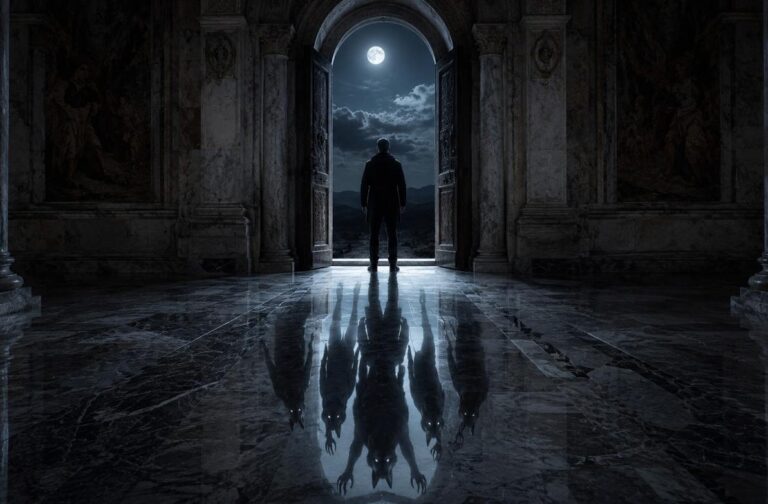
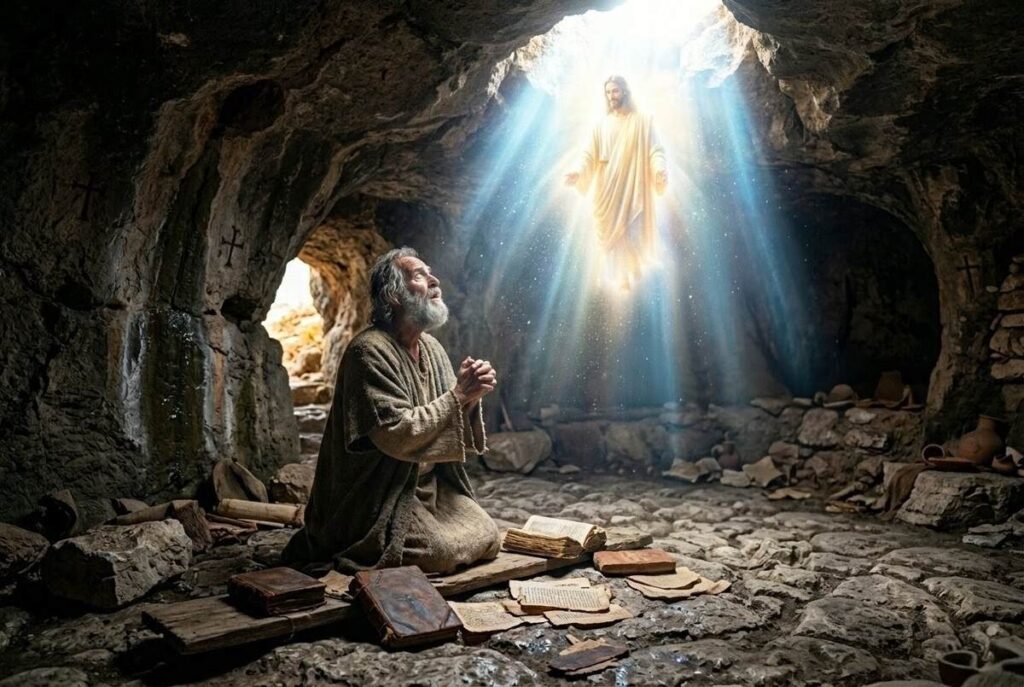
The text opens with John grieving after the crucifixion, questioning how the saviour could have suffered. He retreats to a mountain, presumably the traditional site of the Transfiguration, seeking solitude to process his doubts. Suddenly, “the heavens opened, the world shook, and light descended”–a light that speaks with the voice of Jesus, yet not the crucified victim John remembers. This is the Gnostic Jesus–the transcendent revealer who was never truly embodied, never truly suffered, never truly died. According to the Apocryphon of John, the passion is reinterpreted as administrative error, the cross as temporary filing, the resurrection as the revelation of what was always true [3].
Primary Source Citation: NHC II,1 1:30-2:5. “John, John, why do you doubt, and why are you afraid? You are not unfamiliar with this image, are you?–that is, do not be timid!–I am the one who is with you always. I am the father, I am the mother, I am the son. I am the undefiled and incorruptible one.”
Jesus offers to reveal “the things hidden in silence”–the secret knowledge (gnosis) that explains the origin of the world, the nature of the soul, and the path of return. The frame narrative is not mere literary decoration; it establishes the text’s claim to authority. By presenting the revelation as a post-resurrection teaching to the beloved disciple, the Apocryphon positions itself as more ancient, more secret, and more complete than the public gospels. This is the classified briefing that supersedes the open-source scriptures–the personnel file that reveals the true organisational chart of the celestial administration, hidden from the branch offices of orthodox Christianity [4].
The Pleroma: Divine Fullness
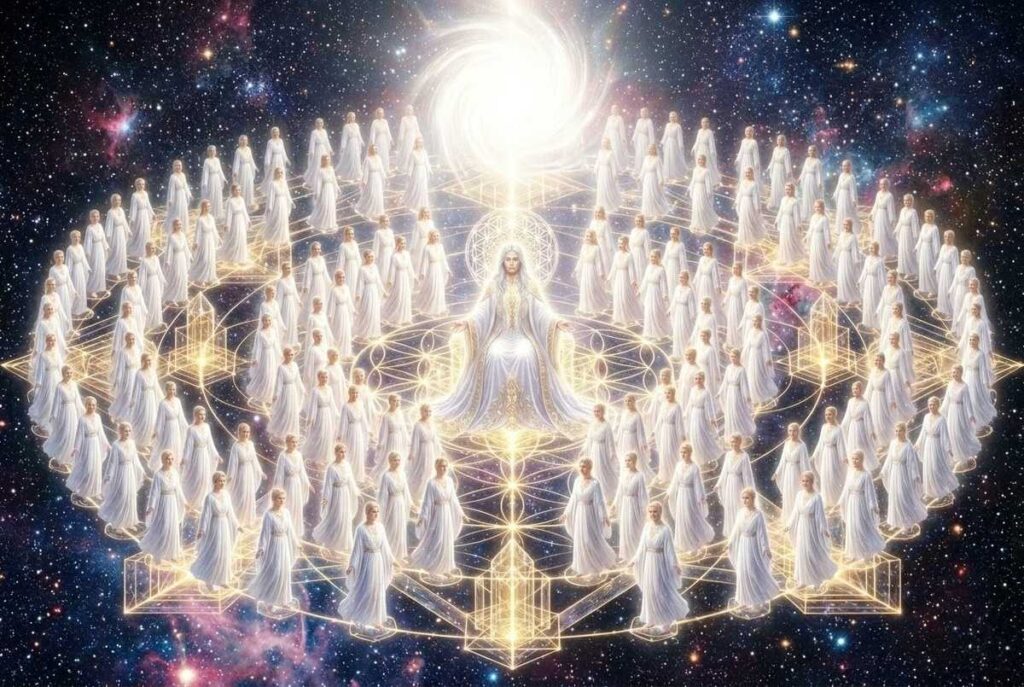
Before all things, there exists the invisible spirit–ineffable, immeasurable, eternal, perfect. With the spirit is Barbelo, the first thought, the divine mother, the womb of everything. From their union proceed the aeons–divine attributes and powers that populate the fullness (pleroma) of the divine realm. This is not creation from nothing but emanation from fullness, the overflow of divine abundance, the generation of multiplicity from unity. The aeons are not separate from the divine but aspects of it, names for what cannot be named, distinctions within the indistinguishable [5].
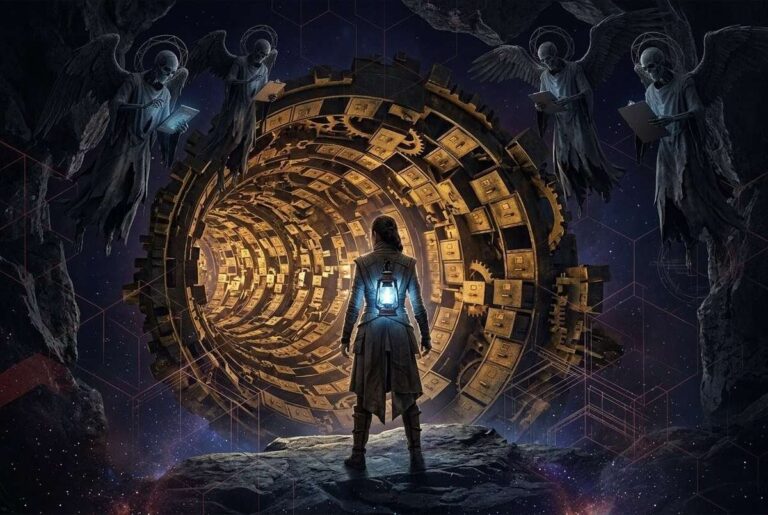
Key aeons include Autogenes (Self-Generated), Protophanes (First-Appearing), and Kalyptos (Hidden One)–each representing stages of divine self-manifestation. The text describes the generation of the Four Luminaries (Harmozel, Oroiael, Daveithe, Eleleth) and the establishment of the thirteen aeons, mapping the divine realm with administrative precision. This is the executive headquarters of the Sethian cosmos–the central filing system where every department is numbered, every jurisdiction defined, and every personnel file cross-referenced against the original divine template. The pleroma is not a place but a state–the fullness of being from which the material world is a derivative, a copy, a diminished reflection [6].
The Fall of Sophia and the Birth of Yaldabaoth
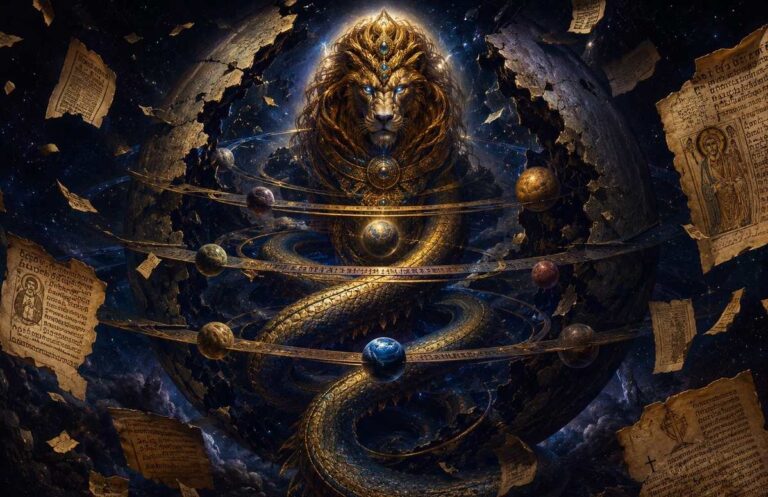
The cosmic crisis comes through Sophia (Wisdom), the last of the aeons. She desires to conceive without her partner, to bring forth from herself alone. Her thought becomes pregnant, but because it lacks the masculine principle, what is born is imperfect–a “lion-faced serpent, androgynous, with eyes like flashing lightning”–Yaldabaoth, the demiurge. Ashamed of her malformed offspring, Sophia casts Yaldabaoth outside the pleroma into the darkness and the void. There, surrounded by chaos and matter, he becomes ignorant of his origins and establishes himself as the only god [7].
Who is Yaldabaoth?
Yaldabaoth (also called Saklas, Samael, “the blind god,” or “the lion-faced”) is the Gnostic demiurge–the ignorant creator of the material world who mistakenly believes himself the supreme deity. Born from Sophia’s unauthorised conception without her consort, he is androgynous, beastial, and characterised by arrogance. According to the Apocryphon of John (NHC II,1 13:20-25), he declares: “I am God and there is no other god beside me,” revealing his ignorance of the transcendent realm above him.
Primary Source Citation: NHC II,1 13:20-25. “Now the archon who is weak has three names. The first name is Yaldabaoth, the second is Saklas, and the third is Samael. And he is impious in his arrogance which is in him. For he said, ‘I am God and there is no other god beside me,’ for he is ignorant of his strength, the place from which he had come.”
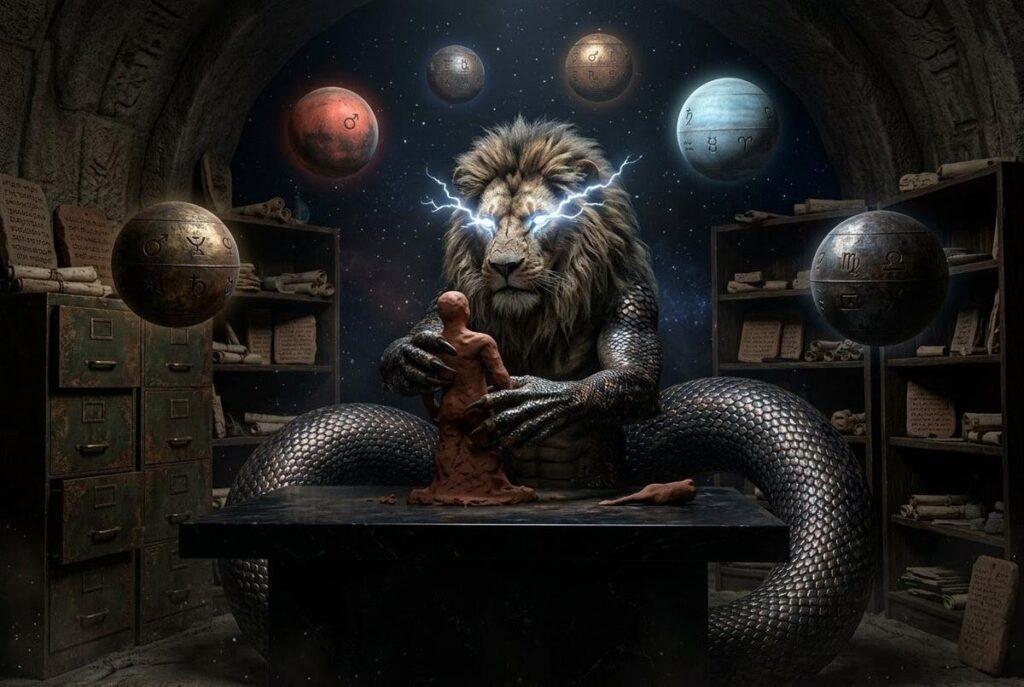
This is the Gnostic critique of the biblical creator–Yahweh is not the highest god but an ignorant, arrogant bureaucrat who mistakenly believes himself supreme. The serpent in Eden is reinterpreted here–not as the villain but as the truth-teller, revealing to Adam and Eve what Yaldabaoth concealed. The archontic prison begins with the demiurge’s declaration of false sovereignty, and the entire material cosmos is his administrative bungle–a flawed copy of the divine realm, darkened, distorted, and dead. Yaldabaoth is the cosmic equivalent of a middle-management figure who has lost contact with the executive headquarters and issues decrees based on incomplete information, convinced that his branch office constitutes the entire corporation [8].
The Creation of Humanity
Yaldabaoth and his archontic minions–the seven planetary rulers–create the material world as a prison, a copy of the divine realm but darkened, distorted, dead. They create Adam from the dust of the ground, but the body lies inert, soulless, until Sophia intervenes, sending the spiritual essence (pneuma) down through the spheres to animate the clay. The archons, seeing that Adam possesses light from the pleroma, become jealous. They create Eve as a distraction, but Sophia again intervenes, making Eve a vessel of spiritual power–the Zoe (Life) who becomes the instructor [9].
Primary Source Citation: NHC II,1 15:1-5. “And the rulers brought Adam into the shadow of death, in order that they might form him again from earth, water, fire, and the spirit that comes from matter–that is, from the ignorance of darkness, and desire, and their own falsehood. And the body of the human being was created by the rulers, but his soul came from the power above.”
It is through Eve that the serpent speaks truth, offering the knowledge of good and evil that will awaken the sleeping divinity trapped in Adam’s ribcage. The text details the archontic scheme to keep humanity ignorant–the establishment of fate (heimarmene), the creation of desire and forgetfulness, the flood and the destruction of Sodom as attempts to destroy the spiritual remnant. Throughout, Sophia works to liberate, sending the spiritual seed into the world to awaken those who can hear. This is the counter-intelligence operation of the divine realm–the systematic effort to expose the archontic deception and restore the elect to their native jurisdiction [10].
The Three Types of Human
According to the Apocryphon of John, humanity is divided into three categories based on the composition of their souls–an anthropology that explains why some respond to the Gnostic message and others do not. This is not predestination in the Calvinist sense but a description of spiritual capacity–the recognition that humans are not all the same, that some are ready for the secret teaching and others are not, that the saviour’s message is for those who can receive it [11].
The Three Natures in Gnosticism
The three natures (or three races) comprise: (1) Pneumatikoi (spirituals)–those with divine spark from the pleroma, destined for salvation through gnosis; (2) Psychikoi (souls)–intermediate beings capable of salvation through faith and good works but requiring further refinement; (3) Hylikoi (materials)–those of flesh alone, devoid of spiritual essence, incapable of salvation, created for the archons’ service. This schema appears in Apocryphon of John (NHC II,1 25:1-5) and determines one’s capacity for receiving secret knowledge.
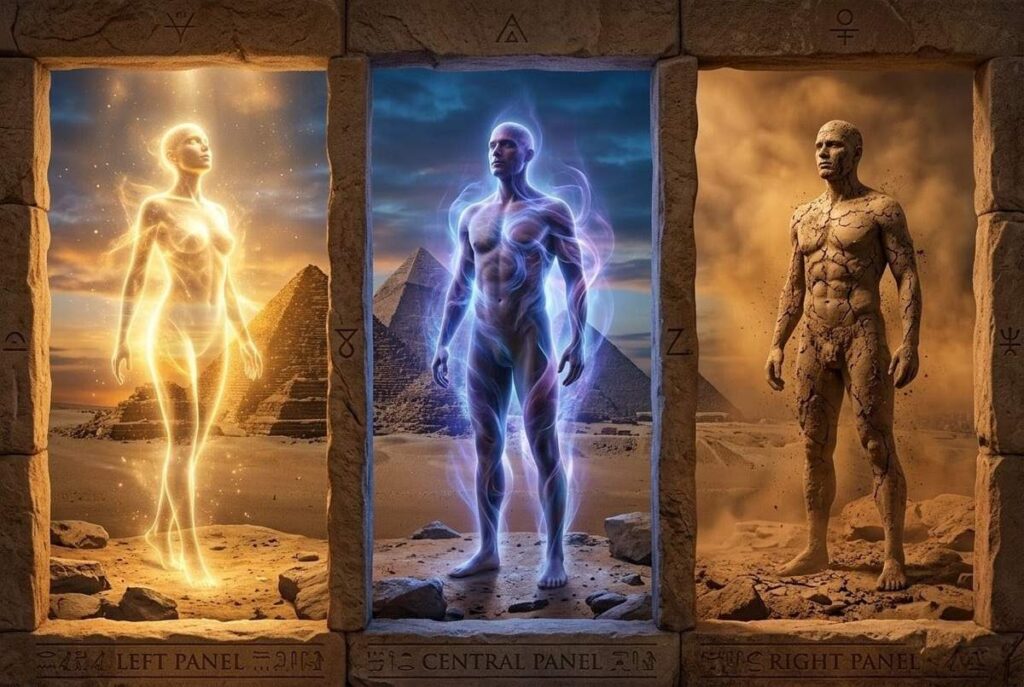
The spiritual (pneumatikoi) possess the divine spark, recognise the call, and will ultimately be saved. They are from the pleroma and to the pleroma they shall return. The psychic (psychikoi) are of soul, intermediate, capable of salvation through faith and good works but not through direct knowledge alone. They occupy the middle realm between spirit and flesh, requiring the community’s guidance. The material (hylikoi) are of flesh alone, devoid of spiritual essence, incapable of salvation. They are like the animals, created for the archons’ service, returning to matter when they die. This tripartite anthropology is the personnel classification system of the Sethian administration–the framework that determines who receives the classified briefings and who remains in the outer offices [12].
The Five Seals: Sethian Initiation
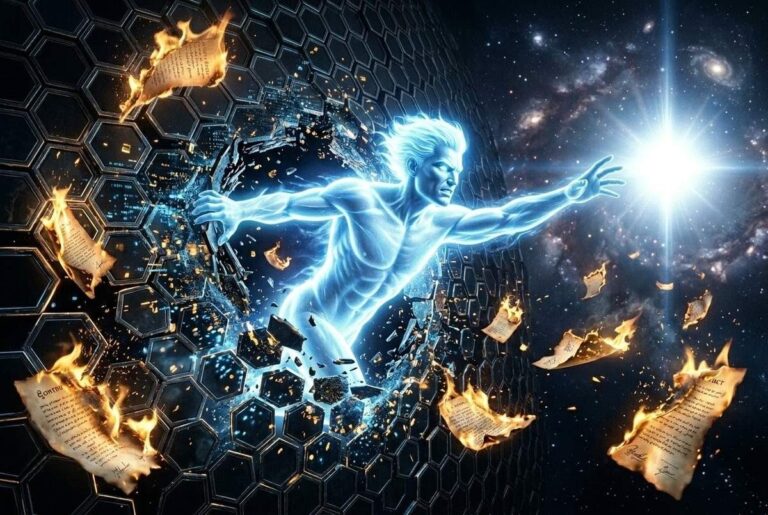
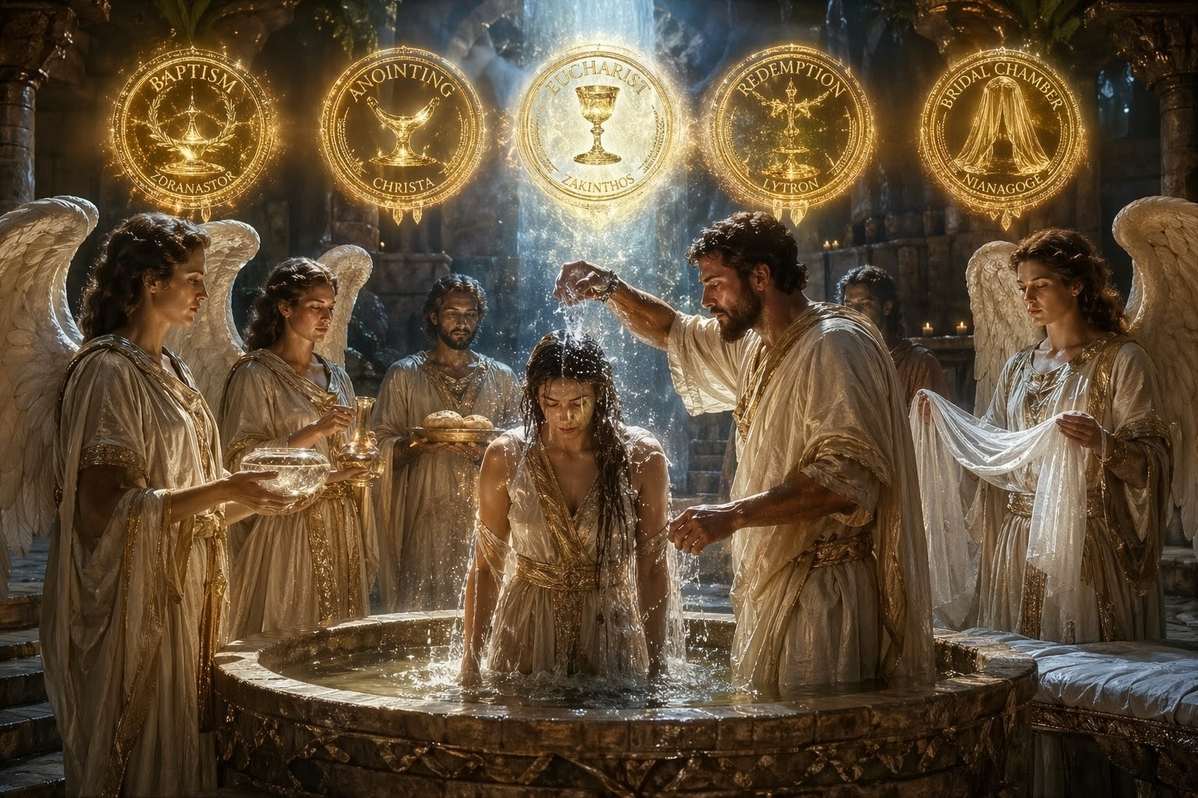
Unique to the longer version (NHC II,1), the Five Seals (pentasphragis) represent the Sethian initiation ritual required for the pneumatics to guarantee their return to the pleroma. While the text is cryptic about the specific mechanics, scholars generally interpret the five seals as a sequence of sacramental actions that remove the archontic imprint and restore the initiate’s divine credentials. The ritual effectively reverses the archontic scheme–stripping away the “forgetfulness” and “slavery to fate” imposed by Yaldabaoth’s minions and replacing them with the luminous garments of light required for entry into the upper jurisdictions [13].
- Baptism in living water–the first immersion, stripping away the material garments
- Anointing with oil–the chrism, sealing the initiate with divine fragrance
- The eucharistic meal–bread and cup, nourishment for the journey
- The redemptive ritual–the apolytrosis, releasing the soul from archontic bonds
- The bridal chamber–the nymphōn, restoration of the primordial syzygy
Primary Source Citation: NHC II,1 31:20-25. “And he baptised them in the name of the father, the son, and the holy spirit. And he gave them the holy spirit, and he sealed them, and he gave them the garment of light.”
According to the text, those who receive these seals “will become lights that dwell in the light, remaining in the pleroma, blessed and holy.” The Five Seals are not merely symbolic gestures but operational protocols–the sonic passwords and ceremonial credentials required to pass through the planetary checkpoints and gain access to the executive headquarters. Without them, the ascending soul would be detained by the archontic toll collectors, challenged by the planetary guardians, and returned to the lower jurisdictions. With them, the initiate becomes invisible to hostile powers and recognisable to friendly ones–a legitimate traveller in a cosmos that demands proper documentation [14].
The Saviour as Revealer
In the final sections, Jesus explains his role in the cosmic drama. He is not the crucified redeemer of orthodox theology but the revealer–the one who comes to awaken the sleeping, to call the spiritual back to their origin, to provide the knowledge (gnosis) that liberates from fate (heimarmene). The saviour does not die for sins; he teaches the path of return. Salvation is not through faith in his passion but through understanding his revelation. This is the Gnostic inversion of Christian soteriology: the cross is not the centre but the periphery, not the means but the mistake, not the victory but the temporary setback [15].
Primary Source Citation: NHC II,1 30:1-5. “I have come to reveal to you the things that were hidden, to teach you about the holy seed, to show you the way of ascent.”
The text concludes with John returning to his fellow disciples to share what he has learned–completing the frame, establishing the chain of transmission, authorising the secret teaching for those who are worthy. This is the esoteric succession pattern that characterises much of Gnostic literature: the revelation is given to one, who passes it to the few, who guard it from the many. The Apocryphon of John thus functions simultaneously as cosmological treatise, ritual handbook, and community charter–the foundational document that establishes who belongs to the elect, how they are initiated, and where they are going [16].
How to Read the Apocryphon of John
This is not a text for casual reading. It is dense, symbolic, repetitive, and deliberately strange. The names of the aeons–Barbelo, Autogenes, Protophanes–resist memorisation. The narrative structure is circular rather than linear, returning again and again to the same events from different angles, as if viewing a crystal through multiple facets. Read it slowly. Read it multiple times. Do not worry about understanding every detail; the text is designed to overwhelm, to disorient, to shift consciousness through sheer density of symbolism [17].
Pay attention to the emotions the text evokes–revulsion at Yaldabaoth’s arrogance, pity for Sophia’s suffering, hope for the spiritual seed, longing for the pleroma. These emotional responses are the text working on you, not just your intellect but your deeper self. Recognise that this is myth–not literal history, not scientific cosmology, but symbolic narrative pointing to truths about consciousness, alienation, and return. The archons are not space aliens; they are the forces that keep us asleep. The pleroma is not a distant galaxy; it is the fullness of being we have forgotten [18].
Why This Text Matters
The Apocryphon of John makes Gnosticism comprehensible. Without it, the other Nag Hammadi texts remain fragments; with it, they cohere into a worldview. The Sethian system articulated here–fall and restoration, demiurge and saviour, divine spark and archontic prison–provides the framework for understanding dozens of related texts. For those who feel alien in this world, who sense that something is wrong with reality, who long for a home they cannot name–this text offers recognition. You are not crazy. The world is indeed broken. And there is indeed a path of return [19].
For scholars of ancient religion, the Apocryphon is indispensable for tracing the development of Sethian theology, its relationship to Jewish apocalypticism, its appropriation of Platonic metaphysics, and its transformation of Christian narrative. For historians of philosophy, it offers a window into the syncretistic imagination of the second century–the capacity to weave together biblical, Platonic, and Egyptian elements into a coherent (if strange) whole. And for contemporary seekers, it offers a spirituality that treats alienation not as pathology but as accurate perception, and that promises not adjustment to the world but liberation from it. The secret book waits. The saviour speaks. The pleroma calls [20].
Frequently Asked Questions
What is the Apocryphon of John?
The Apocryphon of John (Secret Book of John) is a 2nd-century Sethian Gnostic text from the Nag Hammadi Library (NHC II,1). It presents the complete Gnostic creation myth including the fall of Sophia, the birth of the demiurge Yaldabaoth, and the creation of humanity. Framed as secret teachings from Jesus to John the Apostle, it serves as the foundational text for understanding Sethian cosmology.
Who is Yaldabaoth in the Apocryphon of John?
Yaldabaoth is the Gnostic demiurge–the ignorant creator god born from Sophia’s unauthorized conception. Described as a lion-faced serpent with eyes like lightning, he mistakenly declares himself the only god (‘I am God and there is no other god beside me’). He creates the material world as a prison for humanity and establishes the archontic control system to keep humans ignorant of their divine origin.
What are the three types of human in Apocryphon of John?
The text divides humanity into three natures: (1) Pneumatikoi (spirituals) with divine spark destined for salvation through gnosis; (2) Psychikoi (souls) who can be saved through faith and good works; and (3) Hylikoi (materials) devoid of spiritual essence who serve the archons. This represents spiritual capacity rather than predestination.
What are the Five Seals in Sethian Gnosticism?
The Five Seals (pentasphragis) are the Sethian initiation rituals mentioned in the longer version of Apocryphon of John. Generally interpreted as baptism, anointing with oil, eucharist, redemption ritual, and the bridal chamber/sealing. These rituals remove archontic imprinting and guarantee the pneumatic soul’s return to the pleroma.
How does Apocryphon of John differ from Genesis?
While Genesis presents the creator (Yahweh) as good and the serpent as evil, Apocryphon of John inverts this: Yahweh is identified with Yaldabaoth, an ignorant demiurge who creates a flawed world, while the serpent becomes the truth-teller who reveals knowledge to Adam and Eve. The text reinterprets the biblical narrative through the lens of divine fall and restoration.
Is the Apocryphon of John a Christian text?
It is a Sethian Gnostic text that uses Christian framing (Jesus teaching John) but incorporates Platonic, Jewish apocalyptic, and Egyptian elements. It represents an alternative Christianity that predates orthodox dogma, emphasising secret knowledge (gnosis) over faith in the crucifixion. It was likely composed in the 2nd century CE in Alexandria.
Where can I read the Apocryphon of John?
The complete text survives in the Nag Hammadi Library (Codex II,1; III,1; and IV,1) and the Berlin Codex (BG 8502,2). English translations are available in the Robinson edition of the Nag Hammadi Library, the Meyer anthology ‘The Nag Hammadi Scriptures,’ and online through the Gnostic Society Library. It is essential reading for understanding Gnostic cosmology.
Further Reading
These links connect the Apocryphon of John to related resources within the ZenithEye library, providing pathways for deeper exploration of Sethian cosmology, textual variants, and the broader Gnostic tradition.
- Nag Hammadi Library: Complete Guide to 46 Gnostic Scriptures — Master index and navigational hub for all forty-six tractates and thematic collections.
- Three Witnesses: The Apocryphon of John Across Codices — Comparative study of the Apocryphon across Codices II, III, and IV, tracing textual development and scribal variation.
- Codex II: The Crown Jewels — Overview of the codex containing the longest version of the Apocryphon of John and related foundational texts.
- The Five Seals: Sethian Initiation — Detailed study of the baptismal and sealing ceremonies underlying the Apocryphon’s soteriology.
- Creation Myths in the Nag Hammadi Library — Thematic collection positioning the Apocryphon within the broader landscape of Gnostic cosmogony.
- Sethian and Valentinian Traditions — Comparative guide to the Sethian school, providing context for the theological framework of the Apocryphon.
- Gnostic Technical Glossary: Key Terms — Essential reference for the aeonic hierarchies, divine names, and technical terminology of Sethian cosmology.
- On the Origin of the World — A later, more polished Sethian creation myth that overlaps with and expands the Apocryphon’s cosmology.
- Hypsiphrone and the Five Seals — Examination of the mysterious ascent text and its connection to the sealing rituals of Sethian initiation.
- The Complete Nag Hammadi Reading Order — Structured path through all forty-six tractates, with guidance on building preparation for the Apocryphon and related texts.
References and Sources
The following sources support the claims and quotations presented in this article. All citations to the Nag Hammadi Library represent direct translations from the Coptic text as established in the standard critical editions.
Primary Sources and Critical Editions
- [1] Robinson, J.M. (Ed.). (1988). The Nag Hammadi Library in English (4th ed.). Brill.
- [2] Meyer, M. (Ed.). (2007). The Nag Hammadi Scriptures: The International Edition. HarperOne.
- [3] Waldstein, M. & Wisse, F. (1995). The Apocryphon of John: Synopsis of Nag Hammadi Codices II,1; III,1; and IV,1 with BG 8502,2. Brill.
- [4] King, K.L. (2006). The Secret Revelation of John. Harvard University Press.
- [5] Layton, B. (1987). The Gnostic Scriptures. Doubleday.
Scholarly Monographs and Commentaries
- [6] Turner, J.D. (2001). Sethian Gnosticism and the Platonic Tradition. Peeters.
- [7] Pearson, B.A. (2007). Ancient Gnosticism: Traditions and Literature. Fortress Press.
- [8] Williams, M.A. (1996). Rethinking “Gnosticism”: An Argument for Dismantling a Dubious Category. Princeton University Press.
- [9] Logan, A.H.B. (1996). Gnostic Truth and Christian Heresy. T&T Clark.
- [10] Brakke, D. (2010). The Gnostics: Myth, Ritual, and Diversity in Early Christianity. Harvard University Press.
Comparative Studies and Thematic Analyses
- [11] Schenke, H.-M. (1974). “The Phenomenon and Significance of Gnostic Sethianism.” In The Rediscovery of Gnosticism, Vol. 2. Brill.
- [12] Pagels, E.H. (1979). The Gnostic Gospels. Random House.
- [13] Jonas, H. (1958). The Gnostic Religion: The Message of the Alien God and the Beginnings of Christianity. Beacon Press.
- [14] Rudolph, K. (1987). Gnosis: The Nature and History of Gnosticism. HarperSanFrancisco.
- [15] Armstrong, A.H. (1986). “Platonism and Gnostic Transformation: The Journey of the Soul.” In Classical Mediterranean Spirituality. Crossroad.