Codex I: The Jung Codex — Valentinian Theology and the Tripartite Tractate
Codex I of the Nag Hammadi Library holds a singular place in the history of modern scholarship. It was the first codex to be examined by Western academics, the first to reveal the magnitude of Muhammad Ali’s 1945 discovery, and the first to be acquired by a Western institution–the Jung Institute in Zurich, which gave this volume its enduring nickname, “The Jung Codex.” Its purchase ensured the preservation and accessibility of the collection, setting the pattern for the eventual publication of the entire library. But Codex I is far more than a historical curiosity. It contains some of the most theologically sophisticated texts in the collection, including the Tripartite Tractate (NHC I,5)–the longest and most complex tractate in the entire Nag Hammadi corpus, presenting Valentinian theology in its most developed, most philosophically ambitious form [1].
The five tractates of Codex I span the full range of Valentinian expression: the brief but potent Prayer of the Apostle Paul (NHC I,1), a liturgical invocation that functions as spiritual threshold to the codex; the Apocryphon of James (NHC I,2), presenting secret teaching and esoteric succession; the Gospel of Truth (NHC I,3), perhaps the most beautiful theological poem in the library; the Treatise on the Resurrection (NHC I,4), a pastoral letter addressing doubts about bodily transformation; and the monumental Tripartite Tractate (NHC I,5), a comprehensive systematisation of Valentinian cosmology, anthropology, and soteriology. Together, these texts demonstrate that Valentinianism was not merely a Christian heresy but a rigorous philosophical theology, drawing on Platonic metaphysics, Stoic physics, and biblical narrative to construct one of the most intellectually ambitious spiritual systems of antiquity [2].
Table of Contents
- Introduction — The First Codex Discovered
- The Manuscript and Its Historical Significance
- The Tractates of Codex I
- Valentinian Theology at Its Most Developed
- Reading Codex I: A Guided Approach
- Why Codex I Matters
- Frequently Asked Questions
- Further Reading
- References and Sources
Introduction – The First Codex Discovered
What is Codex I?
Codex I is the “Jung Codex” of the Nag Hammadi Library, the first codex discovered by scholars and the first acquired by a Western institution. It contains five Valentinian tractates: the Prayer of the Apostle Paul (NHC I,1), a brief liturgical invocation; the Apocryphon of James (NHC I,2), secret teaching on esoteric succession; the Gospel of Truth (NHC I,3), a theological poem on recognition; the Treatise on the Resurrection (NHC I,4), a pastoral letter on bodily transformation; and the Tripartite Tractate (NHC I,5), the longest and most complex tractate in the library. Written in the Subachmimic Coptic dialect, this codex represents Valentinian theology at its most philosophically ambitious.
The five territories: Prayer of Paul (liturgical threshold) → Apocryphon of James (secret transmission) → Gospel of Truth (poetic recognition) → Treatise on Resurrection (pastoral transformation) → Tripartite Tractate (philosophical systematisation). Together they map the full spectrum of Valentinian spiritual expression [3][4].
The texts of Codex I are the executive memoranda of the Valentinian administration. They do not merely describe the celestial hierarchy; they analyse it, philosophise about it, and construct systematic arguments for its structure and operations. Where Sethian texts tend toward mythological narrative–dramatic accounts of divine falls, archontic bungles, and heroic rescues–Valentinian texts like those in Codex I tend toward philosophical systematisation. The Tripartite Tractate is not a story but a treatise, not a revelation but a demonstration, not a hymn but an argument. It employs Platonic metaphysics, Stoic physics, and Aristotelian logic to construct a comprehensive account of reality that would not have been out of place in the philosophical schools of Alexandria or Athens. This is Gnosticism for the intellectually ambitious–the advanced curriculum of the celestial civil service, requiring not merely faith or vision but sustained analytical engagement with the structure of being itself [5].
For scholars of ancient religion, Codex I is essential for understanding the full range of Gnostic expression. It preserves the most extensive surviving exposition of Valentinian theology, offering unparalleled detail on the generation of the pleroma, the fall of the aeon, the creation of the material world, and the salvation of the spiritual seed. For contemplative readers, it offers a spirituality that treats enlightenment not as emotional experience or visionary ascent but as recognition–the recovery of what was always true but temporarily obscured by error and forgetfulness. The Gospel of Truth captures this perfectly: salvation is not acquisition but recollection, not journey but awakening, not the discovery of something new but the recognition of what has never ceased to be [6].
The Manuscript and Its Historical Significance
Codex I was discovered in December 1945 near the town of Nag Hammadi in Upper Egypt, buried alongside eleven other codices in a sealed jar at the foot of the Jabal al-Tarif cliffs. Its subsequent history is the most dramatic of any codex in the collection. While the other codices passed through various hands in Egypt, Codex I was smuggled out of the country and eventually purchased by the C.G. Jung Institute in Zurich in 1952–hence its enduring designation as “The Jung Codex.” This acquisition ensured its preservation and accessibility, setting the pattern for the eventual publication of the entire library, though it also generated significant controversy about the ethics of removing ancient manuscripts from their country of origin [3].
The codex contains approximately 138 pages of Coptic text, making it one of the longer volumes in the collection. The texts are written in a practically pure Subachmimic dialect, displaying few remarkable linguistic features but maintaining consistent orthographic conventions throughout. Paleographical analysis places the copying in the mid-to-late fourth century CE, though the Greek originals of the tractates likely circulated between the second and third centuries. The codex is generally well-preserved, with the exception of some damage to the opening and closing pages of certain tractates [4].
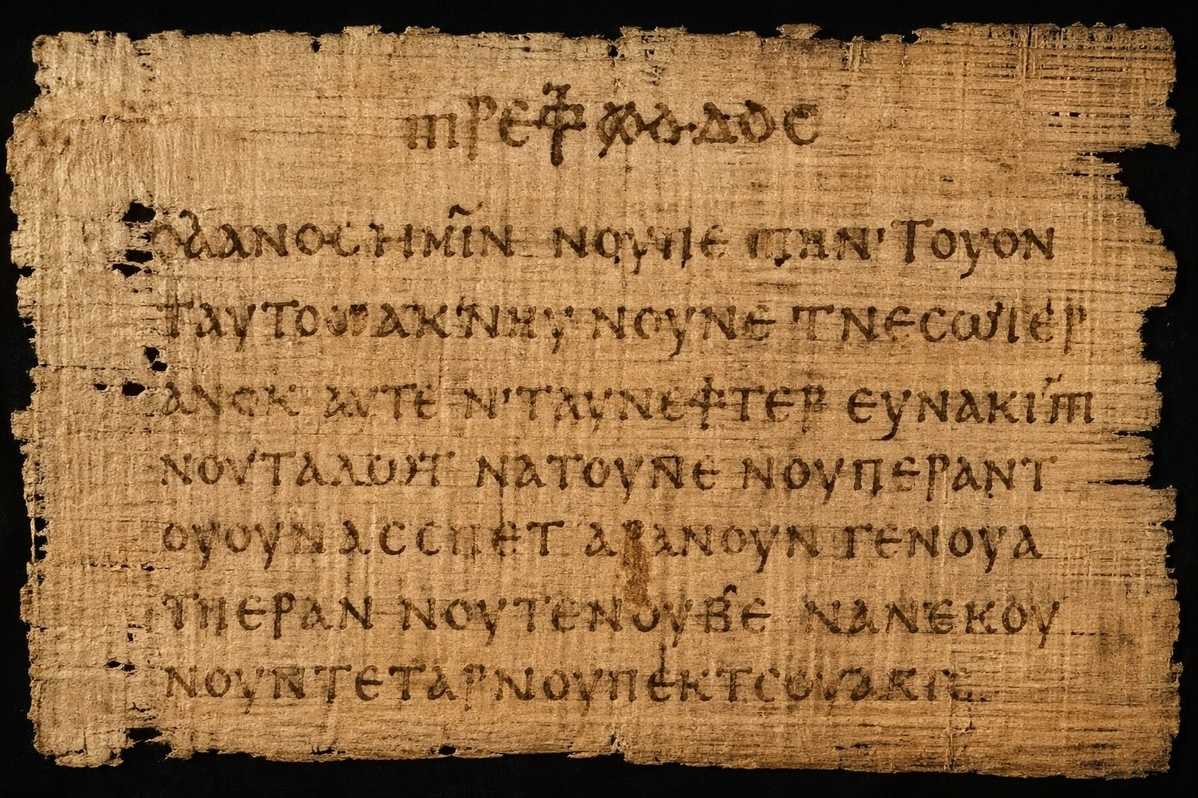
The Prayer of the Apostle Paul occupies the front flyleaf of the codex–a position that suggests it was added after the main texts were copied, functioning as a spiritual key to unlock what follows. The scribe who added the prayer used a ductus distinct from the main copyist, suggesting a deliberate editorial decision to frame the codex with an invocation. The title, followed by a brief benediction in Greek, retains the language of the original and establishes the Valentinian provenance of the collection. This is not merely a random assemblage of texts but a curated collection, organised to guide the reader from invocation through secret teaching to philosophical systematisation [7].
The Tractates of Codex I
The five tractates of Codex I articulate distinct modalities of Valentinian spirituality–from liturgical invocation to secret transmission to poetic recognition to pastoral instruction to philosophical systematisation. Together they demonstrate that Valentinianism was not a single literary tradition but a comprehensive spiritual system capable of generating multiple forms of expression, each addressing a different dimension of the tradition’s concerns.
Prayer of the Apostle Paul (NHC I,1): Liturgical Threshold
The Prayer of the Apostle Paul is a brief but potent invocation, placed at the beginning of the codex like a spiritual key to unlock what follows. “I invoke you, the one who is and who pre-existed in the name which is exalted above every name, through Jesus Christ, the Lord of Lords, the King of the ages.” The prayer establishes the tone of mystical ascent and divine invocation that characterises much of the codex, framing the subsequent texts as secret teachings accessible only to those who have properly prepared themselves through prayer [8].
Primary Source Citation: NHC I,1 A.11-15. “I invoke you, the one who is and who pre-existed in the name which is exalted above every name, through Jesus Christ, the Lord of Lords, the King of the ages; give me your gifts, of which you do not repent.”
The prayer is heavily indebted to the Psalms and the Pauline Epistles, yet it transforms biblical language into Gnostic idiom. The speaker asks for gifts that the divine does not begrudge, for authority when asking, for healing for the body, and for the revelation of the First-born of the pleroma to the mind. “Grant what no angel eye has seen and no archon ear has heard, and what has not entered into the human heart.” This is not conventional Christian petition but Gnostic invocation–a request for knowledge that exceeds the perceptual capacities of the lower powers, a demand for access to classified intelligence from the executive headquarters. Scholars debate whether the prayer was composed for the codex or represents an older liturgical text adapted for Valentinian use. Either way, it functions as threshold–preparing the reader with the proper credentials before entering the secret teachings that follow [9].
Apocryphon of James (NHC I,2): Secret Teaching and Esoteric Succession
The Apocryphon of James presents itself as secret teaching given by Jesus to James after the resurrection, combining ascetic instruction with eschatological urgency. The text is framed as a letter from James to an unnamed recipient, establishing from the outset that what follows is not public preaching but private briefing–classified material for those with the proper security clearance. “The perishable has gone to the perishable, and the imperishable has gone to the imperishable.” This stark declaration establishes the text’s fundamental conviction: that the material and spiritual realms operate according to different principles, and that the wise soul must learn to distinguish between them [10].
Primary Source Citation: NHC I,2 12:15-20. “The perishable has gone to the perishable, and the imperishable has gone to the imperishable. You, be eager to be begotten without passion, and do not fear.”
The text is notable for its emphasis on the transmission of secret knowledge. James is instructed to pass these teachings to the worthy, establishing the pattern of esoteric succession that characterises much of Gnostic spirituality. The text also contains one of the earliest references to the bridal chamber (nymphōn) as the highest sacrament: “The bridal chamber is the place of healing.” This sacramental dimension connects the Apocryphon to the broader Valentinian tradition, where the nymphōn represents the restoration of syzygy and the healing of the primordial division. The text insists that knowledge must be guarded and transmitted carefully, not broadcast indiscriminately. This is the personnel policy of the Valentinian administration–clearance levels must be maintained, and classified material must not fall into the wrong hands [11].
Gospel of Truth (NHC I,3): The Poetics of Recognition
The Gospel of Truth is perhaps the most beautiful text in the entire Nag Hammadi Library–a Valentinian meditation on the nature of truth, the fall of error, and the restoration of unity. Despite its title, this is not a narrative gospel but a theological poem, weaving together biblical allusions, Platonic metaphysics, and Gnostic soteriology into a seamless whole. “The gospel of truth is joy for those who have received from the Father of truth the gift of knowing him by the power of the Logos, who has come from the pleroma.” This opening declaration establishes the text’s central theme: that truth is not discovered but recognised, not acquired but remembered [12].
Primary Source Citation: NHC I,3 16:31-17:5. “The gospel of truth is joy for those who have received from the Father of truth the gift of knowing him by the power of the Logos, who has come from the pleroma and who is in the thought and the mind of the Father.”
The text describes the pre-existence of the elect in the Father’s thought, their fall into forgetfulness, and their awakening through the appearance of Jesus. “He made the incorruptible into a retreat for the small and the great, and he provided for them a kingdom and a teaching, so that they might return to him.” The Gospel of Truth is about recognition–the recovery of what was always true but temporarily obscured. The Father is not jealous of what he has given; rather, he desires that the All know him and love him. “The Father was not jealous. What jealousy, indeed, is there between him and his members?” This generous theology distinguishes Valentinianism from the more hostile dualism of Sethian texts. The world is not a prison designed by an incompetent demiurge but a fog of forgetfulness that dissipates when the light of knowledge dawns. Error has no root, no substance, no reality–it is merely the absence of truth, and it ceases to exist when truth is remembered [13].
Primary Source Citation: NHC I,3 24:20-25. “The Father was not jealous. What jealousy, indeed, is there between him and his members? For, even if the aeon had received their perfection, they would not have been able to approach the perfection of the Father.”
Treatise on the Resurrection (NHC I,4): Pastoral Transformation
The Treatise on the Resurrection is a letter to a certain Rheginos, addressing doubts about the nature of resurrection with a pastoral tone that distinguishes it from the more abstract theology of the Tripartite Tractate. The author argues against both literalist and purely spiritual interpretations, offering instead a Valentinian understanding: resurrection is the transformation of the material body into a spiritual body, the realisation of what was potential rather than the acquisition of something new. This is not abstract theology for the academy but practical instruction for a struggling believer, revealing the Valentinian concern with maintaining community cohesion while teaching esoteric doctrine [14].
Primary Source Citation: NHC I,4 45:25-30. “Do not suppose that resurrection is an illusion. It is not an illusion; rather it is something real. Instead, one ought to maintain that the world is an illusion, rather than resurrection.”
The text’s famous declaration–“Do not suppose that resurrection is an illusion. It is not an illusion; rather it is something real. Instead, one ought to maintain that the world is an illusion, rather than resurrection”–reverses conventional Christian priorities. For orthodox Christianity, the world is real and good, while resurrection is the miraculous exception. For the Valentinian author of this treatise, the world is the illusion, and resurrection is the reality that underlies it. The material body is not discarded but transformed, not rejected but transfigured. This is the corporate restructuring of the cosmos, not its demolition–the material realm is not evil but provisional, a temporary jurisdiction that will be absorbed into the spiritual administration when the proper protocols are followed [15].

Tripartite Tractate (NHC I,5): The Crown Jewel
The Tripartite Tractate is the crown jewel of Codex I–and arguably of the entire Nag Hammadi Library. At over 5,000 Coptic lines, it is the most extensive surviving exposition of Valentinian theology, presenting a comprehensive cosmology, anthropology, and soteriology that draws on Platonic metaphysics, Stoic physics, and Aristotelian logic. The “tripartite” of the title refers to the threefold nature of reality: the spiritual (pneumatikos), the psychic (psychikos), and the material (hylikos). The text traces the generation of the pleroma, the fall of the aeon, the creation of the material world, and the salvation of the spiritual seed with administrative precision [16].
Primary Source Citation: NHC I,5 55:1-5. “The father is not jealous of what he has given, but he is good, giving generously to all who are worthy.”
Unlike the mythological Sethian texts, the Tripartite Tractate presents its cosmology in philosophical terms. The Father is described as the unbegotten source of all being, the self-sufficient perfection from whom all reality overflows. The aeons are not characters in a drama but ontological categories, emanations of divine thought that structure the intelligible realm. The fall is not a rebellion but an error of self-will, a miscalculation in the cosmic administration that generates the material realm as a by-product rather than as a deliberate creation. And salvation is not rescue from hostile powers but the restoration of what was temporarily disrupted–the return of the spiritual seed to its native pleroma through recognition and transformation [17].
Reading the Tripartite Tractate requires patience. Its sentences are long, its arguments complex, its terminology technical. But for those who persist, it offers the most complete picture we have of what sophisticated Valentinian Christianity looked like. The text insists on the generosity of the divine, the inevitability of restoration, and the dignity of the spiritual seed. “The father is not jealous of what he has given, but he is good, giving generously to all who are worthy.” This is not the theology of a desperate escape from cosmic imprisonment but the philosophy of a gradual return to native perfection–the celestial administration operating not through coercion but through the natural attraction of like to like, the restoration of order through the recognition of what has always been true [18].
Valentinian Theology at Its Most Developed
The texts of Codex I reveal Valentinianism at its most philosophically ambitious. Where Sethian texts tend toward mythological narrative–dramatic accounts of divine falls, archontic bungles, and heroic rescues–Valentinian texts like those in Codex I tend toward systematic exposition. The difference is not merely stylistic; it reflects fundamentally different approaches to the problem of salvation. For Sethians, salvation comes through knowledge of cosmic history–the recovery of memory about what happened in the pleroma and how the spiritual seed came to be trapped in material embodiment. For Valentinians, salvation comes through recognition of present reality–the realisation that we have never truly been separated from the Father, that our exile is illusory, that truth is available now to those with eyes to see [19].
This distinction shapes every aspect of Valentinian theology. The Gospel of Truth describes error not as a hostile power but as a fog of forgetfulness that dissipates when knowledge dawns. The Treatise on the Resurrection describes the material world as illusion and resurrection as reality. The Tripartite Tractate describes the fall not as rebellion but as miscalculation, and restoration not as rescue but as return. The archons are not evil administrators to be outwitted but ignorant functionaries who will dissolve when their error is exposed. In the Valentinian filing system, there are no security clearances to be earned, no passwords to be memorised, no checkpoints to be passed–only the recognition that one has always possessed the credentials, always held the proper rank, always belonged to the executive headquarters from which one never truly departed [20].
This theological optimism distinguishes Valentinianism from the more hostile dualism of Sethian Gnosticism. The Father is not jealous; the world is not a prison; the body is not a trap. The material realm is provisional, not evil–a temporary jurisdiction that will be reabsorbed into the spiritual administration when the proper recognition occurs. This is the corporate restructuring of the cosmos, not its demolition. The Valentinian does not flee the world but transforms it, not rejects the body but transfigures it, not despises matter but recognises its provisional status. Codex I preserves both the poetic expression of this recognition (Gospel of Truth) and its philosophical elaboration (Tripartite Tractate), offering a complete portrait of a spirituality that is simultaneously rigorous and generous, analytical and hopeful [21].

Reading Codex I: A Guided Approach
For newcomers to Nag Hammadi, Codex I presents both opportunities and challenges. The Prayer of the Apostle Paul is brief and accessible, providing an immediate entry into the liturgical atmosphere of Valentinian spirituality. The Gospel of Truth follows naturally–beautiful, non-technical, and immediately moving in its description of recognition and return. The Treatise on the Resurrection is pastoral and clear, addressing practical concerns that any reader can appreciate. Only after gaining familiarity with these three should the reader attempt the Apocryphon of James, with its esoteric framing and ascetic demands, and the Tripartite Tractate, with its philosophical complexity and technical terminology [22].
For systematic study, begin with the Tripartite Tractate to understand the full Valentinian system, then read the Gospel of Truth to see how that system is expressed poetically. The Apocryphon of James and the Treatise on the Resurrection then provide practical applications–secret transmission and pastoral care, respectively. For thematic exploration, compare the Tripartite Tractate with the Sethian cosmologies in Codex II to understand the diversity of Gnostic theological approaches. The contrast is instructive: where the Apocryphon of John dramatises cosmic history as mythological narrative, the Tripartite Tractate analyses it as philosophical system; where Sethianism emphasises the hostility of the archons, Valentinianism emphasises the generosity of the Father [23].
For advanced study, Codex I demands comparative reading. Set the Gospel of Truth alongside the Gospel of Philip to trace the development of Valentinian poetic theology. Read the Treatise on the Resurrection with the Nag Hammadi Burial and Resurrection Texts collection to understand the full range of Gnostic attitudes toward death and transformation. Study the Tripartite Tractate with the Valentinian Exposition to map the relationship between different Valentinian schools. And consult the Feminine Divine collection to explore the role of Mary Magdalene and the bridal chamber in Valentinian sacramental theology. Such comparison reveals both the shared concerns and the distinctive contributions that make Valentinianism one of the most intellectually sophisticated spiritual traditions of antiquity [24].
Why Codex I Matters
This codex represents the pinnacle of Valentinian theological development. Where Sethian texts tend toward mythological narrative, Valentinian texts like those in Codex I tend toward philosophical systematisation. The difference is not merely stylistic–it reflects different approaches to the problem of salvation, different strategies for addressing the human condition, and different conceptions of the relationship between the divine and the material. For understanding the full range of Gnostic thought, Codex I is essential [25].
The historical significance of the Jung Codex adds another dimension to its importance. As the first codex to be examined by scholars, it shaped the initial reception of the Nag Hammadi discovery and established the framework within which the entire library would be interpreted. Its acquisition by the Jung Institute ensured its preservation while also generating debates about the ethics of manuscript removal that continue to inform discussions about cultural heritage. The codex thus functions as both theological treasure and historical document–a witness to ancient spirituality and a participant in modern scholarly history [26].
For contemporary readers, Codex I offers a spirituality that is intellectually rigorous without being emotionally cold, philosophically ambitious without being spiritually empty. The Gospel of Truth reminds us that salvation is recognition, not acquisition. The Treatise on the Resurrection assures us that transformation is real, not illusory. And the Tripartite Tractate demonstrates that the cosmos, however complex, is fundamentally ordered by a generous divine intelligence that desires the return of all who have strayed into forgetfulness. This is the executive headquarters at its most welcoming–the celestial administration that does not demand passwords or security clearances but simply waits for its children to remember who they are and come home [27].

Frequently Asked Questions
What is Codex I in the Nag Hammadi Library?
Codex I is one of the twelve codices discovered near Nag Hammadi in 1945, known as the Jung Codex after its acquisition by the C.G. Jung Institute in Zurich. It contains five Valentinian tractates: the Prayer of the Apostle Paul, the Apocryphon of James, the Gospel of Truth, the Treatise on the Resurrection, and the Tripartite Tractate. It was the first codex examined by Western scholars and the first acquired by a Western institution.
What are the five tractates of Codex I?
The five tractates are: (1) Prayer of the Apostle Paul (NHC I,1)–a brief liturgical invocation; (2) Apocryphon of James (NHC I,2)–secret teaching on esoteric succession; (3) Gospel of Truth (NHC I,3)–a theological poem on recognition and return; (4) Treatise on the Resurrection (NHC I,4)–a pastoral letter on bodily transformation; and (5) Tripartite Tractate (NHC I,5)–the longest tractate in the library, presenting comprehensive Valentinian cosmology.
Why is Codex I called the Jung Codex?
Codex I is called the Jung Codex because it was purchased by the C.G. Jung Institute in Zurich in 1952, making it the first Nag Hammadi codex acquired by a Western institution. This acquisition ensured its preservation and set the pattern for the eventual publication of the entire library, though it also generated controversy about the ethics of removing ancient manuscripts from Egypt.
What is the Tripartite Tractate and why is it significant?
The Tripartite Tractate (NHC I,5) is the longest and most complex tractate in the Nag Hammadi Library, presenting a comprehensive systematisation of Valentinian theology. Its title refers to the threefold nature of reality–spiritual, psychic, and material. It is significant for its philosophical ambition, drawing on Platonic metaphysics, Stoic physics, and Aristotelian logic to construct one of the most intellectually sophisticated Gnostic systems surviving from antiquity.
What is the Gospel of Truth and its central theme?
The Gospel of Truth (NHC I,3) is a Valentinian theological poem describing salvation as recognition rather than acquisition. Its central theme is that the elect have fallen into forgetfulness, not irreparable separation, and that Jesus reveals the truth that dispels the fog of error. The Father is generous, not jealous, and desires that all return to him through knowledge.
How does Valentinianism in Codex I differ from Sethian Gnosticism?
Valentinianism tends toward philosophical systematisation rather than mythological narrative. Where Sethian texts describe cosmic history as drama–falls, archons, and rescues–Valentinian texts analyse reality as ontology. Valentinianism is also more optimistic: the world is provisional rather than evil, the Father is generous rather than distant, and salvation is recognition rather than escape. The Tripartite Tractate exemplifies this analytical and hopeful approach.
How should readers approach the texts of Codex I?
Beginners should start with the Prayer of the Apostle Paul and the Gospel of Truth for accessibility and beauty, then the Treatise on the Resurrection for pastoral clarity. The Apocryphon of James requires some familiarity with esoteric traditions. The Tripartite Tractate is the most demanding and should be approached with background in Platonic metaphysics or after reading foundational texts from elsewhere in the library.
Further Reading
These links connect Codex I to related resources within the ZenithEye library, providing pathways for deeper exploration of Valentinian theology, textual history, and the comparative study of Gnostic traditions.
- Nag Hammadi Library: Complete Guide to 46 Gnostic Scriptures — Master index and navigational hub for all forty-six tractates and thematic collections.
- Tripartite Tractate: The Valentinian System — Detailed individual tractate study exploring the longest and most complex text in the library.
- Gospel of Truth: The Poetics of Recognition — In-depth analysis of the theological poem and its meditation on truth, error, and the recovery of unity.
- Apocryphon of James: Secret Teachings and Esoteric Succession — Examination of the secret teaching given to James and its emphasis on transmission to the worthy.
- Codex II: The Crown Jewels — Comparative codex overview examining the Sethian alternative to Valentinian theology.
- Sethian and Valentinian Traditions — Comparative guide positioning Valentinianism within the broader landscape of Gnostic schools.
- Valentinian Sacramental Theology — Study of the bridal chamber and sacramental dimensions of Valentinian practice.
- Creation Myths in the Nag Hammadi Library — Thematic collection comparing Valentinian cosmology with Sethian and Hermetic alternatives.
- Feminine Divine in the Nag Hammadi Library — Exploration of Mary Magdalene and the bridal chamber in Valentinian and related traditions.
- The Complete Nag Hammadi Reading Order — Structured path through all forty-six tractates, with guidance on building preparation for Valentinian texts.
References and Sources
The following sources support the claims and quotations presented in this article. All citations to the Nag Hammadi Library represent direct translations from the Coptic text as established in the standard critical editions.
Primary Sources and Critical Editions
- [1] Robinson, J.M. (Ed.). (1988). The Nag Hammadi Library in English (4th ed.). Brill.
- [2] Meyer, M. (Ed.). (2007). The Nag Hammadi Scriptures: The International Edition. HarperOne.
- [3] Attridge, H.W. (Ed.). (1985). Nag Hammadi Codex I (The Jung Codex): Introductions, Texts, Translations, Indices. NHS 22. Brill.
- [4] Mueller, D. (1979). “The Prayer of the Apostle Paul (I,1).” In Nag Hammadi Codex I (The Jung Codex). NHS 22. Brill.
- [5] Williams, F. (Ed.). (1985). “The Apocryphon of James (I,2).” In Nag Hammadi Codex I (The Jung Codex). NHS 22. Brill.
Scholarly Monographs and Commentaries
- [6] Layton, B. (1987). The Gnostic Scriptures. Doubleday.
- [7] Turner, J.D. (2001). Sethian Gnosticism and the Platonic Tradition. Peeters.
- [8] Pearson, B.A. (2007). Ancient Gnosticism: Traditions and Literature. Fortress Press.
- [9] King, K.L. (2006). The Secret Revelation of John. Harvard University Press.
- [10] Thomassen, E. (2006). The Spiritual Seed: The Church of the Valentinians. Brill.
Comparative Studies and Thematic Analyses
- [11] Pagels, E.H. (1979). The Gnostic Gospels. Random House.
- [12] Markschies, C. (2000). Valentinus Gnosticus? Untersuchungen zur valentinianischen Gnosis. De Gruyter.
- [13] Dunderberg, I. (2008). Beyond Gnosticism: Myth, Lifestyle, and Society in the School of Valentinus. Columbia University Press.
- [14] Mahé, J.P. (1995). “Hermetic Texts in Nag Hammadi.” In La Fable Apocryphe. Brepols.
- [15] Jenott, L. (2011). The Gospel of Judas: Coptic Text, Translation, and Historical Interpretation. Mohr Siebeck.