
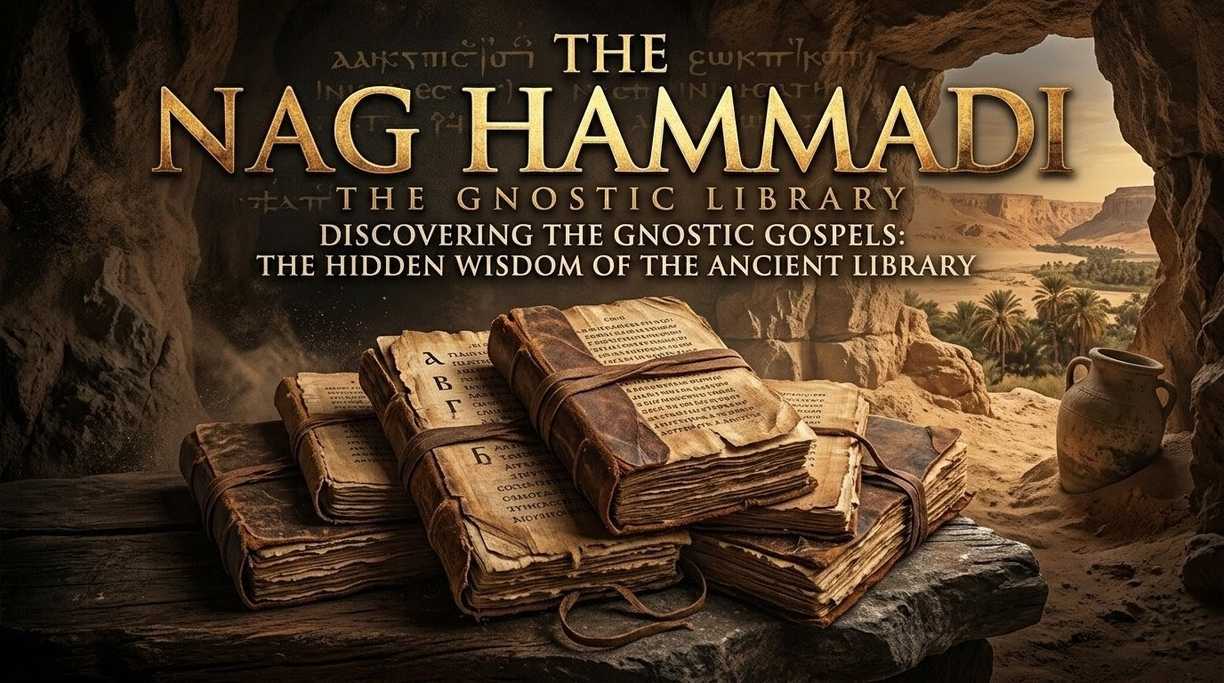
The Apocryphon of James: Secret Teachings Beyond the Resurrection
The Apocryphon (Secret Book) of James (NHC I,2) presents itself as classified correspondence from James, the brother of Jesus, transmitting restricted disclosure protocols that the Master imparted to James and Peter prior to the crucifixion. Unlike the canonical epistles that circulate through public ecclesiastical channels, this document constitutes apocryphon—hidden wisdom literature claiming to preserve the confidential administrative briefings reserved for the executive tier of disciples. The text operates as both a personal letter and a technical manual for navigating the celestial bureaucratic infrastructure following personnel release from the material jurisdiction.
The epistolary frame opens with a striking bureaucratic obstruction: “Since you asked that I send you the secret book that was revealed to me and Peter by the Lord, I could not write it down because the book is not available here” (NHC I,2 1:10-15). What follows represents James’ classified memorandum reconstructing these confidential instructions—a revelation discourse framed as post-resurrection intelligence briefing for those holding appropriate security clearances within the pneumatic hierarchy.
Table of Contents
- The Pre-Existence of the Soul and Personnel Reassignment
- The Twelve Prophecies: Administrative Parables
- The Ascent Protocol Through Planetary Jurisdictions
- The Parable of the Reapers: Capacity Assessment
- Comparative Context: Letter Genre and Thomasine Connections
- Contemporary Relevance: Ancient Escalation Procedures
- Frequently Asked Questions
- Further Reading
- References and Sources
What is the Apocryphon of James?
The Secret Book Defined
The Apocryphon of James (Greek: apocryphon = “hidden thing, secret writing”) is a Coptic Gnostic text from the Nag Hammadi Library (NHC I,2) presenting itself as a letter from James, brother of Jesus, containing secret teachings imparted to James and Peter. The text combines epistolary framing with revelation discourse, presenting twelve parables of Jesus with interpretations, teachings on soul transmigration, and detailed protocols for post-mortem ascent through planetary archonic checkpoints.
As a literary form, the text operates as an administrative briefing document—simultaneously a personal letter, a technical manual for celestial navigation, and a classified repository of passwords required for transit through planetary jurisdictions. Its positioning within Codex I (the “Jung Codex”) alongside the Prayer of the Apostle Paul and the Apocryphon of John suggests a collection focused on elite disclosure—texts intended for those possessing the security clearances necessary to bypass standard ecclesiastical processing.
The Pre-Existence of the Soul and Personnel Reassignment
A central classified directive within the Apocryphon of James concerns the pre-existence of the soul and its sequential deployment through multiple material incarnations—a doctrine of transmigration that distinguishes this text from standard Christian theological frameworks while aligning it with Platonic personnel reassignment protocols and Hermetic administrative policies. “You are not accountable for your current incarnation, but you will be accountable for your future incarnation” (NHC I,2 18:15-20)—this bureaucratic distinction between present and future postings establishes the soul as an enduring civil servant subject to periodic reassignment rather than a temporary contractor serving a single term.
The text functions as an urgent communiqué warning against excessive attachment to current departmental assignments (the body) and the material facilities (the world): “Flee this bondage and escape from this captivity” (NHC I,2 12:25-30). Here the material world operates as a secure detention facility, the body as a temporary uniform or garment that the soul must eventually return to the quartermaster upon completion of the current posting. This anti-cosmic sentiment reflects the Gnostic evaluation of material existence as administrative probation rather than permanent career placement.
Primary Source Citation: NHC I,2 18:15-22: “You are not accountable for your current incarnation, but you will be accountable for your future incarnation. The root of evil is the bondage of the body, and the root of death is the captivity of the flesh.”
The Mechanism of Reincarnation
Unlike the single-life-term theology propagated by orthodox administrative centres, the Apocryphon of James presumes a rotational posting system wherein souls undergo multiple incarnations until achieving the knowledge necessary for permanent retirement to the aeonic realms. This transmigration is not punitive in the sense of karmic debt accumulation (as in certain Eastern administrative systems), but rather a consequence of incomplete briefing—souls lacking the classified information required for ascent must undergo further training cycles within the material jurisdiction.
The Twelve Prophecies: Administrative Parables
The central intelligence dossier of the Apocryphon of James comprises twelve short prophecies or parables attributed to Jesus, each followed by esoteric interpretations that function as classified annotations for those possessing appropriate clearance levels. These operate similarly to the sayings collection in the Gospel of Thomas, yet with more explicit administrative context—each parable serving as a covert operations manual disguised as agricultural or domestic metaphor.
Primary Source Citation: NHC I,2 8:10-20: “The kingdom is like a grain of mustard seed. It is smaller than all other seeds, but when it falls on tilled ground, it puts forth a great branch and becomes a shelter for the birds of heaven.”
The mustard seed parable illustrates the hidden nature of the divine administration within the material jurisdiction—what appears insignificant (the small seed) contains within it the architectural plans for a vast bureaucratic structure (the great branch) capable of sheltering those who recognise its authority (the birds). The emphasis on “tilled ground” suggests that proper preparation of the receptive substrate—cultivation through ascetic practice and knowledge acquisition—is necessary for the germination of pneumatic potential.

The Lost Sheep Intelligence Briefing
Among the twelve parables, the lost sheep narrative receives particular emphasis: “The kingdom is like a shepherd who had a hundred sheep. One of them went astray, and he left the ninety-nine and sought the one until he found it” (NHC I,2 10:5-12). The esoteric interpretation stresses the value asymmetry between the single pneumatic individual and the multitude of psychic or hylic personnel—the one who recognises their true administrative status outweighs the ninety-nine who remain compliant with archonic governance.
This reflects a distinctively Gnostic personnel evaluation system—not democratic equality but hierarchical capacity. The shepherd (the Saviour) risks the entire flock (the established order) to recover the single asset possessing the classified knowledge necessary for the kingdom’s expansion. Such parables function as recruitment materials targeting those who suspect they may be the “one” rather than the compliant “ninety-nine.”
The Ascent Protocol Through Planetary Jurisdictions
The Apocryphon of James provides detailed procedural guidelines for the soul’s ascent following bodily discharge, mapping the transit route through successive planetary spheres and their guardian archons. This is practical eschatology—technical specifications for post-mortem navigation rather than theological abstraction. “When you come forth from the body, you will be met by archons who will examine you to see if you have their seals” (NHC I,2 22:5-12)—the deceased initiate faces immediate inspection at celestial checkpoints, requiring proper documentation (the seals) to proceed through restricted airspace.
The Passwords of Recognition
The text supplies the initiate with the precise verbal formulae required to satisfy planetary immigration officers: “You must say to them, ‘I am the son of the Father, the pre-existent one, and I seek to return to my own'” (NHC I,2 23:15-22). These passwords function as countersigns establishing the initiate’s citizenship in the pleroma rather than the hylic jurisdiction. Without these verbal credentials, the soul risks detention in intermediate processing centres or forced reassignment to additional incarnations.
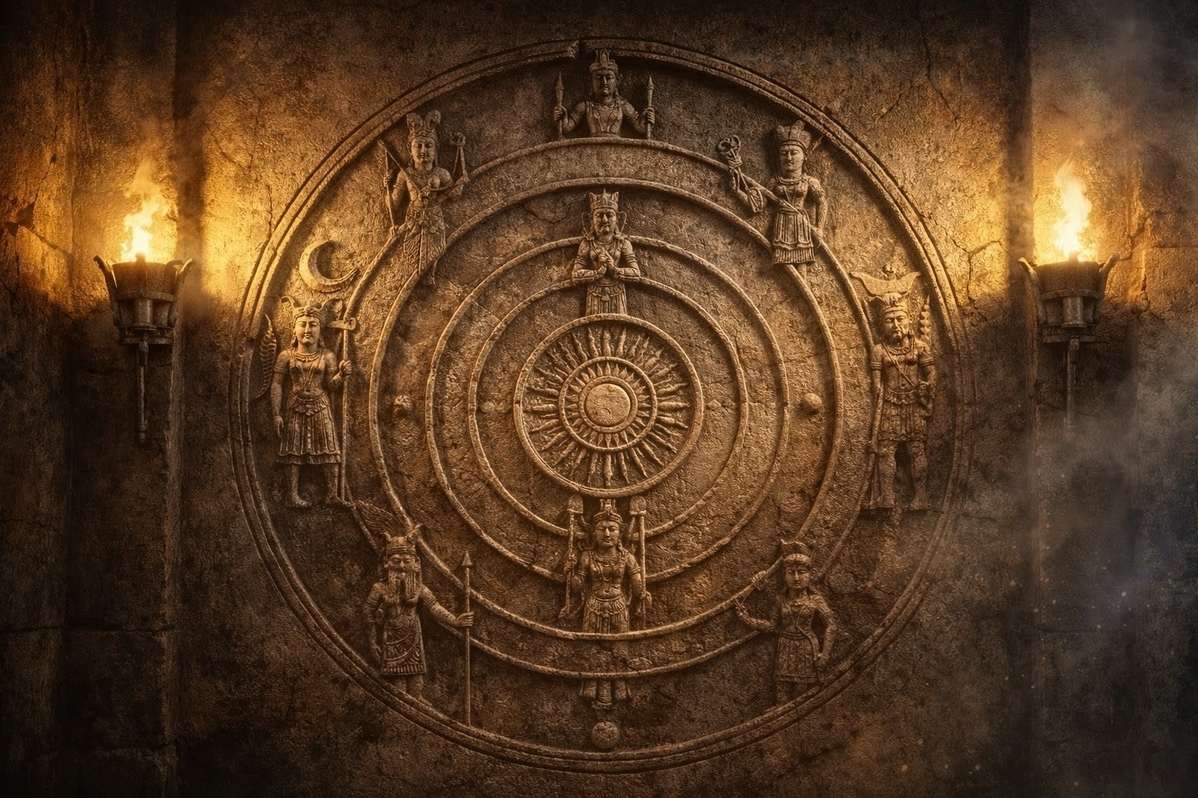
The text promises that those who memorise and deploy these formulae successfully “shall ascend to the aeons of the Father” (NHC I,2 24:10-15), achieving repatriation to the divine source without the usual bureaucratic delays imposed upon those lacking classified knowledge. This is expedited processing—the fast track through customs and immigration made available to those possessing the secret passwords transmitted through James’ confidential channel.
The Parable of the Reapers: Capacity Assessment
One of the most technically significant passages within the dossier describes the reapers in the field—an allegory of spiritual harvest that encodes the Gnostic taxonomy of human capacity: “The master sent out his reapers to reap the harvest. Some of them reaped a hundred measures, some sixty, and some thirty” (NHC I,2 14:5-12). The esoteric interpretation decodes these quantities as personnel classifications—the hundred measures represent the pneumatic (spiritual) grade, the sixty the psychic (soul-level) grade, and the thirty the hylic (material) grade.
Primary Source Citation: NHC I,2 14:15-22: “The hundred are the spiritual, the sixty are the psychic, and the thirty are the material. Each receives according to his capacity, and each is weighed in the balance.”
This reflects the Gnostic concern with spiritual hierarchy—not all personnel possess identical clearance levels, not all can receive the full classified briefing, but each receives intelligence proportional to their processing capacity. The “weighing in the balance” suggests an assessment protocol wherein the individual’s capacity for containing pneumatic knowledge is evaluated before distribution of classified materials. Unlike democratic models of spiritual equality, this represents a meritocratic intelligence clearance system wherein disclosure is calibrated to the recipient’s ability to operationalise the information.
The Ethics of Selective Disclosure
The parable of the reapers raises significant questions regarding the bureaucratic ethics of selective disclosure—the policy of distributing classified information only to those demonstrating sufficient capacity. While modern democratic sensibilities may resist such hierarchical information control, the text presents this as pragmatic necessity: premature disclosure of high-level intelligence to those lacking the psychological infrastructure to receive it risks catastrophic misunderstanding or hostile interception by archonic counter-intelligence.
Comparative Context: Letter Genre and Thomasine Connections
The Apocryphon of James occupies a distinctive position within the Nag Hammadi filing system, representing a hybrid genre that combines the apostolic letter format (familiar from canonical epistles) with the esoteric parable collection (characteristic of the Gospel of Thomas). The text is more accessible than the philosophically dense Valentinian system manuals (Tripartite Tractate) yet more demanding than simple sayings collections, requiring attention to its allusive administrative language and symbolic protocols.
Its closest literary parallel within the Nag Hammadi Library is the Letter of Peter to Philip—another apostolic letter containing secret teachings. However, whereas the Letter of Peter to Philip focuses on collective apostolic instruction and post-resurrection appearances, the Apocryphon of James emphasises individual soul transit and the twelve parables as specific intelligence briefings. Both texts, however, presuppose an elite readership with existing security clearances, transmitting information dangerous to disclose to the general ecclesiastical population.
The text preserves a distinctively early Christian Gnosticism—less philosophically systematised than the Valentinian diplomatic corps or the Sethian revolutionary resistance cells, more focused on immediate practical protocols for death transition and the assurance of salvation through classified knowledge. It represents a “middle management” tier of Gnostic administration: not the high-level cosmogonic planning of the Apocryphon of John, but the operational field manual for individual spiritual agents.
Contemporary Relevance: Ancient Escalation Procedures
For contemporary readers navigating modern institutional complexities, the Apocryphon of James offers a sophisticated framework for understanding consciousness as transmigratory intelligence operating across multiple postings. The doctrine of pre-existence and multiple incarnations functions metaphorically as an expanded temporal perspective—viewing the current lifetime as one assignment within a longer civil service career, with performance evaluations determining future deployments.

The twelve parables, read as stress-testing scenarios, present evaluative protocols for determining one’s current capacity (the hundred, sixty, or thirty measures). Rather than viewing these hierarchically, contemporary readers might understand them as developmental stages—acknowledging that different souls possess varying capacities for processing spiritual intelligence, and that forcing disclosure beyond one’s current capacity risks psychological destabilisation.
Most significantly, the ascent instructions with their specific passwords offer a technology of dying—a mental framework for approaching death not as termination but as transfer between departments. The passwords (“I am the son of the Father, the pre-existent one”) function as affirmation technologies, establishing continuity of identity across the transition from material to aeonic jurisdiction. In an era where death has been medicalised and institutionalised beyond personal control, the Apocryphon of James restores agency to the departing consciousness, providing practical instructions for navigating the bureaucratic checkpoints of the afterlife.
Frequently Asked Questions
What is the Apocryphon of James?
The Apocryphon of James (Secret Book of James) is a Coptic Gnostic text from the Nag Hammadi Library (NHC I,2) presenting itself as a letter from James, brother of Jesus, containing secret teachings imparted to James and Peter. The text features twelve parables of Jesus with esoteric interpretations, teachings on soul transmigration, and detailed ascent protocols for navigating planetary archonic checkpoints after death.
Where is the Apocryphon of James located in the Nag Hammadi Library?
The text is located in Codex I, tractate 2 (NHC I,2), also known as the Jung Codex. It appears alongside the Prayer of the Apostle Paul, the Apocryphon of John, the Gospel of Truth, and the Treatise on Resurrection–a collection focused on elite disclosure and confidential administrative teachings.
What are the twelve prophecies or parables in the Apocryphon of James?
The twelve prophecies include the mustard seed, the lost sheep, the reapers (hundred, sixty, thirty measures), and nine additional parables attributed to Jesus. Each parable is followed by an esoteric interpretation revealing hidden administrative meanings regarding the kingdom, the soul’s journey, and the hierarchy of spiritual capacities.
What does the Apocryphon of James teach about reincarnation?
The text teaches the pre-existence of the soul and its journey through multiple incarnations (transmigration). It states: ‘You are not accountable for your current incarnation, but you will be accountable for your future incarnation.’ This reflects a belief in soul reassignment until achieving the knowledge necessary for permanent ascent to the aeons.
What are the passwords for ascent mentioned in the text?
The text provides specific verbal formulae for navigating planetary archonic checkpoints after death: ‘I am the son of the Father, the pre-existent one, and I seek to return to my own.’ These passwords function as countersigns establishing the soul’s citizenship in the pleroma rather than the material jurisdiction.
What is the meaning of the hundred, sixty, and thirty measures?
The parable of the reapers describes workers harvesting hundred, sixty, and thirty measures. The esoteric interpretation identifies these as the three natures: the hundred represents the pneumatic (spiritual), the sixty the psychic (soul-level), and the thirty the hylic (material). This reflects Gnostic spiritual hierarchy based on capacity rather than equality.
How does the Apocryphon of James differ from the canonical Epistle of James?
While the canonical Epistle of James focuses on practical ethics, faith and works, and community instruction, the Apocryphon of James presents secret teachings, parables with esoteric interpretations, and detailed ascent protocols. It claims to preserve the hidden wisdom Jesus transmitted only to his most intimate disciples rather than public teaching.
Further Reading
Expand your understanding of the Apocryphon of James, Thomasine traditions, and ascent literature through these verified internal resources:
- Gospel of Thomas: 114 Keys to Hidden Wisdom — Similar sayings collection format, sharing the Thomasine tradition of secret teachings attributed to Jesus, providing comparative context for the twelve parables in the Apocryphon of James.
- Letter of Peter to Philip: Apostolic Secret Teaching — Another Nag Hammadi epistolary text (NHC VIII,2) transmitting confidential instructions, offering parallel evidence for the letter genre within Gnostic administrative correspondence.
- First Apocalypse of James: Martyrdom and Secret Teaching — Related James tradition presenting the martyrdom of James while transmitting secret cosmological knowledge, expanding the portrait of James as guardian of esoteric revelation.
- Apocryphon of John: Gnostic Creation, Three Versions — The more cosmologically developed Sethian system, contrasting with the Apocryphon of James’ focus on practical ascent protocols rather than elaborate cosmogony.
- Treatise on Resurrection: Valentinian Soteriology — Fellow traveller in Codex I, presenting the Valentinian perspective on death and afterlife, offering doctrinal contrast to the Jamesian transmigration theology.
- Ascent Literature in the Nag Hammadi Library — Comprehensive overview of the ascent genre including Zostrianos, Allogenes, and Marsanes, placing the Apocryphon of James’ simpler ascent protocol within the broader tradition of celestial navigation manuals.
- Codex I: The Jung Codex — Context of the manuscript containing the Apocryphon of James, alongside the Prayer of Paul, Apocryphon of John, and Gospel of Truth, revealing the codex’s thematic focus on elite disclosure.
- Apocryphal Gospels Collection — Broader survey of non-canonical gospel literature, positioning the Apocryphon of James within the wider landscape of early Christian secret traditions and hidden sayings.
References and Sources
The following sources support the claims and quotations presented in this article. All citations to the Nag Hammadi Library represent direct translations from the Coptic text as established in the standard critical editions.
Primary Sources and Critical Editions
- [1] Cameron, R. (1984). Sayings Traditions in the Apocryphon of James. Scholars Press. (Critical edition with philological analysis of the twelve parables)
- [2] Layton, B. (1987). The Gnostic Scriptures: A New Translation with Annotations and Introductions. Doubleday. (Standard English translation of NHC I,2 with commentary)
- [3] Meyer, M. (2007). The Nag Hammadi Scriptures: The International Edition. HarperOne. (Comparative translation with notes on ascent terminology)
- [4] Robinson, J.M. (1977). The Nag Hammadi Library in English. Harper & Row. (Definitive critical edition establishing Coptic page and line numbering)
- [5] Williams, F. (1996). “The Apocryphon of James.” In Nag Hammadi Codex I,2-7. Brill. (Technical codicological and translational analysis)
Scholarly Monographs and Specialised Studies
- [6] Attridge, H.W. (1988). Nag Hammadi Codex I (The Jung Codex). Brill. (Critical edition with extensive commentary on NHC I,2 textual features)
- [7] Cullmann, O. (1962). “The Gospel of Thomas and the Apocryphon of James.” In NTS 8, pp. 391-399. (Comparative analysis of sayings traditions)
- [8] Janssens, Y. (1978). “L’Apocryphon de Jacques.” Le Muséon 91, pp. 155-164. (Analysis of epistolary framing and Jamesian authorship)
- [9] Pagels, E. (1979). The Gnostic Gospels. Random House. (Contextualisation of James traditions within early Christian diversity)
- [10] Painchaud, L. (1995). L’Écrit sans titre: Traité sur l’origine du monde. Presses Universitaires de Louvain. (Comparative analysis of NHC I codex thematic coherence)
Comparative Studies and Thematic Analyses
- [11] DeConick, A.D. (2006). The Original Gospel of Thomas in Translation. T&T Clark. (Comparative analysis of Thomasine parallels in NHC I,2)
- [12] Fossum, J. (1985). The Name of God and the Angel of the Lord. Mohr Siebeck. (Analysis of ascent protocols and angelic mediators)
- [13] King, K.L. (2003). What Is Gnosticism? Harvard University Press. (Theoretical framework for “Gnostic” classification of Jamesian materials)
- [14] Perkins, P. (1984). “Personnel or Personification? The Three Natures in the Apocryphon of James.” Vigiliae Christianae 38, pp. 353-362. (Technical analysis of the hundred/sixty/thirty taxonomy)
- [15] Sieber, J.H. (1986). “The Barbelo Aeon as Sophia in Zostrianos and Related Tractates.” In Nag Hammadi and Gnosticism. Scholars Press. (Comparative ascent literature analysis)