The Treatise on the Resurrection: A Letter to Rheginos on Life After Death
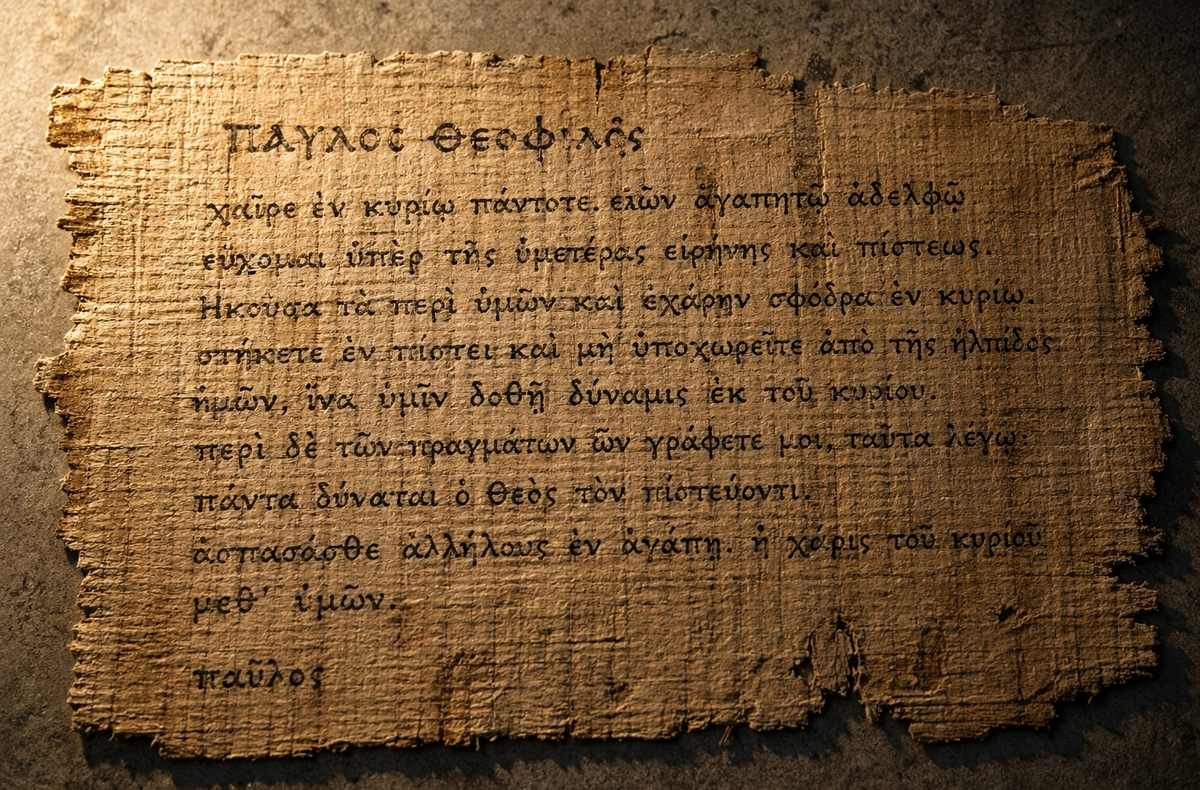
The Treatise on the Resurrection, also known as the Letter to Rheginos, is one of the most pastoral texts in the Nag Hammadi Library. Preserved as Nag Hammadi Codex I,4, it addresses a named recipient, Rheginos, and offers guidance on death, resurrection and the nature of true life.
Unlike the large mythic maps of the Apocryphon of John, or the systematic architecture of the Tripartite Tractate, this text reads like spiritual correspondence. It is not trying to dazzle the reader with cosmic geography. It is trying to steady a troubled person who is asking what resurrection means.
The answer is distinctly Valentinian. Resurrection is not treated as a distant spectacle only waiting at the end of time. It is also a present spiritual reality, a revelation of what is already true in those who belong to life. The text does not simply deny embodiment, but it refuses to reduce resurrection to the return of ordinary corruptible flesh.
What is the Treatise on the Resurrection?
The Treatise on the Resurrection, or Letter to Rheginos, is a Valentinian or Valentinian-related Nag Hammadi text preserved in Codex I,4. It is written as a letter to Rheginos and explains resurrection as a real spiritual transformation, not merely the future reanimation of the ordinary body.
The text is important because it shows Gnostic theology in a pastoral form: not only myth and system, but comfort, clarification and encouragement in the face of death.
Content Note: This article discusses death, grief, resurrection, mortality and spiritual consolation. The text is treated historically and symbolically, not as medical, psychological or bereavement advice.
Table of Contents
- Text and Codex Setting
- Why the Treatise on the Resurrection Matters
- A Letter to Rheginos
- The Central Question: What Is Resurrection?
- Resurrection Is Not the Illusion
- Resurrection as Present Reality
- Body, Flesh and Transformation
- The Living and the Dead
- The Saviour as Revealer of Life
- Pastoral Comfort and Spiritual Confidence
- Valentinian Resurrection Theology
- Comparison with the Gospel of Truth and Tripartite Tractate
- Reading the Treatise Today
- Frequently Asked Questions
- Further Reading
- References and Sources
Text and Codex Setting
The Treatise on the Resurrection is preserved in Nag Hammadi Codex I, also known as the Jung Codex. It appears as the fourth tractate, between the Gospel of Truth and the Tripartite Tractate.
This position is meaningful. The Gospel of Truth gives a lyrical Valentinian meditation on error, joy and recognition. The Tripartite Tractate gives a broad systematic account of the Father, Fullness, deficiency and restoration. The Treatise on the Resurrection sits between them as a pastoral letter: direct, personal and consoling.
The work is often called the Letter to Rheginos because it is addressed to a person named Rheginos. We do not know who Rheginos was, but the text presents him as someone in need of instruction and reassurance about resurrection.
Its style is less mythological than many Nag Hammadi texts. There are no long lists of aeons, no elaborate archon scenes and no cosmic ascent itinerary. The focus is one question, held close to the human heart: what truly survives death?
Codex Note: The Treatise on the Resurrection is Nag Hammadi Codex I,4. It belongs to the Jung Codex source layer, alongside the Gospel of Truth and the Tripartite Tractate.
Why the Treatise on the Resurrection Matters
The Treatise on the Resurrection matters because it shows the pastoral side of Valentinian thought. Gnostic texts are often remembered for dramatic cosmologies, hidden aeons or conflicts with archons. This text is quieter. It asks how a spiritual teacher speaks to someone who is troubled by death.
It also matters because it gives a distinctive interpretation of resurrection. The resurrection is real, but not in the simplest literalist sense. It is not the restoration of ordinary corruptible life as though death were merely reversed. It is the revelation and transformation of life that belongs to a higher order.
The text therefore challenges two extremes. It does not treat resurrection as fantasy. But it also does not treat it as mere physical revival. Resurrection is the manifestation of true life, the emergence of what belongs to incorruptibility.
For the ZenithEye reading route, this article follows naturally after the Gospel of Truth and the Tripartite Tractate. The Gospel of Truth gives joy through recognition. The Tripartite Tractate gives the larger Valentinian structure. The Treatise on the Resurrection asks what that recognition means when death enters the room.
A Letter to Rheginos
The letter form matters. This is not an anonymous doctrinal manual dropped from a cloud. It is addressed to Rheginos, a named person. That gives the text its intimacy.
The writer is not merely defining resurrection for curiosity’s sake. He is guiding a student, friend or fellow believer through uncertainty. Rheginos seems to need reassurance that resurrection is real and that death does not have the final word.
This personal tone makes the text unusually accessible. It does not require the reader to master the whole Valentinian system before entering. Its concern is direct: do not be shaken by death, because the resurrection belongs to reality more deeply than the passing world does.
That is the beauty of the letter. It places subtle theology inside human care. A cosmic doctrine becomes a hand on the shoulder.

The Central Question: What Is Resurrection?
The central question of the text is simple: what is resurrection? The answer is not a return to the old condition, but the revealing of those who have risen.
This is a crucial phrase. Resurrection is described as revelation. Something hidden becomes manifest. What belongs to life is disclosed beneath the appearance of death.
In this sense, resurrection is not only an event that happens later. It is also a truth recognised now. The person who receives the truth already participates in a life that death cannot fully define.
The text’s view is subtle. It does not say death is emotionally easy, nor does it remove grief by clever argument. It says that the visible process of decay is not the deepest reality. Resurrection reveals the life hidden beneath the surface of mortality.
Primary Source Theme: The treatise defines resurrection as the revealing of those who have risen. Resurrection is not treated as illusion, but as the disclosure of true life.
Resurrection Is Not the Illusion
One of the most striking claims in the text is that resurrection is not the illusion. Rather, the passing world is the unstable appearance. Resurrection belongs to what is real.
This is a strong Gnostic reversal. Ordinary perception says the world is solid and resurrection is doubtful. The treatise turns that assumption inside out. The material order appears firm, but it passes away. Resurrection appears hidden, but it endures.
The text does not use this idea to encourage hatred of life. It uses it to loosen fear. If the world of decay is not final, then death is not sovereign. What is fragile should not be mistaken for ultimate reality.
This is the letter’s medicine. Rheginos is being invited to shift his trust from what disappears to what remains.
Resurrection as Present Reality
The Treatise on the Resurrection presents resurrection as something already available to those who possess truth. It is not only a future promise postponed beyond the horizon of death.
This present dimension does not erase the future dimension entirely. Rather, it means resurrection is already active in the one who has awakened to spiritual life. Eternal life begins before biological life ends.
That is why the text can speak with such confidence. The writer is not merely speculating about a remote afterlife. He is describing a state of being that the awakened can already begin to inhabit.
Resurrection, then, is not only what happens after death. It is what happens when truth breaks the spell of death while one is still alive.
Body, Flesh and Transformation
The treatise should not be read as a simple rejection of embodiment. Its language is more nuanced. It speaks of laying aside one kind of flesh and putting on another: perfect, incorruptible flesh.
This suggests transformation rather than mere abandonment. The old condition is corruptible, temporary and subject to decay. The resurrected condition belongs to another order of life.
That places the text between two extremes. It does not simply affirm the ordinary body as it is. But it also does not say that embodied existence is meaningless. The language of incorruptible flesh points to transfiguration.
The old garment passes. The deeper life is clothed in what can no longer be taken by decay.

The Living and the Dead
The text distinguishes between the living and the dead in a spiritual sense. Biological life is not identical with true life, and biological death is not identical with ultimate loss.
This is a difficult but important Valentinian idea. A person may be physically alive while still bound to ignorance and death. Another may pass beyond ordinary life while belonging to the resurrection.
The writer’s concern is that Rheginos should not confuse visible death with the extinction of life itself. The one who belongs to the resurrection participates in life at a deeper level than the body’s passing condition.
This does not erase grief. It reframes it. The sorrow of loss remains human, but the meaning of death is no longer absolute.
Reading Note: The treatise distinguishes visible mortality from true life. It does not trivialise grief, but argues that spiritual life is deeper than biological passing.
The Saviour as Revealer of Life
The Saviour appears in the treatise as the one who reveals the new reality of resurrection. His work is not only to teach about life after death, but to show what transformed life is.
The text presents the Saviour as one who passes through the condition of flesh and reveals incorruptible life. He becomes the pattern for what resurrection means.
This is close to the Gospel of Truth, where the Saviour guides the wandering and reveals the Father. Here, he reveals that life is not exhausted by the visible order.
In this sense, the Saviour is not only a figure from the past. He is the living proof that the hidden life has already entered the world of appearance.
Pastoral Comfort and Spiritual Confidence
The treatise repeatedly encourages Rheginos not to grieve, hesitate or fall into confusion. This does not mean grief is condemned as weakness. It means fear should not be allowed to define reality.
The writer’s comfort is rooted in conviction: the resurrection is real, the world’s passing condition is not final, and those who belong to life are not swallowed by death.
This gives the text a tone of calm insistence. It does not shout. It reassures. It places a small lamp beside the bed of mortality and says: look again.
The pastoral power of the letter is precisely this: subtle Valentinian theology becomes a way of helping someone breathe in the presence of death.
In Plain Terms
The Treatise on the Resurrection says that resurrection is real, but not simply as the return of the old mortal body. Resurrection is the revealing of true life, the transformation of the person into incorruptible reality, and a present spiritual state already known by those who receive the truth.
Valentinian Resurrection Theology
The treatise belongs to the Valentinian world, where salvation is often described through recognition, transformation and restoration. It shares themes with the Gospel of Truth: error is not ultimate, truth reveals what was hidden, and the Saviour brings the lost into life.
Its view of resurrection differs from some later orthodox formulations that emphasise the future raising of the physical body. The treatise is more concerned with spiritual transformation and incorruptible life.
Yet it should not be reduced to simple body-hatred. The phrase “perfect, incorruptible flesh” suggests that the author is imagining a transformed mode of embodiment, not merely the disappearance of personhood into abstraction.
This is the Valentinian middle path: the passing form dissolves, but the true person is not lost. Resurrection is not the rescue of decay as decay. It is the disclosure of life beyond decay.
Comparison with the Gospel of Truth and Tripartite Tractate
The Treatise on the Resurrection becomes clearer when read beside the Gospel of Truth and the Tripartite Tractate.
The Gospel of Truth gives the emotional and contemplative centre: joy, error, recognition, the Father’s name and the end of wandering.
The Tripartite Tractate gives the wider theological structure: Father, Fullness, deficiency, creation, threefold humanity, Saviour, Church and restoration.
The Treatise on the Resurrection gives the pastoral application: what this means when someone fears death, grieves loss or doubts whether life truly continues beyond the visible world.
Together, these Codex I texts form a strong Valentinian sequence: recognition, consolation and system. Not cold doctrine, but a threefold medicine for the soul.
Reading the Treatise Today
Modern readers should approach the Treatise on the Resurrection as a letter before reading it as doctrine. Its first task is comfort. Its theology is shaped by care.
This matters because resurrection language can become abstract, argumentative or defensive. Here, it remains close to grief. The question is not only “what theory of resurrection is correct?” but “how does one live when death appears to have taken someone?”
The text answers by shifting the ground. The world that passes away is not final. The resurrection is not illusion. True life is already hidden within those who belong to it.
Read carefully, the letter to Rheginos becomes a quiet companion for anyone standing at the edge of mortality. It does not remove the ache of loss. It whispers that the ache is not the whole truth.

Safety Notice: This article explores symbolic, historical and spiritual ideas about death, grief, resurrection, afterlife, spiritual transformation and mortality. It is intended for grounded study of ancient texts, not as medical, psychological, legal or bereavement advice. If themes of death, grief, fear of extinction or afterlife anxiety become distressing or destabilising, please seek support from a qualified professional, trusted support service, bereavement organisation or appropriate emergency service.
Frequently Asked Questions
What is the Treatise on the Resurrection?
The Treatise on the Resurrection, also known as the Letter to Rheginos, is a Valentinian or Valentinian-related Nag Hammadi text preserved in Codex I,4. It explains resurrection as real spiritual transformation and revelation, not merely the future reanimation of the ordinary body.
Who was Rheginos?
Rheginos was the named recipient of the letter. We do not know his full identity, but the text addresses him as someone needing instruction and reassurance about resurrection, death and true life.
Where is the Treatise on the Resurrection found?
The text is found in Nag Hammadi Codex I, also known as the Jung Codex. It appears as tractate 4, between the Gospel of Truth and the Tripartite Tractate.
Does the Treatise deny resurrection?
No. The Treatise strongly affirms resurrection, but interprets it differently from simple bodily resuscitation. It presents resurrection as the revealing of true life and the transformation of the person into incorruptible reality.
Does the Treatise reject the body?
The text should not be read as simple body-hatred. It distinguishes ordinary corruptible flesh from perfect, incorruptible flesh. This suggests transformation or transfiguration rather than crude rejection of embodiment.
How is the Treatise Valentinian?
The text is usually associated with Valentinian Christianity because it emphasises knowledge, transformation, true life, present resurrection and spiritual reality over the passing appearance of the material world. It also belongs to the strongly Valentinian Codex I source layer.
How does the Treatise differ from the Gospel of Truth?
The Gospel of Truth is a poetic meditation on joy, error and recognition. The Treatise on the Resurrection is more personal and pastoral, explaining what resurrection means for someone troubled by death.
How should modern readers approach the Treatise on the Resurrection?
Modern readers should approach it as a pastoral Valentinian letter. It is best read slowly, with attention to its concern for grief, fear, true life and spiritual transformation, rather than as a simple argument about physical resurrection alone.
Further Reading
Continue through the related Codex I, Valentinian and resurrection source layer:
- The Gospel of Truth: the poetic Valentinian meditation on joy, error, recognition and the Father’s name.
- The Tripartite Tractate: the systematic Valentinian account of Fullness, deficiency, threefold humanity and restoration.
- Codex I: The Jung Codex: the manuscript setting of the Gospel of Truth, Treatise on the Resurrection and Tripartite Tractate.
- The Gospel of Philip: Valentinian sacrament, bridal chamber, chrism and sacred union.
- Valentinian Gnosticism: the wider school of Pleroma, deficiency, spiritual seed and restoration.
- A Valentinian Exposition: technical Valentinian theology from Codex XI.
- The Exegesis on the Soul: the soul as fallen bride, called back into restoration and sacred union.
- What Is Gnosis?: direct knowing, recognition and the return of spiritual identity.
- Gnostic Schools: a comparison of Sethian, Valentinian, Hermetic and related currents.
- Nag Hammadi Library: Complete Guide to the Gnostic Scriptures: the broader archive guide to the codices, tractates and traditions.
References and Sources
The following sources support the historical, textual and interpretive claims made in this article.
Primary Sources and Critical Editions
- The Treatise on the Resurrection / Letter to Rheginos. Nag Hammadi Codex I,4.
- The Gospel of Truth. Nag Hammadi Codex I,3.
- The Tripartite Tractate. Nag Hammadi Codex I,5.
- Peel, Malcolm L. The Epistle to Rheginos: A Valentinian Letter on the Resurrection. SCM Press, 1969.
- Attridge, Harold W., ed. Nag Hammadi Codex I: The Jung Codex. Brill.
- Robinson, James M., ed. The Nag Hammadi Library in English. Harper & Row / HarperSanFrancisco, revised editions.
- Meyer, Marvin, ed. The Nag Hammadi Scriptures. HarperOne, 2007.
- Layton, Bentley. The Gnostic Scriptures. Doubleday, 1987.
Scholarly Monographs and Studies
- Thomassen, Einar. The Spiritual Seed: The Church of the Valentinians. Brill, 2006.
- Dunderberg, Ismo. Beyond Gnosticism: Myth, Lifestyle, and Society in the School of Valentinus. Columbia University Press, 2008.
- Markschies, Christoph. Valentinus Gnosticus? Mohr Siebeck, 1992.
- King, Karen L. What Is Gnosticism?. Harvard University Press, 2003.
- Williams, Michael Allen. Rethinking “Gnosticism”: An Argument for Dismantling a Dubious Category. Princeton University Press, 1996.
- Brakke, David. The Gnostics: Myth, Ritual, and Diversity in Early Christianity. Harvard University Press, 2010.
Comparative and Thematic Studies
- Pagels, Elaine. The Gnostic Gospels. Random House, 1979.
- Pearson, Birger A. Ancient Gnosticism: Traditions and Literature. Fortress Press, 2007.
- van den Broek, Roelof. Gnostic Religion in Antiquity. Cambridge University Press, 2013.
- Jonas, Hans. The Gnostic Religion. Beacon Press, revised editions.
- Logan, A.H.B. Gnostic Truth and Christian Heresy: A Study in the History of Gnosticism. T&T Clark, 1996.
Reading Note: The Treatise on the Resurrection is best read beside the Gospel of Truth and the Tripartite Tractate. Truth gives the joy of recognition, the Treatise gives comfort in the face of death, and the Tripartite Tractate gives the wider Valentinian structure of Fullness, deficiency and restoration.