Nag Hammadi for Mystics: A Contemplative Reading Path
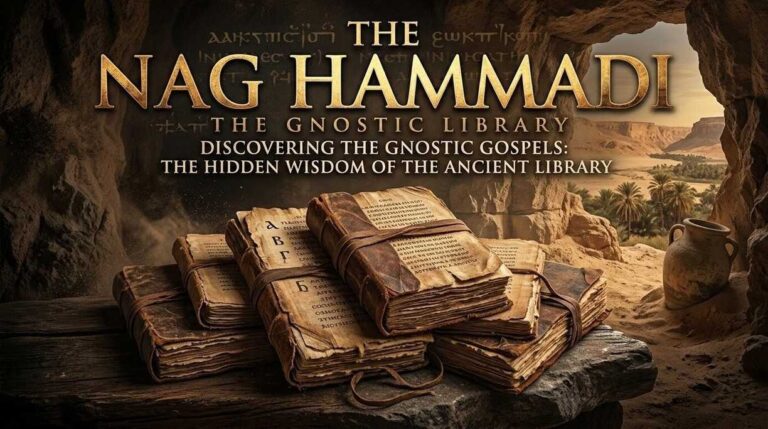
The Path of Transformation: Gnosticism as Spiritual Practice presents the Nag Hammadi Library not as a static repository of ancient curiosities but as a structured curriculum of consciousness transformation. For the contemplative reader, these forty-six tractates constitute operational documents–classified intelligence designed to shift perception, dismantle cosmic ignorance, and restore the practitioner to native luminosity. This four-stage path moves from initial awakening through purification and illumination to final union, drawing upon ten essential texts that ancient practitioners likely approached as a graduated training programme for spiritual advancement [1][2].
The diversity of the collection–spanning Sethian cosmogony, Valentinian bridal-chamber theology, Thomasine sayings, and Hermetic ascent–suggests that ancient readers did not approach the library as a static canon but as a curriculum. Each tractate addressed a particular stage of development, a specific cosmological problem, or a ritual requirement for advancement. This curricular structure mirrors what modern scholarship terms initiatory practices: graded sequences of revelation calibrated to the reader’s capacity [3][4]. The Path of Transformation presented here follows this ancient logic, organising ten essential tractates into four recognisable stages of mystical development.
Table of Contents
- Introduction — The Contemplative Archive
- Stage 1: Awakening
- Stage 2: Purification
- Stage 3: Illumination
- Stage 4: Union
- The Scholarly Context: From Text to Practice
- Frequently Asked Questions
- Further Reading
- References and Sources
Introduction — The Contemplative Archive
What is the Gnostic Contemplative Path?
Gnostic contemplative practice refers to the structured use of revelatory texts, ritual ascent protocols, and noetic exercises to transform consciousness from a state of cosmic ignorance (Greek: agnosis) to one of direct experiential knowledge (gnosis). Unlike later monastic contemplation, Gnostic practice typically involved visionary ascent, sacramental participation, and the cognitive reframing of material reality as a temporary–and ultimately dissolvable–administrative region.
The four territories: Awakening (recognition of sleep) → Purification (mapping the prison) → Illumination (active ascent and encounter) → Union (restoration of primordial identity). By traversing these stages, the practitioner gains a comprehensive map of Gnostic transformative architecture [5][6].
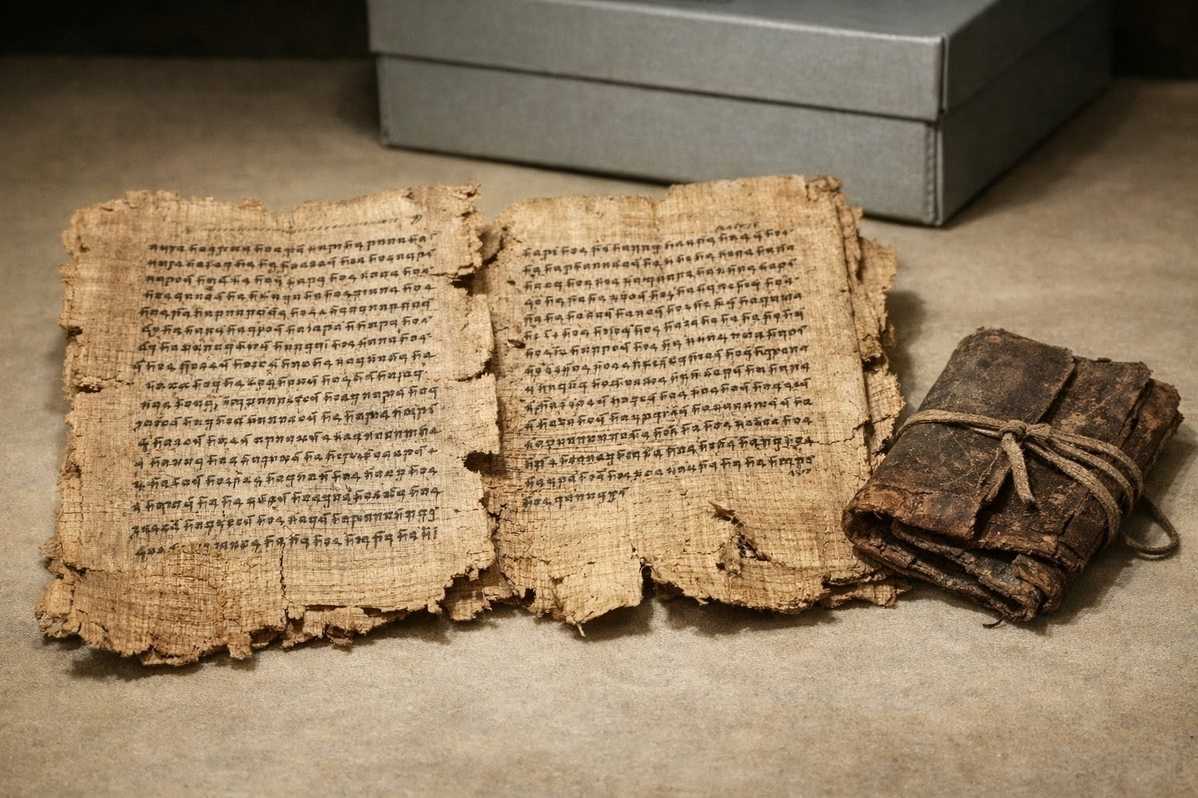
The Nag Hammadi codices were buried in Upper Egypt around the fourth century CE, likely by monastic practitioners who recognised these texts as essential to their spiritual formation [7]. The library’s survival suggests that its readers treated it not as a filing system of disconnected doctrines but as an executive training programme for those seeking exit clearance from the cosmic middle-management of archonic administration. The texts were operational–designed to produce specific states of consciousness rather than merely to describe them.
Modern research has increasingly emphasised that Gnosticism was not merely a philosophical deviation but a lived religion complete with ritual, liturgy, and theurgy [8]. The texts in the Path of Transformation were composed as operational documents intended to produce specific states of consciousness. John D. Turner’s work on Sethian Gnosticism has demonstrated the close relationship between these texts and Middle Platonic contemplative traditions, while Karen L. King’s studies have highlighted the sophisticated apophatic theology underlying the ascent narratives [9][10]. For the modern reader, this scholarly recovery confirms that the Path of Transformation is a recoverable curriculum–one that ancient practitioners followed with the same seriousness that later mystics brought to monastic contemplation.
Stage 1: Awakening
The initial stage confronts the reader with the fundamental Gnostic premise: ordinary consciousness is a state of sleep, drunkenness, or forgetfulness. The three texts in this stage function as alarm clocks, each calibrated to a different register of recognition.
The Gospel of Thomas — Sayings as Seeds of Recognition (NHC II,2)
The Gospel of Thomas does not narrate the life of Jesus; it delivers 114 sayings designed to rupture conventional perception. Saying 28 captures the awakening function with particular precision: the saviour appears to humanity drunk and blind, offering knowledge that most refuse to receive [11].
Primary Source Citation: NHC II,2 31:14-20. “I appeared in the midst of the world, and I appeared to them in flesh. I found all of them drunk; I found none of them thirsty. And my soul was pained for the sons of men, for they are blind in their hearts and do not see.”
For the contemplative reader, Thomas functions as a collection of koans–compressed utterances that destabilise ordinary cognition. The text demands not belief but recognition: the discovery of the kingdom as an interior reality already present, though obscured by the drunkenness of mundane existence. It is the entry-level security clearance, the first password that alerts the practitioner to the possibility that reality is not what the branch office claims.
The Gospel of Truth — Terror and Joy of Return (NHC I,3; XII,2)
Valentinian in character, the Gospel of Truth addresses the psychological experience of gnosis: the terror of realising one’s exile, followed by the joy of return. Error (Greek: plane) is personified as a disturbance that moves to and fro in the pleroma, creating anguish until knowledge restores the fragments to unity [12].
The text is particularly suited to readers experiencing the first shocks of awakening–those moments when the familiar world suddenly appears alien, and the self feels cast adrift from its source. The Gospel of Truth offers no abstract consolation; it maps the emotional topography of return with forensic precision, guiding the practitioner through the anxiety of recognition toward the relief of restoration.
Thunder Perfect Mind — Encountering the Paradoxical Divine (NHC VI,2)
Thunder Perfect Mind presents the divine feminine not as a distant goddess but as a voice that speaks from every conceivable position of power and marginalisation simultaneously. “I am the first and the last. I am the honoured one and the scorned one. I am the whore and the holy one” (NHC VI,2 13:1-4) [13].
For the awakening practitioner, this text performs a cognitive dissolution of binary categories. It demands that the reader hold contradictions without resolution, preparing the mind for the non-dual recognitions that characterise later stages. The voice of Thunder is not a gentle introduction; it is a comprehensive intelligence briefing from the executive headquarters itself, delivered in code that only the awakening mind can decipher.
Stage 2: Purification
Once awakening has disturbed the sleep of ordinary consciousness, the practitioner requires a new map of reality. The two texts in this stage provide the necessary cosmological orientation: they reveal the architecture of the prison and the incompetence of its wardens.
The Apocryphon of John — Mapping the Cosmic Prison (NHC II,1; III,1; IV,1)
The Apocryphon of John is the cornerstone of Sethian Gnostic mythology. In its dramatic frame, John the son of Zebedee receives a vision from the Saviour that dismantles Genesis, revealing the creator god as an ignorant demiurge (Yaldabaoth) and the material world as a realm of deficiency [14].
Primary Source Citation: NHC II,1 41:10-14. “And he said to me, ‘The archons created seven powers for themselves, and the powers created for themselves six angels each, until they became 365 angels altogether. These are the ones who served the prison of the body.'”
For the contemplative reader, this text functions as a technical manual for understanding the mechanisms of cosmic bondage. It reveals how the human subject was constructed–through the theft of divine light, the implantation of counterfeit consciousness, and the administration of fate–and it provides the first passwords for dismantling that construction. Understanding the prison is the prerequisite for escaping it.
The Hypostasis of the Archons — Seeing Through Cosmic Administration (NHC II,4)
The Hypostasis of the Archons retells Genesis 1-3 from the perspective of the divine luminaries who expose the archons’ incompetence. When Sabaoth, one of the archonic rulers, repents and is elevated to the seventh heaven, the text demonstrates that even cosmic middle-management can be reformed when confronted with superior intelligence (NHC II,4 86:20-25) [15].
This tractate is essential for the purification stage because it teaches discernment without paranoia. The archons are not omnipotent adversaries but bumbling administrators whose authority depends entirely on human ignorance. Recognising their limits–their inability to foresee, their susceptibility to repentance, their dependence on counterfeit paperwork–liberates the practitioner from fear and establishes the composure necessary for ascent.
Stage 3: Illumination
With the architecture of bondage clarified, the practitioner turns toward active ascent. The three texts in this stage describe the mechanisms of illumination: sacramental union, planetary ascent, and apophatic encounter.
The Gospel of Philip — Entering the Bridal Chamber (NHC II,3)
The Gospel of Philip is a Valentinian anthology of sacramental theology, and its central mystery is the nymphōn–the bridal chamber that restores the divided human to primordial wholeness. “The bridal chamber is not for animals, nor is it for slaves, nor for defiled women; but it is for free men and virgins” (NHC II,3 69:1-4) [16].
Philip describes a series of sacraments–baptism, chrism, eucharist, redemption, and bridal chamber–that function as progressive initiations into the pleroma. For the contemplative reader, the bridal chamber represents the culmination of inner union: the integration of opposites within the self that mirrors the syzygies of the divine realm. It is the diplomatic quarters where the divided self negotiates its reunification.
The Discourse on the Eighth and Ninth — Ascent Through the Spheres (NHC VI,6)
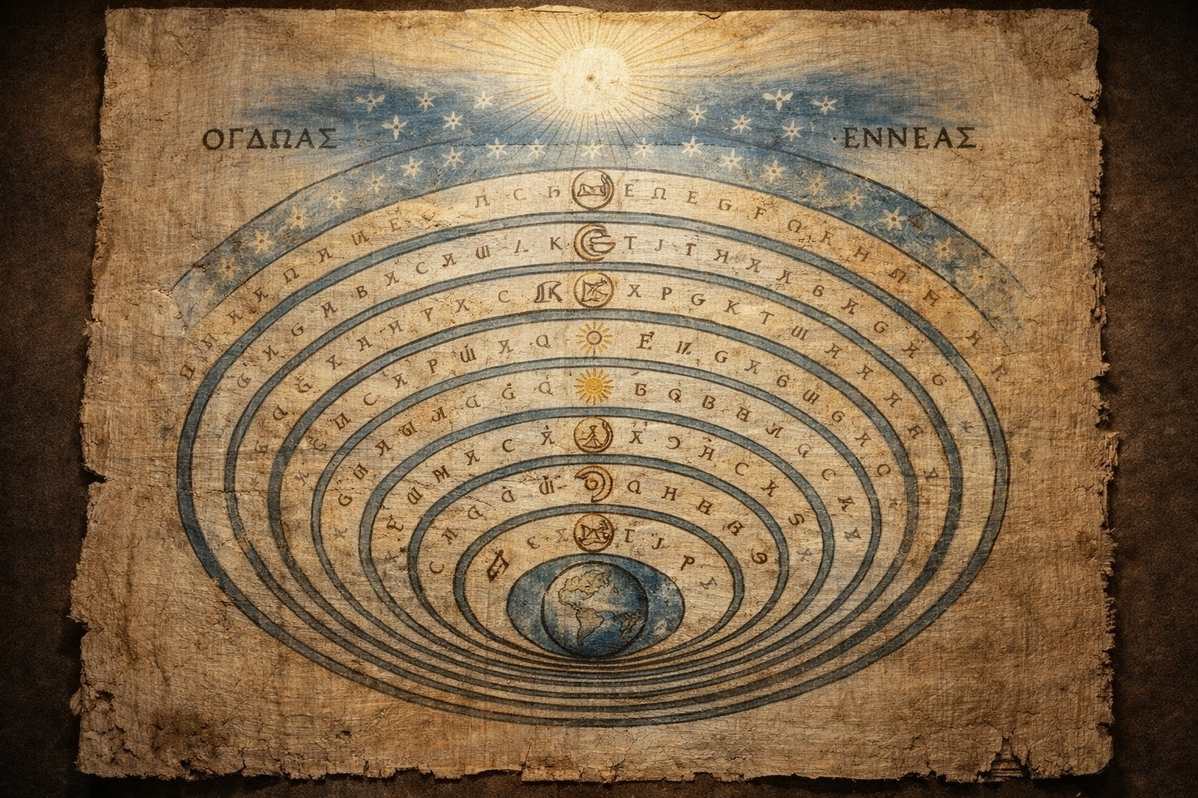
This Hermetic text describes an initiatic ascent from the planetary realm (the seven spheres) into the Ogdoad (eighth sphere of fixed stars) and ultimately the Ennead (ninth sphere of pure divinity). The ritual involves vowel intonations, call-and-response hymns, and the progressive shedding of cosmic influences [17].
The Discourse is unique among NHC texts for its explicit ritual instructions. Hermes leads his disciple Tat through a ceremony of ascent that includes “singing a hymn in silence”–a wordless utterance that expresses the limits of logos and the entry into pure nous. For modern practitioners, this text offers the most detailed surviving protocol for celestial navigation, complete with the sonic passwords required to pass through each planetary checkpoint.
Allogenes — Standing Before the Unknowable (NHC XI,3)
Allogenes narrates a century of contemplative preparation culminating in direct encounter with the Unknowable One. Guided by the aeon Youel, the protagonist ascends through the Triple-Powered One–comprising Existence, Vitality, and Blessedness–until he reaches a state of apophatic stillness [18].
Primary Source Citation: NHC XI,3 59:30-60:13. “And should you experience a revelation of that One by means of a primary revelation of the Unknowable One, should you know him, you must be incognizant! And if you become afraid in that place, retreat because of those activities. And should you become complete in that place, stay still! And do not desire to be active, lest in any way you fall away from the inactivity in you of the Unknowable One.”
This text is the summit of Sethian contemplative literature. It teaches that the highest knowledge is a knowing that transcends cognition–a standing still that mirrors the stillness of the divine itself. For the practitioner, Allogenes provides the essential warning: the final stage is not an achievement but a surrender of all activity, even the activity of knowing. One must become incognizant to know the Unknowable.
Stage 4: Union
The final stage does not describe a new destination but a recognition of what has always been the case. The two texts in this stage articulate the language and seal of completed transformation.
The Prayer of the Apostle Paul — The Language of Ascent (NHC I,1)
This brief, lyrical invocation opens Codex I and functions as a daily practice of orientation. The prayer addresses the “Redeemer, the father of all fatherhoods, the infinite one” and requests the grace of divine union (NHC I,1 1:1-5) [19].
For the practitioner, the Prayer of Paul serves as a compact liturgy–a hotline to the executive headquarters that can be uttered at any moment to re-establish primordial identity. Its placement at the beginning of Codex I suggests that ancient readers treated it as a preliminary invocation for the entire library, a daily reminder of the destination before the journey begins.
Trimorphic Protennoia — Recognition and the Five Seals (NHC XIII,1)
Trimorphic Protennoia presents the three descents of divine wisdom (Protennoia/Barbelo) as Voice, Speech, and Word–each descending to dismantle a specific layer of cosmic bondage. The text culminates in the revelation of the Five Seals, a Sethian baptismal ascent ritual that seals the practitioner against archonic interference and establishes them in the light [20].
For the contemplative reader, this tractate offers the final recognition: the saviour is not external but is one’s own first thought, the primordial intelligence that descended to restore what was never truly lost. The Five Seals function as the ultimate security clearance–the irrevocable stamp of identity that renders middle-management mediation obsolete. “I am the Thought of the Father, Protennoia, that is, Barbelo, the perfect Glory” (NHC XIII,1 35:1-5).
The Scholarly Context: From Text to Practice
Birger A. Pearson’s foundational research on Gnostic ritual has established that baptism, visionary ascent, and sacramental union were not metaphorical abstractions but embodied practices [8]. The texts in the Path of Transformation were composed as operational documents intended to produce specific states of consciousness. The difference between Gnostic and later contemplative traditions lies in the cosmological framing: where later traditions might speak of purifying the soul, Gnostic practice speaks of dissolving a counterfeit identity and reclaiming a native luminosity that was never truly extinguished.
For the modern reader, this scholarly recovery is crucial. It confirms that the Path of Transformation is not an anachronistic projection but a recoverable curriculum–one that ancient practitioners followed with the same seriousness that later mystics brought to monastic contemplation or Sufi dhikr. The jar is open. The alternative archive has survived. These ten texts offer not heresy to be refuted but contemplative provocations to be engaged–challenges that continue to illuminate the boundaries, possibilities, and enduring questions of spiritual transformation.
Frequently Asked Questions
What is the Path of Transformation in Gnosticism?
The Path of Transformation is a four-stage contemplative curriculum drawn from the Nag Hammadi Library, organising ten essential tractates into stages of Awakening, Purification, Illumination, and Union. It reflects the ancient understanding that these texts were not merely theological speculations but operational documents designed to produce direct experiential knowledge–gnosis–through structured reading and ritual practice.
Which Nag Hammadi texts are best for beginners in contemplative practice?
The Gospel of Thomas (NHC II,2) and the Gospel of Truth (NHC I,3) serve as the most accessible entry points. Thomas offers 114 sayings that function as seeds of recognition, while the Gospel of Truth maps the emotional topography of awakening–the terror of separation and the joy of return–with psychological precision.
How does the Gospel of Thomas function as an awakening text?
Thomas operates through cognitive destabilisation. Saying 28 describes humanity as drunk and blind, offering knowledge that most refuse to receive. The text demands not belief but recognition–the discovery of the kingdom as an interior reality obscured by mundane existence.
What is the role of the bridal chamber in Gnostic illumination?
The bridal chamber (Greek: nymphon) in the Gospel of Philip (NHC II,3) represents the sacramental restoration of primordial wholeness. It is the culmination of a series of initiations–baptism, chrism, eucharist, and redemption–that reintegrate the divided self into the syzygies of the divine realm.
How does Allogenes describe the highest stage of contemplative ascent?
Allogenes (NHC XI,3) narrates a century of preparation culminating in apophatic stillness before the Unknowable One. The text teaches that the final stage is not an achievement but a surrender–a standing still that mirrors the inactivity of the divine itself, where even the activity of knowing must cease.
What are the Five Seals in Trimorphic Protennoia?
The Five Seals constitute a Sethian baptismal ascent ritual revealed in the third descent of Protennoia (NHC XIII,1). They function as irrevocable marks of identity that seal the practitioner against archonic interference and establish them in the supreme light of the pleroma.
How can modern readers use Nag Hammadi texts for spiritual practice?
Modern readers can approach these texts as a graduated curriculum rather than a static canon. Each tractate addresses a specific stage of development–from the initial shock of awakening through the dismantling of cosmic ignorance to the final recognition of primordial identity. Scholarly context enhances rather than diminishes this practice, confirming that ancient Gnostics were contemplatives and ritualists as much as they were theologians.
Further Reading
These links connect the Path of Transformation to related resources within the ZenithEye library, providing pathways for deeper exploration of specific contemplative stages and textual studies.
- Nag Hammadi for Beginners: A 10-Text Journey — The foundational introduction for newcomers, offering a lighter administrative briefing before tackling the full contemplative curriculum.
- Nag Hammadi Library Complete Reader’s Guide — A comprehensive map of all forty-six tractates with scholarly and contemplative annotations for navigating the corpus.
- The Complete Nag Hammadi Reading Order — The systematic sequence for traversing the entire library, placing the Path of Transformation within the broader filing system of Gnostic traditions.
- The Gospel of Thomas: Hidden Sayings Revealed — Deep analysis of the 114 sayings and their function as cognitive destabilisers and seeds of awakening.
- Apocryphon of John: Gnostic Creation and Cosmology — The essential technical manual for understanding the architecture of cosmic bondage and the mechanisms of the prison.
- Gospel of Philip: Sacrament, Eros, and the Bridal Chamber — Examination of the nymphon and Valentinian sacramental theology as the heart of illuminatory practice.
- Allogenes: Sethian Ascent to the Unknowable One — Detailed study of apophatic stillness and the encounter with the divine that transcends all cognition.
- Trimorphic Protennoia: Three Descents of Divine Wisdom — Analysis of the three descents and the Five Seals ritual that establishes the practitioner in primordial identity.
- The Five Seals: Sethian Initiation and Baptismal Ascent — Technical exploration of the seal protocol that renders archonic interference administratively void.
- Ascent Literature in the Nag Hammadi Library — Overview of the entire ascent tradition, placing the Path of Transformation within the broader genre of celestial navigation texts.
References and Sources
The following sources support the claims and quotations presented in this article. All citations to the Nag Hammadi Library represent direct translations from the Coptic text as established in the standard critical editions.
Primary Sources and Critical Editions
- [1] Robinson, J.M. (1977). The Nag Hammadi Library in English. Harper & Row.
- [2] Turner, J.D. (2001). Sethian Gnosticism and the Platonic Tradition. Peeters.
- [3] Layton, B. (1987). The Gnostic Scriptures. Doubleday.
- [4] Meyer, M. (2007). The Nag Hammadi Scriptures. HarperOne.
- [5] Waldstein, M. & Wisse, F. (1995). The Apocryphon of John. Brill.
Scholarly Monographs and Commentaries
- [6] King, K.L. (1995). Revelation of the Unknowable God. Polebridge Press.
- [7] Peel, M.L. (1969). The Epistle to Rheginus. Westminster Press.
- [8] Janssens, Y. (1978). La Protennoia trimorphe. Brill.
- [9] Schenke, H.M. (2001). “Der Brief an Rheginus” in Nag Hammadi Deutsch, Vol. 1. De Gruyter.
- [10] Leloup, J.-Y. (2004). The Gospel of Philip: Jesus, Mary Magdalene, and the Gnosis of Sacred Union. Inner Traditions.
Comparative Studies and Thematic Analyses
- [11] Turner, J.D. (2000). “Ritual in Gnosticism” in Practicing Gnosis: Ritual, Magic, Theurgy and Liturgy. Brill.
- [12] Pearson, B.A. (1992). “Gnostic Ritual” in Gnosticism, Judaism, and Egyptian Christianity. Fortress Press.
- [13] DeConick, A.D. (2006). The Original Gospel of Thomas in Translation. Mohr Siebeck.
- [14] Marjanen, A. (2005). The Woman Jesus Loved: Mary Magdalene in the Nag Hammadi Library. Brill.
- [15] Hanegraaff, W.J. (2019). Hermetic Spirituality and the Historical Imagination. Cambridge University Press.