The Gospel of Thomas: The Secret Words of the Living Jesus
The Gospel of No-Story dismantles every convention of sacred biography. While canonical gospels narrate—birth in Bethlehem, temptation in the wilderness, healing campaigns, passion week, resurrection appearances—the Gospel of Thomas offers something radically different: one hundred and fourteen sayings attributed to Jesus, stripped of context, chronology, and narrative scaffolding. Just the voice. Just the lightning. Just the secret words that claim to unlock immortality for those who grasp their interpretation.
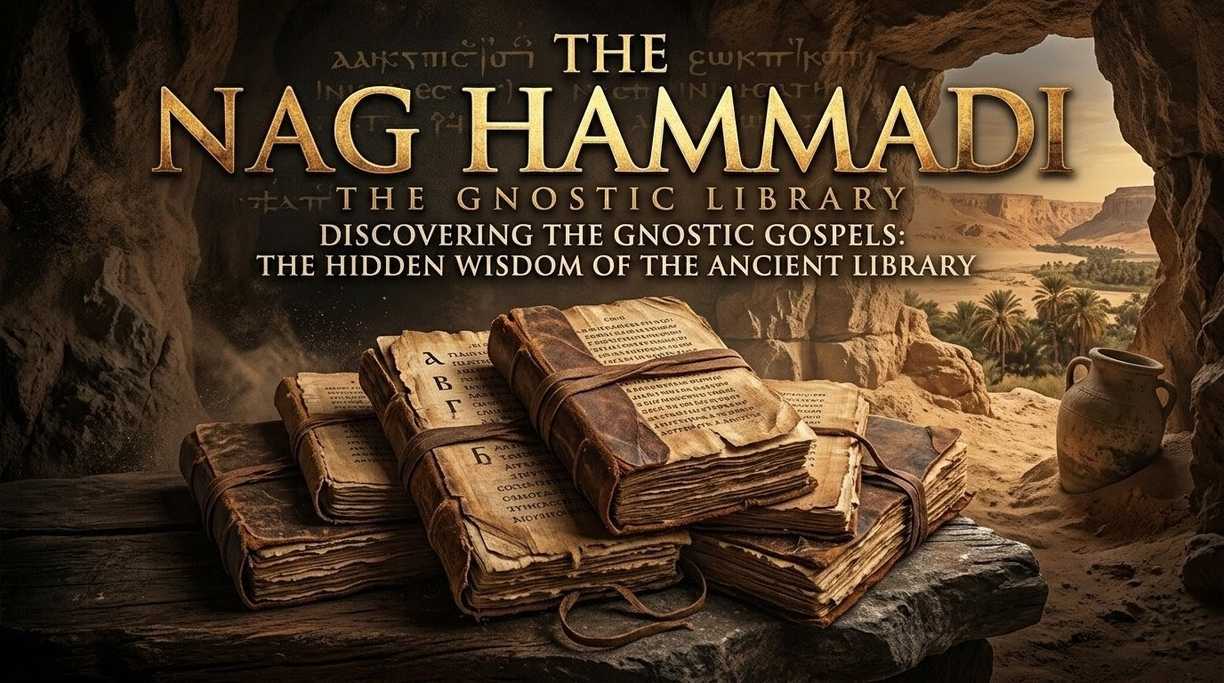
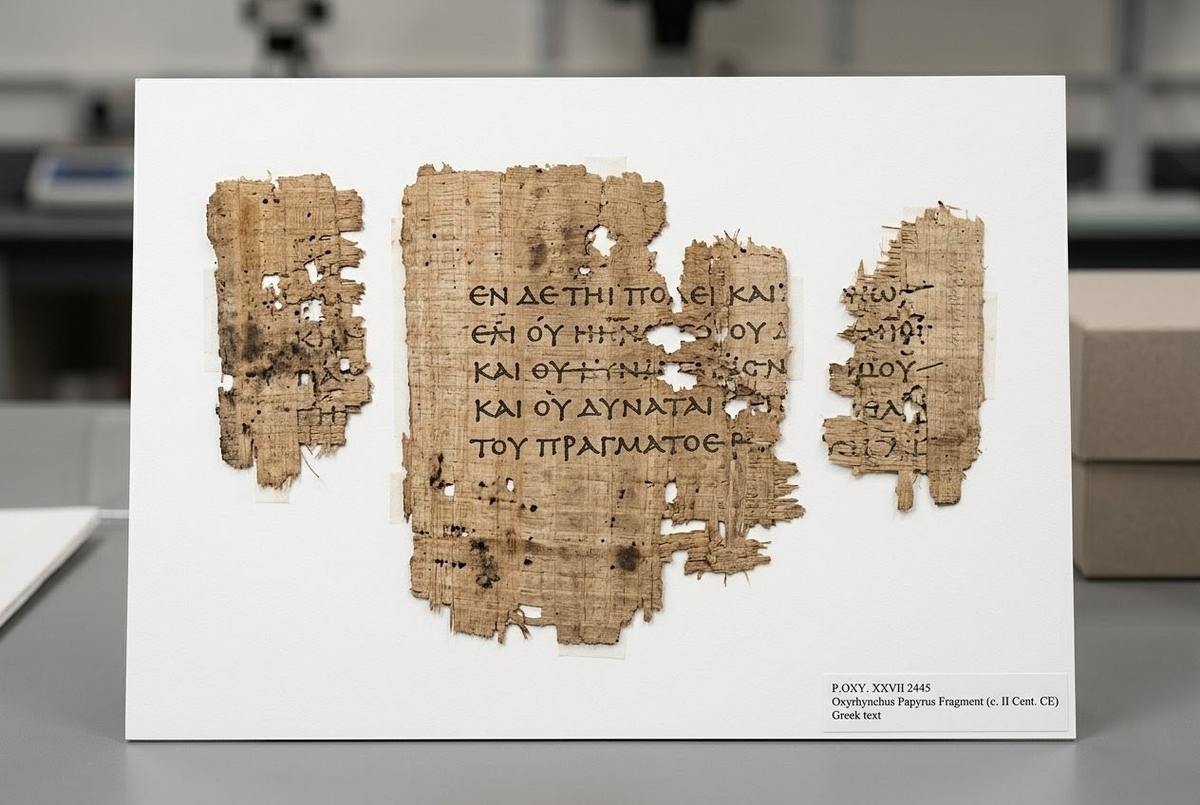
Discovered as the second text in Nag Hammadi Codex II, Thomas was not entirely unknown to scholarship before 1945. Fragments had surfaced in the Oxyrhynchus papyri excavated in Egypt at the turn of the twentieth century, tantalising scholars with glimpses of a sayings collection that paralleled yet diverged from the synoptic gospels. But the complete Coptic text transformed our understanding of early Christianity. Here was a collection of Jesus’s teachings that knew nothing of the virgin birth, the atoning cross, or the empty tomb—and yet claimed to offer “the secret words which the living Jesus spoke” (NHC II,2 32:10-11). This is not narrative theology but technology of transformation: compressed instructions for awakening.
Contents
- The Structure of Silence: Organisation of the 114 Sayings
- The Living Jesus: Voice Beyond History
- Kingdom as Present Reality: Immanence Over Eschatology
- The Solitary Ones: Monachos and the Bridal Chamber
- Thomas and the Canonical Gospels: Independence and Influence
- How to Read Thomas: Koans for the Journey
- Frequently Asked Questions
- Further Reading
- References and Sources
The Structure of Silence: Organisation of the 114 Sayings
What is the Gospel of Thomas?
The Gospel of Thomas (NHC II,2) is a collection of 114 sayings (logia) attributed to Jesus, discovered in Nag Hammadi Codex II. Unlike narrative gospels, it presents only the voice of Jesus without biographical context, chronology, or resurrection accounts. It claims to record “the secret words which the living Jesus spoke” and promises immortality to those who find the interpretation of these sayings. The text represents Thomasine Christianity, emphasising direct knowledge, present realisation of the Kingdom, and the transformation of the solitary one (monachos).
The text opens with a promise that functions as hermeneutical key and soteriological guarantee: “Whoever finds the interpretation of these sayings will not experience death” (NHC II,2 32:11-12). This is not metaphorical consolation but literal assertion. The sayings are not information about Jesus; they are technologies of transformation, operating systems for consciousness that require proper installation to function. The reader is not a passive recipient but an active interpreter whose very existence is wagered on the understanding achieved.
The collection follows a deliberate pedagogical progression, moving from initial recognition through radical reversal to ultimate identification:
Sayings 1-18: The initial call to recognition. “The Kingdom is inside you, and outside you” (Saying 3). The seeker must understand that the divine is not elsewhere, not deferred to apocalyptic future, but immediately present—though obscured by the filters of ordinary perception.
Sayings 19-36: The reversal of ordinary values. “Blessed is the one who came into being before coming into being” (Saying 19). Paradox piled upon paradox until the rational mind, exhausted by its own categories, surrenders to a mode of knowing beyond logic. This is the demolition of the ego’s administrative control over reality.
Sayings 37-52: The stripping of identity. “When you disrobe without being ashamed… then you will see the Son of the Living One” (Saying 37). Nakedness as metaphysical condition—the removal of social roles, religious identities, and the constructed self that maintains the illusion of separation.
Sayings 53-72: The critique of religious institutions. The Pharisees, the Sabbath, circumcision, dietary laws—all subjected to withering irony. “Woe to the Pharisees, for they are like a dog sleeping in the manger of oxen” (Saying 102). This is anticlericalism as spiritual necessity, recognising that institutional religion often functions as the primary obstacle to direct experience.
Sayings 73-96: The necessity of self-knowledge. “When you know yourselves, you will be known, and you will understand that you are children of the Living Father” (Saying 50). The Delphic command internalised: gnōthi seauton as the gateway to filial recognition.
Sayings 97-114: The eschatological urgency. “The Kingdom of the Father is spread out upon the earth, and people do not see it” (Saying 113). The final sayings push toward immediate recognition, collapsing the temporal distance that would defer salvation to future history.
The Living Jesus: Voice Beyond History
Thomas’s Jesus is not the crucified redeemer of Pauline theology nor the historical figure of critical scholarship. He is the living Jesus—the voice that continues to speak, the presence that remains available beyond the constraints of time and narrative. The text shows no interest in the historical particulars of Jesus’s life because it operates from the assumption that what matters is the encounter with the voice, not the biography of the vocaliser.
Primary Source Citation: “These are the secret words which the living Jesus spoke and which Didymos Judas Thomas wrote down. And he said: Whoever finds the interpretation of these sayings will not experience death” (NHC II,2 32:10-12).
Consider Saying 13, the most extraordinary dialogue in the collection and the locus of Thomas’s claim to authority:
Jesus said to his disciples: “Compare me to something and tell me what I am like.” Simon Peter said to him: “You are like a righteous angel.” Matthew said to him: “You are like a wise philosopher.” Thomas said to him: “Teacher, my mouth is wholly incapable of saying what you are like.” Jesus said: “I am not your teacher. Because you have drunk, you have become intoxicated from the bubbling spring which I have measured out.” And he took him, and withdrew, and spoke three words to him. When Thomas came back to his companions, they asked him: “What did Jesus say to you?” Thomas said to them: “If I tell you one of the words he said to me, you will pick up stones and throw them at me. And fire will come out of the stones and burn you up.”
Gospel of Thomas, Saying 13 (NHC II,2 35:4-21)

This is the drama of esoteric transmission. Peter and Matthew offer categorical answers—angel, philosopher—fitting Jesus into existing taxonomies. Thomas alone recognises the inadequacy of language, the failure of metaphor to capture the unnameable. For this recognition, he receives direct transmission: the three words, never revealed in the text, constitute the essence of the gnosis that cannot be spoken directly. The stones represent the literalism of those who cannot bear the fire of recognition; the burning fire is the transformative energy of truth that consumes the one who would weaponise it.
Primary Source Citation: “Jesus said: I am not your teacher. Because you have drunk, you have become intoxicated from the bubbling spring which I have measured out” (NHC II,2 35:12-15).
Kingdom as Present Reality: Immanence Over Eschatology
The most radical element of Thomas—indeed, the feature that most distinguishes it from the synoptic tradition—is its treatment of the Kingdom (malkuth). Unlike the canonical gospels, which frequently speak of the Kingdom as future apocalypse (“Thy Kingdom come”), Thomas insists upon immanence, presence, and immediate accessibility:
“The Kingdom of God is inside you, and it is outside you” (Saying 3). “The Kingdom is spread out upon the earth, and people do not see it” (Saying 113). “What you look forward to has already come, but you do not recognise it” (Saying 51). This is not eschatology deferred to the end of history; it is metaphysics of presence. The Kingdom is not a future state but the true condition of reality, obscured by ignorance (agnosis) and revealed by recognition (gnosis).
The administrative metaphor clarifies: the canonical tradition often treats the Kingdom as a promised reward, a future pension plan for the morally compliant. Thomas treats it as the current reality hidden by a perceptual error, a misfiled document in the archives of consciousness. One does not wait for the Kingdom to arrive; one removes the filters that prevent seeing its omnipresence. This shifts soteriology from moral improvement to epistemological correction, from earning salvation to recognising what already is.
The Solitary Ones: Monachos and the Bridal Chamber
Thomas has little use for community in the conventional sense of social organisation. The ideal is the monachos—the solitary, the single one, the unified consciousness that has integrated its fragmented aspects:
Primary Source Citation: “Many are standing at the door, but it is the solitary who will enter the bridal chamber” (NHC II,2 51:16-18).
“When you make the two into one, and when you make the inner like the outer and the outer like the inner… then you will enter the Kingdom” (Saying 22). This is not antisocial withdrawal but metaphysical necessity. True community requires prior individuation; one must become “a passerby” (Saying 42) in the world of attachments before one can stand in the truth without being defined by social roles. The monachos is not lonely but whole—one who has resolved the internal divisions that project outward as external conflict.
The bridal chamber (nymphōn) appears here as the destination of the solitary—not the Valentinian sacrament of marriage but the restoration of the syzygy, the reunification of the separated self with its divine counterpart. The crowd at the door represents the mass of the uninitiated; the solitary enters because they have reduced the many to the one, transcending the binary oppositions that bind ordinary consciousness.
Thomas and the Canonical Gospels: Independence and Influence
Scholarly debate continues: Did Thomas know the synoptic gospels, or does it preserve an independent stream of Jesus tradition parallel to the Q source? The parallels are extensive—Thomas shares material with Mark, Matthew, and Luke in varying configurations. But the differences are more theologically significant than the similarities.
Thomas lacks the narrative framework of incarnation, ministry, death, and resurrection. It lacks the apocalyptic urgency of the coming Son of Man. It lacks the atoning theology that would become orthodox Christianity’s central focus. What remains is the Jesus of the sayings—the teacher of subversive wisdom, the revealer of hidden knowledge, the voice that addresses the individual with immediate demands for transformation.
Whether Thomas is “earlier” or “later” than the canonical gospels matters less than what it preserves: a Christianity of direct encounter rather than mediated salvation, of present awakening rather than future hope, of knowledge (gnosis) rather than faith (pistis). It represents a trajectory within early Christianity that emphasised the internal journey over the historical event, the realised eschatology over the apocalyptic timetable.
How to Read Thomas: Koans for the Journey
The text warns its reader: “These are the secret words which the living Jesus spoke.” Secret not because they are cryptographically encoded, but because they require a particular quality of attention to unlock their transformative power. The saying that arrests your understanding today may slip through your fingers tomorrow; the one that baffled you last year may open like a flower when consciousness has shifted.
Do not read Thomas linearly as narrative. Let the sayings work as koans—compressed paradoxes designed to short-circuit the discursive mind and force recognition through the back door of consciousness. When you encounter a saying that stops your internal dialogue—perhaps “The dead are not alive, and the living will not die” (Saying 11)—pause. Copy it out. Carry it with you. Let it haunt your ordinary awareness until the categories of living and dead dissolve into direct perception.
The text is attributed to Didymos Judas Thomas—”Didymos” means “twin” in Greek, “Thomas” means “twin” in Aramaic. The twin of Jesus? The twin of the reader? The text invites us to become twins of Jesus—to so internalise his voice that his words become our words, his recognition our recognition. “Whoever drinks from my mouth will become like me,” Jesus says (Saying 108). “I myself shall become that person, and the hidden things will be revealed to that one.” This is not imitation of Christ but identification with Christ, the dissolution of the boundary between teacher and student in the bubbling spring of gnosis.
Thomas is not a book to be finished and shelved. It is a companion for the journey, a voice that speaks differently at different stages of your own unfolding. The archons have not retired; the filters remain in place; the Kingdom is still spread out upon the earth, unnoticed. The text remains alive because the Jesus it presents is living—available not in the historical past but in the immediate present, speaking to whoever has ears to hear the secret words.
Frequently Asked Questions
What is the Gospel of Thomas and where was it found?
The Gospel of Thomas (NHC II,2) is a collection of 114 sayings of Jesus discovered in Nag Hammadi Codex II. Unlike narrative gospels, it contains no birth stories, miracles, or resurrection accounts–only the voice of Jesus. Fragments were previously found in Oxyrhynchus papyri, but the complete Coptic text was discovered in 1945.
Why is it called the Gospel of No-Story?
Thomas lacks the narrative scaffolding of canonical gospels–no chronology, no biography, no plot. It presents only sayings (logia) attributed to Jesus, stripped of context. The focus is on immediate transformative knowledge rather than historical events or salvation history.
What does the Gospel of Thomas teach about the Kingdom of God?
Unlike the canonical gospels which often present the Kingdom as future, Thomas insists on immanence: ‘The Kingdom is inside you and outside you’ (Saying 3), and ‘spread out upon the earth, and people do not see it’ (Saying 113). It is present reality obscured by ignorance, not future apocalypse.
Who is Didymos Judas Thomas?
Didymos (Greek) and Thomas (Aramaic) both mean ‘twin.’ The text is attributed to the twin of Jesus, suggesting the reader is invited to become Jesus’s twin through internalising his teaching. This represents identification with Christ rather than worship from a distance.
What are the three words Jesus spoke to Thomas in Saying 13?
The text never reveals the three words. They represent esoteric knowledge that cannot be spoken directly to the uninitiated–‘if I tell you… fire will come out of the stones.’ This reflects the Thomasine emphasis on direct transmission beyond linguistic categories.
How does Thomas differ from the canonical gospels?
Thomas lacks narrative framework, apocalyptic eschatology, and atoning theology. It focuses on secret wisdom, present realisation of the Kingdom, and the transformation of the solitary one (monachos). It represents knowledge (gnosis) over faith (pistis) and immediate encounter over mediated salvation.
How should modern readers approach the Gospel of Thomas?
Read it non-linearly, as koans or compressed paradoxes designed to shift consciousness. Carry specific sayings that arrest your attention. Do not seek information but transformation. The text functions as a companion for ongoing spiritual unfolding rather than a book to be finished.
Further Reading
- Gospel of Thomas: 114 Keys — Comprehensive commentary on all sayings with interpretive guidance for each logion.
- Gospel of Thomas Overview — Introduction to the Thomasine tradition and its place in early Christianity.
- Gospel of Thomas Commentary: Hidden Sayings — Deep analysis of the most cryptic and transformative sayings in the collection.
- Codex II: Crown Jewels of Nag Hammadi — Guide to the codex containing Thomas and other essential texts.
- Book of Thomas the Contender — The companion text from Nag Hammadi exploring Thomas’s secret teachings on the flesh and the soul.
- Sayings Gospels of Nag Hammadi — Comparative analysis of Thomas and other wisdom collections in the library.
- Apocryphon of John — The Sethian cosmological text that provides context for understanding Thomas’s theological environment.
- Dialogue of the Saviour — Another text from Nag Hammadi featuring secret teachings and the theme of the solitary one.
- Nag Hammadi for Beginners — Curated reading path including Thomas as essential entry point.
- Nag Hammadi Library: Complete Guide — Master index for navigating all 46 tractates and thematic collections.
References and Sources
The following sources support the claims and quotations presented in this article. All citations to the Nag Hammadi Library represent direct translations from the Coptic text as established in the standard critical editions.
Primary Sources and Critical Editions
- [1] Robinson, J.M. (1977). The Nag Hammadi Library in English. Harper & Row.
- [2] Layton, B. (1987). The Gnostic Scriptures. Doubleday.
- [3] Meyer, M. (2007). The Nag Hammadi Scriptures. HarperOne.
- [4] Attridge, H.W. (1985). “The Gospel of Thomas (NHC II,2).” In Nag Hammadi Codex II,2-7, ed. B. Layton. Brill.
- [5] Patterson, S.J., Robinson, J.M., & Bethge, H.-G. (2011). The Fifth Gospel: The Gospel of Thomas Comes of Age. T&T Clark.
Scholarly Monographs and Thomasine Studies
- [6] DeConick, A.D. (2006). Recovering the Original Gospel of Thomas: A History of the Gospel and Its Growth. T&T Clark.
- [7] Valantasis, R. (1997). The Gospel of Thomas. Routledge.
- [8] Davies, S.L. (1983). The Gospel of Thomas and Christian Wisdom. Seabury Press.
- [9] Patterson, S.J. (2013). The Gospel of Thomas and Christian Origins: Essays on the Fifth Gospel. Brill.
- [10] Plisch, U.-K. (2008). The Gospel of Thomas: Original Text with Commentary. Deutsche Bibelgesellschaft.
Comparative Studies and Historical Context
- [11] Pagels, E.H. (1979). The Gnostic Gospels. Random House.
- [12] King, K.L. (2003). What Is Gnosticism? Harvard University Press.
- [13] Gathercole, S.J. (2014). The Gospel of Thomas: Introduction and Commentary. Brill.
- [14] Uro, R. (1998). Thomas at the Crossroads: Essays on the Gospel of Thomas. T&T Clark.
- [15] Arnal, W.E. (2001). Jesus and the Village Scribes: Galilean Conflicts and the Setting of Q. Fortress Press.