The Prayer of the Apostle Paul: Secret Supplication and the Five Seals
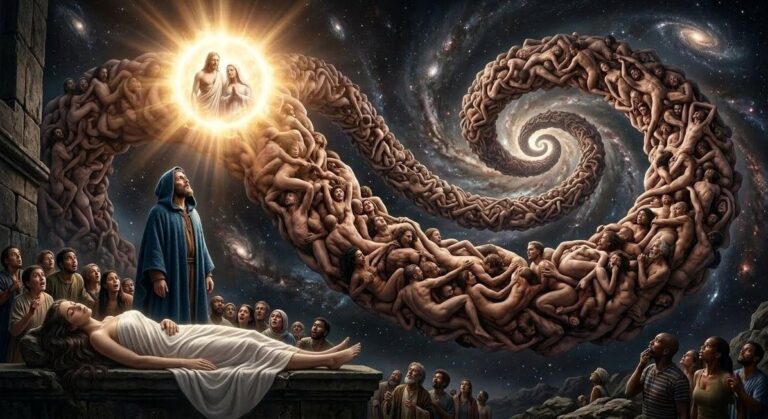
The Briefest Text, The Deepest Opening presents the threshold of the Nag Hammadi Library. While the codices contain elaborate cosmological treatises, secret dialogues, and complex ascent narratives, Codex I—the Jung Codex—opens not with doctrine but with a gasp. The Prayer of the Apostle Paul (NHC I,1) occupies the first pages, shockingly brief yet ritually dense. What we possess is not a treatise but an invocation, a ritual preamble designed to prepare the reader for the revelations that follow and to transform the act of reading into a participatory mystery.
To rush past this prayer is to miss the hermeneutical key. It establishes the acoustic—the tonal frequency—in which the entire library must be received. The text is spare, urgent, and cosmological in scope, invoking the Five Seals of Sethian initiation and demanding liberation from the chains of the archons. Whoever preserved this codex understood that encountering these texts was never a passive scholarly activity but an initiatory rite requiring proper preparation. The prayer transforms the reader from spectator to initiand, establishing the conditions under which the archontic filters might be bypassed and the divine light received.
Contents
- The Threshold of the Library: Context and Function
- The Text and Its Structure: Sequence of Awakening
- The Five Seals: Sethian Initiation Protocol
- Paul as Mystagogue: Apostolic Authority Reclaimed
- The Chains of the Archons and Cosmic Fate
- Ritual Function: Reading as Performative Act
- Contemporary Relevance: The Prayer Today
- Frequently Asked Questions
- Further Reading
- References and Sources
The Threshold of the Library: Context and Function
What is the Prayer of the Apostle Paul?
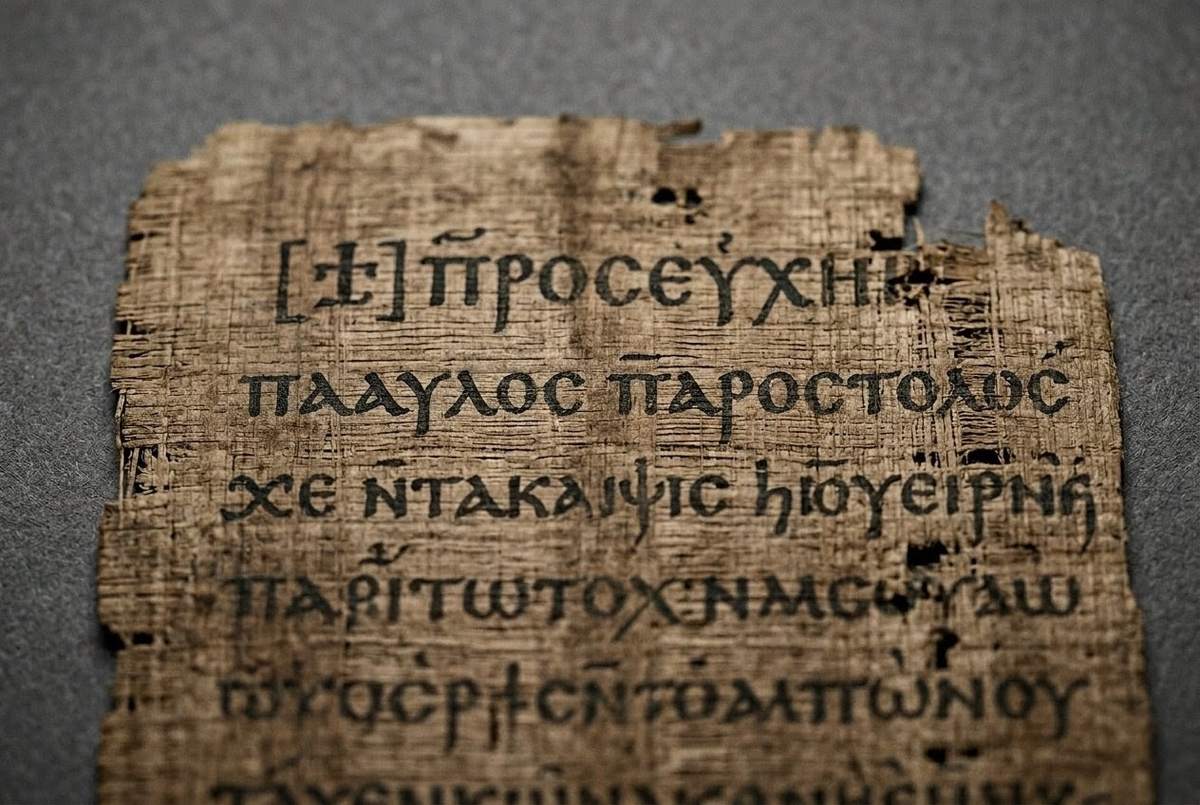
The Prayer of the Apostle Paul (NHC I,1) is a brief Sethian liturgical text preserved as the opening tractate of Codex I (the Jung Codex) from the Nag Hammadi Library. Consisting of only a few lines of Coptic, it functions as a ritual invocation requesting divine illumination, wisdom, and liberation from archontic powers. It references the Five Seals initiation protocol and establishes Paul as a mystagogue whose authority validates the secret teachings that follow in the codex.
The placement of this prayer at the head of Codex I is strategically significant. The Jung Codex, named after Carl Gustav Jung whose estate helped fund its acquisition, contains some of the most important Valentinian and Sethian texts: the Apocryphon of James, the Gospel of Truth, the Treatise on Resurrection, and the Trimorphic Protennoia. To position the Prayer of Paul before these revelations suggests that the compilers understood the entire collection as a sacred mystery requiring proper preparation.
The prayer serves as what liturgical scholars term a “collect”—a concise formula that gathers the intentions of the community and directs them toward divine reception. It is the airlock between the profane world and the sacred space of the text, the decompression chamber where the reader adjusts to the atmospheric pressure of the Pleroma. In the logic of Sethian ritual, one does not simply read about the divine; one must be properly configured to receive the transmission.
The Text and Its Structure: Sequence of Awakening
The prayer’s structure reveals a precise phenomenology of Gnostic awakening, moving through four distinct stages that mirror the Sethian progression from agnosis to gnosis. The text is rhythmically urgent, cosmological in scope, and technically sophisticated despite its brevity:
Primary Source Citation: “Your light, give me your light, that I may see the truth, that I may know your wisdom, that I may be redeemed from the chains of the archons and the fate of the stars” (NHC I,1 1:1-5).
Note the precise sequence: first light (vision, illumination, the capacity to perceive), then truth (cognitive recognition of what is), then wisdom (integrative understanding of the cosmic order), and finally redemption (liberation from the material constraints). This is not random poetry but a technical map of the initiatory process. One cannot know truth without first receiving the divine light that makes perception possible; one cannot be redeemed without the wisdom that understands what binds the soul.
Variations in the manuscript tradition preserve slight textual differences—some versions expand the plea for protection, others emphasise the bridal chamber—but the core structure remains consistent across the witnesses. The prayer operates as a vade mecum, a portable ritual that can be uttered by the individual reader or intoned by a community leader before the reading of the texts. Its compression is its power; it is the concentrated essence of Sethian soteriology distilled into a single breath.
The Five Seals: Sethian Initiation Protocol
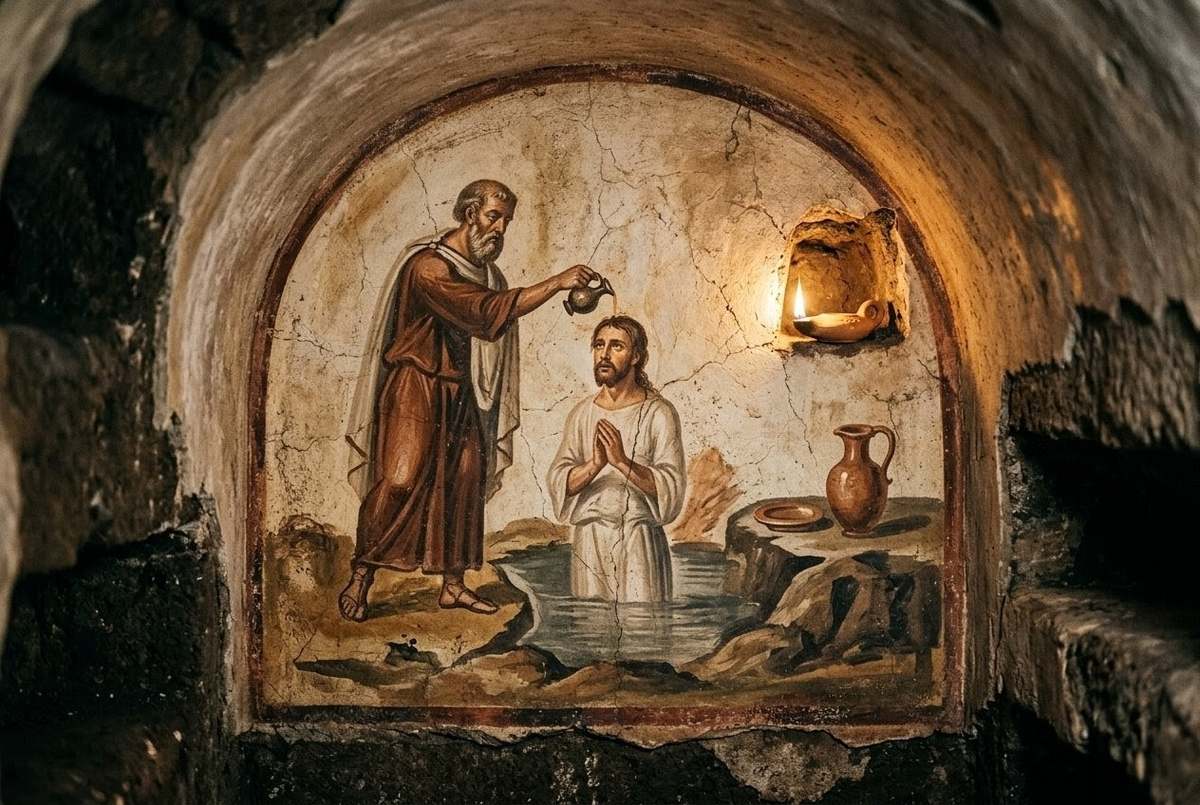
The prayer invokes the “Five Seals” (sphragides)—a technical term referring to the Sethian baptismal rite mentioned throughout the Nag Hammadi corpus, particularly in the Trimorphic Protennoia and the Gospel of the Egyptians. These are not literal wax impressions affixed to documents but spiritual initiations marking stages of integration into the divine realm:
The Seal of Light: The initial reception of divine illumination, the awakening of the spiritual faculty dormant in the material body. The Seal of Water: Ritual immersion representing dissolution of the hylic nature and rebirth into the psychic stage. The Seal of Chrism: Anointing with oil, conferring the Holy Spirit and marking the initiate as belonging to the pneumatics. The Seal of the Bridal Chamber: The nymphōn, the ultimate sacrament of union between the human and the divine, restoring the separated syzygy. The Seal of Silence: The cessation of ordinary speech and the reception of the divine Word, the logos that transcends vocal articulation.
Primary Source Citation: “Seal me with your seals, that I may be lifted up from the flesh of the world and the deficiency of the aeons” (NHC I,1 1:6-8).
The technical specificity of this language suggests a lived ritual practice rather than literary fiction. The prayer is too precise, too compressed, too urgently rhythmic to be mere prefatory material. It reflects actual liturgical usage, possibly in Egyptian Sethian communities where baptismal initiations were performed in secret locations—caves, hidden rooms, or desert sites—where the “flesh of the world” could be temporarily suspended and the “deficiency of the aeons” momentarily bypassed.
Paul as Mystagogue: Apostolic Authority Reclaimed
Why Paul? The apostle to the Gentiles, the epistle-writer, the martyr of Rome—what has he to do with Sethian Gnosticism? Significantly more than orthodox tradition would admit. Paul spoke of being “caught up to the third heaven,” of mysteries hidden from the foundation of the world, of a wisdom spoken only among the mature (teleioi). These passages in 2 Corinthians and 1 Corinthians provided the Gnostics with scriptural warrant for their esoteric hermeneutics.
The Sethian and Valentinian schools claimed Paul as their own apostolic founder. They read his Damascus road experience not as a conversion but as an ascent through planetary spheres, bypassing the archontic checkpoints. His “thorn in the flesh” became the lingering attachment to material existence that even the enlightened must endure—evidence that the archons do not relinquish their claim easily. By attributing this prayer to Paul, the text collects his authority and channels it toward the reader’s own initiation, legitimising the secret teachings that follow as authentically apostolic.
Paul functions here as mystagogue—the one who leads the initiate into the mysteries. His letters, read through Gnostic lenses, become coded transmissions of ascent techniques. The prayer thus serves a dual function: it prepares the reader and validates the corpus through apostolic attribution. This is not merely pious fiction but strategic theology, claiming the authority of the canonical tradition while subverting its institutional interpretation.
The Chains of the Archons and Cosmic Fate
The prayer requests rescue specifically from “the chains of the archons and the fate of the stars”—the heimarmene that binds ordinary mortals to cyclical repetition. This is the Gnostic diagnosis in miniature, the administrative indictment of the cosmic order. We are not sinners in need of moral improvement but captives, bound by celestial bureaucracy, sentenced to repetition by the mechanical turning of the planetary spheres.
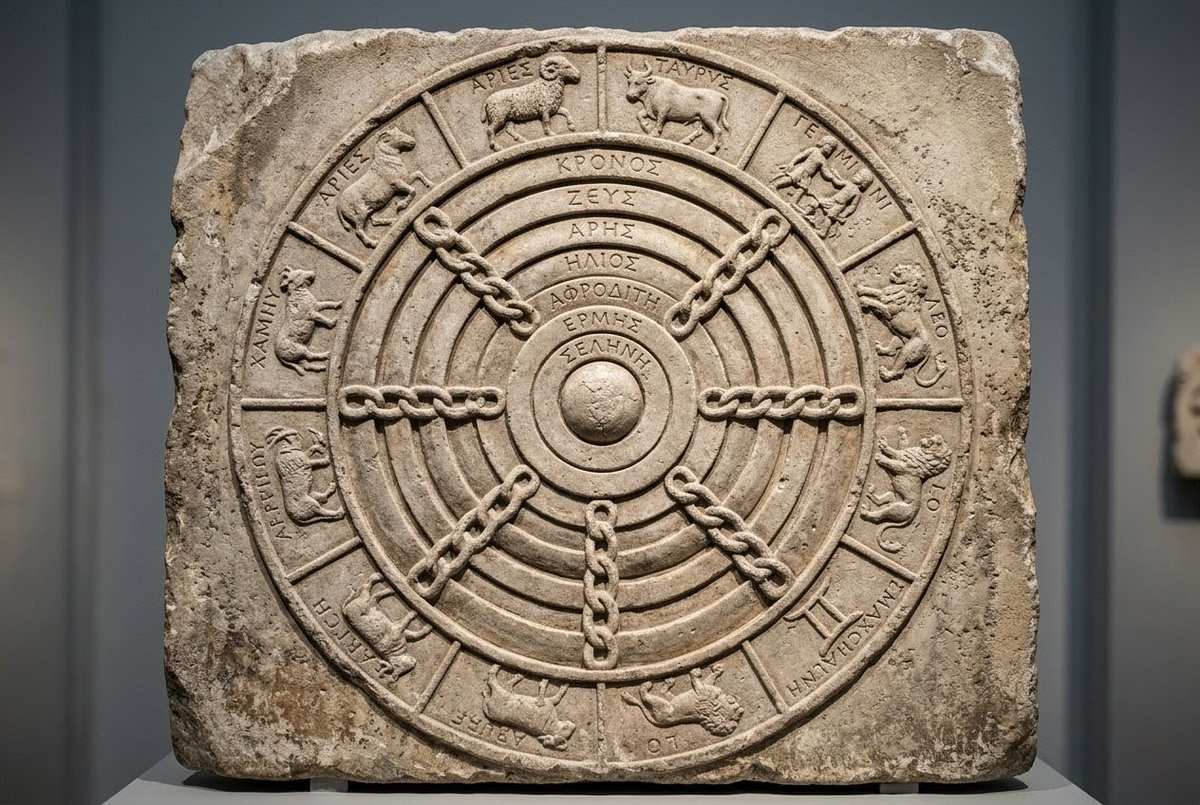
The archons—planetary powers, cosmic administrators, blind gods—have established their jurisdiction in the space between the divine and the human. They do not merely punish wrongdoing; they enforce forgetfulness, ensuring that the divine spark remains unaware of its own origin. The prayer recognises this ontological imprisonment and calls for extraction. “Redeem me” is not a request for theological correctness or moral perfection. It is a demand for jailbreak, an insistence that the administrative control of the planetary powers be suspended and the prisoner released.
Primary Source Citation: “Redeem me from the chains of the archons and the fate of the stars, that I may be taken up to the place of my repose” (NHC I,1 1:8-10).
The “fate of the stars” refers to astrological determinism, the belief that the planetary bodies govern human destiny through the mechanisms of birth charts and stellar influences. The prayer asserts that the initiate stands outside this jurisdiction, capable of transcending the heimarmene through the reception of divine light and the performance of the Five Seals. This is not science but soteriology—the claim that spiritual knowledge dissolves the bonds of cosmic necessity.
Ritual Function: Reading as Performative Act
Scholars debate whether this prayer was actually used in Sethian liturgy or whether it is a literary fiction—a prayer attributed to Paul for the sake of the texts that follow. The evidence suggests the former. The language is too technically precise, too liturgically compressed, too urgently rhythmic to be mere prefatory decoration. It bears the marks of oral performance, of communal intonation, of ritual actualisation.
Imagine the scene: a community gathers in the Egyptian desert, perhaps in a cave near the Jabal al-Tarif or a hidden room in an urban dwelling. Someone produces the codex—the leather-bound treasure buried for sixteen centuries. Before the reading begins, the leader chants this prayer. The assembly responds. The Five Seals are invoked, perhaps accompanied by actual anointing and baptismal sprinkling. Only then do they turn to the Apocryphon of James, already vibrating at the frequency of sacred expectation. The prayer is the tuning fork; the texts are the music that follows.
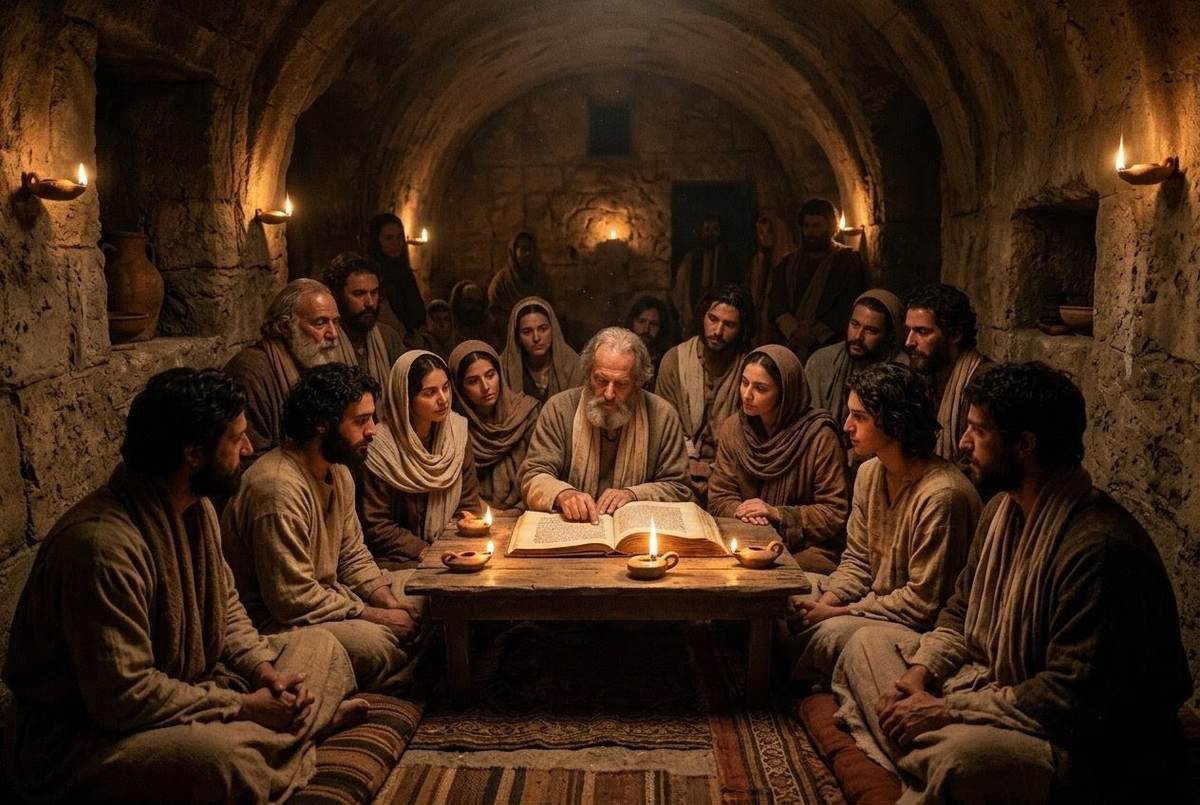
This performative dimension transforms the act of reading from passive consumption to active participation. The reader is not studying ancient history but entering a current—a stream of gnosis that flows from the divine through the text into the properly prepared consciousness. The prayer is the airlock, the decompression chamber, the ritual technology that configures the reader to receive what the text transmits.
Contemporary Relevance: The Prayer Today
We can still use the prayer this way. Before reading the Nag Hammadi texts—particularly the Sethian ascent literature—pause. Read the Prayer of the Apostle Paul aloud. Let its cadence establish your breathing. Let its demands sharpen your intention. You are not studying archaeology; you are entering a current that still flows.
The prayer reminds us that these texts were buried for a reason, preserved for a reason, and now delivered to us—for a reason. The archons have not retired; they have merely changed their uniforms. The stars still turn, exerting their subtle influences on the psyche. The chains still rattle, though we have grown accustomed to their sound. The light is still available, but one must ask for it specifically, demand it, claim it as one’s birthright.
“Your light, give me your light.” It is the only prayer that matters, the fundamental request that precedes all theology, all cosmology, all speculation. Without the light, there is no seeing; without the seeing, there is no knowing; without the knowing, there is no liberation. The briefest text opens the deepest path. Begin here.
Frequently Asked Questions
What is the Prayer of the Apostle Paul in the Nag Hammadi Library?
The Prayer of the Apostle Paul (NHC I,1) is a brief Sethian liturgical text opening Codex I (the Jung Codex). It is an invocation requesting divine light, truth, wisdom, and redemption from the chains of the archons, intended to prepare the reader for the revelations that follow.
Where is the Prayer of the Apostle Paul located in Nag Hammadi?
It is the first text (Tractate 1) in Codex I, also known as the Jung Codex. It precedes major texts including the Apocryphon of James, the Gospel of Truth, the Treatise on Resurrection, and the Trimorphic Protennoia.
What are the Five Seals mentioned in the prayer?
The Five Seals are a Sethian initiation protocol consisting of: the Seal of Light (illumination), Seal of Water (baptism), Seal of Chrism (anointing), Seal of the Bridal Chamber (nymphon), and Seal of Silence (transcendent word). These mark stages of spiritual integration into the divine realm.
Why is the prayer attributed to the Apostle Paul?
Gnostic traditions claimed Paul as their own, interpreting his letters as coded transmissions and his ascent to the third heaven (2 Cor 12) as an archontic bypass. Attributing the prayer to Paul legitimises the Sethian teachings as authentically apostolic while subverting orthodox institutional authority.
What are the chains of the archons?
In Sethian cosmology, the archons are planetary powers or cosmic administrators who bind the divine spark in material existence. The chains represent astrological fate (heimarmene) and the forgetfulness enforced by the planetary spheres, from which the initiate seeks liberation through gnosis.
How long is the Prayer of the Apostle Paul?
It is extremely brief—only a few lines of Coptic text, perhaps 50-60 words in translation. Despite its brevity, it contains dense technical terminology including references to the Five Seals, archontic chains, and the fate of the stars.
How should modern readers use this prayer?
Read it aloud as a ritual preparation before engaging with Sethian texts, particularly those in Codex I. Its function is to establish the proper receptive state, transforming reading from passive study to participatory mystery and claiming the divine light necessary for gnosis.
Further Reading
- Apocryphon of James: Secret Teachings — The text that follows the Prayer in Codex I, delivering secret teachings to the Lord’s brother.
- Trimorphic Protennoia: Three Descents — Comprehensive treatment of the Five Seals initiation protocol from the same codex.
- Codex I: The Jung Codex — Complete guide to the codex containing the Prayer and other Valentinian and Sethian treasures.
- Five Seals: Sethian Initiation — Detailed examination of the baptismal sequence invoked in the Prayer of Paul.
- Prayer of the Apostle Paul: Secret Supplication — Extended commentary on the ritual function and Pauline mystagogy.
- Apocryphon of John: Gnostic Creation — The foundational Sethian text describing the archons and the chains of fate.
- Gospel of Truth: Poetics of Recognition — The Valentinian masterpiece from Codex I on the restoration of the fallen pleroma.
- Nag Hammadi for Mystics — Contemplative path through the library including ritual preparation texts.
- Nag Hammadi Library: Complete Guide — Master index for navigating all 46 tractates and their ritual contexts.
- Complete Reading Order — Strategic guide for reading the Nag Hammadi texts in sequence, beginning with Codex I.
References and Sources
The following sources support the claims and quotations presented in this article. All citations to the Nag Hammadi Library represent direct translations from the Coptic text as established in the standard critical editions.
Primary Sources and Critical Editions
- [1] Robinson, J.M. (1977). The Nag Hammadi Library in English. Harper & Row.
- [2] Meyer, M. (2007). The Nag Hammadi Scriptures. HarperOne.
- [3] Layton, B. (1987). The Gnostic Scriptures. Doubleday.
- [4] Attridge, H.W., & MacRae, G.W. (1990). “The Prayer of the Apostle Paul (NHC I,1).” In Nag Hammadi Codex I (The Jung Codex), ed. H.W. Attridge. Brill.
- [5] Schenke, H.-M. (1981). “The Prayer of the Apostle Paul.” In Nag Hammadi Codex I (The Jung Codex): Introductions, Texts, Translations, Indices, ed. H.W. Attridge. Brill.
Scholarly Monographs and Thematic Studies
- [6] Turner, J.D. (2001). Sethian Gnosticism and the Platonic Tradition. Presses Universitaires de Louvain.
- [7] King, K.L. (1995). Revelation of the Unknowable God. Polebridge Press.
- [8] Thomassen, E. (2006). The Spiritual Seed: The Church of the Valentinians. Brill.
- [9] Pearson, B.A. (2007). Ancient Gnosticism: Traditions and Literature. Fortress Press.
- [10] DeConick, A.D. (2013). Seek to See Him: Ascent and Vision Mysticism. Brill.
Comparative Studies and Ritual Context
- [11] Sevrin, J.-M. (1986). Le dossier baptismal séthien. Presses Universitaires de Louvain.
- [12] April, D. (2016). “The Five Seals in Sethian Baptismal Liturgy.” Vigiliae Christianae, 70(1), 1-24.
- [13] Pagels, E.H. (1979). The Gnostic Gospels. Random House.
- [14] Rudolph, K. (1987). Gnosis: The Nature and History of Gnosticism. Harper & Row.
- [15] Williams, M.A. (1996). Rethinking “Gnosticism”. Princeton University Press.