
What Is The Thread? ZenithEye’s Complete Explainer
Every archive needs a spine. For ZenithEye, that spine is called The Thread–a way of organising ideas that also happens to be an idea in itself. If the Nag Hammadi Library is our collection of ancient source texts, The Thread is the living tissue that connects those sources to the present: the practices, states, hidden agreements, and transformations that arise when ancient insight meets contemporary life. This article explains what The Thread is, how it is structured, and why it matters for anyone trying to navigate the space between historical gnosis and lived experience.
The name is not arbitrary. A thread runs through the history of esoteric and contemplative traditions–sometimes buried, sometimes severed, often rewoven by hands that never met across centuries. It is the recognition, expressed differently in every age, that reality is not what it appears to be, that consciousness is not a passive receiver but an active participant, and that liberation is not a political programme but an interior event with cosmic implications. The Thread is ZenithEye’s attempt to trace that continuity without flattening the differences between traditions, and to offer contemporary seekers a map that is rigorous enough for scholars and accessible enough for newcomers.
The Thread is divided into five interlocking areas, each addressing a different dimension of the journey from fragmented perception to integrated knowing. Together they form something like a curriculum–not in the sense of a mandatory course, but in the older sense of a currere, a path to be run.
Table of Contents
- The Living Thread: Where Gnosis Survives
- States of Knowing: The Architecture of Experience
- The Hidden Agreements: Patterns Across Cultures
- The Transformation: After the Lightning Strikes
- Practice and Method: The Five Gateways
- The Thread and the Nag Hammadi Library
- How to Navigate The Thread
- Frequently Asked Questions
- Further Reading
- References and Sources
The Living Thread: Where Gnosis Survives
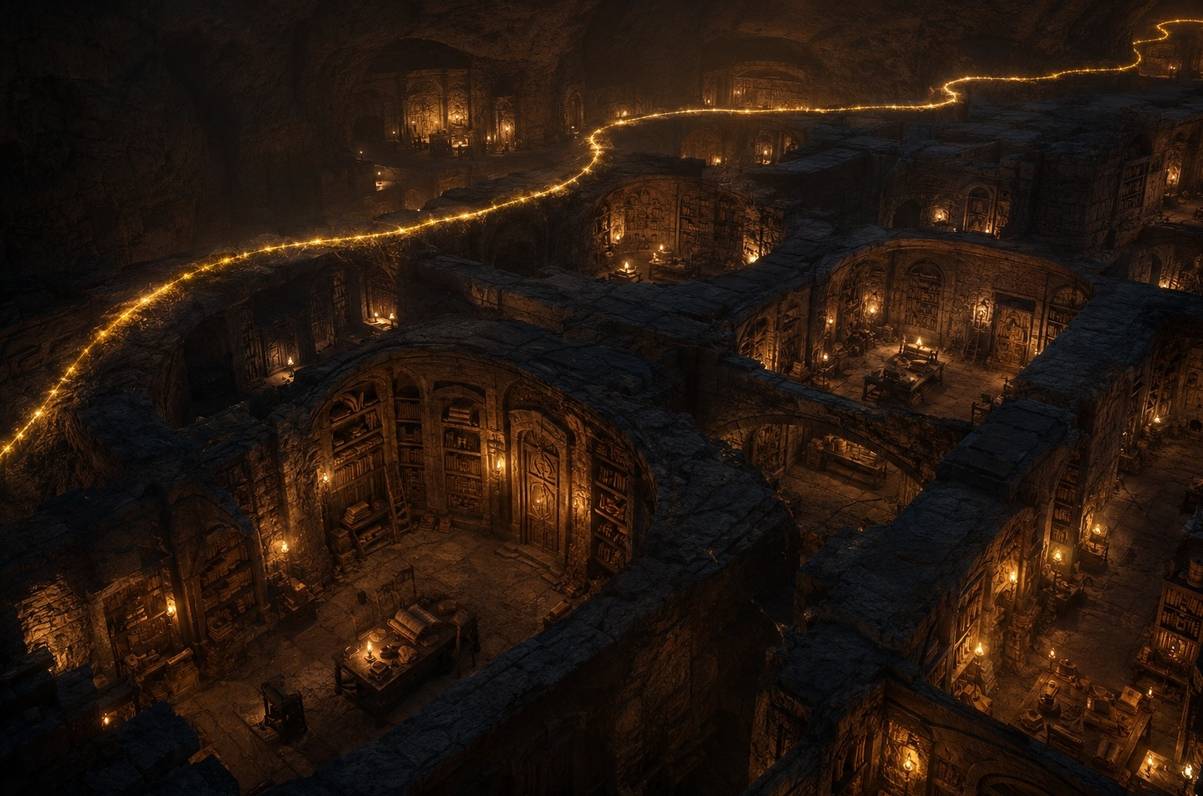
The Living Thread is the historical and cultural wing of the archive. It asks a simple question with a complicated answer: if the Gnostic traditions were suppressed, burned, and driven underground, how did they survive? And what forms do they take now?
This section covers the survival and revival of suppressed traditions–from the Cathars of medieval Languedoc to the Mandaeans of modern Iraq, from the Rosicrucian manifestos of the seventeenth century to the neo-Gnostic circles of the present day. It examines how forbidden texts escaped destruction, how lineages of resistance maintained continuity through persecution, and how modern movements–sometimes consciously, sometimes unconsciously–rehearse ancient insights in new vocabularies. The Living Thread also tracks the modern resonances: the way Gnostic concepts surface in science fiction, depth psychology, quantum theory, and the scattered communities of contemporary seekers who may never have read the Nag Hammadi Library but who recognise the architecture of the prison all the same.
The emphasis here is on living. This is not antiquarianism. The Thread is not a museum rope keeping visitors at a safe distance from the exhibits. It is a recognition that the same forces the ancients described–the counterfeit spirit, the archonic administration, the sleep of forgetfulness–are still operational, merely wearing different uniforms.
States of Knowing: The Architecture of Experience
States of Knowing addresses the phenomenology of consciousness–the varieties of experience that the modern world tends to pathologise, ignore, or monetise. This is where ZenithEye examines altered states, sleep and dreams, the simulation hypothesis, near-death experiences, ego dissolution, and the cognitive frameworks that either support or obstruct direct knowing.
The Gnostic texts describe gnosis as an event, not an opinion. It arrives–sometimes gradually, sometimes catastrophically–and it restructures everything. States of Knowing treats these events with the seriousness they deserve, drawing on neuroscience, contemplative phenomenology, and cross-cultural anthropology to understand what happens when the familiar self dissolves and something else becomes visible. It also examines predatory consciousness: the states of knowing that are not liberating but imprisoning, the spiritual emergencies that masquerade as awakening, and the importance of discernment when the boundary between genuine insight and archonic mimicry grows thin.
This section is not a guide to having experiences. It is a guide to understanding them, integrating them, and refusing to let them be captured by the very systems they might otherwise expose.

The Hidden Agreements: Patterns Across Cultures
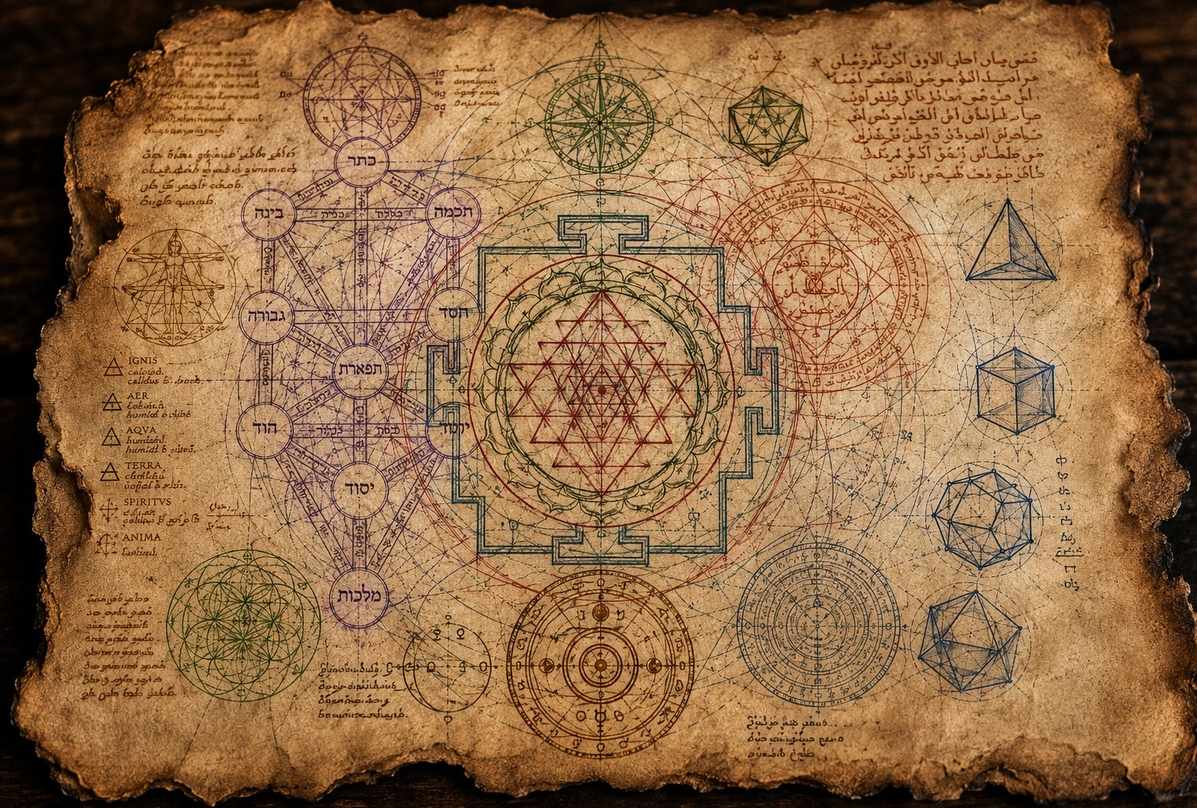
The Hidden Agreements is ZenithEye’s comparative department. It examines the cross-cultural patterns that suggest the esoteric traditions of the world were not isolated inventions but responses to a shared recognition–one that appears in different costumes but tells the same story.
Here you will find explorations of sacred architecture across civilisations, the cryptographic systems and occult communication methods that allowed forbidden knowledge to travel under the noses of censors, and the perennial structures that recur in Kabbalah, Hermeticism, alchemy, Tantra, and Gnosticism alike. The Hidden Agreements does not argue that all traditions are the same. It argues that they are addressing the same problem from different starting positions, and that their agreements–often hidden beneath layers of cultural specificity–are too precise to be coincidental.
This section also tracks the esoteric lineages: the documented and sometimes secret transmission chains that carried specific techniques, symbols, and insights from antiquity into the modern period. It is one thing to notice similarities between the Sefer Yetzirah and the Emerald Tablet. It is another to trace the actual historical pathways by which Jewish mysticism, Islamic esotericism, and Renaissance Hermeticism influenced one another through translation movements, refugee scholars, and the occasional burned library.
The Transformation: After the Lightning Strikes
The Transformation addresses what happens after. After the mystical experience, the dark night, the ego dissolution, the recognition that the world is not what it seemed. This is the most neglected phase of spiritual life in contemporary culture, which excels at selling peak experiences but has almost nothing to say about the long, unglamorous work of living with what has been seen.
This section covers integration and grounding: the practices, relationships, and disciplines that prevent insight from becoming inflation, escape, or burnout. It examines spiritual emergence and emergency–the fine line between transformation and breakdown–and the stages of integration that move from immediate stabilisation through short-term working-through to long-term ripening and, where appropriate, transmission to others. The Transformation also includes the Shadow Work subcategory, because genuine change requires confronting what the comfortable self would prefer to ignore.
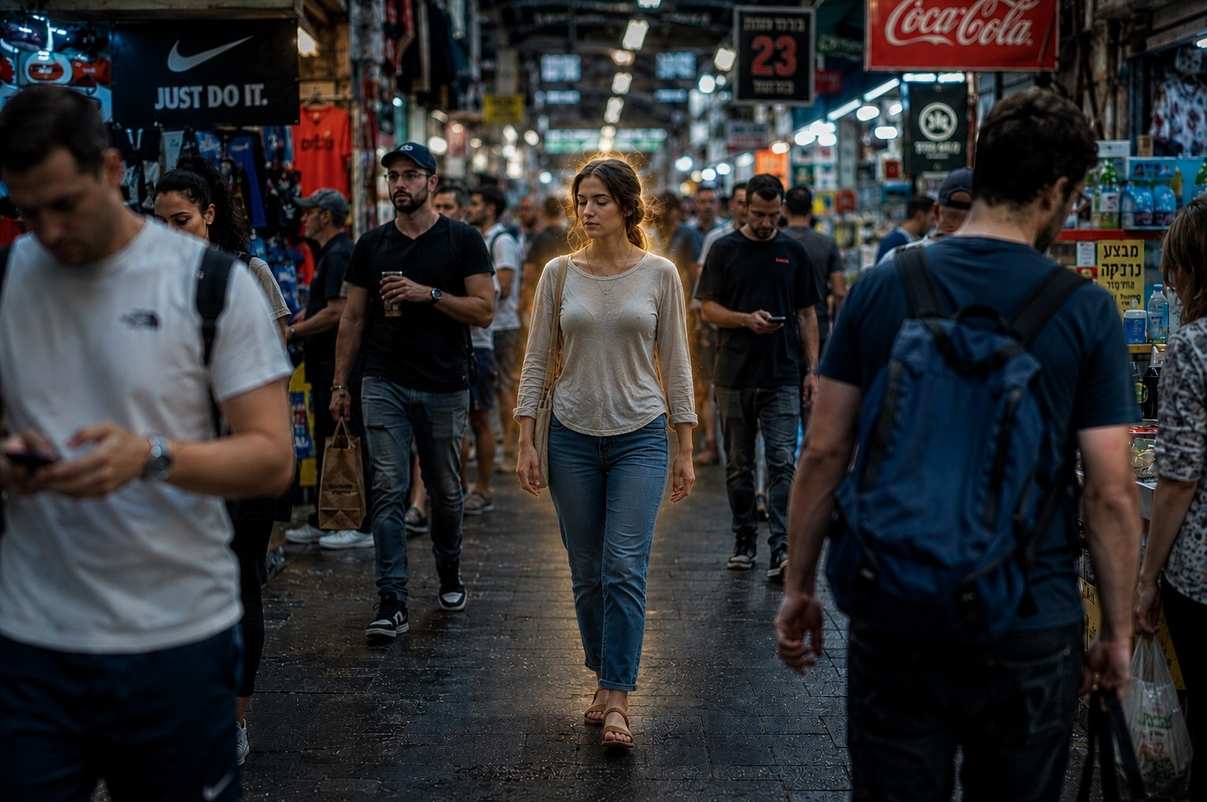
The ordinary saint–a concept threaded throughout this section–is the person who has done the work and returned to the marketplace. Not glowing. Not performing enlightenment. Simply present, integrated, and quietly dangerous to the systems that depend on universal sleep.
Practice and Method: The Five Gateways
Practice and Method is where theory becomes discipline. ZenithEye organises its practical content around the Five Gateways–five modalities of direct knowing that have been validated across multiple contemplative traditions and that require no doctrinal commitment to begin.
Gateway One: Attention. The foundational capacity to direct and sustain awareness without capture by internal narrative or external stimulus. This includes concentration practices, mindfulness in its non-commercial form, and the cultivation of witness consciousness.
Gateway Two: Body. Somatic practices that restore the intelligence of the physical organism: breathwork, body scanning, movement disciplines, and the recognition that the body is not a machine to be optimised but a field of knowing to be inhabited.
Gateway Three: Solitude. Extended alone time as a deliberate practice, not a symptom of dysfunction. The desert fathers knew what the smartphone era has forgotten: that genuine insight requires periods of withdrawal from the social and digital consensus.
Gateway Four: Recognition. The capacity to discern pattern, symbol, and meaning in experience–to read the text beneath the text, whether in dreams, synchronicities, or the ordinary events of daily life.
Gateway Five: Integration. The weaving together of insight and daily life, preventing the split between “spiritual” experience and “ordinary” existence that has plagued esoteric traditions since antiquity.
These gateways are not sequential requirements. They are capacities that reinforce one another, and different seekers will find different entry points. The section also covers embodiment practices, contemplative techniques, and the planetary operations and angelic curriculum for those working within specific esoteric lineages.

The Thread and the Nag Hammadi Library
ZenithEye maintains two major content areas: The Thread and the Nag Hammadi Library. They are not competitors. They are complements, addressing different aspects of the same project.
The Nag Hammadi Library is an archive of ancient sources. It provides the scholarly groundwork: codex overviews, individual tractate articles, thematic collections, and the technical apparatus that allows readers to engage with Coptic Gnostic texts on their own terms. It is historical, philological, and text-critical. It asks: what did these texts actually say, in their original context, before two millennia of interpretation distorted them?
The Thread, by contrast, is contemporary and applied. It asks: what do these recognitions mean for someone living now? How do the insights of the Nag Hammadi texts–and the broader esoteric traditions they represent–translate into practice, experience, and the navigation of a world that has grown exponentially more complex since the texts were buried in the Egyptian desert?
The relationship is something like the relationship between a medical school and a hospital. The library trains the eye. The Thread trains the hand. Neither is sufficient alone. Reading the Apocryphon of John without understanding how its cosmology maps onto contemporary systems of control is an incomplete education. Practising breathwork without knowing that the tradition of interior cultivation extends back to the Egyptian desert and beyond is a kind of amnesia. ZenithEye exists to prevent both.
How to Navigate The Thread
New visitors often ask where to begin. The honest answer is: wherever your present life demands it. If you are in the aftermath of an overwhelming experience and need to understand what has happened to you, start with States of Knowing and The Transformation. If you are historically minded and want to know how these traditions survived persecution, begin with The Living Thread. If you are already practising and need technique, go to Practice and Method. If you are struck by the similarities between traditions that should have had no contact, explore The Hidden Agreements.
The Thread is not a ladder to be climbed. It is a web to be wandered. Articles cross-reference one another extensively, and many readers find themselves moving between categories in ways that mirror their own unfolding understanding. The site is designed for this. No single article claims to be the final word. Each is a node in a larger network, and the network is the point.
For those who prefer structure, ZenithEye offers reading paths that thread through multiple categories in deliberate sequence. For those who prefer serendipity, the internal linking architecture is dense enough that almost any starting point will eventually connect to almost any other. The Thread, after all, is not a straight line. It is a living tissue. And living tissues grow in all directions.
Frequently Asked Questions
What is The Thread on ZenithEye?
The Thread is ZenithEye’s primary content framework for contemporary esoteric and contemplative material. It is organised into five interlocking areas–The Living Thread, States of Knowing, The Hidden Agreements, The Transformation, and Practice and Method–that together trace the continuity of suppressed spiritual insight from antiquity into the present day.
How does The Thread differ from the Nag Hammadi Library?
The Nag Hammadi Library is an archive of ancient sources, providing scholarly, text-critical engagement with Coptic Gnostic texts. The Thread is contemporary and applied, examining how ancient insights translate into modern practice, experience, and cultural critique. They are complementary: the Library trains the eye; The Thread trains the hand.
What are the Five Gateways?
The Five Gateways are ZenithEye’s organising framework for contemplative practice: Attention (sustained awareness), Body (somatic intelligence), Solitude (deliberate withdrawal), Recognition (pattern discernment), and Integration (weaving insight into daily life). They are not sequential requirements but reinforcing capacities.
Is The Thread only for Gnostics?
No. The Thread draws on Gnostic texts as primary sources but engages with Hermeticism, Kabbalah, alchemy, Tantra, depth psychology, neuroscience, and cross-cultural contemplative traditions. It is designed for anyone seeking rigorous, historically grounded insight into consciousness, culture, and transformation.
Where should I start reading The Thread?
Start wherever your present life demands it. If you have had overwhelming experiences, begin with States of Knowing and The Transformation. If you are historically minded, begin with The Living Thread. If you need technique, go to Practice and Method. If you are struck by cross-cultural similarities, explore The Hidden Agreements.
What does the ordinary saint mean?
The ordinary saint is a concept within The Transformation section describing the person who has done genuine interior work and returned to ordinary life without performing enlightenment or seeking recognition. They are present, integrated, and quietly subversive to systems that depend on mass unconsciousness.
Is ZenithEye a religious organisation?
No. ZenithEye is an independent archive and publishing project. It presents religious and esoteric material with scholarly rigour and critical distance, respecting the traditions it examines without endorsing any single doctrine or demanding doctrinal commitment from readers.
Further Reading
These ZenithEye articles offer deeper entry points into each area of The Thread and its relationship to the broader archive:
- Who Are the Neo-Gnostics? The Complete Guide to Modern Gnostic Revival — A comprehensive introduction to the living traditions that continue the Gnostic thread into the present day.
- What Is Gnosticism? Defining the Undefinable — The foundational conceptual framework that underpins both The Thread and the Nag Hammadi Library.
- States of Knowing: How Consciousness Unravels — An exploration of altered states, phenomenology, and the architecture of direct experience.
- The Hidden Agreements: Esoteric Architecture — Cross-cultural patterns, sacred geometry, and the cryptographic systems that carried forbidden knowledge across centuries.
- The Transformation: After the Mystical Experience — Integration, grounding, and the long work of living with what has been seen.
- The Five Gateways to Direct Knowing — The complete framework for contemplative practice across attention, body, solitude, recognition, and integration.
- Attention: The First Gateway of Consciousness — A deep dive into the foundational capacity that underpins all other practice.
- Esoteric Lineages: The Hidden Transmission — Documented chains of transmission that carried specific techniques and insights from antiquity to the modern period.
- The Ordinary Saint: Invisibility as Completion — The concept of the integrated practitioner who has returned to the marketplace without performing enlightenment.
- The Nag Hammadi Library: A Complete Guide to the Gnostic Scriptures — The definitive hub for ancient source material that informs everything in The Thread.
References and Sources
The Thread is not a doctrinal system but an organisational and conceptual framework. The following sources have informed its architecture and the philosophical assumptions that underpin it.
Primary Gnostic and Esoteric Sources
- Robinson, J. M. (Ed.). (1990). The Nag Hammadi Library in English (3rd ed.). HarperSanFrancisco. — Standard critical edition of the Coptic Gnostic texts that form the historical foundation of ZenithEye’s archive.
- Layton, B. (Ed.). (1987). The Gnostic Scriptures. Doubleday. — Scholarly translations with commentary on Gnostic cosmology, soteriology, and the mechanics of divine recognition.
- Copenhaver, B. P. (Ed.). (1992). Hermetica: The Greek Corpus Hermeticum and the Latin Asclepius. Cambridge University Press. — Critical edition of the Hermetic texts that inform The Hidden Agreements and The Living Thread.
- Matt, D. C. (Trans.). (2004). The Zohar. Stanford University Press. — Pritzker Edition of the foundational work of Kabbalistic mysticism, central to the esoteric lineage tracing in The Hidden Agreements.
Scholarly and Comparative Studies
- King, K. L. (2003). What Is Gnosticism? Harvard University Press. — The definitive scholarly deconstruction of the category “Gnosticism,” essential for understanding ZenithEye’s nuanced approach to the tradition.
- Smith, J. Z. (1990). Drudgery Divine: On the Comparison of Early Christianities and the Religions of Late Antiquity. University of Chicago Press. — Foundational work on comparative methodology in ancient religions, informing The Hidden Agreements’ cross-cultural approach.
- Faivre, A. (1994). Access to Western Esotericism. State University of New York Press. — Systematic taxonomy of Western esoteric currents, providing the structural logic for The Living Thread’s lineage tracing.
- Staal, F. (1975). Exploring Mysticism: A Methodological Essay. University of California Press. — Methodological framework for the phenomenological study of mystical and contemplative states, central to States of Knowing.
- Forman, R. K. C. (Ed.). (1990). The Problem of Pure Consciousness: Mysticism and Philosophy. Oxford University Press. — Philosophical and phenomenological analysis of unmediated experience, informing the States of Knowing section.
Contemporary Practice and Integration
- Washburn, M. (1995). Ego and the Dynamic Ground: A Transpersonal Theory of Human Development. State University of New York Press. — Developmental psychology framework informing The Transformation’s stages of integration.
- Lukoff, D. (1985). The diagnosis of mystical experiences with psychotic features. Journal of Transpersonal Psychology, 17(2), 155-181. — Foundational clinical work on the differentiation between spiritual emergence and psychosis, central to The Transformation section.
- Grof, S., & Grof, C. (Eds.). (1989). Spiritual Emergency: When Personal Transformation Becomes a Crisis. Tarcher. — Clinical and phenomenological exploration of spiritual emergency, informing The Transformation’s coverage of integration and crisis.
- Gendlin, E. T. (1978). Focusing. Bantam Books. — Methodology for accessing bodily-felt sense and implicit meaning, informing the Practice and Method section’s somatic gateway.