
What Is Neo Gnosticism? The Modern Revival of Ancient Direct Knowing
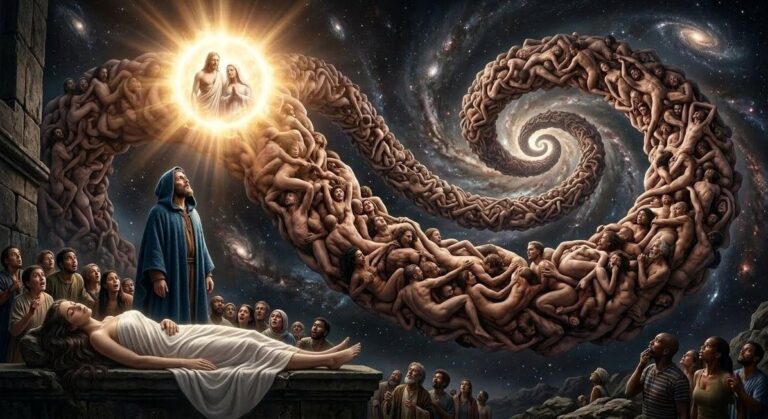
Neo Gnosticism is a modern revival or reinterpretation of Gnostic themes outside their original ancient settings. Rather than a single organised religion, it names a dispersed current of thought–spanning academic scholarship, contemplative practice, artistic expression, and political critique–that retrieves the ancient insistence on gnosis, direct experiential knowledge of the source or divine, and applies it to contemporary conditions. Where the ancient Gnostics of the first centuries CE developed intricate mythologies of archons, a fallen demiurge, and a divine spark trapped in matter, neo Gnostics ask whether those maps still describe the architecture of modern consciousness.
The term itself is contested. Some scholars reject it entirely, arguing that Gnosticism was a specific historical phenomenon extinguished by the fourth century. Others use it descriptively, recognising that the questions Gnostics posed–about the goodness of the creator or source, the reality of evil, and the possibility of liberation through inner awakening–have never ceased to attract seekers. This article tries to offer a clear, balanced introduction to what neo Gnosticism means, where it draws from, how it manifests today, and what shadows attend its revival.
Table of Contents
- What Is Neo Gnosticism?
- Historical Roots and the Nag Hammadi Discovery
- Key Themes in Neo Gnosticism
- Expressions of Neo Gnosticism Today
- Criticisms and the Shadow Side
- Frequently Asked Questions
- Further Reading

What Is Neo Gnosticism?
At its simplest, neo Gnosticism describes any modern engagement with Gnostic ideas that occurs outside the boundaries of ancient Gnostic Christian communities. The prefix neo signals both continuity and distance. Continuity, because the core concern remains gnosis–a knowing that transforms the knower, rather than a belief system accepted on authority. Distance, because the social, theological, and cosmological contexts have shifted almost beyond recognition.
The ancient Gnostics were embedded in a Mediterranean world of Hellenistic philosophy, Jewish apocalypticism, and emerging Christianity. They produced complex mythological systems–Sethian, Valentinian, Hermetic–to explain how a perfect divine realm (the Pleroma) could have produced a flawed material world (the Kenoma) ruled by ignorant or malevolent powers (Archons) under a blind creator (the Demiurge). Neo Gnostics rarely adopt these systems wholesale. Instead, they tend to extract what they consider the experiential kernel from the mythological husk: the conviction that reality is not what it appears, that the self carries a divine spark, and that awakening is possible through direct inner recognition.
This means neo Gnosticism is not a church. It has no authorised creed, no unified hierarchy, and no single sacred text. It is better understood as a hermeneutical stance–a way of reading the world, and oneself, through the lens of estrangement and return. The modern seeker who suspects that institutional structures distort consciousness, that consumerism functions as a new form of bondage, or that technology has become a contemporary demiurge, is thinking in recognisably neo Gnostic patterns even if they have never read a page of the Apocryphon of John.
Historical Roots and the Nag Hammadi Discovery
The revival would be impossible without a single event: the 1945 discovery of the Nag Hammadi Library in Upper Egypt. Before those thirteen codices emerged from the sand, Gnosticism was known almost exclusively through the hostile accounts of its opponents–primarily the Church Fathers, especially Irenaeus of Lyons, who wrote Against Heresies in the late second century. The Gnostics had no surviving voice of their own. They were heretics by definition, described but never heard.
The Nag Hammadi texts changed this permanently. For the first time, scholars and seekers could read Gnostic cosmologies, hymns, and revelation dialogues from the inside. The diversity was staggering. Codex I contained the poetic Gospel of Truth and the philosophically dense Tripartite Tractate. Codex II held the Apocryphon of John and the Gospel of Thomas. Codex VI included Hermetic texts alongside Christian-Gnostic material. The library revealed that Gnosticism was not a single heresy but a spectrum of approaches, some radically ascetic, others sacramental, some deeply philosophical, others visionary and mythological.
This textual recovery coincided with the twentieth century’s broader crisis of authority. Two world wars, the Holocaust, the nuclear age, and the rise of totalitarian systems produced a cultural mood deeply suspicious of official narratives. The Gnostic suspicion that the visible world is administered by illegitimate powers resonated powerfully. By the 1960s and 1970s, the Nag Hammadi texts were being read not only by theologians but by psychologists, artists, political radicals, and spiritual seekers. The neo Gnostic revival was underway, though it would remain fragmented and largely uninstitutionalised.

Key Themes in Neo Gnosticism
While neo Gnosticism resists systematisation, several themes recur with enough consistency to map the territory. These are not doctrines to be believed but recognitions to be tested.
Direct Knowing (Gnosis) Over Belief
The ancient Gnostics distinguished between pistis (faith) and gnosis (knowledge). Faith, in their view, was adequate for the masses but insufficient for liberation. Gnosis required an interior event–a remembering, a recognition, an awakening to one’s true identity as a spark of the divine Fullness. Neo Gnostics retain this priority of experience over doctrine. The question is not whether one believes in Sophia or the Demiurge, but whether one has undergone a shift in perception that makes the old categories of sacred and profane seem provisional.
The World as Administered, Not Natural
The ancient archons were planetary powers, celestial gatekeepers, and cosmic administrators who obstructed the soul’s ascent. Neo Gnostics translate this mythological language into sociological and psychological registers. The archons become systems of control: ideological, economic, technological, pharmacological. The point is not that Saturn literally houses a malevolent being named Yaldabaoth, but that the structures governing modern life often operate with a logic hostile to awakening–distracting, fragmenting, and anaesthetising consciousness. The demiurge becomes a metaphor for the blind, automatic forces that shape reality without wisdom or love.
The Divine Spark and the Stranger Self
Many Nag Hammadi texts describe the soul as a stranger in a foreign land, a royal child exiled into poverty, or a spark of light trapped in darkness. Neo Gnostics often experience this as a persistent sense of not belonging, not to one’s family, nation, or culture, but to the deeper current of reality itself. This is not mere alienation. It is the recognition that the self is dual: a constructed ego operating within social scripts, and a deeper awareness that witnesses those scripts without being identical to them. The goal is not to destroy the ego but to relativise it, to recognise that the true self is not the role but the light that illuminates the role.
Sophia, the Fallen Wisdom
The figure of Sophia (Wisdom) occupies a special place in neo Gnostic imagination. In the ancient myths, Sophia’s fall or error produces the material world and the demiurge. Her restoration is inseparable from the restoration of all things. Modern interpreters often read Sophia as a symbol of the feminine principle in divinity, suppressed by patriarchal orthodoxy; as the intelligence of nature itself, wounded by human exploitation; or as the capacity for insight within the seeker, temporarily lost in confusion. The neo Gnostic engagement with Sophia is typically ecological, psychological, and feminist as well as theological.
Pleroma and Kenoma as States of Consciousness
The ancient Gnostics mapped cosmology vertically: the Pleroma (Fullness) above, the Kenoma (Emptiness) below. Neo Gnostics often read this map horizontally, as a description of two possible modes of awareness. The Pleroma is the state of integration, presence, and connection in which nothing is lacking. The Kenoma is the state of fragmentation, craving, and alienation that characterises much of modern life. The goal is not to escape the world geographically but to shift the centre of gravity from Kenoma to Pleroma, from scarcity to fullness, while remaining fully engaged in ordinary existence.

Expressions of Neo Gnosticism Today
Neo Gnosticism manifests in at least four distinct but overlapping domains. None owns the label. All contribute to the current.
Academic and Textual Recovery
Scholarship remains the backbone of the revival. The critical edition and translation of Nag Hammadi texts, the ongoing work of the Institut fuer Papyrologie in Muenster, and the publication of related Coptic and Greek materials provide the raw material for every other expression. Scholars such as David Brakke, Michael Allen Williams, and Karen L. King have complicated the category of Gnosticism itself, arguing that the ancient diversity resists the unified heresy label imposed by the Church Fathers. This scholarly rigour paradoxically strengthens the revival by preventing it from collapsing into fantasy. Neo Gnosticism, at its best, knows that its myths are myths–and takes them seriously precisely for that reason.
Contemplative and Spiritual Practice
A growing number of practitioners engage with Gnostic texts not as historical curiosities but as living maps for inner work. This includes meditation informed by the Gospel of Thomas, dreamwork inspired by the ascent literature of Zostrianos, and ritual practices derived from the Valentinian sacramental system. Some work within established esoteric organisations–the Ecclesia Gnostica, the Johannite Church, or various Thelemic and Rosicrucian lineages–while others pursue a solitary path, reading the texts directly and allowing recognition to emerge without institutional mediation. The emphasis is consistently on experience: the text is a mirror, not a manual.
Artistic and Cultural Production
Philip K. Dick’s VALIS trilogy is perhaps the most famous literary expression of neo Gnostic themes in the twentieth century, but the current runs through cinema (The Matrix, The Truman Show, Dark City), music (ambient and industrial genres exploring simulation and control), and visual art. These works rarely name Gnosticism explicitly. Instead, they enact its core gesture: the protagonist discovers that reality is constructed, that the apparent authorities are fraudulent, and that liberation requires a radical shift in perception. The audience, entertained, is also being prepared.
Political and Social Critique
Perhaps the most consequential neo Gnostic expression today is political. The critique of institutional religion, the analysis of corporate and state power as archonic systems, and the ecological reading of Sophia as wounded nature all draw on Gnostic frameworks. The recognition that suffering is not merely accidental but systemic, that the system itself may be structurally blind or hostile to human flourishing, carries a Gnostic signature. This is not to say that every political radical is a Gnostic, but that Gnosticism provides one of the oldest and most sophisticated vocabularies for naming the gap between official reality and lived experience.
Criticisms and the Shadow Side
No revival is without its shadows. Neo Gnosticism faces legitimate criticism from multiple directions, and internal self-critique is essential to its maturity.
Historical distortion is the most common charge. By detaching Gnostic ideas from their original contexts–Coptic Egypt, second-century Syria, Valentinian Rome–neo Gnostics risk creating a past that never existed. The ancient Gnostics were not proto-hippies, feminist mystics, or quantum physicists. They were embedded in specific religious communities with practices, hierarchies, and boundaries that modern seekers might find uncomfortable. Selective retrieval can become selective amnesia.
Elitism is another danger. The ancient Gnostics divided humanity into three natures: the hylic (material), the psychic (soul-level), and the pneumatic (spiritual). Only the pneumatic could receive gnosis. Neo Gnostics sometimes reproduce this hierarchy in secular dress, distinguishing the “awakened” from the “sleeping,” the conscious from the programmed. This can breed spiritual arrogance, social detachment, and a quiet contempt for ordinary people who do not share the initiate’s perspective.
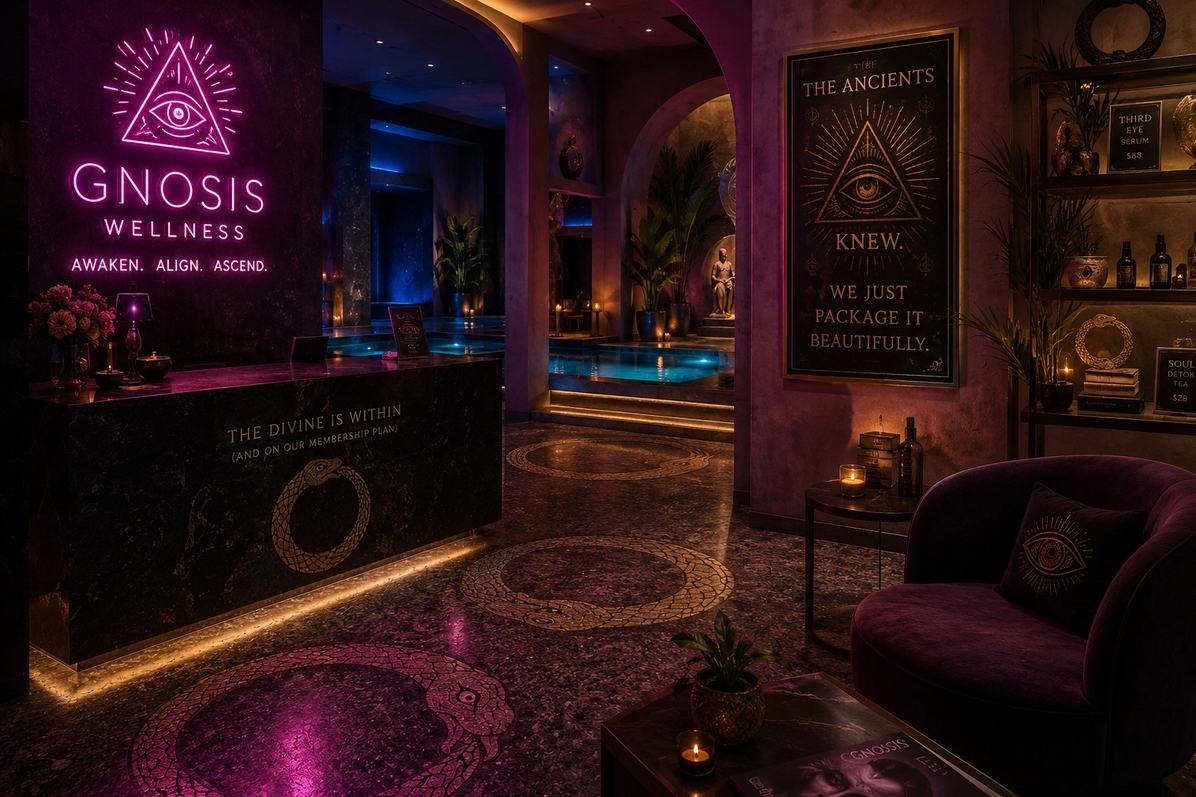
Commodification is perhaps the most pressing shadow. The wellness industry, the self-help market, and the spiritual tourism economy have proven adept at absorbing dissent and selling it back as lifestyle. Gnostic symbols–the ouroboros, the eye of providence, the divine spark–appear on yoga mats, coffee mugs, and Instagram infographics, stripped of their critical edge. When gnosis becomes merely a product, the archons have won by other means.
Escapism remains a final temptation. If the world is fundamentally flawed, the obvious response is to withdraw. But the ancient Gnostics were not uniformly world-renouncing–the Valentinians, in particular, maintained active involvement in civic life–and neo Gnosticism risks irrelevance if it becomes merely a private consolation for those who cannot bear the news. The challenge is to hold the critical insight without collapsing into cynicism, to recognise the Kenoma without abandoning responsibility for it.
Frequently Asked Questions
What is neo Gnosticism in simple terms?
Neo Gnosticism is a modern revival of ancient Gnostic ideas–particularly the emphasis on direct inner knowing (gnosis) over institutional belief–applied to contemporary life. It is not a single religion but a dispersed current found in scholarship, spiritual practice, art, and political critique.
Is neo Gnosticism a real religion?
No. Neo Gnosticism is not an organised religion with a unified creed or hierarchy. It is better understood as a hermeneutical stance or spiritual current that draws on ancient Gnostic texts and themes while remaining diverse and largely uninstitutionalised. Some practitioners affiliate with Gnostic churches, but many pursue solitary paths.
How is neo Gnosticism different from ancient Gnosticism?
Ancient Gnosticism was embedded in specific historical communities of the first centuries CE, with complex mythological systems and ritual practices. Neo Gnosticism extracts the experiential core–direct knowing, the divine spark, and critique of illegitimate authority–and applies it to modern contexts such as psychology, technology, and politics, often without adopting the ancient myths literally.
Can you be a Christian and a neo Gnostic?
This depends on definition. Some neo Gnostics identify as Christian, reading the Gnostic gospels as authentic expressions of Jesus’s secret teachings. Others reject Christianity entirely. The ancient Gnostics considered themselves the true Christians, while orthodox authorities condemned them as heretics. Modern neo Gnostics span the spectrum from Christian mystical to post-Christian and non-Christian.
What is the relationship between neo Gnosticism and the Nag Hammadi Library?
The Nag Hammadi Library, discovered in 1945, provides the primary textual foundation for neo Gnosticism. Without these Coptic codices, the ancient Gnostics would be known only through the hostile accounts of their opponents. The library’s publication enabled the modern revival by making Gnostic voices available directly to readers.
Is neo Gnosticism anti-material or anti-body?
Not necessarily. While some ancient Gnostic texts express strong dualism and hostility toward the body, others–particularly Valentinian traditions–affirm the material world as a place of transformation. Neo Gnosticism is similarly diverse. Many contemporary practitioners engage in embodied practices and ecological activism, reading Sophia as the intelligence of nature rather than as a symbol of world-rejection.
What are the main dangers or shadows of neo Gnosticism?
The primary shadows include historical distortion (selectively retrieving the past), elitism (dividing humanity into the awakened and the asleep), commodification (absorbing Gnostic critique into the wellness market), and escapism (withdrawing from social responsibility under the guise of spiritual superiority). Healthy neo Gnosticism maintains self-critique in all four areas.
Further Reading
- Who Are the Neo-Gnostics? The Complete Guide to Modern Gnostic Revival — A comprehensive survey of the contemporary seekers, scholars, and practitioners who constitute the modern Gnostic landscape.
- Contemporary Gnosticism: Ancient Patterns in Modern Realities — Explores how Gnostic themes of archonic control, simulation, and direct knowing manifest in twenty-first-century conditions.
- Living Gnosis: How Neo-Gnostics Navigate Work, Relationships, and the Modern World — Practical guidance for embodying Gnostic recognition within the demands of ordinary contemporary life.
- What Is Gnosticism? The Ancient Currents of Direct Knowledge — The foundational glossary entry establishing the historical context from which neo Gnosticism draws its themes.
- What Is Gnosis? Meaning, Recognition, and Direct Knowing — A precise exploration of the central concept that distinguishes Gnostic and neo Gnostic approaches from conventional religiosity.
- The Shadow Side of the Gnostic Revival: Cults, Commerce, and the Trap of Knowing — A critical examination of the dangers that attend any spiritual revival, including elitism, commodification, and spiritual bypassing.
- Transhumanism as Neo-Gnosticism: The Body Escape Debate — Investigates one of the most controversial modern expressions of Gnostic themes: the desire to transcend the body through technology.
- The $6.8 Trillion Theft: How the Wellness Industry Stole Gnosis and Sold It Back Empty — A sharp critique of how Gnostic concepts have been absorbed, diluted, and marketed by the contemporary wellness economy.
- Gnosticism vs Orthodox Christianity: What the Early Church Suppressed — Essential historical context for understanding why Gnosticism was marginalised and why its revival carries theological and political weight.
- The Nag Hammadi Library: A Complete Guide to the Gnostic Scriptures — The definitive hub for exploring the ancient texts that make the neo Gnostic revival possible.