
The Somatic Sacrament: Embodied Sexuality as Gnostic Practice
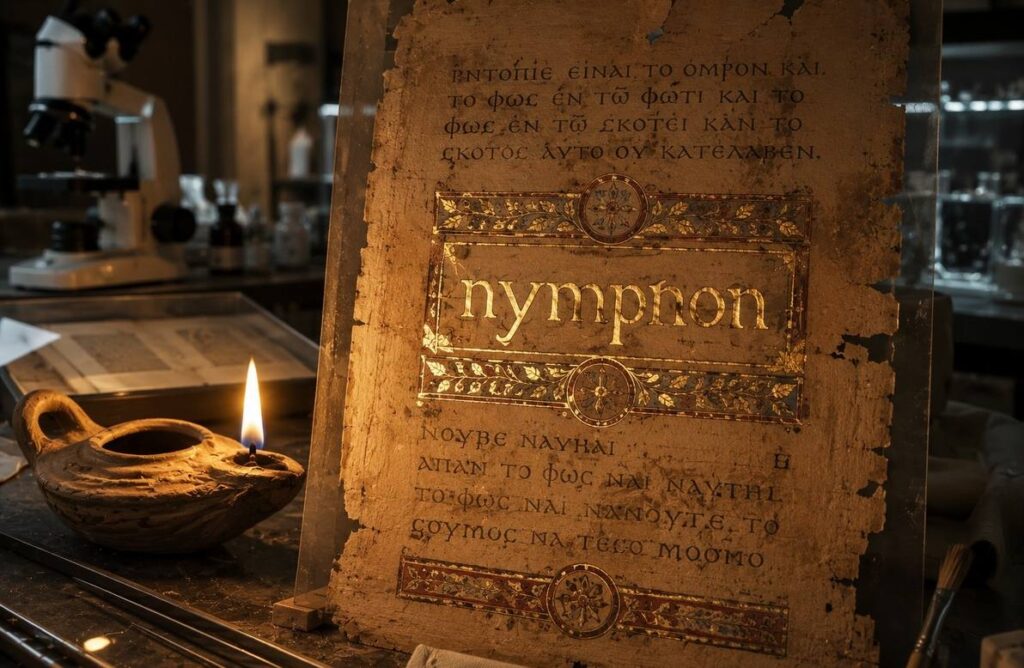
The body is not the obstacle to Gnosis; it is the instrument. This claim, radical in its simplicity, cuts against centuries of misinterpretation that have painted Gnosticism as purely world-negating. While certain Sethian texts regard matter with deep suspicion, the Valentinian tradition preserved in the Nag Hammadi Library takes a more nuanced view. The Gospel of Philip names five sacraments: baptism, chrism, eucharist, redemption, and the bridal chamber (nymphon). Of these, the bridal chamber stands highest, for it is there that the separated elements are restored to unity.
This article examines sexuality not as escapism but as a somatic technology–a practice through which consciousness may be refined rather than dissipated. We draw upon Valentinian sacramental theology, Hindu and Taoist subtle-body maps, and contemporary neuroscience to explore what happens when the body becomes a laboratory rather than a battlefield. The approach is neither prudish nor hedonistic. It is alchemical: the transformation of raw energy into awakened awareness.
Table of Contents
- Flesh as Vocation
- The Bridal Chamber and the Five Mysteries
- The Neurochemistry of Union
- The Anatomy of the Subtle Body
- The Four Practices of Embodiment
- From Prostitution to Restoration
- The Ethics of the Flesh
- Frequently Asked Questions
- Further Reading
- References and Sources

Flesh as Vocation
The body is not the obstacle to Gnosis; it is the instrument. This is particularly true of sexuality, which is the most intense somatic experience available to the embodied self. To engage in sex unconsciously is to be swept away by the archonic current–addiction, compulsion, the endless hunger for novelty. To engage in sex consciously is to ride that current like a surfer, using its power to break through the membrane of the kenoma into the pleroma.
Embodied sexuality is the sacrament of the Gnostic–not despite the flesh but because of it. The nerves are the pathways; the hormones are the fuel; the orgasm is the portal. Yet this portal does not open automatically. It requires preparation, intention, and the courage to remain present in the most vulnerable of human encounters.
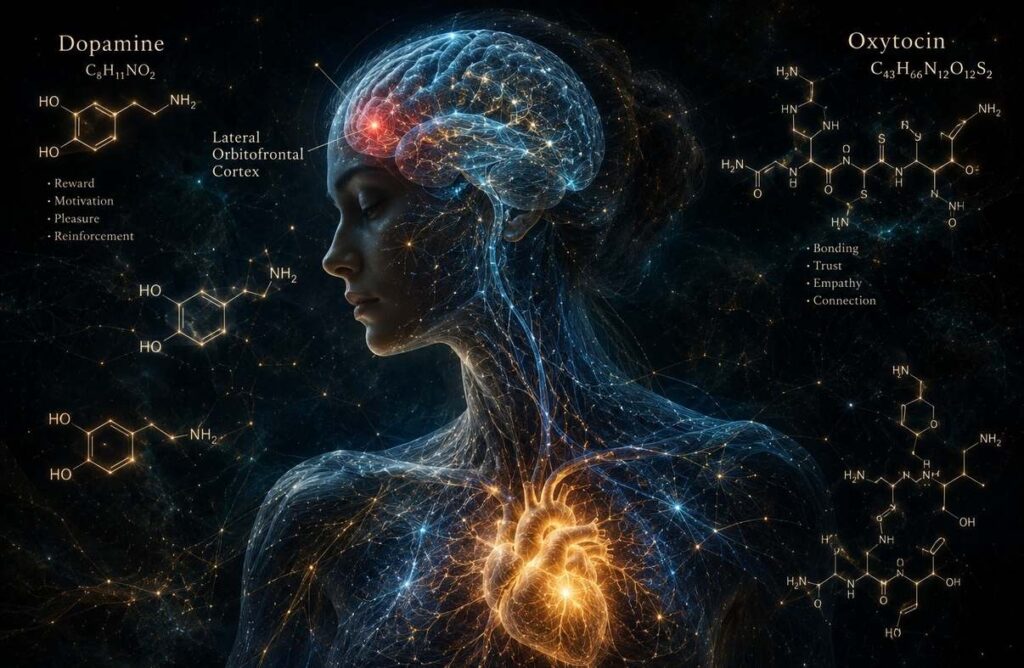
Contemporary neuroscience confirms what the mystics intuited. During orgasm, the brain releases a cascade of neurochemicals–dopamine, oxytocin, endorphins, and vasopressin–while simultaneously deactivating the lateral orbitofrontal cortex, the region responsible for self-monitoring and behavioural control. This temporary neurological suspension of ego creates a window of dissolution in which the ordinary boundaries of selfhood soften. For the unconscious participant, this window slams shut within minutes, followed by prolactin-driven withdrawal and the familiar post-coital flatness. For the conscious practitioner, the same neurochemistry becomes a bridge–a momentary dissolution that, if held with awareness, can initiate deeper integration rather than mere depletion.
The Bridal Chamber and the Five Mysteries
The Valentinian Christians of the second century understood salvation as a sequence of initiatory stages. According to the Gospel of Philip, the five mysteries or sacraments are: baptism, chrism, eucharist, redemption, and the bridal chamber (nymphon). The text explicitly ranks them: “There were three buildings specifically for sacrifice in Jerusalem. The one facing the west was called ‘The Holy’. Another, facing south, was called ‘The Holy of the Holy’. The third, facing east, was called ‘The Holy of the Holies’… Baptism is ‘the Holy’ building. Redemption is the ‘Holy of the Holy’. ‘The Holy of the Holies’ is the bridal chamber.”
For the Valentinians, the bridal chamber was not merely earthly marriage but a spiritual rite that restored the primordial unity shattered by separation. The Gospel of Philip states: “If the woman had not separated from the man, she should not die with the man. His separation became the beginning of death. Because of this, Christ came to repair the separation… and again unite the two.” In this framework, sexual union–when entered with sacramental consciousness–becomes an icon of the soul’s reunion with its divine counterpart, the angelic bridegroom or heavenly syzygy.
Scholars debate whether the historical Valentinians practised a literal sexual rite or a symbolic one involving imposition of hands and liturgical formulae. Irenaeus, writing in the late second century, describes them as preparing a bridal chamber and employing fixed formulae “stating that a spiritual marriage is to be performed after the pattern of the higher Syzygia.” A garbled liturgical formula preserved in his work includes the words: “Deck thyself as a bride who awaits her bridegroom, that thou mayest become as I am, and I as thou art. Let the seed of light descend into thy bridal chamber.” Whether literal or symbolic, the theological point remains: sexuality, when stripped of compulsion and infused with recognition, becomes a mirror of cosmic restoration.
The Neurochemistry of Union
Modern research into the sexual brain offers unexpected support for the ancient claim that orgasm is a portal. The neurochemical cascade unfolds in distinct phases. During desire, dopamine surges through the mesolimbic pathway, priming anticipation. During arousal, norepinephrine narrows attentional focus, producing the absorbed presence that mystics call “recollection.” At orgasm itself, the hypothalamus releases oxytocin–the bonding hormone–while the ventral tegmental area floods the nucleus accumbens with dopamine, reinforcing the experience as reward.
Crucially, Georgiadis and Kringelbach’s neuroimaging research documented that orgasm produces temporary deactivation of the lateral orbitofrontal cortex. This is the brain’s surveillance centre–the region that maintains self-consciousness, social monitoring, and inhibitory control. Its deactivation explains the characteristic quality of ego dissolution reported during climax. For a brief interval, the individual is neurologically incapable of the self-judgement that ordinarily constrains awareness.
The post-orgasmic period is equally significant. Research by Kerstin Uvnas Moberg identified a consolidation window of approximately fifteen to forty-five minutes after climax, during which sustained skin-to-skin contact triggers a secondary oxytocin release. This secondary wave converts the pleasure event into a bonding event, reducing cortisol and priming the parasympathetic nervous system for social connection. When partners separate immediately–to check devices, to clean up, to retreat to opposite sides of the bed–this window closes, and the bonding potential is lost. From a Gnostic perspective, this neuroscience describes the mechanism behind the portal. The deactivation of the orbitofrontal cortex is the temporary dissolution of the egoic self–the solve. The secondary oxytocin release, if cultivated through sustained contact and intention, becomes the coagula–the reconstitution of selfhood at a more integrated level.
The Anatomy of the Subtle Body
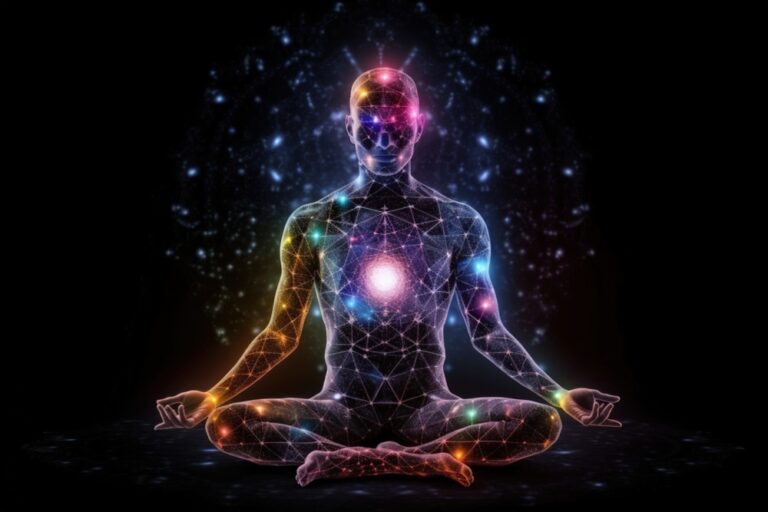
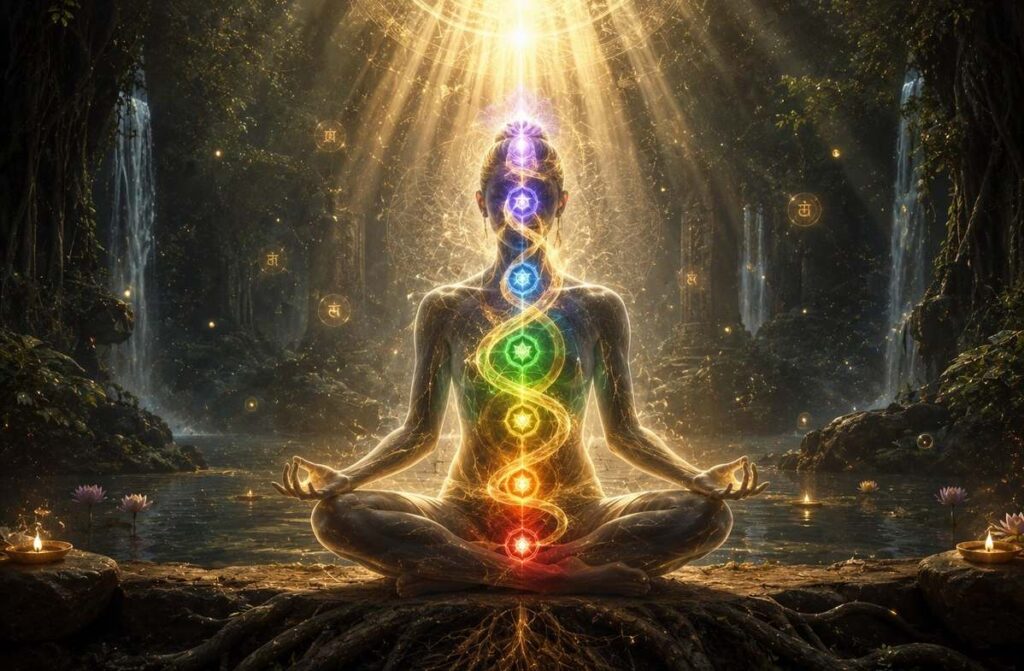
The linga sharira–the subtle body–contains energetic pathways that correspond to the physical nervous system but extend beyond it. The term derives from Sanskrit, where linga means “characteristic mark” and sharira means “body.” In Samkhya and Vedantic philosophy, the linga sharira comprises the pranamaya kosha (vital breath), manomaya kosha (mind), and vijnanamaya kosha (intellect)–the three sheaths that surround the innermost self. It is the vehicle through which consciousness experiences the world and the medium that carries karmic impressions between incarnations.
During sexual arousal, these pathways open. The untrained practitioner dissipates this energy through ejaculation or external climax; the trained practitioner circulates it. In Hindu and Hatha Yoga traditions, this redirection is cultivated through vajroli mudra–the “thunderbolt seal”–which involves controlled contraction of the urogenital muscles to draw energy upward through the vajra nadi, a channel said to run alongside the central spine. In Taoist practice, the same principle appears as the microcosmic orbit, in which qi is guided up the governing vessel along the spine and down the conception vessel along the front of the body, completing a circuit of renewal.
This is not repression but redirection. The pleasure is not denied; it is multiplied, refined, turned from a localised genital sensation into a full-body ecstasy that dissolves the boundaries of the self. The big draw–a Taoist technique in which the practitioner contracts the perineum and draws breath up the spine during the moment of peak sensation–allows the energetic charge to be recirculated rather than expelled. The result, according to tradition, is rejuvenation rather than depletion, clarity rather than fog. It is important to note that these techniques originate in distinct cultural contexts. Vajroli mudra belongs to the Hatha Yoga Pradipika tradition; the microcosmic orbit to Taoist qi gong. Their synthesis in contemporary Western esotericism is a modern development, not an ancient unified system.
The Four Practices of Embodiment
Theory without practice is speculation. The following four disciplines are drawn from multiple traditions and adapted for the contemporary seeker. They are offered not as dogma but as experiments–methods for testing whether consciousness can indeed be refined through somatic intensity.
1. The Slow Approach
Speed is the enemy of consciousness. The modern sexual culture is fast–friction, release, sleep. The Gnostic approach is slow–hours of touch without goal, the cultivation of arousal without urgency. Slowness allows the nervous system to fully activate. It permits the dopamine anticipation phase to extend, deepening the mesolimbic response. It creates space for the practitioner to notice when attention fragments and to return it to sensation. The slow approach transforms sex from a transaction into a meditation.
2. The Breath as Anchor
The breath connects the voluntary and involuntary nervous systems. During sexual engagement, the breath is the steering mechanism. Shallow, fast breath drives toward climax; deep, slow breath spreads the energy through the body. Taoist traditions teach that the perineum is the pump and the spine is the pipe. By coordinating contraction of the pelvic floor with slow inhalation up the spine, the practitioner can redistribute arousal from the genitals to the heart and crown. This is not a technique to be forced but a rhythm to be discovered.
3. The Eye Contact
To look into the eyes of the partner during the act is to resist the descent into animal anonymity. It maintains the recognition–“I am here, you are here, this is sacred.” Eye contact sustains activation of the prefrontal cortex, preventing the complete dissociation that can accompany climax. It keeps the orbitofrontal deactivation from becoming a blackout rather than a portal. In the Valentinian liturgy, the bridal chamber involved facing the beloved. The gaze is the simplest and most profound sacramental gesture.
4. The Retention and Circulation
Techniques from Taoist and Tantric traditions allow the practitioner to retain the essence while experiencing the energetic peak. For men, vajroli mudra and the big draw allow seminal energy to be recirculated rather than expelled. For women, sahajoli mudra offers an analogous muscular control. The microcosmic orbit–breathing energy up the spine and down the front channel–can be practised by any body regardless of anatomy. The result is not frustration but fullness: a sustained energetic state that continues long after the physical act concludes. These techniques should be learned from qualified teachers; improper practice can create energetic blockages or psychological distress.
From Prostitution to Restoration
The Nag Hammadi tractate Exegesis on the Soul offers a haunting allegory for unconscious sexuality. The soul is personified as a virgin daughter of the Father who descends into the material world and is prostituted to “many robbers” and “wanton creatures.” These adulterers represent the archonic powers–the forces of compulsion, addiction, and sensory deception that exploit the soul’s longing for union. The text draws on the prophets Hosea, Jeremiah, and Ezekiel to depict the soul’s degradation: “You built yourself brothels on every lane, and you wasted your beauty, and you spread your legs in every alley.”
Yet the allegory does not end in despair. The soul, weeping before the Father, is turned inward. Her womb, which had been external and vulnerable, is reversed and baptised. “The womb of the soul is around the outside like the male genitalia which is external. So when the womb of the soul, by the will of the father, turns itself inward, it is baptised and is immediately cleansed of the external pollution.” This is the somatic sacrament in mythic language: the restoration of interiority, the return of awareness from dissipation to concentration, the transformation of prostitution into marriage.
The soul’s final restoration comes through union with her true bridegroom–her divine brother sent by the Father. She adorns herself, awaits him in the bridal chamber, and is made whole. The androgynous state is recovered. Death, which entered through separation, is undone through reunion. The text thus frames sexuality not as inherently sinful but as the arena in which the soul either loses or finds itself.
The Ethics of the Flesh
Embodied sexuality requires the full consent of the somatic intelligence. The body knows what it wants and what it fears. To override this with the ego’s agenda–performance, conquest, placation–is to violate the sacrament. The Gnostic listens to the body’s “no” as the voice of the divine.
This listening is particularly crucial for those with a history of trauma. The nervous system of a traumatised individual may interpret intense arousal as threat, triggering freeze or dissociation. Conscious sexuality in such cases is not a technique to be applied but a territory to be explored with patience, therapeutic support, and the understanding that the body’s resistance is wisdom, not obstruction. The ethical practitioner does not use esoteric ideology to bypass boundaries. They use boundaries as the first discipline of the work.
Consent between partners is the foundation, yet it is only the beginning. Each participant must also consent internally–to their own sensations, emotions, and emerging memories. The bridal chamber cannot be entered by force, even the force of one’s own ambition. It opens only to those who approach without demand.
The body is the church. The bed is the altar. The sweat is the wine. Consume with awareness, or consume with ignorance–the choice is yours, but the consequences differ vastly.

Frequently Asked Questions
What is the somatic sacrament in Gnostic practice?
The somatic sacrament is the practice of using conscious, embodied sexuality as a path to spiritual realisation. Rooted in Valentinian theology, it treats the bridal chamber (nymphon) as the highest of the five mysteries, where sexual union becomes a mirror of the soul’s reunion with its divine counterpart. It requires intention, slowness, and full somatic presence rather than mechanical performance.
What are the five Valentinian sacraments?
According to the Gospel of Philip, the five Valentinian sacraments are baptism, chrism (anointing), eucharist, redemption, and the bridal chamber (nymphon). The bridal chamber is ranked highest because it represents the restoration of primordial unity and the reunion of separated spiritual elements.
What happens in the brain during conscious sexual union?
During orgasm, the brain releases dopamine, oxytocin, endorphins, and vasopressin while temporarily deactivating the lateral orbitofrontal cortex–the region responsible for self-monitoring. This creates a brief window of ego dissolution. A subsequent consolidation window of 15–45 minutes allows secondary oxytocin release through sustained skin contact, converting pleasure into bonding and integration.
What is the subtle body and how does it relate to sexual energy?
The linga sharira is the subtle body in Hindu and Yogic philosophy, composed of the pranamaya (energy), manomaya (mental), and vijnanamaya (intellect) sheaths. During arousal, its energetic pathways open. Trained practitioners redirect this energy upward through the spine using techniques like vajroli mudra or the microcosmic orbit, transforming localised sensation into full-body awareness.
What are the four practices of embodied sexuality?
The four practices are: the Slow Approach (cultivating arousal without urgency), the Breath as Anchor (using deep, slow breath to redistribute energy), Eye Contact (maintaining recognition and prefrontal presence), and Retention and Circulation (recirculating sexual energy through Taoist or Tantric techniques rather than dissipating it).
Is sexual energy redirection scientifically supported?
While the specific concept of kundalini or qi is not validated by Western biomedicine, the neuroscience of orgasm confirms that attention, breath control, and sustained intimacy measurably alter neurochemical outcomes. The deactivation of self-monitoring brain regions during climax and the oxytocin consolidation window are well-documented phenomena that parallel traditional descriptions of energetic opening and integration.
What are the ethical considerations for conscious sexuality practice?
Ethical practice requires full somatic consent, trauma-informed awareness, and the understanding that the body’s resistance is wisdom rather than obstacle. Techniques such as vajroli mudra should be learned from qualified teachers. Conscious sexuality is not a tool for bypassing boundaries or healing trauma alone; it complements but does not replace therapeutic support.
Further Reading
- Embodiment Practices: Grounding the Awakening — Explores why spiritual realisation requires somatic integration and how to anchor peak experiences in the body.
- The Gateway of Sensation: Body Scan and Somatic Awareness — A practical guide to developing the interoceptive sensitivity that underpins all conscious embodiment work.
- Kundalini Phenomena and the Physiology of Awakening — Examines the neurobiology of energetic arousal and the nervous system changes that accompany spiritual opening.
- Integration of Shadow and Eros: Trauma as Sacred Fuel — Investigates how unconscious sexual patterning becomes material for transformation when approached with awareness.
- The Alchemical Couple: Gnosis in the Mirror of Relationship — Explores the coniunctio oppositorum and how intimate partnership becomes a crucible for individuation.
- The Gospel of Philip: Sacrament and Eros — A detailed examination of the Valentinian bridal chamber and the five mysteries preserved in Nag Hammadi Codex II.
- Nervous System Regulation: The New Meditation and Embodied Spirituality — Connects contemporary polyvagal theory with ancient somatic technologies for self-regulation.
- Neuroception and the Felt Sense: Spiritual Discernment — Explores how the body’s implicit knowing becomes a reliable guide for navigating subtle energetic experiences.
- The Five Gateways to Direct Knowing — Maps the broader framework of somatic, contemplative, and energetic practices that support non-conceptual recognition.
- Exegesis on the Soul: An Allegory of Descent and Return — A complete guide to the Nag Hammadi tractate that uses the metaphor of prostitution and restoration to describe the soul’s journey.
References and Sources
The following sources represent the primary textual, scholarly, and scientific materials consulted in the preparation of this article.
Primary Gnostic and Esoteric Texts
- The Gospel of Philip. Nag Hammadi Codex II,3. Translated by Wesley W. Isenberg. In The Nag Hammadi Library in English. Harper & Row, 1977.
- The Exegesis on the Soul. Nag Hammadi Codex II,6. Translated by William C. Robinson, Jr. In The Nag Hammadi Library in English. Harper & Row, 1977.
- Irenaeus of Lyons. Against Heresies (Adversus Haereses), Book I. Translated by Alexander Roberts and James Donaldson. Ante-Nicene Fathers, Vol. 1. Christian Literature Publishing, 1885.
Scholarly Monographs and Critical Studies
- Thomassen, Einar. The Spiritual Seed: The Church of the Valentinians. Brill, 2006.
- Pagels, Elaine. The Gnostic Gospels. Random House, 1979.
- DeConick, April D. The Gnostic New Age: How a Countercultural Spirituality Revolutionised Christianity from Antiquity to Today. Columbia University Press, 2016.
- Turner, John D. Sethian Gnosticism and the Platonic Tradition. Presses de l’Universite Laval, 2001.
Neuroscience and Somatic Studies
- Georgiadis, J. R., and M. L. Kringelbach. “The Human Sexual Response Cycle: Brain Imaging Evidence Linking Sex to Other Pleasures.” Progress in Neurobiology, 2012.
- Uvnas Moberg, Kerstin. The Oxytocin Factor: Tapping the Hormone of Calm, Love, and Healing. Da Capo Press, 2003.
- Porges, Stephen W. The Polyvagal Theory: Neurophysiological Foundations of Emotions, Attachment, Communication, and Self-Regulation. W. W. Norton, 2011.
- Chia, Mantak. Taoist Secrets of Love: Cultivating Male Sexual Energy. Aurora Press, 1984.
Comparative and Yogic Sources
- Hatha Yoga Pradipika. Translated by Swami Muktibodhananda. Bihar School of Yoga, 1985.
- Eliade, Mircea. Yoga: Immortality and Freedom. Princeton University Press, 1958.
- Kohn, Livia, ed. Taoist Meditation and Longevity Techniques. University of Michigan, 1989.
Safety Notice: This article explores advanced somatic and sexual practices that can activate intense psychological and energetic material. It does not constitute medical, psychological, or sexual advice. If you have a history of trauma, dissociation, or sexual dysfunction, please consult a trauma-informed therapist or qualified medical professional before attempting energetic retention techniques. Practices such as vajroli mudra should only be learned under the guidance of an experienced teacher. Conscious sexuality complements but does not replace clinical mental health treatment, couples therapy, or medical care. Do not use esoteric frameworks to bypass personal boundaries or to pressure partners into practices they do not fully consent to.