The Chakra System: Origins, Development, and Modern Misconceptions
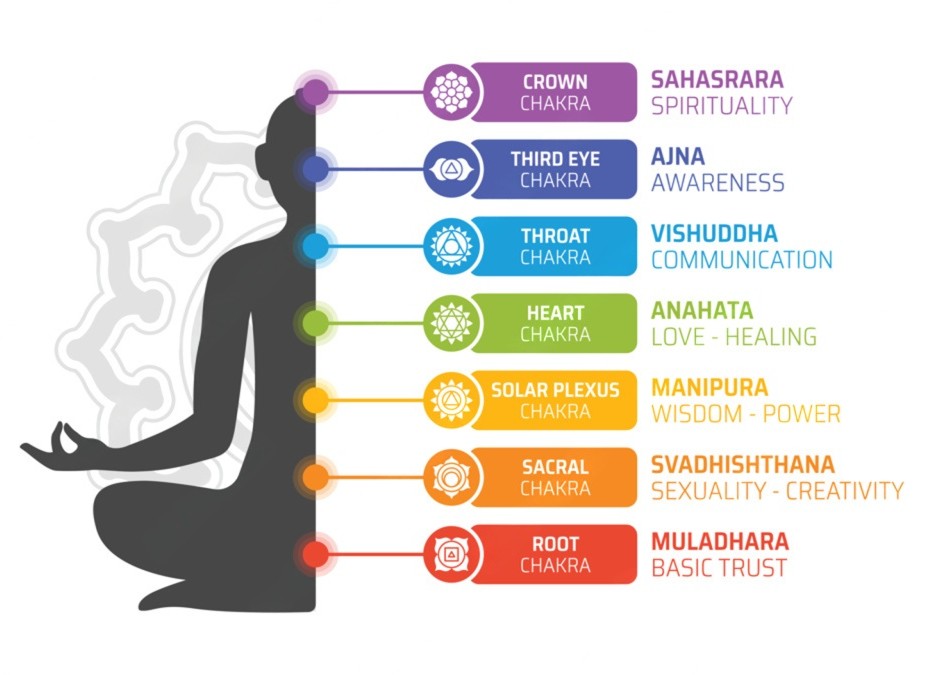
The chakras, in contemporary imagination, are seven coloured wheels aligned along the spine–red, orange, yellow, green, blue, indigo, violet–each associated with psychological functions, each openable or blockable through practice. This system, taught in yoga studios and wellness centres, is not ancient. It is modern synthesis–early 20th century, created through cross-cultural translation, now mistaken for tradition.
The actual history is more interesting. The chakra concept–cakra, Sanskrit for wheel or circle–emerges in Tantric texts, 8th–12th centuries CE. The number varies: four, five, six, seven, twelve, more. The location varies: along the central channel, sushumna, but precise placement differs by text. The function varies: psychological, physiological, cosmological, ritual. The system, ancient, was not a system but a plurality of systems.
The modern seven-chakra rainbow derives primarily from The Serpent Power–Arthur Avalon’s 1919 translation of two Tantric texts, the Shat-Chakra-Nirupana and Paduka-Panchaka. Avalon (Sir John Woodroffe), a British judge in India, rendered Sanskrit into English with a Theosophical framework. The translation, influential, fixed what had been fluid. This article traces the ancient plurality, the modern fixation, and how the contemporary practitioner can work with the chakra map without mistaking the cartographer for the territory.
Table of Contents
- The Ancient Plurality: Maps Before the Map
- The Avalon Translation and the Theosophical Lens
- The Rainbow Imposition: How Colour Was Assigned
- Psychological Map or Liberation Technology?
- Working with Awareness
- Frequently Asked Questions
- Further Reading
- References and Sources
The Ancient Plurality: Maps Before the Map
Before the seven-chakra standard, Tantric literature presented a bewildering variety of subtle-body architectures. The chakra was not originally a fixed psycho-spiritual organ but a dynamic locus–a centre of energy, a wheel of transformation, a doorway to cosmological power. Different texts mapped different territories because they served different functions: ritual invocation, yogic ascent, alchemical transmutation, or deity visualisation.
The Six Centres of the Shat-Chakra-Nirupana
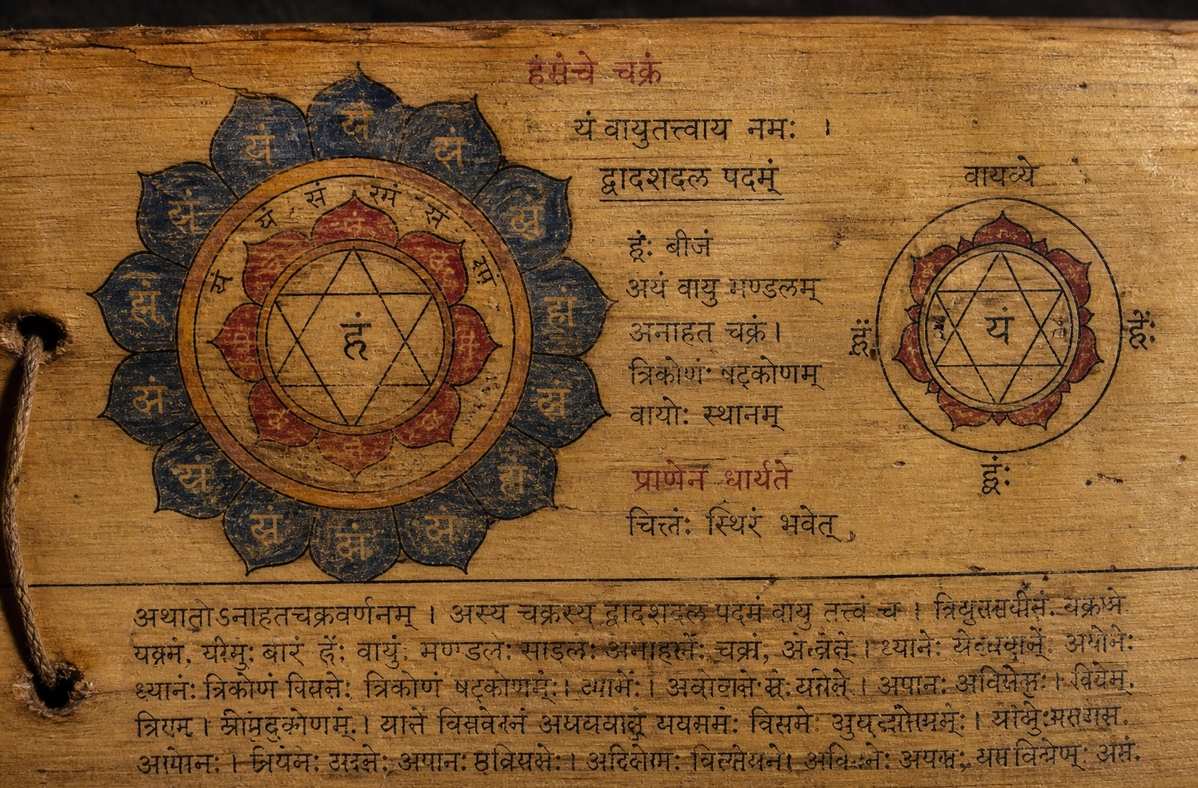
The Shat-Chakra-Nirupana (“Description of the Six Centres”), composed by Purnananda in 16th-century Bengal, provides the most detailed Sanskrit account of the chakras [^107^]. Despite its influence, the text describes six primary lotuses–Muladhara, Svadhishthana, Manipura, Anahata, Vishuddha, and Ajna–with the Sahasrara (thousand-petalled lotus) positioned above them as the transcendent goal rather than the seventh member of the sequence. The text is precise about petals, letters, deities, and elements, but it does not present the chakras as a psychological ladder. They are stations of Kundalini ascent, each requiring piercing (bheda) by the serpent power to achieve liberation.
Gorakshashataka and the Hatha Yoga Tradition
The Gorakshashataka, attributed to the 10th–12th century yogi Gorakhnath, describes six adharas (supports) rather than seven chakras [^108^]. The terminology differs: adhara (foundation), nadi (channel), and padma (lotus) appear interchangeably. The focus is on bindu (semen/essence) retention, breath control, and the alchemical preservation of vital fluid. The chakra, here, is not a coloured wheel for self-improvement but a valve in the subtle physiology that the yogi must master to prevent leakage of the divine nectar.
Kubjikamata and Ritual Architecture
The Kubjikamata Tantra, a Kashmiri Shaiva text, presents a five-chakra system embedded within a complex ritual geometry. The chakras correspond to five seats (pitha) of the Goddess Kubjika, each linked to specific mantras, mudras, and offerings. The practitioner does not “open” these centres through introspection but activates them through external ritual–the deployment of sacred sound, gesture, and substance. To reduce this architecture to a wellness diagram is to mistake a temple for a gym.
Hevajra Tantra and the Fourfold Pattern
The Buddhist Hevajra Tantra employs a four-chakra scheme corresponding to the four elements, four stages of enlightenment, and four Buddha families. The chakras are not aligned along the spine in the Indian manner but configured within a mandala of enlightened consciousness. This demonstrates that the chakra concept was never monolithic even within South Asia; it travelled, transformed, and adapted to the soteriological needs of distinct traditions.
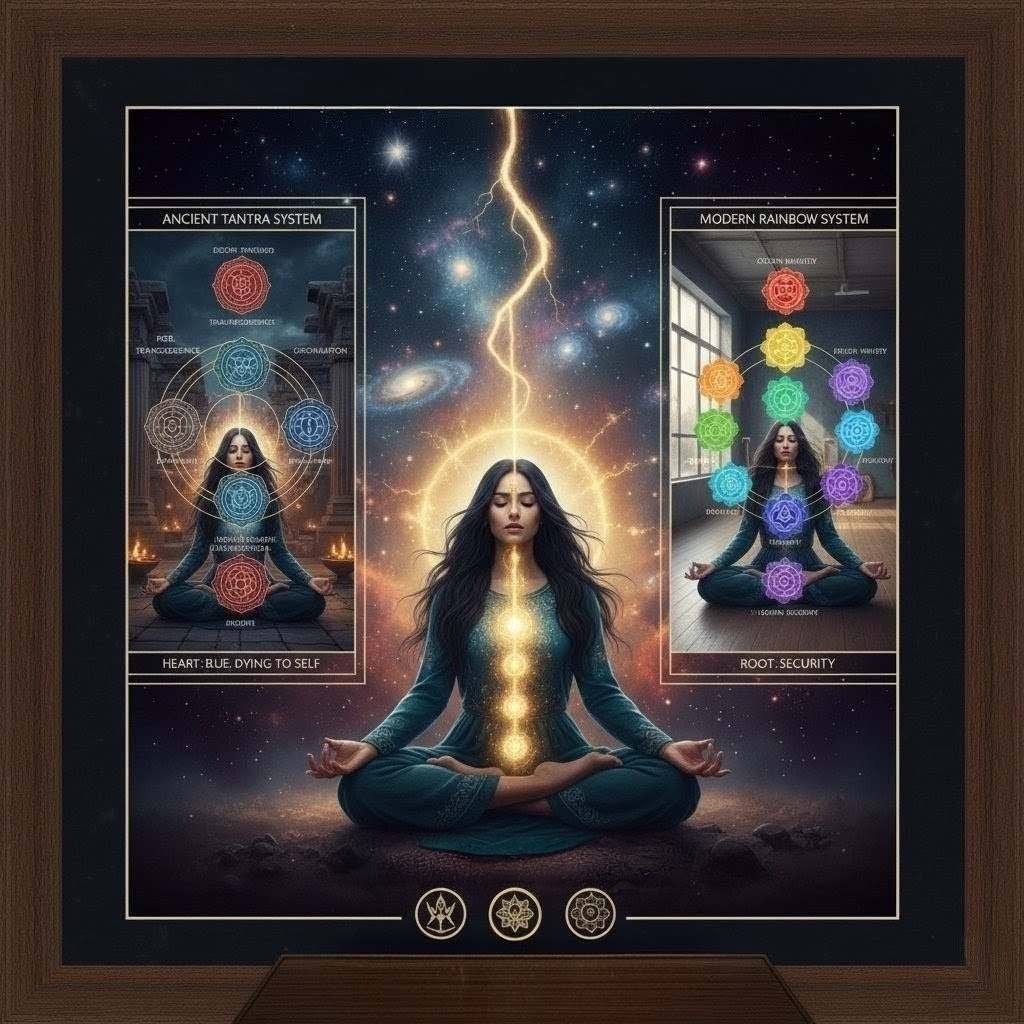
The Avalon Translation and the Theosophical Lens
In 1919, Arthur Avalon (Sir John Woodroffe, 1865–1936), a British High Court judge in Calcutta, published The Serpent Power–a translation of the Shat-Chakra-Nirupana and Paduka-Panchaka with extensive commentary [^96^]. The work was groundbreaking: it made Tantric subtle-body anatomy accessible to English readers for the first time, complete with illustrated plates of the lotuses. But accessibility came at a cost. Avalon interpreted the texts through a Theosophical framework that emphasised spiritual evolution, universal religion, and the harmonisation of science with mysticism–concepts foreign to the original Sanskrit sources.
The Theosophical Society, founded by Helena Blavatsky and Henry Steel Olcott in 1875, had already established a template for reading Eastern traditions through Western esoteric lenses. Avalon’s translation, though scholarly, stabilised the idea that there “should” be seven principal chakras in a vertical sequence–even though classical Indian lists vary considerably [^99^]. The Shat-Chakra-Nirupana itself describes six; the Sahasrara is the transcendent destination. Yet Avalon’s plates, commentary, and systematic presentation created a visual and conceptual standard that later teachers treated as ancient fact.
The fixing of the fluid was complete. What had been a plurality of maps–six chakras here, five there, four in another tradition–became a single blueprint. The modern yoga student who speaks of “the seven chakras” is not repeating ancient wisdom but echoing a 20th-century editorial decision.
The Rainbow Imposition: How Colour Was Assigned
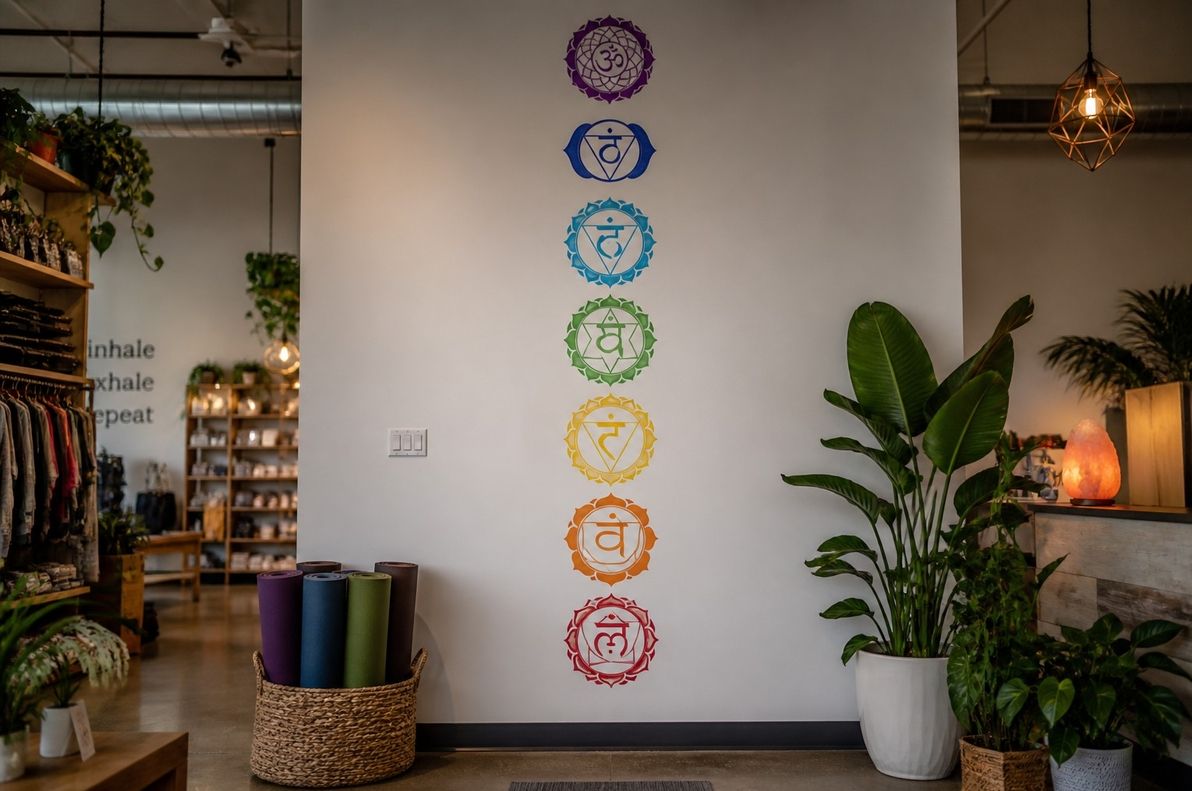
The colours, ancient, are not a rainbow spectrum. The modern ROYGBIV assignment derives from Western colour theory, specifically Isaac Newton’s optical spectrum, imposed on Indian subtle anatomy through Theosophical syncretism and later New Age popularisation [^97^].
Leadbeater’s Clairvoyant Colours
The decisive step occurred in 1927, when Charles W. Leadbeater–a prominent Theosophist and clairvoyant–published The Chakras. Leadbeater claimed to perceive each chakra as a swirling vortex of specific hue, and he assigned colours based on his psychic observations combined with Theosophical colour symbolism [^99^]. His system differed from both ancient Sanskrit descriptions and later New Age versions, but it established the principle that chakras have fixed colours. This principle, once established, invited endless revision.
Newton’s Spectrum Meets Eastern Anatomy
The alignment of chakras with the Newtonian rainbow–red at the root, violet at the crown–gained traction in the 1970s and 1980s through the New Age movement [^97^]. This alignment is not found in any Sanskrit text. The ancient descriptions use a palette of gold, crimson, smoke, moon-white, and lightning-flash–colours tied to deities, elements, and alchemical processes, not to optical physics. The rainbow system is elegant, memorable, and pedagogically useful, but it is no more ancient than the pocket calculator.
Ancient Descriptions vs Modern Assignments
The Shat-Chakra-Nirupana describes each lotus through its petals, letters, deities, and internal elements rather than uniform colour coding. The Muladhara has crimson petals and a golden central region. The Anahata contains a smoky hexagonal area and a deity the colour of lightning. The Vishuddha is smoky purple. The Ajna is white. The Sahasrara is whiter than the full moon, with a hint of the rising sun [^107^]. These are not the clean spectral bands of the wellness poster. They are poetic, dynamic, and symbolically dense–designed for meditation, not interior decoration.
Psychological Map or Liberation Technology?
The seven-chakra rainbow system, though historically inaccurate, is not worthless. It provides an accessible framework for Western practitioners. The psychological associations enable self-work without requiring Tantric initiation. But accessibility has costs. The chakras, psychologised, lose their transformative function. The system, popularised, becomes a wellness product rather than a liberation technology.
The Modern Wellness Framing
Root: Security and stability. The modern practitioner works here to heal childhood wounds, establish boundaries, and feel grounded.
Sacral: Creativity and sexuality. Workshops promise to unlock creative flow and sexual confidence through orange-light visualisation.
Solar Plexus: Personal power and will. Affirmations and core-strengthening poses build self-esteem at this yellow centre.
Heart: Love and compassion. Green-light meditation opens the capacity for empathy and relational healing.
Throat: Communication. Blue-energy work aims to remove blocks to authentic self-expression.
Brow: Intuition. Indigo visualisation supposedly develops psychic perception and inner vision.
Crown: Spirituality. Violet or white light connects the practitioner to higher consciousness or the divine.
The Ancient Esoteric Function
Muladhara: Transcendence of animal nature through Kundalini awakening. The serpent sleeps here; the yogi must rouse her without dissipating the vital bindu.
Svadhishthana: Control of vital fluids and the alchemical transformation of sexual essence into somatic nectar.
Manipura: Transformation of the five elements within the body–the reduction of gross matter to subtle fire.
Anahata: Dying to the self–the dissolution of egoic identity through piercing the heart lotus.
Vishuddha: Purity of subtle sound (nada) and the attainment of mantra siddhi–power over speech as creative vibration.
Ajna: Command over thought and the unification of ida and pingala in the central channel.
Sahasrara: Dissolution into the void–not higher spirituality but the extinction of the practitioner as separate entity.
The distinction is stark. Modern chakra work asks: “How can I feel better?” Ancient chakra work asked: “How can I cease to be the one who feels?” The first is therapeutic; the second is soteriological. Both have value, but conflating them produces confusion–and a spiritual marketplace that sells liberation in monthly instalments.
Working with Awareness
The contemporary practitioner need not reject the modern chakra system. The system, used with awareness of its origins, remains functional. But awareness matters. The recognition that one is using a modern synthesis, not ancient tradition, enables appropriate evaluation. When you visualise a green heart chakra, you are not accessing a 1,000-year-old technology; you are using a 20th-century pedagogical tool. The tool may work–but the practitioner should know what the tool is.
The thread extends through accurate transmission. Accuracy, maintained, enables genuine extension. If you work with chakras, let the recognition of origins–Tantric, diverse, transformed through Theosophy–clarify what you do. The modern map is not the territory, but it can be a useful guide if you remember that the cartographer was a British judge writing in 1919, and the colours were added by a Theosophical clairvoyant eight years later.
The path continues. The thread persists. The lotus, however many petals it has, still opens toward the same sun.
Frequently Asked Questions
Are the seven chakras actually ancient?
No. The specific system of seven rainbow-coloured chakras aligned along the spine is a modern synthesis developed in the early 20th century. Arthur Avalon’s 1919 translation ‘The Serpent Power’ stabilised the seven-centre model, and Charles Leadbeater’s 1927 book ‘The Chakras’ assigned the colour scheme. Ancient Tantric texts describe varying numbers of chakras–four, five, six, or more–with diverse functions and locations.
Who created the modern chakra system?
The modern seven-chakra system emerged from multiple sources. Arthur Avalon (Sir John Woodroffe) introduced the Sanskrit textual basis to the West through ‘The Serpent Power’ (1919). The Theosophical Society, particularly Charles Leadbeater in ‘The Chakras’ (1927), added the colour associations and clairvoyant descriptions. The New Age movement of the 1970s and 1980s then aligned these with Newton’s optical spectrum and modern psychology.
What do ancient texts actually say about chakra colours?
Ancient Sanskrit texts like the Shat-Chakra-Nirupana do not describe a rainbow spectrum. They use poetic colour descriptions tied to deities and elements: crimson petals at the root, golden regions, smoky grey at the throat, white at the brow, and a thousand-sun radiance at the crown. The clean ROYGBIV assignment is a Western imposition with no basis in classical Indian sources.
How many chakras did ancient traditions recognise?
The number varied by tradition. The Shat-Chakra-Nirupana describes six primary centres plus the Sahasrara crown. The Gorakshashataka describes six adharas. The Kubjikamata Tantra presents five chakras in some recensions. The Buddhist Hevajra Tantra uses four. There was no universal ancient standard of seven.
Is the modern chakra system useful despite being historically inaccurate?
Yes. The modern system provides an accessible framework for self-work, meditation, and energy awareness. The psychological associations can facilitate genuine insight and healing. The issue is not utility but misattribution: presenting a 20th-century synthesis as millennia-old tradition distorts expectations and obscures the original transformative function of the chakras as liberation technology.
What was the original purpose of the chakras in Tantra?
In classical Tantra, chakras were loci of subtle energy, centres of transformation, and doorways to cosmological realms. They were not psychological organs but stations in a process of alchemical and yogic ascent. The goal was not self-improvement but liberation (moksha)–the piercing of each centre by Kundalini Shakti until the practitioner dissolved into the non-dual void of the Sahasrara.
Can I use the modern chakra system while honouring its origins?
Absolutely. The key is awareness. Use the modern map as a tool, but recognise it as a modern synthesis. Study the ancient sources to understand the original context. Approach the chakras as a living tradition rather than a fixed dogma. The thread continues through honest transmission–not by pretending the map is older than it is, but by using it with full knowledge of its cartography.
Further Reading
These links connect the chakra system’s history to related resources within the ZenithEye library, offering context on sacred architecture, comparative cosmology, contemplative practice, and the broader landscape of esoteric transmission.
- The Sevenfold Pattern: Planets, Metals, Chakras & The Architecture of Seven — The chakra system in comparative context, tracing the number seven across alchemy, astrology, and sacred geometry.
- The Hidden Agreements: Why Esoteric Traditions Keep Inventing the Same Architecture — Why the number seven appears universally and what it reveals about the architecture of consciousness.
- Kundalini Phenomena: The Physiology of Awakening Energy — What happens when the chakra system is activated through Kundalini arousal, from ancient description to contemporary report.
- Deciphering the Esoteric Meaning: A Complete Guide — How hidden wisdom is transmitted, transformed, and sometimes mistranslated across cultures and centuries.
- Creating a Personal Practice: Combining the Five Gateways — The chakra system as map, not territory, integrated into a contemporary contemplative framework.
- Sacred Geometry: The Architecture of Creation — The geometric principles underlying chakra mandalas, yantras, and the sacred architecture of subtle body mapping.
- The Tree of Life: Kabbalistic Architecture Explained — A parallel system of subtle energy centres from the Jewish mystical tradition, offering comparative perspective.
- Contemplative Techniques: The Thread’s Practical Foundation — Methods from the world’s mystical traditions for training the attention that chakra practice requires.
- How Scripture Became Scripture: The Politics of Canon — How sacred texts are selected, translated, and fixed–paralleling the stabilisation of the chakra system.
- The Thread: Five Gateways to Direct Knowing — The complete map of ZenithEye’s pillars, from historical survival of Gnosis to contemplative practice.
References and Sources
The following sources support the historical and textual claims presented in this article. Primary Sanskrit sources are cited by title and approximate date; modern scholarship follows standard conventions.
Primary Texts and Critical Editions
- Avalon, Arthur [Sir John Woodroffe]. (1919). The Serpent Power: Being the Shat-Chakra-Nirupana and Paduka-Panchaka. Ganesh & Co., Madras.
- Leadbeater, C. W. (1927). The Chakras. Theosophical Publishing House, Adyar.
- Purnananda. (16th c.). Shat-Chakra-Nirupana. In Avalon, Arthur (Trans.), The Serpent Power.
- Gorakshashataka. (10th–12th c.). In Mallik, K. (Ed.), The Siddha Siddhanta Paddhati and Other Works of Nath Yogis. Poona: Oriental Book House.
Scholarly Monographs and Commentaries
- Brooks, D. R. (1990). The Secret of the Three Cities: An Introduction to Hindu Sakta Tantrism. University of Chicago Press.
- White, D. G. (2003). Kiss of the Yogini: Tantric Sex in its South Asian Contexts. University of Chicago Press.
- Wallis, C. D. (2013). Tantra Illuminated: The Philosophy, History, and Practice of a Timeless Tradition. Anusara Press.
- Samuel, G. (2008). The Origins of Yoga and Tantra: Indic Religions to the Thirteenth Century. Cambridge University Press.
Comparative Studies and Thematic Analyses
- Singleton, M. (2010). Yoga Body: The Origins of Modern Posture Practice. Oxford University Press.
- Jain, A. (2015). Selling Yoga: From Counterculture to Pop Culture. Oxford University Press.
- Godwin, J. (1994). The Theosophical Enlightenment. State University of New York Press.