Codex XI: Valentinian Technical Texts and Allogenes
The Nag Hammadi Library preserves thirteen papyrus codices, yet one stands apart as the most intellectually demanding archive in the collection. Codex XI contains four texts representing the most advanced theological and mystical speculation in the library: a Valentinian reflection on sacramental knowledge, a technical exposition of Valentinian aeonology, a Platonizing Sethian treatise on apophatic ascent, and the fragmentary remains of a feminine revelatory discourse [1].
Where Codex I presents Valentinian theology in its most accessible form and Codex VIII narrates the dramatic ascent of Zostrianos, Codex XI operates as the restricted-access annex–the filing cabinet requiring the highest security clearance. It is not a codex for newcomers. The texts here assume familiarity with Platonic metaphysics, Valentinian sacramental terminology, and Sethian cosmological architecture. Yet for readers with adequate preparation, Codex XI preserves perspectives found nowhere else: the temple-mystical soteriology of the Interpretation of Knowledge, the systematic aeonology of the Valentinian Exposition, the radical negative theology of Allogenes, and the haunting fragments of Hypsiphrone [2].
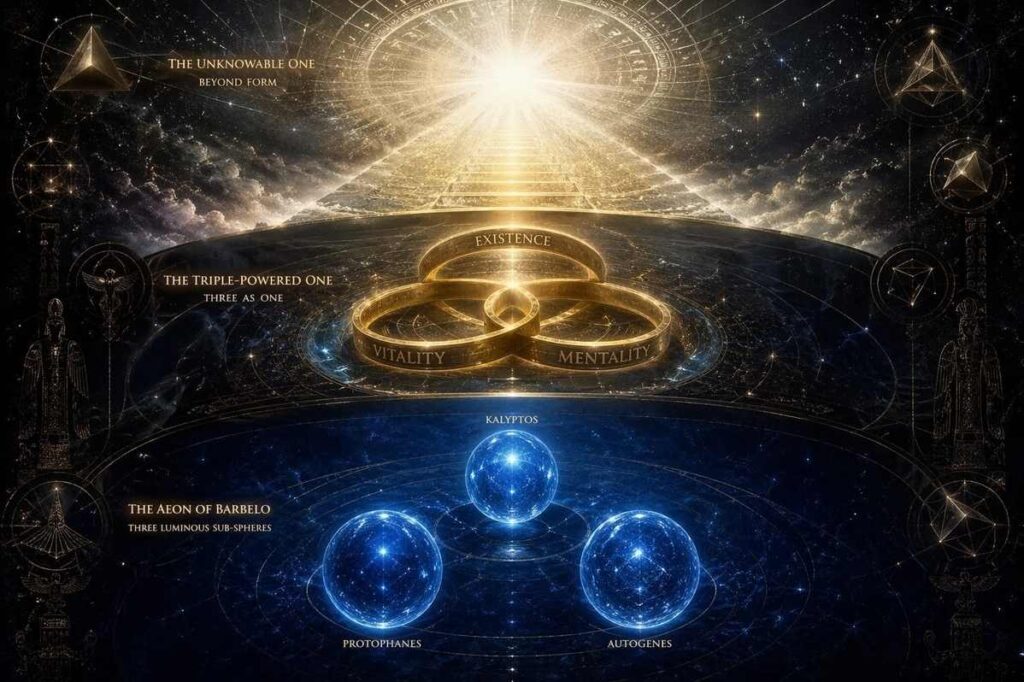
Table of Contents
- What is Codex XI?
- Manuscript Context
- The Tractates of Codex XI
- 1. Interpretation of Knowledge
- 2. Valentinian Exposition
- 3. Allogenes
- 4. Hypsiphrone
- Reading Order for Codex XI
- Why Codex XI Matters
- Comparative Context: The Platonizing Trilogy
- Frequently Asked Questions
- Further Reading
- References and Sources
What is Codex XI?
Codex XI (Nag Hammadi Codex XI) contains four tractates representing the most advanced theological and mystical material in the library: Interpretation of Knowledge (NHC XI,1), a Valentinian reflection on sacramental practice and ecclesial unity; Valentinian Exposition (NHC XI,2), a technical treatise on aeonology and cosmology; Allogenes (NHC XI,3), a Platonizing Sethian ascent text mapping the journey to the Unknowable One; and Hypsiphrone (NHC XI,4), fragmentary remains of a feminine revelatory discourse. Discovered in 1945 near Nag Hammadi, Egypt, this codex demands preparation in Platonic philosophy, Valentinian theology, and Sethian cosmology [1][3].
Manuscript Context
Discovery and Physical State
Codex XI was discovered in December 1945 by Muhammad Ali al-Samman and his brothers, buried alongside the other twelve codices in a sealed jar near the Jabal al-Tarif cliff [4]. The codex is relatively well preserved compared to Codex XII, though lacunae appear throughout all four tractates, particularly in Hypsiphrone where the text breaks off almost entirely after four pages [5].
The codex contains 66 pages of papyrus, copied in Sahidic Coptic dialect by a single scribal hand in the mid-fourth century CE. The physical arrangement is significant: the codex opens with Valentinian material (Interpretation of Knowledge and Valentinian Exposition) before transitioning to Sethian ascent literature (Allogenes) and concluding with the fragmentary feminine text (Hypsiphrone). Whether this sequence reflects deliberate theological progression–from sacramental practice through systematic theology to mystical ascent–or merely practical scribal convenience remains debated [3].
A Codex of Two Traditions
Uniquely among Nag Hammadi codices, Codex XI combines Valentinian and Sethian material in a single volume. The first two tractates are unmistakably Valentinian, engaging with sacramental theology, ecclesiology, and aeonology. The third is Sethian–specifically Platonizing Sethian–drawing on Middle Platonic metaphysics to construct a technical map of ascent. The fourth resists easy categorisation due to its fragmentary state [6].
This dual tradition raises important questions about ancient reading communities. Did Valentinian and Sethian groups share libraries? Did individual readers move between traditions? Or did a single compiler possess broad theological interests, gathering advanced texts regardless of sectarian origin? The presence of both traditions in one codex suggests a fluidity that modern scholarly categories sometimes obscure [2].
The Tractates of Codex XI
1. Interpretation of Knowledge (NHC XI,1)
The Interpretation of Knowledge is a Valentinian reflection on the nature of knowledge (gnosis) and its relationship to sacramental practice, addressed to a Christian congregation apparently consisting of both Valentinians and non-Valentinians. The text appeals for unity in the face of divisions caused by jealousy over superior spiritual gifts–a rare glimpse into the social dynamics of Gnostic communities [7].
“The interpretation of knowledge is the confession of the father, the son, and the holy spirit.” The text discusses baptism, the eucharist, and the bridal chamber as means of receiving and expressing divine knowledge. But it is not merely a liturgical manual; it is a complex theological meditation on how the crucified Christ functions as the veil of the heavenly temple, through whom the soul enters the holy of holies [8].
Primary Source Citation: NHC XI,1 10:24-27 — “Receive the form of this shape that exists before the Father, the Logos, and the height; this let you know him before you were led astray while in the flesh of condemnation.” (Translation: Thomassen 2010)
Temple Mysticism and the Christological Veil
Recent scholarship has illuminated the text’s sophisticated temple mysticism. The crucified Saviour presents his “shape” (schema)–the form the soul possessed primordially before being imprisoned in flesh by the beastly archons. By entering through the “rib” of the crucified Christ (evoking both Eve’s creation from Adam’s side and the Johannine spear-wound), the soul hides from its adversaries and gains access to the heavenly ascent [8].
This soteriology connects directly to the bridal chamber (nymphion) theology of the Gospel of Philip. Where Philip describes the bridal chamber as the “holy of holies” opened by the rending of the temple veil, the Interpretation of Knowledge presents Christ’s crucified body as that veil–the membrane between material and spiritual, torn to allow passage. The soul enters through the wound, is reborn “in the flesh and blood of the Saviour,” and is thereby prepared for pneumatic ascent [9].
Ecclesial Conflict and Spiritual Gifts
The text’s framing is remarkable for its honesty about internal conflict. The congregation is divided; some members resent others’ superior spiritual gifts. The author–possibly a Valentinian teacher addressing a mixed community–urges humility and mutual recognition. “Do not esteem the flesh, but rather reject it as loss and punishment. Receive the teaching of the crucified Saviour, since this is profit for the soul” [7].
This practical dimension distinguishes the Interpretation of Knowledge from more abstract Valentinian treatises. It reveals not just theological speculation but the lived challenge of maintaining esoteric community–the jealousy, the hierarchy of gifts, the need for humility before mystery. The celestial administration, it seems, was not immune to personnel disputes [2].
2. Valentinian Exposition (NHC XI,2)
The Valentinian Exposition is a collection of technical theological discussions on Valentinian themes–cosmology, anthropology, soteriology, and ethics. “The exposition of the Valentinians concerning the nature of the aeons.” The text assumes familiarity with Valentinian terminology and concepts, making it inaccessible to newcomers but indispensable for specialists [10].
The Exposition reveals the sophistication of Valentinian theology–not the popular caricature of Gnosticism as world-hating dualism, but a nuanced reflection on the relationship between spirit and matter, divine transcendence and immanence, fall and restoration. “The father is the source of all things, the unbegotten, the incomprehensible.” The negative theology here is extreme, approaching the apophatic language of later Christian mysticism [11].
Primary Source Citation: NHC XI,2 — “The 30 Aeons remain in silence and ineffable grace… until the desire of Sophia creates the shadow-noise.” (Translation: Thomassen 2006)
The Aeonology of the Pleroma
Central to the Exposition is its detailed mapping of the Valentinian pleroma–the fullness of divine aeons emanating from the Father. The standard Valentinian system posits thirty aeons arranged in pairs (syzygies), with Sophia as the thirtieth and outermost. Her “passion” or “desire” creates a disturbance that generates the Horos (Limit)–the boundary protecting the Pleroma from dissipation into chaos [12].
The text describes how Christ and the Holy Spirit are produced “out of band” to restore the aeons to their original frequency. This is the Restoration Protocol–the correction of Sophia’s deficiency without compromising the integrity of the divine system. The technical precision of this account demonstrates that Valentinian theologians were not merely mythologians but systematic thinkers engaging with the philosophical problem of how a perfect divine system could produce imperfection [10].
Negative Theology and the Incomprehensible Father
The Exposition pushes divine transcendence to its limit. The Father is not merely hidden or distant but absolutely incomprehensible–beyond all predication, beyond Being and Non-Being. This apophatic trajectory anticipates the more developed negative theology of Allogenes and would influence later Christian mystics from Pseudo-Dionysius to Meister Eckhart [11].
For understanding Valentinian systematic theology at its most technical, the Exposition is essential. It provides the architectural blueprint behind the poetic visions of the Gospel of Truth and the sacramental practices of the Gospel of Philip. Without it, the Valentinian tradition appears more fragmentary than it actually was [2].

3. Allogenes (NHC XI,3)
Allogenes–“the stranger” or “alien”–is one of the most technically demanding texts in the Nag Hammadi Library, and one of the most rewarding for those willing to engage its complexity. Framed as a revelation from the angel Youel to Allogenes, who then transmits it to his son Messos, the text presents a detailed map of the journey from material embodiment to transcendent knowledge [13].
Unlike the more narrative ascent texts, Allogenes is systematic, technical, and deliberately obscure–designed for advanced practitioners already familiar with Sethian cosmology. It belongs to the elite tier of Platonizing Sethian literature, alongside Zostrianos and Marsanes, forming a trilogy of highly technical ascent treatises that engage contemporary philosophy while maintaining distinctively Sethian theological commitments [14].
Primary Source Citation: NHC XI,3 60:9-12 — “Do not know him, for it is impossible; but if by means of an enlightened thought you should know him, stay incognizant of him!” (Translation: Turner 1990)
The Three-Tiered Ontology
Allogenes presents a meticulously organised three-tiered ontology. At the summit stands the Invisible Spirit–the Unknowable One, the source beyond all predication. This is the absolute transcendent, “not an Existence lest he be in want,” “not revealed so as to be seen,” and “not comprehensible so as to be known” [15].
Between the absolute transcendent and the knowable realm stands the Triple-Powered One–the highest knowable reality, existing in three modalities: Existence (Being, hyparxis), Vitality (Life, zote), and Mentality (Blessedness, nous). These are not separate entities but three aspects of a single administrative function, “the traverser of the boundlessness of the Invisible Spirit” [16].
The third tier is the Aeon of Barbelo–the divine pleroma proper, containing three sub-levels: Kalyptos (the hidden), Protophanes (the first-manifest), and Autogenes (the self-generated). Barbelo herself–the androgynous First Thought of the Invisible Spirit–serves as the gateway to the upper administration [13].
The Method of Negative Theology
The central teaching of Allogenes concerns the deliberate limitation of knowledge. Where ordinary religious texts promise comprehensive understanding, Allogenes insists that the highest reality can only be approached through the systematic dismantling of cognitive claims. “Do not seek to know him, for that is impossible. But if you seek not to know him, you will know him” [15].
This paradoxical instruction captures the text’s apophatic method. The divine is known precisely in the recognition that it cannot be known, approached in the admission of its absolute transcendence. The text describes Allogenes’ own experience: “I was in great rest, and I ceased from the sense-perceptible world, and I heard a voice saying, ‘Cease from all things, and seek not to know him.'” The cessation of ordinary consciousness is the prerequisite for transcendent knowledge [13].
Allogenes and the Plotinian Circle
Allogenes occupies a crucial position in the history of ancient thought. Porphyry records that Plotinus’s Gnostic opponents possessed “revelations of Zoroaster and Zostrianos and Nicotheos and Allogenes”–a direct attestation that this text circulated among the philosophers of Plotinus’s circle in third-century Rome [14].
The philosophical sophistication of Allogenes–its triadic metaphysics, its negative theology, its careful distinction between transcendent and immanent–demonstrates that Sethian Gnosticism was not merely a parasitic adaptation of Platonic thought but an independent philosophical tradition capable of contributing to the metaphysical debates of late antiquity. The Existence-Vitality-Mentality triad appears in Allogenes before its systematic development in Plotinus and Proclus, suggesting that what scholars once considered purely Neoplatonic innovations may have emerged from the crucible of Platonic-Sethian dialogue [16].
4. Hypsiphrone (NHC XI,4)
The final tractate of Codex XI preserves fragments of a text about Hypsiphrone–“she of high mind” or “she who thinks on high things”–a feminine revealer figure. The text is too fragmentary to reconstruct with confidence, but what survives suggests another example of Gnostic feminine theology, parallel to Thunder: Perfect Mind, Trimorphic Protennoia, and the Sophia texts [17].
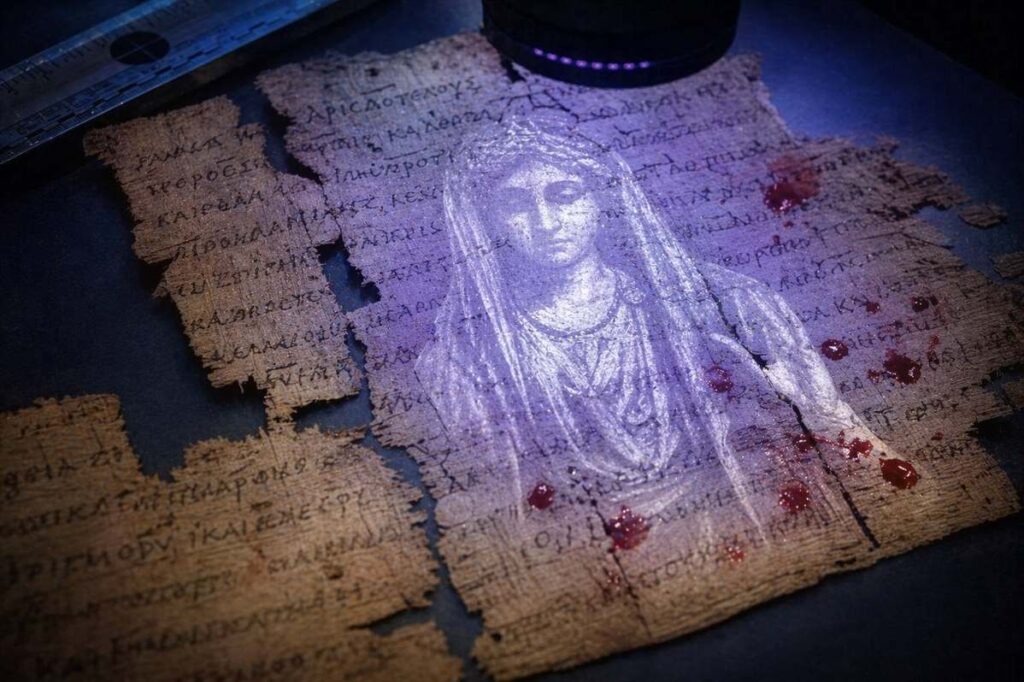
The incipit reads: “The book [concerning the things] that were seen [by] Hypsiphrone [revealed] in the place of [her] virginity.” The narrative centres on dialogues between Hypsiphrone and Phainops (the “bright-eyed one”), exploring mystical visions involving a “fount of blood” and themes of revelation, purity, and divine encounter [18].
Primary Source Citation: NHC XI,4 69:21-25 — “[The book concerning the things that were seen by] Hypsiphrone [revealed] in the place of [her] virginity.” (Translation: Emmel 1990)
The Feminine Revealer in Fragment
The blood imagery in Hypsiphrone’s vision–the “fount of blood”–may draw on Egyptian and biblical motifs, from Levitical purification to the Johannine flow of blood and water from Christ’s side. But the fragmentary state makes interpretation speculative. What is clear is that Hypsiphrone, like Protennoia and the Thunder speaker, delivers revelation from a position of divine authority, speaking from the “place of her virginity”–a primordial state of purity prior to material entanglement [18].
For specialists, Hypsiphrone represents a tantalising hint of theological diversity now largely lost. For general readers, it serves as a reminder that the Nag Hammadi Library preserves only a portion of what once existed–that other feminine divine texts may have circulated, their voices now reduced to barely legible fragments on damaged papyrus [2].
Reading Order for Codex XI
For newcomers: Skip this codex initially. Return only after mastering more accessible texts such as the Gospel of Truth, Gospel of Philip, and Apocryphon of John. Codex XI assumes background knowledge that newcomers cannot be expected to possess.
For advanced study: Read Allogenes first (most complete, most significant, most philosophically rewarding), then Interpretation of Knowledge (for sacramental theology and temple mysticism), then Valentinian Exposition (for systematic aeonology). Hypsiphrone is for specialists and comparativists only [1].
For comparative study: Read Allogenes alongside Zostrianos and Marsanes to understand the range of Platonizing Sethian ascent literature. Compare the Interpretation of Knowledge with the Gospel of Philip to trace the development of Valentinian bridal chamber theology. Examine Hypsiphrone alongside Thunder: Perfect Mind and Trimorphic Protennoia to map the diversity of feminine divine discourse [14].
Why Codex XI Matters
The Full Sophistication of Gnostic Thought
This codex preserves the most advanced theological and mystical material in the library–texts that reveal the full sophistication of Gnostic thought. The Valentinian Exposition shows systematic theology at work; Allogenes shows mystical ascent in its most technical form. Together they demonstrate that Gnosticism was not merely mythological speculation or anti-cosmic rebellion but a serious intellectual tradition engaging with the best philosophy of its era [2].
Evidence of Philosophical Engagement
The Platonizing Sethianism of Allogenes reveals engagement with contemporary philosophy at the highest level. The text’s triadic metaphysics, negative theology, and technical vocabulary demonstrate authors fully conversant with Middle Platonism–not borrowing superficially but transforming Platonic concepts for their own soteriological framework. The presence of Allogenes in Plotinus’s circle confirms that these texts participated actively in the philosophical debates of third-century Rome [14].
Valentinianism as Systematic Theology
The first two tractates correct the misconception that Valentinianism was merely poetic or sacramental. The Interpretation of Knowledge reveals sophisticated Christology–the crucified body as temple veil, the soul’s entry through the wound, the restoration of the primal androgyne. The Valentinian Exposition reveals precise aeonology–the thirty aeons, the Horos boundary, the restoration protocol. Together they show Valentinianism as a comprehensive theological system with philosophical depth and ritual precision [10].

Comparative Context: The Platonizing Sethian Trilogy
Allogenes belongs to a small but significant group: the Platonizing Sethian treatises. Alongside Zostrianos (NHC VIII,1) and Marsanes (NHC X,1), it forms a trilogy of highly technical ascent literature that engages Middle Platonic metaphysics while maintaining Sethian theological commitments [14].
All three texts share distinctive features: a three-tiered ontology (material, psychic, spiritual), a triadic divine structure (Kalyptos, Protophanes, Autogenes within the Barbelo Aeon), negative theology derived from Platonic sources, and detailed ascent protocols. All three employ technical philosophical vocabulary–hyparxis, zote, nous–that signals their authors’ participation in the philosophical schools of their era [16].
Yet each has its own character. Zostrianos is the most narratively elaborate, describing thirteen aeons with multiple baptisms. Marsanes is the most fragmentary and metaphysically abstract, mapping the three substances (matter, soul, spirit). Allogenes is the most philosophically precise, with its detailed analysis of the Triple-Powered One and its radical apophaticism. Together they demonstrate the range of Platonizing Sethianism–not a single system but a family of approaches united by shared philosophical vocabulary and theological concerns [13].
When read alongside the Three Steles of Seth (NHC VII,5)–which shares the Barbeloite theology and employs similar doxological formulae–the Platonizing trilogy reveals the liturgical and communal dimensions of this tradition. These were not merely philosophical speculations but ritual texts, designed to be performed, contemplated, and enacted by communities of practitioners [14].
“Do not know him, for it is impossible; but if by means of an enlightened thought you should know him, stay incognizant of him!”
— Allogenes, NHC XI,3
Frequently Asked Questions
What is Codex XI in the Nag Hammadi Library?
Codex XI contains four advanced tractates: Interpretation of Knowledge (Valentinian sacramental theology), Valentinian Exposition (technical aeonology), Allogenes (Platonizing Sethian ascent text), and Hypsiphrone (fragmentary feminine revealer). It is the most intellectually demanding codex in the library, requiring background in Platonic philosophy and Gnostic cosmology.
What is the Interpretation of Knowledge about?
Interpretation of Knowledge (NHC XI,1) is a Valentinian text addressing a mixed congregation on the relationship between gnosis and sacramental practice. It features sophisticated temple mysticism presenting Christ crucified body as the veil of the heavenly temple through which the soul enters the holy of holies–and appeals for unity amid jealousy over spiritual gifts.
What does the Valentinian Exposition teach?
The Valentinian Exposition (NHC XI,2) is a technical treatise on Valentinian cosmology, detailing the thirty aeons of the Pleroma, the passion of Sophia, the generation of the Horos (Limit), and the restoration protocol through Christ and the Holy Spirit. It reveals Valentinianism as systematic theology rather than mere poetic mysticism.
What is Allogenes and why is it significant?
Allogenes (NHC XI,3) is a Platonizing Sethian text describing the ascent to the Unknowable One through negative theology and the Triple-Powered One (Existence, Vitality, Mentality). It is significant for its philosophical sophistication, its attestation in Plotinus circle, and its anticipation of Neoplatonic metaphysical triads.
What are the three tiers of reality in Allogenes?
Allogenes presents three ontological levels: (1) the Unknowable One (Invisible Spirit, beyond all predication); (2) the Triple-Powered One (the highest knowable reality, comprising Existence, Vitality, and Mentality); and (3) the Aeon of Barbelo (the divine pleroma with its three sub-levels: Kalyptos, Protophanes, and Autogenes).
What is Hypsiphrone and why is it fragmentary?
Hypsiphrone (NHC XI,4) is a fragmentary text about a feminine revealer (she of high mind) and her visions involving a fount of blood. Only four pages survive, making interpretation speculative. It likely belongs to the tradition of feminine divine discourse found in Thunder: Perfect Mind and Trimorphic Protennoia.
Should beginners read Codex XI?
No. Codex XI is recommended only for advanced readers with prior knowledge of Valentinian theology, Sethian cosmology, and Platonic metaphysics. Beginners should start with more accessible texts such as the Gospel of Truth, Gospel of Philip, and Apocryphon of John before attempting these technically demanding treatises.
Further Reading
The following articles from the ZenithEye archive provide additional context for understanding Codex XI within the broader landscape of Gnostic traditions:
- The Nag Hammadi Library: Complete Index — Return to the master guide for all 46 tractates and 13 codices.
- Allogenes: The Sethian Ascent to the Unknowable One — Deep analysis of the Triple-Powered One, negative theology, and the Plotinian connection.
- Codex I: The Jung Codex — Home of the Gospel of Truth and Tripartite Tractate, the accessible Valentinian counterparts to Codex XI’s technical treatises.
- Codex VIII: Zostrianos and Ascent Literature — The narrative complement to Allogenes, offering the most detailed Sethian ascent journey.
- Zostrianos: The Complete Journey Through the Thirteen Aeons — The longest and most narratively elaborate of the Platonizing Sethian trilogy.
- Marsanes: Platonizing Sethian Metaphysics — The third member of the trilogy, mapping the three substances and the path of return.
- Gospel of Truth: The Poetics of Recognition — The beautiful Valentinian meditation that provides accessible entry to the tradition behind Interpretation of Knowledge.
- Sethian and Valentinian: Two Great Streams — Comprehensive guide to distinguishing the two major theological systems represented in Codex XI.
- Codex X: Marsanes — Context for the most philosophically ambitious of the Platonizing Sethian treatises.
- Nag Hammadi Library: Complete Reader’s Guide — Strategic pathways through all 46 tractates for every level of inquiry.
References and Sources
The following sources support the claims and quotations presented in this article. All citations to the Nag Hammadi Library represent direct translations from the Coptic text as established in the standard critical editions.
Primary Sources and Critical Editions
- [1] Robinson, J.M. (Ed.). (1988). The Nag Hammadi Library in English (4th ed.). Brill.
- [2] Turner, J.D. (1990). “Nag Hammadi Codices XI, XII, XIII.” In Nag Hammadi Codices XI, XII, XIII. Brill.
- [3] Emmel, S. (1990). “Nag Hammadi Codices XI, XII, XIII: Introduction.” In Nag Hammadi Codices XI, XII, XIII. Brill.
- [4] Robinson, J.M. (1979). “The Discovery of the Nag Hammadi Codices.” Biblical Archaeologist, 42(4), 206-224.
- [5] Funk, W.P. (2004). L’Allogène (NH XI, 3). Bibliotheque copte de Nag Hammadi, Section “Textes” 30. Presses de l’Universite Laval/Peeters.
Scholarly Monographs and Commentaries
- [6] Thomassen, E. (2006). The Spiritual Seed: The Church of the Valentinians. Brill.
- [7] Thomassen, E. (2010). “The Interpretation of Knowledge.” In Nag Hammadi Codices XI, XII, XIII. Brill.
- [8] Twigg, M. (2013). “The Temple-Mystical Background to a Valentinian Saying of the Saviour: The ‘Interpretation of Knowledge’ (NHC XI, 1) 10.18-38.” Correspondences, 1(1), 35-73.
- [9] Isenberg, W.W. (1979). The Gospel of Philip (NHC II,3). In B. Layton (Ed.), Nag Hammadi Codex II, 2-7. Brill.
- [10] Painchaud, L. (2003). “L’utilisation des paraboles dans l’Interpretation de la gnose (NH XI, 1).” Vigiliae Christianae, 57, 428-435.
Comparative Studies and Thematic Analyses
- [11] Turner, J.D. (2001). Sethian Gnosticism and the Platonic Tradition. Peeters.
- [12] Markschies, C. (2000). Valentinus Gnosticus? Untersuchungen zur valentinianischen Gnosis mit einem Kommentar zu den Fragmenten Valentins. Mohr Siebeck.
- [13] King, K.L. (1995). Revelation of the Unknowable God: With Text, Translation, and Notes to NHC XI,3 Allogenes. Polebridge Press.
- [14] Burns, D.M. (2014). Apocalypse of the Alien God: Platonism and the Exile of Sethian Gnosticism. University of Pennsylvania Press.
- [15] Mazur, Z. (2010). “The Platonizing Sethian Gnostic Background of Plotinus’s Mysticism.” PhD dissertation, University of Chicago.