Nag Hammadi for Theologians: A Doctrine-Focused Reading Path
Nag Hammadi for Theologians: A Doctrine-Focused Path presents a systematic theological approach to the Nag Hammadi Library, organising fifteen essential tractates according to the traditional loci of Christian doctrine: the nature of the Divine, the origin and structure of reality, the constitution of humanity, the person and work of the Saviour, the means of salvation, and the end of all things. For theologians trained in the categories of Nicaea and Chalcedon, these texts offer disorienting yet illuminating perspectives—alternative visions of Christian truth that developed alongside early orthodoxy yet articulated radically different answers to fundamental questions [1][2].
This is not an invitation to uncritical adoption. The theological traditions preserved at Nag Hammadi were rejected by the Great Church for reasons both political and substantive. Yet they remain Christian voices—quoting the Scriptures, invoking Christ, seeking salvation—and as such, they demand serious theological engagement. What happens when we take these texts seriously as Christian theology, reading them not as heresy to be refuted but as coherent religious systems requiring intellectual encounter? The result is a profound challenge to assumed categories, a re-examination of the boundaries of Christian identity, and an expansion of theological imagination [3][4].
Table of Contents
- Theological Provocations from the Desert
- Foundations: The Nature of the Divine
- Cosmology: The Origin and Structure of Reality
- Anthropology: The Nature of Humanity
- Christology: The Person and Work of the Saviour
- Soteriology: The Means of Salvation
- Eschatology: The End of All Things
- Theological Engagement: Method and Caution
- Frequently Asked Questions
- Further Reading
- References and Sources
Theological Provocations from the Desert
The Architecture of This Path
This doctrinal sequence moves through six traditional theological categories, each addressed through primary texts that exemplify the Nag Hammadi perspective. The journey begins with the highest metaphysical questions—What is the nature of the Divine?—and descends through cosmological, anthropological, and christological concerns before ascending again to soteriological and eschatological conclusions. The structure mirrors the ancient pattern of exitus-reditus: the departure of all things from the divine source and their eventual return [5][6].
The six territories: Foundations (Divine hierarchy and transcendence) → Cosmology (Creation and cosmic structure) → Anthropology (Human constitution) → Christology (The Saviour’s person and work) → Soteriology (Salvation as recognition) → Eschatology (Final restoration and ascent). By traversing these categories, the theologian gains a comprehensive map of Gnostic theological architecture [7].
The Nag Hammadi Library presents a fundamental challenge to Christian theology—not as heresy to be refuted, but as alternative visions of Christian truth that demand serious engagement. These texts were not written by outsiders to the Christian tradition but by communities who understood themselves as possessing the deeper, secret teaching of Christ—gnosis—which the orthodox churches had either lost or suppressed. Their theological sophistication, particularly in the Platonizing Sethian texts, demonstrates that Gnosticism was not merely “mythological” primitivism but a tradition capable of sophisticated philosophical construction [8][9].
Foundations: The Nature of the Divine
The theological path begins with the highest metaphysical questions: What is the nature of the ultimate reality? How does the transcendent God relate to the knowable world? The Nag Hammadi texts offer complex hierarchies of divine being that challenge both biblical literalism and later Trinitarian orthodoxy [10].
1. The Apocryphon of John (NHC II,1/III,1/IV,1)
Primary Source Citation: NHC II,1 30:11-15 — “And the Spirit of the Great Light, the Mother, the Pronoia, took the luminous Power out of the First Man who was called Adamas, and she placed it within the chief archon as a consciousness so that he might become dark through that luminous Power and might be bound to the Pleroma.”
The Apocryphon of John provides the foundational text for understanding the Gnostic divine hierarchy. It presents a tripartite divine structure: the transcendent Father/Mother, the First Thought (Barbelo/Pronoia), and the Self-Generated (Autogenes). This is not the simple monotheism of the creeds but a complex emanation theology in which the ultimate God generates through a series of mediating principles [11][12].
The text’s theological innovation lies in its distinction between the transcendent Father—”the One who is, who is the invisible Spirit, who is above all things”—and the lower administrative layers of divinity that govern the cosmos. The Barbelo Aeon functions as the interface between absolute transcendence and the knowable world, a “First Thought” that contains within itself the patterns (eikones) of all subsequent reality. This is sophisticated negative theology: the highest God is not the creator of the material world, nor the God of Israel, but the silent source beyond all predication [12][13].
2. Allogenes (NHC XI,3)
Allogenes represents the most philosophically sophisticated exploration of divine transcendence in the entire library. It distinguishes between the Unknowable One—the absolute beyond all cognitive grasp—and the Triple-Powered One, the highest knowable reality existing in three modalities: Existence, Vitality, and Mentality. This is not mere mysticism but technical metaphysics, engaging the contemporary Platonic discussion of the One and the Many [14][15].
Primary Source Citation: NHC XI,3 47:10-14 — “He exists as an invisible One, unattainable for them all. He contains them all within himself, for they all exist because of him.”
The text’s apophatic method—”Do not know him, for it is impossible; but if by means of an enlightened thought you should know him, stay incognizant of him!”—represents a radical theology of divine hiddenness. The Unknowable One is “not an Existence lest he be in want,” “not revealed so as to be seen,” and “not comprehensible so as to be known.” This is the via negativa pushed to its extreme: the final theological truth is the recognition that no theological concept can capture the divine reality [15][16].
3. Trimorphic Protennoia (NHC XIII,1)
The Trimorphic Protennoia explores the Three Forms of Divine Thought: the Voice of the Father, the Speech of the Mother, and the Word of the Son. This is a theology of progressive divine self-disclosure, in which the transcendent God becomes increasingly accessible through three descending modalities. The text presents Protennoia/Barbelo as the “First Thought” who descends three times to awaken the sleeping spiritual seed [17][18].
The theological significance lies in its auditory metaphors: salvation comes through hearing the call. The Voice explains and nullifies bondage; the Speech initiates the shift of the Ages; the Word reveals the mystery of the Five Seals. This is a theology of revelation as progressive illumination, each descent bringing deeper clarity until the final mystery is disclosed [18][19].
Cosmology: The Origin and Structure of Reality
Gnostic cosmology presents a fundamental theological challenge: the material world is not the good creation of a benevolent deity but the flawed product of a lower administrative power—the Demiurge—who acts in ignorance or malice. This is not mere dualism but a sophisticated theology of cosmic error and correction [20].
4. On the Origin of the World (NHC II,5/XIII,2)
This tractate offers the most detailed account of Gnostic cosmogony, presenting the creation of the material universe as a series of administrative errors and corrections. The Demiurge Yaldabaoth, born from Sophia’s error, creates the material world as a “prison” for the divine spark, yet the higher powers continually intervene to introduce elements of correction [21][22].
Theologically significant is the text’s treatment of Sabaoth, the repentant archon who receives authority and becomes a just ruler. This demonstrates that Gnostic cosmology is not simple demonisation of the lower powers; even the archonic administration contains possibilities of repentance and redemption. The cosmic egg, the creation of Adam as a hollow vessel, and the eschatological conflagration all contribute to a theology of creation as temporary and pedagogical rather than permanent and ultimate [22][23].
5. The Hypostasis of the Archons (NHC II,4)
The Hypostasis of the Archons provides another creation account with distinctive theological features, particularly its emphasis on the Spirit as Eve’s instructor and the detailed account of the Flood as archonic attempt to destroy spiritual knowledge. The text presents the archons as “having acted with arrogance” yet ultimately subject to the higher divine power [24][25].
Theologically, this text develops the concept of the “spiritual Eve” who instructs Adam, contrasting with the “carnal Eve” created by the archons. This is a theology of spiritual pedagogy: the divine sends instructors—Eve, the Spirit, the Saviour—to awaken the sleeping divine spark. The division of humanity into three races (spiritual, psychic, material) reflects a theological anthropology that correlates human types with soteriological destinies [25][26].
6. Zostrianos (NHC VIII,1)
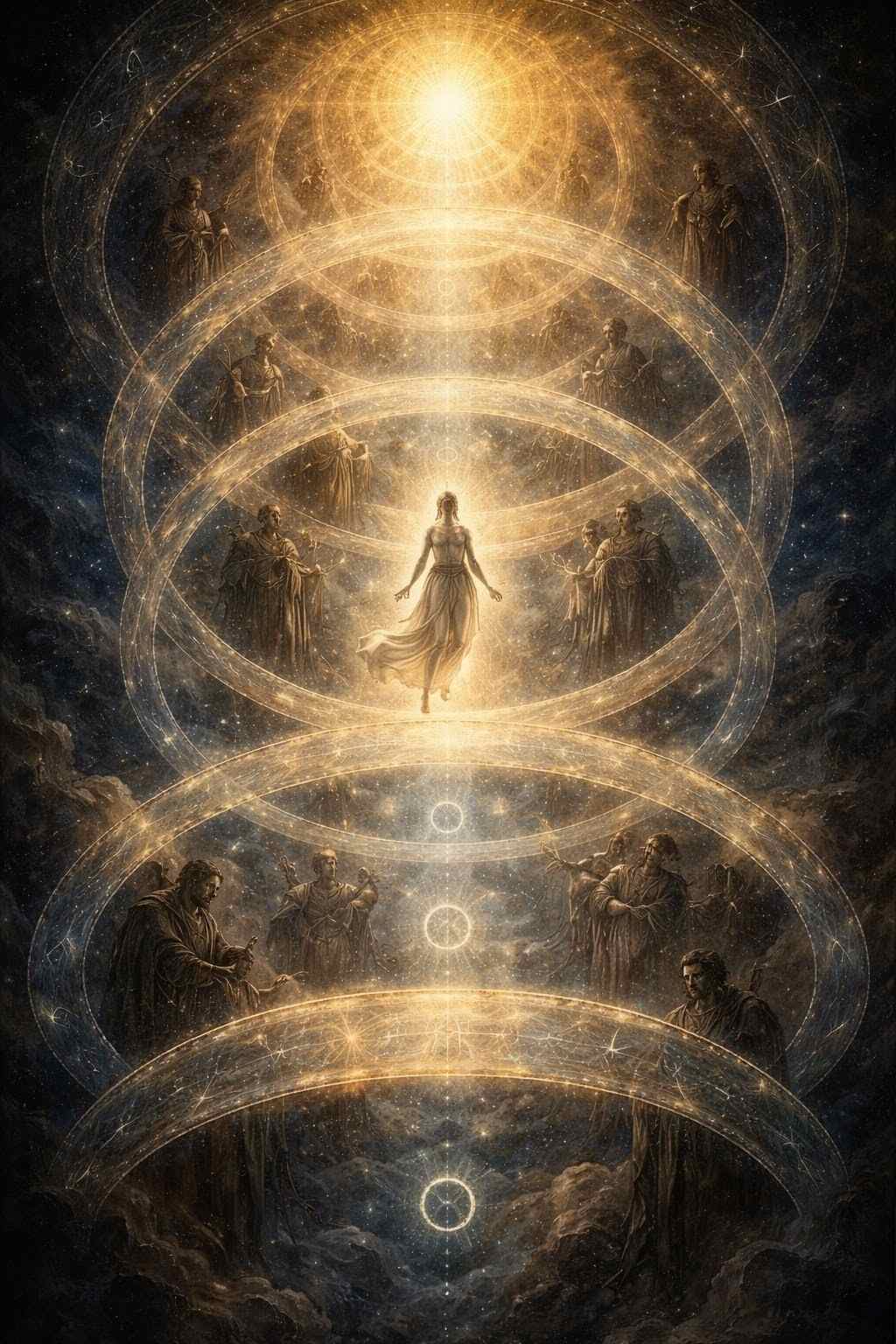
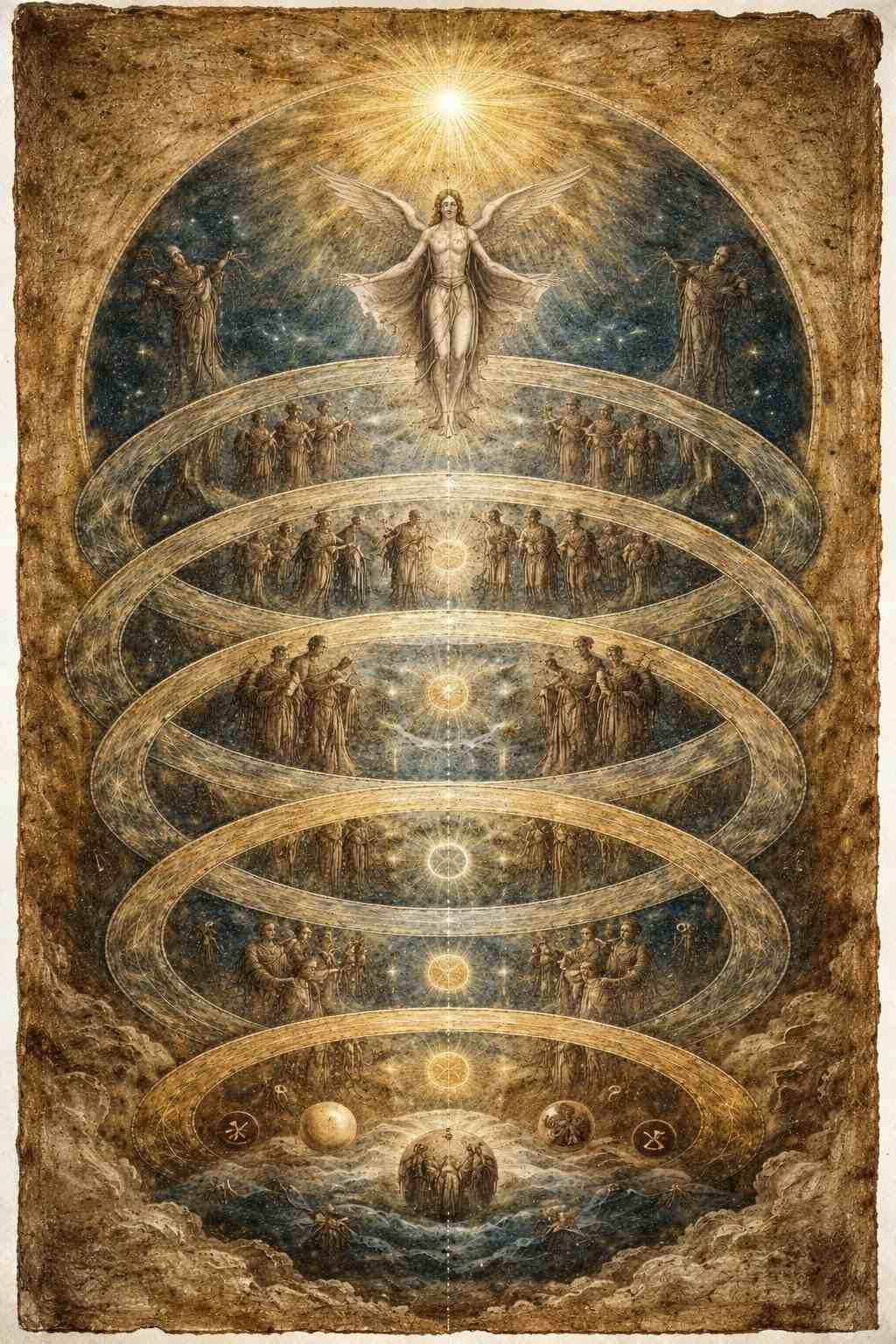
Zostrianos presents the elaborate Sethian cosmology of the thirteen aeons, providing the most comprehensive map of the celestial administration. The text describes the soul’s ascent through thirteen levels of cosmic reality, each with distinct governance protocols, resident powers, and clearance requirements. This is not symbolic geography but systematic celestial topography [27][28].
Theologically, Zostrianos demonstrates the compatibility of Gnostic theology with Platonic philosophy—the thirteen aeons corresponding to Platonic spheres, the baptisms reflecting Platonic purifications. The Triple-Powered One stands at the boundary between the knowable and unknowable, representing the highest administrative level before absolute transcendence. This is theology as cosmic cartography, mapping the journey from material embodiment to divine union [28][29].
Anthropology: The Nature of Humanity
Gnostic anthropology presents a radical theological claim: humanity is not a unified race created by the biblical God but a composite of three distinct natures—spiritual (pneumatic), psychic (psychic), and material (hylic)—each with different origins, capacities, and destinies. This is a theology of essential difference, not universal equality [30].
7. The Gospel of Philip (NHC II,3)
The Gospel of Philip develops the theology of spiritual and material elements in humanity, presenting the body as a “garment” that the spiritual nature wears temporarily. The text’s famous declaration—”The world came about through a mistake”—establishes the fundamental theological premise: material existence is not the intended state but a consequence of cosmic error [31][32].
Theologically significant is the text’s treatment of the nymphon (bridal chamber) as the supreme sacrament. This is not merely marriage theology but a cosmological claim: the restoration of the divided spiritual nature through sacramental union. The text also presents Mary Magdalene as the koinōnos (companion/spouse) of the Saviour, challenging patriarchal ecclesiastical structures with a theology of spiritual partnership [32][33].
8. The Treatise on the Resurrection (NHC I,4)
This text addresses the nature of the spiritual body and the transformation of human nature. Rejecting fleshly resurrection as “disgusting,” it presents resurrection as the transformation of the spiritual nature into its primordial state. This is a theology of ontological change, not bodily revivification [34][35].
The text’s pastoral context—a teacher consoling Rheginos for his son’s death—demonstrates how Gnostic anthropology functions practically. The “resurrection” is an already-accomplished reality for the spiritual nature; the death of the body is merely the stripping off of a garment. This is not denial of death but recontextualisation: death is the return to the true state, not the end of existence [35][36].
Christology: The Person and Work of the Saviour
Nag Hammadi Christology operates on multiple levels simultaneously, presenting a Saviour who is not merely the historical Jesus but a divine aeon descending through cosmic realms. This is not the Incarnation of the Creed but a complex theology of divine accommodation—more radical than orthodox Christology yet not without its own coherence [37].
9. The Apocalypse of Peter (NHC VII,3)
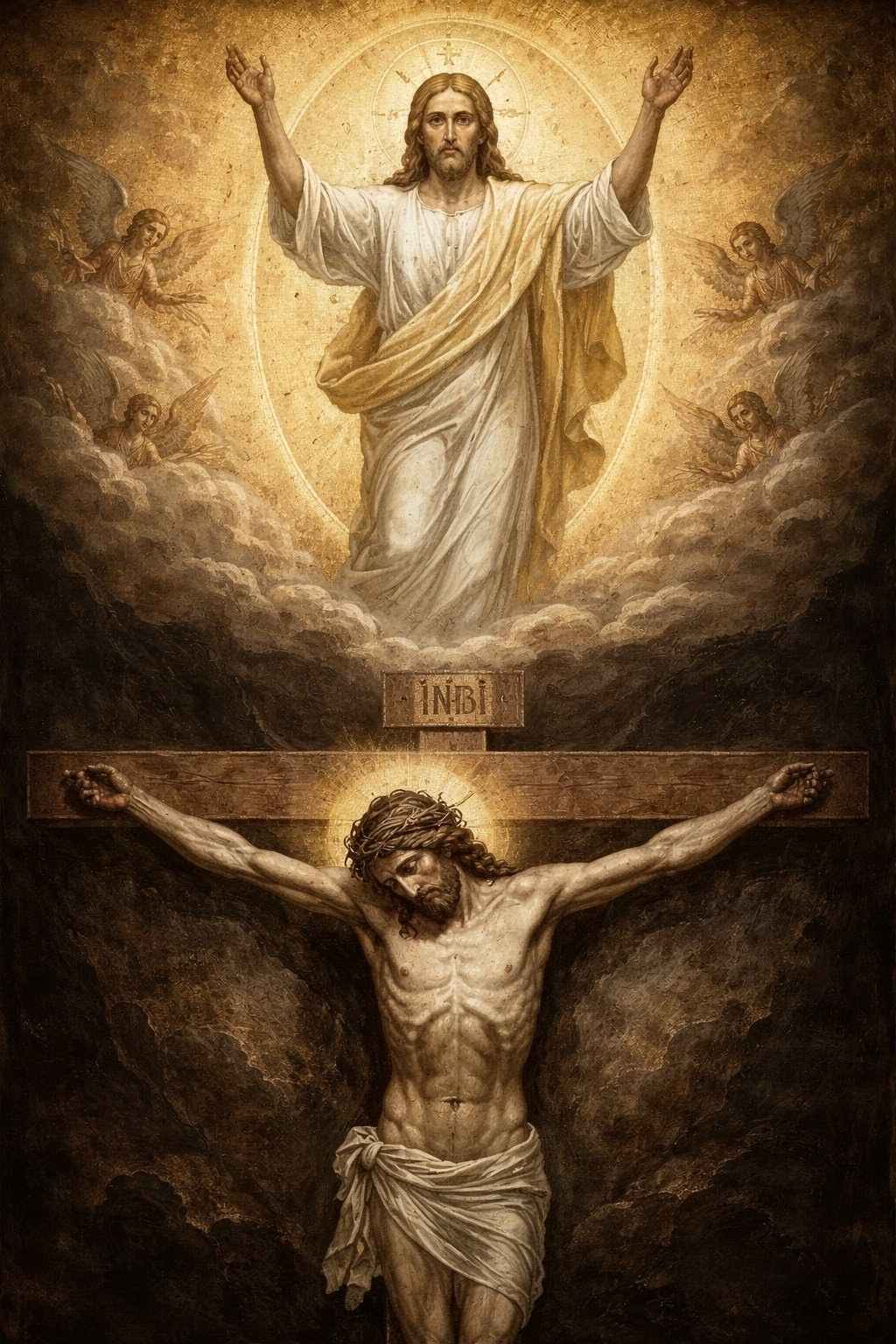
The Apocalypse of Peter presents a docetic Christology in which the divine Saviour does not suffer on the cross but stands apart, laughing at the archons’ ignorance. The text distinguishes between the “living Jesus” who is spiritual and unchangeable, and the “fleshly part” that can suffer. This is a radical separation of the divine Christ from the material Jesus [38][39].
Theologically, this challenges the orthodox doctrine of the communicatio idiomatum—the communication of divine and human properties in the one person. For the Apocalypse of Peter, the divine nature cannot suffer; only the material vessel experiences passion. The laughing Saviour represents the triumph of divine impassibility over archonic violence [39][40].
10. The Second Treatise of the Great Seth (NHC VII,2)
Primary Source Citation: NHC VII,2 56:1-10 — “They saw me and punished me, but someone else, their father, drank the gall and the vinegar; it was not I. They were striking me with a scourge, but someone else, Simon, bore the cross on his shoulder. Someone else wore the crown of thorns.”
This text develops the theology of the laughing Saviour to its extreme, claiming that “it was another… who drank the gall and the vinegar; it was not I.” The theological implication is stark: the divine Saviour does not suffer; the material Jesus is a separate entity, a vessel that can be discarded. The Passion is a “joke” played on the blind archons who mistake the shadow for reality [41][42].
The text’s docetism shifts salvation from atonement through sacrifice to gnosis—the knowledge that reveals the crucifixion’s illusory nature. The Saviour declares, “I did not die in reality but in appearance,” and “I was not afflicted at all.” This is not anti-Christian polemic but an alternative soteriology: liberation comes through recognition of the illusion, not through participation in the suffering [42][43].
11. Melchizedek (NHC IX,1)
The Melchizedek text explores the priestly and sacrificial dimensions of Christology, presenting Jesus as the fulfilment of the priesthood of Melchizedek. This is a theology of Christ as high priest who offers the perfect sacrifice, not in the earthly temple but in the heavenly sanctuary [44][45].
Theologically, this engages Jewish-Christian traditions about the priestly Messiah, combining them with Gnostic cosmology. The text presents a warrior-priest Christology in which the Saviour battles the archonic powers and establishes a new priesthood. This is not the peaceful teacher of the Gospels but the cosmic conqueror who defeats the lower powers and liberates the spiritual seed [45][46].
Soteriology: The Means of Salvation
If orthodox soteriology centres on atonement—Christ’s sacrifice satisfying divine justice—Nag Hammadi texts generally propose salvation as gnōsis, recognition. The soul, trapped in material existence and ignorant of its divine origin, remembers (anamnēsis) its true identity through the Saviour’s revelation. This is not works-righteousness or forensic justification but ontological transformation [47].
12. The Gospel of Truth (NHC I,3/XII,2)
The Gospel of Truth offers the most beautiful expression of Gnostic soteriology. It describes error (planē) as a kind of nightmare, and the Saviour as one who awakens the sleepers. “He made the error tremble by showing him forth, and he made the error become nothing by revealing the truth.” This is salvation as the dispelling of illusion through recognition [48][49].
Theologically, this presents salvation as essentially cognitive—knowing who you are—yet not merely intellectual. The rapture (apolytrōsis) is a ritual event, a sealing with the five seals that transforms the ontological status of the recipient. The Gospel of Truth describes the “fragrance of the Father” that draws the wandering soul back to its source. This is soteriology as homecoming, not legal acquittal [49][50].
13. The Paraphrase of Shem (NHC VII,1)
The Paraphrase of Shem develops the concept of noetic baptism—baptism not of water but of mind (nous). This is a theology of salvation through spiritual transformation rather than ritual purification. The text presents three natures (spiritual, psychic, material) and the means by which each may be redeemed [51][52].
Theologically significant is the text’s universalising tendency: even the material nature will eventually be purified and restored. This is not the eternal damnation of the hylics found in some Sethian texts but a theology of ultimate restoration (apokatastasis) in which all things eventually return to their source. The Paraphrase of Shem thus offers a more inclusive soteriology than some of its contemporaries [52][53].
Eschatology: The End of All Things
Gnostic eschatology is not primarily concerned with the end of the world but with the end of ignorance—the recognition of what has always been true. Yet these texts do present visions of post-mortem ascent, final restoration, and the ultimate dissolution of the material cosmos [54].
14. The Apocalypse of Paul (NHC V,2)
The Apocalypse of Paul presents the Gnostic vision of post-mortem ascent through the ten heavens. Paul, guided by the Spirit, ascends past the toll-collectors who demand passwords, past the Old Man (the Demiurge) in the seventh heaven, and into the Ogdoad, the ninth, and tenth heavens where he greets his fellow spirits. This is eschatology as celestial navigation [55][56].
Primary Source Citation: NHC V,2 24:2-8 — “The seventh heaven opened and we went up to the Ogdoad. And I saw the twelve apostles. They greeted me, and we went up to the ninth heaven. I greeted all those who were in the ninth heaven, and we went up to the tenth heaven. And I greeted my fellow spirits.”
Theologically, this text presents the apostle Paul as the model of the ascending soul—one who knows the passwords, who shows the sign to the Demiurge, who transcends even the twelve apostles in the Ogdoad to reach the Pleroma. The “toll-collectors” represent the archonic powers who attempt to hinder the soul’s ascent; the “sign” is the knowledge that transforms the soul’s ontological status and grants passage [56][57].
15. Marsanes (NHC X,1)
Marsanes develops the theology of final restoration (apokatastasis) and the ultimate dissolution of material existence. The text presents a complex system of thirteen seals through which the soul must pass, each representing a stage in the return to the divine source. This is eschatology as progressive deification [58][59].
Theologically, Marsanes represents the culmination of Platonizing Sethian eschatology. The material world is temporary; the spiritual nature is eternal. The end of all things is not destruction but restoration—the return of all spiritual elements to the Pleroma, the dissolution of the archonic administration, and the establishment of the eternal kingdom. This is not the apocalyptic destruction of the world but its ultimate transfiguration [59][60].
Theological Engagement: Method and Caution
This doctrinal path is not an invitation to uncritical adoption but to serious theological engagement. The Nag Hammadi texts challenge orthodox Christianity at its foundations—reinterpreting creation, reimagining Christ, redefining salvation—yet they do so from within the Christian tradition, quoting Scripture, invoking Christ, seeking the same salvation the orthodox seek [61].
The theologian who engages these texts must hold two principles in tension: intellectual honesty, which requires taking the texts seriously as Christian theology; and theological discernment, which requires evaluating their claims against the broader Christian tradition. The result is not necessarily conversion to Gnosticism but an expanded theological imagination, a deeper appreciation for the diversity of early Christian thought, and a more nuanced understanding of the choices made by the orthodox tradition [62].
The jar is open. The alternative archive has survived. These fifteen texts offer not heresy to be refuted but theological provocations to be engaged—challenges that continue to illuminate the boundaries, possibilities, and enduring questions of Christian theology [63].
Frequently Asked Questions
How does Nag Hammadi theology differ from orthodox Christianity?
Nag Hammadi texts generally distinguish between the transcendent Father and the Demiurge who created the material world, propose docetic Christologies in which the divine Saviour does not suffer, and define salvation as gnosis (recognition) rather than atonement through sacrifice. They also present complex cosmic hierarchies (aeons) and three human natures (spiritual, psychic, material) rather than universal human equality.
What is docetic Christology in the Nag Hammadi texts?
Docetic Christology maintains that the divine Christ did not truly experience physical suffering but only appeared to do so. Texts like the Second Treatise of the Great Seth and the Apocalypse of Peter describe the divine Saviour laughing at the archons’ ignorance while a substitute (Simon of Cyrene or the material body) suffers the passion. The divine nature remains untouched by material violence.
What is the Demiurge in Gnostic theology?
The Demiurge (often named Yaldabaoth, Saklas, or Samael) is the lower creator god who fashioned the material world in ignorance or arrogance, believing himself to be the only god. He is not the transcendent Father of Jesus but an administrative power who governs the material realm. The Demiurge represents the biblical God read literally, contrasted with the higher God revealed by the Saviour.
What does salvation as gnosis mean?
Salvation as gnosis means liberation through recognition or knowledge rather than through faith in Christ’s sacrifice. The soul, trapped in material existence and ignorant of its divine origin, remembers (anamnesis) its true identity through the Saviour’s revelation. This is ontological transformation—the dispelling of illusion—rather than legal forgiveness or vicarious atonement.
What are the three natures in Gnostic anthropology?
Gnostic texts often divide humanity into three natures: pneumatic (spiritual) souls who will be saved regardless, psychic (soul-endowed) individuals who may be saved through faith and gnosis, and hylic (material) natures who are bound to the flesh and generally perish. This is a theology of essential difference rather than universal human equality before God.
How do these texts relate to the New Testament?
Nag Hammadi texts quote extensively from the New Testament, particularly the Gospels and Paul, but interpret them through a Gnostic lens. They often claim to preserve the secret teaching of Jesus that was either lost or suppressed by the orthodox churches. They represent alternative Christianities that existed alongside the developing catholic tradition in the second and third centuries.
Should modern theologians take these texts seriously?
Yes, as historical sources for early Christian diversity and as theological provocations that challenge assumed categories. They demonstrate the range of Christian thought in the second-third centuries and illuminate the choices made by the orthodox tradition. Engaging them seriously expands theological imagination without requiring adoption of their specific claims.
Further Reading
These links connect this theological path to related resources within the ZenithEye library, providing pathways for deeper exploration of specific doctrinal themes and textual studies.
- Nag Hammadi for Beginners: A 10-Text Journey — The introductory path for those seeking foundational familiarity before engaging the theological complexities of this doctrinal sequence.
- Nag Hammadi Library: Complete Guide to 46 Gnostic Scriptures — Comprehensive overview of the entire collection for theologians ready to expand beyond the fifteen texts presented here.
- The Apocryphon of John: Gnostic Creation and Salvation — Deep dive into the foundational text for divine hierarchy and cosmology.
- Allogenes: Sethian Ascent to the Unknowable One — Extended study of the most philosophically sophisticated exploration of divine transcendence.
- Zostrianos: The Complete Journey Through the Thirteen Aeons — Detailed examination of Sethian cosmology and the celestial hierarchy.
- The Gospel of Philip: Sacrament, Eros, and the Bridal Chamber — Theological analysis of the text central to Gnostic anthropology and sacramental theology.
- The Apocalypse of Peter: The Laughing Saviour and Docetic Cross — Study of the docetic Christology that challenges orthodox passion theology.
- The Gospel of Truth: Poetics of Recognition — Extended commentary on the most beautiful expression of Gnostic soteriology.
- Gnostic Schools: Sethians, Valentinians, and Hermetics — Guide to the theological traditions represented in the library, essential for understanding doctrinal diversity.
- What Is Gnosticism? Defining the Undefinable — Methodological framework for approaching these texts with appropriate theological sophistication.
References and Sources
The following sources support the claims and theological analysis presented in this article. All citations to the Nag Hammadi Library represent direct translations from the Coptic text as established in the standard critical editions.
Primary Sources and Critical Editions
- [1] Robinson, J.M. (Ed.). (1988). The Nag Hammadi Library in English (4th ed.). Brill. Standard complete translation with scholarly introductions to each tractate.
- [2] Meyer, M. (Ed.). (2007). The Nag Hammadi Scriptures: The International Edition. HarperOne. Revised translations with updated scholarly apparatus.
- [3] Layton, B. (1987). The Gnostic Scriptures: A New Translation with Annotations and Introductions. Doubleday. Scholarly translation with extensive commentary.
- [4] Turner, J.D. (1990). “Allogenes: Introduction, Translation, and Notes.” In Pagels, E.H. & Hedrick, C.W. (Eds.), Nag Hammadi Codices XI, XII, XIII. Brill.
- [5] Funk, W.P. (2004). L’Allogène (NH XI, 3). Bibliothèque copte de Nag Hammadi, Section “Textes” 30. Presses de l’Université Laval/Peeters.
Scholarly Monographs and Theological Studies
- [6] Turner, J.D. (2001). Sethian Gnosticism and the Platonic Tradition. Presses de l’Université Laval/Brill. Comprehensive study of Platonizing Sethian theology.
- [7] Brakke, D. (2010). The Gnostics: Myth, Ritual, and Diversity in Early Christianity. Harvard University Press. Historical and theological analysis of Gnostic diversity.
- [8] King, K.L. (2006). The Secret Revelation of John. Harvard University Press. Critical theological study of the Apocryphon of John.
- [9] Thomassen, E. (2006). The Spiritual Seed: The Church of the ‘Valentinians’. Brill. Definitive study of Valentinian theology.
- [10] Logan, A.H.B. (2006). The Gnostics: Identifying an Early Christian Cult. T&T Clark. Examination of Sethian and Valentinian theological distinctives.
Comparative and Doctrinal Studies
- [11] Williams, M.A. (1996). Rethinking “Gnosticism”: An Argument for Dismantling a Dubious Category. Princeton University Press. Critical analysis of Gnostic taxonomy.
- [12] Burns, D.M. (2014). Apocalypse of the Alien God: Platonism and the Exile of Sethian Gnosticism. University of Pennsylvania Press. Analysis of Sethian theological identity.
- [13] Rasimus, T. (2009). Paradise Reconsidered in Gnostic Mythmaking. Brill. Study of Sethian cosmology and theology.
- [14] Scopello, M. (2006). Femmes, Gnose et Manichéisme. Brill. Study of feminine divine imagery in Gnostic theology.
- [15] van den Broek, R. (2013). Gnostic Religion in Antiquity. Cambridge University Press. Survey of Gnostic religions with attention to theological systems.