
Asceticism and Discipline: The Technology of Transformation
Asceticism and discipline are often misunderstood as spiritual punishment: joyless denial, body-hatred, sexual repression, religious guilt, or the grim theatre of being harder on oneself than life already is. Yet in many contemplative, Gnostic, Hermetic, monastic, yogic, and esoteric traditions, discipline has a more precise function. It is a technology of transformation: the deliberate use of restraint to interrupt unconscious compulsion, conserve attention, clarify desire, and make room for direct knowing.
This article approaches asceticism as spiritual method rather than moral performance. The question is not how much pleasure can be rejected, but how much automatic behaviour can be brought into awareness. A fast, a silence, a vigil, a digital Sabbath, a period of solitude, or a chosen limit on consumption can reveal the machinery that normally runs beneath the surface. What do you reach for when discomfort appears? What happens when the usual outlet is unavailable? What energy returns when habit no longer spends it for you?
In a digital age of engineered gratification, discipline becomes newly relevant. Many modern systems do not need to crush the spirit by force. They can simply keep the nervous system stimulated, distracted, reactive, and mildly hungry for the next small reward. Asceticism, wisely practised, is the refusal to let every impulse become law. It is not hatred of the body. It is the recovery of conscious choice within the body.

In Plain Terms
Asceticism means chosen restraint: limiting certain behaviours, comforts, inputs, or habits so that attention, energy, and desire become clearer.
Discipline is the steady structure that makes transformation possible. It may involve sleep rhythm, food, speech, solitude, digital limits, sexual integrity, prayer, meditation, study, service, or emotional non-reactivity.
The healthy aim is freedom from compulsion, not hatred of the body. Discipline should make a person clearer, kinder, steadier, more embodied, and more capable of choice. If it becomes harsh, obsessive, proud, punitive, or physically harmful, it has lost the plot.
Sources and Traditions Discussed
- Gospel of Thomas, especially its warning against performative fasting, prayer, and almsgiving when outer practice replaces inner transformation.
- Book of Thomas the Contender, especially its strong encratite language around passions, desire, and the danger of being ruled by appetite.
- Early Christian asceticism, including desert practice, silence, fasting, vigilance, and the struggle with compulsive thought.
- Hermetic and Gnostic practice, especially contemplative focus, purification, ascent language, and liberation from unconscious rule.
- Stoic and Buddhist resonances, including attention, non-reactivity, discipline of desire, and mindful observation of impulse.
- Comparative subtle-energy traditions, including Taoist jing, Ayurvedic ojas, yogic discipline, and the careful handling of sexual and vital energy.
- Modern psychology and neuroscience, including habit loops, neuroplasticity, executive function, reward systems, shadow integration, and compulsive behaviour.
- Digital minimalism, the contemporary discipline of reducing attention capture, screen dependency, compulsive stimulation, and engineered distraction.
How to Read This Article
This article discusses asceticism, fasting, sleep rhythm, sexual restraint, solitude, silence, media fasting, and habit interruption. Read these as reflective and comparative practices, not as medical or psychological instructions.
Discipline must be adapted to the person. A practice that clarifies one reader may destabilise another. Extreme fasting, sleep deprivation, compulsive austerity, sexual repression, and harsh self-denial can cause real harm. Anyone with a history of eating disorders, trauma, obsessive control, severe anxiety, depression, dissociation, compulsive sexual behaviour, or unstable spiritual practice should approach these themes very carefully and seek qualified support where needed.
The measure is not severity. The measure is freedom. Healthy discipline increases presence, compassion, steadiness, honesty, and embodied life. Unhealthy discipline increases pride, fear, self-punishment, rigidity, secrecy, or contempt for the body.
Asceticism is not the rejection of life. At its best, it is the refusal to let compulsion impersonate freedom.
Table of Contents
- Beyond Mortification: The Logic of Restraint
- The Gospel of Thomas on Performative Piety
- The Neuroscience of Habit Interruption
- The Three Domains of Ascetic Practice
- Bodily Asceticism: Food, Sleep, and Sexual Energy
- Emotional Asceticism: Non-Reactivity and Silence
- Mental Asceticism: Media Fasting and One-Pointedness
- The Dangers of Excess
- Discipline Without Repression
- The Fruit of Discipline
- Digital Minimalism and Urban Asceticism
- The Gnostic Reading: Habit, Archons, and Conscious Choice
- Related Glossary Terms
- Read Next
- Frequently Asked Questions
- Further Reading
- References and Sources
Beyond Mortification: The Logic of Restraint
Asceticism becomes dangerous when it is treated as punishment. The body is not an enemy to be beaten into holiness. Desire is not automatically sin. Pleasure is not proof of spiritual failure. Many religious cultures have used discipline badly, confusing holiness with fear, shame, control, and obedience.
Yet the misuse of discipline does not erase its deeper value. Every serious path eventually asks the practitioner to notice what governs them. Appetite, fear, status, lust, comfort, stimulation, attention, resentment, approval, distraction, and habit can all become hidden rulers. Ascetic practice makes those rulers visible.
The logic is simple: when the usual satisfaction is temporarily withheld, the machinery beneath it becomes audible. Hunger may reveal emotional dependence on food. Silence may reveal compulsive self-explanation. Solitude may reveal fear of being unseen. Digital fasting may reveal the nervous system’s dependence on novelty. Sexual continence may reveal longing, shame, power, fantasy, loneliness, or vitality that has never been consciously held.
This is why restraint can be transformative. It is not because the denied object is evil. It is because the automatic relationship to the object becomes visible. The purpose is not permanent deprivation, but liberation from unconsciousness.
The Gospel of Thomas on Performative Piety
The Gospel of Thomas contains a striking warning in Saying 14: if you fast, pray, or give alms in the wrong spirit, you may harm rather than help yourself. The saying is deliberately unsettling because it refuses the assumption that religious acts are automatically transformative.
Its target is not necessarily fasting, prayer, or generosity as such. The target is performative piety: outer action without inner truth, visible discipline used for status, guilt, self-display, or spiritual bargaining. A practice can look holy while strengthening the ego that performs it.
This warning is especially useful now. The modern world easily turns discipline into identity branding. Minimalism can become aesthetic superiority. Fasting can become body anxiety in spiritual costume. Digital detox can become another public performance. Silence can become passive aggression with incense. The practice is only liberating when it changes the practitioner’s relationship to desire, fear, attention, and truth.
Authentic discipline is often quiet. It does not need an audience. It does not announce itself every five minutes like a monk with a marketing department. It works in the hidden place where impulse meets awareness.
The Neuroscience of Habit Interruption
Modern psychology gives a grounded way to understand why discipline works. Habits are not merely ideas. They are embodied loops: cue, craving, response, reward, repetition. Over time, many behaviours become increasingly automatic. The hand reaches for the phone before the mind has chosen. The mouth answers before the heart has listened. The body seeks stimulation before the feeling underneath has been named.
Habit research often points to the basal ganglia, reward pathways, prefrontal control, and the way repeated behaviour becomes efficient through neural patterning. This does not reduce spiritual practice to brain chemistry. It simply shows that ancient discipline and modern neuroscience are describing related territory: automaticity can be trained, interrupted, and reshaped.
Ascetic practice introduces a pause. The snack is not immediately eaten. The notification is not immediately opened. The argument is not immediately continued. The sexual impulse is not immediately acted out. The emotional surge is not immediately made into speech. In that pause, awareness can see the loop.
That visibility is the beginning of freedom. One cannot transform what remains invisible. Discipline turns the hidden mechanism into an object of knowledge.
The Three Domains of Ascetic Practice
Traditional asceticism often works across three domains: body, emotion, and mind. These are not separate compartments. They braid together constantly. Food affects mood. Sleep affects attention. Sexual energy affects imagination. Speech affects emotion. Digital input affects the nervous system. Discipline therefore works best when it is balanced rather than extreme.
Each domain requires calibration. What liberates one person may bind another. A person who is chaotic may need structure. A person who is already rigid may need softness. A person addicted to stimulation may need digital limits. A person prone to dissociation may need embodiment rather than more withdrawal. Discipline without self-knowledge is just a hammer looking for a mirror.
Bodily Asceticism: Food, Sleep, and Sexual Energy
Bodily asceticism concerns the basic rhythms of life: food, sleep, sexuality, movement, comfort, and sensory input. The aim is not to defeat the body, but to bring automatic drives into conscious relationship.
Food and Fasting
Fasting appears in many traditions because food is intimate, necessary, emotional, and habitual. Refusing or simplifying food for a limited period can reveal patterns that ordinary eating hides: comfort-seeking, boredom, anger, loneliness, reward craving, anxiety, self-soothing, or the fear of emptiness.
A healthy fast is not a war against hunger. It is a chosen container. It should respect medical reality, personal history, and bodily limits. For many people, simple dietary discipline is safer than fasting: eating without screens, reducing sugar or alcohol, keeping regular meals, cooking simply, or noticing why the hand reaches for food when the heart is unsettled.
The point is not to become lighter in a moral sense. The point is to become more conscious in relation to appetite.
Sleep and Vigil
Sleep regulation also appears in monastic and contemplative traditions. Waking for prayer, dawn practice, night vigil, or structured rest can change the quality of attention. Liminal hours, especially early morning or the edge of sleep, may carry a different texture of perception.
But sleep deprivation is not wisdom. Chronic lack of sleep can damage mood, cognition, immune function, judgement, and psychological stability. For modern practitioners, the more useful discipline is often not heroic wakefulness, but restoring a sane sleep rhythm. In a culture of late-night scrolling, going to bed on time may be more radical than pretending exhaustion is enlightenment.
Sexual Energy and Continence
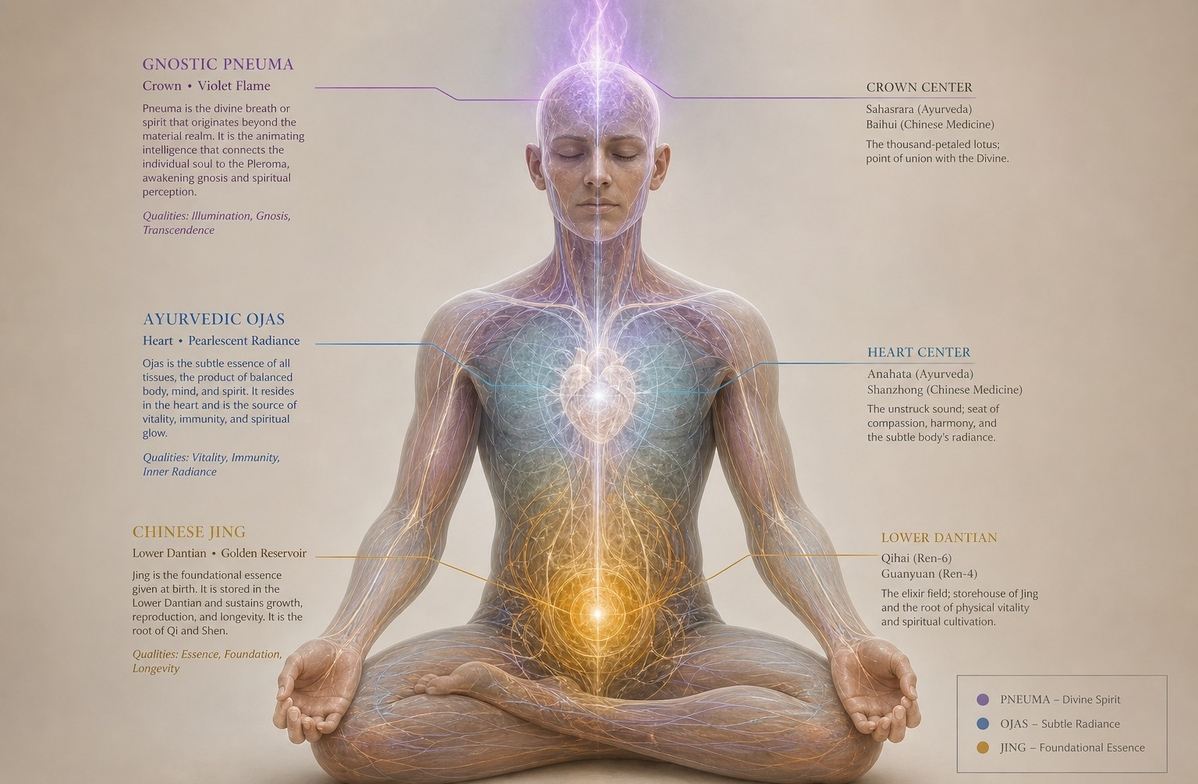
Sexual continence is one of the most powerful and easily distorted forms of discipline. Traditions speak of conserving or redirecting sexual energy through many vocabularies: jing, ojas, pneuma, vitality, creative force, eros, or subtle fire. These terms are not identical, but they point to a shared intuition: sexual energy is potent and can be dissipated, compulsively expressed, repressed, integrated, or consciously held.
Healthy continence is not contempt for sexuality. It is the temporary or ongoing choice to relate to sexual energy consciously rather than automatically. This may mean abstinence for a period, ending compulsive pornography use, avoiding exploitative relationships, refusing dissociated sex, or allowing desire to become creative, relational, devotional, or contemplative rather than merely reactive.
Unhealthy continence becomes shame, control, fear of the body, hatred of desire, or spiritual pride. Sexual discipline must be handled with maturity, especially when trauma, repression, religious guilt, compulsive behaviour, or relational wounds are present. The goal is not a frozen body. The goal is an awake one.

Emotional Asceticism: Non-Reactivity and Silence
Emotional asceticism does not mean refusing to feel. It means refusing to be ruled by immediate emotional discharge. Anger, envy, lust, fear, pride, shame, grief, and resentment can all become commands when they are not seen clearly.
Non-Reactivity
Non-reactivity is the discipline of allowing an emotional surge to be known before it becomes action. The anger rises, and the practitioner notices heat, pressure, story, accusation, and impulse. The feeling is not denied. It is not indulged. It is witnessed long enough to reveal its structure.
Stoic prosoche, Buddhist mindfulness, Christian watchfulness, and Gnostic self-knowledge all converge around this point: the person who can observe a movement is no longer identical with it. The gap between stimulus and response is not coldness. It is the birthplace of freedom.
Silence
Silence is another emotional discipline. Much speech exists to manage anxiety, defend identity, secure approval, control perception, discharge discomfort, or avoid feeling. Deliberate silence reveals the machinery of expression.
A few hours of silence may reveal how often the self wants to justify. A day of silence may reveal how much identity depends on being heard. Longer silence, handled carefully, can reveal grief, tenderness, fear, and the quiet ache of a self that has been speaking to avoid listening.
Silence should not become withdrawal, punishment, superiority, or emotional avoidance. True silence improves speech. It makes words cleaner when they return.
Mental Asceticism: Media Fasting and One-Pointedness
Mental asceticism is perhaps the most urgent form for modern seekers. The mind is constantly fed: news, feeds, short videos, arguments, notifications, ads, messages, headlines, recommendations, outrage, analysis, speculation, and ambient noise. The inner world becomes crowded with furniture it never chose.
Media Fasting
A media fast is deliberate abstention from digital input for a set period. This may mean one hour each morning, one evening a week, a screen-free Sabbath, no news before practice, no phone in the bedroom, or a longer retreat from social media.
The goal is not anti-technology purity. The goal is to discover what happens when attention is no longer externally pulled every few minutes. At first, restlessness may appear. Then boredom. Then anxiety. Then grief. Then, sometimes, a quieter kind of perception returns.
Digital minimalism is modern asceticism because the contemporary appetite is often not for bread, but for stimulation. The phone is not evil. But the unconscious relationship to it may be hungry enough to require discipline.
One-Pointedness
One-pointedness is the training of attention to remain with a chosen object: breath, mantra, icon, text, bodily sensation, prayer, or simple task. Without this capacity, deeper contemplation becomes difficult. A scattered mind cannot enter subtle practice because it keeps wandering out through every open window.
The point is not violent concentration. It is return. Attention wanders. The practitioner notices and returns. Again. Again. The discipline is humble, repetitive, and quietly alchemical. The mind learns that it does not have to obey every passing signal.

The Dangers of Excess
Asceticism is powerful precisely because it touches deep systems: appetite, control, shame, reward, identity, bodily safety, sexuality, and spiritual ambition. That means it can go wrong. The danger is not theoretical. Many sincere practitioners have harmed themselves by confusing severity with truth.
- Spiritual materialism: pride in discipline, comparison with others, purity identity, or the ego turning restraint into a crown.
- Dissociation: using practice to escape the body, emotion, relationship, trauma, money, work, sexuality, or ordinary life.
- Physical harm: extreme fasting, unsafe sleep deprivation, excessive exercise, rigid restriction, or ignoring medical needs.
- Compulsive austerity: discipline becoming another addiction, where control replaces gratification but the underlying loop remains.
- Sexual repression: confusing healthy continence with fear, shame, hatred of the body, or denial of relational needs.
- Grandiosity: believing discipline makes one spiritually superior, chosen, purified, or exempt from ordinary accountability.
- Social withdrawal: mistaking isolation for depth when the real issue is fear, avoidance, depression, or unresolved relational pain.
The Book of Thomas the Contender uses strong language about passions, garments, fire, desire, and self-control. It should be read in historical context and not turned into a licence for self-harm. Even radical texts must be interpreted with discernment. The purpose of discipline is awakening, not damage.
A useful rule: if a discipline makes you more honest, steady, kind, embodied, patient, and free, it may be serving transformation. If it makes you brittle, proud, secretive, frightened, compulsive, or contemptuous of ordinary human needs, the practice has become another form of bondage rather than a path to freedom.
Discipline Without Repression
The key distinction is between repression and discipline. Repression denies, buries, shames, and pushes desire into the dark. Discipline observes, names, contains, redirects, and brings desire into conscious relationship.
Repressed desire does not disappear. It returns through obsession, projection, secrecy, resentment, symptoms, judgement, fantasy, or sudden collapse. Disciplined desire is different. It is felt honestly without being automatically obeyed. It is not treated as a tyrant or a criminal. It is treated as energy asking to be understood.
Jung’s language of shadow integration helps here. What is rejected without awareness becomes shadow. What is known, held, and integrated becomes part of a fuller life. The Gnostic practitioner does not reject the body as a prison in any crude sense. The body becomes one of the places where ignorance is exposed and consciousness is restored.
Authentic renunciation often has a quality of relief. Something no longer serves, so it is released. Forced prohibition has a quality of tension. Something is feared, so it is locked away. The first creates space. The second creates a basement with teeth.
Discipline without repression requires honesty. Why am I doing this? What am I avoiding? What am I trying to prove? Does this practice increase love or shrink it? Does it clarify desire or make it monstrous? Does it serve the body or punish it?

The Fruit of Discipline
Properly practised, discipline produces fruits that are not merely moral achievements. They are changes in the way consciousness relates to impulse, body, time, desire, and attention.
Energy Conservation
Energy previously spent on automatic gratification becomes available for practice, study, creativity, relationship, repair, and attention. This can be understood spiritually as conservation of vital force, psychologically as reduced leakage through compulsion, and practically as no longer spending the whole day feeding little fires.
Clarity
When cravings, inputs, and reactions are reduced, hidden material becomes visible. This is not always pleasant. Clarity may initially reveal restlessness, sadness, loneliness, anger, or the strange emptiness that constant stimulation had been covering. But this is useful. The clean room first shows the dust.
Freedom
Freedom is not the ability to satisfy every desire. That is often just obedience wearing a party hat. Freedom is the capacity to choose consciously. The disciplined person may enjoy pleasure more deeply because they are no longer forced to chase it mechanically.
Compassion
True discipline softens judgement. Having met one’s own compulsion, one becomes less eager to condemn others. The rigid ascetic judges. The mature practitioner recognises shared bondage and shared possibility.
The fruit of discipline is not a smaller life. It is a life less governed by invisible strings.
Digital Minimalism and Urban Asceticism
For modern seekers, asceticism rarely means fleeing permanently to the desert. The desert has changed address. It now appears in the bedroom with the phone charging beside the pillow, in the open tabs, in the shopping basket, in the late-night scroll, in the streaming queue, in the nervous habit of checking whether the world has reacted to you yet.
Urban asceticism means practising restraint inside ordinary modern life. It does not require theatrical austerity. It requires intelligent limitation.
- Digital minimalism: scheduled periods without screens, notifications, social media, news, or algorithmic feeds.
- Consumptive simplicity: buying less, keeping fewer possessions, reducing display pressure, and refusing identity through acquisition.
- Temporal discipline: fixed times for practice, sleep, meals, study, silence, work, and rest.
- Social solitude: deliberate time without audience, performance, messaging, or external validation.
- Speech restraint: reducing gossip, over-explanation, argument loops, reactive posting, and self-advertisement.
- Attention fasting: choosing one task, one text, one person, or one practice without switching.
The aim is not to become anti-modern. The aim is to stop being unconsciously available to every system designed to capture the nervous system. A digital fast is not a moral medal. It is a room with the windows open.

The Gnostic Reading: Habit, Archons, and Conscious Choice
Gnostic myth speaks of Archons as ruling powers that bind consciousness through ignorance, imitation, fear, and false authority. In a modern symbolic reading, habit itself can become archonic. It rules not because it is strong in some dramatic cosmic sense, but because it operates without being seen.
The Demiurge declares the visible order final. Habit declares the familiar pattern inevitable. The counterfeit spirit imitates life by making compulsion feel like identity: this is just who I am, this is what I need, this is how I cope, this is how the world works.
Discipline interrupts that false finality. It says: let us test this. Let the phone remain untouched. Let the appetite wait. Let the anger breathe before speaking. Let the body sleep. Let desire be known before it acts. Let silence reveal what noise was hiding.
In this sense, asceticism is not anti-world. It is anti-automatic. It does not reject life. It rejects the counterfeit version of life in which every impulse, platform, appetite, institution, wound, or inherited script gets to steer the soul.
The disciplined freedom is not severe for its own sake. It is spacious. The body remains. Pleasure remains. Desire remains. Relationship remains. But their relationship to awareness changes. They are no longer unconscious masters. They become energies that can serve truth.

Related Glossary Terms
For quick definitions, use the main ZenithEye Glossary. The key terms for this article are:
Read Next
Continue with: Contemplative Techniques: Methods for Stabilisation
If this article explores restraint and discipline as transformation technology, the next step widens the method: concentration, open awareness, breath, embodiment, witness practice, and the stabilisation of direct knowing in ordinary life.
Within Practice & Method
This article belongs to Contemplative Techniques, the Practice & Method route where attention, restraint, breath, silence, solitude, embodiment, digital minimalism, and disciplined inquiry become practical supports for gnosis.
Frequently Asked Questions About Asceticism and Discipline
What is asceticism in spiritual practice?
Asceticism is chosen restraint used to clarify desire, attention, and consciousness. It may involve food, speech, sleep rhythm, solitude, sexuality, digital input, consumption, or emotional reactivity. Healthy asceticism is not self-punishment. It is a practice technology for seeing and interrupting unconscious compulsion.
How is Gnostic asceticism different from religious punishment?
Gnostic asceticism is best understood as transformation practice rather than punishment for sin. Its aim is not to appease divine anger or hate the body, but to expose the patterns that keep consciousness bound to automatic desire, false identity, distraction, and unconscious habit.
Is asceticism necessary for awakening?
Asceticism is not universally necessary in the same form for everyone, but some degree of discipline is usually essential for stable transformation. Attention, restraint, ethical clarity, digital limits, emotional non-reactivity, and regular practice help create the conditions in which direct knowing can be recognised and integrated.
What is the difference between discipline and repression?
Repression denies and buries desire, often making it stronger in the shadow. Discipline observes, contains, and redirects desire consciously. Repression is driven by fear or shame. Healthy discipline is driven by freedom, clarity, and the wish not to be ruled by automatic patterns.
How does digital minimalism function as modern asceticism?
Digital minimalism is a modern form of mental asceticism. By limiting notifications, feeds, news cycles, social media, and compulsive screen use, the practitioner interrupts attention capture and restores space for contemplation, reading, silence, relationship, and embodied awareness.
What are the dangers of excessive asceticism?
Excessive asceticism can lead to physical harm, eating-disorder patterns, sleep deprivation, sexual repression, spiritual pride, dissociation, compulsive control, isolation, and harsh self-judgement. Discipline should serve wellbeing and freedom. If it creates rigidity, fear, secrecy, or harm, it needs to be paused and reassessed.
What are the fruits of healthy discipline?
Healthy discipline can produce greater clarity, steadier attention, reduced reactivity, freedom from compulsion, increased energy for practice, stronger ethical behaviour, and deeper compassion. Its fruit is not severity, but conscious choice and a more integrated life.
Study and Safety Note
This article explores asceticism, discipline, fasting, sleep rhythm, sexual continence, silence, digital minimalism, habit interruption, and Gnostic symbolism for educational and reflective purposes. It does not provide medical, psychological, psychiatric, nutritional, sexual-health, trauma, meditation-instruction, or spiritual-direction advice.
Extreme fasting, sleep deprivation, compulsive exercise, sexual repression, rigid restriction, or harsh austerity can cause physical and psychological harm. If you have a history of eating disorders, trauma, obsessive-compulsive patterns, severe anxiety, depression, dissociation, compulsive sexual behaviour, or unstable spiritual practice, seek qualified support before attempting restrictive disciplines.
Discipline should serve life. If a practice increases shame, panic, isolation, contempt for the body, compulsive control, or difficulty functioning, pause it and return to grounded care.
Further Reading
These ZenithEye links continue the themes of discipline, contemplative practice, digital minimalism, embodiment, shadow work, and stabilisation:
- Contemplative Techniques: Methods for Stabilisation – The next article in the live route, expanding restraint into a broader practice framework for stabilising gnosis.
- Digital Minimalism as Mystical Practice – The contemporary asceticism of deliberate disconnection from the attention economy.
- The Discipline of Solitude: Extended Alone Time as Gateway to Recognition – How solitude becomes a container for inner listening and direct knowing.
- Gateway of Breath: Pranayama Techniques for Altered States – Breath as a bridge between bodily discipline and subtle perception.
- Creating Personal Practice: How to Combine the Five Gateways – Integrating breath, movement, sensation, sound, vision, and silence into daily practice.
- Integration and Grounding: 7 Keys to Mystical Experience – Post-practice stabilisation and the return to ordinary life.
- Shadow Work: Excavating the Repressed – How to work safely with the inner material that discipline may uncover.
- Embodiment Practices: Grounding the Awakened Body – Somatic methods for keeping practice rooted in the body.
- Predatory Consciousness and Spiritual Emergency – Recognising when spiritual opening, discipline, or intensity becomes destabilising.
- Spiritual Emergency: When Awakening Becomes Crisis – Essential context for intensive practice, destabilisation, and care.
- Nervous System Regulation: The New Meditation and Embodied Spirituality – Why regulation and bodily steadiness matter more than harsh self-control.
- The Nag Hammadi Library: A Complete Reader’s Guide – A wider source map of the codices, tractates, and reading routes.
References and Sources
The following sources support the Gnostic, Thomasine, contemplative, psychological, and digital-culture framework used in this article.
Primary Gnostic and Early Christian Sources
- [1] The Gospel of Thomas. Nag Hammadi Codex II,2.
- [2] The Book of Thomas the Contender. Nag Hammadi Codex II,7.
- [3] The Discourse on the Eighth and Ninth. Nag Hammadi Codex VI,6.
- [4] The Sentences of Sextus. Nag Hammadi Codex XII,1.
- [5] The Teachings of Silvanus. Nag Hammadi Codex VII,4.
- [6] Robinson, James M. (ed.). The Nag Hammadi Library in English. Revised edition. HarperOne, 1990.
- [7] Meyer, Marvin (ed.). The Nag Hammadi Scriptures. HarperOne, 2007.
- [8] Layton, Bentley (ed.). Nag Hammadi Codex II, 2-7. Brill, 1989.
- [9] Layton, Bentley. The Gnostic Scriptures. Yale University Press, 1987.
Asceticism, Monasticism, and Comparative Practice
- [10] Brown, Peter. The Body and Society: Men, Women, and Sexual Renunciation in Early Christianity. Columbia University Press, 1988.
- [11] Harmless, William. Desert Christians: An Introduction to the Literature of Early Monasticism. Oxford University Press, 2004.
- [12] Evagrius of Pontus. Praktikos and related writings on the eight thoughts.
- [13] John Cassian. The Institutes and Conferences.
- [14] Foucault, Michel. The History of Sexuality, Vol. 2: The Use of Pleasure. Pantheon, 1985 English edition.
- [15] Flood, Gavin. The Ascetic Self: Subjectivity, Memory and Tradition. Cambridge University Press, 2004.
- [16] Wimbush, Vincent L. and Valantasis, Richard (eds.). Asceticism. Oxford University Press, 1995.
Gnostic and Early Christian Scholarship
- [17] King, Karen L. What Is Gnosticism?. Harvard University Press, 2003.
- [18] Williams, Michael Allen. Rethinking “Gnosticism”: An Argument for Dismantling a Dubious Category. Princeton University Press, 1996.
- [19] Brakke, David. The Gnostics: Myth, Ritual, and Diversity in Early Christianity. Harvard University Press, 2010.
- [20] Pearson, Birger A. Ancient Gnosticism: Traditions and Literature. Fortress Press, 2007.
- [21] DeConick, April D. The Original Gospel of Thomas in Translation. T&T Clark, 2006.
- [22] Valantasis, Richard. The Gospel of Thomas. Routledge, 1997.
Psychology, Habit, Shadow, and Behaviour Change
- [23] Duhigg, Charles. The Power of Habit: Why We Do What We Do in Life and Business. Random House, 2012.
- [24] Wood, Wendy. Good Habits, Bad Habits: The Science of Making Positive Changes That Stick. Farrar, Straus and Giroux, 2019.
- [25] Clear, James. Atomic Habits. Avery, 2018.
- [26] Jung, C. G. The Archetypes and the Collective Unconscious. Collected Works, Vol. 9i. Princeton University Press.
- [27] Jung, C. G. Two Essays on Analytical Psychology. Collected Works, Vol. 7. Princeton University Press.
- [28] Baumeister, Roy F. and Tierney, John. Willpower: Rediscovering the Greatest Human Strength. Penguin Press, 2011.
- [29] van der Kolk, Bessel. The Body Keeps the Score. Viking, 2014.
- [30] Ogden, Pat, Kekuni Minton, and Clare Pain. Trauma and the Body: A Sensorimotor Approach to Psychotherapy. W. W. Norton, 2006.
Digital Minimalism, Attention, and Contemporary Practice
- [31] Newport, Cal. Digital Minimalism: Choosing a Focused Life in a Noisy World. Portfolio, 2019.
- [32] Newport, Cal. Deep Work: Rules for Focused Success in a Distracted World. Grand Central, 2016.
- [33] Gazzaley, Adam and Rosen, Larry D. The Distracted Mind: Ancient Brains in a High-Tech World. MIT Press, 2016.
- [34] Carr, Nicholas. The Shallows: What the Internet Is Doing to Our Brains. W. W. Norton, 2010.
- [35] Wu, Tim. The Attention Merchants: The Epic Scramble to Get Inside Our Heads. Knopf, 2016.
- [36] Williams, James. Stand Out of Our Light: Freedom and Resistance in the Attention Economy. Cambridge University Press, 2018.
- [37] Zuboff, Shoshana. The Age of Surveillance Capitalism. PublicAffairs, 2019.
Subtle Energy, Sexual Discipline, and Comparative Esotericism
- [38] Kohn, Livia. Daoism and Chinese Culture. Three Pines Press, 2001.
- [39] Kohn, Livia. Chinese Healing Exercises: The Tradition of Daoyin. University of Hawai‘i Press, 2008.
- [40] Unschuld, Paul U. Medicine in China: A History of Ideas. University of California Press, 1985.
- [41] Eliade, Mircea. Yoga: Immortality and Freedom. Princeton University Press, 1958.
- [42] White, David Gordon. Kiss of the Yogini: “Tantric Sex” in its South Asian Contexts. University of Chicago Press, 2003.
- [43] Avalon, Arthur. The Serpent Power. 1919.