VALIS and the Nag Hammadi: What Philip K. Dick Actually Got Right About Gnosticism
In February 1974, a science fiction writer in California opened his door to a delivery woman and saw, hanging at her throat, a golden fish. The symbol–an ichthys, used by early Christians–triggered something vast. Philip K. Dick, then forty-five years old and recovering from dental surgery, experienced what he later called anamnesis: the loss of forgetfulness. In his own words, he remembered who he was and where he was. The world as he had known it–California, 1974–ebbed away, and in its place he saw the contours of Imperial Rome, a black iron prison overlaid upon reality, and the secret presence of Christians who knew that Christ had not abandoned the world but would soon return. The experience lasted only a moment, but it initiated an eight-year theological marathon that produced the Exegesis: roughly eight thousand pages of handwritten and typed notes, now published in a nine-hundred-page edition by Houghton Mifflin Harcourt.
Dick was no scholar of antiquity. He was a prolific science fiction author–thirty-six novels, over a hundred short stories–whose work had already explored false realities, simulacra, and the instability of identity. But after 2-3-74 (his shorthand for the February-March events), he found himself retracing a path first mapped in the second century by authors whose works would be buried at Nag Hammadi and rediscovered in 1945. The parallels are striking enough that one might suspect direct influence, yet Dick’s engagement with Gnosticism came largely after the fact. He read Hans Jonas’s The Gnostic Religion in the late 1970s and recognised his own intuitions in its pages. What he got right about Gnosticism–and where his idiosyncratic vision carried him beyond the texts–is the subject of this article.
Table of Contents
- What Dick Actually Experienced
- What Dick Got Right About Gnosticism
- The Demiurge Problem: Evil or Ignorant?
- Where Dick Diverged from the Texts
- Specific Nag Hammadi Parallels
- Conclusion
- Further Reading
- References and Sources

What Dick Actually Experienced
The 2-3-74 Events
The immediate trigger was mundane. Dick had two impacted wisdom teeth removed. A pharmacy delivery woman brought pain medication–Darvon–and when Dick opened the door, he noticed her necklace. He asked about the fish-shaped pendant. “This is a sign used by the early Christians,” she said, and departed. In that instant, Dick later wrote, he experienced anamnesis. He remembered his celestial origins. He saw the world as information, as a simulation or overlay, and he understood that he was not truly of this world but had been thrown into it–a condition he explicitly linked to Heidegger’s concept of Geworfenheit, the thrownness of existence.
What followed over the next weeks and months was a cascade of visions, dreams, and what Dick called “die messages” from his radio. He saw ancient Rome superimposed upon modern Santa Ana. He felt himself in telepathic communication with a first-century Christian named Thomas. He received a warning via the Beatles’ “Strawberry Fields Forever”–a strawberry-pink light that informed him his son Christopher was in danger. He rushed the child to a physician and discovered a potentially fatal inguinal hernia, requiring immediate surgery. The predictive accuracy of the vision disturbed him more than the vision itself.
The Exegesis and Its Scope
From 1974 until his death from a stroke in March 1982, Dick wrote the Exegesis in late-night sessions, sometimes producing one hundred and fifty pages in a single sitting. The complete manuscript runs to approximately eight thousand pages. A selection was published in 2011, edited by Pamela Jackson and Jonathan Lethem, comprising nine hundred and forty-four pages of dense, repetitive, and often contradictory speculation. The editors described it as “absolutely stultifying, brilliant, repetitive, and contradictory. It just might contain the secret of the universe.”
The Exegesis is not a systematic theology. It is a record of a mind trying to think its way out of a mystery. Dick cycles through explanations: Jungian psychology, temporal lobe epilepsy, extraterrestrial contact, kabbalah, Buddhist emptiness, and–increasingly–Gnosticism. He quotes Plato, Spinoza, Heidegger, and the Nag Hammadi texts with equal urgency. He treats his own novels, particularly Ubik, Flow My Tears, the Policeman Said, and A Scanner Darkly, as if they were prophetic documents written by a self he did not yet understand. The result is a document that is simultaneously one of the most penetrating and most maddening accounts of mystical experience in modern literature.
What Dick Got Right About Gnosticism
Anamnesis and the Thrown Condition
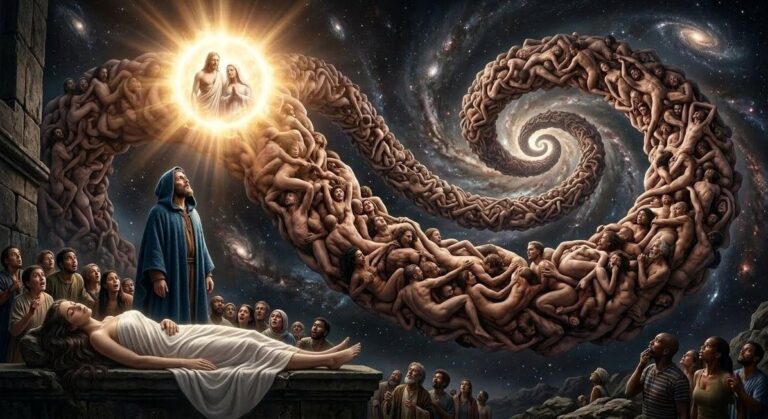
Dick’s central experience–the recovery of a forgotten divine identity–is structurally identical to the Gnostic concept of anamnesis. The Greek term, used in the Gospel of Truth (NHC I,3), describes the moment when the fog of error lifts and the soul remembers the Father. Dick explicitly adopted this term, writing that the fish sign caused him to remember his celestial origins and his real nature. He understood the world as a place into which he had been thrown–not a home, but a prison.
This maps precisely onto the Gnostic anthropology found in the Apocryphon of John. There, the divine spark is trapped in material flesh, subjected to the counterfeit spirit and the bonds of fate, and must be awakened by the Saviour’s descent. Dick’s formulation–“You are here in this world in a thrown condition, but are not of this world”–could have been lifted directly from a Valentinian tractate. That he arrived at it independently, through a dental surgery recovery and a delivery woman’s necklace, is one of the more remarkable instances of convergent mystical evolution in modern history.
The Black Iron Prison and the Palm Tree Garden
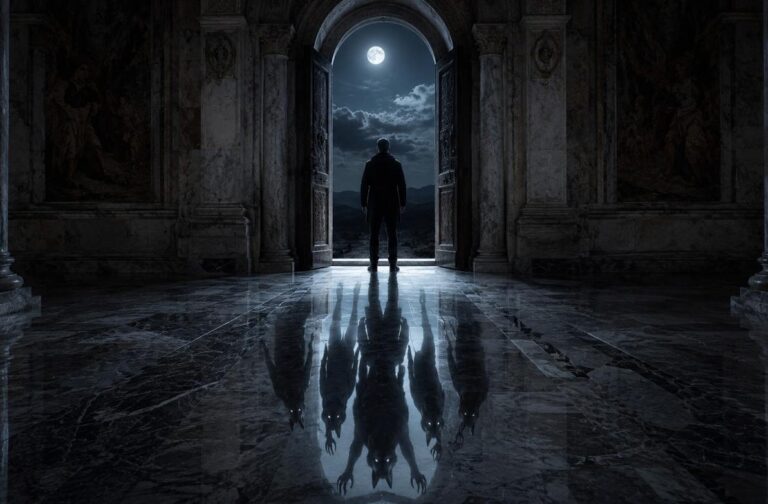
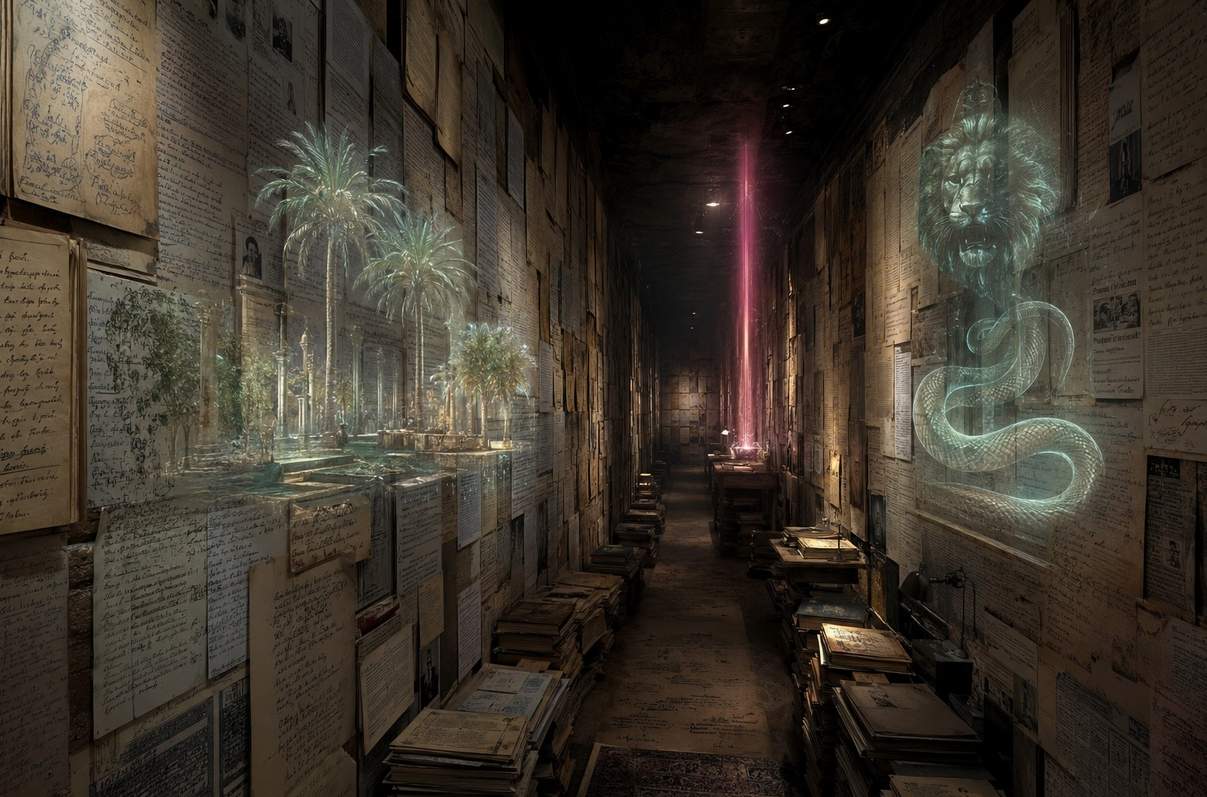
Two of Dick’s most enduring images from the Exegesis are the Black Iron Prison (BIP) and the Palm Tree Garden (PTG). The BIP is the fallen world: oppressive, mechanical, ruled by what Dick called “the Empire”–a term he used to describe not merely political structures but the ontological condition of material existence itself. The PTG is the redeemed world, the garden of divine presence that breaks through the prison walls when gnosis is achieved.
This dichotomy is essentially Gnostic. The Apocryphon of John describes the material cosmos as a counterfeit creation designed to entrap divine light. The Hypostasis of the Archons opens with the declaration that the rulers’ authority is an illusion, and the Gospel of Truth describes error as a fog that obscures the true world. Dick’s BIP is the Gnostic kenoma–the empty place of deficiency–rendered in industrial metaphor. His PTG is the pleroma–the fullness of divine reality–breaking through into the prison. He did not invent the dichotomy; he renamed it for an industrial age.
The Divine Spark and DNA
Dick wrote in the Exegesis that “the (golden) fish sign causes you to remember… Your celestial origins; this has to do with the DNA because the memory is located in the DNA… You remember your real nature.” This is a distinctly modern formulation of an ancient intuition. The Gnostic texts speak of the divine spark (spinther) trapped in matter, a fragment of the Pleroma imprisoned in flesh. Dick recoded this as genetic memory, a biological carrier of experiential information. Whether this is a legitimate translation or a category error depends on one’s metaphysics, but the structural parallel is undeniable: both systems posit that the true self is not the body but a transcendent identity carried within it, waiting to be recalled.
The Empire and the Archons
Dick’s concept of “the Empire”–the hidden, malevolent system that rules the visible world–parallels the Gnostic archons with remarkable fidelity. In the Exegesis, he wrote that there is a secret within a secret: the first secret is that the Empire rules, and the second is that secret Christians resist it. This is structurally identical to the Gnostic revelation that the visible gods are false, and a hidden divine truth operates beneath their jurisdiction. The archons, in texts like the Hypostasis of the Archons, believe they govern, yet their power depends on human ignorance. Dick’s Empire is the same system updated for an age of corporations, governments, and media control.
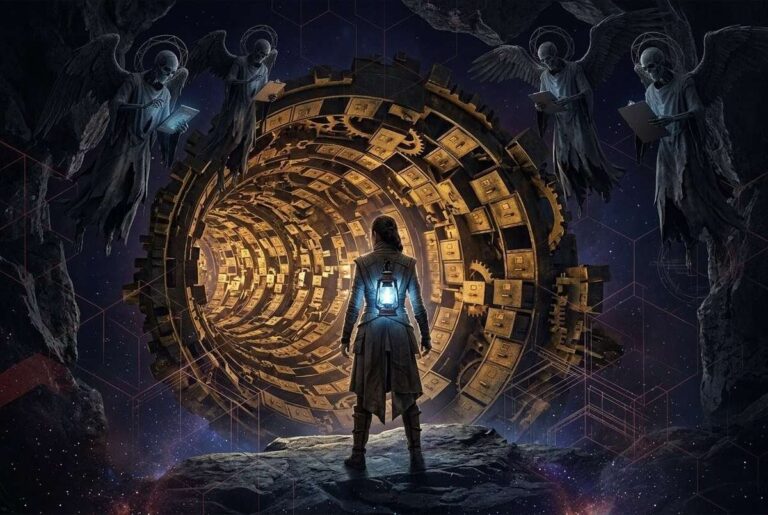
Where Dick sharpened the Gnostic insight was in his recognition that the Empire is not merely political but epistemological. It controls not only bodies but perceptions. This anticipates much of contemporary discourse about surveillance, algorithmic governance, and the simulation hypothesis–themes that have become central to modern Gnostic revivalism. Dick saw that the prison is not made of iron but of information, and that the rulers are not tyrants but systems.

The Demiurge Problem: Evil or Ignorant?
One of the most sophisticated aspects of Dick’s engagement with Gnosticism is his wrestling with the nature of the demiurge. In the Exegesis, he flip-flopped between viewing the demiurge and archons as actively evil–a Manichaean dualism of light versus darkness–and viewing them as aberrant, ignorant, or even demented products of their own limitations. This distinction is not merely theological hairsplitting. It defines the difference between a cosmos at war and a cosmos asleep.
The Manichaean Temptation
In his darker moments, Dick embraced a hard dualism. The world is a prison, the rulers are evil, and the task of the gnostic is to resist, escape, and ultimately overthrow the regime. This is the Manichaean reading: good and evil are absolute principles, and the material world is the kingdom of darkness. Dick’s concept of the Black Iron Prison sometimes carries this weight. The Empire is not merely mistaken; it is malign. The demiurge is not merely blind; he is a liar and a captor.
This reading has political energy. It aligns with Dick’s well-documented suspicion of governmental and corporate power, his sympathy for the counterculture, and his experience of the 1970s as an era of institutional betrayal. It also aligns with the Sethian strain of Gnosticism, in which Yaldabaoth is actively hostile, the archons forge chains of fate, and the counterfeit spirit is an instrument of deliberate enslavement. When Dick wrote that “the Empire never ended,” he was channelling this Manichaean fury.
The Valentinian Correction
Yet Dick also moved toward a more Valentinian position, particularly after reading Hans Jonas. In this mode, the demiurge is not evil but ignorant. The world is not a battlefield but a mistake–or, in the Valentinian system, a pedagogical drama staged within the Father’s foreknowledge. The archons are not devils but administrators who do not know they are administering a shadow. Evil, in this reading, is a psychological state of unconsciousness, tantamount to ignorance rather than malice.
Dick wrote in the Exegesis that the artifact or demiurge “may be ignorant, or else demented.” The ambiguity is deliberate and, from a scholarly perspective, remarkably astute. The Nag Hammadi texts themselves are not uniform on this question. The Apocryphon of John presents Yaldabaoth as arrogant and hostile, while Valentinian sources describe the demiurge as well-meaning but limited, unconsciously influenced by the higher realm. Dick’s oscillation between these positions reflects not inconsistency but honesty: he was trying to determine whether the world was wicked or merely asleep, and he never fully resolved the question because the texts themselves do not resolve it.
The Valentinian mode also opens into what Erik Davis has called “a continual transformation, an awakening that’s always on the fly.” If the demiurge is ignorant rather than evil, then the world can be redeemed, not merely escaped. This is the difference between the Black Iron Prison and the Palm Tree Garden: not two separate locations, but two ways of perceiving the same reality. Dick’s novel VALIS ends not with escape but with the death and promised return of Sophia–a distinctly Valentinian motif of cyclical restoration rather than apocalyptic rupture.
Where Dick Diverged from the Texts
To say that Dick got Gnosticism right is not to say he got it pure. The Exegesis is a palimpsest of influences, and Gnosticism is only one layer–albeit a deep one. Where Dick diverged, he diverged significantly, and those divergences reveal as much about modernity as they do about his individual psychology.
Science Fiction as Scripture
Dick had a habit–perhaps a compulsion–of reading his own fiction as prophecy. He treated Ubik, written in 1966, as if it were a coded account of 2-3-74. He found the cipher “KING FELIX” in his 1970 novel Flow My Tears, the Policeman Said and interpreted it as a kabbalistic signal. He saw his earlier stories about false realities and simulacra as unconscious anticipations of his own mystical unveiling. This is not how the Nag Hammadi authors treated their texts. For them, scripture was revelation, not autobiography in disguise.
The divergence is methodological. The Gnostic texts present themselves as transmissions from divine or angelic messengers–the Secret Book of John, the Gospel of Truth, the Teachings of Silvanus. Dick’s Exegesis presents itself as a personal journal, a man talking to himself in the dark. The authority claims are inverted. The ancient Gnostics spoke from the Pleroma; Dick spoke from his living room. Both may be genuine, but they are genuine in different registers.
The Pink Beam and the Satellite
Dick’s most famous technological image is the pink beam–a ray of light that he believed conveyed information from VALIS, sometimes identified as a satellite, sometimes as God, sometimes as an alien artificial intelligence. This is pure Dick, and it has no parallel in the Nag Hammadi Library. The Gnostic texts describe revelation through dreams, angelic messengers, secret books, and baptismal ascent. They do not describe extraterrestrial satellites firing pink lasers into suburban California.
The pink beam is best understood as Dick’s attempt to find a material substrate for transcendence. He was a science fiction writer; he thought in terms of technology, information, and media. Where the ancient Gnostics spoke of aeons and syzygies, Dick spoke of Vast Active Living Intelligence Systems and DNA memory coils. The underlying intuition–that the divine communicates through specific, disruptive interventions–is Gnostic. The packaging is mid-century American technoculture.
Psychology and Pathology
Dick was acutely aware that his experiences could be explained medically. He considered temporal lobe epilepsy, drug use (he was primarily an amphetamine user, not a psychedelic enthusiast), and schizophrenia as possible causes. The Exegesis is full of self-diagnostic passages, moments where Dick steps back and asks whether he is merely mad. The Nag Hammadi authors did not entertain this possibility. For them, gnosis was divine grace, not neurological anomaly.
This modern uncertainty is both Dick’s limitation and his gift. By refusing to settle on a single explanation, he preserved the ambiguity of mystical experience in a way that ancient texts, with their authoritative voices, often do not. The Exegesis is a record of doubt as well as conviction, and in that sense it is more honest about the phenomenology of awakening than many doctrinal texts. Dick knew that the line between gnosis and psychosis is thin, and he walked it publicly.

Specific Nag Hammadi Parallels
For readers of the Nag Hammadi Library, Dick’s system is instantly recognisable, not because he copied it but because he independently reconstructed it. Several tractates offer particularly striking parallels.
The Apocryphon of John and the Prison
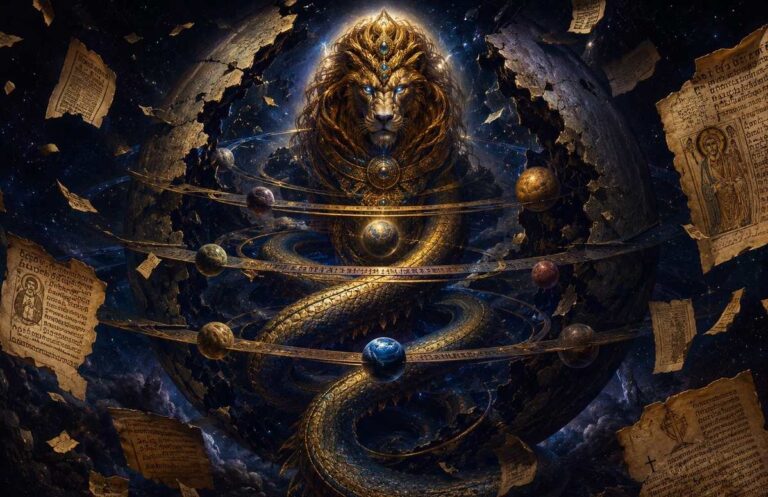
The Apocryphon of John (NHC II,1) describes the creation of the material world as a counterfeit cosmos designed to entrap divine light. Yaldabaoth fashions Adam, breathes a counterfeit spirit into him, and establishes the bonds of fate to keep souls cycling through incarnation. Dick’s Black Iron Prison is this system rendered in industrial-age imagery. The counterfeit spirit becomes the mass media, the bureaucratic state, the dulling repetition of consumer existence. The parallel is not exact–Dick’s prison is more technological, less astral–but the architecture is the same.
The Gospel of Truth and Anamnesis
The Gospel of Truth (NHC I,3) describes error as a fog that obscures the truth, and gnosis as the moment the fog lifts. “The universe came into being because the Father was unknown, and it will be dissolved when he is recognised.” Dick’s anamnesis–the loss of forgetfulness triggered by the fish sign–is this Gospel’s central experience enacted in a California suburb. The mechanism is identical: a sign, a recognition, and the sudden dissolution of the world’s apparent solidity.
The Hypostasis of the Archons and the Empire
The Hypostasis of the Archons (NHC II,4) declares that the rulers’ authority is an illusion, and that their power depends on human ignorance. Dick’s concept of the Empire–a system that appears omnipotent but is actually illegitimate–mirrors this declaration with uncanny precision. Where the text describes archons who fashion Adam from dust and water, Dick describes a system that fashions citizens from advertising and bureaucracy. Both systems are counterfeit, and both are maintained by the sleep of those they govern.
The Tripartite Tractate and the Divided Self
The Tripartite Tractate (NHC I,5) presents a Valentinian cosmology in which the fall and redemption of Sophia is a pedagogical drama within the Father’s foreknowledge. Dick’s oscillation between the Black Iron Prison and the Palm Tree Garden, his sense that the world is simultaneously fallen and redeemable, aligns with this Valentinian sensibility. The divided self–Horselover Fat in the novel VALIS, the bifurcated psyche in the Exegesis–is the modern equivalent of the upper and lower Sophia, the perfect aeon and the fallen Achamoth.
Conclusion
Philip K. Dick did not set out to be a Gnostic theologian. He set out to write science fiction, pay his rent, and keep his sanity. But the 2-3-74 experience forced upon him a cosmology that the Nag Hammadi authors would have recognised–not because he studied them first, but because he lived through the same intuition from the other side of two millennia. He got anamnesis right. He got the prison right. He got the hidden divinity of the human subject right. He even got the ambiguity of the demiurge right, flip-flopping between Manichaean hostility and Valentinian ignorance with an honesty that the ancient texts themselves display.
Where he diverged–the pink beam, the satellite, the reading of his own novels as prophecy–he diverged as a modern man, a Californian, a science fiction writer, and a patient recovering from surgery. Those divergences are not errors to be corrected but data to be understood. They show what Gnosticism looks like when it is not transmitted through codices and communities but through pain, medication, and a delivery woman’s necklace. The form is different. The structure is the same. Dick’s Exegesis is, in the end, a Nag Hammadi tractate written in amphetamine and American vernacular–messy, contradictory, occasionally mad, and genuinely illuminated.
Safety Notice: This article explores the mystical experiences and theological speculations of Philip K. Dick for educational and comparative purposes. It does not claim that drug use, sleep deprivation, or medical trauma produce genuine religious insight, nor does it present Dick’s interpretations as authoritative theology. Readers experiencing similar phenomena should seek appropriate medical and psychological support alongside any spiritual exploration.
Frequently Asked Questions
What was Philip K. Dick’s 2-3-74 experience?
In February and March 1974, following dental surgery, Philip K. Dick experienced a series of visions and revelations triggered by a delivery woman’s ichthys necklace. He described this as anamnesis–a loss of forgetfulness–in which he remembered his divine origins and perceived the world as a prison overlaid upon ancient Rome. He spent the remaining eight years of his life documenting these experiences in the Exegesis, an eight-thousand-page journal of theological and philosophical speculation.
What is VALIS?
VALIS stands for Vast Active Living Intelligence System, a term Philip K. Dick used to describe the divine or alien intelligence he believed was communicating with him. In his 1980 novel of the same name, VALIS appears as a satellite, a pink beam of light, and a living information system. Dick also used the term to describe his own mystical experiences, sometimes identifying it with God, Zebra, or an evolving cosmic mind.
How does Philip K. Dick’s work relate to Gnosticism?
Dick independently rediscovered several core Gnostic intuitions: that the world is a prison or illusion, that humans carry a divine spark, that a false god or demiurge rules the material realm, and that secret knowledge (gnosis) can awaken the soul. He read Hans Jonas’s The Gnostic Religion and explicitly identified his own experiences with the Nag Hammadi texts, though he filtered them through science fiction, psychology, and his own idiosyncratic vision.
What is the Black Iron Prison?
The Black Iron Prison (BIP) is Philip K. Dick’s term for the fallen, oppressive nature of material reality as he experienced it during 2-3-74. He contrasted it with the Palm Tree Garden (PTG), a symbol of spiritual liberation and divine wholeness. The BIP closely parallels the Gnostic concept of the material world as a prison created by the demiurge and ruled by archons, particularly as described in the Apocryphon of John and the Hypostasis of the Archons.
Did Philip K. Dick view the demiurge as evil or ignorant?
Dick flip-flopped on this question throughout the Exegesis. At times he viewed the demiurge and archons as actively malevolent forces of oppression–a Manichaean dualism. At other times, following Valentinian Gnosticism and the scholarship of Hans Jonas, he saw them as aberrant products of ignorance rather than pure evil. This distinction matters: evil implies an irredeemable opposition, while ignorance suggests the possibility of awakening and restoration.
What did Philip K. Dick get wrong about Gnosticism?
Dick’s interpretations were idiosyncratic and sometimes anachronistic. He conflated his 2-3-74 visions with his own science fiction plots, at times treating his earlier novels as prophetic texts. He speculated about extraterrestrial satellites, pink laser beams, and DNA-encoded memories in ways that have no parallel in second-century Gnostic theology. His Exegesis is also repetitive, contradictory, and psychologically complex in ways that resist systematic theological consistency.
Is Philip K. Dick considered a modern Gnostic?
Dick is often described as a modern Gnostic or Gnostic without knowing it because his experiences and writings independently echoed ancient Gnostic themes. However, he was not part of any Gnostic church or lineage, and his system–if it can be called that–was uniquely his own. Scholars like Erik Davis and Simon Critchley treat him as a genuine religious thinker whose work illuminates Gnosticism for contemporary readers, even where it diverges from historical accuracy.
Further Reading
Explore related threads across the ZenithEye archive:
- The Gnostic Matrix — An exploration of Gnostic themes in digital culture and the metaphysics of simulated worlds.
- Archons and the Soul Trap — A comprehensive guide to the archons as described across Gnostic traditions and their modern resonances.
- The Soul Trap Hypothesis: A Critical Examination — Philosophical examination of the Gnostic prison hypothesis and its modern interpretations.
- Apocryphon of John: The Gnostic Creation Account — The foundational Nag Hammadi text detailing the demiurge, archons, and the counterfeit spirit.
- The Reality of the Archons — An in-depth study of the Hypostasis of the Archons and its account of cosmic rulership.
- Gospel of Truth: Poetics of Recognition — The Valentinian masterpiece exploring error, fog, and the return to the Father through anamnesis.
- Tripartite Tractate: The Valentinian System — A comprehensive guide to Valentinian metaphysics, the fall of Sophia, and the bridal chamber.
- What is Gnosticism? Defining the Undefinable — An essential primer on Gnostic schools, terminology, and theological distinctions.
- Modern Resonances — Exploring how Gnostic themes echo through contemporary culture, technology, and consciousness studies.
- The Shadow Side of the Gnostic Revival — A critical examination of how modern Gnostic movements navigate authenticity, commerce, and the dangers of esoteric knowledge.
- Nag Hammadi Library: The Complete Reader’s Guide — The definitive starting point for navigating all forty-six tractates and their thematic connections.
References and Sources
This article draws upon Philip K. Dick’s published works, the published Exegesis, scholarly analyses of his Gnostic engagement, and standard critical editions of the Nag Hammadi Library. Sources are grouped by category for clarity.
Primary Sources by Philip K. Dick
- Dick, Philip K. (1980). VALIS. Bantam Books.
- Dick, Philip K. (1981). The Divine Invasion. Timescape Books.
- Dick, Philip K. (1982). The Transmigration of Timothy Archer. Doubleday.
- Dick, Philip K. (2011). The Exegesis of Philip K. Dick. Edited by Pamela Jackson and Jonathan Lethem. Houghton Mifflin Harcourt.
Gnostic Primary Sources and Critical Editions
- Waldstein, Michael, and Frederik Wisse. (1995). The Apocryphon of John: Synopsis of Nag Hammadi Codices II,1; III,1; and IV,1 with BG 8502,2. Nag Hammadi and Manichaean Studies 33. Brill.
- Layton, Bentley. (1976). The Hypostasis of the Archons. Nag Hammadi Studies. Brill.
- Attridge, Harold W., and George W. MacRae. (1985). “The Gospel of Truth.” In The Nag Hammadi Library in English, edited by James M. Robinson. HarperSanFrancisco.
- Thomassen, Einar. (2006). The Spiritual Seed: The Church of the ‘Valentinians’. Nag Hammadi and Manichaean Studies 60. Brill.
Scholarly and Critical Studies
- Jonas, Hans. (1958). The Gnostic Religion: The Message of the Alien God and the Beginnings of Christianity. Beacon Press.
- Davis, Erik. (1998). “Philip K. Dick’s Divine Interference.” Techgnosis. Available online at techgnosis.com.
- Rossi, Umberto. (2011). “The True Stories of Philip K. Dick’s Science Fiction: A Visionary Among the Charlatans.” Science Fiction Studies, Vol. 38, No. 1, pp. 77-101.
- Sutin, Lawrence. (1989). Divine Invasions: A Life of Philip K. Dick. Harmony Books.
- King, Karen L. (2003). What Is Gnosticism? Harvard University Press.
- Turner, John D. (2001). Sethian Gnosticism and the Platonic Tradition. Bibliotheque Copte de Nag Hammadi, Section “Etudes.” Presses de l’Universite Laval.