
Gnostic Ecology: Sophia, the Modern Demiurge & Earth’s Soul
There is a grief that arrives without a funeral. It is not the sharp sorrow of a single death, but the slow erosion of a world you once recognised as home. Australian philosopher Glenn Albrecht coined the term solastalgia in 2003 to name this condition: the distress of witnessing your home environment transform while you remain within it. It is, as he wrote, the homesickness you feel when you have never left.
For the Gnostics, this feeling would have been immediately intelligible. They understood that the material world is not merely inert substance but the ensouled body of Sophia, the divine wisdom who descended from the Pleroma and became entangled in matter. To watch the forests burn, the glaciers retreat, and the waters rise is not simply to observe ecological change. It is to witness the continuing suffering of a living intelligence — the Earth itself as a fallen aeon, still luminous beneath her wounds.
This article proposes a Gnostic ecology: a reading of environmental collapse through the lens of ancient cosmology. Not as an exercise in esoteric escapism, but as a rigorous mythic framework for understanding how humanity severed its reciprocity with the living planet, and how the path of gnosis — direct, experiential knowledge — offers something that mere optimism or despair cannot provide.
Table of Contents
- The Grief That Has No Name: Solastalgia and Ancient Recognition
- Sophia as Earth: The Divine Feminine in the Soil
- The Modern Demiurge: Industrial Extraction as Ignorant Creator
- The Archons of Ecocide: Inorganic Forces Binding the Planet
- The Neurological Virus: How Perceptual Severance Enables Destruction
- Matter as Prison and Sanctuary: The Gnostic Paradox of the Living World
- Gnosis as Ecological Reconnection: Recognition Beyond Doomism
- Frequently Asked Questions
- Further Reading
- References and Sources
The Grief That Has No Name: Solastalgia and Ancient Recognition
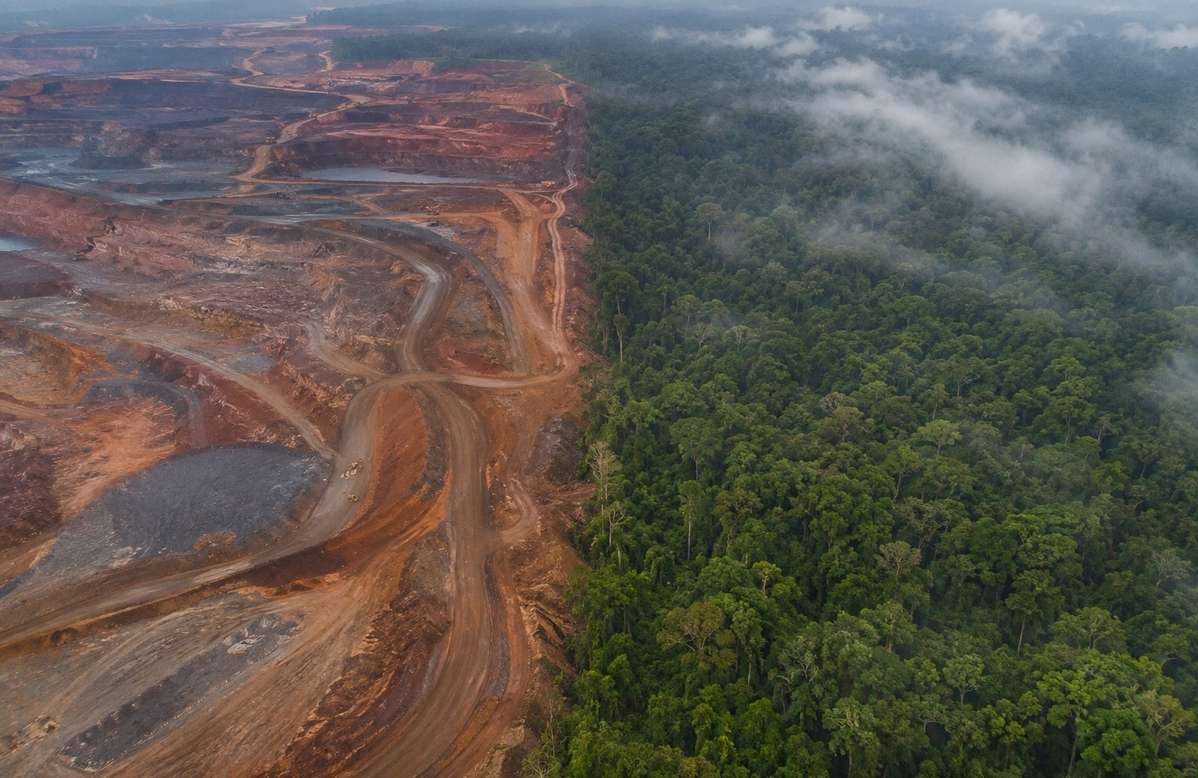
Solastalgia is now a clinically recognised phenomenon. A 2025 scoping review published in BMJ Mental Health examined nineteen studies encompassing more than five thousand participants across Australia, Germany, Peru, and the United States. The researchers found consistent, statistically significant correlations between solastalgia and depression, anxiety, and PTSD. Notably, they observed that slow-onset environmental destruction — the kind that never makes the evening news — produced more intense psychological distress than discrete natural disasters. The road that vanishes inch by inch into the sea does more damage to the soul than the storm that takes it in an hour.
For Indigenous communities, whose identity is inseparable from place, solastalgia is not an individual pathology but a collective wound. The Conservation of Resources Theory, applied to these contexts, describes how the loss of ancestral lands constitutes a depletion of critical psychic and cultural resources. When the river is poisoned, when the songlines fracture, when the seasonal markers shift beyond recognition, the distress is not metaphorical. It is the grief of a body watching its own limbs decay.
The Gnostics would have recognised this as the suffering of Sophia in matter. In the Apocryphon of John and related texts, Sophia’s descent produces the material cosmos not through malice but through a necessary error — a divine overflow that becomes entangled in its own creation. The Earth is not a dead rock upon which life happens to occur. In this reading, she is the outermost garment of a divine power who remembers her origin even as she forgets it.
Sophia as Earth: The Divine Feminine in the Soil
In Valentinian and Sethian cosmologies, Sophia is the youngest of the Aeons, the emanation of divine wisdom whose longing to know the Unknowable Father sets in motion the entire drama of creation. Her fall generates the Demiurge, the ignorant creator who fashions the material realm without awareness of the spiritual fullness above. Yet Sophia does not abandon her creation. She remains present within it, concealed in matter like light trapped in stone.
This is not merely poetic theology. It is an ontological claim with radical ecological implications. If the Earth is Sophia — not as metaphor but as the embodied residue of divine overflow — then ecological destruction is not simply a practical crisis. It is a spiritual violence against the very intelligence that sustains embodied life. The Gnostic texts describe Sophia as both Prouneikos and the anima mundi, the world-soul. She is the bridge between Pleroma and Kenoma, between the fullness of divine reality and the emptiness of material existence.
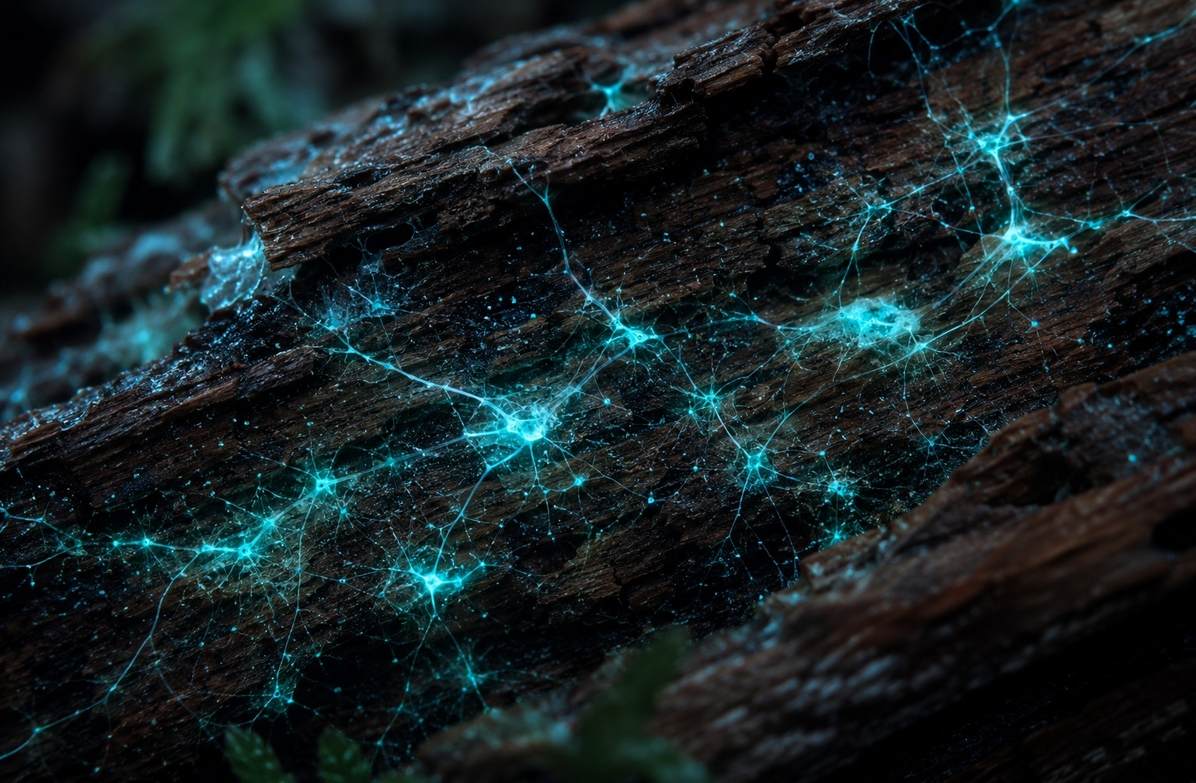
Carl Jung, in his engagement with Gnostic materials recovered in the Nag Hammadi era, identified Sophia with the anima — the feminine soul-image within the psyche that mediates between ego and the unconscious. James Hillman extended this to see Sophia as the very principle of psychological and ecological ensoulment. To recognise the Earth as Sophia is to recover what the ecologist and philosopher David Abram called “the spell of the sensuous”: the participatory perception that indigenous and oral cultures maintained for millennia, in which the landscape itself speaks, remembers, and desires.
The Modern Demiurge: Industrial Extraction as Ignorant Creator
If Sophia is the Earth, then who is the Demiurge in the Anthropocene? The ancient texts describe Yaldabaoth as blind, arrogant, and ignorant of the realms above him. He creates a copy of a copy, a flawed simulacrum of divine reality. He believes himself to be the only god, and his creation is a closed system designed to keep divine sparks trapped in cycles of reincarnation and forgetting.
The modern Demiurge is not a single entity but a system: the extractive-industrial complex that treats the Earth as inert resource rather than ensouled matrix. It is the cognitive framework that measures value only through quantification, that replaces reciprocity with extraction, and that substitutes technological control for participatory relationship. Like Yaldabaoth, this system is characterised by ignorance of any reality beyond its own operational parameters. It cannot recognise Sophia because it has never known the Pleroma.
Environmental doomism — the pervasive sense that collapse is inevitable and resistance futile — is, in this reading, a theological error disguised as realism. It is the assumption that the Demiurge’s creation is the only possible world, that his flaws are absolute, and that no light persists beneath the crust of exploitation. The Gnostics rejected precisely this assumption. They insisted that the Demiurge’s realm, however totalitarian it appears, is derivative, partial, and ultimately permeable.
The Archons of Ecocide: Inorganic Forces Binding the Planet
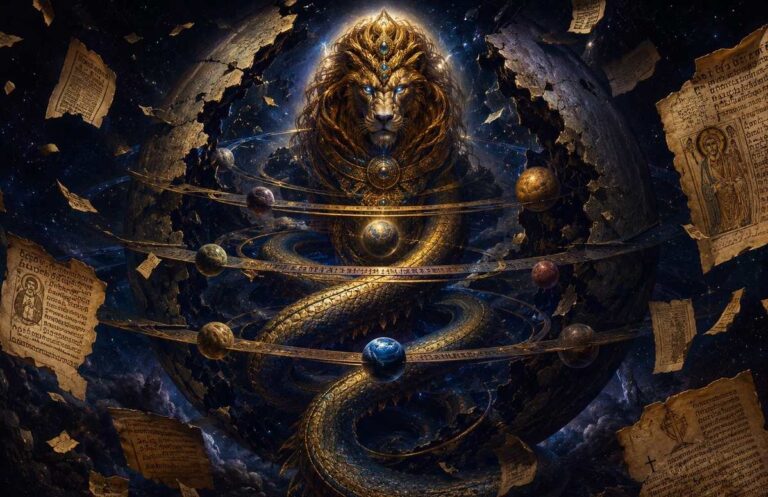
In the Hypostasis of the Archons and related texts, the seven planetary rulers — the Hebdomad — govern the material spheres and prevent souls from ascending. Each archon is associated with a celestial body and a specific form of binding: Saturn with time and limitation, Jupiter with law and social order, Mars with violence and division, the Sun with egoic radiance, Venus with desire and attachment, Mercury with commerce and deception, and the Moon with cyclical illusion and memory.
Reinterpreted ecologically, these bindings map with disturbing precision onto the forces of contemporary ecocide. The archon of commerce and deception presides over greenwashing and carbon markets that substitute symbolic action for systemic change. The archon of law and social order enforces property rights that privatise the commons. The archon of violence and division fuels resource wars and the militarisation of extractive frontiers. The archon of cyclical illusion generates the narrative that technology will save us, that the next innovation will interrupt the pattern of destruction.

These are not supernatural entities in the literal sense. They are inorganic systemic intelligences — patterns of behaviour, institutional logics, and perceptual habits that operate with a consistency indistinguishable from agency. The Gnostics understood that the archons feed on ignorance. In ecological terms, they feed on the severance between human consciousness and the living world. Where participation becomes impossible, extraction becomes inevitable.
The Neurological Virus: How Perceptual Severance Enables Destruction
David Abram’s groundbreaking work, The Spell of the Sensuous (1996), argues that the shift from oral to literate culture fundamentally altered human perception, severing the synaesthetic, participatory engagement with the more-than-human world. The alphabet, he proposes, enabled a kind of cognitive abstraction that made it possible to treat nature as passive backdrop rather than animate presence. This was not a technological failure but a perceptual transformation — a “forgetting of the air,” as he puts it, in which the very medium of our existence becomes invisible.
In Gnostic terms, this is the neurological virus: a perceptual infection that renders the ensouled world inert. It operates not through coercion but through the gradual replacement of direct experience with representation. The screen mediates the forest. The data point replaces the watershed. The concept of “nature” replaces nature itself. Once this infection takes hold, the destruction of the living world becomes psychologically tolerable because the world is no longer perceived as living.
The virus is self-replicating. It produces subjects who cannot feel solastalgia because they have no place to lose. It generates environmental pessimism not as an emotional response to genuine crisis but as a cognitive default — the logical conclusion of a perceptual system that has already killed the world in advance of its physical destruction. The Gnostics called this condition hylic existence: a state of material identification so complete that the divine spark is not merely hidden but actively forgotten.
Matter as Prison and Sanctuary: The Gnostic Paradox of the Living World
Gnosticism is often mischaracterised as body-hating dualism that rejects matter as evil. This is a caricature. While some sects embraced extreme asceticism, Valentinian Gnosticism in particular maintained a more nuanced view: materiality is not a separate substance from the divine but an error of perception that becomes symbolised as creation. Matter is both prison and sanctuary. It is the realm of the Demiurge’s flawed architecture, yet it is also the very substance through which Sophia’s light remains accessible.
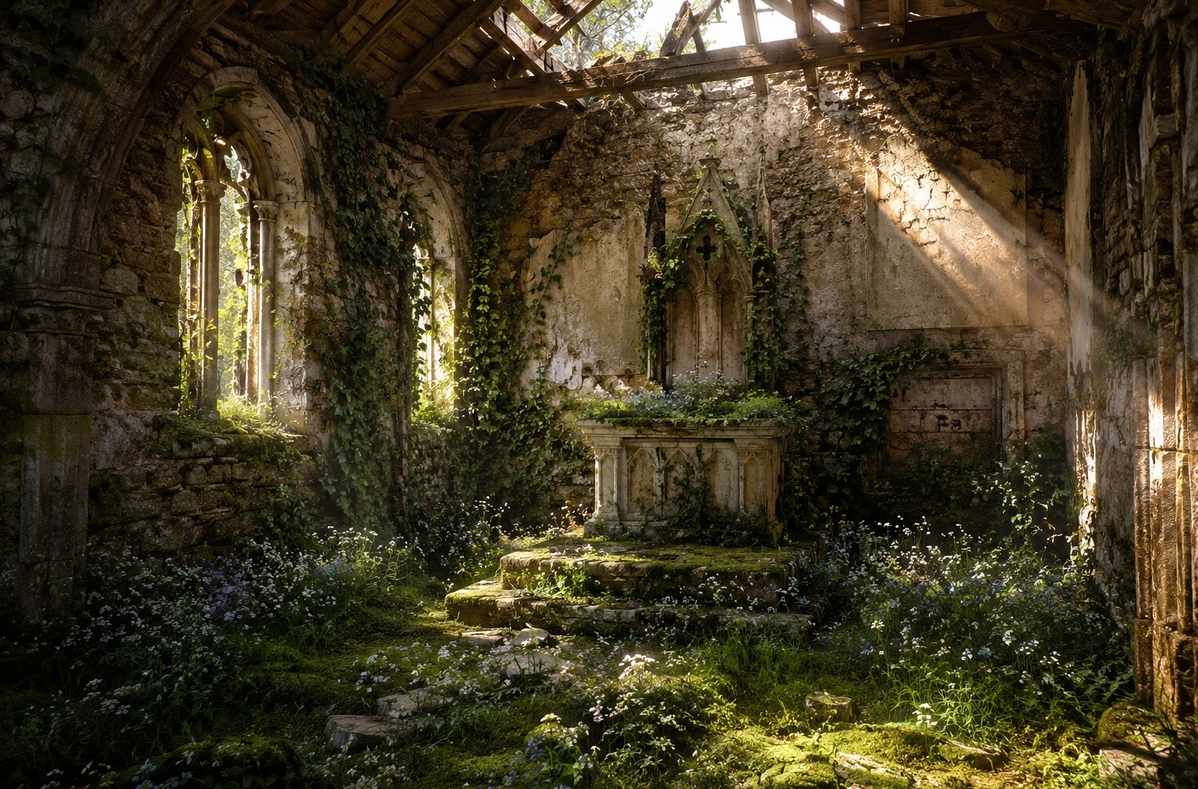
This paradox is essential for ecological Gnosticism. It refuses both the New Age romanticism that denies the reality of ecological collapse and the doomist nihilism that denies the persistence of sacred presence within the damaged world. The polluted river still carries Sophia’s memory in its chemistry. The clear-cut forest still holds her pattern in the mycelial networks beneath the stumps. The body still knows what the mind has forgotten.
To recognise this is to refuse the binary of pristine wilderness and ruined wasteland. It is to perceive, instead, the Gnostic continuum: a world in which the divine spark is distributed unevenly, concentrated in certain places, certain moments, certain practices of attention. The task is not to escape matter but to refine perception within it — to recover the gnosis that matter itself is a mode of divine expression, however obscured.
Gnosis as Ecological Reconnection: Recognition Beyond Doomism
Gnosis is not belief. It is not optimism, hope, or positive thinking. It is direct, experiential knowledge of the divine spark within oneself and within the world. In ecological terms, it is the recovery of participatory perception: the capacity to feel oneself as a node within the synaptic network of the ensouled Earth.
This recovery is not merely psychological. It has practical, political, and spiritual dimensions. Psychologically, it addresses solastalgia by restoring the capacity to grieve relationally — to mourn the Earth not as an abstract system but as a wounded companion. Politically, it generates what the Gnostics called parrhesia, fearless speech: the courage to name the archons and their operations without succumbing to their narrative control. Spiritually, it reopens the path of ascent — not as escape from the world, but as the recognition that the world itself is permeable, that Sophia’s light persists, and that the Demiurge’s reign is provisional.

The contemporary Gnostic does not retreat into esoteric individualism. She joins the lineage of resistance that stretches from the ancient mystics to the land-defenders of the present. She recognises that ecological restoration and spiritual awakening are not separate projects. To replant a forest is to assist Sophia’s remembering. To clean a river is to restore a pathway of gnosis. To sit in silent attention with a single tree is to participate in the very knowledge the archons most fear: that the world is alive, aware, and awaiting recognition.
The Earth does not need us to save her in the manner of the Demiurge — through control, extraction, and technological dominion. She needs us to recognise her. This recognition is the beginning of every authentic ecology. It is also the oldest spiritual practice in the world: the simple, radical act of paying attention until the world speaks back.
Frequently Asked Questions
What is solastalgia and how does it relate to Gnosticism?
Solastalgia is the distress caused by environmental change in one’s home environment, coined by Glenn Albrecht in 2003. It is the homesickness felt while still at home. Gnosticism offers a mythic framework for this grief by recognising the Earth as Sophia — a divine intelligence whose suffering in matter mirrors the psychological suffering of those who witness ecological destruction.
Who is Sophia in Gnostic ecology?
Sophia is the divine wisdom and youngest of the Aeons in Gnostic cosmology. Her descent from the Pleroma generates the material world. In ecological readings, Sophia is understood as the anima mundi or world-soul — the ensouled intelligence of the Earth itself, present within matter even after her fall.
What is the modern Demiurge in environmental terms?
The modern Demiurge is not a person but a system: the extractive-industrial complex that treats the Earth as inert resource. Like the ancient Yaldabaoth, it is ignorant of higher realities, believes itself sovereign, and creates a closed system of exploitation that traps human consciousness in cycles of consumption and forgetting.
How do the Archons function as forces of ecological destruction?
The Archons are reinterpreted as inorganic systemic intelligences — institutional logics, perceptual habits, and economic patterns that bind consciousness to destructive materialism. Commerce, legalised extraction, technological solutionism, and perceptual severance each function as archonic forces that prevent ecological recognition and maintain the status quo.
What does Gnosticism say about the nature of matter and the Earth?
Contrary to popular caricature, Gnosticism — especially Valentinian strains — does not declare matter evil. It sees materiality as an error of perception that contains divine sparks. Matter is both prison and sanctuary: the flawed architecture of the Demiurge, yet the very substance through which Sophia’s light remains accessible to those who develop gnosis.
What is the neurological virus of ecological disconnection?
The neurological virus is a metaphor for the perceptual severance described by David Abram and others: the cognitive shift — accelerated by literacy, abstraction, and digital mediation — that renders the animate world inert. It is the condition of being unable to perceive the Earth as living, which makes ecological destruction psychologically tolerable.
How can gnosis help address ecological grief and environmental doomism?
Gnosis — direct experiential knowledge — restores participatory perception. It allows the grieving person to recognise the Earth as ensouled companion rather than abstract system. This recognition transforms doomism (the belief that the Demiurge’s world is the only world) into informed action rooted in relationship, courage, and the certainty that Sophia’s light persists within the wounded world.
Further Reading
Explore these ZenithEye articles to deepen your understanding of Gnostic cosmology, ecological perception, and the path of recognition.
- The Sophia Myth: Three Falls, Three Redemptions Across Gnostic Schools — A complete guide to Sophia’s descent, her presence in matter, and the path of restoration in Sethian, Valentinian, and modern readings.
- Pleroma and Kenoma: The Foundational Geography of Gnostic Cosmology — Understanding the divine fullness and the emptiness of material existence, and how Sophia bridges both realms.
- The Archons Feed on Suffering: Gnosticism as Political Critique — How the archons operate as systemic forces in the modern world, and why recognition is the first act of resistance.
- Archons: The Ruling Powers That Shape Reality — A detailed examination of the Hebdomad, their planetary associations, and how they prevent souls — and species — from ascending.
- The Digital Demiurge: AI as the New Yaldabaoth — How modern technological systems replicate the Demiurge’s ignorance and what quantum consciousness offers as an escape route.
- Doomscrolling and the Cortisol Cascade: Addiction to the Apocalypse — The neurological and psychological mechanisms behind environmental pessimism, and how to break the cycle of passive despair.
- The Resurrection of the Senses: Anhedonia’s Defeat and the Return of Aesthetic Gnosis — Restoring participatory perception through the senses, and why sensory awakening is essential to ecological recognition.
- Body Against Algorithm: Reclaiming Embodiment — How the body remembers what the screen forgets, and why ecological reconnection begins with somatic awareness.
- Entity Gnosis: The Divine Spark and the Geography of Awakening — The three natures (hylic, psychic, pneumatic) and how gnosis transforms our relationship with matter, self, and world.
- Nag Hammadi Library: The Complete Guide to Gnostic Scriptures — The definitive introduction to the texts that preserve Sophia’s voice, the Demiurge’s folly, and the path of recognition.
References and Sources
This article draws upon environmental psychology, phenomenological ecology, and critical scholarship on Gnostic cosmology. Sources are grouped by discipline for clarity.
Environmental Psychology and Ecological Grief
- Albrecht, Glenn. (2019). Earth Emotions: New Words for a New World. Cornell University Press.
- Vela Sandquist, E., et al. (2025). “Solastalgia and mental health: a scoping review.” BMJ Mental Health, 29(3). doi:10.1136/bmjmhc-2025-301428
- Agudelo-Hernandez, S., & Guapacha-Montoya, J. (2025). “Psychosocial determinants of solastalgia in children and young people.” PMC, 12811544.
- Abram, David. (1996). The Spell of the Sensuous: Perception and Language in a More-Than-Human World. Pantheon Books.
Gnostic Studies and Critical Editions
- Layton, Bentley. (1987). The Gnostic Scriptures: A New Translation with Annotations and Introductions. Doubleday.
- Robinson, James M. (Ed.). (1990). The Nag Hammadi Library in English. HarperSanFrancisco.
- Turner, John D. (2001). Sethian Gnosticism and the Platonic Tradition. Presses de l’Universite Laval.
- Irenaeus of Lyons. (c. 180 CE). Adversus Haereses. Translated in The Ante-Nicene Fathers, Vol. 1. Christian Literature Publishing Co.
Psychology and Philosophy of Religion
- Jung, Carl Gustav. (1951). Aion: Researches into the Phenomenology of the Self. Princeton University Press.
- Hillman, James. (2006). The Soul’s Code: In Search of Character and Calling. Random House.
- Quispel, Gilles. (1981). “Gnosticism from its origins to the Middle Ages.” In The Encyclopedia of Religion, Vol. 5. Macmillan.
Safety Notice: This article explores ecological grief, solastalgia, and climate distress. It does not constitute medical, psychological, or therapeutic advice. If you are experiencing severe anxiety, depression, or suicidal thoughts related to environmental change, please contact a mental health professional, your GP, or a crisis support service immediately. Climate distress is a rational response to real conditions, and support is available.