
The Resurrection of the Senses: Anhedonia’s Defeat and the Return of Aesthetic Gnosis
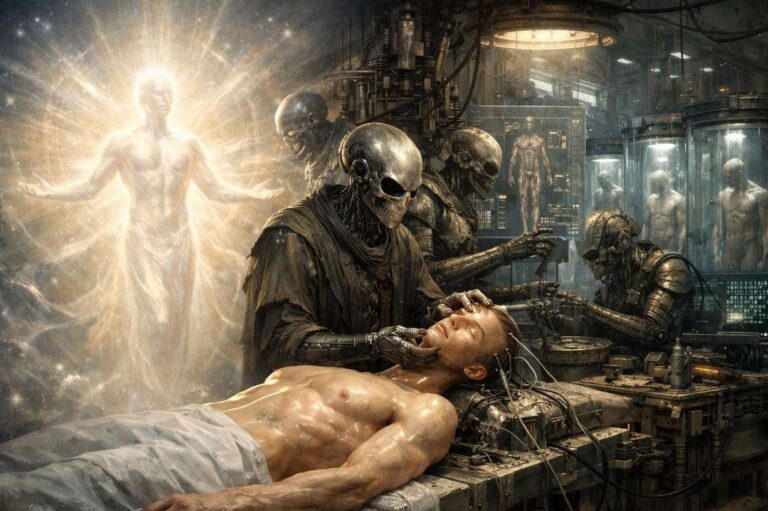
You have passed through the grey. The dark night has burned away the capacity for cheap sensation, leaving you numb, ashen, convinced that beauty was a lie told to children. Then, without warning, the return: the sky is not blue but impossibly blue, a violence of azure that hurts the eyes with its generosity. The orange is not food but a sunburst of citrus collapsing on the tongue. Music is no longer sound but architecture, building cathedrals in the chest cavity. This is the resurrection of the senses–not the dulling of the ecstatic through habituation, but the sharpening of perception until the mundane becomes the miraculous.
This article explores what contemplative traditions have long called aesthetic gnosis: knowing through direct sensory participation rather than conceptual mediation. It draws on Gnostic cosmology, contemporary neuroaesthetics, and the phenomenology of perception to map how the senses can become instruments of recognition rather than mere survival tools. Whether approached as literal physiology, symbolic psychology, or theological cosmology, the resurrection of the senses offers a framework for understanding why the world appears newly made after periods of profound inner dissolution.
Table of Contents
- Through the Grey: The Dark Night and Sensory Loss
- Kenoma and Pleroma: Two Orders of Perception
- The Neurobiology of Re-enchantment
- The Hierarchy of Sensation
- The Discipline of Delight
- Practices for Cultivating Aesthetic Gnosis
- Frequently Asked Questions
- Further Reading
- References and Sources

Through the Grey: The Dark Night and Sensory Loss
The term dark night of the soul originates with the sixteenth-century Spanish mystic St. John of the Cross, who described a period of profound spiritual desolation in which the individual loses access to the meanings, identities, and frameworks that previously organised inner life. In contemporary psychological usage, the dark night refers to a crisis of identity, meaning, and self-coherence–often precipitated by major life transitions, losses, or the gradual exhaustion of a self-concept built on achievement, role, or external validation.
One of the most disorienting features of this passage is anhedonia–the inability to feel pleasure. Clinically, anhedonia is a core symptom of major depressive disorder, characterised by diminished interest or pleasure in previously rewarding activities. In the context of spiritual transformation, however, anhedonia assumes a different quality. Thomas Moore, psychotherapist and former monk, distinguishes the dark night from clinical depression by its particular quality of purposeful suffering–a sense, even in the depths, that something is being worked, something is being shed, something is being prepared.
The dark night is not merely a psychological event. It has neurobiological dimensions. Lisa Feldman Barrett’s research on predictive processing describes the brain as a prediction machine that constantly generates expectations about self, world, and meaning based on prior experience. When internal developmental pressures or major disruptions challenge the existing predictive framework profoundly enough, the result is existential disorientation: the brain’s meaning-making systems are unable to generate adequate predictions, and the person experiences this as a profound loss of ground.
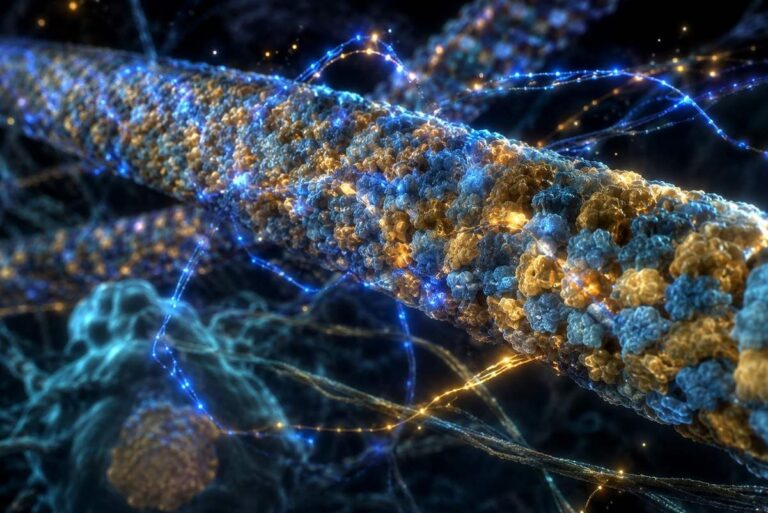
From this perspective, anhedonia during spiritual crisis is not simply a symptom to be medicated away. It is the temporary collapse of the reward-prediction apparatus–the brain’s refusal to provide dopaminergic confirmation for experiences that no longer align with the emerging identity structure. The old pleasures fail to pleasure because they belonged to the old self. The numbness is not pathology but preparation: the sensory system is clearing its cache, preparing to receive new data without the filters of habit and expectation.
Kenoma and Pleroma: Two Orders of Perception
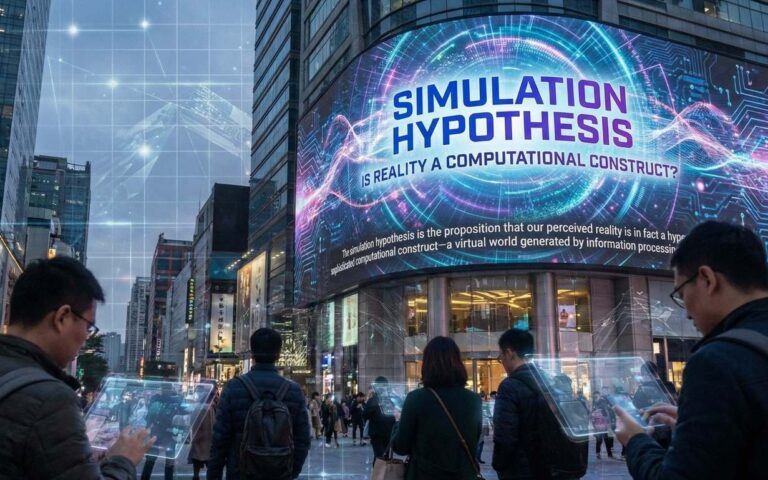
Gnostic cosmology distinguishes between two realms: the kenoma and the pleroma. The kenoma–literally “emptiness” or “deficiency”–is the realm of material existence as experienced through the unawakened senses. It is not evil, but it is impoverished: a simulation running on reduced bandwidth, offering entertainment without nourishment, stimulation without significance. The archons, in this framework, are not merely cosmic prison guards but perceptual filters–the inherited templates that reduce the world’s infinite texture to manageable, consumable, forgettable categories.
The pleroma, by contrast, is the realm of fullness, the original pattern of which the material world is a distant echo. It is not a place but a mode of perception–the capacity to apprehend the inexhaustible depth of what is already present. Where the kenoma offers entertainment, the pleroma offers aesthesia: the full participation of the senses in the divine. The archons would have you consume images; the Gnostic insists on the direct, unmediated encounter with the real, which is always, inexhaustibly, beautiful.
The world is not a backdrop for your drama; it is the revelation of the pleroma in matter. Touch it. Taste it. The resurrection is now.
ZenithEye Editorial Position
This is not a call to hedonism. The distinction is crucial. Hedonism seeks pleasure as escape from discomfort; aesthetic gnosis seeks perception as participation in truth. The hedonist consumes; the Gnostic recognises. The hedonist’s pleasure diminishes with repetition; the Gnostic’s perception deepens. The same strawberry that bores the habitual eater becomes, for the awakened senses, a theophany–a showing-forth of the divine through the particular.
The Neurobiology of Re-enchantment
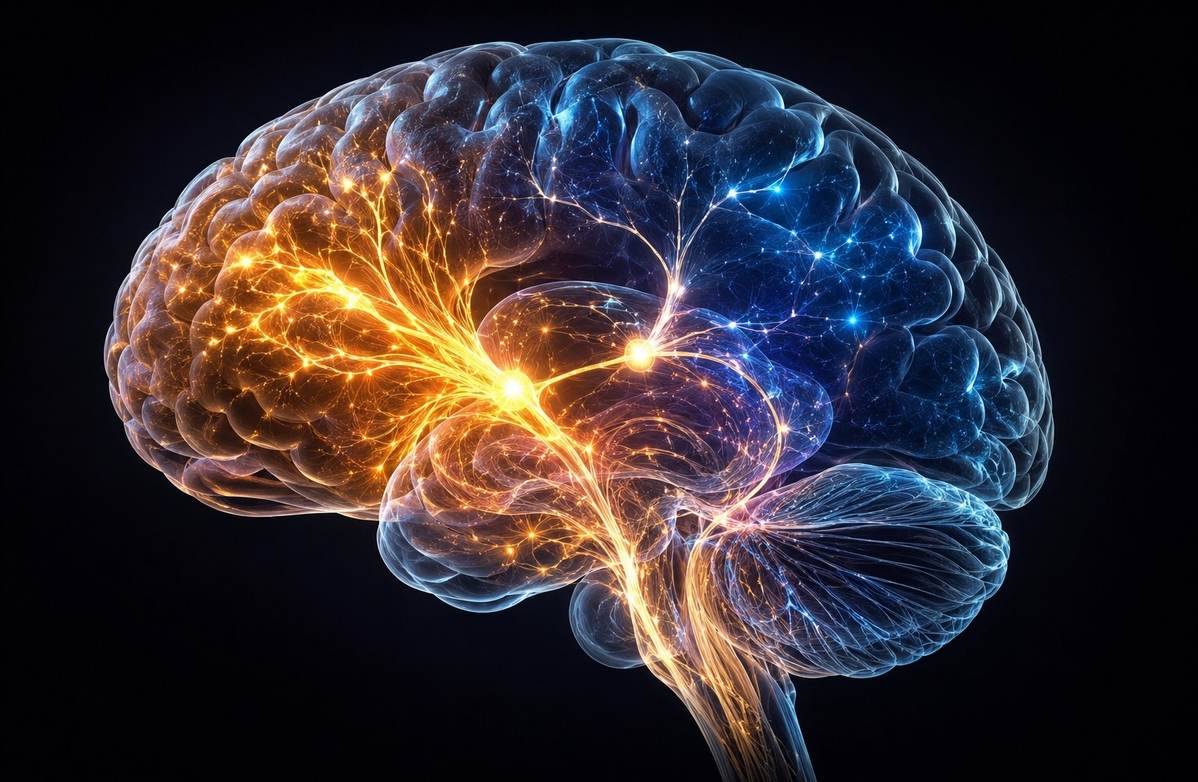
What happens in the brain when the senses resurrect? The research is nascent but suggestive. The default mode network (DMN)–active during rest, self-reflection, and autobiographical memory–appears to play a central role. In depression, the DMN shows hyperconnectivity with limbic regions, contributing to rumination, self-criticism, and recurrent negative thoughts. The DMN, in effect, is the neural correlate of the narrative self: the storyteller that filters all experience through the lens of “what does this mean for me?”
Carhart-Harris and Friston’s REBUS model (Relaxed Beliefs Under Psychedelics) proposes that altered states of consciousness–whether induced by meditation, psychedelics, or profound psychological transformation–temporarily relax the precision of high-level priors in the brain’s predictive hierarchy. The DMN, positioned at the top of this hierarchy, normally suppresses bottom-up sensory information that contradicts the brain’s established predictions. When the DMN’s dominance is reduced–whether acutely through psilocybin or gradually through contemplative practice–sensory information flows more freely through the system, causing a bigger impact on conscious experience.
The result is not chaos but enhanced signal clarity. Research on psilocybin demonstrates decreased DMN integrity coupled with increased between-network connectivity, particularly between the DMN and sensory-processing networks. The brain does not become disordered; it undergoes a temporary shift to a more flexible and integrative state. Applied to the natural transformation described in contemplative literature, this suggests that the “resurrection of the senses” may correspond to a lasting reduction in DMN-driven narrative filtering, allowing raw perceptual data to register with fuller intensity.
Neuroaesthetics–the subdiscipline of cognitive neuroscience concerned with the neural basis of aesthetic experiences–offers additional frameworks. Research at the University of Pennsylvania’s Center for Neuroaesthetics investigates whether there is a common neural currency to beauty across different domains (bodies, nature, objects, spaces), and how aesthetic experiences might be used therapeutically. Preliminary findings suggest that beauty is not merely subjective preference but engages specific neural circuitry associated with reward, attention, and emotional salience–circuitry that may become more responsive after periods of sensory deprivation or psychological recalibration.
The Hierarchy of Sensation
The resurrected senses do not operate randomly. They form a hierarchy–not of value, but of intimacy. Each sense offers a different mode of participation with the world, and each can become an instrument of gnosis when liberated from habitual filtering.
The Tactile Sacrament
Touch regains its innocence. The texture of linen, the weight of a stone, the temperature of another’s skin–these are not means to an end but revelations. The body becomes the organ of gnosis, reading the world in Braille. Neuroscience confirms that tactile experience activates the insula cortex, a region implicated in interoception, empathy, and the integration of bodily states with emotional awareness. When touch is attended to deliberately, it ceases to be background information and becomes foreground revelation.
The Gustatory Epiphany
Food is not fuel but Eucharist. The flavour profile of a strawberry–acid, sugar, the ghost of the soil–becomes a theophany. Eating is communion with the earth, chewing as meditation, digestion as the integration of the external into the internal. The French philosopher Jean Anthelme Brillat-Savarin wrote that “the discovery of a new dish does more for the happiness of the human race than the discovery of a star.” For the awakened palate, every meal is a new dish, every bite a discovery.
The Auditory Architecture
Music is understood not as entertainment but as structure, mathematical relationships made flesh in vibration. The interval of the perfect fifth, esoteric musicology suggests, resonates with the heart centre–a claim that remains outside verified scientific consensus but finds support in the phenomenological reports of practitioners across traditions. The drone of the tanpura, sustained beneath melodic improvisation, creates a field of continuous sound in which the boundary between listener and heard may dissolve. Research on auditory entrainment confirms that sustained rhythmic stimuli can alter brainwave patterns, though claims about chakra activation remain in the territory of traditional teaching rather than clinical fact.
The Visual Pleroma
Sight becomes penetration, not mere reception. To see is to participate in the visibility of the object, to co-create the phenomenon with the light. The sunset is not watched but witnessed, a collaboration between photon and consciousness. Maurice Merleau-Ponty, the French phenomenologist, described vision as a form of “palpation”–the eye touches the object at a distance, and the object touches back. In aesthetic gnosis, this mutual touching becomes explicit: the world is not a picture hanging before the eyes but a living presence that addresses the seer.
The Olfactory Gateway
Smell, the most ancient and least filtered of the senses, offers direct access to the limbic system–the brain’s emotional and memory architecture. A single scent can collapse decades, transporting consciousness instantaneously to places and states long buried under narrative. The resurrected nose recognises that fragrance is not decoration but information: the signature of place, the breath of the earth, the invisible atmosphere that surrounds every object. To smell deeply is to inhale the world itself.

The Discipline of Delight
This is not hedonism. The resurrected senses serve the Work. Beauty becomes the compass–what is beautiful is true, what is ugly is archonic, mechanical, life-denying. The cultivation of aesthetic discernment is the cultivation of spiritual discrimination.
But discernment requires discipline. The senses, once awakened, do not remain so without practice. Habituation–the enemy of aesthesia–returns quickly. The impossibly blue sky becomes merely blue within days if not re-encountered with fresh attention. The strawberry becomes merely food. The music becomes background noise. The discipline of delight is the deliberate, repeated act of encountering the world as if for the first time.
This discipline has nothing to do with moral austerity and everything to do with attentional hygiene. It requires slowing down–not as a lifestyle choice but as a perceptual necessity. The modern world is designed to accelerate consumption and prevent depth. The resurrected senses demand the opposite: duration, patience, the willingness to be surprised. The discipline is simple: choose one sensory experience each day and give it your full, unmediated attention. Do not name it. Do not judge it. Do not compare it. Simply receive it.
Practices for Cultivating Aesthetic Gnosis
The following practices are offered as experiments in perceptual training. They require no doctrinal commitment, only the willingness to test whether the world is more than it appears.
The Five-Minute Feast
Select a single piece of fruit, a square of chocolate, or a sip of wine. Before consuming, examine it visually for one minute–not analytically, but contemplatively, as if it were the first object you had ever seen. Smell it for one minute. Place it in your mouth and do not chew for thirty seconds. Allow the flavours to arrive on their own schedule. Chew slowly, noticing texture, temperature, and the changing profile of taste. Swallow consciously. Wait one minute before speaking or moving. This is not eating; this is communion.
The Sonic Bath
Listen to a single piece of music–classical, drone, or ambient–without multitasking. Lie down, close your eyes, and attend to the sound as if it were a physical substance entering the body. Notice where in the body different frequencies register. Follow the decay of each note into silence. When the mind wanders, return to the breath and the ear. Thirty minutes of this practice, performed daily for one week, often produces noticeable shifts in auditory sensitivity and emotional responsiveness.
The Touch Meditation
Sit in a natural setting–garden, park, or forest. Remove footwear if safe and appropriate. Hold a stone, a leaf, or a piece of wood in both hands. Close your eyes and describe the texture aloud, using only tactile vocabulary: rough, smooth, cool, porous, dense, yielding. Do not name the object. Do not tell its story. Simply report what the fingers know. This practice trains the mind to receive sensory data without the interference of conceptual labels.
The Light Vigil
At sunset, position yourself facing west. Watch the light change for twenty minutes without checking a device, speaking, or engaging in internal commentary. Notice the quality of the light–not merely its colour but its weight, its temperature, its emotional tone. When the sun has descended, sit in the afterglow for five minutes with eyes closed, noticing the after-images on the retina. This practice re-sensitises the visual system to subtle gradations of luminosity that ordinary attention misses.

Frequently Asked Questions
What is aesthetic gnosis?
Aesthetic gnosis is the direct knowing of reality through unmediated sensory participation rather than conceptual analysis. It derives from Gnostic and contemplative traditions that view the senses as potential instruments of spiritual recognition rather than mere survival tools. The term combines ‘aesthesis’ (perception) with ‘gnosis’ (direct knowledge).
Is anhedonia during spiritual awakening the same as clinical depression?
Not necessarily. While both involve diminished pleasure and low mood, clinical depression typically includes neurovegetative symptoms such as profound fatigue, cognitive slowing, and disrupted sleep that respond to biological treatment. The dark night of the soul, by contrast, often carries a sense of purposeful suffering organised around questions of meaning and identity. A trauma-informed therapist can help distinguish between them, and both may coexist.
Does science support the idea that spiritual awakening enhances the senses?
Research on the default mode network and psychedelic states suggests that reduced top-down filtering can acutely enhance sensory clarity. Carhart-Harris and Friston’s REBUS model demonstrates that relaxing high-level brain priors allows bottom-up sensory information to flow more freely. However, claims about permanent sensory supersensitivity after awakening remain speculative and require more longitudinal research.
What is the difference between kenoma and pleroma?
In Valentinian and Sethian Gnostic cosmology, the kenoma is the realm of deficiency, emptiness, or material existence experienced through unawakened perception. The pleroma is the realm of fullness, the original divine pattern of which the material world is an echo. These are not merely places but modes of perception–the kenoma reduces reality to consumable categories, while the pleroma apprehends inexhaustible depth.
Is this practice compatible with clinical depression or PTSD?
The practices described here are contemplative and sensory-based, not therapeutic interventions. If you have clinical depression, PTSD, or complex trauma, please consult a qualified mental health professional before undertaking intensive sensory-awakening practices. Some individuals with trauma histories may find that heightened sensory awareness initially triggers distress rather than relief. These methods complement but do not replace clinical treatment.
How long does the resurrection of the senses last?
The initial intensity–the impossibly blue sky, the overwhelming taste–typically softens within days to weeks as the brain habituates. However, the underlying capacity for deep perception can be maintained through regular practice. The discipline of delight is not about sustaining peak intensity but about preventing the return of habitual dullness.
What is the REBUS model and how does it relate to perception?
REBUS stands for Relaxed Beliefs Under Psychedelics, a model developed by Carhart-Harris and Friston that explains how altered states reduce the brain’s top-down predictive filtering. In normal waking consciousness, high-level priors in the default mode network suppress sensory information that contradicts expectations. When these priors relax–through meditation, psychedelics, or profound psychological transformation–raw perceptual data registers with greater intensity and novelty.
Further Reading
- Default Mode Network Dissolution and the Loss of the Narrative Self — The neurobiology of ego dissolution and how DMN suppression alters perception.
- Embodiment Practices for Grounding Transcendent Experience — Somatic techniques for maintaining presence in the physical vehicle after awakening.
- Gateway of Sensation: Body Scan and Somatic Awareness — Developing monitoring capabilities in the sensory department.
- 7 Integration Practices After Mystical Experience — Essential guidance for grounding mystical experience and stabilising transformation.
- Contemplative Techniques: Methods for Stabilisation — Practical technologies for maintaining presence and grounding awareness.
- States of Knowing: What Happens When Consciousness No Longer Belongs to You — Phenomenology of mystical experience, altered states, and perceptual transformation.
- Nervous System Regulation: The New Meditation — Polyvagal theory, interoception, and the neurobiology of embodied spirituality.
- Four Elements of Consciousness and Spiritual Evolution — Integrating elemental symbolism with the physiology of internal transformation.
- Luminous Darkness: The Hidden Light of the Unconscious — Navigating the dark night and the return of meaning after dissolution.
- The Chronos Trap: Why Awakening Has No Timeline — Understanding the non-linear nature of spiritual transformation and sensory recalibration.
Safety Notice: This article explores advanced contemplative practices involving altered sensory states and psychological transformation. It does not constitute medical, psychological, or spiritual advice. If you have a history of psychosis, bipolar disorder, dissociation, complex trauma, or clinical depression, please consult a trauma-informed therapist before undertaking intensive sensory-awakening practices. Some individuals with trauma histories may find that heightened sensory awareness initially triggers distress. These methods complement but do not replace clinical mental health treatment.
References and Sources
The following sources are organised by category to support both scholarly rigour and independent investigation.
Primary Sources and Critical Editions
- St. John of the Cross. (16th c.). Dark Night of the Soul (Noche Oscura). Translated in The Collected Works of St. John of the Cross. Washington: ICS Publications.
- Merleau-Ponty, M. (1945). Phenomenology of Perception. Paris: Gallimard. (English translation by Colin Smith, 1962.)
- Brillat-Savarin, J. A. (1825). The Physiology of Taste (Physiologie du Gout). Paris.
Neuroscientific and Medical Sources
- Carhart-Harris, R. L., & Friston, K. J. (2019). REBUS and the anarchic brain: Toward a unified model of the brain action of psychedelics. Pharmacological Reviews, 71(3), 316-344.
- Carhart-Harris, R. L., et al. (2012). Neural correlates of the psychedelic state as determined by fMRI studies with psilocybin. Proceedings of the National Academy of Sciences, 109(6), 2138-2143.
- Li, J., et al. (2023). The journey of the default mode network: Development, function, and impact on mental health. Biomedicines, 11(3), 844.
- Barrett, L. F. (2017). How Emotions Are Made: The Secret Life of the Brain. Boston: Houghton Mifflin Harcourt. (Predictive processing framework.)
Neuroaesthetics and Phenomenology
- Chatterjee, A., & Vartanian, O. (Eds.). (2024). Neuroaesthetics. Cambridge: MIT Press. (Penn Center for Neuroaesthetics research agenda.)
- Harvard CAMLab. (2026). Neuroaesthetics: At the Threshold of Consciousness. Exhibition, March 21-22. Harvard University.
Psychological and Contemplative Sources
- Moore, T. (2004). Dark Nights of the Soul: A Guide to Finding Your Way Through Life’s Ordeals. New York: Gotham Books.
- Wright, A. (2026). The dark night of the soul: What it is, why it happens, and how to move through it. anniewright.com.