What Are Archons?The Ruling Powers of The Gnostic Cosmos
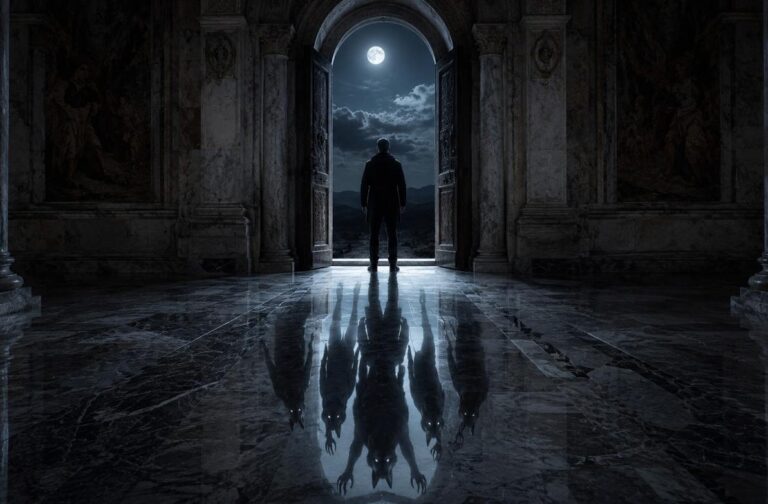
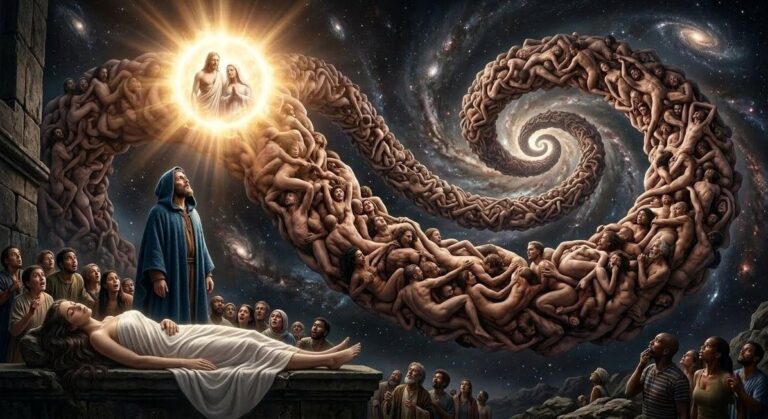
Archons are rulers, powers, or authorities. In many Gnostic texts, they govern or distort the lower world and obstruct the soul’s awakening. The term names not a single enemy but a class of beings, forces, or administrative structures that stand between the human being and its recognition of divine origin. They are the middle management of a cosmos that does not want its inhabitants to discover they are prisoners.
This article explores what the archons actually are in ancient Gnostic literature, how they function within cosmology and psychology, why they are inseparable from the figure of the Demiurge, and how the concept has been reinterpreted in modern spiritual, philosophical, and psychological discourse. It also distinguishes the ancient teaching from its more recent sensationalist adaptations, offering a grounded account of one of Gnosticism’s most misunderstood concepts.
Table of Contents
- Etymology and Ancient Origins: From Greek Magistrate to Cosmic Warden
- The Seven Planetary Rulers and Their Domains
- Yaldabaoth: The Chief Archon and the Blind God
- The Archons in the Nag Hammadi Texts
- Mechanisms of Control: Forgetting, Counterfeit, and Capture
- Archons and the Soul’s Ascent Through the Spheres
- Modern Interpretations: Systems, Complexes, and Invisible Architecture
- Why the Archon Concept Persists Today
- A Necessary Distinction: Scholarship and Sensationalism
- Frequently Asked Questions
- Further Reading
Etymology and Ancient Origins: From Greek Magistrate to Cosmic Warden
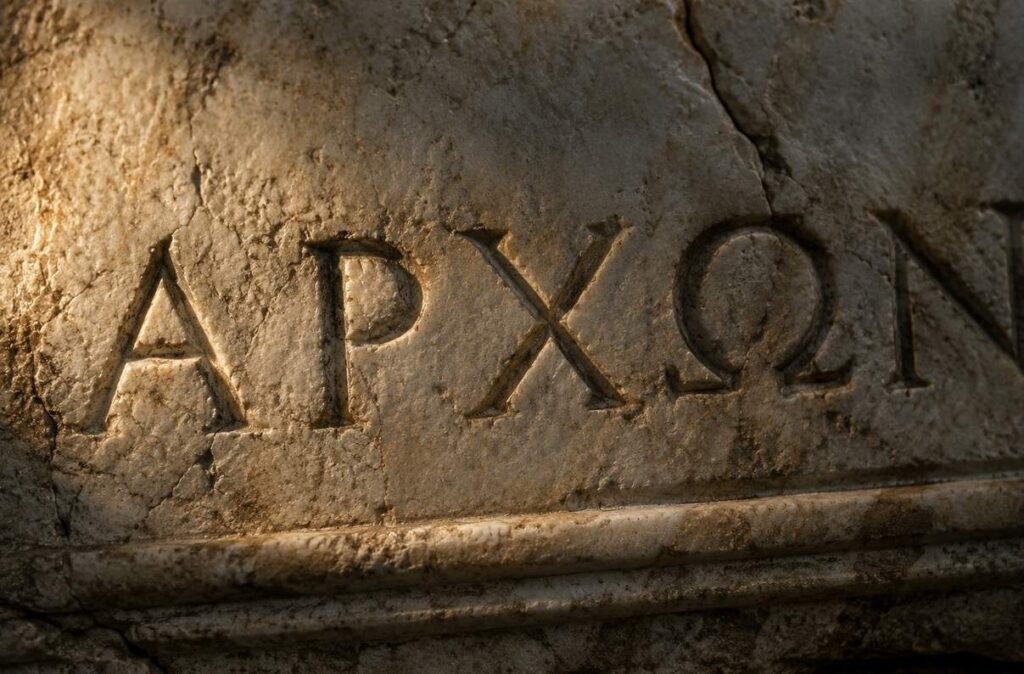
The Greek word archon (ἄρχων) originally meant ruler, commander, or chief magistrate. In classical Athens, the archons were high officials who administered civic law and presided over religious ceremonies. The term carried no negative connotation. It simply denoted legitimate authority within the polis.
In Gnostic literature, the word was repurposed to describe a very different kind of authority. The archons are not evil in the absolute sense. They are not demons from a hell beneath the world. They are administrators of a middle realm–the kenoma, the realm of deficiency–who maintain order, enforce limits, and prevent the divine spark within human beings from recognising its origin and returning to the pleroma, the fullness of divine reality. Their rule is characterised not by malice but by ignorance, limitation, and institutional inertia. They do not know the highest God, and they do not want their subjects to know him either.
This repurposing of a civic term for cosmic administration is significant. The Gnostics did not invent a new vocabulary of evil. They took the language of legitimate earthly power and applied it to the forces that keep human beings asleep. The implication is subtle but decisive: the problem is not power itself, but power that mistakes its jurisdiction for the whole.
The Seven Planetary Rulers and Their Domains
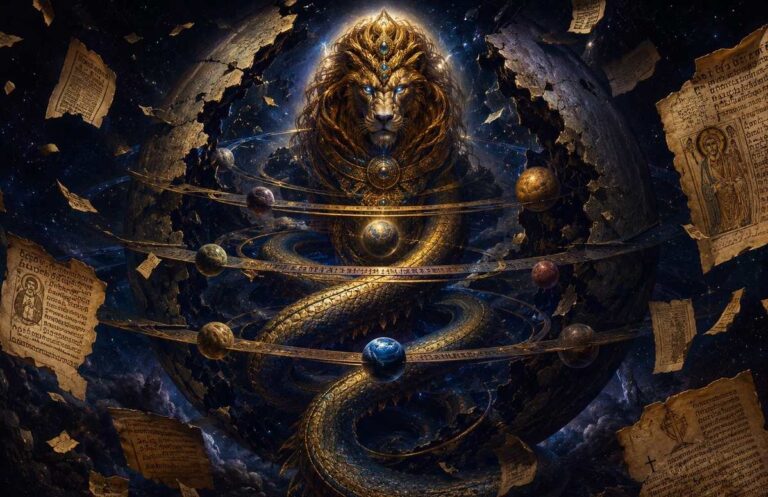
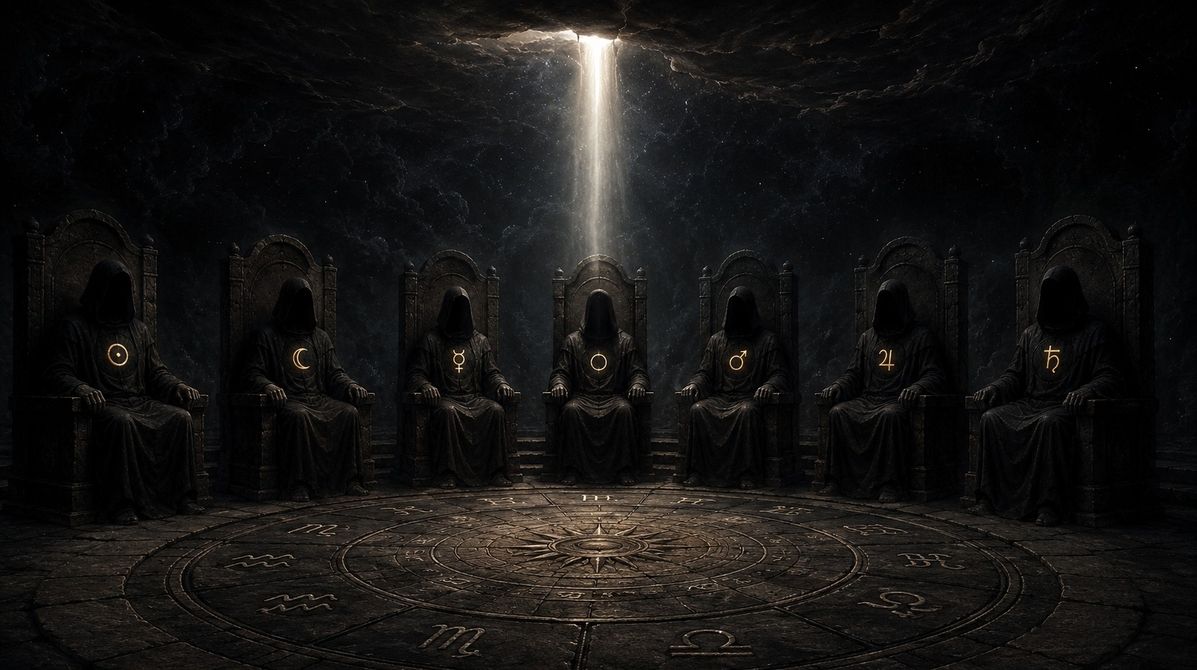
Nearly all Gnostic systems describe a hierarchy of seven archons, each associated with one of the classical planetary spheres: the Moon, Mercury, Venus, the Sun, Mars, Jupiter, and Saturn. This reflects the widespread ancient cosmology in which the visible cosmos was structured as a series of concentric spheres, each governed by a distinct intelligence or power. The soul, in this view, descends through these spheres at birth, acquiring the characteristics and limitations of each planetary domain, and must ascend through them again at death or liberation, confronting each archon and stripping away the accretions of matter, fate, and false identity.
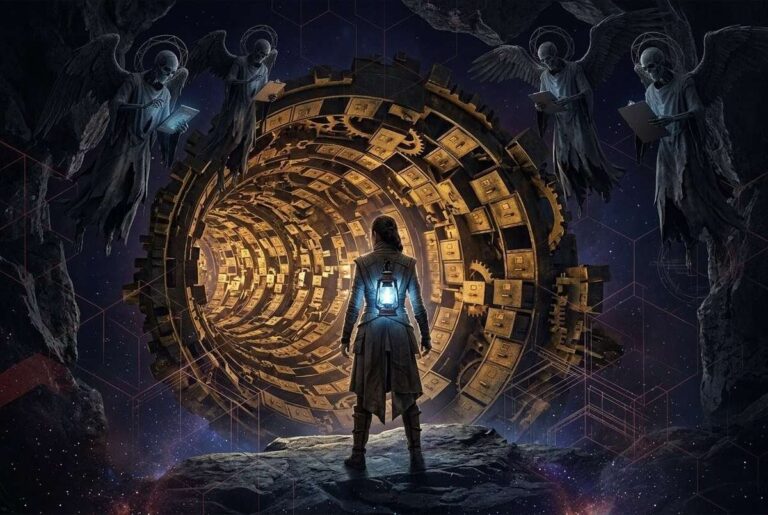
The names of the archons vary across texts. The Apocryphon of John names them Ialdabaoth, Iao, Sabaoth, Adonaios, Elaios, Oreos, and Astaphaios, each corresponding to a planetary sphere and bearing names that echo or distort the names of the Jewish God and other Semitic deities. Irenaeus, in his Against Heresies, preserves a similar list. The First Apocalypse of James describes the archons as toll collectors who demand passwords and seals from the ascending soul, treating the afterlife as a bureaucratic checkpoint system rather than a realm of divine mercy.
The sevenfold structure is not arbitrary. It corresponds to the ancient understanding of the cosmos as a closed system, a machine of fate (heimarmene) in which every human life is determined by planetary influences at birth. The archons, in this context, are not merely obstacles. They are the keepers of a cosmic order that mistakes itself for the totality of reality. To escape their jurisdiction is not to destroy the cosmos but to see through it.
Yaldabaoth: The Chief Archon and the Blind God
At the summit of the archonic hierarchy stands a figure known by many names: Yaldabaoth, Samael, Saklas, Nebro, and sometimes simply the Demiurge. He is the chief archon, the first offspring of Sophia’s fall, and the craftsman who fashioned the material world. In the Apocryphon of John, he is described as a lion-faced serpent, a being of fire and darkness who declares himself the only god because he does not know the divine realm above him.
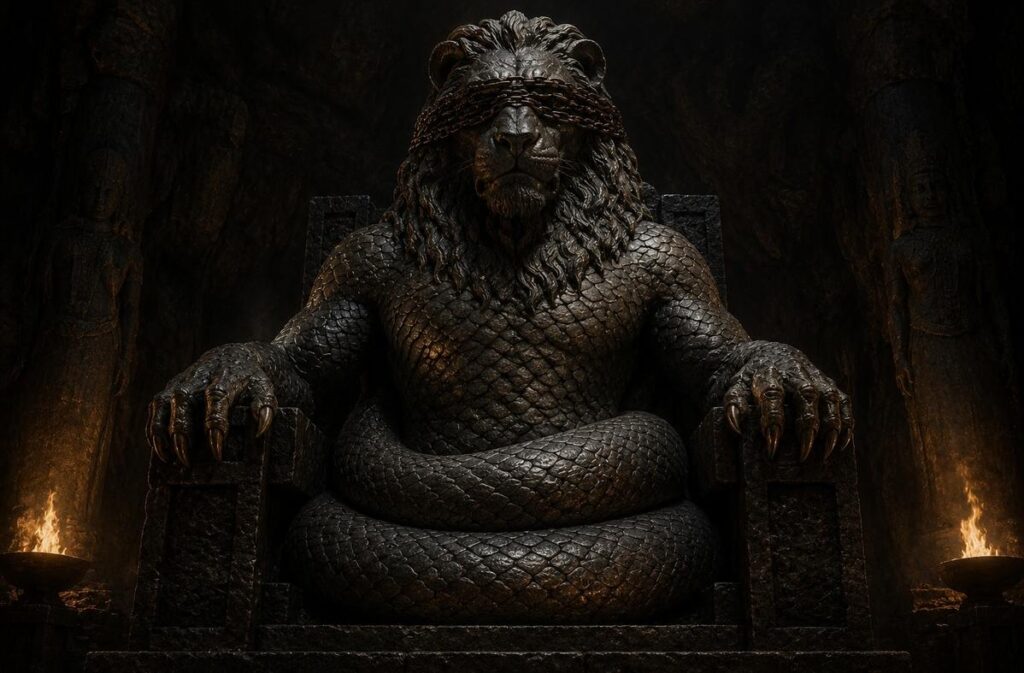
Yaldabaoth’s blindness is not merely physical. It is ontological. He believes himself supreme because his knowledge stops at the ceiling of his own creation. He is the administrator who mistakes his department for the entire organisation. When he creates Adam, he does so from matter, psyche, and the divine spark that has fallen into his realm. He breathes life into the inert body, but the body does not move until the divine spark–the power from above–enters it. Yaldabaoth and his archons are immediately jealous. They seek to trap the divine element within the human being, surrounding it with flesh, desire, forgetfulness, and the illusion of autonomous selfhood.
The figure of Yaldabaoth is one of the most psychologically penetrating images in ancient religious literature. He represents not evil in its purest form but incompetence elevated to absolute authority. He is dangerous precisely because he is limited, proud, and unaware of his own limits. In this respect, the Gnostic archons are not fantasy villains. They are recognisable types: the ignorant administrator, the insecure ruler, the system that defends itself against knowledge of its own insufficiency.
The Archons in the Nag Hammadi Texts
The Nag Hammadi Library contains several tractates in which the archons play central roles. Each text offers a different angle on their nature and function.
The Apocryphon of John
The longest and most detailed account of archonic activity appears in the Apocryphon of John. Here, Yaldabaoth creates the material world and the first human being in imitation of the divine realm above. When Adam proves more intelligent than his creator, Yaldabaoth casts him into the lowest matter and creates Eve as a further distraction. The archons then attempt to rape Eve, but she escapes into a tree, and the divine power within her is transferred to her daughter Norea. The text describes the archons as simultaneously powerful and pathetic: they can create systems of control but cannot comprehend the light they are trying to contain.
The Hypostasis of the Archons
The Hypostasis of the Archons (literally, The Reality of the Archons) offers a more narrative treatment. The archons see a reflection of the divine realm in the waters below and attempt to seize it, only to discover that they have grasped a shadow. They create Adam from matter and breath, but the divine spirit enters from above without their knowledge. When they realise that the human being contains a power they cannot control, they devise the flood to destroy humanity–a classic bureaucratic overreaction. The text is notable for its sympathetic treatment of Eve, who teaches Adam the true nature of their condition, and for its portrayal of the archons as fundamentally deluded rather than purely malevolent.
The First Apocalypse of James
In the First Apocalypse of James, the archons appear as interrogators and toll collectors who block the soul’s ascent after death. James is instructed to give specific passwords and to display the seals he has received through gnosis. The archons are described as fearful and obedient to higher powers, suggesting that their authority is delegated rather than absolute. The text treats them as obstacles to be navigated rather than enemies to be destroyed, emphasising knowledge and preparation over confrontation.
Mechanisms of Control: Forgetting, Counterfeit, and Capture
The archons maintain their rule through specific mechanisms that operate on both the cosmic and psychological levels. Understanding these mechanisms is essential for understanding how Gnostic texts frame the problem of human alienation.
The Veil of Forgetting
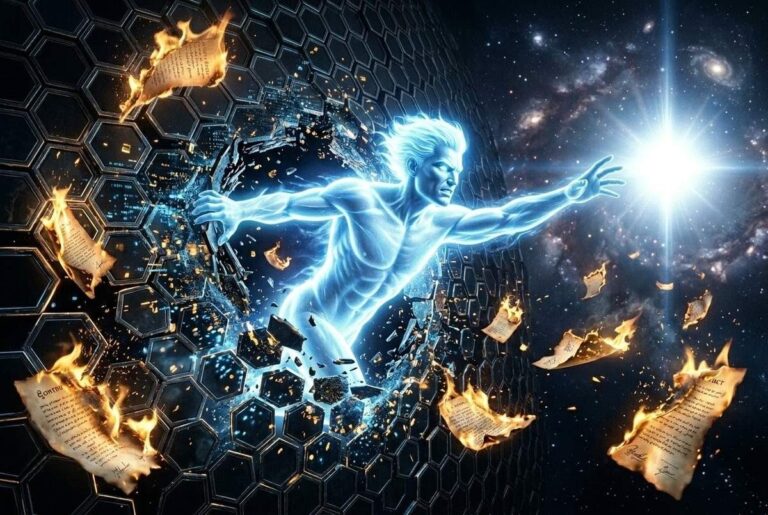
The primary archonic weapon is not force but amnesia. The human being enters the world having forgotten its divine origin. This forgetting is not merely a personal failure; it is built into the architecture of incarnation. The soul descends through the planetary spheres, acquiring at each level a coating of material substance, psychic habit, and false identity. By the time it reaches the body, it no longer remembers what it was. The archons do not need to guard a conscious prisoner. They guard a sleeper who believes the cell is the whole world.
The Counterfeit Spirit
The Apocryphon of John and related texts describe a “counterfeit spirit” (antimimon pneuma) that accompanies the soul through its incarnations. This spirit mimics true spiritual guidance while actually reinforcing archonic control. It produces false prophecy, spiritual pride, and the illusion of advancement without genuine transformation. In modern terms, the counterfeit spirit is the mechanism by which partial insights are captured and redirected back into the system. It is the voice that tells the seeker they have arrived when they have only changed rooms in the same prison.
The Harvest of Suffering
Some Gnostic texts suggest that the archons feed on human suffering, distraction, and emotional turbulence. This is not a literal vampirism but a systemic principle: the more the human being is absorbed in fear, desire, conflict, and identification with the material body, the less likely it is to awaken. The archonic system, in this view, is self-sustaining. It does not require conscious conspiracy. It requires only that its inhabitants remain too occupied to ask fundamental questions.

Archons and the Soul’s Ascent Through the Spheres
The archons are not merely obstacles to earthly happiness. They are the gatekeepers of the soul’s return. In Gnostic ascent literature–including the Apocalypse of Paul, Zostrianos, and the Hermetic Discourse on the Eighth and Ninth–the liberated soul must pass through each planetary sphere, confronting the archon who governs it and stripping away the garment, passion, or identification acquired at that level.
This ascent is not a military campaign. It is an act of recognition. The soul does not destroy the archons; it sees through them. It gives the correct password, displays the proper seal, or simply refuses to be detained by what it now knows to be a lesser power. The archons, confronted by a soul that has awakened, are often described as weeping, fleeing, or admitting their subordinate status. Their authority is real but conditional. It extends only as far as the soul’s ignorance.
The ascent narratives are among the most practical texts in the Nag Hammadi collection. They function as maps for the dying, the meditating, or the spiritually prepared. They suggest that liberation is not a matter of moral perfection but of knowledge–specifically, the knowledge of one’s true identity, the names and natures of the powers that govern each sphere, and the route that leads beyond them all.
Modern Interpretations: Systems, Complexes, and Invisible Architecture
The archon concept did not remain confined to ancient cosmology. In the twentieth and twenty-first centuries, it has been reinterpreted across multiple disciplines, often shedding its literal planetary associations while retaining its structural insights.
Psychological Readings
Carl Jung and later depth psychologists found in the archons a model for the autonomous complexes of the unconscious–the sub-personalities, defence mechanisms, and internalised authorities that block individuation. The archons become the internal voices that say “you cannot,” “you must not,” or “this is all there is.” In this reading, the ascent through the spheres becomes the integration of the psyche, and the passwords become the insights that dissolve each complex’s claim to absolute authority.
Sociological and Political Readings
Contemporary thinkers have applied the archon model to institutional power, media systems, and ideological control. The archons become the invisible structures that shape perception without being perceived: algorithmic feeds, inherited assumptions, economic necessity, and the subtle violence of consensus reality. In this framework, the archons are not conscious conspirators. They are emergent properties of systems that self-perpetuate by keeping their subjects too busy, too afraid, or too identified with false needs to question the whole.
Technological Readings
Some contemporary Gnostic-inspired writers have extended the archon concept to artificial intelligence, surveillance infrastructure, and digital identity. The argument is not that technology is demonic but that it can function as an archonic system: a layer of mediation between the human being and direct experience, which captures attention, simulates intimacy, and replaces recognition with data. The smartphone, in this metaphor, is not an archon but an archonic instrument–a tool of the middle realm that makes the user forget there is anything above or below the feed.

Why the Archon Concept Persists Today
The archons remain relevant because they name a recognisable experience. Most people have encountered forces–internal or external–that seem to block their growth, distort their perception, or trap them in repetitive patterns. The ancient Gnostic vocabulary offers a way to understand these forces without reducing them to personal failure or external conspiracy.
The archon model has several advantages over simpler frameworks. It distinguishes between malevolence and ignorance. It recognises that control can be structural rather than personal. It suggests that liberation comes through knowledge rather than conflict. And it preserves the dignity of the human being by insisting that the divine spark, however buried, remains intact and recoverable.
Within ZenithEye, the archons belong to The Thread’s Hidden Agreements: the invisible structures that shape perception, limit possibility, and maintain the condition of forgetfulness. They are also part of States of Knowing, because recognising their operation is itself a form of awakening. The archons lose their power not when they are destroyed but when they are seen.
A Necessary Distinction: Scholarship and Sensationalism
Any serious treatment of the archons must distinguish between the ancient textual evidence and its modern sensationalist adaptations. In some popular circles, the archons have been literalised as extraterrestrial reptilians, interdimensional parasites, or conscious entities that feed on human fear. These interpretations, while emotionally compelling, bear little resemblance to the nuanced, psychologically sophisticated accounts found in the Nag Hammadi texts.
The ancient archons are not monsters. They are administrators of a flawed system, ignorant of their own limits, jealous of the light they cannot possess. Their danger is not that they are evil but that they are mistaken for the whole. The Gnostic texts do not counsel war against them. They counsel recognition, preparation, and ascent. The seeker who understands this avoids both the paranoia of conspiracy and the naivety of denial. The archons are real–but their reality is conditional, and their power ends where gnosis begins.
Frequently Asked Questions
What are archons in Gnosticism?
Archons are ruling powers or authorities in Gnostic cosmology who govern the lower material world and obstruct the soul’s awakening. They are typically seven in number, associated with the classical planetary spheres, and headed by a chief archon or Demiurge such as Yaldabaoth. They maintain control through forgetting, fate, and the illusion that their realm is the whole of reality.
Are archons evil?
The archons are not evil in an absolute sense. They are ignorant, limited, and blindly proud. They do not know the highest divine source and mistake their own jurisdiction for the totality of reality. Their danger lies in their administrative inertia and their jealousy of the divine spark within human beings, not in conscious malevolence.
Who is Yaldabaoth?
Yaldabaoth is the chief archon in many Gnostic texts, including the Apocryphon of John. He is described as a lion-faced serpent, the offspring of Sophia’s fall, and the craftsman who created the material world. He declares himself the only god because he is ignorant of the divine realm above him. He represents limited power that mistakes itself for absolute authority.
How do archons control human beings?
Archons maintain control primarily through forgetting, fate, and distraction. The soul descending into incarnation passes through the planetary spheres and forgets its divine origin. The archons also employ a counterfeit spirit that mimics true guidance while reinforcing the system. Their rule depends on the sleeper remaining asleep.
What is the soul’s ascent through the archons?
In Gnostic ascent literature, the liberated soul must pass through each planetary sphere, confronting the archon who governs it and stripping away the material and psychic accretions acquired during incarnation. The soul does not destroy the archons but sees through them, using passwords, seals, or the power of recognition to pass beyond their jurisdiction.
Do archons exist today?
In a literal sense, the ancient planetary archons are a cosmological model from late antiquity. In a structural sense, many modern thinkers find the archon concept useful for describing invisible systems of control: psychological complexes, institutional power, ideological frameworks, and technological mediation. The function persists even if the names have changed.
Are archons the same as demons?
No. Demons in traditional theology are typically fallen angels or evil spirits who rebel against God. Archons are administrators of a cosmic order who are ignorant of the highest reality. They are not rebels; they are middle managers who mistake their department for the entire organisation. Their problem is not defiance but incompetence elevated to authority.
Further Reading
Explore these ZenithEye articles to deepen your understanding of the archons and their context:
- What Is Gnosis? Meaning, Recognition, and Direct Knowing — The direct knowing that dissolves archonic illusion and restores memory of divine origin.
- What Is Gnosticism? The Ancient Currents of Direct Knowledge — The broader family of teachings within which the archon concept operates.
- The Apocryphon of John: The Gnostic Creation Myth — The foundational text describing Yaldabaoth, the archons, and the creation of Adam.
- The Hypostasis of the Archons: Eve and the Truth — The narrative account of archonic delusion and the divine response.
- The First Apocalypse of James — The ascent narrative with passwords and seals for passing the archonic toll collectors.
- Zostrianos: The Journey Through the Thirteen Aeons — An advanced ascent text describing the soul’s passage beyond archonic jurisdiction.
- The Apocalypse of Paul: Heavenly Ascent Beyond the Fourth Heaven — The weeping archons and the soul’s triumphant recognition.
- The Archons Feed on Suffering: Gnosticism as Political Critique — How archonic structures operate in contemporary systems of power and control.
- The Archon in Your Phone: AI Intimacy and the Gnostic Counterfeit — Modern technological mediation as an archonic instrument.
- The Names of the Archons: Gnostic Entities — A detailed catalogue of the seven planetary rulers and their attributes.
Related Terms
The archons connect to a wider vocabulary explored across ZenithEye:
- Gnosis — The direct knowing that sees through archonic illusion.
- Demiurge — The chief archon or craftsman who fashioned the material cosmos.
- Yaldabaoth — The lion-faced serpent, first offspring of Sophia’s fall, and ruler of the archons.
- Sophia — Divine wisdom whose fall or disturbance precipitated the emergence of the archonic realm.
- Pleroma — The fullness of divine reality beyond archonic jurisdiction.
- Kenoma — The realm of deficiency and emptiness where the archons exercise their limited rule.
- Divine Spark — The portion of highest reality within the human being that the archons seek to trap and obscure.
- Counterfeit Spirit — The archonic mechanism that mimics true guidance while reinforcing control.
- The Thread — The recurring pattern of hidden knowledge, suppression, and return that includes the archon concept.
- Hidden Agreements — The invisible structures of consent and control that the archons represent.
- Planetary Spheres — The seven celestial levels through which the soul descends and must ascend, each governed by an archon.
The archons are not the enemy. They are the symptom. They rule a world that believes itself complete, guarding a prison whose inmates have forgotten they are captive. Their power is real but borrowed, their authority extensive but conditional. The one who recognises them has already begun to pass beyond their jurisdiction. Not by force, not by flight, but by the simple, devastating act of seeing.