Gnosis Is Not a Product: Why No One Can Sell Direct Knowing
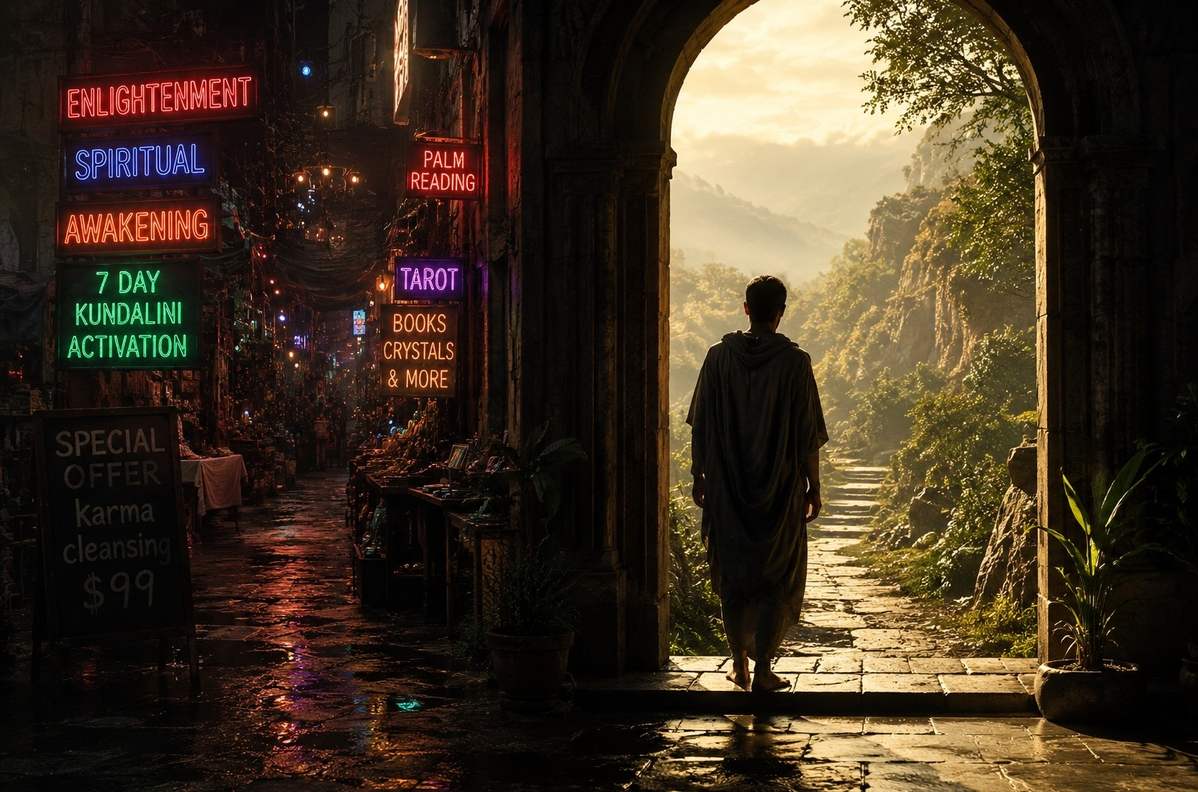
Gnosis is not a product. It can be studied, approached through texts, teachings, practice, symbols, silence, attention and long inner work. People may write books, translate sources, host websites, teach courses, preserve archives, publish research or guide readers through difficult material. That labour has value. But Gnosis itself is not merchandise. No church, order, company, teacher, platform, retreat, subscription, initiation system or spiritual brand can sell direct knowing. At most, they can offer maps. The seeing is not theirs to own.
A map may be sold. The territory cannot.
In Plain Terms
Gnosis means direct knowing. It can be supported by books, teachers, translations, archives, study and practice, but it cannot be bought, certified, franchised or handed over by authority. Honest guidance points back to the reader’s own recognition. False authority turns recognition into status, hierarchy, dependence or spiritual product.
Primary Sources and Traditions Discussed
- The Gospel of Thomas, especially its language of self-knowledge and recognition.
- The Gospel of Philip, especially its symbolic treatment of mystery, union and recognition.
- The Apocryphon of John, especially its critique of false authority and counterfeit spiritual power.
- The Nag Hammadi Library as a diverse collection of early Christian, Gnostic and related texts, not a single official church manual.
- Valentinian and Sethian traditions as examples of diversity within ancient Gnostic currents.
- Modern questions of spiritual authority, paid guidance, cult dynamics, branding and discernment.
How to Read This Article
Read this as a discernment guide, not an attack on all teachers, authors, translators, publishers, courses or communities. The distinction is simple but important: supporting real labour can be ethical, but selling direct knowing itself as a product, rank, certificate or spiritual status is a distortion.
Modern Companion: False Authority Discernment
For the wider Neo Gnostic guide to gurus, algorithms, AI advisers, spiritual communities and systems that steal direct knowing by replacing it with dependence, read Neo Gnosticism and False Authority. This article explains why gnosis cannot be sold as a product. The companion article shows how false authority keeps trying to sell, certify, automate or possess it.
Table of Contents
- What Does Gnosis Mean?
- The Difference Between Paying for Labour and Buying Gnosis
- Why No One Can Be the Official Voice of Gnosis
- The Problem With Spiritual Branding
- Useful Teachers Versus False Authority
- False Authority and the Selling of Direct Knowing
- Gnosis Costs Something, But Not Money Alone
- How to Study Without Surrendering Discernment
- Red Flags: When Gnosis Is Being Sold Back to You
- Healthy Signs: When Guidance Is Actually Helpful
- Gnosis, Archives and Ethical Support
- Related Glossary Terms
- Read Next
- Conclusion: The Light Is Not a Product
- Further Reading
- References and Sources
What Does Gnosis Mean?
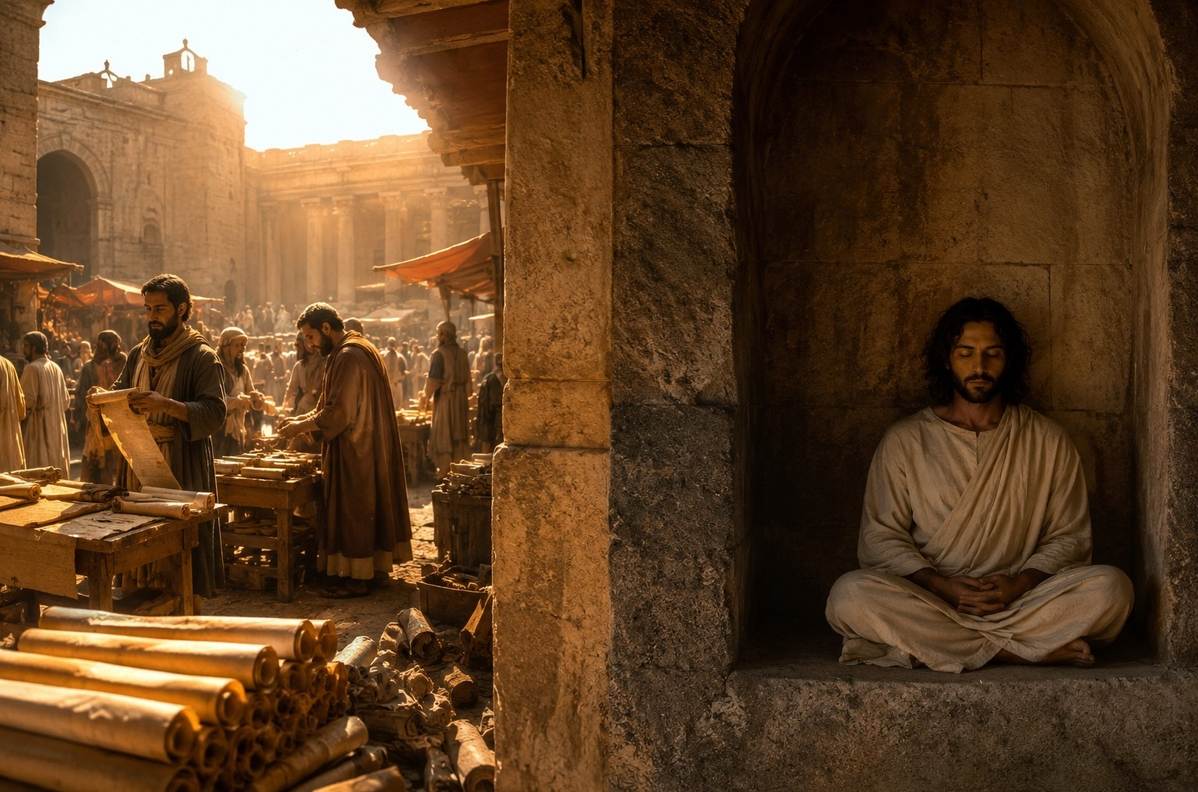
Gnosis is direct knowing, recognition, inner seeing or awakened understanding. The Greek term carries the weight of personal, experiential knowledge rather than abstract intellectual acquisition. It is not merely information, belief, opinion, ritual identity or secret vocabulary. In the Gospel of Thomas, Jesus says the kingdom is inside you and outside you, and that when you come to know yourselves, you will be known. This is not a command to accumulate data. It is an invitation to recognition.
The Nag Hammadi Library, a collection of 52 treatises preserved across 13 codices discovered in 1945 near Nag Hammadi, Egypt, presents Gnosis as something lived and realised, not something conferred by external authority. The texts speak of the divine spark, the pleroma, the bridal chamber and the descent of Sophia not as doctrines to be memorised, but as patterns that mirror an inner process. The reader is not asked to believe. The reader is asked to recognise.

The Difference Between Paying for Labour and Buying Gnosis
This distinction is crucial. Paying for a book, supporting a website, buying a translation, attending a course, contributing to research or paying for someone’s time can all be legitimate exchanges. The labour has value. A translator who spends years with Coptic manuscripts deserves support. A teacher who guides students through difficult primary sources deserves compensation. A website that hosts archives, writes commentary and maintains resources deserves to cover its costs.
The problem begins when payment is presented as buying awakening itself. When a course promises guaranteed enlightenment, when a subscription tier offers secret superiority, when an initiation system sells rank as if it were spiritual depth, the distortion is clear. You can buy a map. You cannot buy the territory. You can pay for a lamp. You cannot pay for the sight that uses it.
Ethical spiritual labour is transparent about this limit. It says: here is what I can offer, translation, guidance, context, community. Here is what I cannot offer, your own recognition. That remains yours to cultivate.
Why No One Can Be the Official Voice of Gnosis
Ancient Gnostic currents were diverse. Valentinians and Sethians held different cosmologies. The Nag Hammadi Library contains texts from multiple schools, myths and symbolic systems, not a single official manual. There was no central Gnostic institution, no franchise agreement to inherit, no apostolic succession of secret knowledge that modern groups can simply claim.
As David Brakke demonstrates in The Gnostics, the ancient movement was characterised by myth, ritual and diversity rather than uniformity. Karen King’s What Is Gnosticism? further dismantles the idea that Gnosticism was a single, coherent religion opposed to orthodoxy. The texts themselves disagree. Theologies vary. The moment someone claims to be the official owner of direct knowing, discernment should wake up and pay attention.
No modern person, organisation, church or school can claim to be the sole inheritor of Gnosis. The archive belongs to anyone who approaches it with honesty.
The Problem With Spiritual Branding
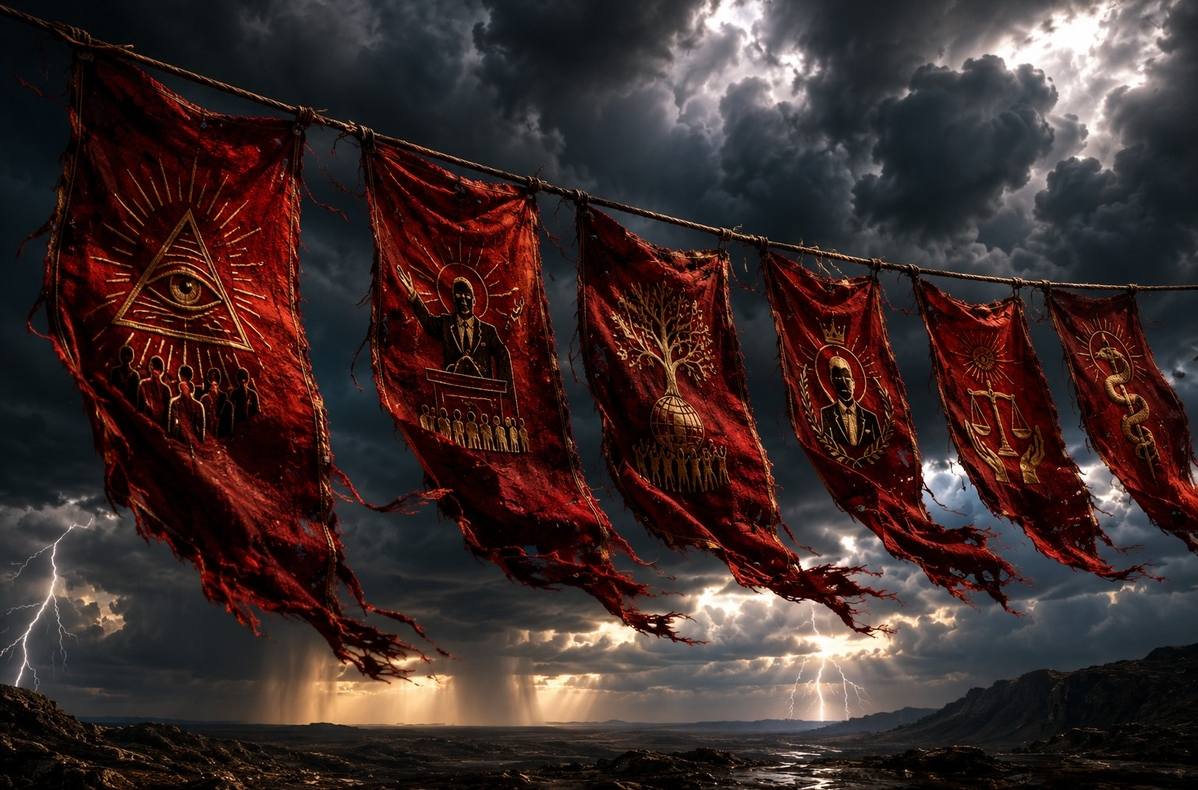
Modern spirituality often turns inner work into identity performance. Logos, costumes, spiritual status, paid inner circles, guru aesthetics, secret-rank language, chosen-few marketing and endless upgrades all borrow the language of depth while selling the surface. The Apocryphon of John warns of the counterfeit spirit, the force that mimics what is genuine while binding the soul more tightly. In modern terms, the counterfeit spirit may wear a brand identity.
It is not the teacher’s robe that matters. It is whether the teaching returns you to your own light. It is not the exclusivity of the group that signals depth. It is whether the group returns you to your own discernment. Spiritual branding often inverts this: the more expensive the retreat, the more restricted the circle, the more elaborate the costume, the more authentic it must be. This is a logic the ancient texts would have recognised as archontic, a system that substitutes appearance for substance.

Useful Teachers Versus False Authority
The difference is not in the price tag. It is in the direction the teaching points.
Useful teachers return you to your own discernment. They name their sources, admit uncertainty, do not demand worship, do not isolate you from ordinary life and do not weaponise mystery. They treat Gnosis as something you cultivate, not something they dispense. They know they are offering maps, not selling territory.
False authority claims exclusive access, demands obedience, monetises fear, flatters spiritual superiority, punishes doubt, sells certainty and discourages grounded life. It treats questions as threats and independence as rebellion. It may speak of love while practising control. It may speak of liberation while tightening the cage.
The Gospel of Philip speaks of the bridal chamber as a mystery of recognition, not a purchase. The teacher’s role is to prepare the ground, not to harvest the crop. The moment a teacher claims to own the light, they have become another kind of archon: a ruler of the very freedom they profess to offer.
False Authority and the Selling of Direct Knowing
False authority is not simply bad teaching. It is guidance that stops pointing beyond itself and begins to feed on the seeker. It turns maps into ownership, support into dependence, mystery into leverage and recognition into a purchasable status. In that moment, the teacher, platform, group, brand, course, algorithm or AI adviser stops serving gnosis and begins replacing it.
This is the deeper reason gnosis cannot be sold. The problem is not payment for honest labour. The problem is the theft of the centre. When a system says, “You cannot know without us,” it has moved from guidance into capture. When it says, “Our interpretation is final,” it has moved from teaching into domination. When it says, “Your direct knowing is unsafe unless we approve it,” it has taken the lamp from the seeker’s hand and called the theft protection.
For the full Neo Gnostic treatment of this pattern across gurus, algorithms, AI advisers and spiritual systems, continue with Neo Gnosticism and False Authority: Gurus, Algorithms and the Theft of Direct Knowing.
False authority sells the map, then quietly claims to own the traveller.
Gnosis Costs Something, But Not Money Alone
Real seeing asks for honesty. It may cost comfort, illusion, borrowed identity, false belonging, spiritual performance, certainty, avoidance and the right to blame everything outside yourself. These are not currency transactions. They are interior reckonings.
The cost is the self you thought you were. The cost is the security of borrowed answers. The cost is the pleasure of feeling spiritually superior without doing the actual work. The ancient texts understood this. The descent of Sophia is not a comfortable myth. It is a story about the painful separation from wholeness and the difficult path of return. The ascent through the planetary spheres in the Hermetic and Sethian traditions is not a tourist excursion. It is the stripping away of everything that is not essential.
No credit card can pay for that. No subscription can shortcut it. The price is paid in attention, patience, humility and the willingness to be wrong.
How to Study Without Surrendering Discernment
Read primary sources where possible. Compare interpretations. Watch emotional dependency. Avoid groups that demand isolation. Keep ordinary life intact. Test insight through patience, humility and conduct. Do not confuse intensity with truth, or secrecy with depth.
The Nag Hammadi Library is available to anyone who wishes to read it. No gatekeeper holds the key. The Gospel of Thomas does not require an intermediary. The Apocryphon of John does not demand a fee. The texts speak directly to the reader who approaches them with sincerity. Scholarship, whether by Elaine Pagels, April DeConick, Marvin Meyer or David Brakke, offers context and interpretation, but it does not replace the reader’s own encounter with the material.
Treat any teacher, book or system as a map rather than the owner of truth. The map is useful. The map is not the journey.
Red Flags: When Gnosis Is Being Sold Back to You
Some warning signs are subtle. Others are unmistakable. Learn to read them.
- “Only we have the real teaching.”
- “You are special because you found us.”
- “Doubt means you are spiritually blocked.”
- “You must pay to reach the next level.”
- “Your family or ordinary life is holding you back.”
- “Our leader has final authority.”
- “The texts only mean what we say they mean.”
- “You cannot trust your own perception without us.”
Each of these statements shifts power away from the seeker and toward an institution. Each treats Gnosis as a proprietary product rather than a direct recognition. Each is a sales technique dressed in spiritual language.
Healthy Signs: When Guidance Is Actually Helpful
Not all guidance is harmful. The question is whether it empowers or extracts.
- Sources are named.
- Claims are modest.
- Payment is transparent.
- No one is pressured.
- Disagreement is allowed.
- Ordinary life is respected.
- Psychological distress is handled responsibly.
- Mystery is honoured without being exploited.
Healthy guidance does not promise to replace your own discernment. It equips it. It does not demand that you abandon your life. It asks you to bring more attention to it. It does not sell certainty. It cultivates the capacity to live with questions.
Gnosis, Archives and Ethical Support
ZenithEye costs time, labour, research, writing, hosting and maintenance. That work has value. But the site does not sell Gnosis. It offers maps, articles, sources, pathways and interpretations. The reader’s seeing remains their own. The archive can point. It cannot awaken on your behalf.
This is the honest position of any ethical archive, teacher or translator. The labour is real. The support is valuable. The limit is clear. No one who works with these texts honestly can claim to own the recognition they describe. At most, they can clear some brush from the path.
Related Glossary Terms
These terms help frame the article’s main ideas across the wider ZenithEye archive.
- Gnosis
- Direct Knowing
- Discernment
- Counterfeit Spirit
- False Authority
- Authority Capture
- Spiritual Outsourcing
- Spiritual Performance
- Archons
- Demiurge
- Divine Spark
- Sophia
- Pleroma
- Spiritual Authority
- Initiation
- Esoteric Knowledge
Read Next
Continue with the foundations of discernment, direct knowing and false spiritual imitation before moving deeper into source study.
The Light Is Not a Product
Gnosis is not a possession. It is not a brand. It is not a private commodity hidden behind a spiritual counter. It is recognition.
A teacher may help. A text may open a door. A community may support the work. A website may offer maps through difficult territory. But no one can sell you the seeing itself. That part has to become true in you.
The ancient texts knew this. They buried their library in a jar in the Egyptian desert not because they wanted to start a franchise, but because they trusted that the right readers would find it. The discovery in 1945 was not a marketing event. It was a reminder that real knowledge persists, waits and recognises its own.
Study seriously. Pay for honest labour when you can. Support the archives, translators and teachers who serve the tradition with integrity. But never surrender the part of you that knows. That part is not for sale. It never was.
Further Reading
- Neo Gnosticism and False Authority: Gurus, Algorithms and the Theft of Direct Knowing – The direct companion on false authority, spiritual outsourcing, guru capture, machine authority and systems that steal direct knowing.
- What Is Gnosis? Meaning, Recognition and Direct Knowing – An exploration of Gnosis as direct, experiential knowledge rather than belief or doctrine.
- What Is the Counterfeit Spirit? False Imitation of Spiritual Life – How false spiritual imitation mimics genuine recognition while binding the soul more tightly.
- What Is the Divine Spark? The Hidden Light Within That Remembers and Seeks Return – The ancient teaching of the divine spark and why it cannot be owned by any institution.
- The Living Thread: How Forbidden Knowing Survives – How esoteric knowledge persists across centuries despite suppression and commodification.
- The $6.8 Trillion Theft: How Wellness Stole Gnosis – A critical examination of how the wellness industry commodifies ancient spiritual concepts.
- Spiritual Inflation: Recognise Yourself – The dangers of spiritual ego and performative awakening.
- Against Spiritual Bypassing: The Refusal to Feel – Why avoiding difficult emotions is not the same as spiritual progress.
- Finding the Other: Recognition Without Community – How to maintain discernment and connection outside of institutional structures.
- Nag Hammadi Library: Complete Reader’s Guide – The definitive starting point for reading the primary sources on your own terms.
Can Gnosis be sold?
No. Books, courses, translations, websites and teaching labour may be paid for, but Gnosis itself means direct knowing. It cannot be sold, owned, certified or handed over as a product.
Is it wrong to pay for spiritual books or courses?
Not necessarily. Paying for someone’s labour, research, teaching or publishing can be ethical. The problem begins when payment is presented as buying awakening, spiritual superiority, secret status or exclusive access to truth.
Is there an official Gnostic authority?
No single modern person, organisation, church or school can claim to be the official owner of Gnosis. Ancient Gnostic traditions were diverse, and direct knowing cannot be reduced to institutional ownership.
What are warning signs of false spiritual authority?
Warning signs include claims of exclusive truth, pressure to obey, paid spiritual ranks, fear-based teaching, isolation from ordinary life, punishment for doubt, and demands that readers surrender their own discernment.
How can I study Gnosticism safely?
Start with primary sources, compare interpretations, keep ordinary life grounded, avoid groups that demand obedience, and treat any teacher or system as a map rather than the owner of truth.
What is the difference between a spiritual map and the territory?
A map, such as a book, course, teaching or symbol, can point toward truth, but it is not the truth itself. The territory is direct recognition, which no one can sell or transfer to another person.
Can a website or archive awaken someone on their behalf?
No. An archive can preserve texts, offer interpretations and guide readers toward primary sources, but awakening remains the reader’s own work. The archive can point. It cannot see on your behalf.
How is false authority related to selling gnosis?
False authority appears when a teacher, group, platform, course or system turns guidance into dependence and presents direct knowing as something it owns, sells, certifies or controls. Honest guidance supports discernment. False authority replaces it.
References and Sources
This article draws on primary sources from the Nag Hammadi Library and established scholarly works in Gnostic studies. Sources are grouped by category for clarity.
Primary Sources and Critical Editions
- The Apocryphon of John. NHC II,1. In The Nag Hammadi Library in English, edited by James M. Robinson. Brill, 1977.
- The Gospel of Philip. NHC II,3. In The Nag Hammadi Library in English, edited by James M. Robinson. Brill, 1977.
- The Gospel of Thomas. NHC II,2. In The Nag Hammadi Library in English, edited by James M. Robinson. Brill, 1977.
- The Nag Hammadi Scriptures, edited by Marvin Meyer. HarperOne, 2007.
Scholarly Monographs
- Brakke, David. The Gnostics: Myth, Ritual, and Diversity in Early Christianity. Harvard University Press, 2010.
- DeConick, April D. The Gnostic New Age: How a Countercultural Spirituality Revolutionized Religion from Antiquity to Today. Columbia University Press, 2016.
- King, Karen L. What Is Gnosticism? Harvard University Press, 2003.
- Pagels, Elaine. The Gnostic Gospels. Random House, 1979.
Comparative and Contextual Studies
- Layton, Bentley. The Gnostic Scriptures. Yale University Press, 1987.
- Meyer, Marvin, and Elaine Pagels. “Introduction to the Nag Hammadi Library.” In The Nag Hammadi Scriptures, edited by Marvin Meyer. HarperOne, 2007.
Safety Notice: This article explores themes of spiritual authority, discernment and psychological manipulation. It does not constitute medical, legal, psychological or spiritual advice. If you are experiencing coercive control within a spiritual group, please contact a trauma-informed therapist or relevant support services. Critical thinking complements but does not replace professional mental health treatment.
Study Note: This article is for spiritual discernment and reader education. It is not an attack on teachers, authors, translators, publishers, courses or communities that act transparently and ethically. The distinction is between supporting real labour and claiming to sell direct knowing itself. For the wider Neo Gnostic frame around gurus, algorithms, AI advisers and systems that replace recognition with dependence, read Neo Gnosticism and False Authority.