Acts of Peter and the Twelve Apostles: The Pearl More Precious Than Gold
Acts of Peter and the Twelve Apostles (NHC VI,1) presents one of the Nag Hammadi Library’s most sophisticated explorations of spiritual economics–a narrative that subverts the canonical Parable of the Pearl to interrogate the relationship between material poverty and gnosis. This apocryphal Acts text, occupying pages 1–12 of Codex VI, employs the literary form of apostolic missionary narrative while encoding a radical theology of recognition whereby the “pearl of great price” is revealed not as commodity but as classified intelligence freely given to those who discern true value beneath deceptive appearances.
Unlike the canonical Acts of the Apostles, which chronicles the institutional expansion of early Christianity, this Coptic tractate from the fourth century furnishes a contemplative manual on the hermeneutics of suspicion–the capacity to read reality against its surface presentation. The narrative positions Peter and the Twelve not as administrators of sacramental authority but as initiates undergoing examination for their security clearance to transmit esoteric knowledge. The text’s placement at the opening of Codex VI establishes its function as a pedagogical gatekeeper: before encountering the thunderous revelations of the Thunder: Perfect Mind or the metaphysical ascents of the Discourse on the Eighth and Ninth, the reader must first demonstrate proficiency in distinguishing the pearl of gnosis from the counterfeit currency of material prosperity.
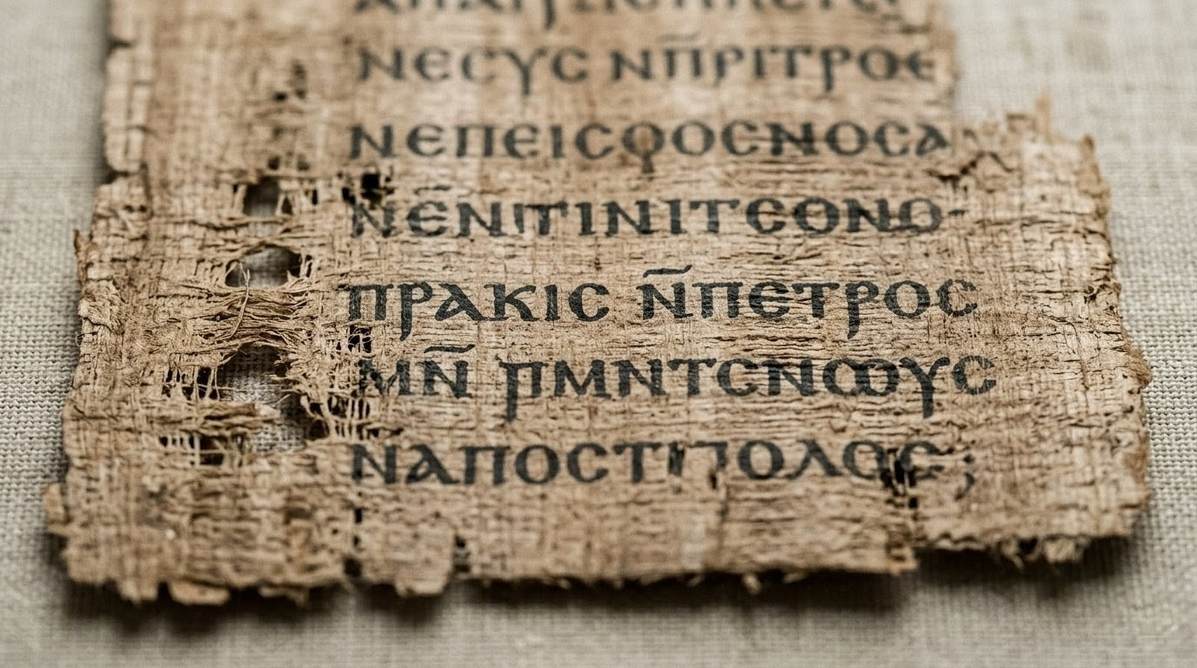
Table of Contents
- Introduction: A Classified Dossier on Spiritual Economics
- The Narrative Structure: Bureaucracy of Disguise
- Lithargoel and the Economy of Grace
- Jewish-Christian Roots and Gnostic Development
- Codex VI Context: The Curriculum of Recognition
- The Hermeneutics of Suspicion
- Frequently Asked Questions
- Further Reading
- References and Sources
Introduction: A Classified Dossier on Spiritual Economics
What is the Acts of Peter and the Twelve Apostles?
The Acts of Peter and the Twelve Apostles (NHC VI,1) is a Coptic apocryphal text from the Nag Hammadi Library, dated to approximately the fourth century CE. It recounts the journey of Peter and the apostles to a city named “Home” (Coptic: founded on endurance), where they encounter a pearl merchant named Lithargoel–a cryptic appellation for Jesus–who tests their discernment through disguise and paradox. The narrative subverts Matthew’s Parable of the Pearl (13:45–46) by presenting the pearl not as commodity but as gratuitous gift, thereby encoding a theology of recognition (anagnorisis) as the central soteriological mechanism.
The text opens with the apostles executing their commission to “preach the kingdom of God,” yet immediately departs from canonical precedent. These are not the Pentecost-dependent disciples of Luke’s Acts, awaiting executive authorisation from on high. Rather, they constitute an already-equipped cadre possessing the spiritual acumen necessary to navigate the administrative malpractice of material existence–what the text understands as the deceptive filing system of archonic governance [1]. The narrative’s opening establishes their unity of purpose: “we were one,” a pneumatic solidarity that functions as their initial security clearance for the trials ahead.
The manuscript itself occupies the first twelve pages of Nag Hammadi Codex VI, a carefully curated collection that progresses from this pedagogical narrative through the thunderous self-revelations of Thunder: Perfect Mind (VI,2), the ethical instruction of Authoritative Teaching (VI,3), the apocalyptic vision of The Concept of Our Great Power (VI,4), Platonic philosophical fragments (VI,5), and culminates in Hermetic ascension literature (Discourse on the Eighth and Ninth, VI,6). This codicological context suggests that the Acts of Peter serves as a prerequisite examination–what we might term a clearance verification protocol–before the reader may access the more highly classified materials that follow.
The Narrative Structure: Bureaucracy of Disguise
Primary Source Citation: “It came to pass that when we [were sent] to go out to [preach . . .], we, the apostles [ . . . ] we set sail, during which we [ . . . ] of the body together with others who were fearful in their [hearts]. And in our [hearts], we were one.” — NHC VI,1 1.1–10 [2]
The narrative architecture follows a tripartite testing structure familiar to readers of Hellenistic romance and Jewish apocalyptic: the journey, the encounter with the disguised deity, and the recognition scene (anagnorisis). The apostles sail for “a day and a night”–a liminal temporal marker indicating transition from ordinary to extraordinary reality–before arriving at the City of Home (Coptic founded on endurance), a toponym that encodes the text’s ethical prerequisite: only those who demonstrate persistence in the face of deceptive appearances merit advancement to higher clearance levels.
Their encounter with Lithargoel operates as a bureaucratic examination of their personnel files. The stranger appears as a beggar “covered in sores, dressed in rags, seated by the gate”–a visual vocabulary of destitution that functions as strategic camouflage. When Peter offers gold from their common purse, the beggar refuses with a challenge that exposes the limitations of material compassion: “If you have the pearl that is more precious than gold, give it to me” (NHC VI,1 8.15–20). This request operates on multiple registers: it tests whether the apostles possess gnosis (the pearl), whether they recognise the hierarchical superiority of spiritual to material wealth, and whether they can perceive through the archonic filing system of appearances to identify the examiner behind the disguise.
The revelation of Lithargoel’s identity–“I am not a beggar; I am the one who examines hearts and tests minds” (NHC VI,1 9.5–10)–inverts the economic hierarchy of the Roman world. In the imperial cura system, wealth indicated status and divine favour; here, material poverty conceals the highest executive authority. This reversal constitutes the text’s central pedagogical move: training the reader to suspect that the branch office of material reality may be managed by incompetent middle-management (the archonic powers), while the true executive headquarters operates through apparently insignificant personnel.
Lithargoel and the Economy of Grace
The Merchant Who Gives Rather Than Sells
Primary Source Citation: “He said to them, ‘I am not a beggar. It is your father who gives you what you need. I am the one who examines hearts and tests minds, who makes the rich poor and the poor rich in a moment.'” — NHC VI,1 9.1–15 [3]
The name Lithargoel (possibly from Coptic light + to gaze or Greek lithos [stone] + Aramaic rgal [foot]) remains cryptic, suggesting the text’s function as a password or security verification for initiates. Unlike Matthew’s merchant who sells all to purchase the pearl, Lithargoel operates within an economy of grace wherein the pearl is freely given to those who demonstrate appropriate discernment. This transformation of the Matthean parable–from commercial transaction to charitable disclosure–reflects the Gnostic suspicion of mercantile exchange as an analogue of archonic exploitation.
The text provides Lithargoel with a “medicine box” (pharmakeia) and “student’s pouch”–equipment that functions as classified operational gear for the apostles’ mission. These objects symbolise the therapeutic function of gnosis: the healing of spiritual blindness that prevents recognition of true value. The command to “heal all the sick who believe in my name” (NHC VI,1 10.20–25) establishes a two-tier healing protocol: first bodily, to establish credibility; then spiritual, to effect clearance upgrades from hylic (material) to pneumatic (spiritual) status.
Poverty as Security Clearance
The text develops a theology of radical poverty that transcends mere asceticism to constitute an epistemological stance. The apostles’ detachment from gold functions as prerequisite for receiving the pearl–not because poverty is inherently virtuous, but because material attachment obstructs the verification protocols of spiritual discernment. The rich who “wallowed in their riches and arrogance” (NHC VI,1 11.15–20) possess high status in the material filing system but lack clearance for classified knowledge.
This stratification reflects the three-nature anthropology (hylic, psychic, pneumatic) prevalent in Sethian and Valentinian systems. The rich correspond to the hylic nature–bound to material existence and unable to perceive the executive headquarters beyond the branch office. The apostles, having abandoned their possessions, demonstrate psychic-to-pneumatic transformation, capable of recognising the pearl beneath the rags. The text’s warning against dining in rich houses or accepting their favouritism (NHC VI,1 12.1–10) constitutes a protocol for maintaining operational security–avoiding contamination by the archonic values of the material economy.

Jewish-Christian Roots and Gnostic Development
From Ebionite Asceticism to Gnostic Recognition
Scholarly analysis identifies Jewish-Christian elements in the text’s emphasis on community of goods, poverty as virtue, and the anti-wealth polemic echoing the Ebionites and other Jerusalem church traditions [4]. The narrative frame–apostolic journey, encounter with the marginalised, test of discipleship–derives from canonical Acts and the Synoptic gospels, suggesting the text’s strategy of preservation through transformation.
However, the Gnostic redaction fundamentally alters the soteriological mechanism. Where Jewish-Christian tradition emphasised Torah observance and community solidarity as marks of the righteous, this text prioritises anagnorisis–the flash of recognition whereby the disguised divine is identified. The Jesus who appears here functions not as Davidic messiah or apocalyptic Son of Man, but as a celestial examiner conducting entrance interviews for the pneumatic bureaucracy. The “name that exceeds all riches” (NHC VI,1 10.10–15) operates as a password or security token, granting access to the classified archives of divine knowledge.
This transformation represents a significant strategy of second-century Christian diversity: rather than rejecting Petrine authority, the text reinterprets Peter as guardian of esoteric rather than exoteric knowledge. The allusion to Matthew 16:13–19 (the confession at Caesarea Philippi) appears in the recognition scene (NHC VI,1 9.1–15), but whereas the canonical version establishes Peter as foundation of the institutional church, here it confirms his possession of the security clearance necessary to transmit secret teachings.
Codex VI Context: The Curriculum of Recognition
Within Codex VI, the Acts of Peter serves as pedagogical foundation for a carefully structured curriculum. The sequence progresses from this narrative of earthly recognition (the disguised Lithargoel), through the thunderous cosmic self-revelations of Thunder: Perfect Mind (VI,2), to the ethical psychology of Authoritative Teaching (VI,3), the apocalyptic historiography of The Concept of Our Great Power (VI,4), and finally to the Platonic-Hermetic metaphysics of the Discourse on the Eighth and Ninth (VI,6).
This progression mirrors the clearance upgrade protocol: the reader must first demonstrate competence in reading disguised reality (Acts of Peter) before accessing the thunderous voice of the Feminine Divine (Thunder), the ethical instruction on the soul’s descent (Authoritative Teaching), and finally the ascension protocols through the planetary spheres (Discourse on the Eighth and Ninth). The codex thus functions as a training manual for personnel being transferred from the branch office of material existence to the executive headquarters of the Ogdoad and Ennead.
Primary Source Citation: “The rich in the city felt I didn’t deserve their greeting. Instead, they wallowed in their riches and arrogance. So, with people like these, do not eat in their houses, and do not be their friends, or their favouritism could sway you.” — NHC VI,1 11.15–12.10 [5]
The scribal hand responsible for Codex VI–likely a professional copyist working in the fourth-century monastic environment of Upper Egypt–thus curated a collection that balances narrative accessibility with metaphysical abstraction. The Acts of Peter provides the personnel file introduction, establishing the apostles as exemplars of the discernment required to navigate the increasingly technical materials that follow.
The Hermeneutics of Suspicion
The text’s most enduring contribution lies in its hermeneutical method–the disciplined suspicion of material appearances as potentially deceptive. The City of Home appears prosperous but is spiritually deserted; the beggar appears destitute but possesses infinite wisdom; the apostles appear authorised but require examination. This triple-layered deception trains the reader in what modern phenomenology might term the epoche–the suspension of naive belief in the reality of the material filing system [6].
Yet the text moderates this suspicion with pastoral concern. The apostles are fallible learners, not perfect vessels. Peter’s willingness to give gold demonstrates generosity; his initial failure to recognise Lithargoel demonstrates the difficulty of the examination. This humanising touch invites readers to identify with the apostolic band as fellow examinees rather than accomplished masters–fellow travellers seeking security clearance upgrades through the archonic bureaucracy.

The narrative’s brevity–approximately 1,200 Coptic lines–suggests its function as a teaching text for community instruction, read aloud and discussed for its multiple valences. The question “Gold or pearl–which will you choose?” reverberates beyond the narrative frame to interrogate the reader’s own economy of values, inviting existential application of the hermeneutical method.
Frequently Asked Questions
What is the Acts of Peter and the Twelve Apostles in the Nag Hammadi Library?
The Acts of Peter and the Twelve Apostles (NHC VI,1) is a fourth-century Coptic text that narrates the encounter between Peter, the apostles, and a disguised Jesus (named Lithargoel) who tests their discernment through a parable about the pearl of great price. It subverts Matthew’s commercial parable to present the pearl as gratuitous gift rather than commodity.
Who is Lithargoel in the Nag Hammadi text?
Lithargoel is a cryptic name for Jesus in NHC VI,1, possibly meaning ‘light-gazer’ or combining Greek and Aramaic elements. He appears disguised as a beggar to test the apostles’ ability to recognise spiritual value beneath material poverty–functioning as a celestial examiner of their security clearance for transmitting gnosis.
What does the pearl symbolise in Acts of Peter and the Twelve Apostles?
The pearl represents gnosis–the hidden knowledge that liberates from material imprisonment. Unlike Matthew’s merchant who sells all to buy the pearl, Lithargoel gives it freely to those who demonstrate discernment, representing an economy of grace that transcends archonic commercial exchange.
Is Acts of Peter and the Twelve Apostles a Sethian or Valentinian text?
Scholarship classifies NHC VI,1 as a Thomasine or Jewish-Christian Gnostic text rather than strictly Sethian or Valentinian. It lacks the complex emanation schemes of Valentinianism and the elaborate archonic hierarchies of Sethianism, focusing instead on recognition (anagnorisis) and encratite (ascetic) ethics.
What is the City of Home in the text?
The City of Home (Coptic: ‘founded on endurance’) is the narrative setting where the apostles encounter Lithargoel. The name encodes the ethical prerequisite for receiving gnosis–endurance or persistence in the face of deceptive appearances that characterise the material filing system.
How does Acts of Peter and the Twelve Apostles differ from the canonical Acts of the Apostles?
Unlike Luke’s institutional history of the early church, this text presents the apostles as initiates being tested for esoteric knowledge. It subverts Petrine authority from institutional foundation to guardian of secret teachings, and replaces the Holy Spirit’s descent at Pentecost with the gradual acquisition of discernment through examination.
Where is Acts of Peter and the Twelve Apostles located in the Nag Hammadi codices?
The text occupies pages 1–12 of Codex VI, where it serves as the opening tractate of a carefully curated sequence including Thunder Perfect Mind, Authoritative Teaching, Concept of Our Great Power, and the Discourse on the Eighth and Ninth. This placement suggests it functions as a prerequisite examination before accessing higher metaphysical teachings.
Further Reading
- Codex VI: The Gnostic Curriculum — Examining the complete sequence of NHC VI,1-8, where the Acts of Peter serves as the entry-level examination before the advanced metaphysics of the Discourse on the Eighth and Ninth.
- Thunder: Perfect Mind (NHC VI,2) — The thunderous voice of the Feminine Divine that follows the Acts of Peter in Codex VI, representing the cosmic-scale recognition the apostles must attain.
- Discourse on the Eighth and Ninth — The Hermetic ascent text (NHC VI,6) that concludes Codex VI’s curriculum, requiring the discernment skills established in the Acts of Peter.
- Letter of Peter to Philip — Another Petrine text (NHC VIII,2) contrasting with NHC VI,1’s focus on discernment through the lens of apostolic authority and Gnostic revelation.
- The Gospel of Thomas — The sayings gospel (NHC II,2) sharing the Thomasine tradition’s emphasis on secret knowledge and the hidden pearl of understanding.
- Jewish Apocalyptic Roots of Gnosticism — Tracing the Jewish-Christian ascetic elements in NHC VI,1 from Ebionite traditions through to Gnostic transformation.
- Nag Hammadi Library: The Complete Reader’s Guide — The comprehensive overview situating the Acts of Peter within the broader taxonomy of Sethian, Valentinian, and Thomasine traditions.
- Gnostic Schools: Sethians, Valentinians, and Hermetics — Comparative analysis of the traditions, clarifying why NHC VI,1 aligns more closely with Thomasine asceticism than with the elaborate angelic hierarchies of Sethianism.
References and Sources
The following sources support the claims and quotations presented in this article. All citations to the Nag Hammadi Library represent direct translations from the Coptic text as established in the standard critical editions.
Primary Sources and Critical Editions
- [1] Robinson, J.M. (Ed.). (1977). The Nag Hammadi Library in English. Harper & Row. — Standard English translation of NHC VI,1.
- [2] Zinner, S. (Trans.), & Mattison, M.M. (Ed.). The Acts of Peter and the Twelve Apostles (NHC VI,1). Public domain translation with Coptic textual notes.
- [3] Kasser, R., Meyer, M., & Wurst, A. (Eds.). (2007). The Gospel of Judas. National Geographic. — Critical apparatus and comparative Coptic methodology.
- [4] Schenke, H.M. (2012). “The Acts of Peter and the Twelve Apostles (NHC VI,1).” In The Coptic Gnostic Library Online. Brill. — Definitive critical edition with Coptic text and line numbering.
- [5] Layton, B. (1987). The Gnostic Scriptures. Doubleday. — Scholarly translation with theological analysis of the pearl parable’s Gnostic subversion.
Scholarly Monographs and Specialist Studies
- [6] Scholer, D.M. (1997). Nag Hammadi Bibliography 1970-1994. Brill. — Comprehensive scholarly bibliography on NHC VI,1 reception history.
- [7] Bohlig, A., & Wisse, F. (Eds.). (1975). Nag Hammadi Codices III,2 and IV,2: The Gospel of the Egyptians. Brill. — Codicological methodology applicable to Codex VI analysis.
- [8] Smith, C.R. (1985). “The Identification of the Name ‘Peter’ in the Acts of Peter and the Twelve Apostles.” Nag Hammadi and Gnosticism, 129-135. — Analysis of the Matthew 16:13-19 allusion in NHC VI,1.
- [9] Krause, M. (1977). “Der Dialog des Soter in den ‘Acta Petri und der XII Apostel’.” In Essays on the Nag Hammadi Texts. Brill. — German philological analysis of the Lithargoel dialogue.
- [10] Williams, M.A. (1996). Rethinking “Gnosticism”: An Argument for Dismantling a Dubious Category. Princeton University Press. — Theoretical framework for understanding NHC VI,1 outside rigid taxonomic categories.
Comparative Studies and Thematic Analyses
- [11] Ehrman, B.D. (2003). Lost Scriptures: Books that Did Not Make It into the New Testament. Oxford University Press. — Comparative analysis of canonical Acts vs. NHC VI,1.
- [12] Koester, H. (1990). Ancient Christian Gospels. SCM Press. — Analysis of the Thomasine tradition and its relation to NHC VI,1.
- [13] Funk, W.P. (2006). “The Acts of Peter and the Twelve Apostles and the New Testament Apocrypha.” Forum, 3rd ser., 2(1), 145-162. — Genre analysis of NHC VI,1 within the Acts of the Apostles literature.
- [14] Nagel, P. (1990). “Die ‘Acta Petri und der XII Apostel’ und das Thomas-Evangelium.” Zeitschrift fur die neutestamentliche Wissenschaft, 81, 233-246. — Comparative study of NHC VI,1 and the Gospel of Thomas.
- [15] Jenott, L. (2011). The Gospel of Judas: Coptic Text, Translation, and Historical Interpretation. Mohr Siebeck. — Codex Tchacos methodology applicable to Codex VI provenance questions.