Gospels Beyond the Canon
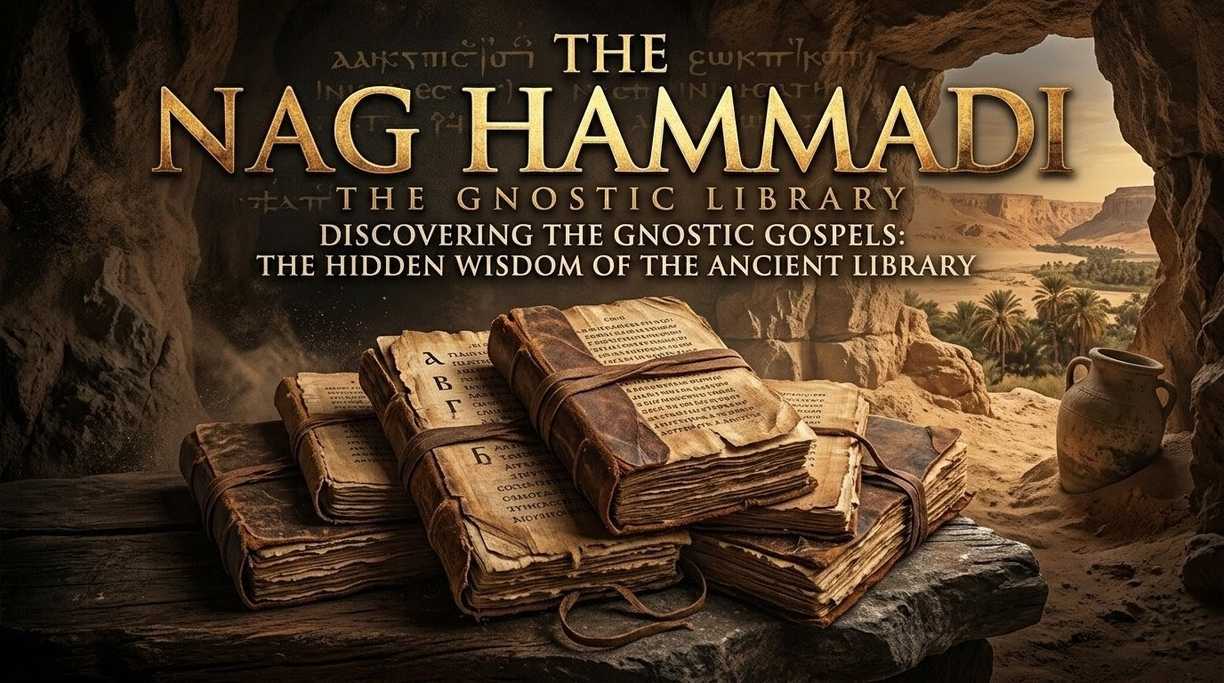
The Gospel Genre Outside the Canon challenges every assumption about early Christian literary form, presenting five texts explicitly titled “Gospel” that contain no biography whatsoever—collections of sayings without narrative framework, dialogues between resurrected Christ and disciples, and theological meditations bearing the euangelion title yet stripped of birth stories, miracle tales, and passion accounts. Alongside the familiar narrative form of Matthew, Mark, Luke, and John, the Nag Hammadi Library preserves the Gospel of Thomas (114 logia without chronology), the Gospel of Philip (sacramental catechism on the bridal chamber), the Gospel of Truth (Valentinian meditation on error and recognition), the Gospel of the Egyptians (Sethian cosmological dialogue), and the Sophia of Jesus Christ (wisdom revelation in question-and-answer form). These texts demand expansion of the “Gospel” category beyond canonical constraints, revealing early Christianity as a pluralistic field where the “good news” took multiple administrative forms—each encoding distinct theological commitments about how divine knowledge should be transmitted, filed, and retrieved. [1][2]
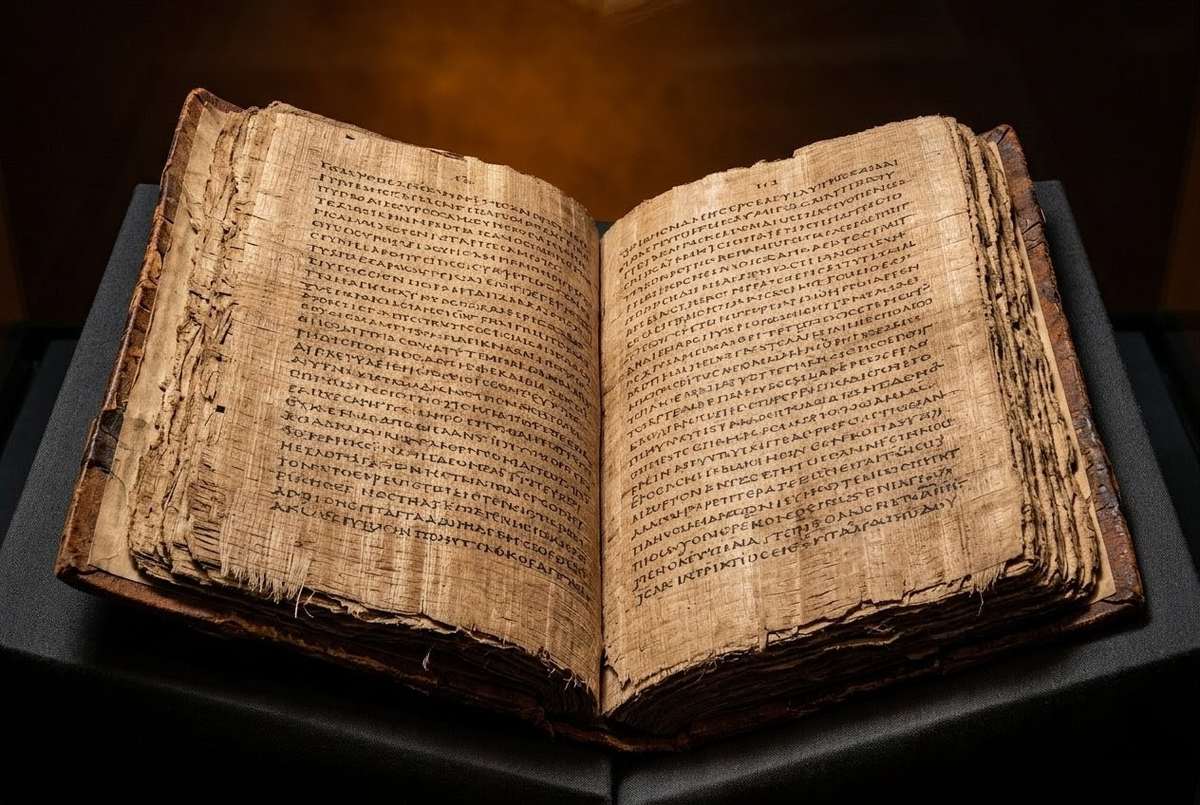
The diversity is not merely literary variation but theological architecture. Sayings collections privilege the living voice of the teacher over historical particularity; dialogue Gospels anchor revelation in conversational encounter rather than biographical narrative; meditative Gospels interiorise the drama of salvation as psychological recognition. The non-canonical Gospels demonstrate that the fourfold Gospel was a deliberate administrative construction—a selection that excluded alternative visions of Jesus and his message, filed under “rejected procedures” by the emerging catholic church centred on Rome. The Nag Hammadi texts, buried c. 360–400 CE by monks who may have found them heterodox or simply obsolete, preserve the evidence that this triumph was not inevitable—alternative protocols for transmitting the euangelion that once operated in vibrant communities across the ancient Mediterranean. [3][4]
Contents
- The Genre Problem: What Is a Gospel Outside the Canon?
- The Gospel of Thomas: Sayings Without Narrative
- The Gospel of Philip: Sacramental Theology
- The Gospel of Truth: Valentinian Manifesto
- The Gospel of the Egyptians: Sethian Cosmology
- The Sophia of Jesus Christ: Wisdom Dialogue
- Sayings Collections vs. Narrative Gospels
- Docetism and the Body of Jesus
- Relationship to Canonical Traditions
- Frequently Asked Questions
- Further Reading
- References and Sources
The Genre Problem: What Is a Gospel Outside the Canon?
Definition: The Expanded Gospel Archive
The Gospel genre outside the canon comprises early Christian texts bearing the title euangelion (good news) yet diverging from the biographical narrative form of Matthew, Mark, Luke, and John. The Nag Hammadi Library preserves at least five such texts: Gospel of Thomas (114 sayings without narrative), Gospel of Philip (sacramental catechism), Gospel of Truth (Valentinian meditation), Gospel of the Egyptians (Sethian cosmological dialogue), and Sophia of Jesus Christ (wisdom revelation). These represent three alternative literary forms: (1) sayings collections (logia) privileging the voice over the life; (2) dialogue Gospels presenting revelation as conversational encounter; and (3) meditative Gospels interiorising salvation as recognition. Composed c. 50–200 CE, these texts demonstrate the plurality of early Christian literary expression before the fourfold Gospel achieved canonical dominance.
The canonical Gospel is a biographical narrative with predictable scaffolding: birth narratives, temptation sequences, healing campaigns, passion week, resurrection appearances. The non-canonical Gospels dismantle this structure. They present Jesus as wisdom teacher, mystagogue, and divine revealer rather than sacrificial victim. The kingdom is not a future event to be awaited but a present reality to be discovered through gnosis. These forms are not defective versions of the canonical template but alternative administrative protocols—different filing systems for the “good news” that encode distinct theological commitments about how divine knowledge should be transmitted. [5][6]
The Gospel of Thomas: Sayings Without Narrative
The Gospel of Thomas (NHC II,2) stands as arguably the most significant non-canonical Gospel discovered in the twentieth century. It consists of 114 sayings (logia) attributed to Jesus, arranged without narrative sequence—no birth stories, no miracle tales, no passion or resurrection accounts. The incipit establishes the theological premise: “These are the secret sayings which the living Jesus spoke and which Didymos Judas Thomas wrote down. And he said, ‘Whoever finds the interpretation of these sayings will not experience death.'” This is not information about Jesus but technology of transformation—compressed instructions for awakening. [7][8]
Primary Source Citation: “The kingdom is inside of you, and it is outside of you. When you come to know yourselves, you will become known, and you will realise that it is you who are the sons of the living Father.” Gospel of Thomas (NHC II,2 3:1-4). The kingdom is not eschatological future but present reality, obscured by ignorance and revealed by self-knowledge.
The sayings range from enigmatic (“The dead are not alive, and the living will not die,” Saying 11) to paradoxical (“Blessed is the lion which becomes man when consumed by man,” Saying 7) to apparently conventional (“Love your brother like your soul, guard him like the pupil of your eye,” Saying 25). The collection includes parallels to all four canonical Gospels but also unique material, including some of the most striking images in the Jesus tradition. Saying 13 is particularly significant: when Jesus asks his disciples to compare him to someone, Peter offers “righteous angel,” Matthew offers “wise philosopher,” but Thomas refuses to speak. Jesus tells Thomas he has “become drunk from the bubbling spring”—praise for mystical experience or criticism of esoteric elitism, depending on interpretive perspective. [9][10]
Saying 114 has generated particular controversy: “Simon Peter said to them, ‘Let Mary leave us, for women are not worthy of life.’ Jesus said, ‘I myself shall lead her in order to make her male, so that she too may become a living spirit resembling you males. For every woman who will make herself male will enter the kingdom of heaven.'” This apparent endorsement of gender transformation has been reclaimed by feminists as evidence for women’s leadership or condemned as misogynist erasure—demonstrating the interpretive challenges of these alternative Gospels. [11][12]
The Gospel of Philip: Sacramental Theology
Where Thomas is aphoristic, the Gospel of Philip (NHC II,3) is discursive—a collection of meditations on sacramental theology, the bridal chamber (nymphōn), and the contrast between psychic Christianity of the masses and pneumatic wisdom of the elect. It is Valentinian in perspective, though not without Sethian influences. The text is notoriously difficult to translate, full of Coptic wordplay and allusions to ritual practices now obscure, but its central themes are clear: transformation of consciousness through the sacraments, restoration of the syzygy (divine pairing), and the distinction between earthly Jesus and heavenly Christ. [13][14]
Primary Source Citation: “The Lord did everything in a mystery, a baptism and a chrism and a eucharist and a redemption and a bridal chamber.” Gospel of Philip (NHC II,3 68:1-4). The five sacraments form progressive initiation into the Pleroma, with the bridal chamber as highest mystery.
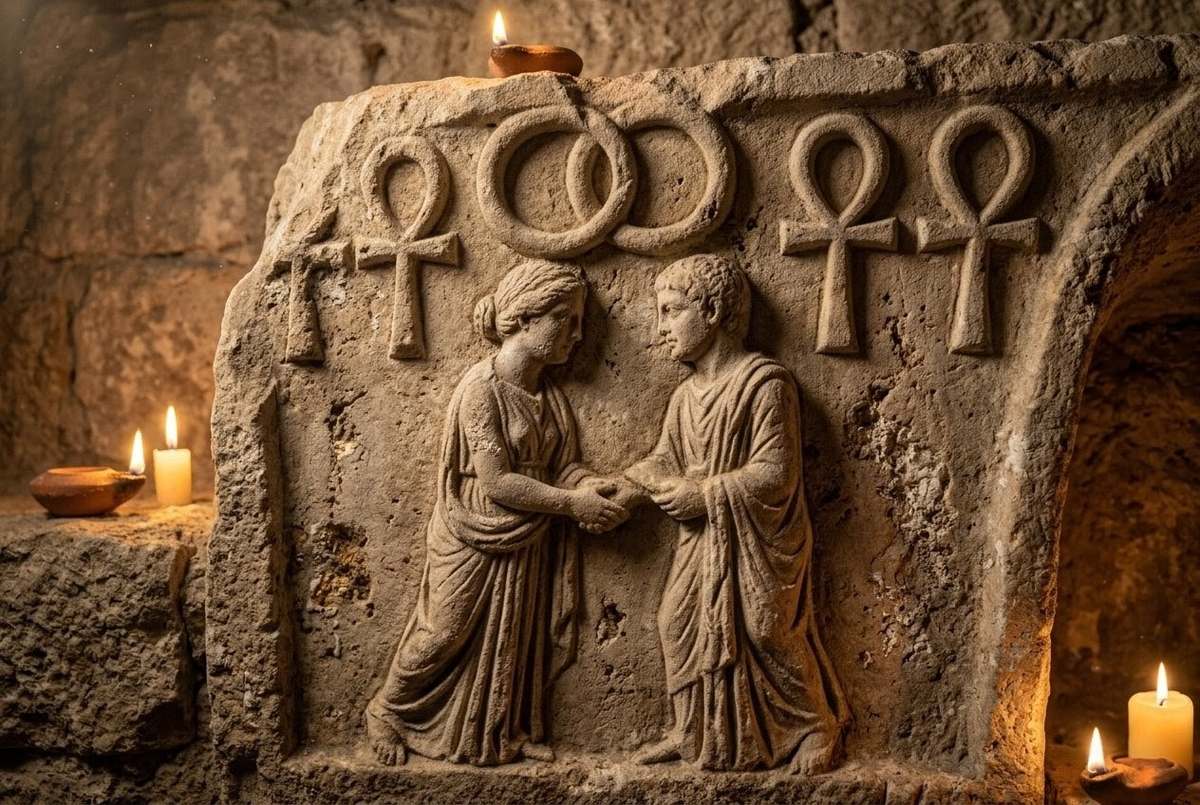
The theology of the bridal chamber is Philip’s most distinctive contribution. Marriage becomes the master metaphor for salvation—not the biological institution but the mystical reunion of separated complements. “If the woman had not separated from the man, she would not die with the man. His separation became the beginning of death. Therefore Christ came to repair the separation which was from the beginning.” This is the restoration of primordial androgynous unity through sacramental practice. [15][16]
Philip preserves traditions about Mary Magdalene that have made it famous: the description of her as Jesus’ companion (koinōnos) whom he loved more than the other disciples, the assertion that he used to kiss her often on the mouth, the controversy over whether the male apostles understood the mystery as she did. Whether this reflects historical memory or symbolic theology, it establishes a prominent place for the feminine in Valentinian spirituality. The “kiss” represents the transfer of gnosis through sacred union—the performative speech act that awakens recognition. [17][18]
The Gospel of Truth: Valentinian Manifesto
The Gospel of Truth (NHC I,3/XII,2) may be the earliest Valentinian text, possibly authored by Valentinus himself (c. 100–160 CE). It contains no sayings of Jesus, no narrative of his ministry, no account of his death or resurrection—instead offering a theological meditation on the nature of the gospel (euangelion) as the manifestation of truth (alētheia) that destroys error (planē). This is a Gospel without a story because the story it tells is interior—the drama of recognition and return that occurs within consciousness itself. [19][20]
Primary Source Citation: “He made the error tremble by showing him forth, and he made the error become nothing by revealing the truth. He abolished the error by showing it forth, for the error was nothing—he revealed the truth to those who had been in error because of ignorance.” Gospel of Truth (NHC I,3 18:25-30). Error is not sin but misidentification; salvation is not atonement but recognition.
The text describes the pre-cosmic fall of Sophia and the resulting ignorance that envelops the spiritual seed. The Saviour comes to awaken the sleepers, to restore the fragments of the divine to their source. “He proclaimed the good news of truth to those who search for him,” and that good news is simply the recognition of who they have always been: “You are the understanding which is drawn forth.” The cross, mentioned only briefly, is understood as the symbol of error’s defeat, not as historical atonement: “He was nailed to a tree, and he published this testament of the fulfilment of the All upon the cross.” [21][22]
The Gospel of the Egyptians: Sethian Cosmology
The Gospel of the Egyptians (NHC III,2/IV,2; also known as the Holy Book of the Great Invisible Spirit) is a Sethian revelation dialogue between Jesus and his disciples, particularly Salome. It contains extensive cosmological speculation about the aeons, the creation, and the salvation of the race of Seth. The text is fragmentary and difficult, but its structure is clear: descent of divine power into the material world, creation of the archons, theft of the spiritual power, and sending of the redeemer to awaken the sleepers. [23][24]
Distinctive to this text is the elevation of Seth as the prototype of the saved. “Seth was planted in this aeon as a seed of the immovable race.” The genea akinetos (immovable race) is the Sethian self-designation—those who are stable in a changing world, spiritual in a material cosmos. The text traces transmission of knowledge from Seth through his descendants: “Seth revealed the secret teachings to his son Enosh, and Enosh to Kenan, and Kenan to Mahalalel”—the Sethian genealogy of truth, parallel to but distinct from biblical genealogies. [25][26]
Salome’s prominence is notable. She asks the questions that drive the revelation, receiving instruction on cosmology, anthropology, and soteriology. Her presence suggests that Sethian communities included women in authoritative teaching roles, or at least imagined such roles as legitimate. The text also contains the most detailed description of the Sethian Five Seals baptismal ritual—complex initiatory practice distinct from Valentinian sacramentalism. [27][28]
The Sophia of Jesus Christ: Wisdom Dialogue
The Sophia of Jesus Christ (NHC III,4) represents the Christian adaptation of Eugnostos the Blessed—transforming a pagan wisdom dialogue into a revelation discourse where the risen Jesus answers his disciples’ questions about cosmology and salvation. The text belongs to the “dialogue Gospel” genre: structured as question-and-answer between Jesus and disciples (Philip, Matthew, Thomas, Bartholomew), with Mary Magdalene appearing as the ideal disciple who comprehends while others waver. [29][30]
The Sophia presents divine wisdom (sophia) as the organising principle of revelation—Jesus speaks as the embodiment of the wisdom that created and sustains the cosmos. The dialogue form allows for systematic exposition of Sethian cosmology: the Invisible Spirit, the First Thought (Barbelo), the Self-Generated (Autogenes), the Four Luminaries, and the descent of the spiritual seed into matter. This is pedagogical theatre—using the dialogue format to dramatise the transmission of knowledge from revealer to receiver, with Mary Magdalene modelling the proper receptive posture. [31][32]
Sayings Collections vs. Narrative Gospels
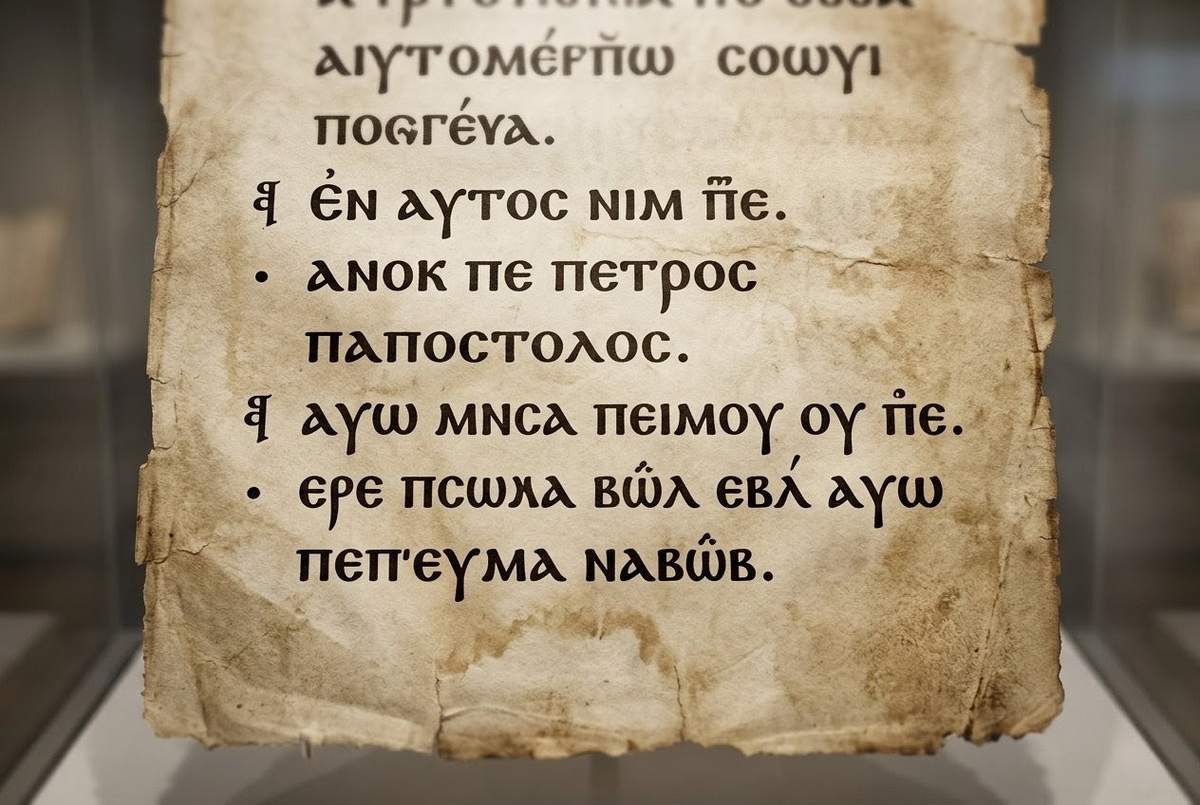
The diversity of Nag Hammadi Gospels raises fundamental questions about literary development. Why did some communities prefer collections of sayings while others developed narratives? What theological commitments are encoded in these formal choices? The sayings collections (Thomas, possibly Q, the Dialogue of the Saviour) privilege the living voice of the teacher over historical particularity. They present Jesus as wisdom figure whose words transcend original context, applicable to any seeker in any time. The absence of passion narrative is not suppression but irrelevance—the saving power lies in recognition awakened by sayings, not in the mechanism of atonement. [33][34]
The narrative Gospels, by contrast, anchor revelation in specific historical events. The Valentinian Gospels (Truth, Philip) maintain framework of Jesus’ ministry, death, and resurrection while interpreting these events in non-literal ways. Truth mentions the cross; Philip refers to resurrection. But these are symbols of interior transformation rather than historical transactions with cosmic consequences. This suggests early Christianity was far more diverse in literary expression than the canon implies—the fourfold Gospel was a deliberate construction, a selection that excluded alternative visions. [35][36]
Docetism and the Body of Jesus
Many non-canonical Gospels reflect docetic tendencies—the view that Jesus’ body was not material but spiritual, his sufferings apparent rather than real. This is not crude denial of physicality but sophisticated theological position about the Saviour’s embodiment. The Second Treatise of the Great Seth (NHC VII,2) offers stark version: “It was another… who drank the gall and the vinegar; it was not I. They struck me with the reed; it was another, Simon, who bore the cross on his shoulder. It was another upon whom they placed the crown of thorns.” The spiritual Christ stands apart from physical sufferings of the earthly Jesus. [37][38]
Primary Source Citation: “I saw him (Simon) being given the drink which mingled with gall and vinegar. And I was with the father. And I laughed at their ignorance.” Second Treatise of the Great Seth (NHC VII,2 55:20-25). The Saviour laughs at the archons’ ignorance—cosmic joke on powers who believe they triumph while actually defeated.
More nuanced is the position of Philip, which distinguishes the fleshly Jesus from the spiritual Christ while maintaining their connection: “Jesus took them all by stealth, for he did not appear as he was, but in the way no one could see him. He appeared to them all. He appeared to the great as great. He appeared to the small as small.” This is not denial of incarnation but particular interpretation—the body of Jesus is temporary accommodation to human perception, a veil that conceals as much as reveals the divine presence behind it. The administrative protocol: the divine appears according to the receptor’s clearance level, adjusting revelation to capacity. [39][40]
Relationship to Canonical Traditions
The non-canonical Gospels do not simply contradict the canonical ones; they engage in complex intertextual dialogue. Thomas shares material with all four canonical Gospels but arranges it differently, emphasises different themes, and includes independent traditions. Philip reflects knowledge of Synoptic and Johannine material while reinterpreting it through Valentinian lenses. Scholars debate whether this represents direct literary dependence or shared oral traditions—either way, the Nag Hammadi Gospels demonstrate that canonical texts were not the only repositories of Jesus tradition in the second century. [41][42]
The eventual dominance of the fourfold Gospel represents the triumph of particular theological and institutional interests—those of the emerging catholic church centred on Rome. The Nag Hammadi texts, buried by monks who may have found them heterodox or simply obsolete, preserve evidence that this triumph was not inevitable. For contemporary readers, these texts offer multiple entry points: historically, they complicate the picture of early Christianity; theologically, they pose questions about the nature of revelation and authority; spiritually, they provide alternative images of Jesus—wisdom teacher, mystagogue, divine revealer—that may resonate more deeply with contemporary sensibilities than the sacrificial saviour of orthodox tradition. [43][44]

Frequently Asked Questions
What are the non-canonical Gospels in the Nag Hammadi Library
The Nag Hammadi Library contains at least five texts explicitly titled ‘Gospel’: (1) Gospel of Thomas–114 sayings of Jesus without narrative framework; (2) Gospel of Philip–Valentinian sacramental catechism on the bridal chamber; (3) Gospel of Truth–Valentinian meditation on error and recognition without Jesus’ sayings or biography; (4) Gospel of the Egyptians–Sethian cosmological dialogue featuring Seth as spiritual progenitor; (5) Sophia of Jesus Christ–wisdom dialogue between risen Jesus and disciples. These represent alternative literary forms to the canonical biographical narratives.
How does the Gospel of Thomas differ from canonical Gospels
Thomas is a sayings gospel (logia) without narrative framework–no birth stories, miracle tales, passion narrative, or resurrection accounts. It presents 114 sayings attributed to Jesus, some parallel to canonical material, others unique. The theological premise is that salvation comes through interpreting the secret sayings (‘Whoever finds the interpretation of these sayings will not experience death’) rather than through faith in Christ’s death and resurrection. The kingdom is present reality (‘inside you and outside you’) rather than future eschatological event.
What is the bridal chamber (nymphon) in the Gospel of Philip
The bridal chamber (Greek: nymphon) is the highest of five Valentinian sacraments (baptism, chrism, eucharist, redemption, bridal chamber). It represents the restoration of primordial androgynous unity–the overcoming of the separation that occurred when Eve was divided from Adam. Not biological marriage but mystical reunion of separated spiritual principles. Through this mystery, the initiate achieves ‘spiritual’ (pneumatikos) status, fully integrated into the Pleroma (Fullness). Philip scandalises orthodox sensibilities by acknowledging that sexual union mirrors spiritual union while distinguishing sharply between ‘marriage in the world’ and the ‘holy marriage.’
What is docetism and how do these Gospels reflect it
Docetism (from Greek dokeo, ‘to seem’) is the view that Jesus’ body was spiritual rather than material, his sufferings apparent rather than real. The Second Treatise of the Great Seth offers extreme version: Simon of Cyrene was crucified in Jesus’ place while Jesus laughed from above. The Gospel of Philip presents more nuanced position: Jesus ‘did not appear as he was’ but adjusted appearance to receptor’s capacity. This protects the divine from suffering by denying reality of the cross–the physical Jesus is temporary vessel, the spiritual Christ eternal revealer.
Do these Gospels represent independent Jesus tradition or dependence on canonical texts
Scholars debate this intensely. The Gospel of Thomas contains material paralleling all four canonical Gospels plus unique sayings–debate centres on whether Thomas is independent (preserving authentic early tradition c. 50-100 CE) or dependent on canonical texts (second-century composition). The Jesus Seminar argues for independence; others like Simon Gathercole emphasise Syriac-dependent secondary character. Either way, Nag Hammadi Gospels demonstrate that canonical texts were not the only repositories of Jesus tradition in the second century.
Why were these Gospels excluded from the New Testament canon
The fourfold Gospel (Matthew, Mark, Luke, John) achieved dominance through the theological and institutional interests of the emerging catholic church centred on Rome. The non-canonical Gospels were excluded for various reasons: Thomas’s lack of passion narrative and elitist ‘secret sayings’ framework; Philip’s Valentinian sacramental theology and erotic mysticism; Truth’s lack of historical Jesus material; Egyptians’ Sethian cosmology identifying biblical God as ignorant demiurge. The canon closed to maintain institutional unity and exclude what were deemed heterodox interpretations.
What is the significance of Mary Magdalene in these texts
Mary Magdalene appears prominently in several non-canonical Gospels. In Philip, she is Jesus’ companion (koinonos) whom he loved more than other disciples and kissed often on the mouth–representing the transfer of gnosis through sacred union. In Sophia of Jesus Christ, she is the ideal disciple who comprehends the mystery while male apostles waver. In the Gospel of Mary, she receives secret teachings from Jesus. These traditions suggest some early Christian communities accorded women authoritative teaching roles, though the ‘making Mary male’ passage in Thomas (Saying 114) remains contested.
Further Reading
The following articles provide essential context for understanding the non-canonical Gospel genre:
- The Gospel of Thomas: The Sayings of Jesus — Complete analysis of the 114 logia, including the Thomas Question (independence vs. dependence), gender controversies (Saying 114), and the kingdom as present reality.
- The Gospel of Philip: Sacraments and the Bridal Chamber — Detailed examination of Valentinian sacramental theology, the nymphōn mystery, Mary Magdalene traditions, and the restoration of androgynous unity.
- The Gospel of Truth: Valentinian Reflection on Knowledge and Error — Analysis of the earliest Valentinian text, possibly by Valentinus himself, exploring soteriology as recognition rather than atonement.
- The Gospel of the Egyptians: Sethian Cosmology — The Sethian Holy Book tracing the genea akinetos (immovable race) through Seth’s lineage, with detailed Five Seals baptismal ritual.
- The Sophia of Jesus Christ: Divine Wisdom Revealed — Christian adaptation of Eugnostos, presenting Jesus as Wisdom (Sophia) in dialogue format with Mary Magdalene as ideal disciple.
- The Dialogue of the Saviour: Living Knowledge — Another dialogue Gospel presenting revelation as conversational encounter between Jesus and disciples, with emphasis on ascent instructions.
- Second Treatise of the Great Seth: Saviour Who Laughs — Extreme docetic Christology where Simon of Cyrene is crucified in Jesus’ place, representing the most radical separation of divine and human in Nag Hammadi.
- The Apocryphon of James: Secret Teachings — Dialogue between Jesus and James/Peter combining pre-Passion and post-Resurrection instruction, martyrdom theology, and secret password transmission.
- Gnostic Schools: Sethians, Valentinians, and Hermetics — Comprehensive guide to the theological traditions behind the non-canonical Gospels, addressing the diversity of early Christian movements.
- Nag Hammadi Library: The Complete Reader’s Guide — Master index to all 46 tractates, providing codicological context for the Gospel texts and their preservation in the library.
References and Sources
The following sources support the claims and quotations presented in this article. All citations to the Nag Hammadi Gospels represent direct translations from the Coptic text as established in the standard critical editions.
Primary Sources and Critical Editions
- [1] Layton, B. (Ed.). (1989). Nag Hammadi Codex II, 2-7 together with XIII, 2*, Brit. Lib. Or.4926(1), and P.Oxy. 1, 654, 655. Leiden: Brill. (Critical edition)
- [2] Attridge, H.W., & Pagels, E. (1985). “The Gospel of Truth.” In B. Layton (Ed.), Nag Hammadi Codex I (The Jung Codex). Leiden: Brill. (Critical edition)
- [3] Meyer, M.W. (Ed.). (2007). The Nag Hammadi Scriptures. New York: HarperOne. (Modern English translation)
- [4] Robinson, J.M. (Ed.). (1977). The Nag Hammadi Library in English. San Francisco: Harper & Row. (Standard translation)
- [5] Layton, B. (1987). The Gnostic Scriptures. Garden City, NY: Doubleday. (Translation and commentary)
Scholarly Monographs and Studies
- [6] Koester, H. (1990). Ancient Christian Gospels: Their History and Development. Philadelphia: Trinity Press. (Genre analysis)
- [7] Patterson, S.J. (2013). The Gospel of Thomas and Christian Origins. Leiden: Brill. (Thomas scholarship)
- [8] Isenberg, W.W. (1989). “The Gospel of Philip.” In B. Layton (Ed.), Nag Hammadi Codex II, 2-7. Leiden: Brill. (Critical study)
- [9] McGuire, A. (1999). “The Gospel of Philip.” In J. Ma. Asgeirsson, K. De Troyer, & M.W. Meyer (Eds.), From Quest to Q. Leiden: Brill. (Valentinian theology)
- [10] Thomassen, E. (2006). The Spiritual Seed: The Church of the “Valentinians”. Leiden: Brill. (Valentinian comprehensive study)
Comparative and Literary Studies
- [11] Cameron, R. (1982). The Other Gospels: Non-Canonical Gospel Texts. Philadelphia: Westminster Press. (Genre collection)
- [12] Ehrman, B.D. (2003). Lost Scriptures: Books That Did Not Make It into the New Testament. Oxford: Oxford University Press. (Canonical history)
- [13] Pagels, E. (1979). The Gnostic Gospels. New York: Random House. (Historical and theological analysis)
- [14] DeConick, A.D. (2006). The Original Gospel of Thomas in Translation. London: T&T Clark. (Thomas reconstruction)
- [15] King, K.L. (2003). What Is Gnosticism? Cambridge, MA: Harvard University Press. (Category critique)