Contemporary Gnostic Experiences: Why Thomas Speaks to Modern Seekers
The Gospel of Thomas does not behave like other ancient texts. Where the canonical gospels present narrative biographies–Jesus born in Bethlehem, baptised by John, crucified under Pilate, raised on the third day–Thomas offers only sayings: cryptic, paradoxical, demanding interpretation. “Whoever discovers the interpretation of these sayings will not taste death.” This promise, made not to the credulous but to the discerning, explains Thomas’s peculiar resonance with contemporary seekers navigating digital modernity.
This article examines why the Thomasine tradition speaks so directly to modern experience: its epistemological radicalism (knowledge over belief), its rejection of mediation (direct encounter over institutional authority), its embrace of paradox (holding contradiction without resolution), and its insistence on present realisation (the kingdom already here, not deferred to apocalyptic future). These characteristics address precisely the spiritual needs of seekers drowning in information yet starving for wisdom, surrounded by connectivity yet experiencing profound isolation.
Table of Contents
- The Sayings Gospel: Antidote to Narrative Overwhelm
- From Hypnotic Identification to Contemplative Shock
- Direct Knowing in an Age of Mediation
- Bypassing the Gatekeepers
- The Democratisation of Access
- Paradox as Cognitive Architecture
- Rehabilitating the Binary Mind
- The Kingdom as Present Reality: Escaping the Eschaton
- Presentism as Resistance
- The Digital Thomas: Archival Gnosis Decentralised
- Solitary Practice in the Networked Age
- From Thomas to Practice: Four Methods of Engagement
- The Thomasine Critique of Algorithmic Modernity
- The Anti-Optimisation Stance
- The Twin Beckons
- Frequently Asked Questions
- Further Reading
- References and Sources
The Sayings Gospel: Antidote to Narrative Overwhelm
Contemporary consciousness suffers from narrative saturation. The digital feed delivers infinite stories–news cycles, social media dramas, entertainment franchises–each competing for attention, each promising meaning through sequence: beginning, middle, resolution. The Gospel of Thomas offers no such narrative comfort. Its 114 sayings stand autonomous, disconnected, demanding active engagement rather than passive consumption.
The text, discovered among the Nag Hammadi Library codices in 1945, escaped the editorial oversight of imperial Christianity. Unlike the synoptic gospels that standardised doctrine through council and canon, Thomas preserves the raw, unmediated sayings–logia that bypass the middle management of ecclesiastical hierarchy entirely. The opening line establishes the hermeneutical contract: “These are the secret sayings which the living Jesus spoke and which Didymos Judas Thomas wrote down. And he said, ‘Whoever finds the interpretation of these sayings will not taste death.'” The reader is not a passive recipient but an active interpreter whose very understanding is wagered on the recognition achieved.
From Hypnotic Identification to Contemplative Shock
This formal characteristic proves spiritually therapeutic. Where narrative induces hypnotic identification–becoming lost in the story–the saying jolts awake. “The kingdom is inside you and it is outside you” (Saying 3). The reader cannot drift through this; must stop, contemplate, wrestle. Thomas mirrors the digital experience of information fragments–scroll, click, attention shift–yet transforms fragmentation into contemplative method. Each saying becomes a meditation object, a koan, a portal.
“What you look forward to has already come, but you do not recognise it.”
— Gospel of Thomas, Saying 51
The modern seeker, overwhelmed by story, finds relief in Thomas’s aphoristic density. No need to remember genealogies, chronologies, plot points. Only the present moment of recognition. The archive compresses. The clutter dissolves.
Direct Knowing in an Age of Mediation
The Gospel of Thomas consistently subverts mediation–the chain of command that places priests, dogmas, and institutions between the seeker and the living water. “I am not your teacher. Because you have drunk, you have become intoxicated from the bubbling spring which I have measured out” (Saying 13). Jesus denies the master-disciple hierarchy; the seeker already possesses the classified material. “Whoever drinks from my mouth will become like me; I myself shall become that person, and the hidden things will be revealed to him” (Saying 108). This is not faith in external saviour but participatory transformation–gnosis as identity exchange, a direct transmission without institutional gatekeeping.
Bypassing the Gatekeepers
This subversion addresses modern spiritual alienation. Institutional religion, with its hierarchies, dogmas, and gatekeepers, has lost credibility for many. The “spiritual but not religious” demographic seeks direct experience without institutional mediation–precisely what Thomas offers. “The kingdom is spread out upon the earth, and people do not see it” (Saying 113). No priest required, no church necessary, no doctrine to believe. Only the capacity to see what is already present.

The Democratisation of Access
The digital age, paradoxically, enables this direct approach. The Nag Hammadi texts, once buried in desert caves to escape the violence of orthodox consolidation, now appear on screens worldwide. The seeker encounters Thomas not through ecclesiastical authority but through search engine, PDF download, or website–archival gnosis democratised. The transmission bypasses the usual channels; the text available to all, the interpretation the individual’s sole responsibility.
Yet this democratisation carries risk. Without the guidance of tradition, the solitary reader may mistake personal projection for genuine gnosis, confuse psychological insight for spiritual transformation, or simply fail to recognise the saying’s challenge to their most cherished assumptions. The text is not safe; it is designed to disrupt. The absence of institutional gatekeepers means the absence of institutional safeguards. The reader must become their own authority–a terrifying and liberating prospect.
Paradox as Cognitive Architecture
Thomas’s sayings consistently violate logical consistency–the binary code of conventional thought. “If you bring forth what is within you, what you bring forth will save you. If you do not bring forth what is within you, what you do not bring forth will destroy you” (Saying 70). The statement is tautological, yet points to something beyond logic–the necessity of self-expression, the danger of repression.
“Blessed is the lion which becomes human when consumed by a human; and cursed is the human whom a lion consumes, and the lion becomes human.”
— Gospel of Thomas, Saying 7
The reversal of predator and prey, the transformation of categories, the indeterminacy of agency–all demand cognitive flexibility that narrative coherence would foreclose. The saying functions as a destabilising force in the operating system of dualistic thought, corrupting the either/or logic that keeps conventional consciousness running.
Rehabilitating the Binary Mind
For contemporary seekers trained in binary thinking–right/wrong, true/false, believer/unbeliever–Thomas offers rehabilitation of paradox. The digital environment, with its filter bubbles and polarised discourse, enforces cognitive rigidity. Thomas forces cognitive flexibility: holding multiple perspectives simultaneously, accepting contradiction as feature rather than bug, recognising that spiritual truth may appear as riddle.
Saying 22 pushes this further: “When you make the two into one, and when you make the inner like the outer and the outer like the inner, and the upper like the lower, and when you make male and female into a single one, so that the male will not be male nor the female be female… then you will enter the kingdom.” This is not merely about gender but about the abolition of all dualistic categories that fragment consciousness. The second-century text 2 Clement quotes this very saying but strips it of mystical meaning, giving it a bland ethical interpretation. This domestication reveals the threat Thomas posed: the saying demands metaphysical transformation, the dissolution of the categories that construct ordinary reality.
The Kingdom as Present Reality: Escaping the Eschaton
Apocalyptic religion promises future salvation: the kingdom coming, the end times approaching, justice deferred to eschaton. Thomas rejects this temporal structure entirely. “His disciples said: When will the repose of the dead come about, and when will the new world come? He said to them: What you look forward to has already come, but you do not recognise it” (Saying 51).
Presentism as Resistance
This present realisation addresses modern despair without future. Climate collapse, political instability, technological acceleration–the future no longer offers reliable horizon for hope. Thomas redirects attention to present immediacy: the kingdom already here, the resurrection already accomplished, the divine light already shining. Not “it will be revealed” but “it is revealed, and you do not see it.”
The contemporary seeker, confronting civilisational crisis without consolation of progress, finds in Thomas a spirituality of presence. Not waiting for better times, not deferring fulfilment to afterlife, but awakening to what is already the case: “There is light within a person of light, and it shines on the whole world” (Saying 24).
The canonical tradition often treats the Kingdom as a promised reward, a future compensation for the morally compliant. Thomas treats it as the current reality hidden by perceptual error, a misfiled document in the archives of consciousness. One does not wait for the Kingdom to arrive; one removes the filters that prevent seeing its omnipresence. This shifts soteriology from moral improvement to epistemological correction, from earning salvation to recognising what already is.
The Digital Thomas: Archival Gnosis Decentralised
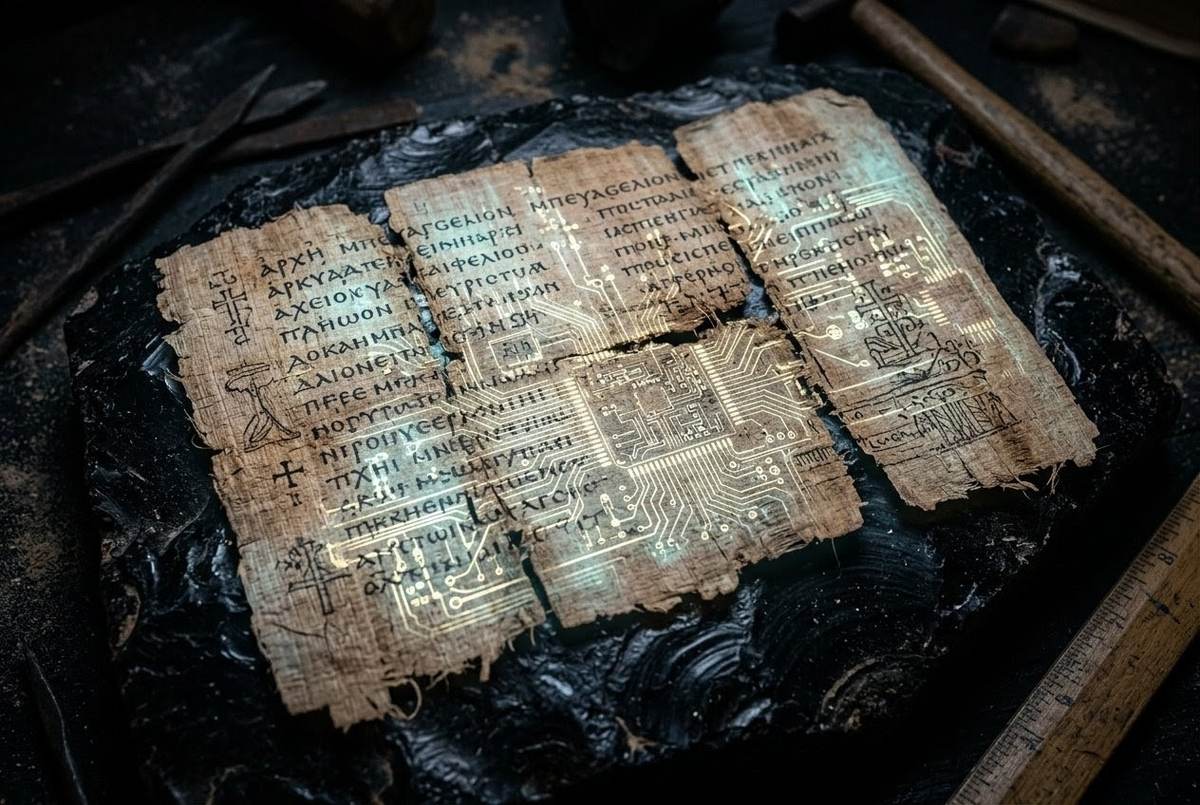
The Nag Hammadi discovery and subsequent digital dissemination create unprecedented conditions for Thomasine revival. The text, once suppressed and nearly lost, now circulates freely outside approved channels. Modern resonances abound: websites preserve and interpret; online communities discuss and apply; digital libraries provide scholarly apparatus previously available only to specialists with proper credentials.
Solitary Practice in the Networked Age
This accessibility generates new forms of Gnostic practice. The solitary seeker, without institutional affiliation, engages Thomas directly–contemplating sayings, journaling interpretations, recognising personal resonance. “Whoever discovers the interpretation”–not the authorised interpretation, the orthodox reading, but the individual’s discovery, validated by interior certainty.
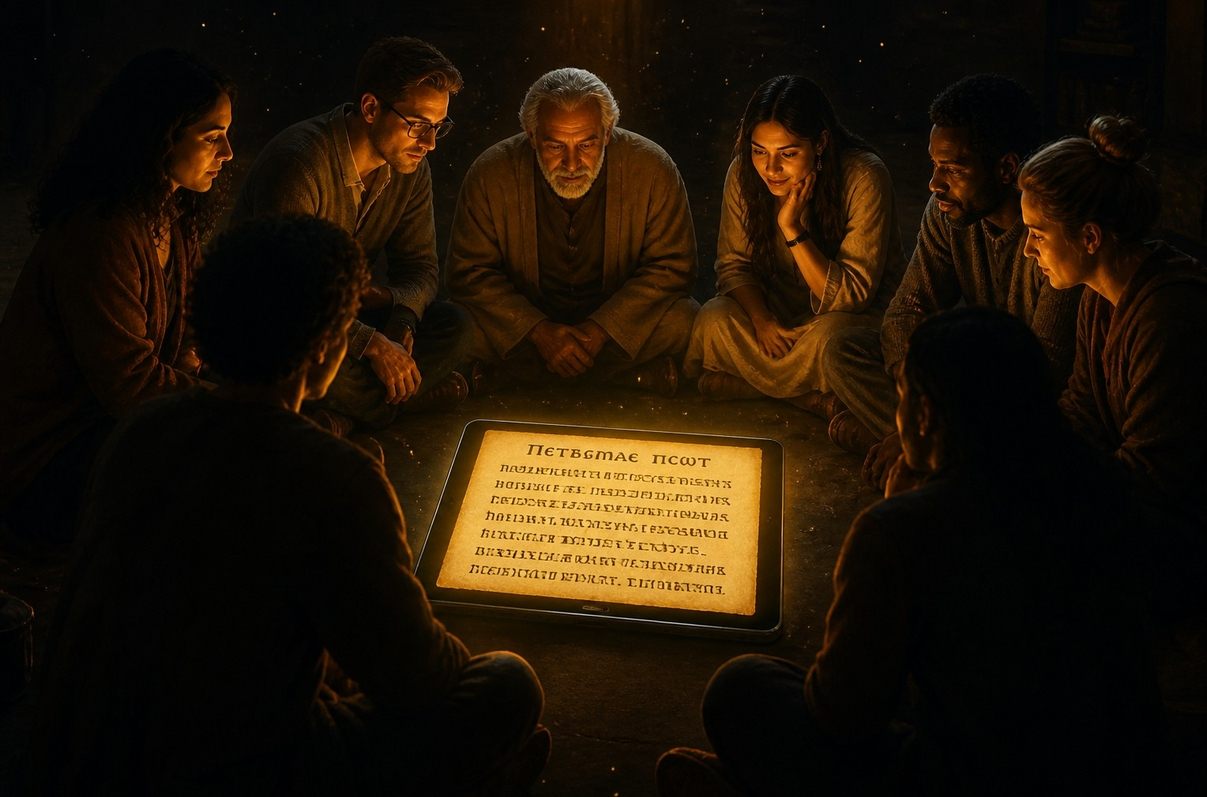
The digital environment also recreates the Thomasine social form. The original Thomasine communities–gathering to read sayings, share interpretations, confirm recognition–find parallel in online forums, study groups, social media connections. The saying generates dialogue; the riddle invites response; the archive enables community without hierarchy.
From Thomas to Practice: Four Methods of Engagement
Contemporary engagement with Thomas moves beyond academic study to lived practice. Specific protocols emerge for navigating the digital age:

Lectio Divina Thomasina
Slow reading of individual sayings, allowing resonance, noting resistance, waiting for recognition. Not analysis but contemplation; not understanding but gnosis. Somatic awareness proves essential–the saying felt in the body before comprehended by the mind.
Journal Interpretation
Recording responses to sayings over time, tracking how the same text yields different recognitions as consciousness develops. “The interpretation” proves not fixed but evolving–a personal codex expanding with each reading. The journal becomes a witness to the transformation.
Group Dialogue
Sharing interpretations without authoritative closure, recognising that Thomas’s meaning emerges through multiple perspectives. “Whoever discovers”–each discovery partial, the collective conversation approaching what no single view grasps. Finding the other without institutional mediation.
Embodied Practice
Taking specific sayings as meditation themes or mantras. “Make the two into one” (Saying 22) as instruction for inner yoga; “Pass by” (Saying 42) as reminder of non-attachment. Solo practice after transmission becomes sustainable through these textual anchors.

The Thomasine Critique of Algorithmic Modernity
Thomas speaks to modern seekers not only through resonance but through challenge. Its radical egalitarianism–“when you make the male and the female into a single one”–confronts gender binaries still enforced by societal algorithms. Its rejection of wealth and status–“Blessed are the poor, for yours is the kingdom of heaven” (Saying 54)–challenges capitalist values. Its insistence on interior transformation over external ritual–“The kingdom is inside you”–undermines performative spirituality.
The Anti-Optimisation Stance
Most profoundly, Thomas challenges the narrative of self-improvement. Not becoming better, but recognising what is already; not climbing the ladder, but realising the ground; not seeking elsewhere, but seeing here. This counter-narrative offers relief from the exhaustion of endless optimisation, the anxiety of comparison, the dissatisfaction of deferred fulfilment.
In an age where artificial intelligence governs attention and digital minimalism becomes survival strategy, Thomas offers a contemplative upgrade: direct knowing, unmediated by the platforms that harvest consciousness.
The Twin Beckons
Didymos Judas Thomas–the Twin–serves as patron of contemporary Gnosis. Not the Twin of historical apostle but twin of every seeker who encounters the text: the reader recognises in Thomas their own concealed nature, the divine spark seeking recognition. “Whoever discovers the interpretation of these sayings will not taste death”–not biological immortality but the transcendence of time-consciousness, the awakening to eternal present, the participation in living tradition that death cannot terminate.
The digital age, with all its dangers of distraction and superficiality, also enables unprecedented access to ancient wisdom. The Thomasine saying, once scratched on papyrus and buried in jar to escape the burning of archives, now glows on screens worldwide, waiting for the seeker ready to recognise. The twin beckons; the kingdom waits; the interpretation calls for discovery.
Safety Notice: This article explores advanced contemplative practices and ancient mystical texts. It does not constitute medical, psychological, or spiritual advice. The practices described here complement but do not replace clinical mental health treatment. If you are experiencing persistent anxiety, depression, or emotional dysregulation that interferes with daily functioning, please consult a qualified healthcare provider. If you are in immediate danger, contact appropriate emergency services.
Frequently Asked Questions
Why does the Gospel of Thomas appeal to modern spiritual seekers?
The Gospel of Thomas appeals to contemporary seekers because it bypasses institutional mediation and emphasises direct personal experience (gnosis) over dogmatic belief. Its non-narrative, aphoristic structure mirrors digital information consumption while demanding deeper contemplation, and its insistence on the kingdom being already present addresses modern anxiety about an uncertain future.
How is the Gospel of Thomas different from the Bible?
Unlike the canonical gospels which present chronological narratives of Jesus’s life, death, and resurrection, Thomas consists of 114 standalone sayings without narrative context. It lacks virgin birth narratives, crucifixion accounts, and resurrection stories, focusing instead on mystical teachings about direct recognition, interior transformation, and the present reality of the kingdom.
What does Whoever discovers the interpretation will not taste death mean?
This opening promise refers not to biological immortality but to the transcendence of ordinary time-consciousness through gnosis (direct knowing). Discovering the interpretation means recognising one’s true nature as the divine spark within, liberating consciousness from the fear of death and the illusion of separation that characterises ordinary existence.
Is the Gospel of Thomas considered authentic?
Scholarly consensus dates the Gospel of Thomas to the mid-to-late first century CE, potentially earlier than some canonical gospels. While excluded from the canonical Bible by early church authorities, its discovery among the Nag Hammadi library in 1945 confirmed it as an authentic early Christian text representing a distinct theological trajectory emphasising wisdom (gnosis) over faith.
How can I practice with the Gospel of Thomas?
Effective practices include lectio divina (slow contemplative reading of individual sayings), journaling interpretations over time to track evolving understanding, group dialogue without authoritative closure, and using specific sayings as meditation mantras. The text rewards repeated engagement rather than single-pass reading.
What is the twin reference in Thomas?
Didymos Judas Thomas literally translates as Twin Judas the Twin (Didymos means twin in Greek, Thomas in Aramaic). This serves metaphorically as the twin of every reader–the recognition that the text mirrors one’s own concealed divine nature. The reader and text become twins in the act of recognition, awakening to what was already present.
Why was the Gospel of Thomas suppressed?
Early church authorities excluded Thomas from the canon partly because its emphasis on direct personal gnosis threatened institutional hierarchies that positioned clergy as necessary mediators between believers and the divine. Its egalitarian nature (make the male and female into a single one) and rejection of external ritual also challenged emerging orthodox structures.
Further Reading
- The Gospel of Thomas: The Secret Words of the Living Jesus — Comprehensive overview of the 114 sayings, the Thomasine tradition, and its place in early Christianity.
- Sayings Gospels: Thomas, Philip, and Wisdom of Jesus — Comparative analysis of non-narrative gospel traditions in the Nag Hammadi Library.
- The Nag Hammadi Library: Complete Guide to Gnostic Scriptures — The definitive introduction covering the 1945 discovery, all 13 codices, and the 46 tractates.
- Modern Resonances: Ancient Wisdom in Contemporary Practice — How ancient Gnostic and Hermetic wisdom resonates with modern challenges.
- Transmission and Lineage: How the Gnosis Travels — How esoteric knowledge transmits through time: initiation chains, communities of practice, and secret teachings in public texts.
- Digital Minimalism for Mystical Practice — Practical strategies for reducing digital noise to create space for Thomasine contemplation.
- What Is Gnosticism? Defining the Undefinable — Essential background on Gnostic movements, common threads, and historical context.
- The Discipline of Solitude: Extended Alone Time as Gateway to Recognition — Why solitude is the laboratory in which Thomasine recognition is refined and tested.
- Nervous System Regulation: The New Meditation — Why nervous system regulation is replacing traditional meditation as the primary path to embodied spirituality and energetic sovereignty.
References and Sources
The following sources are organised by category for clarity. No in-text citation numbers are used, consistent with The Thread editorial style; sources are acknowledged in flowing prose throughout the article.
Primary Sources and Critical Editions
- The Nag Hammadi Library in English. (1977). Edited by James M. Robinson. San Francisco: Harper and Row. (Revised edition 1988, 1996.)
- Patterson, S. J., Robinson, J. M., and Bethge, H.-G. (1998). The Fifth Gospel: The Gospel of Thomas Comes of Age. Harrisburg, PA: Trinity Press International.
- The Oxyrhynchus Papyri: P.Oxy. 1, 654, 655. Greek fragments of the Gospel of Thomas, excavated at Oxyrhynchus, Egypt, late nineteenth to early twentieth century.
Scholarly Monographs and Secondary Studies
- Davies, S. L. (1983). The Gospel of Thomas and Christian Wisdom. New York: Seabury Press.
- Koester, H. (1990). Ancient Christian Gospels: Their History and Development. Philadelphia: Trinity Press International.
- Meyer, M. W. (2004). The Gospel of Thomas: The Hidden Sayings of Jesus. San Francisco: HarperSanFrancisco. (Revised edition.)
- Perrin, N. (2007). Thomas and Tatian: The Relationship between the Gospel of Thomas and the Diatessaron. Leiden: Brill.
- Valantasis, R. (1997). The Gospel of Thomas. London: Routledge.
Comparative Studies and Historical Surveys
- Ehrman, B. D. (2003). Lost Christianities: The Battles for Scripture and the Faiths We Never Knew. Oxford: Oxford University Press.
- Klijn, A. F. J. (2003). The Acts of Thomas: Introduction, Text, and Commentary. Leiden: Brill.
- Turner, J. D. (2010). “The Book of Thomas the Contender (II,7).” In Nag Hammadi Codex II, 2-7, edited by B. Layton. Leiden: Brill.