
Search Results for: health-and

  • | |

    Nirvana, Moksha, and Gnosis: Three Paths Beyond Rebirth

    The cycle of birth, death, and return-samsara-is one of the oldest problems in human thought. Every civilisation that has confronted it has produced a technology of escape. Three of these technologies have survived with particular clarity: the Buddhist nirvana, the Hindu moksha, and the Gnostic gnosis. Each offers a path beyond rebirth. Each operates on…

  • |

    The Memory Wipe: Forgetting, Rebirth, And The Loss Of Divine Identity

    Most people cannot remember their first few years of life. This ordinary forgetting–the natural amnesia of early childhood–serves as a quiet metaphor for something far more vast. Across cultures and centuries, a disturbing consensus has emerged: that birth itself is preceded by a deliberate erasure, a cosmic memory wipe that strips the soul of its…

  • |

    The Soul Trap: Gnosticism and the Machinery of Return

    Ask a modern seeker whether the Gnostics believed in reincarnation, and the answer usually arrives wrapped in New Age certainty: of course they did. The soul returns, lesson after lesson, until gnosis finally dawns and the cycle is complete. But this is not what the Nag Hammadi texts say. The Gnostics did not see rebirth…

  • |

    The Gateless Gate: When Awakening Dissolves the World You Knew

    There is a particular loneliness that does not announce itself with drama. It arrives quietly, like the moment between waking and rising, when the room is familiar but something in the quality of light has shifted. You are still you. The people around you are still them. But the agreement has changed. The unspoken contract…

  • Pneuma and Logos: What Gnosticism and Stoicism Share

    Gnosticism and Stoicism are usually taught as opposites. One rejects the world; the other accepts it. One seeks escape; the other seeks equanimity. But beneath the surface, they share a vocabulary, a historical moment, and a practical logic that makes them far more compatible than the textbooks admit. Ask a philosophy lecturer what Gnosticism and…

  • |

    Transhumanism as Neo Gnosticism: The Body Escape Debate

    The transhumanist promise has never been more articulate, more funded, or more proximate. In the summer of 2025, Sam Altman announced Merge Labs, a brain-computer interface startup positioned to compete directly with Elon Musk’s Neuralink. The goal is not merely to heal paralysis or restore sight but to transcend the biological substrate altogether–to transfer human…

  • |

    The Luminous Darkness: What the Gnostics Knew About the Void

    In the first months of 2026, a curious inversion has occurred within the wellness industry. The colour palette has shifted. Where Instagram once overflowed with golden-hour mandalas, rose-quartz affirmations, and the relentless luminescence of “love and light,” the most discussed spiritual practice of the year is something altogether darker. Dark retreats–periods of voluntary isolation in…

  • The Archons Feed on Suffering: Gnosticism as Political Critique

    The Nag Hammadi Library does not describe the archons as horned demons lurking in shadows. It describes them as administrators. Celestial bureaucrats. Middle managers of a derivative reality who sustain their hollow existence by harvesting the energy of those who possess authentic spirit. The Apocryphon of John calls them the Seven Hebdomad–planetary rulers created by…

  • Gnosticism vs Orthodox Christianity: What the Early Church Suppressed

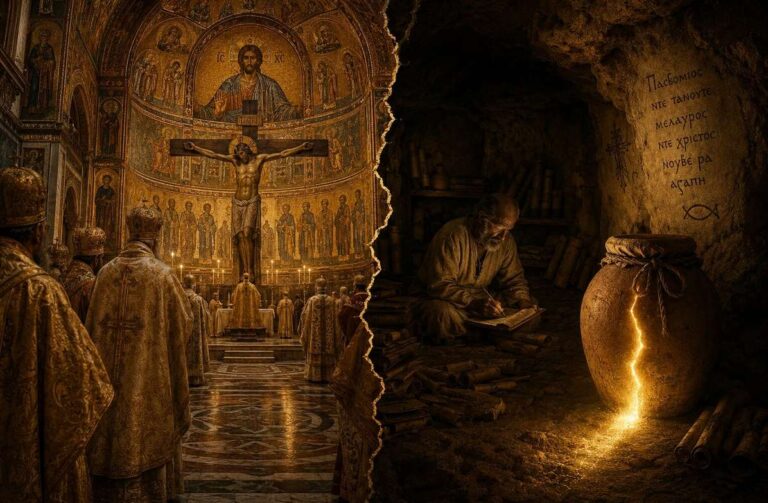
    For nearly two thousand years, the Christian story was told as if it had always been singular. One church, one creed, one authorised account of Jesus Christ. The discovery of the Nag Hammadi Library in 1945 shattered that assumption. Buried in a sealed jar beneath the cliffs of Upper Egypt were thirteen codices containing over…

  • Mandaeism: The Last Living Gnostic Religion

    They call themselves the Nasoraeans–the guardians of secret knowledge–and they have persisted for nearly two thousand years along the waterways of southern Iraq and Iran’s Khuzestan Province. Their name, Mandaean, derives from the Aramaic manda, meaning “knowledge,” sharing the same root as the Greek gnosis that gave Gnosticism its name. They are the only surviving…